You can make a great bird feeder at home without peanut butter by coating a pine cone (or a toilet paper roll, or even tree bark) with vegetable shortening, lard, or suet and rolling it in birdseed. For more complete ideas beyond pine cones and wreaths, see bird feeders you can make at home make a great bird feeder at home. These fat-based coatings hold seed just as well as peanut butter and work better in warm weather when peanut butter can melt and go rancid. If you do want to use peanut butter, mix one part peanut butter with five parts cornmeal to firm it up and make it safer for birds, then spread it on your feeder base of choice. Either way, you can put together a functional, bird-ready feeder in about 15 minutes with stuff you probably already have at home. If you are still deciding, the question of why make a bird feeder is really about what birds will get from it, and the easiest options like pine cones are a good comparison point.
How to Make Bird Feeders Without Peanut Butter
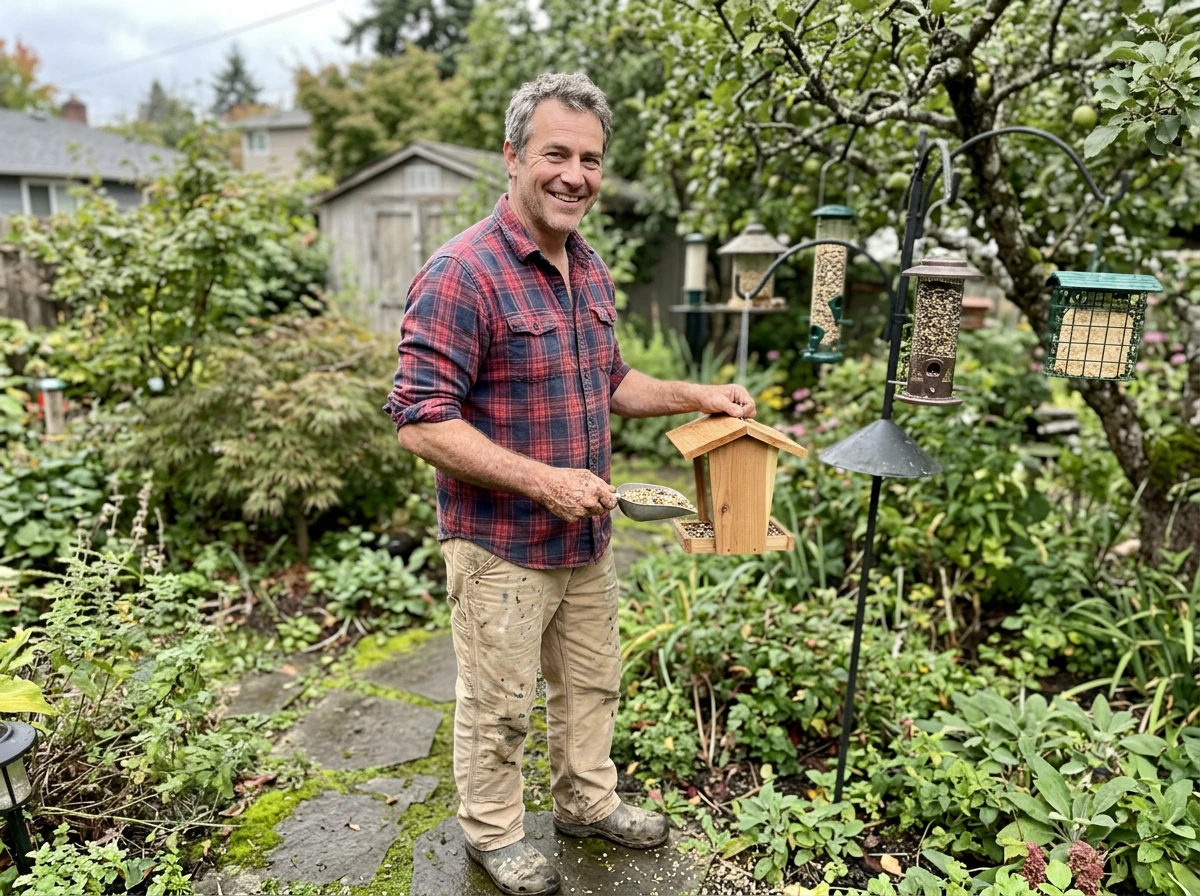
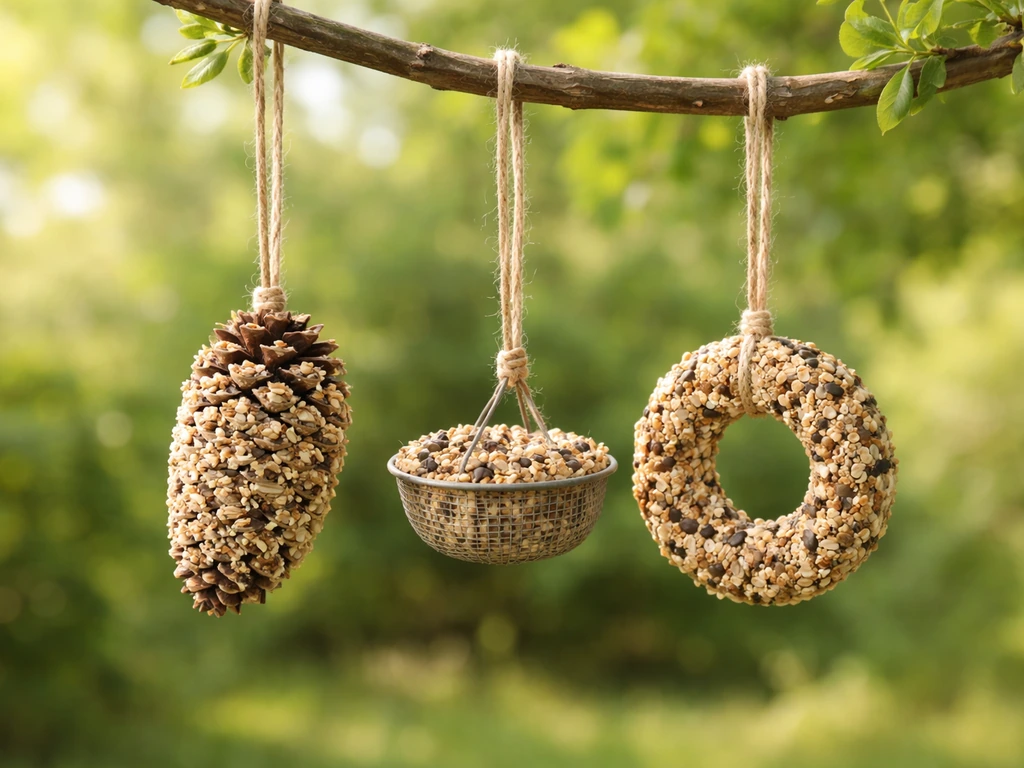
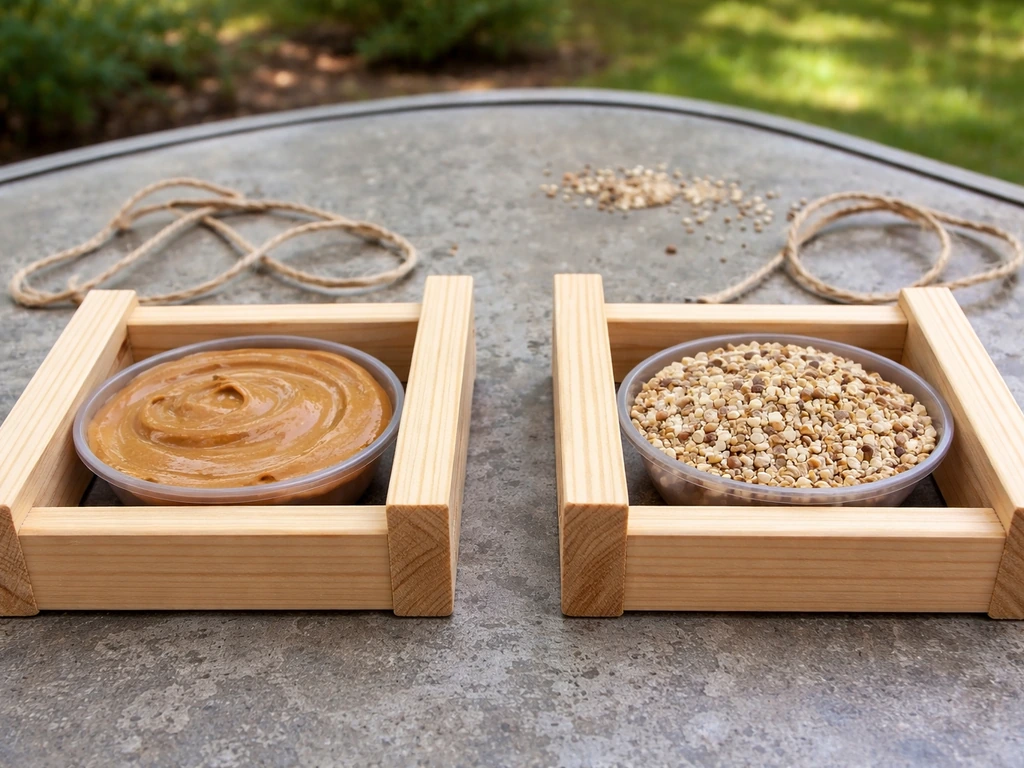
Peanut butter vs. no-peanut feeder options: what you're actually building
Before you start grabbing materials, it helps to understand the two separate things going on with any homemade feeder: the feeder structure (the physical thing you hang in your yard) and the edible coating or food mix (what birds actually eat). A pine cone is a feeder structure. The peanut butter or shortening you press into its scales is the food. The same logic applies to a toilet paper roll, a drilled log, a plastic bottle, or a wreath form. Once you separate those two jobs in your head, it's easy to swap out peanut butter for something else without rebuilding the whole project.
The main reasons people skip peanut butter are allergies (in households with kids, especially), hot weather (fat-based coatings go rancid fast above about 70°F), and just not having any on hand. The good news is that suet, lard, vegetable shortening, and even sunflower butter all work as binders. On the other hand, if peanut butter is what you have and you're feeding in cooler weather, it's a perfectly solid choice as long as you prepare it correctly. The sections below cover both paths in detail.
| Option | Best for | Works in heat? | Skill level | Cost |
|---|---|---|---|---|
| Peanut butter + cornmeal mix | Year-round in cool climates, budget builds | No (goes rancid) | Beginner | Very low |
| Vegetable shortening or lard | Hot weather, allergy-friendly homes | Better than PB | Beginner | Very low |
| Suet (raw or cakes) | Winter feeding, woodpeckers and nuthatches | No (melts) | Beginner | Low |
| Sunflower butter or soy butter | Nut-allergy households | No | Beginner | Low-moderate |
| Seed-only feeder (bottle/jug) | All seasons, no prep needed | Yes | Beginner-intermediate | Free (recycled) |
For most backyard setups, a pine cone or toilet paper roll with shortening and seed is the fastest no-peanut build you can make today. Enchanted Learning's pine cone feeder instructions also list optional add-ins like suet and seeds such as sunflower or millet optional add-ins (e.g., suet and seeds such as sunflower/millet). A plastic bottle or milk jug feeder is better if you want something that holds loose seed and requires zero food prep. If you want to bring in a wider range of birds and don't mind a bit more work, the peanut butter cornmeal mix or a wreath feeder is worth the extra ten minutes.
Pine cone bird feeders without peanut butter
This is probably the fastest bird feeder project you can do, and it genuinely works. Pine cones have all those little open scales that grip fat and seed, so they're basically purpose-built for this kind of feeder. You don't need peanut butter at all. Here's how to make one today using common substitutes.
What you need
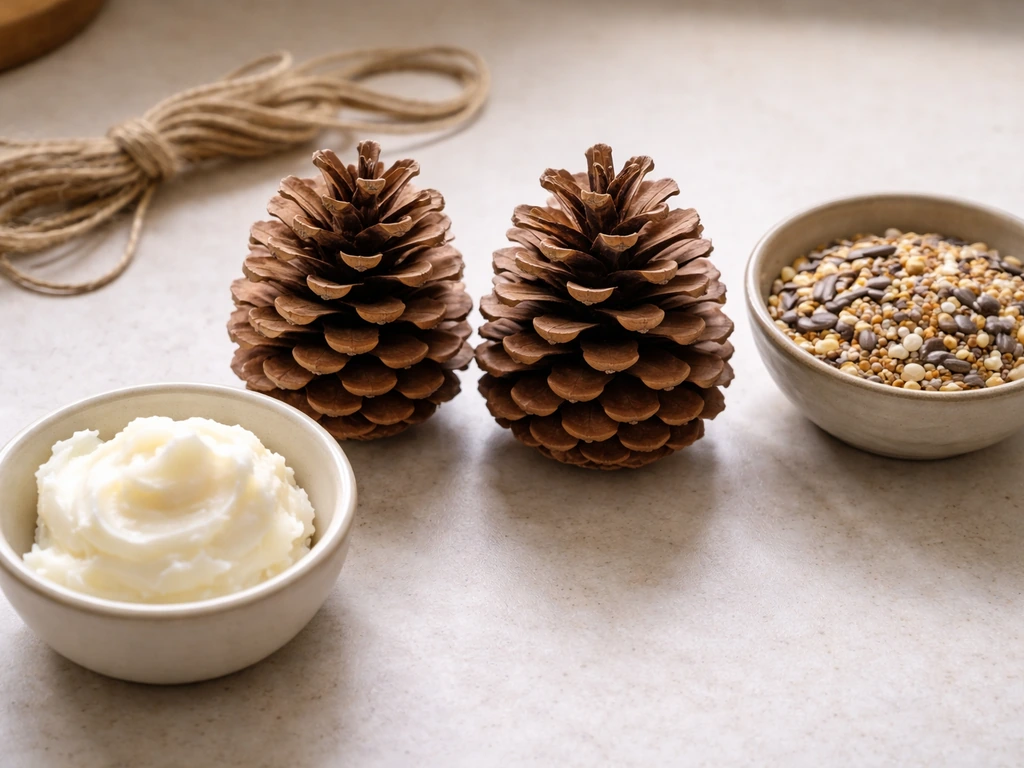
- 1 or 2 large, open pine cones (the bigger the better for holding more seed)
- Vegetable shortening, lard, or suet as your binder (about 2 tablespoons per cone)
- Birdseed mix (sunflower seeds, millet, or a general wild bird mix all work)
- String, yarn, or twine for hanging (about 12 inches per cone)
- A shallow plate or tray for rolling the cone in seed
- Optional: a butter knife or spoon for spreading
Step-by-step instructions
- Tie your string tightly around the top of the pine cone, near the stem end, and make a loop for hanging. Tie it before you add any coating so you're not making a mess later.
- Scoop out a generous amount of shortening, lard, or suet and work it into the scales of the pine cone with your fingers or a spoon. You want to press it into the gaps, not just wipe it on the outside. Cover the whole cone as evenly as you can.
- Pour your birdseed onto the shallow plate. Roll the coated cone in the seed, pressing gently so the seed sticks into the fat. Rotate and repeat until the cone is well covered.
- Hold it up and press a few more seeds into any bare spots by hand.
- Let it set for about 10 minutes somewhere cool (the fridge speeds this up) so the coating firms up and seeds don't fall off immediately when you hang it.
- Hang it from a branch, hook, or shepherd's crook at a height that keeps it away from cats and easy jumping distances for squirrels (more on that below).
If you're making these with kids or doing a classroom-style project, sunflower butter and soy butter are both excellent nut-free binders that behave almost identically to peanut butter. With the right supervision, bird feeders preschoolers can make using simple nut-free binders are a fun way to help kids observe local birds. For a completely fat-free option, you can skip the binder altogether and just dip a slightly dampened cone in seed, but fair warning: the seed won't stay on nearly as long and you'll be refilling constantly. The fat binder is worth using.
One thing that helps a lot: make a few cones at once. They take the same amount of setup time whether you make one or six, and having extras ready to swap in when one empties out makes your yard consistently welcoming for birds.
Peanut butter bird feeders at home: the safe mix and how to apply it
Plain peanut butter straight from the jar isn't ideal for birds on its own. It can stick to a bird's beak and palate in a way that's uncomfortable, and in warm weather it softens to a messy, rancid paste that's more harmful than helpful. The fix is simple: mix one part peanut butter with five parts cornmeal. This ratio firms up the texture, makes it easier for birds to eat, and helps the mixture hold its shape better in mild heat. You can also add some oats or birdseed directly into the mix to bulk it up.
Basic peanut butter bird food recipe
- 1 part peanut butter (any natural, unsalted variety is best; avoid low-fat versions, which have more additives)
- 5 parts cornmeal
- Optional: a handful of birdseed, oats, or crushed unsalted nuts mixed in for variety
Stir everything together until you get a stiff, crumbly dough-like consistency. It should hold its shape when you press it into a clump but not be sticky or runny. If it's too wet, add more cornmeal. This mixture can be pressed into pine cone scales, stuffed into holes drilled in a log, packed into a toilet paper roll, or shaped into balls and placed in a mesh feeder bag.
Applying it to a toilet paper roll feeder
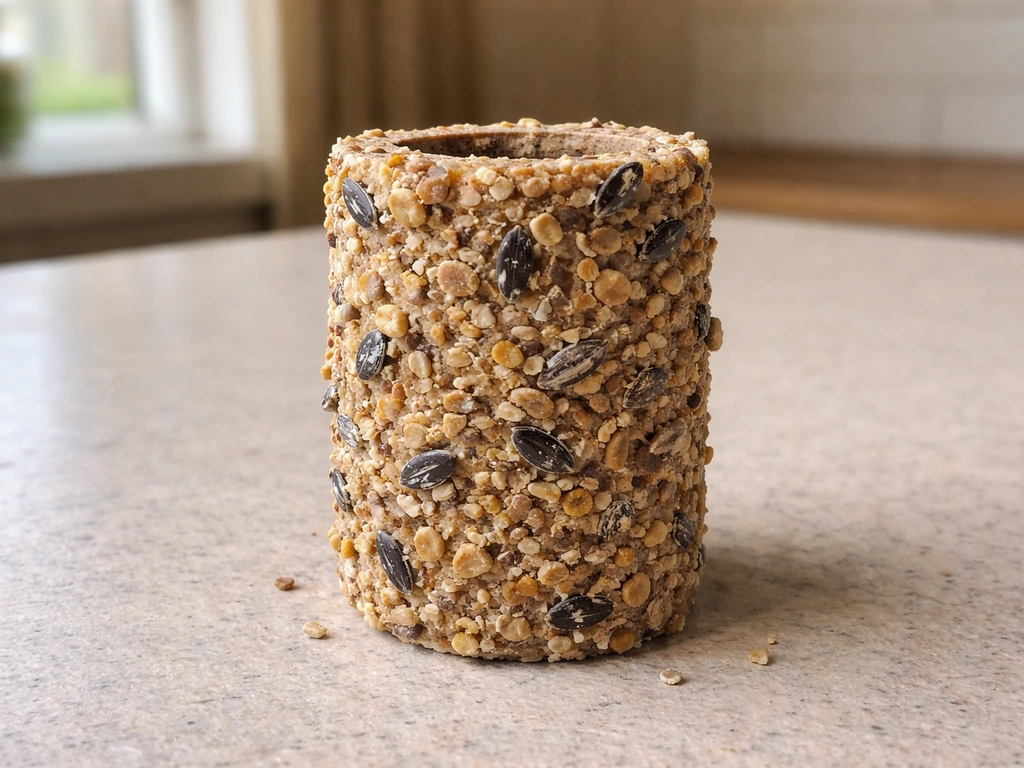
- Thread a piece of string or dowel through the center of a toilet paper roll for hanging.
- Spread the peanut butter cornmeal mixture generously around the outside of the roll with a butter knife.
- Roll the coated tube in a plate of birdseed until fully covered.
- Hang it from a branch or hook. The cardboard tube will gradually break down in rain, so replace it when it starts getting soggy, usually within a week or two depending on weather.
Keep peanut butter feeders out of direct sun and bring them in or replace them when temperatures consistently top 70°F. Peanut butter can go rancid fairly quickly in heat, and moldy or spoiled food can genuinely make birds sick. When in doubt, toss it and make a fresh batch. A new pine cone feeder takes all of 10 minutes.
How to make a homemade peanut butter wreath bird feeder
A peanut butter wreath feeder looks fancier than a pine cone but is still a beginner-level project. The idea is to mix your peanut butter food mixture, press it into a ring-shaped mold, let it harden, and hang the whole ring like a wreath. Birds land on it and peck directly from the ring. It tends to attract more species than a single pine cone because there's more perching surface and more food volume.
Materials for a peanut wreath feeder
- 1/2 cup peanut butter
- 2 to 2.5 cups cornmeal or oats (enough to make a firm, moldable mixture)
- 1 cup birdseed
- A ring-shaped pan or mold (a bundt pan works great, or a round cake pan with a cup in the center as a placeholder)
- Cooking spray or a light coating of oil to grease the mold
- Strong twine or ribbon for hanging
Assembly steps
- Mix the peanut butter, cornmeal or oats, and birdseed together until you have a stiff, cohesive dough. It should hold its shape when pressed together firmly.
- Grease your ring mold lightly so the finished wreath releases cleanly.
- Press the mixture firmly and evenly into the mold. Pack it in tight so it holds together as one piece when unmolded.
- Refrigerate the mold for at least two hours, or until the mixture has hardened completely.
- Once hardened, run a butter knife gently around the edges and flip the mold to release the wreath. If it cracks, press it back together and re-chill.
- Thread twine through the center of the ring and tie a loop for hanging. Hang it from a hook or branch at a height comfortable for birds to perch and peck.
The wreath will hold up best in cool, dry weather. In humid or warm conditions, the fat softens and the ring can sag or break apart. If you're making one in spring or summer, plan to replace it every four to five days rather than leaving it until it looks bad. It's worth making two or three at once and storing the extras in the fridge until needed.
Alternative feeder base ideas that don't need peanut butter
If you want feeders that work in all weather and don't need any fat-based food prep at all, a seed-only feeder built from a recycled plastic bottle or milk jug is the way to go. These are genuinely useful year-round and attract a wide range of birds including finches, sparrows, and chickadees. You're building a structure that holds loose seed and dispenses it through small openings, so there's no coating or recipe involved. If you want to create and learn bird feeder projects beyond peanut butter, start with a seed-only bottle or milk jug feeder and adjust the openings for the birds you want to attract.
Plastic bottle feeder
Take a clean plastic bottle (a 1-liter or 2-liter soda bottle works well), cut small feeding holes about an inch in diameter on opposite sides near the bottom third of the bottle, and poke a wooden chopstick or dowel through just below each hole to act as a perch. Add a small drainage hole at the very bottom so rain doesn't pool. Fill with seed through the top, cap it, and hang it by the neck using wire or strong twine. Birds hover or perch on the sticks and pull seed through the holes.
Milk jug feeder
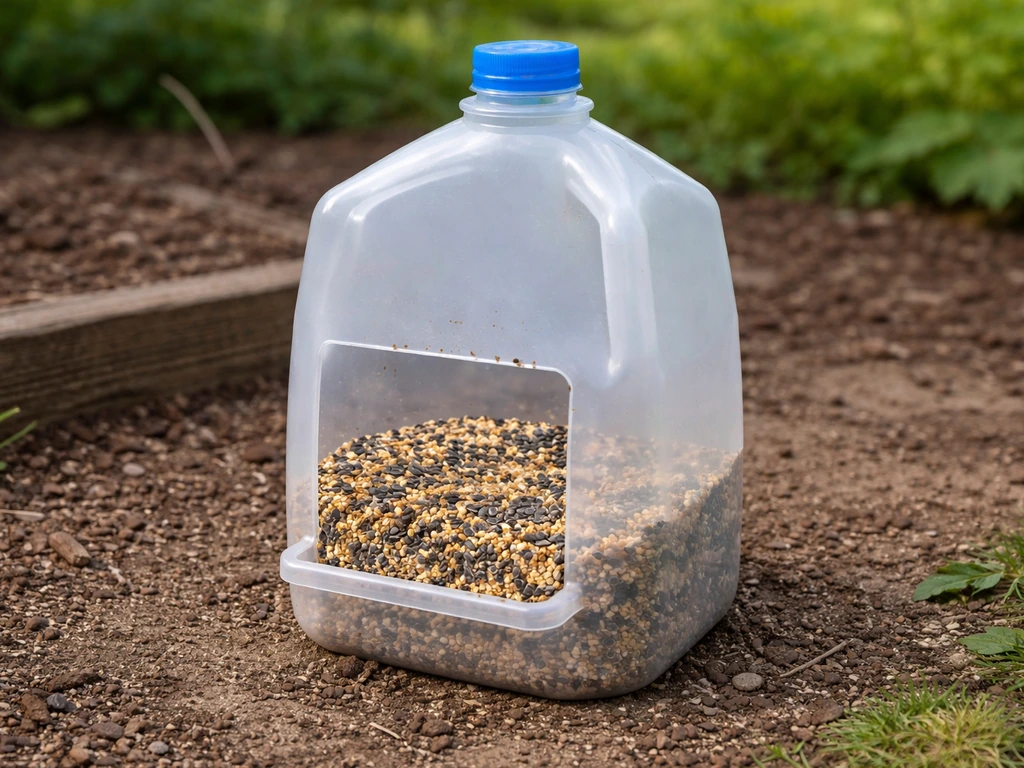
A clean gallon milk jug gives you more capacity. Cut a large rectangular opening on one or two sides, leaving a lip at the bottom to hold seed in. Add a few small drainage holes in the base. Hang it using the handle. This style is more open, which makes it easier for larger birds like cardinals or jays to access. It's also faster to fill and clean.
Drilled log feeder
If you have a thick branch or a section of log, drill a series of 1-inch holes into the sides at different angles and depths. This is your feeder structure. You can stuff these holes with the peanut butter cornmeal mix, plain suet, or lard mixed with seed, depending on what you have. Woodpeckers, nuthatches, and chickadees love this style. Drill a hole through the top for hanging wire.
For readers who want a more structured craft-style build, cookie cutter feeders are another creative option worth exploring, especially if you're making feeders with kids at home. Cookie cutter bird feeders are a fun way to create shaped openings and let birds feed while still keeping your project beginner-friendly cookie cutter feeders.
Hanging, placement, and keeping your feeder going
Where and how you hang the feeder matters more than most people realize. A feeder placed badly will either go untouched or become a mess of squirrel damage and moldy seed within a week.
Placement guidelines
- Hang feeders within 3 feet of a window to reduce bird-window collision risk. Birds flying from that short a distance don't build up enough speed to hurt themselves. Beyond 3 feet, you're in the danger zone. If your only option is farther away, use window decals or screens.
- Position feeders near cover like shrubs or small trees so birds have somewhere safe to retreat to, but not so close that predators can use the same branches to stalk them.
- Keep feeders out of direct afternoon sun in summer to slow fat-based coating degradation.
- Place feeders at least 10 to 12 feet away from any surface a squirrel could jump from, including fences, rooftops, and branches.
Maintenance schedule
Seed-only feeders (like your bottle or jug feeder) should be cleaned at least once every two weeks, and more often during warm or wet weather. Moldy seed and accumulated droppings can make birds seriously ill. To clean, empty the feeder, scrub it with a dilute bleach solution, rinse thoroughly for at least 10 seconds, and let it dry completely before refilling. Wet seed going back into a damp feeder is how you get mold problems.
Pine cone and peanut butter feeders need replacing rather than cleaning. Project FeederWatch also recommends minimizing disease transmission at feeders with frequent cleaning, including more frequent cleaning during heavy use or warm weather, and cleaning hummingbird feeders every couple of days Feeding Birds. When a pine cone is stripped bare or the coating looks dark, discolored, or smells off, take it down and toss it. Same with wreath feeders. Don't try to top them up or re-coat them once they've been hanging for more than a week or two, especially in warm weather. Fresh is safer.
Don't forget the ground below your feeder. Sweeping up old hulls, fallen seed, and droppings regularly prevents the buildup of mold and reduces the chance of attracting rats and raccoons. Virginia DWR specifically warns against scattering loose seed on the ground for exactly this reason: it spreads disease and invites pests. Use a tray or catch platform under your feeder if you want to minimize ground mess.
Troubleshooting and pest-proofing for peanut butter and pine cone setups
Peanut butter and fat-based coatings are extremely attractive to more than just birds. Here's what tends to go wrong and how to fix it.
Squirrels are emptying your feeder
This is the most common complaint, and it's especially bad with fat-coated feeders because squirrels can clean a pine cone in minutes. The most effective fix is a baffle: a bowl or umbrella-shaped barrier mounted on the pole below the feeder that prevents squirrels from climbing up. Penn State Extension describes exactly this style of baffle as one of the most reliable deterrents available. You can buy one cheaply or make one from a large metal mixing bowl with a hole drilled through the center. For hanging feeders, a similar dome-shaped baffle placed above the feeder on the line works to stop squirrels from coming down from above.
Placement also matters. Kansas State University research notes that raccoons and deer are significantly more likely to visit yards with bird feeders, so if you're seeing larger wildlife, consider bringing your feeder in at night, especially fat-based ones with peanut butter that carry a stronger scent.
Fat coating is melting or going soft
If your pine cone or wreath feeder is getting greasy and droopy in warmer weather, the fat-to-seed ratio may need adjusting, or you may just need to accept that fat-based feeders are a cool-weather project. Suet and peanut butter both go rancid quickly above 70°F. For spring and summer feeding, switch to a seed-only bottle feeder and save the fat-based builds for fall and winter. If you want to push into warmer months, refrigerate your extras and only put out small amounts at a time, replacing them every two to three days.
Mold is appearing on the coating
Mold on a feeder is a genuine health risk for birds. If you see dark spots or fuzzy growth on your pine cone or wreath feeder, take it down immediately and throw it away. Don't scrape off the moldy bits and put it back up. The fix is to make smaller batches that get eaten within a few days and to keep feeders in a shaded, ventilated spot where moisture can't collect. Check fat-based feeders after any rain.
Birds aren't visiting
Give a new feeder at least one to two weeks before assuming something is wrong. Birds are cautious and it takes time for them to discover a new food source. Make sure the feeder is placed near natural cover, not in the middle of an open lawn with no nearby perches. Also check that your seed is fresh: old, clumped, or musty seed is often ignored. If birds were visiting and then stopped, mold or a nearby predator (even a neighborhood cat) is usually the cause.
Once you've got one or two of these setups working, you start to get a feel for what your local birds prefer and what conditions your yard throws at a feeder. The pine cone and wreath builds are great starting points, and if you find yourself wanting more structure or capacity, bottle feeders and milk jug feeders are natural next steps that still cost next to nothing to build. The whole point is to keep it simple enough that you'll actually maintain it, which is what keeps birds coming back.
FAQ
Can I use sunflower butter or soy butter instead of peanut butter in the same pine cone or wreath method?
Yes. Treat them as a nut-free binder, then aim for the same goal as with peanut butter, a firm, non-runny coating that will grip seed. If your binder is softer than peanut butter, let the coated cones or wreath ring sit in a cool spot until set, then hang them in shade to slow melting.
What can I do if my shortening or suet coating won’t stay on the pine cone (it falls off)?
Dry the pine cone first (no wet sap), then apply a thicker layer so seed has something to anchor to. Also roll in seed while the fat is still tacky. If the seed keeps slipping off, use a slightly damp surface on the cone or choose lard/suet over vegetable shortening, since they often grab seed better in cooler air.
Is it better to make seed-only feeders or fat-based feeders if the weather is warm and sunny?
Seed-only is usually safer in heat because loose seed does not rely on fat that can go rancid. If you do use fat-based coatings, keep batches small and put feeders out only during the coolest parts of the day, then remove or replace them quickly as temperatures climb, rather than leaving them out continuously.
Can I make a peanut-butter-like mixture without cornmeal?
You can, but cornmeal’s job is to absorb moisture and firm the mix so it does not smear. If you skip cornmeal, try another fine, dry bulking grain such as oats, and adjust until the mixture holds shape when pressed. If it spreads or sticks to your fingers, it is too wet or too high in binder.
Will birds eat from a dipped, fat-free pine cone if the seed won’t stick long-term?
They may, but expect frequent refills. To improve adhesion without using fat, lightly dampen the cone and press seed in firmly, then set it where it stays dry. Even then, rain and dew will reduce hold, so fat-free setups work best in dry weather or with quick replacement schedules.
How often should I replace pine cone or wreath feeders made without peanut butter?
Plan on replacing rather than re-coating. For fat-based cones, replace when the coating looks stripped, darkened, or smells off. For wreath rings, warm or humid conditions often mean replacing within days, commonly around a few days to about a week depending on sun and moisture exposure.
Do I need to worry about mold on fat-free seed-only bottle feeders?
Yes, even without fat, mold can grow when seed is damp or when droppings and hulls accumulate. Clean seed-only feeders at least every two weeks, and more often after wet weather. Always let the feeder dry completely before refilling, otherwise you can trap moisture inside.
What’s the best way to prevent squirrels from taking over fat-based feeders?
Use a baffle, ideally a bowl or dome barrier designed to block squirrels from climbing the pole or line. Also consider placement, keep the feeder away from branches or structures that squirrels can use as launching points, and avoid setting it right near tall cover they can approach from.
How close should feeders be to trees or shrubs?
Birds feel safer when there are nearby perches, typically within a short flight distance rather than an exposed open lawn. If you see no visitors at first, move the feeder closer to natural cover instead of assuming the recipe is wrong.
Are there any foods I should avoid when making no-peanut feeders?
Avoid using ingredients that can spoil quickly in heat or become messy, such as straight peanut butter in warm weather, and do not add salty or flavored seasonings. Also do not let moldy or rancid coated feeders stay out, since birds can be harmed by spoiled food.
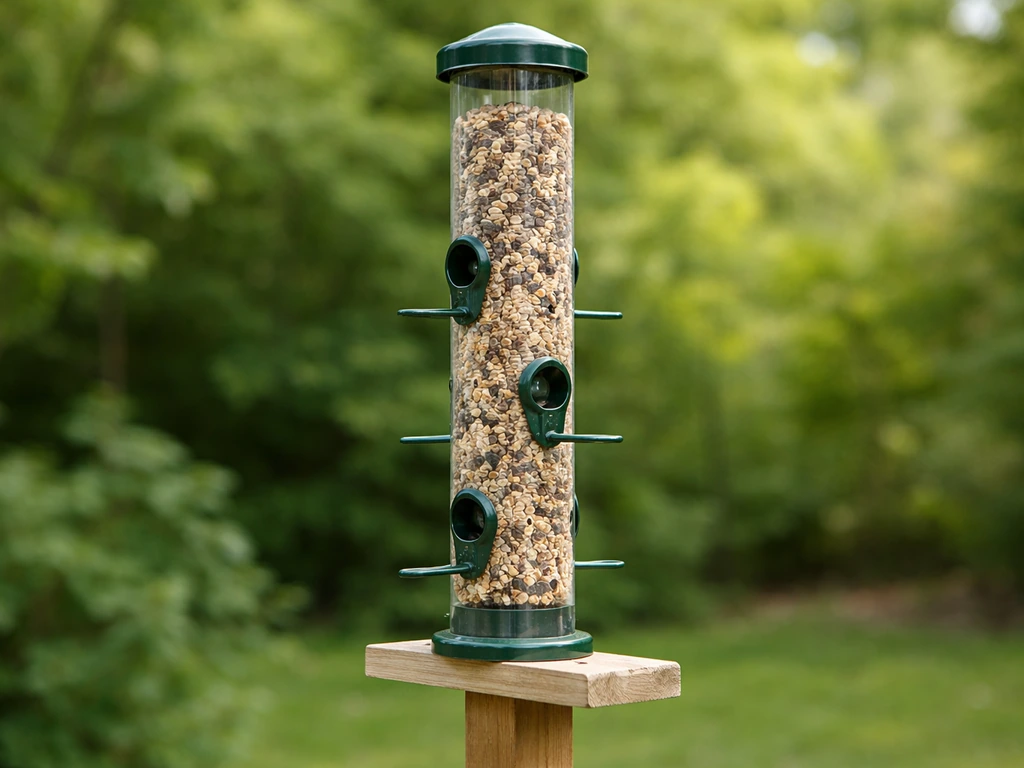
Step-by-step how to make a tube bird feeder with materials, safe mounting, maintenance, and fixes for leaks and clogs.
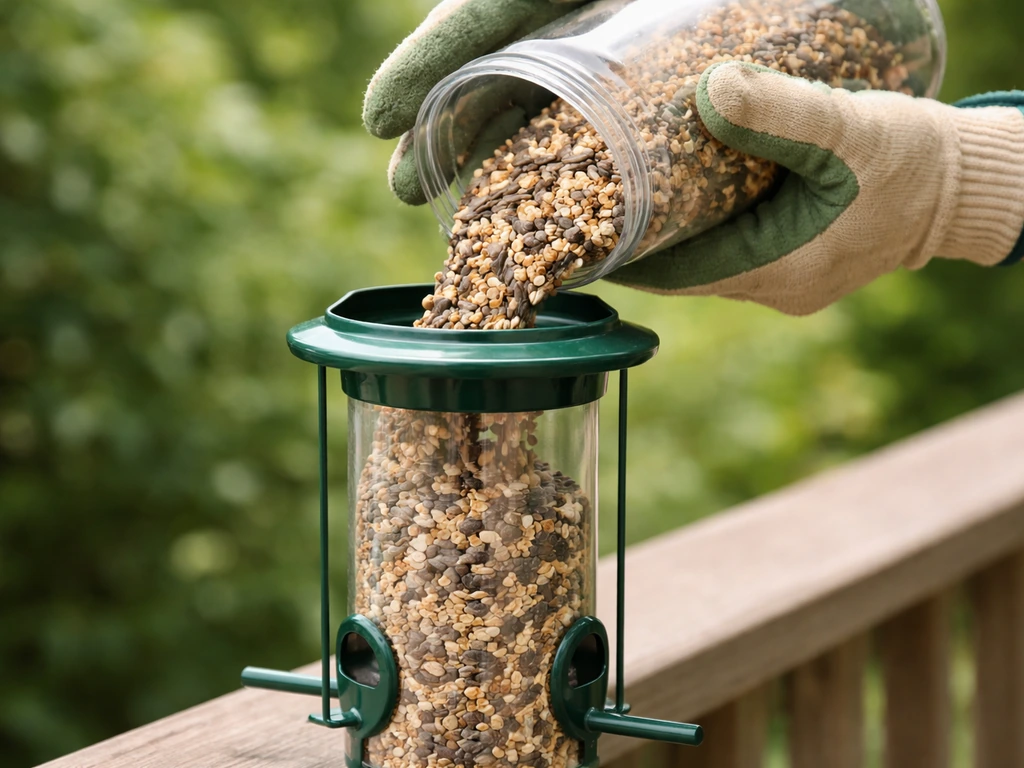
Step-by-step guide to add bird seed to hopper, tube, platform, and suet feeders, avoiding spills and jams.
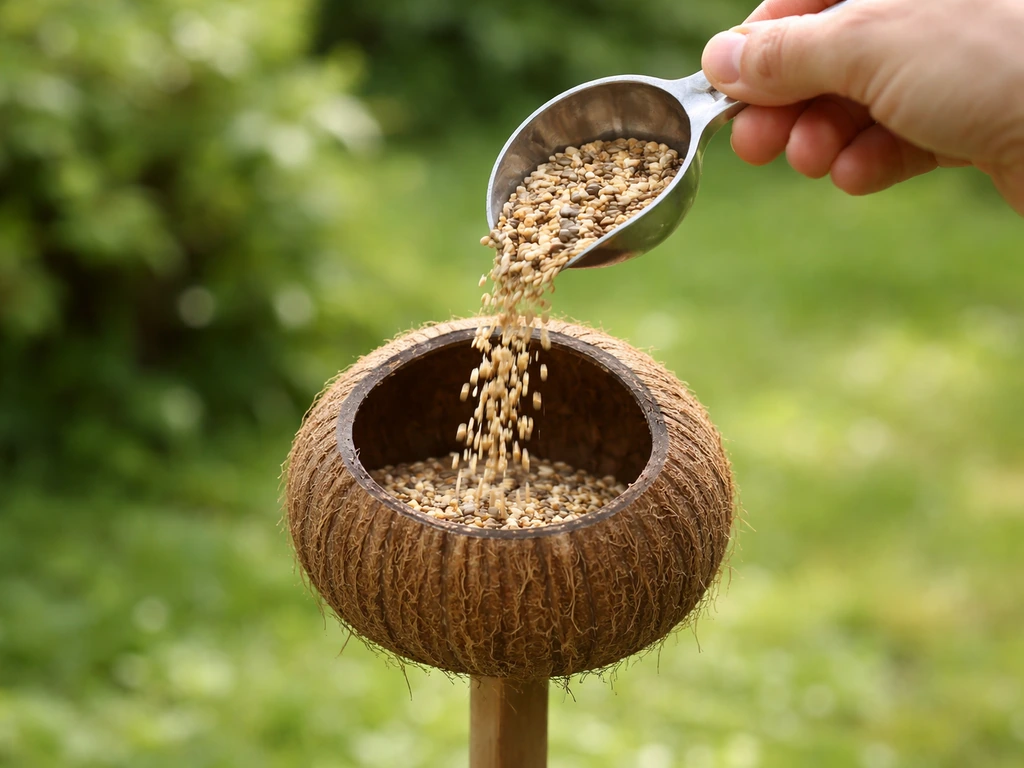
Learn how to refill a coconut bird feeder fast, clean, and mess-free, with feeding, cleaning, and pest-proof tips.