You can do it yourself bird feeder today using materials you likely already have at home, and hang it in a spot where birds will actually find it. do it yourself bird feeder using materials you likely already have at home, and hang it in a spot where birds will actually find it. The key is picking a build method that keeps the heart shape stable while still functioning as a real feeder, not just a decoration. Below I'll walk you through the three most beginner-friendly approaches, how to hang each one correctly, and what to do when squirrels or weather start causing problems.
How to Make Heart Shaped Bird Feeders Step by Step
Marcus Brennan
23 Mar 2026
Choosing materials and a heart-shaped design that works
The heart shape creates one honest challenge: most feeder shapes are symmetrical boxes or cylinders, so a heart has to either be cut from a flat panel, formed from a frame, or built around a pre-shaped object. Each approach has a sweet spot for skill level and material availability.
The three builds worth doing
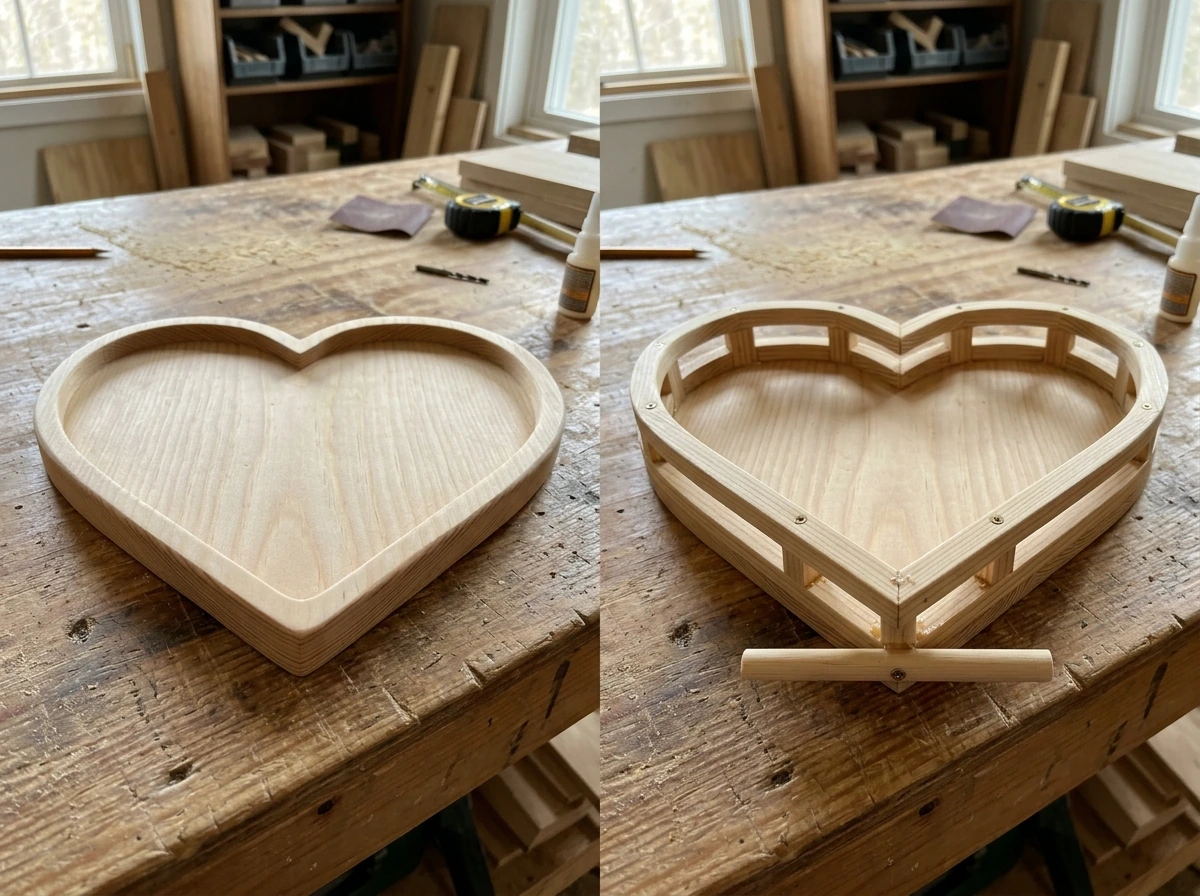
- Flat wood tray feeder: Cut a heart shape from a single piece of wood and add low side rails. This is the most durable option and scales up easily. Cedar and white pine are ideal because they resist rot without needing any treatment.
- Wire frame with pinecone fill: Bend a heavy-gauge wire (14 or 16 gauge works well) into a heart outline, wire multiple pinecones together inside the frame, and roll the whole thing in peanut butter and birdseed. Great for beginners and kids, no tools required beyond pliers.
- Cardboard or foam core template: Cut a heart from thick cardboard or foam core, coat it in peanut butter or suet, and press seed or millet into the surface. Best used as a short-term or seasonal feeder, not a permanent installation.
For anything meant to last more than one season, go with wood. Cedar is the top pick because it handles moisture without rotting or warping. White pine and yellow pine are solid budget alternatives. Avoid treated or pressure-treated lumber entirely, especially for any surface birds land on or peck at. If you want weather protection on the exterior edges, a coat of water-based exterior latex paint is fine for outer surfaces, but leave any interior feeding areas bare and unpainted.
For a quicker build, the pinecone method skips cutting tools altogether and produces a charming, lightweight feeder that chickadees, nuthatches, and woodpeckers love. The trade-off is durability: pinecone feeders need to be refreshed every week or two as the seed gets eaten or washes off.
| Build Method | Materials Needed | Durability | Skill Level | Best For |
|---|---|---|---|---|
| Flat wood tray | Cedar/pine board, jigsaw or coping saw, drill, screws, small side rails | 2+ years | Beginner to intermediate | Permanent backyard feeder |
| Wire frame + pinecones | Heavy wire, pliers, pinecones, peanut butter, seed | 2 to 4 weeks per fill | Complete beginner | Quick project, kids' activity |
| Cardboard/foam core | Thick cardboard, peanut butter or suet, seed, twine | 1 to 2 weeks | Complete beginner | One-time seasonal decoration |
Step-by-step build instructions for a heart-shaped feeder
Wood tray heart feeder (recommended)
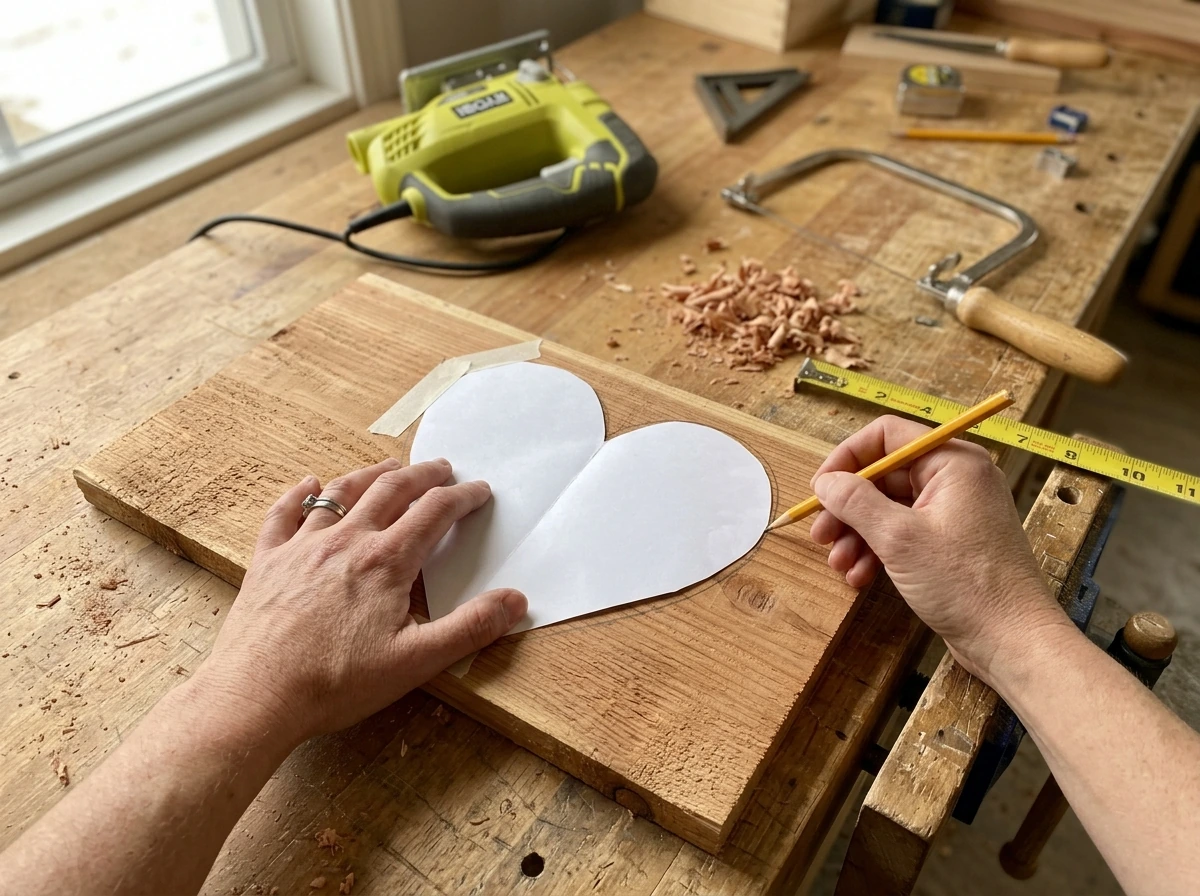
Plan for about 60 to 90 minutes for this build, plus drying time if you paint the exterior. You'll need a 1x6 or 1x8 cedar board (about 18 inches long), a jigsaw or coping saw, a drill with a 3/8-inch bit, wood screws, and thin wood strips for the side rails. how do you make bird feeders.
- Draw your heart shape on the board. A simple trick: fold a piece of paper in half, draw half a heart, cut it out, unfold it, and trace it onto the wood. Aim for a heart that is about 10 to 12 inches wide and 10 inches tall. That gives birds enough landing room.
- Cut out the heart with your jigsaw or coping saw. Take it slow on the curves at the top center (the dip between the two lobes) since that is the trickiest part. A coping saw gives you more control if you do not own a jigsaw.
- Sand all edges smooth with 80-grit sandpaper, then finish with 120-grit. Birds step on the edges, so no splinters.
- Drill drainage holes across the flat tray surface: four to six holes, about 3/8 inch in diameter, spaced a couple inches apart. This keeps water from pooling and rotting the seed.
- Attach side rails around the perimeter of the heart using thin wood strips (about 3/4 inch tall). These keep seed from blowing or rolling off. Glue and a few small screws or brad nails hold them in place. Skip the rail across the very bottom point of the heart to leave a natural drainage gap.
- Drill a hanging hole near the top center (the dip between the two lobes). Use a 1/4-inch bit and thread a screw eye into the hole for hanging.
Wire frame pinecone heart feeder
- Cut about 36 inches of 14-gauge wire and bend it into a heart shape by hand, using pliers to create the two rounded top lobes and the pointed bottom. Twist the ends together at the bottom point to close the frame.
- Collect 8 to 12 medium-sized pinecones. Roll each one in natural peanut butter (no added salt or xylitol), then roll in black oil sunflower seeds or a mixed seed blend. Press the seed in firmly so it sticks.
- Wire the pinecones into the heart frame using short lengths of thinner wire (or twist ties), filling in the frame as evenly as you can.
- Attach a 12-inch length of wire or jute twine to the top center of the frame for hanging.
How to attach feeding trays and ports for the right seed type
The wood tray feeder works as an open platform, which is its biggest advantage: it accepts almost any seed type. Black oil sunflower seeds are the single best all-around choice because they attract the widest variety of species including cardinals, chickadees, finches, and nuthatches. Hulled sunflower (no shell) is cleaner but costs more. Avoid cheap mixed blends with a lot of milo or red millet if you want to reduce waste on the ground.
Because a heart-shaped tray has a point at the bottom, seed naturally migrates toward the lowest spot. To slow this down, you can glue a small wooden dowel or popsicle stick horizontally across the lower third of the tray interior, acting as a gentle seed barrier. This keeps seed more evenly distributed across the tray and gives birds multiple landing spots instead of clustering at the point.
If you want to attract specific birds, consider what goes on the feeder. Nyjer (thistle) seed works well on the platform but is tiny and will fall through drainage holes, so lay a small piece of hardware cloth or mesh inside the tray to catch it. Suet can also be pressed into a heart-shaped mold and placed directly on the tray. For the pinecone version, peanut butter and sunflower seeds are already built in, but you can also roll pinecones in suet for colder months when birds need more fat.
Hanging and placement: where to put it and how to secure it
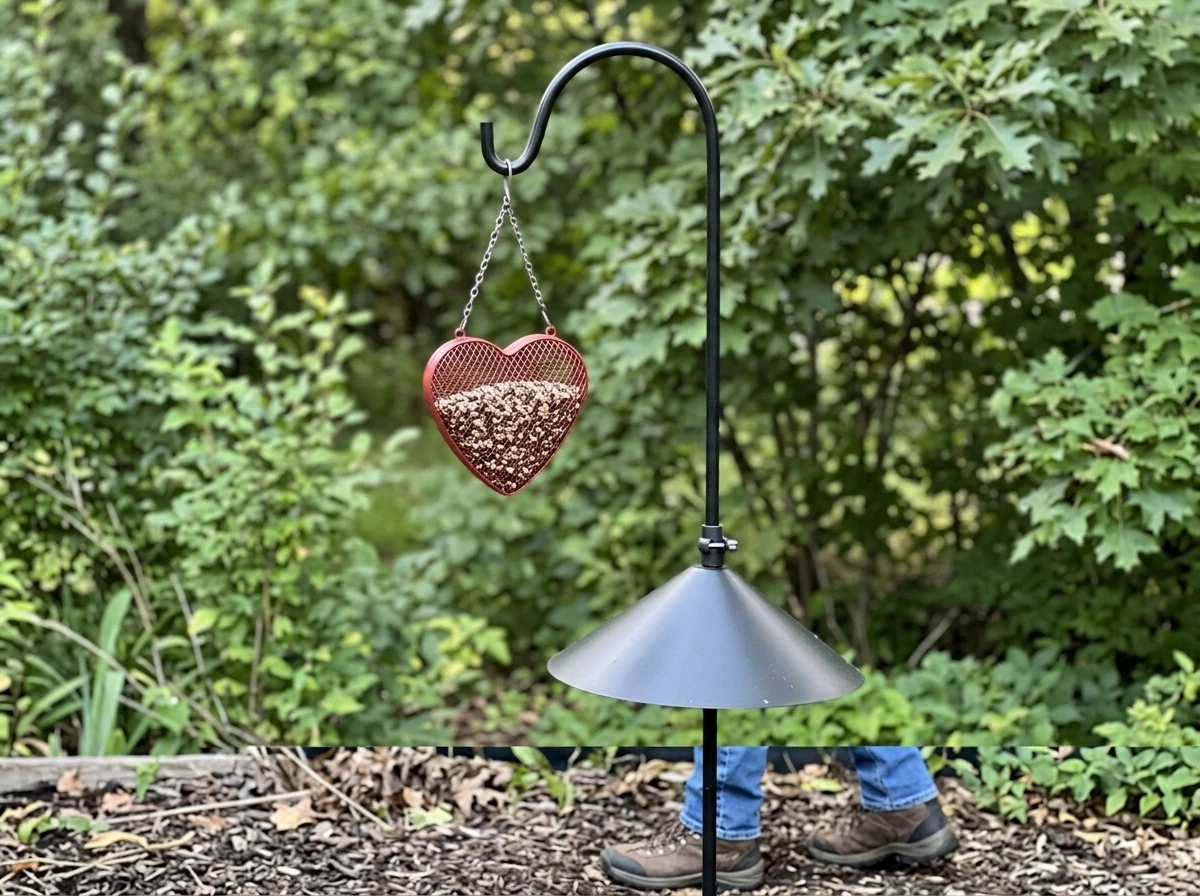
Height matters more than most people expect. Hang your feeder between 5 and 6 feet off the ground. That is comfortable for you to refill without a step stool and high enough to keep most ground-level predators (like cats) from spoiling the feeding area. Too high and birds feel exposed; too low and the feeder becomes an easy target for squirrels jumping from the ground.
Position the feeder within 10 to 15 feet of shrubs or trees so birds have somewhere to retreat if they feel threatened. But keep it at least 10 feet from dense branches that squirrels can use as a launchpad. A spot visible from a window is a bonus for you, and the birds do not mind the audience.
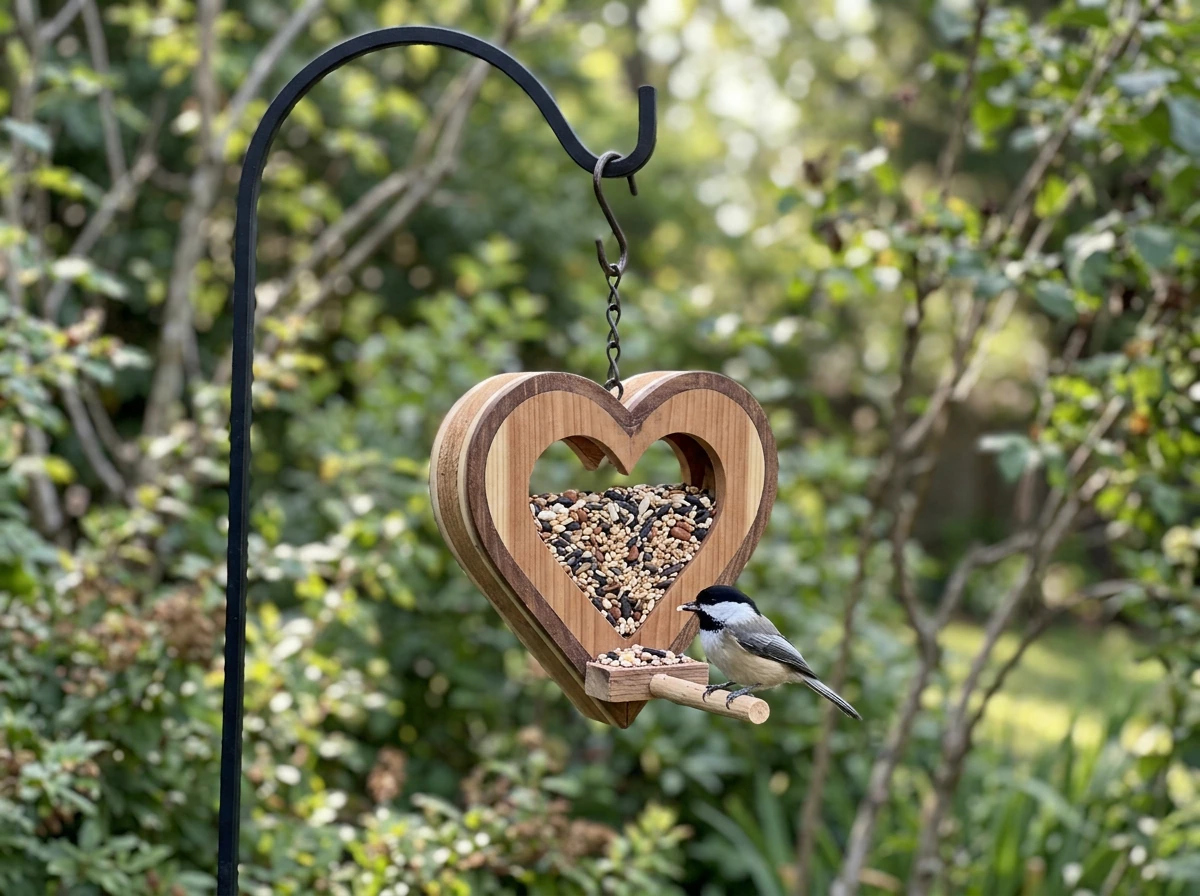
For hanging hardware, a simple S-hook on a shepherd's crook pole is the most stable setup for a tray feeder. If you are hanging from a tree branch, use a loop of coated wire or a sturdy hook screwed into the branch. Avoid thin monofilament or string alone, especially for the wood tray, since it stretches and lets the feeder twist and tilt in the wind. A heart-shaped tray that tilts loses seed quickly.
To keep the feeder level and prevent twisting, use two attachment points instead of one when possible. Drill a small hole near each of the two top lobes of the heart and run a wire or chain between them in a V-shape up to the hanging point. This spreads the weight and keeps the feeder flat even in a breeze. For the pinecone version, a single central hang point is fine because the feeder rotates freely without spilling.
Pest-proofing and preventing common feeding issues
Squirrels are the most common problem with any open tray feeder, and a heart-shaped one is no exception. The best single fix is blank" rel="noopener noreferrer">mounting on a smooth metal pole with a baffle rather than hanging from a branch. If you want a do-it-yourself bird feeder pole, choose a smooth, sturdy metal pole with a baffle setup for the safest squirrel-proof mounting do it yourself bird feeder pole. A cone-shaped baffle placed below the feeder on the pole blocks squirrels from climbing up, and because a smooth metal pole offers no grip, they can not shimmy past it. If you are hanging from a line, a plastic cylinder baffle threaded onto the wire above the feeder works almost as well.
Larger nuisance birds like starlings and grackles are attracted to open platform feeders. One practical workaround: switch to safflower seed instead of sunflower seed. Most nuisance birds dislike safflower, while cardinals and chickadees eat it happily. You can also add a simple wire grid over part of the tray (with openings about 1.5 inches wide) that lets smaller birds reach the seed but blocks larger birds from landing comfortably.
Ants are another issue, especially in summer. A water moat hung above the feeder on the wire or pole creates a barrier ants cannot cross. You can buy these cheaply or make one from a small plastic container with a hole in the lid for the wire to pass through, filled partway with water. Apply a thin ring of petroleum jelly on the pole below the moat as a backup barrier, but avoid getting any on surfaces birds contact directly.
Seed clumping and mold are common problems on flat tray feeders after rain. The drainage holes you drilled during the build help a lot, but also consider only filling the tray with enough seed for two to three days at a time. Overfilling means seed sits wet and starts to mold before birds eat it. This is especially true for the bottom point of the heart shape, where drainage is slower.
Cleaning, maintenance, and troubleshooting over time
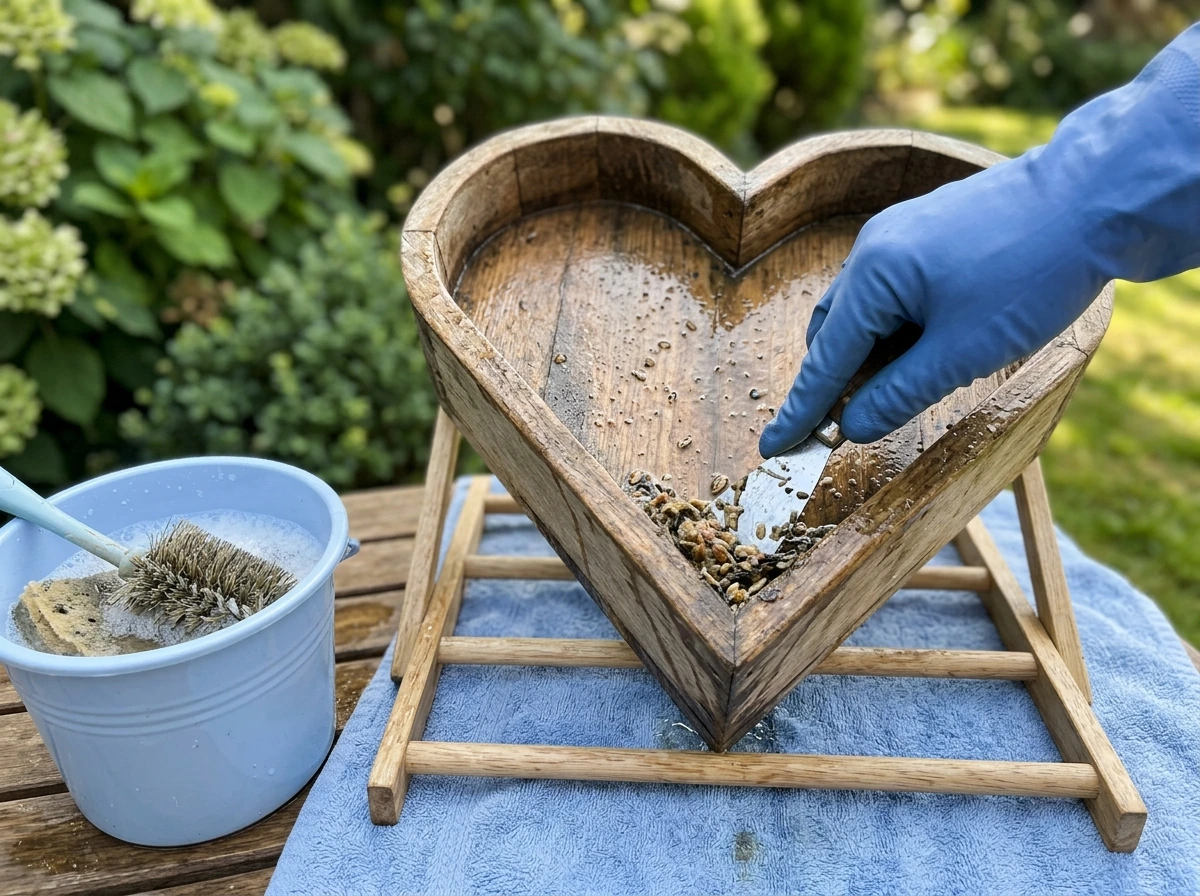
Cleaning is non-negotiable for bird health, and it is the part most backyard feeders skip too long. The standard recommendation from wildlife agencies is to clean seed feeders at least once a month, and more often during wet weather or heavy use. For routine cleaning, scrub the tray with hot water and a stiff brush to remove old seed, hulls, and droppings. For a deeper monthly clean, soak the feeder for 10 minutes in a diluted bleach solution: 1 part liquid chlorine bleach to 9 parts water. Then rinse it thoroughly and let it dry completely before refilling. Do not skip the drying step, since damp seed molds almost immediately.
The heart-shaped tray has one cleaning quirk: the pointed bottom corner tends to collect wet debris. Use a small brush or an old toothbrush to get into that corner during cleaning. If you built in a seed barrier dowel inside the tray, check underneath it for trapped hulls and moisture at each cleaning.
For the pinecone version, there is no deep cleaning process since the feeder itself gets consumed or replaced. When the seed is mostly gone and the pinecone looks bare, re-roll it in peanut butter and seed or swap in fresh pinecones. If you notice the wire frame bending or the pinecones going black or slimy, discard the whole thing and start fresh. That is not a failure, it is just the natural lifecycle of that build.
Weather damage on wood feeders usually shows up as cracking along the grain or warping of the tray. Cedar holds up best, but even cedar will eventually show wear. Inspect the feeder at the start of each spring. If the wood is soft or spongy in any spot, that section has started to rot and the feeder should be rebuilt. If the screw eye at the top is pulling loose due to weathering, fill the hole with a small wooden toothpick and wood glue, let it dry, and re-drive the screw eye into the repaired hole. That buys you another season easily.
Refilling is easier if you keep a scoop or small measuring cup clipped to the feeder pole. For the wood tray, fill it to about half depth rather than heaping it full. That way the seed stays fresh, any rain drains faster, and you are not wasting seed to pests or spoilage. A heart-shaped feeder is a real conversation piece in your yard, but it earns its spot by being a reliable food source, not just a decoration. Get the basics right and the birds will do the rest.
FAQ
How can I prevent the heart-shaped bottom point from becoming a wet, messy seed trap?
If you want the birds to land comfortably, keep the tray surface slightly rough (lightly sand any cut edges) and make sure there are no sharp splinters at the heart point. Also confirm the “heart point” is not too deep, because very narrow points collect wet hulls and slow draining.
Can I paint or seal the wood so it lasts longer in rain?
Yes, but only on the feeder exterior. Use a water-based exterior latex paint on outer faces and edges, and leave the interior feeding surface bare. Painted interior areas can flake or get coated with moisture, which can discourage feeding and make cleaning harder.
What finishes are safest if I want extra weather protection around the feeding area?
For the heart tray, avoid rigid, fully enclosed coatings on the interior. If you add a protective finish, it must be food-safe and applied only where birds do not land or peck, and you still need to keep the tray’s drainage holes clear. A simpler route is leaving the inside uncoated and focusing protection on the exterior.
Why do birds leave a lot of seed on the ground, and how do I reduce waste?
If you see seed waste, it usually means overfilling or seed selection. Fill to about half depth, switch from mixed blends with milo or red millet to black oil sunflower, and consider adding the small barrier dowel near the lower third to reduce clustering at the point.
What should I do if a baffle does not stop squirrels from reaching a tray feeder?
Squirrel baffles work best when they are smooth and properly sized for the pole diameter and placement. If you are hanging from a branch, a baffle is often less effective because squirrels can leap from nearby perches, so move the feeder to a pole if squirrels remain persistent.
How do I keep ants from finding a way onto the feeder over time?
For ants, water moats are most reliable when the moat stays filled and the barrier is sealed so ants cannot bridge the gap. Refill the moat after hot days, and avoid placing petroleum jelly where birds can contact it (stick it only on the pole below the moat).
Should I start with a full refill after cleaning, or is there a better way to restart feeding?
Not immediately. Wait until the feeder is fully dry after any washing or bleach soak, then start with a smaller refill for 24 to 48 hours. Fresh seed can attract birds quickly, but damp residue left behind can cause mold or unpleasant odors and slow visits.
What can cause drainage problems even if I drilled holes in the tray?
If water pools despite drainage holes, you may need more drainage or a slight tilt toward the holes. Make sure the tray is level when hung, then check that the heart point is not blocking holes with wood strips or dowels.
How do I choose hanging hardware so the feeder stays level and does not spill seed?
Tie-down choice matters. Use coated wire or chain between two top lobes so the feeder stays flat and seed does not migrate to one side. Avoid monofilament or string alone, because it stretches and lets the tray twist in wind.
What is the fastest safe way to handle moldy seed on a heart-shaped platform?
If you see mold, stop refilling right away and remove the seed buildup. Scrub the tray, rinse thoroughly, dry completely, and then refill with smaller amounts for two to three days at a time, especially during rainy stretches.
Can I use nyjer on a platform feeder without losing most of the seed?
Nyjer needs containment because it is tiny and drops through openings. Use hardware cloth or mesh inside the tray to catch it, then only drill openings large enough to drain water without allowing nyjer to escape.
How can I deter starlings or grackles if they take over the feeder?
If starlings dominate, safflower is a practical swap because many nuisance birds dislike it. You can also add partial wire grid coverage with about 1.5 inch openings so smaller birds can access seed while larger birds have less landing comfort.
How can I repair a loosening screw eye or attachment so the feeder does not fall?
Yes. If you notice the feeder gradually loosening, inspect at the top attachment point, then tighten and check screw eyes before winter storms. If a hole starts to enlarge, fill with a toothpick and wood glue, let it cure, and re-drive the screw eye to restore a secure hang.
Where is the best placement for a heart-shaped tray feeder if I have cats and squirrels?
Because tray feeders can attract more risk, choose timing and placement. Hang 5 to 6 feet high, keep it within 10 to 15 feet of cover for bird safety, and avoid spots where squirrels can launch from dense branches or jump directly onto the feeder line.