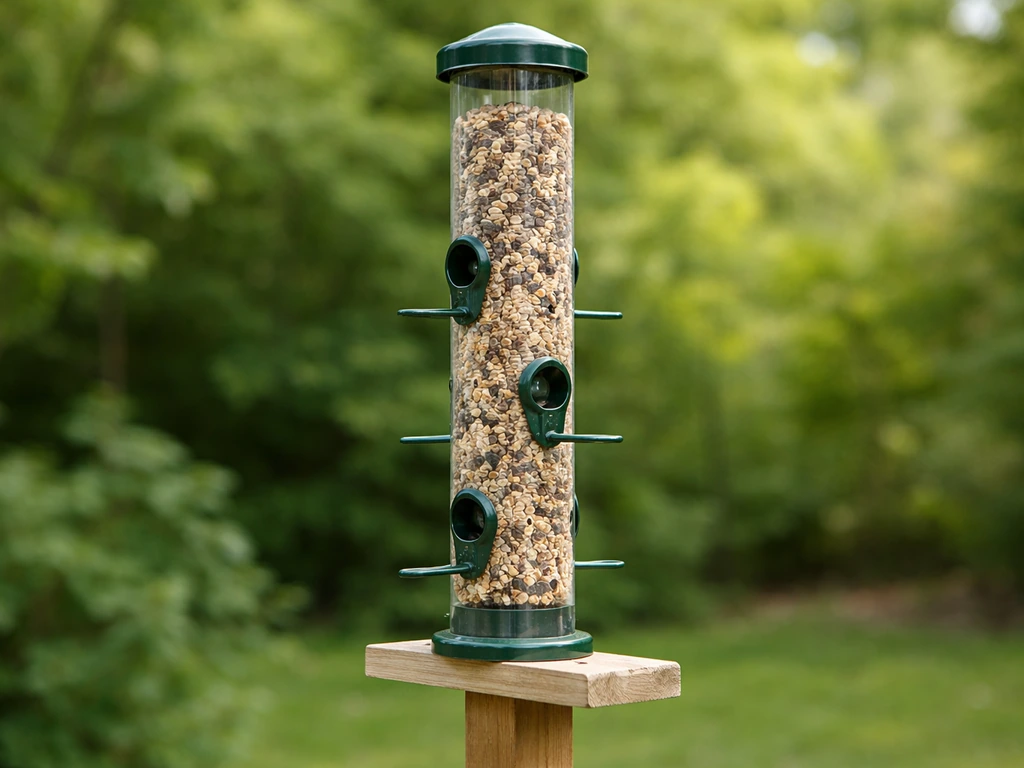
Making a bird feeder at home is one of those projects that sounds fancier than it is. You can build something genuinely functional in under an hour using materials you already have, and birds honestly do not care whether your feeder came from a craft store or a recycled milk jug. What they care about is seed, safety, and a clear flight path. This guide walks you through every major DIY feeder style, with step-by-step instructions, honest material lists, and the placement and maintenance tips that actually make a difference. For a fun twist, you can also learn how to make heart shaped bird feeders that still meet the same safety and placement needs.
How Do You Make Bird Feeders Step by Step DIY Plans
Marcus Brennan
23 Mar 2026
Choosing the right feeder type for your yard
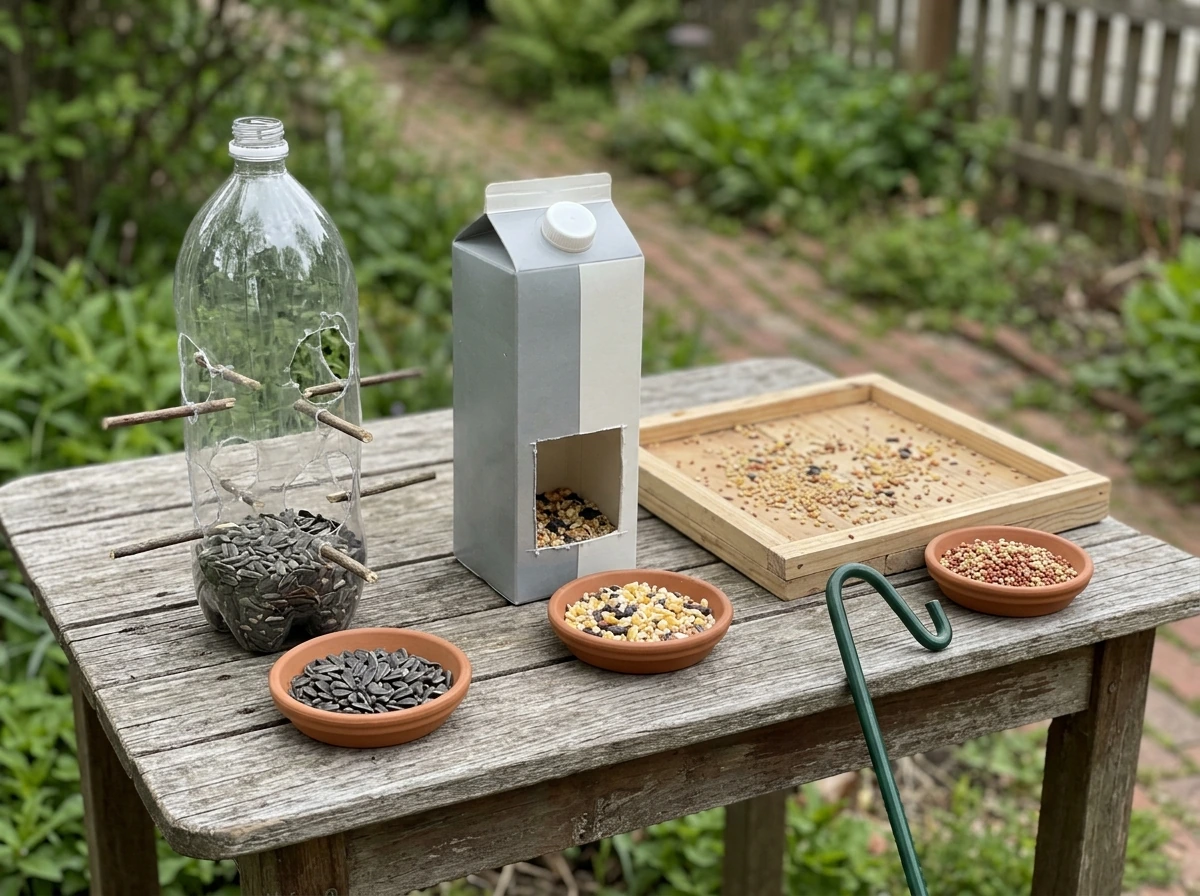
Before you start cutting or drilling anything, it helps to know which style makes sense for your space and the birds you want to attract. Each feeder type works differently and suits different situations.
| Feeder Type | Best For | Skill Level | Materials Needed |
|---|---|---|---|
| Hanging (bottle/jug) | Most backyard species, small yards | Beginner | Plastic bottle or milk jug, string, knife |
| Ground feeder | Doves, sparrows, juncos | Beginner | Shallow tray, wooden board, or old baking pan |
| Flat/platform feeder | Wide variety, good visibility | Beginner–Intermediate | Scrap wood, mesh or screen, screws |
| Log feeder | Woodpeckers, nuthatches, chickadees | Intermediate | Thick branch or log, drill with spade bit, eye hook |
| Natural/edible feeder | All species, minimal tools | Beginner | Pinecone, peanut butter, birdseed, string |
If you are trying this for the first time, start with a hanging bottle feeder or a pinecone feeder. Both take under 20 minutes and use things most people have at home. If you have a little more time and want something sturdier, a flat platform feeder is the most versatile option you can build with basic scrap wood.
Easy homemade bird feeder ideas using household items
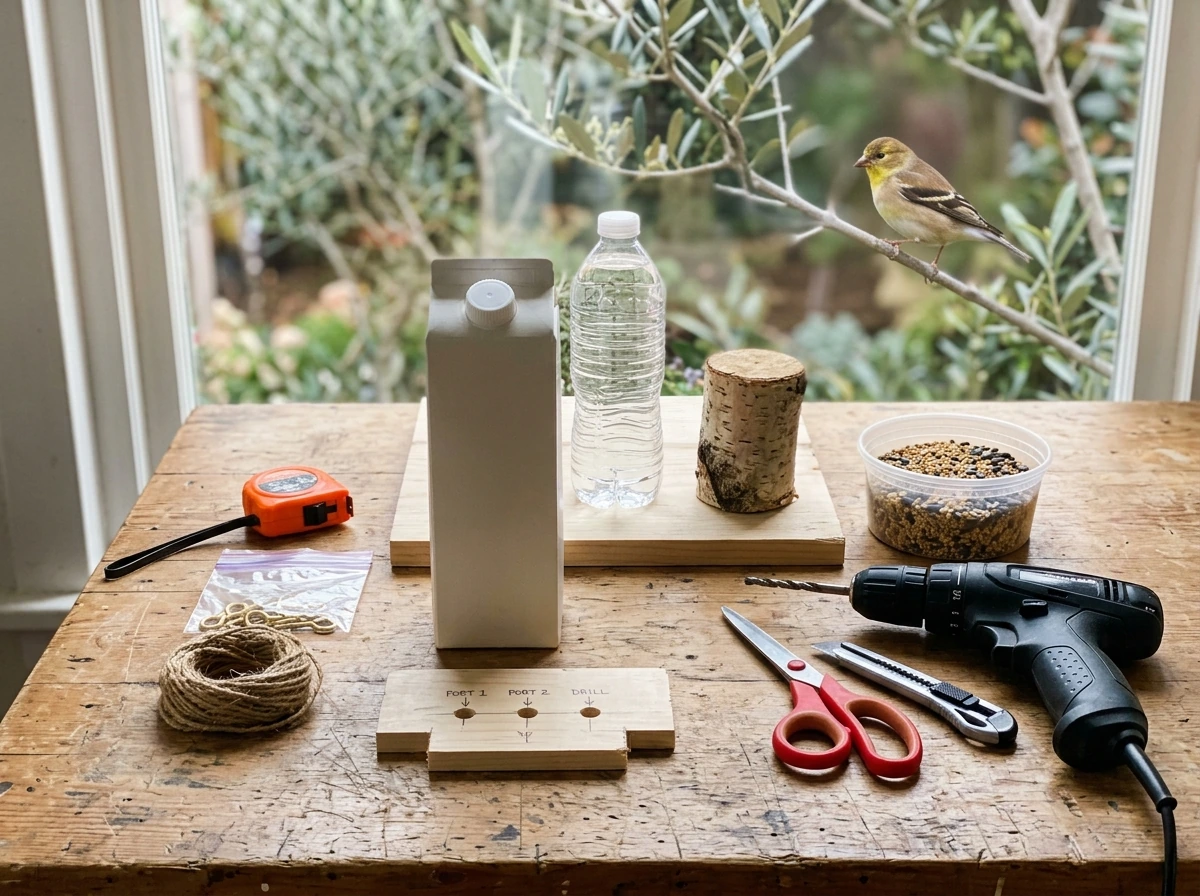
You do not need to buy anything special to get started. Some of the most effective feeders come straight out of the recycling bin or a kitchen drawer. Here are the best household-item builds that actually work.
- Plastic bottle: Cut feeding ports in the sides, thread a wooden spoon or dowel through as a perch, hang with rope. Works for small seeds like millet or nyjer.
- Milk or juice carton: Cut a large window in one side, punch a perch hole below it, and run wire through the top to hang. This is the classic beginner build recommended by Audubon.
- Milk jug (gallon): Similar to the carton build but more weather-resistant. The thick plastic holds up through rain much better than cardboard.
- Toilet paper roll: Coat with peanut butter, roll in birdseed, slide onto a branch or hang with string. Lasts a few days and is fully compostable.
- Shallow baking pan or tray: Set on a stump or fence post and fill with seed. Instant ground or platform feeder with zero construction.
- Orange halves: Skewer on a nail or branch. Attracts orioles and catbirds, especially in spring migration.
The toilet paper roll and orange half options are great if you want to involve kids. They are genuinely functional feeders, not just crafts, and they get replaced so often that hygiene is rarely an issue.
Bird seed basics: what to fill your feeder with
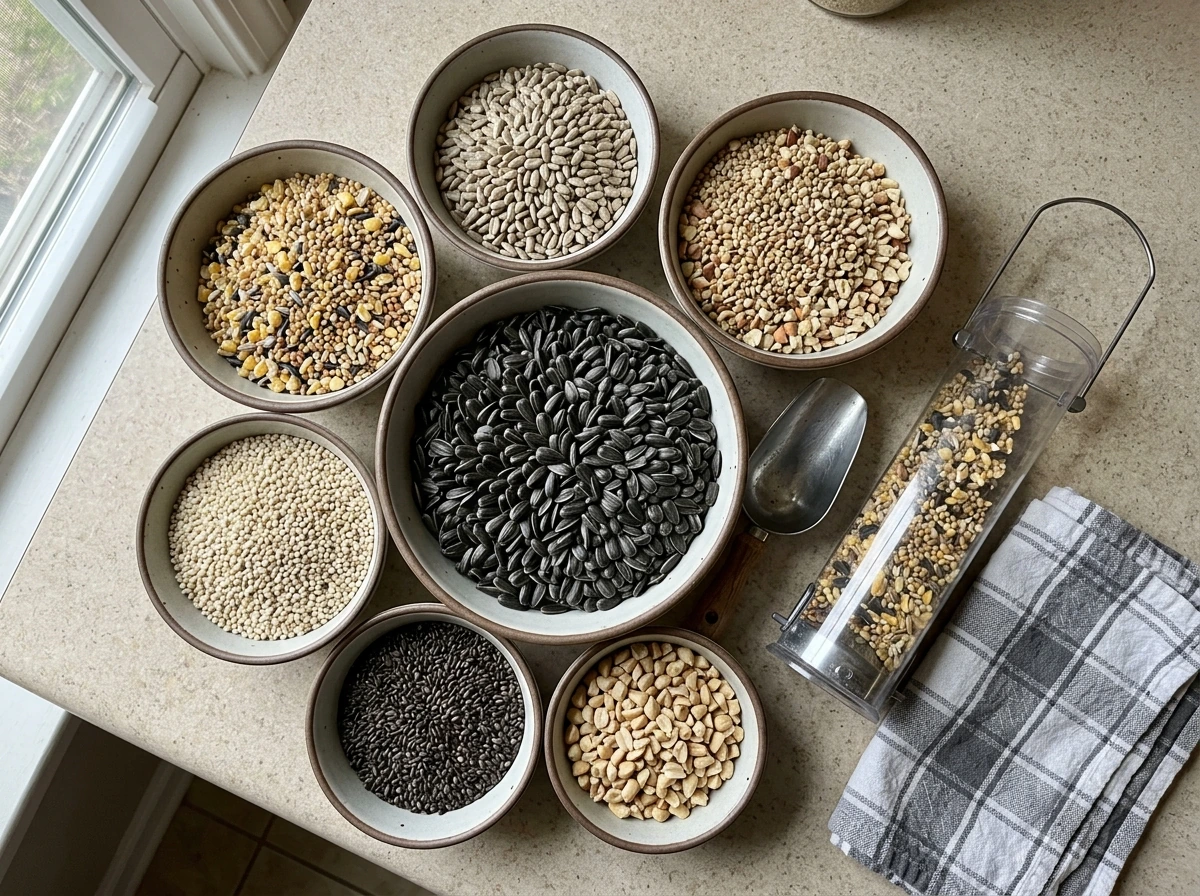
The seed you choose matters more than the feeder design. The wrong seed will sit untouched, get moldy, and discourage birds from returning. Here is what to know before you fill anything up.
Seeds that work for most backyard birds
- Black-oil sunflower seed: The single best all-around choice. Thin shells are easy to crack, and the seed has high fat content. Cardinals, chickadees, finches, and dozens of other species eat it.
- Nyjer (thistle) seed: Best for finches, especially American goldfinches. Requires a feeder with small ports so it does not spill.
- White millet: Attracts ground-feeding birds like juncos, doves, and sparrows. Works well in platform and ground feeders.
- Safflower seed: A solid choice if squirrels are raiding your feeder. Most squirrels dislike it; cardinals and chickadees love it.
- Peanuts (shelled or in-shell): High energy, loved by woodpeckers, blue jays, and nuthatches. Use a mesh feeder or log feeder for in-shell peanuts.
- Avoid cheap mixed seed blends that include milo, oats, or wheat. Most birds toss these out onto the ground, which attracts rats and creates a mess.
How to prepare your feeder before filling it
Before you add seed to a new feeder, rinse it with clean water and let it dry completely. Moisture is what causes seed to clump and mold. For recycled containers, make sure there are no sharp edges where birds could injure their feet or faces. Sand down any rough spots on wood feeders. If you are using a plastic bottle, check the label and remove any residue from whatever was in it before, even water bottles can leave a film.
Fill the feeder only about two-thirds full at first, especially if rain is forecast. Wet seed that sits in a feeder becomes a health hazard for birds surprisingly fast, within two or three days in humid weather. Small, frequent refills beat one big fill-up that sits for a week.
Step-by-step build instructions for each feeder style
Milk carton or juice carton hanging feeder
This build takes about 15 minutes and works best with a half-gallon or gallon carton. Total cost: zero if you have one in the recycling bin.
- Rinse the carton thoroughly and let it dry.
- On one side, draw a large rectangular opening starting about 2 to 3 inches from the bottom (this lip holds the seed in). Cut out the rectangle using scissors or a box cutter, leaving that bottom lip intact.
- About 1 inch below the opening, punch a small hole through both sides of the carton and slide a thin stick, dowel, or pencil through as a perch. Secure it with a dab of waterproof glue if needed.
- Near the top of the carton (just below the spout or cap), punch two holes on opposite sides and thread wire, twine, or a zip tie through to create a hanging loop.
- Fill with black-oil sunflower seed or a mix up to just below the bottom edge of the opening.
- Hang at about 5 feet from the ground, away from walls and close to natural cover like shrubs or trees.
Plastic bottle feeder
A 1 or 2-liter soda bottle works well here. One note from experience: the very bottom of some plastic bottles is extremely thick and hard to cut cleanly, so do your cutting on the sides, not the base.
- Clean and dry the bottle completely.
- Using a sharp knife or heated nail, make two small holes on opposite sides of the bottle about 4 inches from the bottom, sized to fit a wooden spoon handle or sturdy dowel. Push the dowel through both holes so it sticks out a few inches on each side as a perch.
- About 1 inch above each dowel hole, cut a small feeding port, roughly the size of a quarter. Birds will reach in to grab seed.
- If you want two feeding stations, repeat the dowel and port at a different height, rotated 90 degrees.
- Poke a small drainage hole in the very bottom so water does not pool inside.
- Screw the cap back on, thread strong wire or cord under the cap threads or around the bottle neck, and hang from a branch or hook.
- Fill through the top (remove cap), add seed, and replace the cap.
Flat platform feeder
This is the most versatile feeder you can build. It attracts the widest variety of birds and is easy to clean. You need a piece of untreated wood (cedar or pine work well) about 12 by 16 inches, four short pieces of 1-by-2 lumber for the border, a piece of mesh screen or hardware cloth, and some screws.
- Cut your base board to size (12x16 inches is a good starting point).
- Attach the four border strips around the edges of the base using wood glue and screws, leaving small gaps in the corners for drainage.
- Staple a piece of mesh or hardware cloth to the bottom of the base inside the border. This allows air circulation and prevents seed from sitting in water.
- Drill two holes near two corners of the platform to hang it with eye hooks and chain, or mount it on a post by attaching a central block underneath.
- Sand all edges smooth and let any glue cure before filling.
- Fill with a mix of sunflower, millet, and safflower depending on which birds you want to attract.
Log feeder (for woodpeckers and nuthatches)
This one is best if you have access to a thick branch or small log, at least 3 to 4 inches in diameter. It is the feeder woodpeckers and nuthatches go absolutely wild for.
- Find a dry, solid log or branch, about 12 to 18 inches long.
- Screw a large eye hook into one end to hang the log vertically.
- Using a drill with a 1 to 1.5-inch spade bit, drill several holes 1 to 1.5 inches deep into the sides of the log, staggered around it. Space them 2 to 3 inches apart.
- Below each hole, hammer in a short screw or small wooden peg that sticks out about half an inch to act as a perch (optional but helpful for smaller birds).
- Pack each hole with suet, peanut butter mixed with cornmeal, or a commercial suet blend. Do not use pure peanut butter in hot weather as it can stick to birds' beaks.
- Hang vertically from a branch or hook.
Ground feeder tray
Ground feeders are genuinely underrated. Doves, sparrows, towhees, and juncos feed almost exclusively from the ground and ignore hanging feeders entirely. This is the simplest build of all.
- Find a shallow tray, an old baking pan, a terracotta saucer, or a piece of flat wood with a low lip.
- If using wood, drill a few small drainage holes in the bottom.
- Set the tray directly on the ground or raise it a few inches on short legs or bricks to improve drainage and make it harder for ground predators to approach unnoticed.
- Fill with white millet, cracked corn, or sunflower chips (hulled sunflower seeds make less mess).
- Place near low shrubs so ground-feeding birds have quick cover if a hawk appears, but leave enough open space around it that cats cannot creep up unseen.
Edible and natural feeders: pinecones and fat mixes
Natural feeders are the fastest builds and often the most satisfying ones. They require almost no tools and disappear without any cleanup because birds eat the whole thing.
Pinecone feeder
- Collect a large, open pinecone (the bigger the better, as it holds more filling).
- Tie a 12-inch length of twine or jute around the top of the pinecone between the scales.
- Mix peanut butter with an equal part of cornmeal or oats to create a stiffer mixture that holds its shape better in warm weather.
- Press the mixture firmly into all the gaps and scales of the pinecone using a spoon or your fingers.
- Roll the coated pinecone in a shallow dish of birdseed, pressing gently so the seed sticks.
- Hang from a branch using the twine. Done. Birds will find it within a day or two.
Suet or fat and seed cake
Homemade suet cakes are winter gold for insect-eating birds. You can make them without any rendering if you use vegetable shortening as the fat base, though real beef suet works better in cold weather.
- Melt 1 cup of lard, vegetable shortening, or beef suet in a saucepan over low heat.
- Remove from heat and stir in 1 cup of peanut butter until combined.
- Add 3 cups of mixed dry ingredients: birdseed, oats, cornmeal, dried fruit, or crushed peanuts.
- Pour into a muffin tin, a square container lined with parchment, or a mesh onion bag for a ready-made suet holder.
- Refrigerate or freeze until firm, at least 2 hours.
- Hang in a mesh bag, a log feeder hole, or a wire suet cage. Keep in the freezer until ready to use, especially in summer.
Avoid using fats that have been cooked with meat, spices, or seasonings. Plain, rendered fat is safe. Anything with salt, onion, or garlic is not. Also skip adding raisins or grapes, which are toxic to many animals, including some birds.
Where to hang or place your feeder
Placement makes or breaks how quickly birds find and use a feeder. The most common mistake is hanging it too far from cover. Birds, especially small ones, are cautious about visiting exposed spots where they feel vulnerable to predators.
- Hang feeders roughly 5 feet off the ground. High enough to be out of casual reach from cats, low enough to refill easily.
- Position within 10 to 15 feet of shrubs, trees, or dense plantings. This gives birds a safe perch to survey the feeder before dropping in, and a quick escape route.
- Keep feeders either very close to windows (within 3 feet) or well away from them (more than 10 feet). Close feeders mean a bird hitting the glass does not have enough speed to cause injury. Far feeders give birds time to see the glass and avoid it.
- Avoid placing directly under large trees where squirrels can leap down. A 10-foot clear zone from any branch above or to the side helps significantly.
- In hot climates, morning sun and afternoon shade keeps seed from overheating and spoiling quickly.
- For ground feeders, leave at least 3 feet of open space around the tray so birds can see approaching predators.
If birds are not showing up within a week or two, try moving the feeder a few feet closer to cover. Sometimes a very small adjustment makes the difference between a feeder that gets ignored and one that is constantly busy.
How to attract birds faster
- Add a water source nearby. A simple shallow dish of clean water will draw birds to the area faster than seed alone, especially in dry summer months.
- Use high-quality seed without fillers. Birds learn quickly which feeders are worth visiting.
- Be patient. New feeders in areas without existing bird traffic can take two to four weeks to be discovered. Existing bird-friendly yards may see visitors within hours.
- Place a small amount of seed on top of or around the feeder at first to help birds notice it.
- Avoid using pesticides in the yard near the feeder. Many birds rely on insects as a protein source and will avoid chemically treated areas.
Keeping your feeder clean and working well
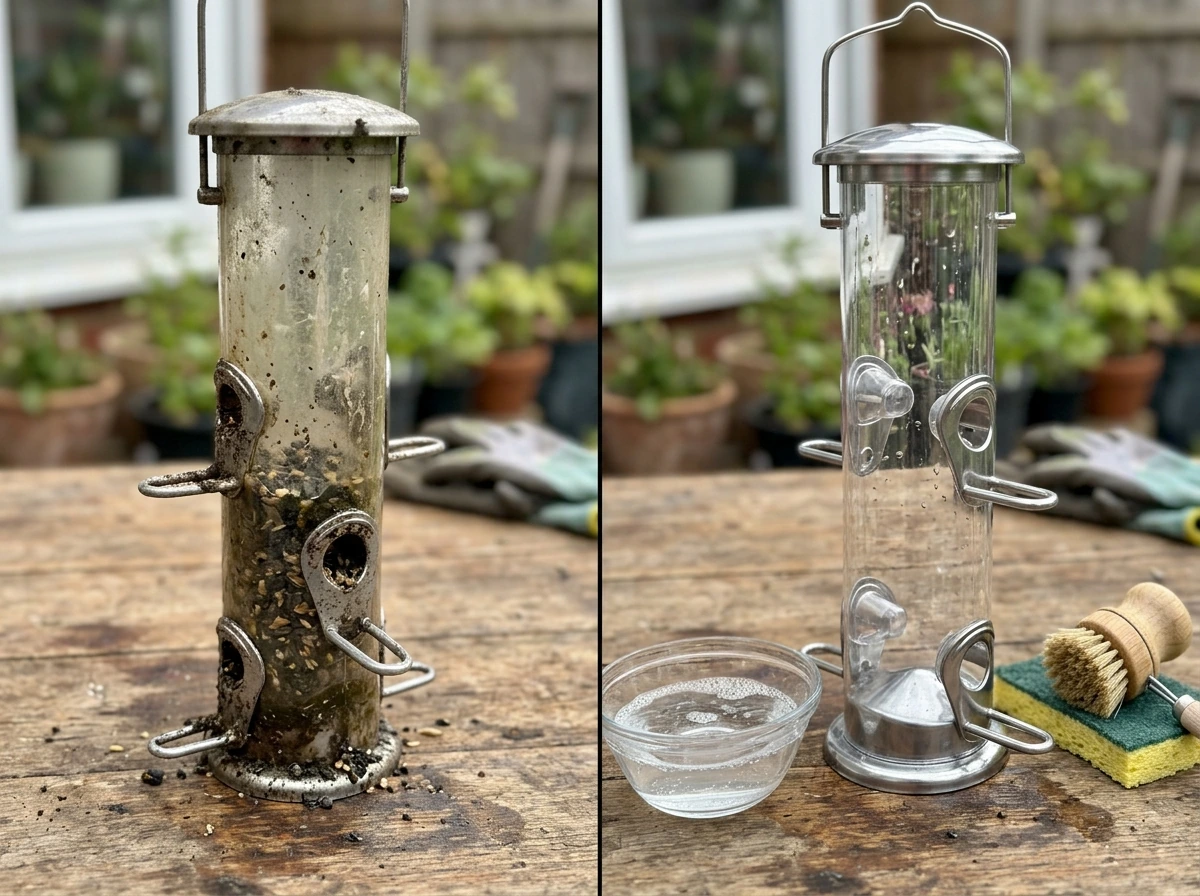
A dirty feeder is genuinely dangerous for birds. Mold, bacteria, and wet seed can cause illness that spreads through a local bird population. This is not about being precious; it is a real issue that is easy to prevent with basic maintenance. All About Birds recommends cleaning feeders with a dilute bleach solution of no more than 1 part bleach to 9 parts water.
Cleaning routine
- Empty and rinse feeders every one to two weeks in dry weather, more often in heat or rain.
- For a deeper clean, soak in a solution of one part white vinegar to nine parts water for about 10 minutes, then scrub with a bottle brush and rinse thoroughly.
- Let the feeder dry completely before refilling. Even a damp feeder will cause seed to clump and mold within days.
- Discard any seed that smells sour, looks clumped, or has visible mold. Do not try to save it.
- Rake or clear the ground under feeders regularly. Discarded hulls and wet seed on the ground attract rodents and can harbor disease.
Troubleshooting common problems
Seed going untouched is usually one of two problems: wrong seed for local birds, or location that feels unsafe to them. Try switching to blank" rel="noopener noreferrer">plain black-oil sunflower seed first, since it works for the widest range of species, and move the feeder a few feet closer to cover.
Seed spoiling too quickly usually means the feeder is holding too much. Fill smaller amounts more often. In warm weather, seed can go bad in as little as three to five days. A smaller feeder that gets emptied and refilled frequently is healthier than a large feeder that sits full for two weeks.
Basic pest-proofing
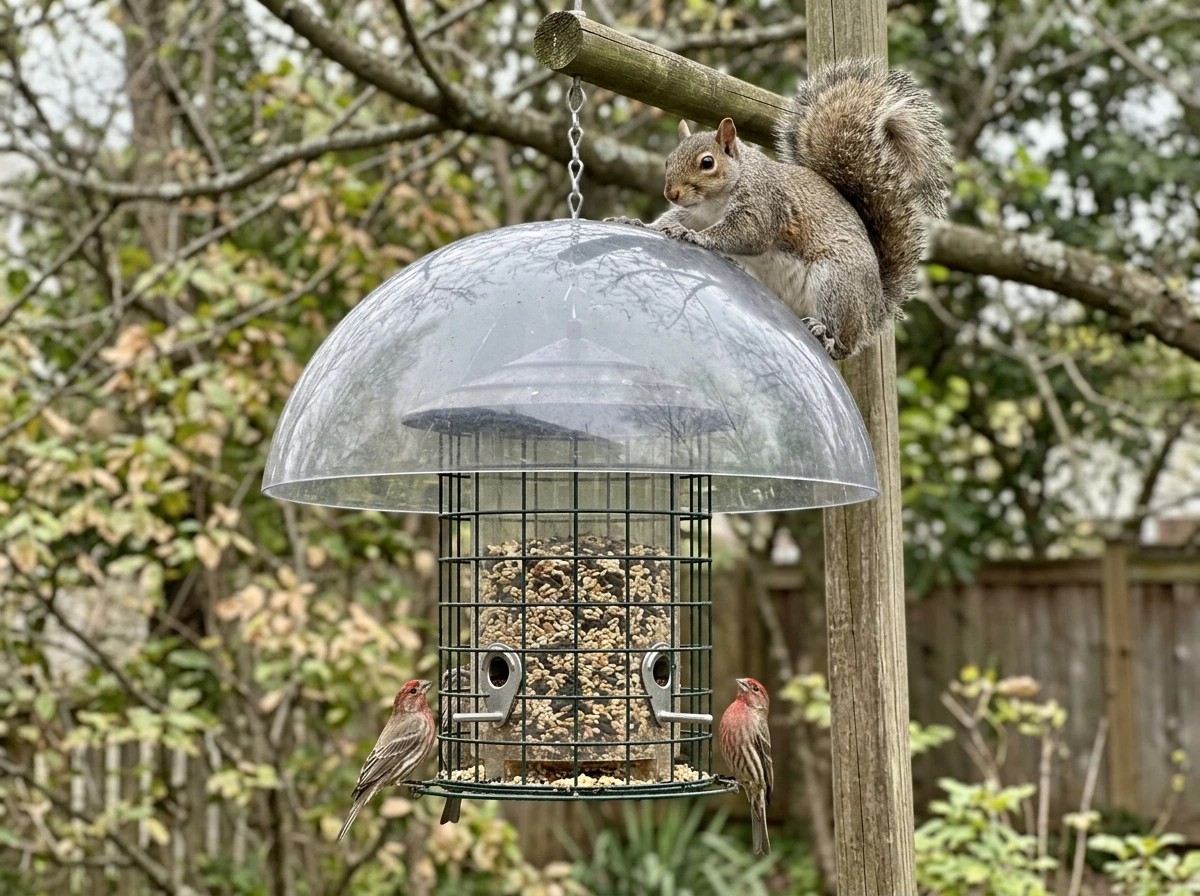
Squirrels, raccoons, and rats are the most common feeder problems. Here is what actually helps:
- Use a squirrel baffle: a dome-shaped guard mounted above a hanging feeder or below a pole-mounted feeder. This physically blocks squirrels from reaching the seed.
- Switch to safflower seed: most squirrels do not like it, and cardinals, chickadees, and other popular birds do.
- Avoid hanging feeders from tree branches. A dedicated pole with a baffle is far more squirrel-resistant.
- Do not use trays that catch excess seed below the feeder in rodent-prone areas. Clean up fallen seed daily instead.
- For raccoons: take feeders in at night or use feeders with weight-sensitive perches that close under heavier animals.
- For sparrow or starling dominance at feeders: switch to feeders with shorter perches or upside-down suet feeders that clinging birds use more easily than bully species.
Nobody gets everything right on the first try. Squirrels will find a way through your first setup, seed will mold once before you figure out the right fill amount, and some feeders will attract nothing for two weeks then suddenly be the most popular spot in the yard. That is just how it goes.
The builds here are cheap or free enough that you can experiment without stressing about it, and each attempt teaches you something about your specific yard and local birds. Start with whichever do it yourself bird feeder kits pole uses materials you already have, get it outside today, and adjust from there. Start with whichever do it yourself bird feeder kits pole uses materials you already have, get it outside today, and adjust from there.
If you want a sturdy, simple option, a do it yourself bird feeder pole is a great alternative to hanging setups.
FAQ
How do you stop squirrels from eating all the seed without ruining the feeder for birds?
Use a feeder location and design that makes access harder for ground-feeders and climbers. Start by hanging it closer to cover for birds but not on a line they can launch from (avoid placing it next to fences or overhanging branches). If you can, add a simple squirrel baffle above the feeder so squirrels cannot climb past it, and offer smaller refills more often so seed does not sit long enough for aggressive takeovers.
What seed should I use when I do not know which birds visit my yard?
Begin with plain black-oil sunflower seed because it typically attracts the broadest mix of backyard birds. If you later want to target finches, add a small separate feeder with nyjer, but keep it away from general mixed seed to reduce wastage and mold risk. If you see no interest after a week, first adjust placement closer to cover, then switch seed.
How often should I clean a homemade bird feeder?
Rinse and scrub on a regular schedule, not just when it looks dirty. A good rule is to clean every 1 to 2 weeks in mild weather and after heavy rain or noticeable mold. For quick cleaning between deeper cleans, empty the feeder, wash with hot water, and let it dry completely before refilling to prevent clumping.
Can I use rainwater or leave seed in the feeder if the weather is wet?
It is better not to. Even if the feeder itself looks intact, wet seed can spoil quickly and can cause bird illness. In forecasted humid or rainy stretches, fill only small amounts (or temporarily pause refilling) so the seed stays dry and is consumed fast.
Is it safe to use bird feeders during winter if I do not have experience with suet?
Yes, but use plain, unscented fat and keep the feeder protected from rain and direct heat. Homemade suet cakes set up differently depending on your fat and temperature, so plan for frequent checking at first. In warm spells, remove or reduce suet availability because it can soften and spoil faster.
What should I do if birds start avoiding the feeder after I changed something?
Undo the change first. Common culprits are a new seed type, a stronger scent from residue on reused containers, or rough edges introduced during repairs. Empty the feeder, rinse thoroughly, let it dry, then return to your earlier seed choice. If placement has changed, move it back a few feet toward cover and ensure there is a clear flight path.
How do you make sure a recycled-container feeder is safe for birds?
Before filling, inspect for sharp plastic edges, residues, and sticky residue from labels or prior contents. Sand rough areas on wood and smooth any cutting burrs on plastic. For bottles or cartons, remove any label residue and rinse well, then fully dry so moisture does not start mold inside seams.
Can I make bird feeders for both ground-feeding and hanging birds at the same time?
Yes, but separate the feeding areas if possible. Ground feeders tend to attract doves, juncos, and sparrows, while many smaller birds prefer being off the ground with cover nearby. If you place both, ensure the ground feeder is not under the hanging feeder where droppings and wet seed can fall and increase mess and spoilage.
Why do I need to let seed and feeder parts dry completely before refilling?
Because moisture trapped in seams and inside the container can cause clumping and mold growth, even if the seed seems dry on the outside. Drying completely also helps prevent fermentation odors that discourage birds. After washing or rinsing, give the feeder time to air dry fully before adding any seed.
My feeder attracts nothing. What is the best troubleshooting order?
Start with the basics in this order: confirm the feeder is clean and dry, use a reliable general seed (like black-oil sunflower), place it closer to cover while still providing an open approach path, and then wait about a week or two. If you still see no activity, switch seed once before making multiple changes at the same time, since too many variables can reset bird habits.
Next Article
How to Make a Tube Bird Feeder Step by Step
Step-by-step how to make a tube bird feeder with materials, safe mounting, maintenance, and fixes for leaks and clogs.