A magic halo for a bird feeder is a ring or hoop suspended around the feeder with hanging wires or strands dropping down from it. If you want a different style of DIY feeding setup, you can also look up how to make a sugar bird feeder as an adjacent option. If you are also looking for a hands-on feeder project, you can apply the same DIY mindset when you learn how to make a macrame bird feeder.
How to Make a Magic Halo for Bird Feeders
Marcus Brennan
5 May 2026
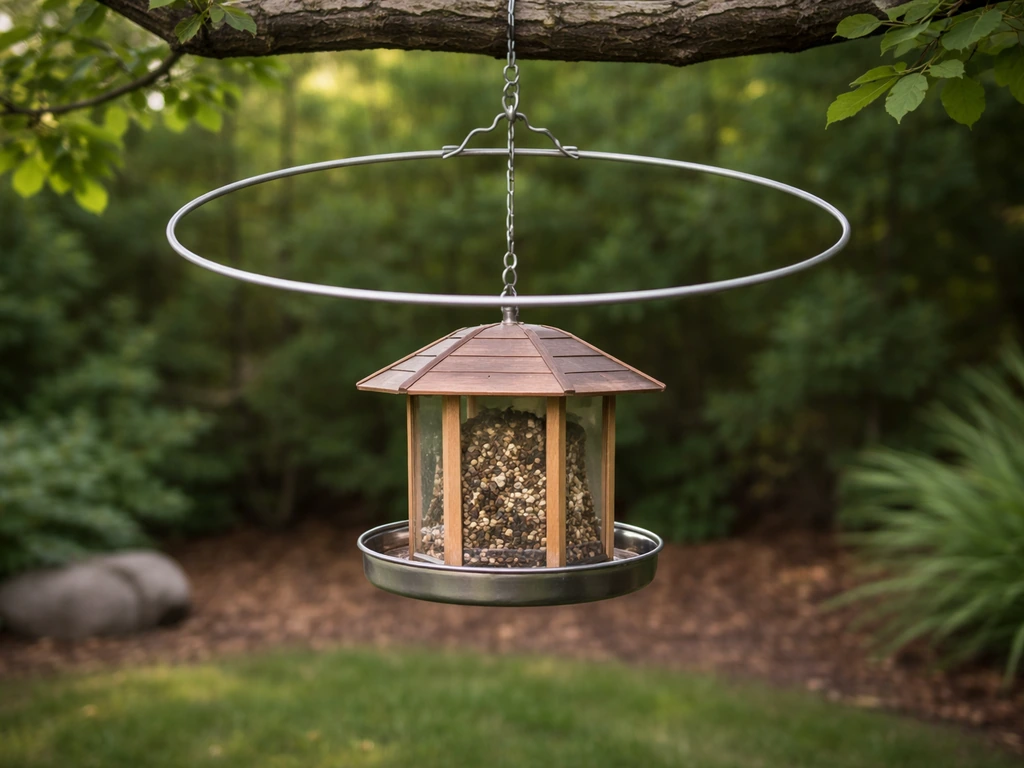
The whole point is that birds comfortable flying through or around a defined "frame" will do so happily, while House Sparrows and other pest birds find the enclosed space unsettling and stay away. The Magic Halo concept was developed based on University of Nebraska research intended to deter invasive House Sparrows from hanging bird feeders University of Nebraska research used to develop the Magic Halo.
You can build one yourself in about 30 minutes using wire, a hula hoop or stiff garden wire, and some basic hardware, and it genuinely works better the more completely it surrounds your feeder.
What a magic halo actually is (and why it works)
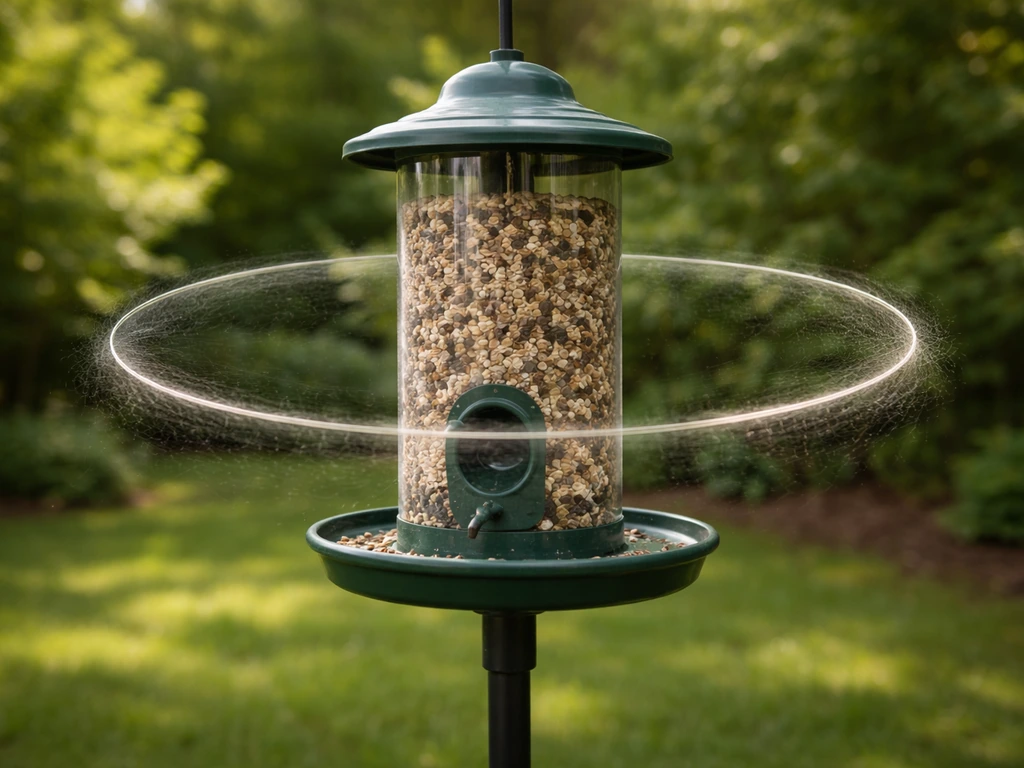
The magic halo concept comes from bird feeder management research focused on deterring invasive House Sparrows without blocking the birds you actually want at your feeder. The halo is essentially a circular ring positioned above and around the feeder, with vertical lines or wires hanging down from it to form a loose cage effect. House Sparrows are wary of entering enclosed or framed spaces, so they avoid feeders set inside the halo. Most other feeder birds, like chickadees, nuthatches, and finches, do not share that hesitation and will fly right through the strands to reach the seed.
The key performance rule is that the more contained your feeder is inside the halo, the more effective the deterrence becomes. That means you want the ring positioned so the feeder sits well within the plane of the hanging strands, not dangling below them. If your feeder hangs too low on a long tether, the bottom of the feeder falls outside the halo zone and the deterrent effect drops off significantly. Keep that principle in mind as you build and hang the system.
Materials and tools you'll need
Most of what you need is probably already in your garage or recycling bin. Here is what works well and some free or cheap alternatives for each item. To specifically attract hummingbirds, choose a nectar feeder and set it up so the birds have an unobstructed feeding area near your perch how to make a bird feeder for hummingbirds.
| Component | Best Option | Free/Recycled Alternative |
|---|---|---|
| Ring/hoop | 14–18 inch diameter wire wreath form or embroidery hoop | Stiff garden wire or old hula hoop section bent into a circle |
| Vertical strands | Thin galvanized wire (22–24 gauge) | Fishing line (10–15 lb monofilament) or jute twine |
| Main hanging line | Braided nylon cord or steel-coated cable | Paracord or thick garden twine doubled up |
| Attachment clips | Small S-hooks or carabiner clips | Zip ties or wire loops twisted by hand |
| Feeder hook/connection | Swivel hook to reduce spin | A simple bent wire hook works fine |
| Tools | Wire cutters, pliers, measuring tape | Scissors work for twine; any sturdy pliers will do |
For the ring itself, a 14 to 18 inch wreath form from a craft store costs about $3 to $5 and is already the right shape. If you are going fully free, cut a length of stiff 14-gauge garden wire about 50 inches long and bend it into a circle, overlapping the ends by 3 inches and twisting them tight with pliers. Either approach gives you a sturdy loop that will hold its shape outdoors through multiple seasons.
Step-by-step: building the magic halo
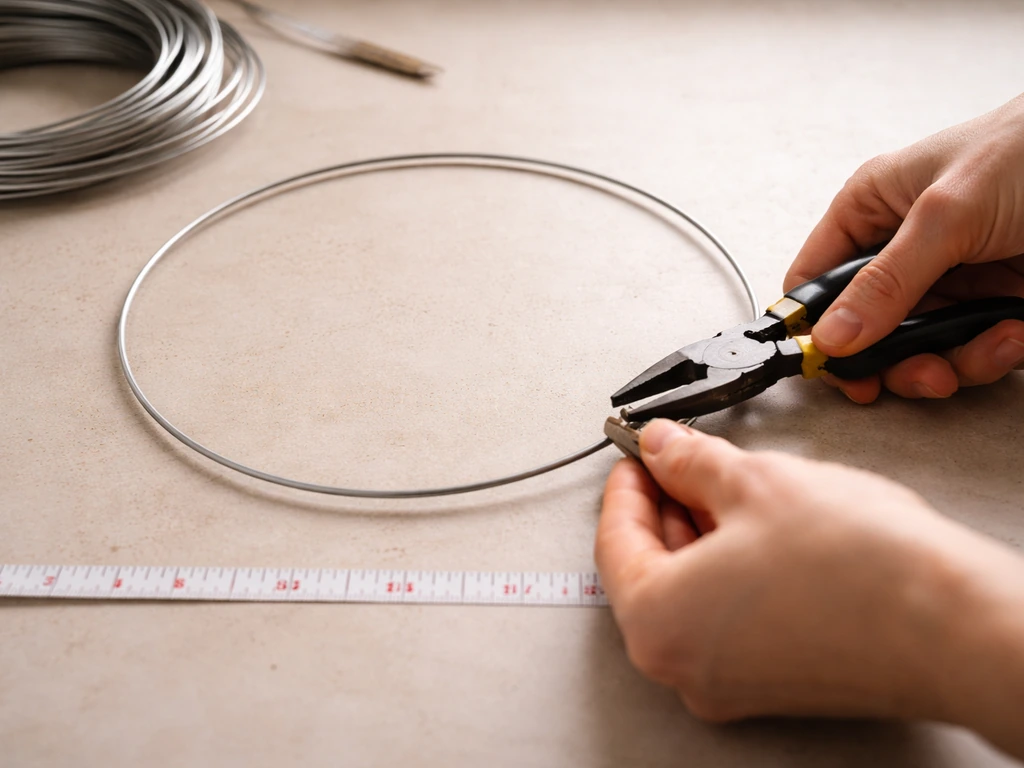
The whole build should take you 20 to 40 minutes depending on how fussy you want to be with spacing. Here is the process I use.
- Form or confirm your ring. If you are bending wire, shape it into a circle roughly 14 to 18 inches in diameter. For most standard tube or hopper feeders, 16 inches works well. Twist the ends together firmly so the joint will not pop open.
- Mark even strand positions around the ring. You want 8 to 12 vertical strands spaced evenly around the hoop. With 8 strands on a 16-inch ring, that is roughly every 6 inches of circumference. Use a marker or small piece of tape to mark each attachment point.
- Cut your vertical strands. Each strand should be long enough to hang from the ring down past the bottom of your feeder with about 2 inches to spare. For a typical 12-inch tube feeder, cut strands about 16 to 18 inches long. Cut all strands the same length so the bottom of the halo hangs level.
- Attach strands to the ring. Wrap the top of each strand around the ring wire twice and twist or knot it tight. If you are using fishing line, a double half-hitch knot holds well. Space them evenly as you go around.
- Add a bottom connector (optional but helpful). Thread a second smaller wire loop or a loose ring through the bottom of all the strands to keep them from splaying outward in wind. This is not strictly required but it makes the halo much more stable.
- Attach your main hanging line to the ring. Use three or four short wire loops or S-hooks spaced evenly around the ring, all connecting to a central point above, OR tie three equally spaced cords up to a central knot or ring that becomes your single hanging point. Either method keeps the halo level.
- Connect the feeder to hang inside the halo. The feeder should hang from the same central point, or from the ring itself, on a short tether so it sits centered and high within the strand zone. Shorten your tether if needed so the bottom of the feeder stays inside the plane of the strands.
That is really it. The finished halo looks like a lampshade or loose cage around the feeder. It does not need to be airtight or perfectly geometric. What matters is that strands surround the feeder on all sides and the feeder hangs up inside the ring rather than below it. If you are also building other feeder types, you can follow the guidance in how to make a nectar bird feeder nz for a good NZ-friendly setup. What a grape jelly bird feeder guide can help too how to make a grape jelly bird feeder.
How to attach and hang the halo safely
A halo and feeder together have more surface area than a bare feeder, which means more wind resistance and more torque on your hanging hardware. Before you put it up, check that your hook, branch, or mounting point can handle at least 5 to 10 pounds of dynamic load (swinging, not just static weight). A loose screw hook or a thin nail is not enough.
Hang the whole system as high as you safely can while still being able to reach it for cleaning and refilling. The user guidance for magic halos specifically recommends hanging the feeder as high and close to the hanger as possible, so the feeder stays well within the halo's deterrent zone rather than drooping below it. If you are using a shepherd's hook pole, make sure it is driven at least 12 inches into the ground and has no wobble before you hang anything from it.
A swivel hook between your hanging cord and the fixed attachment point is worth the $2 to $3 it costs. Without one, wind will spin the halo repeatedly until your cord frays or kinks. Swivels are available at any hardware or fishing supply store.
If you also want squirrel protection below the feeder, you can add a baffle to the pole below the halo. Standard dome baffles should be positioned at least 4 feet above the ground to stop squirrels from jumping past them from below. The halo itself deters pest birds, but it is not a physical barrier to climbing mammals the way a baffle is. Combining both gives you the strongest overall protection.
Placement and getting birds comfortable with it
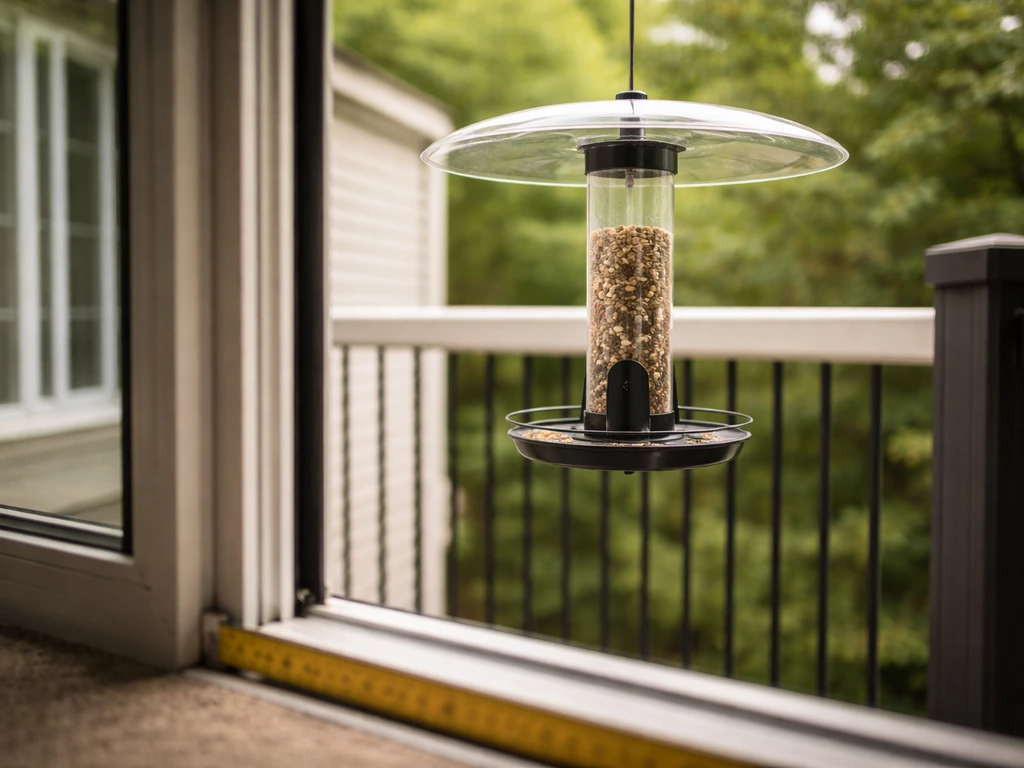
Where you place the feeder and halo matters as much as how you build it. For window safety, position the feeder either closer than 3 feet from a window or farther than 30 feet away. The zone between those distances is where birds build up enough speed to injure themselves in a collision. Closer than 3 feet, they cannot get going fast enough to do real damage.
Keep the feeder at least 7 to 8 feet away from fences, deck railings, or tree branches that squirrels can use as a launch point. Even with a baffle and a halo, a squirrel that can jump directly onto the feeder from a nearby structure will eventually figure that out.
Birds may take a few days to a week to approach a new setup, especially if the halo is unfamiliar. That is completely normal. A few things speed up acceptance: place the feeder near existing cover like a shrub or small tree so birds have a safe perch to assess it from, use seed you know local birds already visit (black oil sunflower seed is reliably attractive to the widest range of species), and avoid moving the feeder around during that first week. Once one or two birds commit, others follow quickly.
If you are interested in attracting specific species beyond seed-eaters, similar DIY feeding setups work for nectar-focused hummingbird feeders and fruit-based setups like grape jelly or apple feeders, though those need their own feeder designs and do not require a halo deterrent in the same way.
Maintenance, cleaning, and troubleshooting
Cleaning the feeder regularly
Clean your feeder every two weeks as a standard schedule. The method that works consistently is a solution of 1 part bleach to 9 parts water. Disassemble the feeder, scrub all surfaces, let it soak for about 10 minutes, then rinse it thoroughly and let it air dry completely before refilling. Do not rush the drying step. Wet seed molds fast and sick birds can spread disease at a dirty feeder quickly. The halo itself (wire or fishing line) just needs a rinse and a check for corrosion or fraying while you do the feeder cleaning.
Weatherproofing the halo
Galvanized wire holds up well for two to three seasons without treatment. If you used regular steel wire, hit it with a coat of rust-resistant spray paint before hanging. Fishing line is practically maintenance-free outdoors. Jute twine, on the other hand, will weaken and rot within one season in wet weather, so inspect it monthly and replace strands that look frayed or discolored. Check all knots and attachment points every couple of months, especially after heavy wind or ice storms.
Troubleshooting common problems
- Feeder still getting hit by House Sparrows: The feeder is probably hanging too low on its tether and dropping below the halo's strand zone. Shorten the connection between the feeder and the ring so the feeder sits higher, well within the strands.
- Halo spinning constantly in wind: Add a swivel hook at the top attachment point and consider weighting the bottom ring slightly with a small bead or extra wire wrap to stabilize it.
- Feeder wobbling badly: Check that your pole or branch attachment is solid. A shepherd's hook needs to go deeper into the ground. For hooks on trees or posts, use a screw hook with a locking nut rather than a plain bent nail.
- No birds approaching after 10 days: Move the feeder 5 to 10 feet closer to existing shrub cover, check that the seed is fresh (stale seed smells off and birds notice), and reduce activity near the feeder (foot traffic, pets) during early morning hours when birds are most active.
- Squirrels reaching the feeder despite the halo: The halo does not stop squirrels physically. Add a pole baffle below the feeder, placed at least 4 feet off the ground, and verify the pole is far enough from any surfaces squirrels can leap from.
- Strands tangling together: This usually means the spacing at the top is too loose. Add a small bottom ring or a few small spacer beads threaded onto each strand near the bottom to keep them apart.
The halo is a simple tool, and simple tools are easy to adjust. If something is not working, the fix is almost always a small tweak to strand length, feeder height, or placement rather than a full rebuild. Give each change a few days before judging it, and you will land on a setup that keeps your target birds fed and the pest birds frustrated.
FAQ
Will a magic halo work for all bird feeders, or only certain feeder types?
Yes, but use the halo to manage access, not to create a fully enclosed cage. If the strands are spaced too tightly, you may deter the very birds you want. As a rule of thumb, aim for a loose, airy “cage” where birds can fly through or land without having to force their way between strands.
What if my feeder hangs too low on the cord or tether, can I still make the halo work?
It usually helps when the ring sits closely around the feeder, but do not force it so low that the hanging parts interfere with refilling or cleaning. If you must use a longer tether for reach, adjust the halo up and the strands so the feeder remains within the strand area, not below it.
How often should I inspect the halo for wear, and what should I replace first?
Replace or re-tension quickly. Wind-driven twisting can fray strands and reduce the deterrent effect, and loose hardware can shift the feeder outside the halo zone. Check strand tightness and attachment points right after storms, and refresh frayed lines before performance drops.
Birds are avoiding the new halo, how long should I wait and what can I do to speed up acceptance?
In most homes, birds will accept the setup faster if the feeder stays in one place for the first week and the surrounding perches are already familiar. Avoid major height or location changes day to day, and keep nearby cover (shrubs or a small tree) so birds have a safe staging spot to approach.
My feeder sways in the wind, will that ruin the deterrent effect?
Use a mount that removes sway and rotation, like a sturdy shepherd’s hook properly driven into the ground, or a solid branch with no movement. If the entire assembly swings like a pendulum, the feeder can periodically drop below the halo zone, which reduces deterrence.
Does the magic halo protect against squirrels, or do I need a separate baffle?
Do not rely on the halo for squirrels. Add a proper squirrel baffle on the pole if squirrels are actively reaching the feeder, and keep the feeder away from launch points like fences, railings, and nearby branches so squirrels cannot simply jump over the strands.
Will a halo near a window increase bird collisions, and what distance should I use?
Yes, but you should still validate the placement for birds, since a framed setup can increase collisions if it is too close to windows. Keep to either very close (under about 3 feet) or far away (over about 30 feet) from windows, and adjust the halo height so birds are not repeatedly forced into rapid turns near glass.
What mounting strength do I really need, and how do I choose a safe hook or branch setup?
Use the weight rating as your minimum safety, then consider dynamic forces from swinging. If you cannot confidently meet a 5 to 10 pound dynamic load, switch to a stronger mounting point or shorter, more stable hang configuration before installing the halo.
Can I adapt a magic halo for hummingbird feeders without blocking their access?
For hummingbirds, prioritize an unobstructed feeding area and stable perching, and avoid having strands cross directly in front of the access path. The halo concept can be adapted, but the deterrence design must preserve open approach space because hummingbirds are less tolerant of cluttered flight paths.
What are the most common reasons the halo does not work, and what quick adjustments should I try first?
If you see pest birds feeding normally, the first fixes are small: raise the feeder so it sits deeper inside the hanging strand zone, slightly shorten or lengthen strand spacing to surround more of the feeder all around, and reposition closer to an existing perch to reduce bird hesitation while still keeping the pest birds out.
Next Articles
How to Make a Tube Bird Feeder Step by Step
Step-by-step how to make a tube bird feeder with materials, safe mounting, maintenance, and fixes for leaks and clogs.
How to Put Bird Seed in a Bird Feeder Step by Step
Step-by-step guide to add bird seed to hopper, tube, platform, and suet feeders, avoiding spills and jams.
How to Refill a Coconut Bird Feeder Fast and Clean
Learn how to refill a coconut bird feeder fast, clean, and mess-free, with feeding, cleaning, and pest-proof tips.