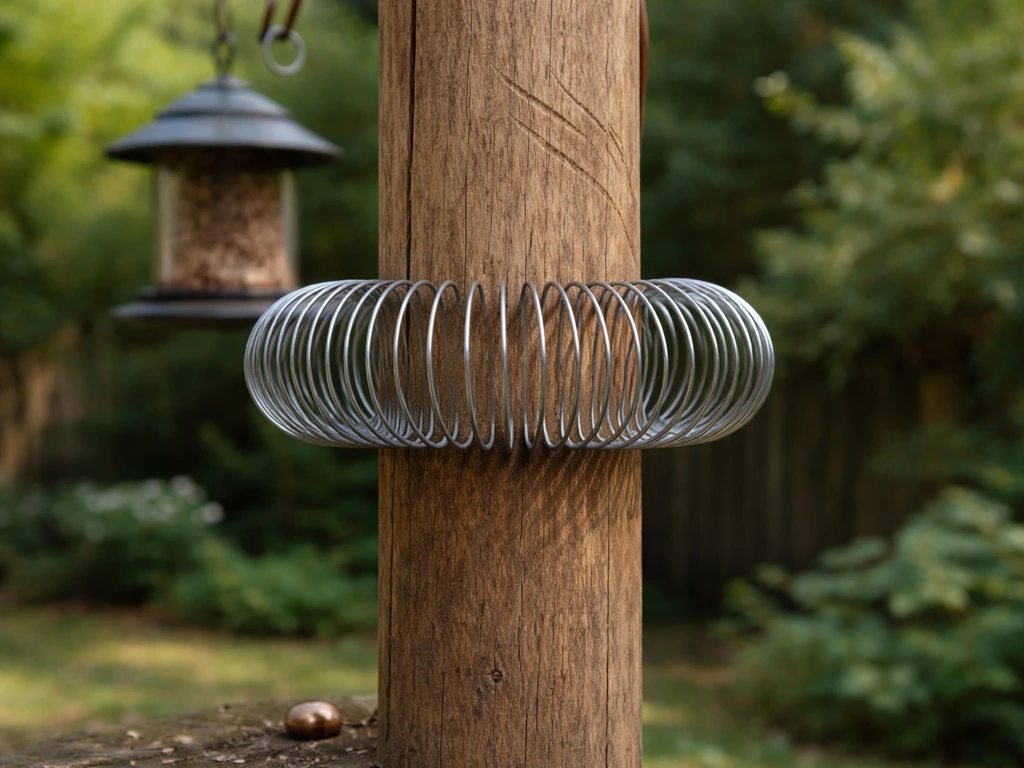
The honest answer here might surprise you: greasing a bird feeder pole is almost never a good idea, and the top wildlife and birding organizations say to skip it entirely. Wild Birds Unlimited, Cornell Cooperative Extension, the University of Nebraska-Lincoln, and Greenwood Wildlife Rehabilitation Center all say the same thing: don't coat your pole with grease, oil, petroleum jelly, WD-40, axle grease, or vegetable oil. That said, there are two narrow situations where a careful lubricant application is genuinely useful on a pole: preventing rust on bare metal and lubricating moving mechanical parts (like a pulley or a screw fitting) that don't contact birds. For those jobs, a dry PTFE (polytetrafluoroethylene) spray lubricant is the safest pick. For squirrel-proofing, a physical baffle beats any slippery coating every single time.
Best Grease for Bird Feeder Pole: Safe Options and How to Apply

Can you grease a bird feeder pole?
Technically yes, physically you can put grease on a pole. Whether you should is a different question. The reason authoritative sources are so unified against it comes down to two real dangers. First, oily or sticky residue on a pole transfers directly to bird feathers and fur when an animal brushes against it. Wild Birds Unlimited specifically describes this as the main hazard: when a squirrel shimmies down a greased pole or a bird lands on it, the grease coats feathers and disrupts their ability to insulate and waterproof. Contaminated feathers can be a serious welfare issue for wild birds. Second, many products people reach for (Vaseline, cooking oil, WD-40) degrade quickly outdoors, drip onto the ground or feeder, and end up exactly where birds feed.
So when is any lubrication actually appropriate? If you have a metal pole showing surface rust or a mechanical joint that's seizing up, a dry-film lubricant applied only to that specific spot (well away from feeder ports, perches, and seed trays) is reasonable. Think of it as hardware maintenance, not pest control. If your goal is to stop squirrels from climbing, grease won't reliably do that anyway. A pole baffle is the solution there.
What grease to use: bird-safe, weather-resistant options
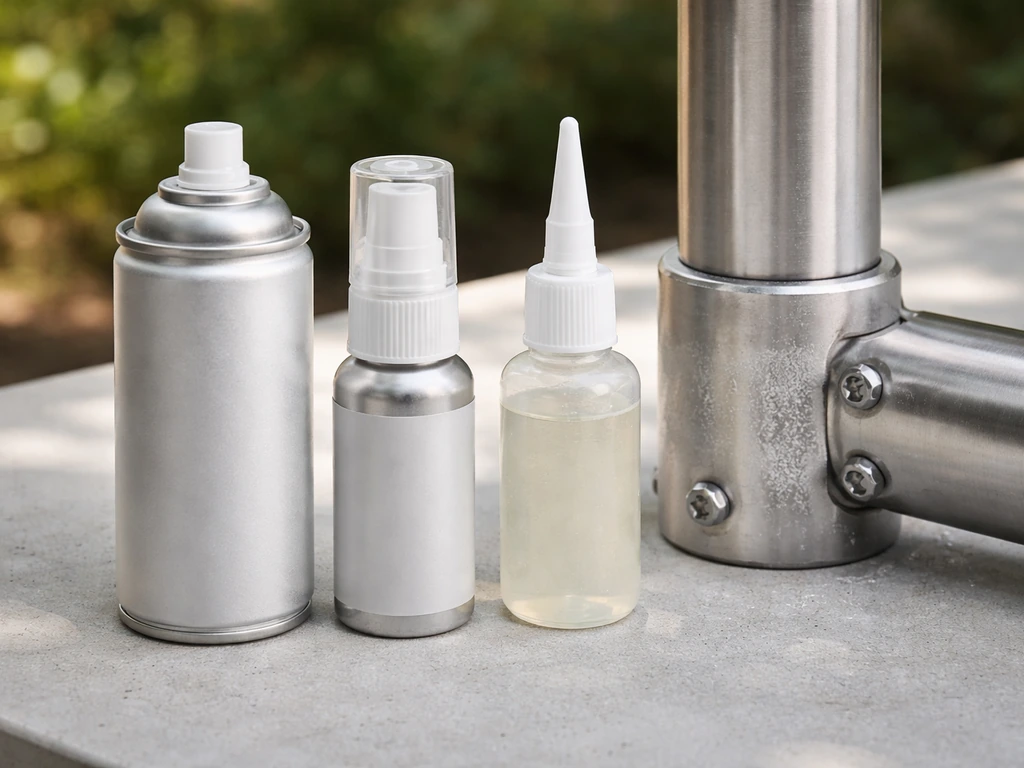
If you genuinely need to lubricate a metal part of a pole system, the safest category is dry PTFE (Teflon) spray lubricant. These products dry to a thin, solid film rather than leaving a wet, sticky layer. They're water-repellent, handle a wide temperature range (some rated from -50°C to +260°C, or roughly -58°F to 500°F), and don't attract dirt the way wet greases do. Because the film is dry once it cures, the risk of transfer onto feathers is much lower than with petroleum jellies or oil-based greases. Brands like TKK PTFE Dry Lubricant, ZenaLube Dry PTFE, and TecLub Dry-Film Lubricant with PTFE all fit this profile. MicroCare's VDX PTFE spray is medical-grade and has one of the lowest friction coefficients available, around 0.06.
If the job is specifically about corrosion protection on a joint or fitting that birds never contact (say, the ground-socket fitting buried in soil), a water-resistant marine grease is durable and effective. Lucas Oil Marine Grease and WD-40 Specialist Marine-Grade Water Resistant Grease are both rated for water washout resistance and corrosion protection. These are purely for metal-on-metal hardware connections, not the shaft of the pole itself.
| Product Type | Best Use | Weather Resistance | Bird Contact Risk | Recommended? |
|---|---|---|---|---|
| Dry PTFE spray (e.g., ZenaLube, TecLub) | Pole joints, mechanical parts | High (water-repellent, wide temp range) | Low once dry | Yes, for hardware only |
| Marine grease (e.g., Lucas Oil, WD-40 Specialist) | Buried ground fittings, socket joints | Very high (water and corrosion resistant) | Medium (stay away from pole shaft) | Yes, for buried/hidden fittings only |
| Petroleum jelly / Vaseline | Nothing on a bird feeder setup | Poor (melts, drips) | High (feather contamination) | No |
| WD-40 standard spray | Nothing on a bird feeder setup | Poor (evaporates, leaves residue) | High | No |
| Vegetable oil / cooking oil | Nothing on a bird feeder setup | Very poor (rancid, drips) | High | No |
| Axle grease | Nothing on a bird feeder setup | Moderate, but messy | High (sticky, persistent) | No |
What to grease and what absolutely not to
This is the most important distinction in this entire article. There's a very short list of things on a pole system where lubrication makes sense, and a much longer list of things you should never put grease near.
Where a dry lubricant is acceptable
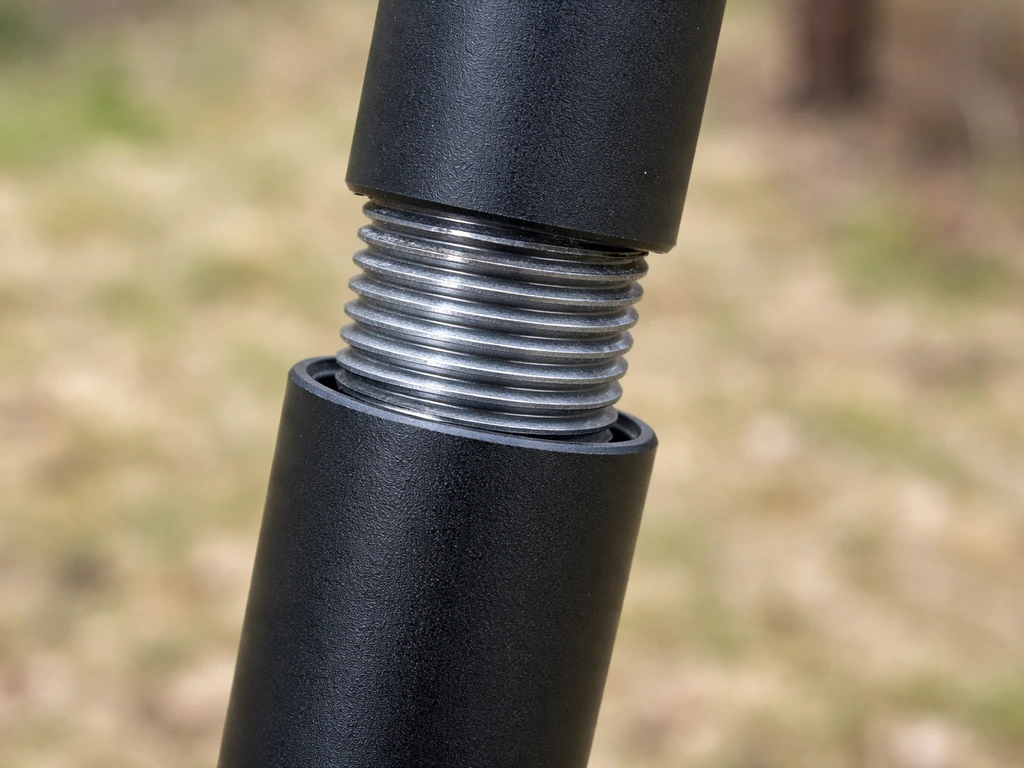
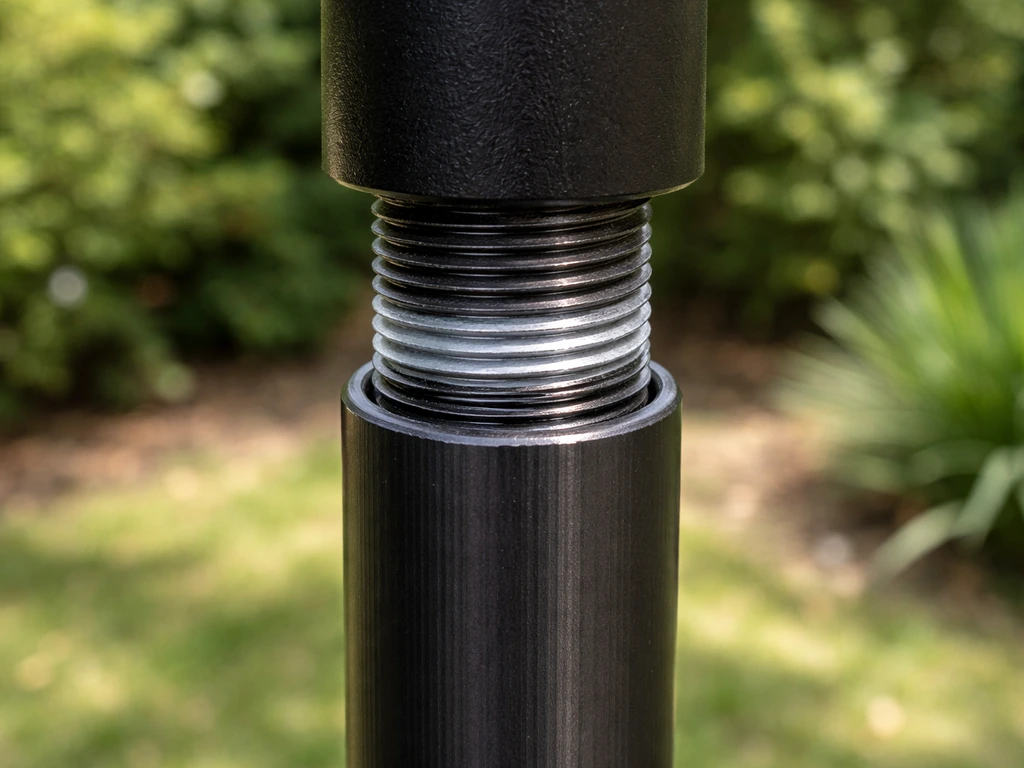
- The threaded joint or socket connection where pole sections screw together (if they're seizing up)
- A pulley wheel or carabiner that's part of a hanging/raising mechanism
- The buried ground socket or anchor fitting (use marine grease here, it stays hidden underground)
- A hinge or pivot if you have a tipping or rotating baffle mount
Where you should never apply grease or oil
- The pole shaft itself, especially anywhere squirrels or birds might grip or brush against it
- Perches, landing spots, or any surface a bird will stand on
- The feeder body, ports, or seed trays (any surface near food)
- Hooks or hangers birds might grab with their feet
- Any surface above a seed tray where drips could fall into feed
Wild Birds Unlimited states it plainly: never apply greasy or oily products directly to the eating surface of a bird feeder. The South Carolina DNR makes the same point about sticky or oily substances near feeding ports. Keep any lubrication far away from anything a bird interacts with directly.
How to grease a pole the right way: prep, apply, and maintain
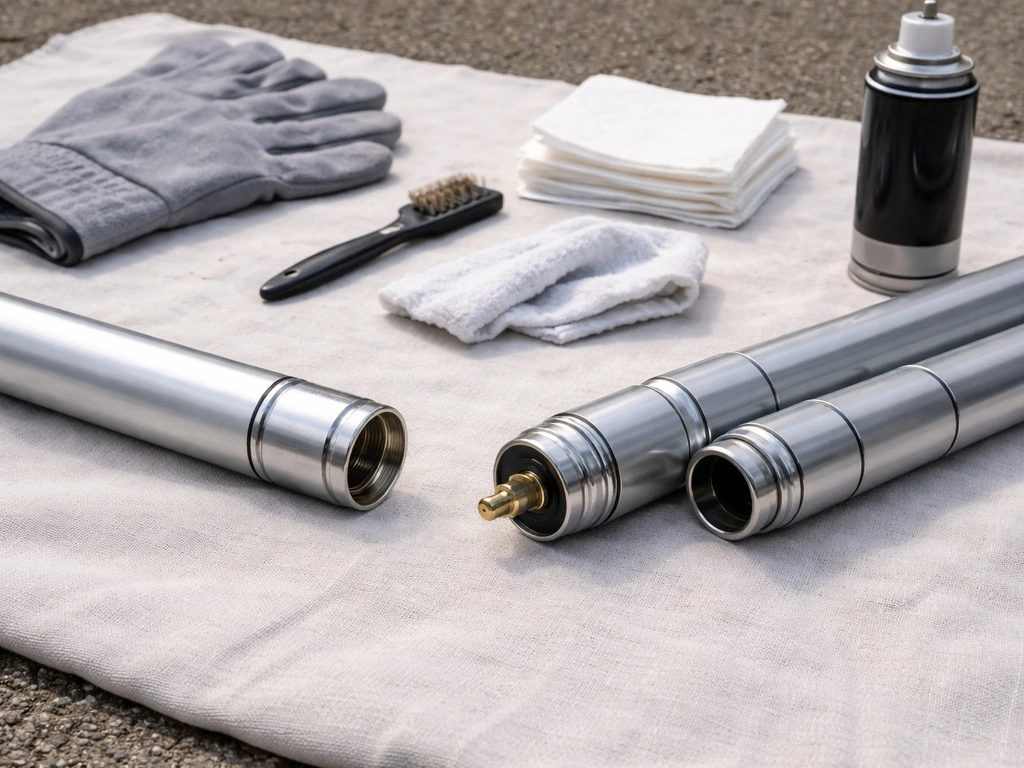
If you've confirmed that a specific mechanical part on your pole needs lubrication, here's how to do it cleanly and safely. If your issue is that the hanging setup feels too long, learning how to shorten bird feeder wire safely can help you adjust the height without touching the feeder surface with grease. This process takes about 15 to 20 minutes the first time. For the next step, make sure you also learn how to put a bird feeder pole in the ground correctly so it stays secure and stable.
- Remove the feeder from the pole and set it aside somewhere clean. You don't want any spray or residue drifting onto the feeder.
- Identify the specific part you're lubricating: a threaded joint, a pulley, a socket fitting. Be precise. You're not coating the whole pole.
- Clean the target area first. Use a stiff brush or cloth to remove rust scale, old grease, dirt, and any flaking material. If there's heavy rust, a bit of steel wool works well. Wipe dry.
- Shake your PTFE dry lubricant spray well. Hold the can about 6 to 8 inches from the surface and apply a thin, even coat to just the joint or fitting. One pass is usually enough. For buried fittings you're using marine grease on, apply with a brush or gloved finger directly to the metal surface before assembly.
- Let the dry PTFE spray cure for 5 to 10 minutes until it's no longer tacky. The film should feel smooth and slightly slick, not wet.
- Wipe away any excess with a clean cloth, especially if any overspray landed outside the target area.
- Reinstall the feeder. Check visually that no lubricant is visible on the pole shaft, perches, or anywhere a bird could land.
How much to apply and how often to reapply
Less is more here. A single thin pass with a PTFE dry spray is enough for most joints. You're not trying to build up a thick coating. If you can see a white or glossy film from a foot away, you've put on too much. The film should be barely visible.
For reapplication frequency: check mechanical joints at the start of each season (spring and fall are good times, since temperature extremes stress connections). If a joint starts feeling stiff or shows new rust, clean and reapply then. In wet climates or near the coast where corrosion is faster, you might check every three months. For buried ground fittings with marine grease, once a year at the start of spring is usually plenty since they're protected from UV and rain.
Common mistakes people make with grease and bird feeder poles
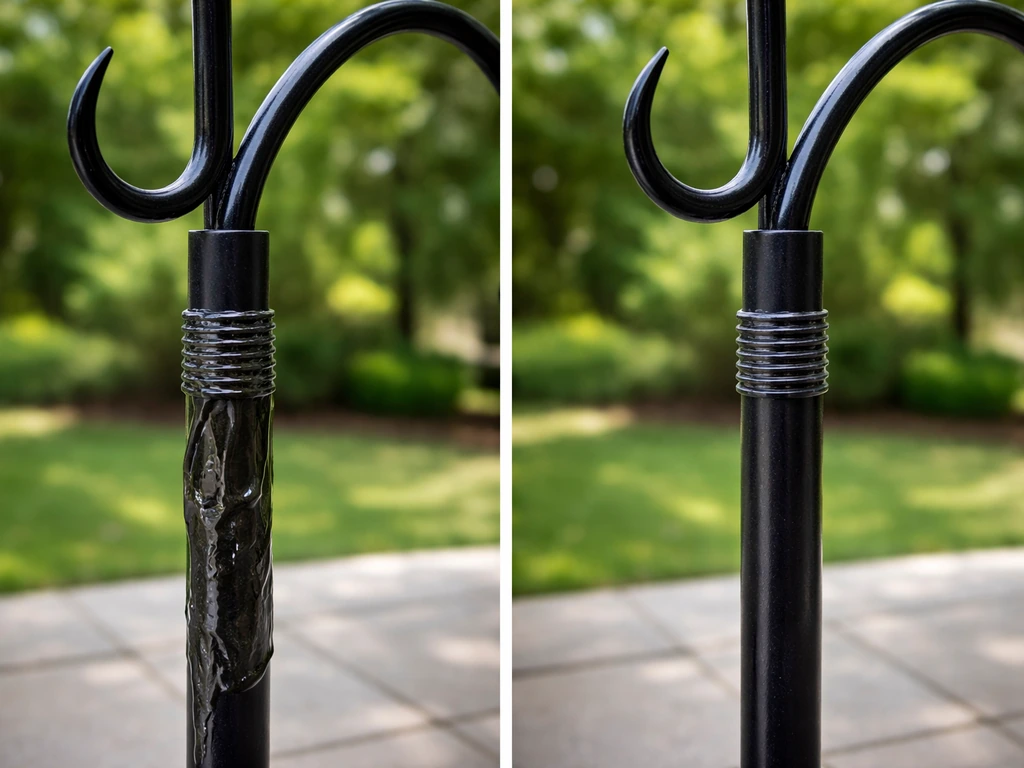
Most of the mistakes in this space come from reaching for the wrong product or applying lubricant to the wrong place. Here's what goes wrong most often:
- Using petroleum jelly (Vaseline) on the pole shaft to deter squirrels. This is the most common mistake and it's listed by name by Wild Birds Unlimited as a product to avoid. It melts in summer heat, drips onto the ground and feeder, and coats feathers on contact.
- Spraying WD-40 to prevent rust on the full pole. Standard WD-40 evaporates quickly, leaves a thin oily residue, and attracts dirt. It's not a durable lubricant and it's not safe near birds.
- Applying cooking or vegetable oil. It goes rancid fast outdoors, drips onto seed, and has a high bird-contact risk.
- Over-applying PTFE spray and getting it on the pole shaft or perches. Even a dry-film lubricant becomes a problem if you coat surfaces birds land on.
- Thinking grease will reliably stop squirrels. It won't. Squirrels are persistent and will work around or through slippery coatings. A physical baffle is the only consistently effective solution.
- Skipping the cleaning step before applying any lubricant. Applying grease over rust or old residue just seals in the problem and reduces adhesion.
If grease isn't the answer, here's what actually works
For squirrel prevention, every authoritative source points to the same solution: a pole baffle. A squirrel baffle is a physical barrier (usually a cone or cylinder made of metal or plastic) that mounts on the pole below the feeder. Squirrels can jump roughly 40 inches vertically, so placement matters. The baffle should sit at least 4 to 5 feet off the ground and the feeder should be at least 10 feet from any horizontal launch point like a tree branch or fence. Cornell Cooperative Extension, Greenwood Wildlife Rehabilitation Center, University of Nebraska-Lincoln, and Wild Birds Unlimited all recommend baffles as the primary pest-control strategy.
If your pole is wobbling or leaning rather than needing lubrication, that's a different problem entirely: making a pole straight and stable is more about anchoring depth and base stability than anything you apply to the surface. When you are addressing a leaning feeder pole, focus on anchoring depth and base stability rather than applying grease how to keep bird feeder pole straight. Similarly, if you're trying to make a pole slippery for other reasons, there are better hardware-based approaches worth exploring. If your goal is to make a bird feeder pole slippery for squirrels, focus on hardware-based deterrents like pole baffles instead of grease.
For rust prevention without any bird-contact risk, consider switching to a powder-coated or galvanized pole if your current one is bare steel. These surfaces resist corrosion without needing any applied product. If your existing pole is showing rust, clean it with a wire brush, treat it with a rust converter product (applied and allowed to cure fully before birds return), and then touch up with outdoor metal paint rated for the exposure.
For mechanical joints that keep seizing, the long-term fix is often to upgrade to stainless steel hardware or add a sleeve or washer at the friction point so metal isn't grinding against metal. That's a one-time investment that outlasts any lubricant schedule.
Bottom line: if you need to lubricate something mechanical on your pole setup, dry PTFE spray applied precisely to the hardware joint is the safest approach. If you're trying to stop squirrels, skip the grease entirely and put a baffle on the pole. For the question of what to put on a bird feeder pole, the safest approach is usually to avoid grease entirely and use a pole baffle instead skip the grease entirely. If you mean using a slinky style device for squirrel control, stick with a clean, hardware-safe setup like a pole baffle instead of grease on the pole how to put a slinky on a bird feeder pole. That's the combination that actually works, keeps birds safe, and doesn't turn into a sticky mess you're cleaning up every two weeks.
FAQ
Can I put a tiny amount of Vaseline or petroleum jelly on the pole to stop squirrels?
It is still a problem, even in small amounts. Petroleum jellies stay tacky and can transfer to fur and feathers during shimmies or landings. If you need squirrel control, use a properly sized pole baffle, and keep any lubricants completely away from the feeder, perches, and launch-adjacent pole area.
What if the pole already has grease on it from a previous owner, how do I clean it safely?
Remove the contaminated residue before you do anything else. Use a disposable degreaser or warm soapy water plus a scraper or paper towels to lift the film, then rinse and let everything fully dry. Avoid letting oily runoff reach the ground near seed, and do not reapply any lubricant until the area is residue-free.
Is dry PTFE spray safe to use if birds sometimes land on the pole above the joint I’m lubricating?
Use extreme caution. Even a dry-film product can migrate if you over-apply or if rain carries it along the pole. Apply only to the specific hardware joint, mask nearby areas if possible, and never spray near the feeder ports, any perches, or the section birds commonly contact.
How can I tell I applied too much dry PTFE on a joint?
If it looks glossy, wet, or visibly thick from more than a few feet away, you used too much. Dry PTFE should cure into a barely noticeable film. If you can feel a slick patch with a clean gloved finger, wipe back excess and let it cure before birds have access.
Do I need to lubricate both the pole and the hanging cable or pulley system?
Focus on moving mechanical parts only, like a pulley sheave or a screw-type fitting. Do not lubricate the pole surface itself, and keep any spray off the feeder’s feeding surface and hang points where birds may brush or land. If the hanging system is stiff, clean first, then apply PTFE only to the friction interface.
Can I lubricate a pole in winter or during freezing rain?
Avoid spraying when temperatures are near or below the product’s safe application range, because curing can be slow and moisture can spread residue. Wait for a dry window so the film can fully set before birds use the feeder.
What should I do if the joint keeps seizing even after applying PTFE?
That usually indicates the problem is mechanical, not just friction. Clean the joint thoroughly, check for misalignment, and consider upgrading hardware (stainless fasteners, proper washers, or a sleeve at the friction point). Re-lubricating repeatedly without fixing the fit can waste product and increase the chance of transfer.
Is marine grease ever appropriate on a pole itself?
Generally no. Marine grease is intended for metal-on-metal connections where birds do not contact the coated surfaces. Do not apply it to the pole shaft, and keep it far from any areas animals can brush while climbing or landing.
If my goal is anti-rust, is switching to galvanized or powder-coated better than using a rust inhibitor every year?
In many cases, yes. Coatings reduce the need to apply spot products near birds. If you do need treatment, use a rust converter and allow full cure time before the feeder goes back up, then monitor for re-flaking or residue before returning birds to the setup.
How often should I check the hardware if I never grease the pole?
Even without pole lubrication, inspect moving parts at the start of spring and fall for stiffness, new rust, or water intrusion. In wet climates, shorter inspection intervals help, and you can address issues by cleaning and a single targeted PTFE application only when needed.
How to Put a Slinky on a Bird Feeder Pole
Step-by-step guide to install a slinky on a bird feeder pole to deter climbing pests, with placement, tools, fixes, and