You can absolutely build and hang a bird feeder on a balcony today, using materials you probably already have. The easiest options are a plastic bottle feeder or a pinecone feeder, both doable in under 30 minutes. If you have a bit more time and a few basic tools, a simple wood feeder or milk jug feeder works great too. The real tricks are picking a spot that's sheltered from wind, mounting the feeder so it won't swing wildly or fall, keeping seed dry so it doesn't mold, and stopping squirrels and ants before they take over. This guide walks you through all of it.
How to Make a Bird Feeder for a Balcony: Step-by-Step
Marcus Brennan
14 May 2026
Choosing the Right Balcony Spot and Feeder Type
Before you build anything, figure out where on the balcony the feeder is actually going to live. Wind is the biggest enemy on a balcony. A feeder that rocks and swings constantly will dump seed everywhere and spook birds before they get comfortable. Look for a corner or a spot along a wall where you get some natural wind break. Shade is a bonus too, since direct sun heats up seed quickly and encourages mold.
Window placement matters more than most people realize. If your feeder ends up close to a sliding glass door or window, place it either within 3 feet of the glass or at least 10 feet away. Anything in between creates a distance where a startled bird can build up enough speed to hit the glass and get hurt. Attached window feeders (the suction-cup style) eliminate that risk entirely and are a genuinely good balcony option if railing space is tight.
If you live in an HOA or a managed apartment building, check the rules before you mount anything permanent. Some HOAs cap feeder size at 12 inches long or wide, and a few buildings restrict hanging items from railings altogether. A freestanding feeder on a small pole stand that sits on the balcony floor sidesteps most of those restrictions.
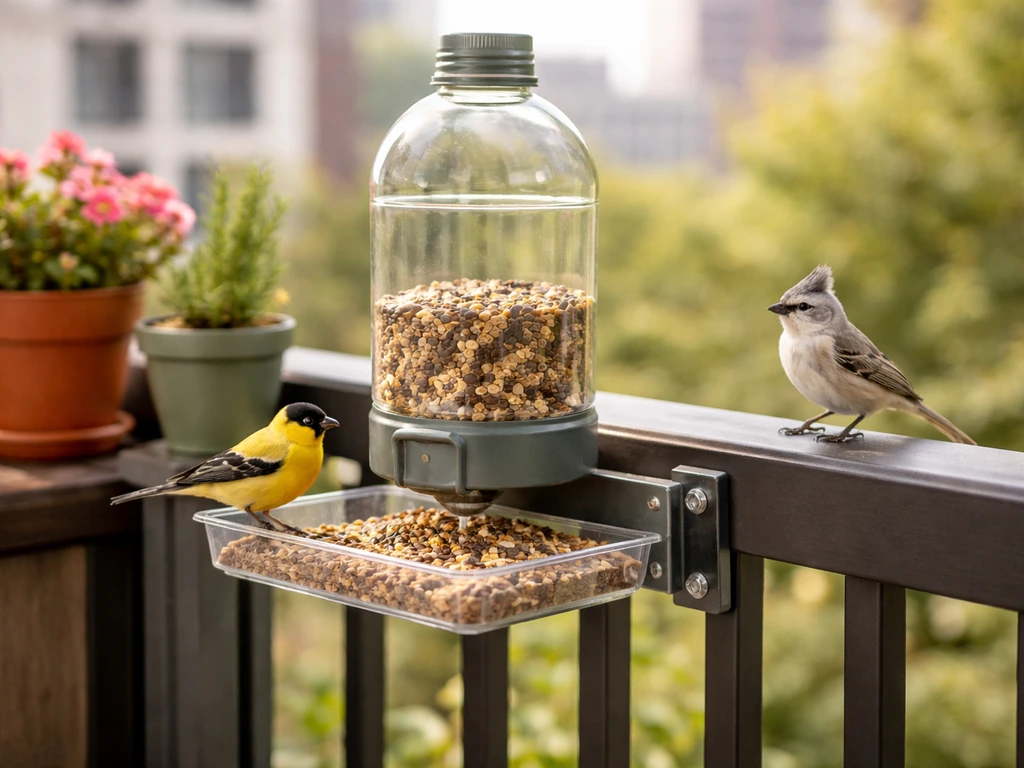
For feeder style, tube feeders are the top pick for balconies. They hold seed in a clear cylinder with small side ports and short perches, which naturally limit access to smaller birds like chickadees, titmice, wrens, and finches. That's exactly the crowd you want on a small balcony. Hopper feeders work too and protect seed better in rain because of their roof-over-platform design. Avoid large open platform feeders on balconies: they attract pigeons, get rained on constantly, and create a mess.
Materials and Tools for a Balcony-Safe Bird Feeder
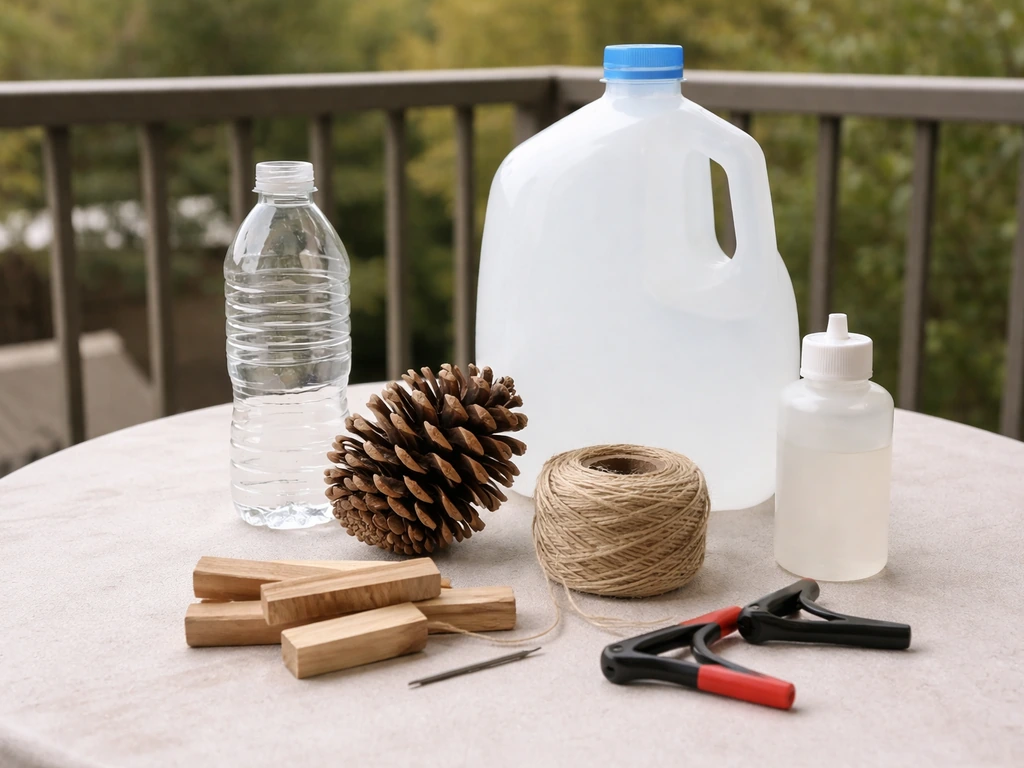
The good news is that none of these builds require a trip to a hardware store. Here's what covers all four build options below:
- Clean plastic bottle (16 oz to 2-liter) or clean plastic milk jug (1-gallon), rinsed and dried
- Large pinecone (at least 3 to 4 inches long), dried out so the scales are open
- Scrap wood or thin craft board (for the simple wood feeder): a piece around 6x6 inches for the tray and a slightly larger piece for the roof
- Peanut butter or sunflower seed butter (nut-free if in a school zone or allergy-concerned building)
- Mixed birdseed or black-oil sunflower seeds
- Strong twine, jute cord, or paracord (at least 8 to 10 inches for hanging, more for knotting to a railing)
- Scissors or a craft knife
- A nail, skewer, or thin dowel for perches (bottle builds)
- Small S-hooks or carabiner clips for railing attachment
- Waterproof outdoor wood glue or weatherproof sealant (for wood builds)
- Disposable gloves for assembly and all future cleaning
Skip the fancy tools. A sharp knife and scissors handle every build here. If you're doing the wood feeder, a hand saw and a few small screws or nails help, but pre-cut craft board from a dollar store works fine too.
Step-by-Step Build Options
Plastic Bottle Feeder (15 to 20 minutes)
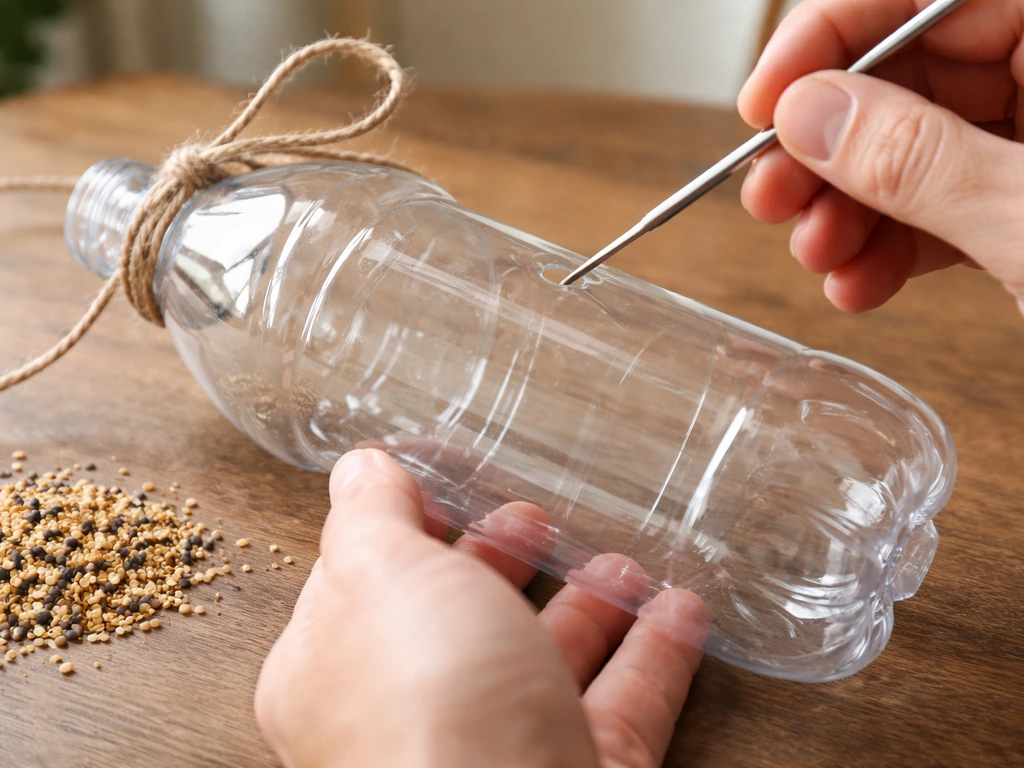
- Rinse and dry a clean plastic bottle completely. Any size works, but a 1-liter or 2-liter gives you a better seed reservoir.
- Use a sharp nail or skewer to poke two small holes on opposite sides of the bottle, about one-third of the way up from the bottom. Push a wooden skewer or thin dowel all the way through both holes to create a perch.
- About 1.25 inches above each perch hole, cut a small seed port. Make each opening just large enough for seed to trickle through, roughly the size of a dime. This is the measurement that keeps seed from pouring out too fast.
- Add a second set of perch and port holes on the other side of the bottle, rotated 90 degrees from the first set, so you get four feeding spots total.
- Poke 4 to 6 small holes in the very bottom of the bottle for drainage so rain doesn't pool inside.
- Fill the bottle with birdseed and screw the cap back on tightly.
- Thread strong twine through the cap and tie securely, or loop twine around the bottle neck for hanging.
Milk Jug Feeder (20 to 25 minutes)
- Rinse and dry a 1-gallon plastic milk jug thoroughly. Any residue left inside will spoil seed fast.
- On two or four sides of the jug, cut out large rectangular openings starting about 3 inches from the bottom. Leave at least 2 inches of plastic below the opening to act as a seed tray lip.
- Punch several small holes in the base of the jug for rain drainage. This is the step most people skip and then regret after the first rain.
- Thread twine through the handle at the top and tie a loop for hanging. The handle is usually strong enough to bear the weight of a filled jug.
- Fill the base with seed to just below the bottom edge of the openings.
- Hang from a hook or railing bracket and test that it hangs level before walking away.
Simple Wood Feeder (30 to 45 minutes)
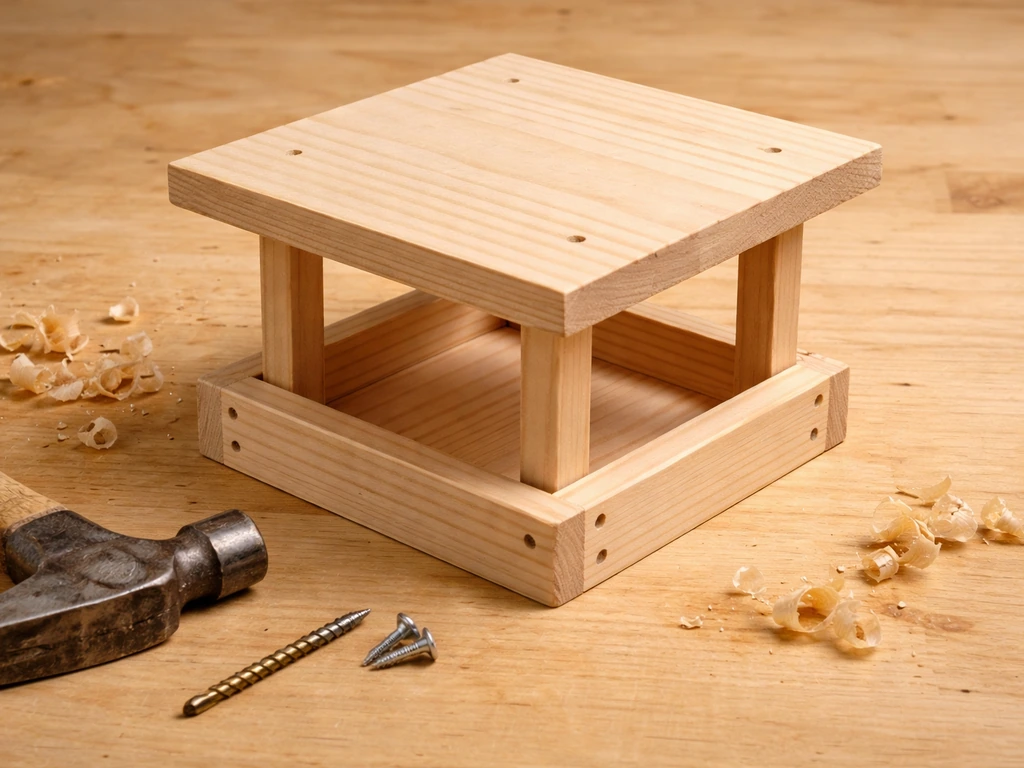
- Cut or source two pieces of untreated wood: one roughly 6x6 inches for the tray floor and one slightly larger (around 8x8 inches) for the roof.
- On the tray piece, drill or hammer a few small drainage holes in the center.
- Attach short side walls (1 to 1.5 inches tall) on two opposite sides of the tray using small nails or screws. Leave the other two sides open so birds can hop in and out easily.
- Mount the roof piece above the tray using two short vertical supports at the back corners. A gap of 4 to 5 inches between tray and roof gives birds room to feed comfortably.
- Apply weatherproof sealant or outdoor wood glue to any raw edges and let it dry fully before adding seed.
- Attach a screw eye or two to the roof for hanging, or add a mounting bracket to the back for railing attachment.
Pinecone Feeder (5 to 10 minutes)
- Find a dry pinecone with open scales. If the scales are closed, leave the cone in a warm spot for a day and it will open up.
- Tie a piece of strong twine or thick ribbon at least 8 to 10 inches long around the top of the pinecone, knotting tightly near the base of the top scales.
- Using a spoon or butter knife, press peanut butter or sunflower seed butter deep into the gaps between the scales. Work it in well so it sticks and doesn't fall out on a windy day.
- Roll the coated pinecone in a plate of mixed birdseed. Press gently so seed embeds into the peanut butter.
- Hang from a hook, railing, or branch using the twine loop.
The pinecone feeder is the fastest start and a great way to test whether birds in your area will visit your balcony before you invest time in a bigger build. If you get visitors within a week, graduate to the bottle or wood version.
How to Hang, Mount, or Secure the Feeder on a Balcony
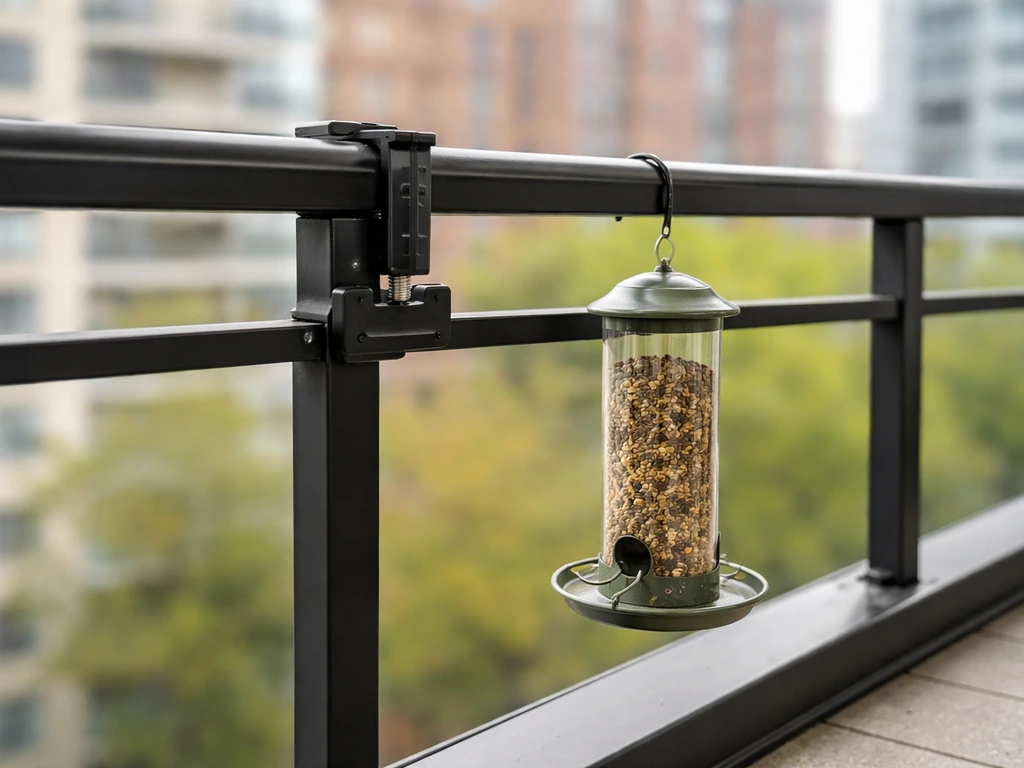
This is where most balcony feeders fail. For a bird feeder where to hang it, aim for a sheltered spot that still lets birds approach safely without running into windows. A feeder that's just looped over a railing with a piece of string will fall, swing, or get knocked off by wind or a curious squirrel. If you are trying to hang a bird feeder from a gutter, use a method that holds the feeder securely and keeps it stable in wind. Here are the mounting options ranked by stability:
| Method | Best For | Tools Needed | Stability |
|---|---|---|---|
| Railing clamp bracket with hook | All feeder types | None (clamp tightens by hand) | High |
| S-hook over railing top | Lightweight feeders (pinecone, small bottle) | None | Medium |
| Freestanding pole stand on balcony floor | Any feeder, HOA-restricted buildings | None | High |
| Screw hook into wall or beam (with permission) | Heavier wood feeders | Drill | Very high |
| Suction cup window mount | Small tube feeders, window-attached style | None | Medium (check weight limit) |
Railing clamp brackets are sold at most hardware stores and garden centers for under $10. They grip the railing top and give you a stable horizontal arm to hang a feeder from. This setup also keeps the feeder a few inches out from the railing, which helps with sightlines for birds approaching and gives you visual separation so seed spill doesn't land directly on the railing.
If you're hanging from a railing with an S-hook, always use a locking carabiner instead when possible. Plain S-hooks can pop free in wind. For heavier builds like the wood feeder, go with the clamp bracket or the freestanding pole stand. A small shepherds hook style stand that sits on the balcony floor with a weighted base handles a lot of balcony situations without requiring any drilling or HOA approval.
For the wood feeder, you can also attach it directly to a deck railing using L-brackets screwed into the feeder base. If you want a more secure option than railing mounting, see how to hang a bird feeder from soffit as a related approach. If you are attaching a feeder to a deck railing, start with sturdy L-brackets and make sure the feeder is level and secure before you load it with seed attach it directly to a deck railing. If deck railing attachment is your main method, the setup works very similarly to how you'd attach any feeder to a railing, which is worth exploring as a dedicated approach depending on your railing style.
Keeping It Clean: Maintenance, Seed Handling, and Weather Protection
Dirty feeders are genuinely dangerous to birds and will keep them from coming back. The cleaning schedule that most wildlife authorities agree on is every two weeks at minimum, and once a month as an absolute floor. The CDC also advises cleaning bird feeders at least once each month to support wildlife and human health blank" rel="noopener noreferrer">every two weeks at minimum, and once a month as an absolute floor.. All About Birds also recommends cleaning feeders using a dilute bleach solution, with no more than 1 part bleach to 9 parts water, soaking feeders for about 10 minutes blank" rel="noopener noreferrer">every two weeks at minimum. Here's the process that actually works:
- Put on disposable gloves before handling the feeder. This protects you and keeps contamination from spreading.
- Empty all old seed. Don't just top it off. Wet, clumped, or old seed underneath fresh seed will mold.
- Scrub the feeder with a stiff brush and hot soapy water to remove seed hulls, droppings, and residue.
- Soak the feeder in a solution of 9 parts water to 1 part bleach for 10 minutes. This is the ratio recommended by the National Wildlife Health Center and used by All About Birds, Audubon, and Virginia DWR.
- Rinse thoroughly with clean water until you can't smell bleach.
- Let the feeder dry completely before refilling. This is the step most people rush, and a feeder that goes back up wet will grow mold on the new seed within days.
Seed handling on a balcony requires a bit more thought than in a backyard. Store seed in a sealed container indoors or in a lidded bin on the balcony. Open bags left outside attract ants, mice, and squirrels within days. Use small amounts of seed and refill more often rather than packing the feeder completely full. That way, seed turns over before it has a chance to get wet and mold.
For weather protection, the drainage holes you added during the build are your first line of defense. Check them every couple of weeks and clear them with a toothpick if they get clogged with seed debris. After heavy rain, pull the feeder down, dump any wet seed, let it dry, and refill with fresh seed. Moldy seed looks grayish or clumped and smells off. Don't just stir it and hope. Dump it and start fresh.
Attracting the Right Birds and Troubleshooting When They Don't Show Up
If birds aren't visiting within the first one to two weeks, don't panic. It usually comes down to one of three things: seed type, location, or visibility. Black-oil sunflower seeds are the single best all-around seed for attracting a wide range of small birds, including finches, chickadees, titmice, and nuthatches. If you used a generic mixed seed with a lot of milo or red millet, switch to straight black-oil sunflower and you'll notice a difference fast.
Location is the next check. Is the feeder in a spot where birds actually have a clear flight path to land? Feeders jammed into a corner with no clear approach from above or the side are harder for birds to find and feel safe using. Try moving it a few feet toward the open edge of the balcony, while still keeping some shelter behind it. Nearby trees or planters give birds a staging spot to perch before flying to the feeder, which helps a lot.
Patience genuinely matters here. In a new location, it can take birds two to four weeks to discover and get comfortable with a feeder. If you're not seeing activity after a month, try sprinkling a small handful of seed on the railing or balcony floor directly below the feeder to catch attention at ground level.
Pest and Safety Proofing: Squirrels, Ants, Cats, Rain, and Wind
Squirrels
If squirrels can reach your balcony, they will find your feeder. The most effective physical deterrent is a baffle, which is a dome or wrap-around disk that blocks the squirrel's path to the feeder. For a pole-mounted setup, a wrap-around baffle of at least 18 inches in diameter placed above the feeder (or around the pole below it) is the standard approach. If squirrels are jumping down from above, a tilting dome baffle at least 18 inches across placed over the feeder works well because it tips when the squirrel lands. Keeping the feeder away from jump-off points like walls, railings, and overhead wires helps too.
Ants
Ants reach feeders by climbing the hanging cord or pole. The fix is a water moat, which is a small cup-shaped dish filled with water that you hang directly above the feeder on the hook or cord. Ants can't cross standing water. You can buy purpose-made ant moats or improvise one from a bottle cap or small plastic lid with a hole drilled through the center.
Cats
If you have a cat or your neighbor does, a feeder positioned low enough to reach from the balcony floor is a genuine hazard. Keep feeders high enough (at least 5 feet from the floor) and away from surfaces a cat could launch from. Don't position the feeder directly in front of a sliding door where a cat could wait in ambush.
Rain and Wind
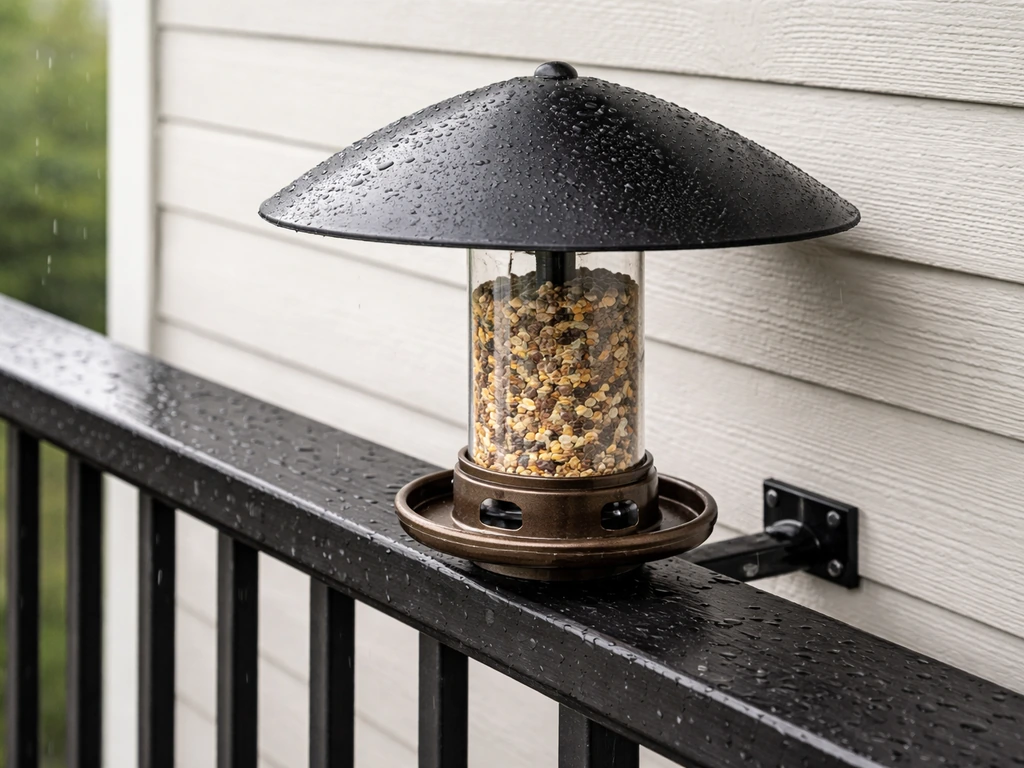
Wind is what ends most balcony feeder setups. A feeder swinging on a thin string will spin, dump seed, and eventually fall. Use a weighted base or a clamped bracket for stability. For wind-prone balconies, a hopper-style feeder with a roof protects seed better than an open tray or bottle, and the enclosed design keeps seed from blowing out. After major storms, always check that the mounting is still tight and inspect seed for moisture. Any seed that clumps or smells off comes out immediately.
Seed Spill and Mess
Seed spill on a balcony is inevitable, but you can control it. A tray or catch basin hung under the feeder collects fallen hulls and seed. Clear it every few days to avoid attracting rodents. No-mess seed mixes (hulled seeds, or mixes without shells) create less debris and are worth the slightly higher cost for a balcony setup where mess falls onto shared outdoor spaces below you.
FAQ
How high should I mount a balcony bird feeder so it is safer for birds and pets?
Aim for at least 5 feet from the balcony floor, and avoid placing it where a cat could easily launch from a planter, chair, or ledge. If you share balconies with others, keep it out of direct line-of-sight from adjacent walkways to reduce disturbances.
Can I use only bird-friendly seed on a balcony, or will ants still be an issue?
Seed type helps, but ants can still find a feeder through the hook cord, pole, or a nearby surface. The most reliable fix is a water-moat ant barrier mounted directly above the feeder, and you should also check the cord and any railing seams where ants travel.
What’s the safest seed strategy for a small balcony to prevent mold?
Use smaller refills more often so seed has a fast turnover, and store unopened seed indoors in a sealed container. After heavy rain, discard any seed that clumps or smells off instead of trying to dry and reuse it.
My feeder is close to a window. Is the 3 feet to 10 feet rule always required?
That guideline is a strong safety target, but if you cannot achieve it, choose an option with a physical barrier such as an attached window feeder (suction-cup style) or relocate the feeder so birds approach from a clear side, not straight toward the glass.
How do I stop pigeons from showing up when I use a balcony feeder?
Avoid large open trays, since they allow wide access. Tube or hopper designs with limited entry ports typically reduce pigeon visits, and you can also keep the feeder level and not overfill, so spilled seeds do not create an easy buffet on the balcony surface.
What if the birds I want are not coming, but other birds are?
Switching seed often matters more than switching feeders. Start with black-oil sunflower for broad attraction, then fine-tune by reducing mixed seed components like milo or red millet that can attract fewer of the small songbirds you are targeting.
How long should I wait before deciding my feeder setup isn’t working?
Give it 1 to 2 weeks for initial visits, and up to 2 to 4 weeks in a new location for birds to feel safe. If there is still no activity after about a month, adjust one variable at a time, usually seed type first, then move the feeder slightly toward an area with a clearer flight path.
How often should I clean a balcony bird feeder, and what mistakes should I avoid?
Clean at least every two weeks, and no less than once per month. Do not just “top off” moldy or dirty seed, and after storms, remove any wet seed, rinse the feeder if your build allows it, and fully dry it before refilling.
What’s the best way to handle seed spill on balconies shared with neighbors below?
Use a catch tray or catch basin under the feeder and empty it every few days. Consider no-mess seed mixes (hulled seeds or shell-free mixes) to reduce debris that can fall into shared outdoor areas and attract rodents.
Can I mount a bird feeder to a railing without drilling, and what’s the safest approach?
Yes, railing clamp brackets are usually the most stable no-drill option, compared with methods like looping string or relying on lightweight hooks. After mounting, test it with the empty feeder first, then gently add seed and re-check tightness after a windy day.
Next Articles
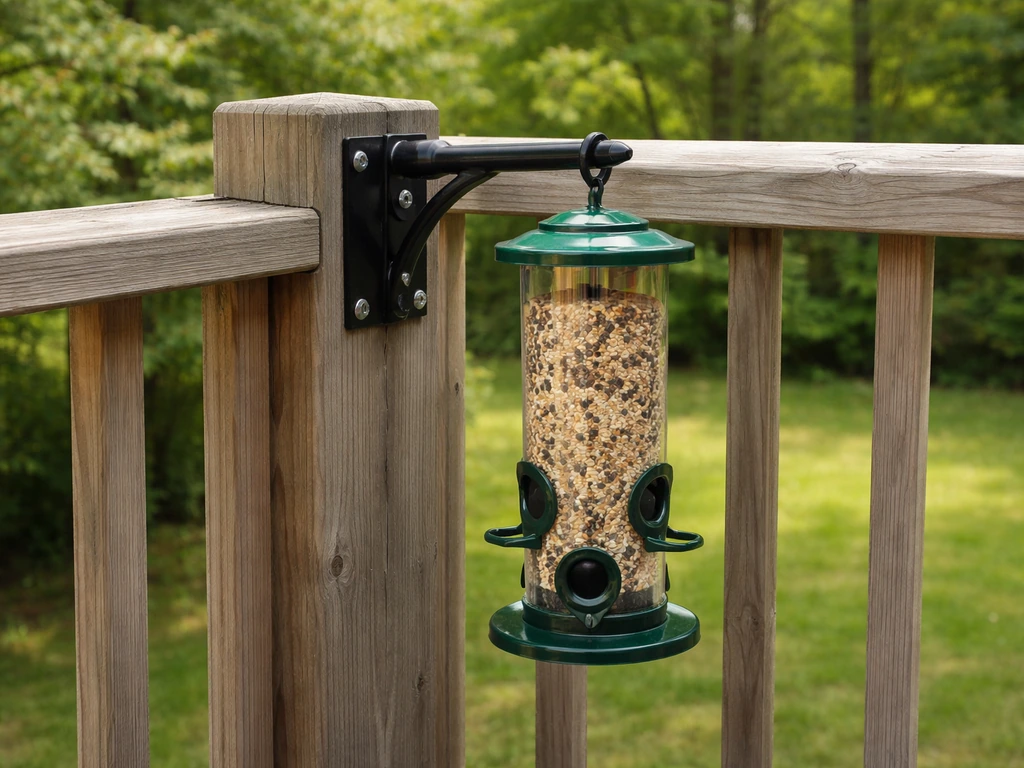
How to Attach a Bird Feeder to Deck Railing
Step-by-step ways to mount a bird feeder on deck railing, choosing safe hardware for wood or metal and preventing sway.
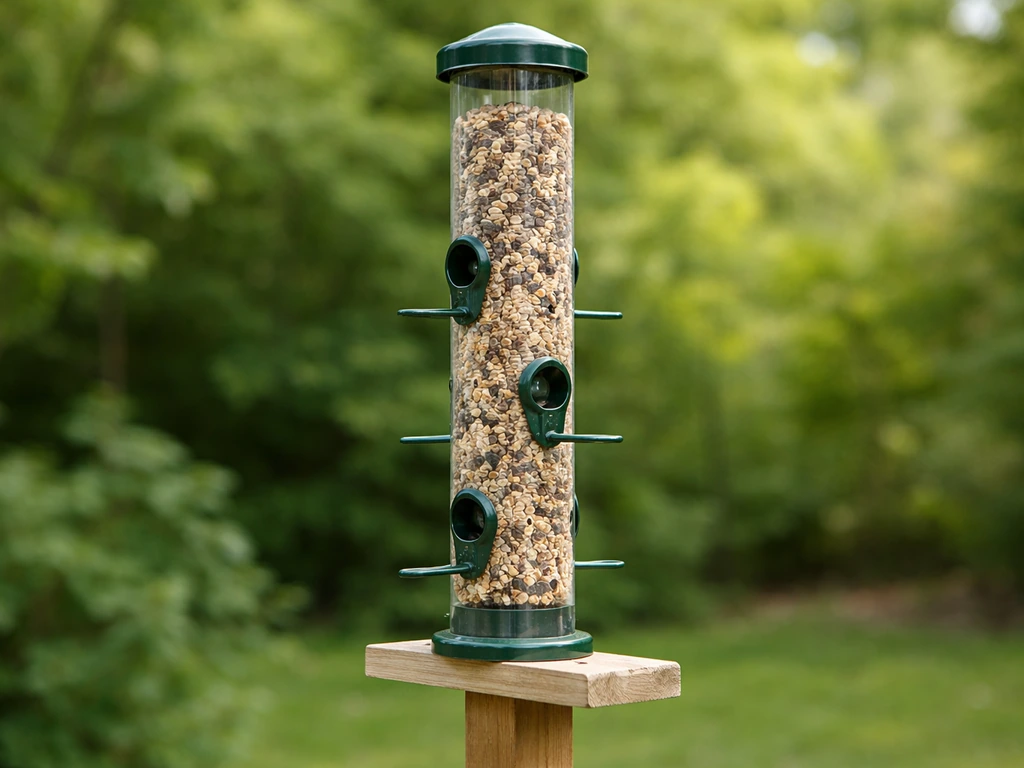
How to Make a Tube Bird Feeder Step by Step
Step-by-step how to make a tube bird feeder with materials, safe mounting, maintenance, and fixes for leaks and clogs.
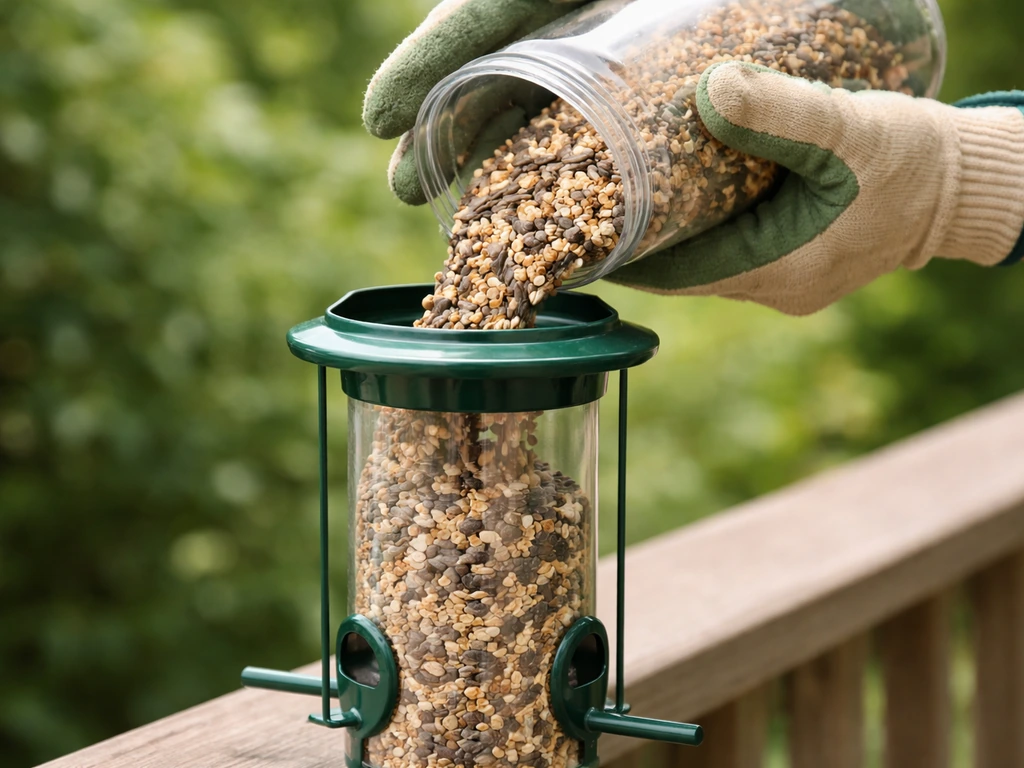
How to Put Bird Seed in a Bird Feeder Step by Step
Step-by-step guide to add bird seed to hopper, tube, platform, and suet feeders, avoiding spills and jams.