You can make a working bird feeder from a yoghurt pot in about 20 minutes using things you almost certainly already have at home: a clean pot, some string or wire, a sharp pencil or skewer, and a wooden dowel or twig for a perch. For more ideas like a yoghurt pot feeder, you can also follow this guide on how to make a bird feeder by Liyala Tuckfield.
How to Make Bird Feeders With Yoghurt Pots
Marcus Brennan
11 May 2026
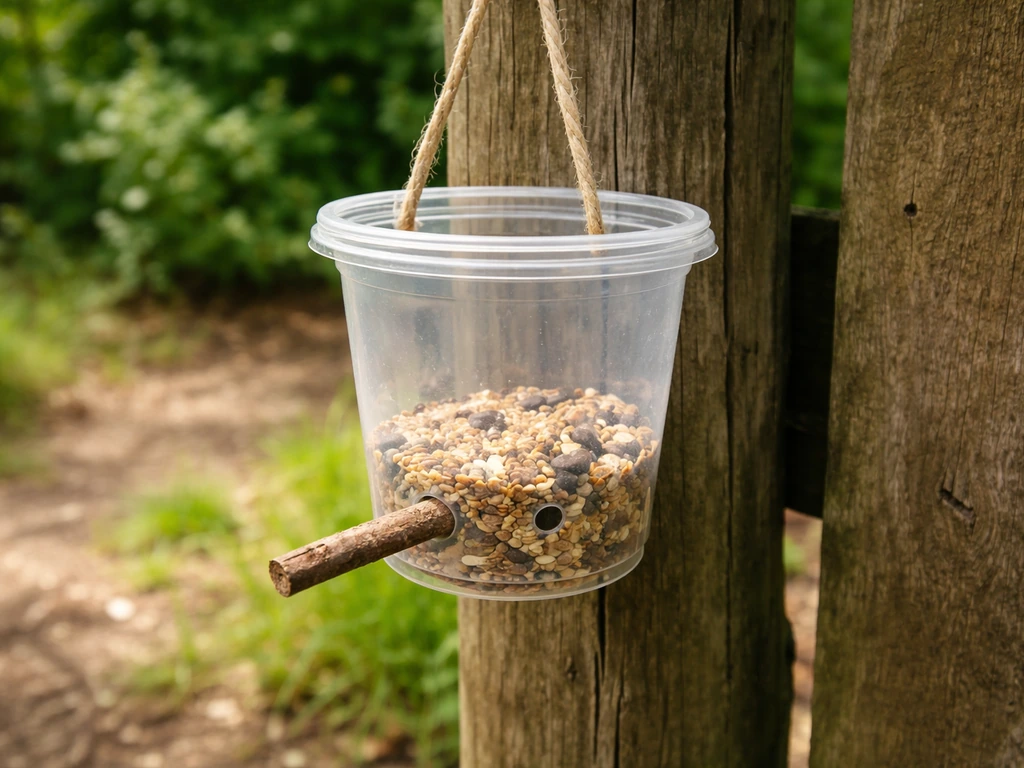
Punch a drainage hole in the bottom, add a perch hole near the opening, thread your hanging cord through, fill it with black oil sunflower seeds, and you're done. It won't win any design awards, but birds genuinely use them, and they're one of the most beginner-friendly feeder builds you can do.
If you want to go beyond yoghurt pots, you can also learn how to make a tire bird feeder with simple tools and safe placement tips tire bird feeder how to make. If you want a different DIY style, these popsicle stick bird feeder instructions are a fun beginner option too.
Choosing the right yoghurt pot size and setting up safely
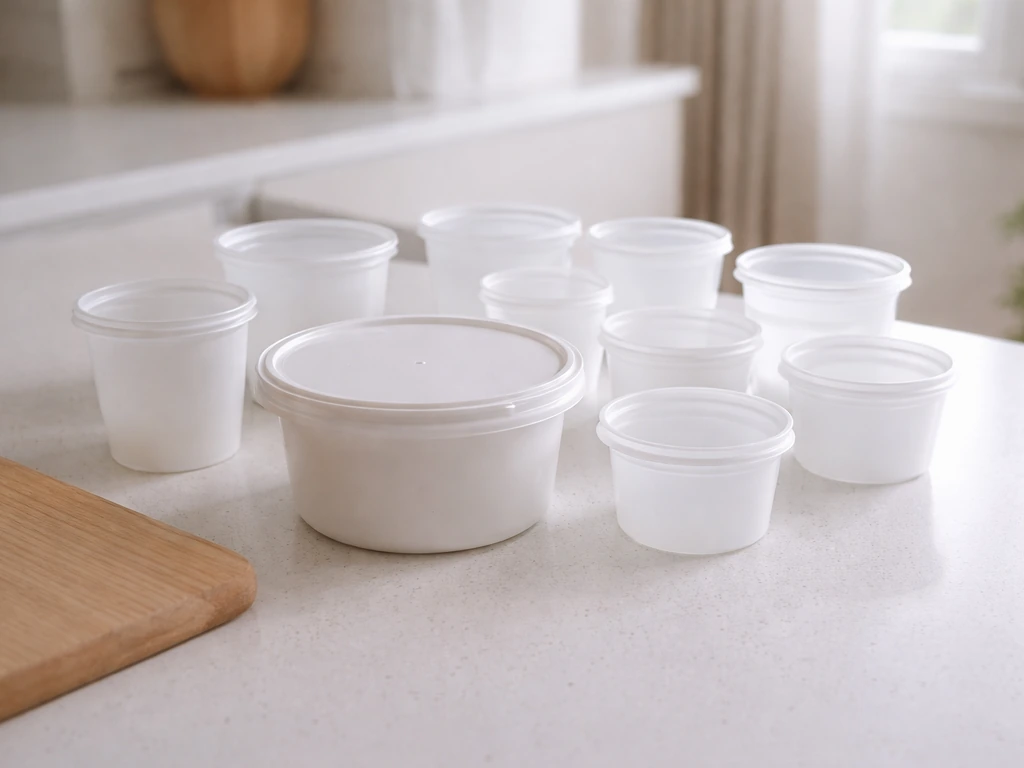
Not every yoghurt pot makes a good feeder, so it's worth picking the right one before you start poking holes. Large 500g or 1kg tubs (the wide, flat-lidded kind from Greek yoghurt or cream cheese) work best because they hold more seed, have a wider opening for birds to access food, and are stable enough to resist tipping in a breeze. Small 125ml individual pots can work too, especially for kids' projects, but they hold so little food that you'll be refilling them every day and they're more prone to spinning and spilling.
For the construction itself, work on a stable surface with a chopping board or folded-up newspaper underneath to protect your table. If you're working with children, use a push pin or sharp pencil for the holes rather than a knife or drill. Adults can use a skewer, a bradawl, or a small drill bit (3mm to 5mm works well) for cleaner, more consistent holes. Rinse the pot thoroughly before you start and make sure there's no yoghurt residue left, since dairy residue can go rancid quickly and put birds off using the feeder.
What you'll need (and a few optional upgrades)
Here's the honest materials list for the basic build, plus some extras if you want to go a step further:
- 1 clean yoghurt pot (large tub preferred, lid optional but useful)
- Strong string, twine, or thin wire for hanging (at least 50cm)
- 1 wooden dowel, pencil, or straight twig for a perch (roughly 15–20cm long, 6–8mm diameter)
- A sharp pencil, push pin, skewer, bradawl, or small drill bit
- Bird seed (black oil sunflower seeds are your best starting choice)
- Scissors or a craft knife (adults only)
- A chopping board or scrap wood to work on
Optional upgrades that make the feeder more durable and attractive to birds:
- Clear waterproof varnish or beeswax to coat the outside of the pot and extend its lifespan
- A second yoghurt pot lid or a small plastic plate zip-tied underneath as a seed catcher (reduces ground mess and rodent attraction)
- A metal screw-eye hook threaded through the top for a more secure hang point than knotted string alone
- Fine mesh or a piece of window screen cut to fit inside the base of a large tub, to allow drainage without losing seed
Step-by-step build: holes, drainage, perches, and access
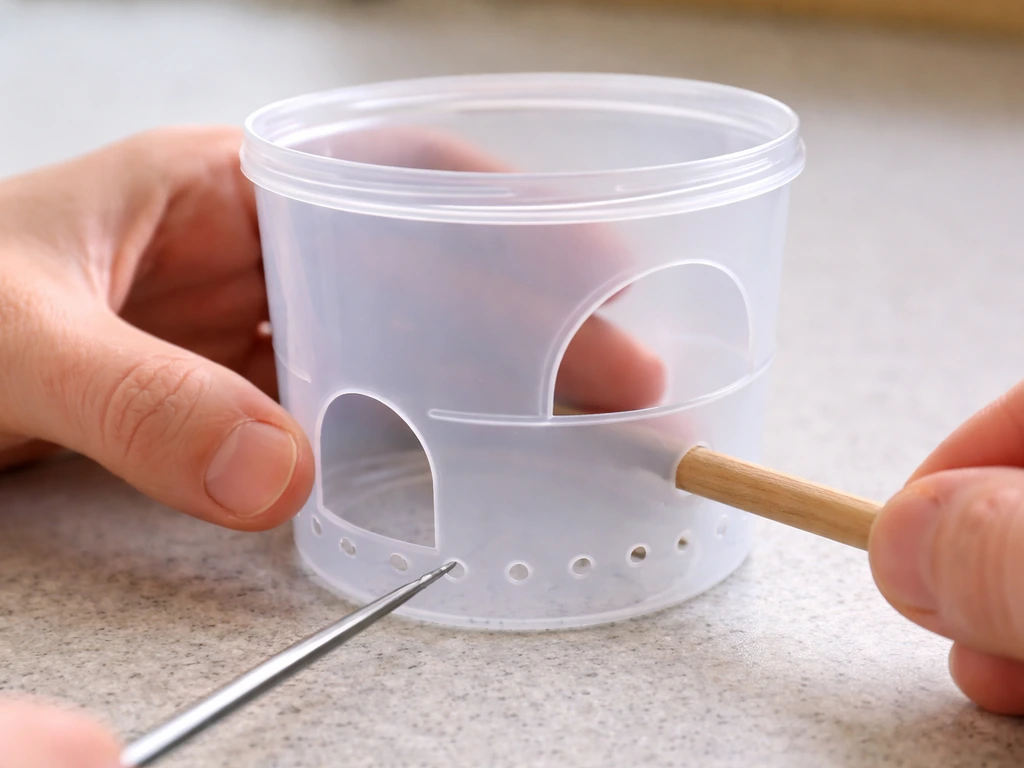
There are two simple styles you can make from a yoghurt pot. You can also take a look at how to make a lego bird feeder for a more playful, toy-based alternative to the yoghurt-pot styles. The first is a hanging seed feeder where the pot hangs upside down or at an angle with a seed port hole cut in the side. The second is an open-cup feeder where the pot sits right-way-up and birds perch on the rim. Here's how to build both.
Style 1: Hanging side-port feeder (more weatherproof)
- Clean and dry your yoghurt pot completely.
- Punch 3 to 4 small drainage holes (about 3mm each) in the base of the pot using a skewer or push pin. These stop water pooling if rain gets in.
- About 3cm up from the base of the pot, punch two holes directly opposite each other — these are your perch holes. Push your dowel or twig through both holes so roughly 4–5cm sticks out on each side. Birds need that overhang to grip onto comfortably.
- About 2cm above each perch hole, cut or punch a seed port opening. Make each port roughly 2.5cm in diameter — large enough for a bird to reach in and pick up seeds, but not so wide that seeds pour out. A sharp pencil will start the hole; widen it carefully with scissors.
- Punch two small holes through the base (or the centre of the lid if your pot has one) and thread your string or wire through, knotting it securely on the inside. This becomes your hanging point. The feeder now hangs with the base at the top and the opening at the bottom.
- Fill the pot loosely with seed through the base opening before you seal it, then thread the string through and tie off. Don't overfill — seed about two-thirds of the way up is plenty.
- Hang it up (see the placement section below) and watch.
Style 2: Open-cup feeder (easiest for beginners and kids)
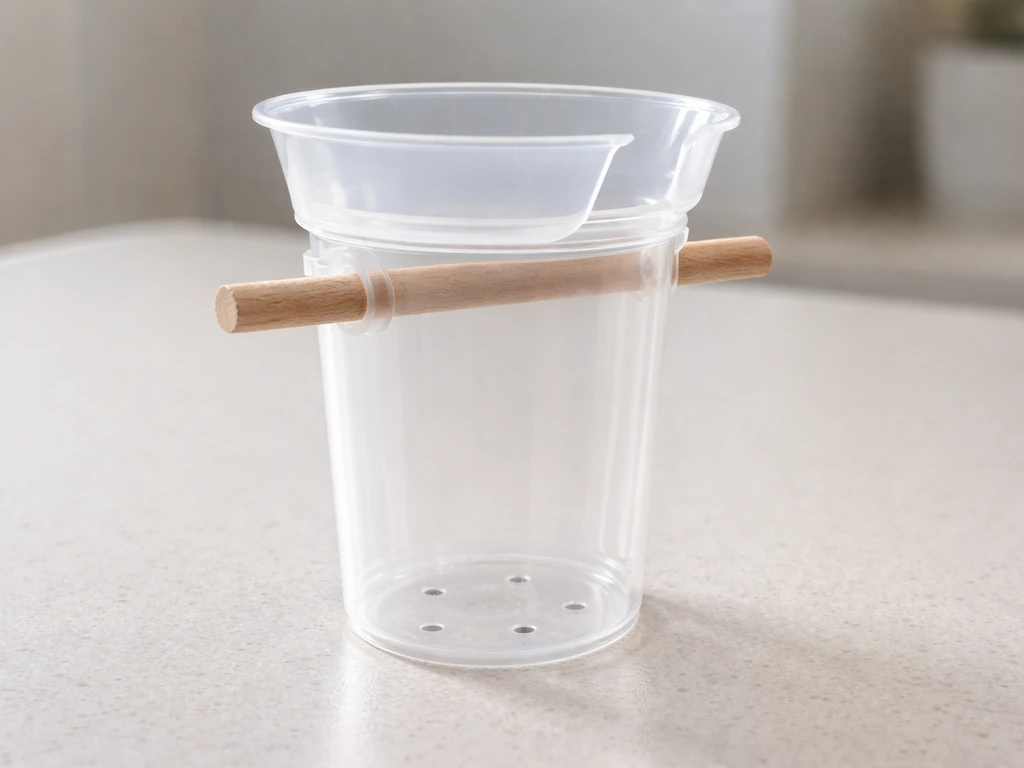
- Clean and dry the pot.
- Punch 4 to 6 drainage holes in the base — slightly larger than style 1 (about 5mm) since water needs to drain freely from an upright container.
- Punch two hanging holes just below the rim of the pot, directly opposite each other. Thread your string through both and tie firmly so the pot hangs level.
- Fill with seed to about half the pot's depth — birds will sit on the rim and peck down.
- If you have a lid, punch matching holes and use it as a loose rain cover by hanging it above the open pot on the same string, about 5–8cm above the rim.
A quick note on hole size: for the access ports specifically, roughly 2 to 2.5cm (about an inch) is a practical size for common garden birds like sparrows, finches, and tits. Going much larger lets seed scatter and wastes food; much smaller and birds can't get their beak in easily. You don't need to be precise, close enough genuinely works here.
Filling it with the right bird food (and how much)
Black oil sunflower seeds are the single best thing you can put in a yoghurt pot feeder. They attract the widest variety of common garden birds, including sparrows, finches, chickadees, and nuthatches, and have a thin shell that smaller birds can crack. If you want to branch out, nyjer (thistle) seed is excellent for goldfinches, and mixed seed blends with millet work well for general feeding. If you want to branch out, blank" rel="noopener noreferrer">nyjer (thistle) seed is excellent for goldfinches, and mixed seed blends with millet work well for general feeding. Avoid cheap filler-heavy mixes that are mostly red millet or milo, birds ignore most of it and it falls to the ground.
Do not feed birds bread, crackers, or processed human food. It sounds harmless but it lacks nutrition, can cause digestive problems, and birds will fill up on it instead of eating food that's actually good for them. Similarly, avoid suet in warm weather (above about 20°C / 68°F) because it melts, goes rancid fast, and can mat into birds' feathers.
For a small yoghurt pot feeder, fill it to about half to two-thirds full each time. Only put in as much seed as birds can eat in roughly a day or two. This keeps the food fresh, reduces waste on the ground (which attracts rats and mice), and means you're checking and maintaining the feeder regularly.
How to hang and place it safely in your yard
Height matters more than most people think. Aim for 5 to 6 feet (about 1.5 to 1.8 metres) off the ground. This puts the feeder high enough to reduce predator access from ground level but low enough that you can actually reach it to refill and clean it. Hang it from a tree branch, a shepherd's hook, a fence post, or even a washing line hook.
One of the most important placement decisions is your distance from windows. Feeders placed within 3 feet (about 90cm) of a window are actually safer than those at intermediate distances, because birds don't build up enough speed to injure themselves if they do fly toward the glass. Feeders placed 30 feet or more from windows are also safe. The danger zone is the middle range, roughly 3 to 30 feet, where birds have enough space to accelerate but can't see the glass clearly. If your only option is that middle distance, add window decals or tape strips to the glass to make it visible.
Position the feeder near cover: ideally within 2 to 3 metres of a shrub, hedge, or small tree. Birds use this cover to watch for predators before flying in to feed, and to escape quickly if a cat or hawk appears. Completely exposed feeders in the middle of an open lawn take much longer to attract regular visitors.
For squirrel-proofing, keep the feeder at least 8 feet horizontally from any fence, deck rail, or tree branch a squirrel could launch from. If you're using a pole or shepherd's hook, add a baffle below the feeder. A large upside-down plastic bowl threaded onto the pole works reasonably well as a DIY option. Because yoghurt pot feeders are lightweight, squirrels can sometimes just knock them clean off, so a secure hanging method matters more here than with heavier feeders.
Weather-proofing, cleaning, and keeping on top of maintenance
Yoghurt pots are not inherently waterproof on the inside, and wet seed is where things go wrong fast. Mold grows, seed clumps, and birds will stop using a feeder that smells bad or has visibly spoiled food. If you open the feeder and the seed is wet, smells off, or you can see any mold, discard all the seed, clean the pot, and start fresh before refilling.
For regular cleaning, aim for every two weeks as a baseline. During warm, damp weather or periods of heavy use, clean it weekly. The method is simple: rinse the pot, then soak or scrub it with a 10% bleach solution (1 tablespoon of standard household bleach per gallon, or roughly 5ml per litre, of water). Rinse it very thoroughly afterwards to remove any bleach smell, and let it dry completely before refilling with seed. Wet seed in a freshly bleached-but-not-rinsed feeder is a fast way to drive birds away.
Yoghurt pots will degrade in UV light and weather over time. Expect to replace them every few months, or sooner if the plastic starts cracking or the pot becomes impossible to clean properly. That's not a flaw in the project, it's just the nature of the material. Having two or three pots on rotation so one is always drying after cleaning is a habit worth building.
If you want to extend the lifespan, coat the outside of the pot with a thin layer of clear outdoor varnish or even beeswax before you hang it. This adds some UV protection and makes the surface easier to wipe down.
Troubleshooting: when birds won't come, or pests do
Birds are ignoring the feeder
Give it at least two weeks before assuming something is wrong. Birds are cautious about new objects in their territory and it takes time for them to accept a new food source. If nothing's happening after two weeks, check these things first: Is it placed near cover? Is the seed fresh and dry? Is the feeder stable, or is it swinging and spinning in the wind (which birds find unsettling)? Try weighting the base slightly with a small stone or using a shorter, stiffer hanging cord to reduce spin.
Also check that your seed port holes aren't too small. If you can't comfortably fit your finger in them, they may be too tight for birds to reach seed easily. Enlarge them slightly with a pair of scissors.
Ants are getting into the feeder
Ants are one of the most common complaints with any hanging feeder. The easiest solution is an ant moat: a small cup or bottle cap filled with water threaded onto the hanging string above the feeder. Ants can't cross standing water. You can make one by pushing your hanging string through the base of a small plastic bottle cap and sealing the string to it with a little silicone or hot glue, then keeping the cap topped up with water. Clean the moat weekly or it becomes a breeding ground.
Squirrels keep raiding or knocking down the feeder
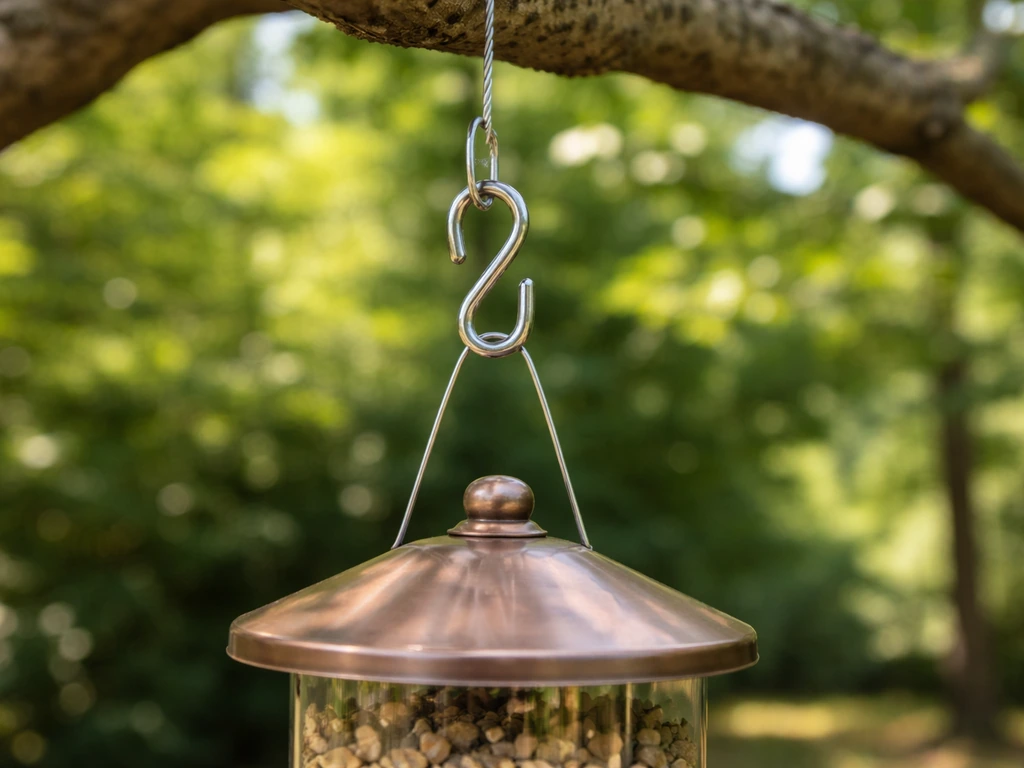
If your feeder keeps getting knocked down, the hanging attachment isn't strong enough. Switch from string to thin wire or a metal S-hook. Also revisit your placement: if a squirrel can reach it from a fence or branch, move it further away (remember that 8-foot horizontal clearance rule). Yoghurt pots are so light that determined squirrels will sometimes just grab the whole thing, so a more secure wire attachment point directly to a shepherd's hook is more reliable than a swinging string hang.
Seed is spilling and making a mess on the ground
Ground spillage attracts rats, mice, and pigeons. If your seed port holes are too big or the feeder swings heavily in wind, seed spills fast. Reduce the hole size, try filling the feeder less full (less seed means less pressure pushing out), and consider adding a small seed-catcher tray below the feeder. Check the ground regularly and rake up spilled seed promptly.
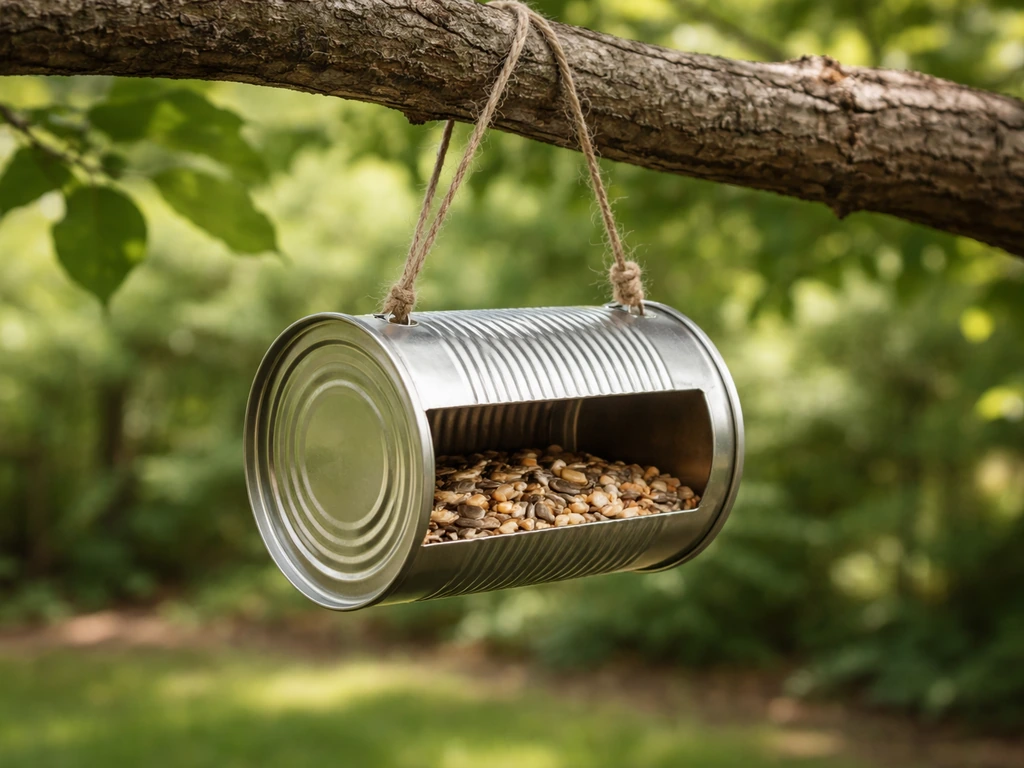
If you enjoy building feeders from recycled materials, the same principles here apply neatly to tin cans, tetra pack cartons, and other food containers. If you're specifically interested in a how-to, see how to make bird feeder with tetra pack for a carton version of the same hanging feeder idea tetra pack cartons. If you want to go beyond yoghurt pots, a tin can bird feeder DIY setup is a great alternative using the same hole placement and drainage ideas tin cans. Each material has its own quirks around drainage and weatherproofing, but the core logic of hole placement, perch sizing, and food choice stays consistent across all of them.
FAQ
What should I use if I do not have sunflower seeds or the seed I have looks different from oil sunflower seeds?
Oil sunflower seeds with a thin shell are best, but you can swap in a small amount of mixed sunflower (still mostly sunflower) if that's what you have. Avoid heavy filler mixes, and do not start with a large bulk bag until you confirm birds actually land and eat from the access holes.
How can I tell if the drainage hole is big enough?
After you add water to the filled feeder area (or mist the outside), check that water quickly escapes rather than pooling inside. If water stays for more than a few minutes, enlarge the bottom hole slightly so wet seed does not build up.
Can I make a yoghurt pot feeder in cold weather, and do I need to change anything?
Yes, but adjust refill timing. In damp or freezing spells, check more often for clumping and moisture, and use smaller refills so seed does not sit for long periods and turn stale.
How do I prevent the feeder from swinging and scaring birds?
Use a shorter, stiffer hanging line (or a wire attachment), and keep the string untwisted so the pot hangs straight. Also ensure the hanging hole is punched symmetrically, if it is off-center the pot will spin more in wind.
What if I see birds sitting on the rim but not eating, does that mean the holes are wrong?
Often it means the access ports are too tight or too high. Make sure birds can reach with their beak, aim for roughly 2 to 2.5 cm opening, and check that the seed port is cut at a height that lets a bird comfortably insert its head.
Do I need to remove the feeder after nesting season or when birds stop coming?
Not automatically. If birds stop for a week or two, first check dryness, cleanliness, and placement near cover. Only remove it if seed is repeatedly going moldy or ants or squirrels keep disrupting access.
How often should I refill if ants keep showing up or the feeder is covered with rain?
Refill in smaller batches, so seed is not left damp. When it's rainy, empty and discard any seed that looks clumped or has an off smell, then dry-clean the pot and restart with fresh dry seed.
Is it safe to use other seed types like peanuts, corn, or oats in a yoghurt pot feeder?
In most yoghurt-pot builds, stick to seeds that birds can crack quickly, like sunflower. Larger or softer items like corn can block access holes or fall out, and peanuts often require a different texture or feeder design to prevent spillage and spoilage.
How can I make it safer for birds if I cannot place the feeder at a window distance I like?
If you end up in the mid-range that is hardest to optimize, make the glass visible with decals or tape strips and keep the feeder close to nearby cover so birds have a short, controlled approach rather than a long direct flight path.
What is the best way to handle cleaning if I do not want to use bleach?
Bleach is an effective option, but if you skip it, focus on thorough rinsing and drying and scrub well with hot soapy water, then rinse until no soap remains. If you see mold or the seed turns sour, switching to a disinfecting solution is safer for bird health.
Why do squirrels sometimes knock the feeder off even when I hang it high?
Yoghurt pots are lightweight, so a strong launch from a nearby branch can tip or detach them. Use a secure metal hook attachment point to a stable support, and maintain the recommended horizontal clearance from any launch points.
What should I do if I am seeing birds avoid the feeder after I cleaned it?
Wait a bit, birds can be wary of a newly cleaned object. Also confirm there is no bleach or strong residue smell, and that the feeder is fully dry before refilling, wet plastic or lingering chemical odor can reduce visits.
Next Article
Tin Can Bird Feeder DIY: Step-by-Step Guide for Setup
Build a DIY tin can bird feeder with safe prep, simple and durable designs, secure hanging, placement tips, and upkeep.