You can make a working bird feeder at home today using a plastic bottle, a milk jug, a pinecone, or a few pieces of scrap wood. Each option attracts real birds, costs almost nothing, and takes under an hour to put together. The trick is matching the right design to the birds you want, hanging it correctly so squirrels and weather don't wreck it, and keeping it clean enough that birds keep coming back. Here's everything you need to know to build one, set it up, and actually see results. If you are wondering why make a bird feeder, it all comes down to bringing more birds into your yard with simple, reliable food.
Bird Feeders You Can Make at Home: Easy DIY Plans
Marcus Brennan
17 May 2026
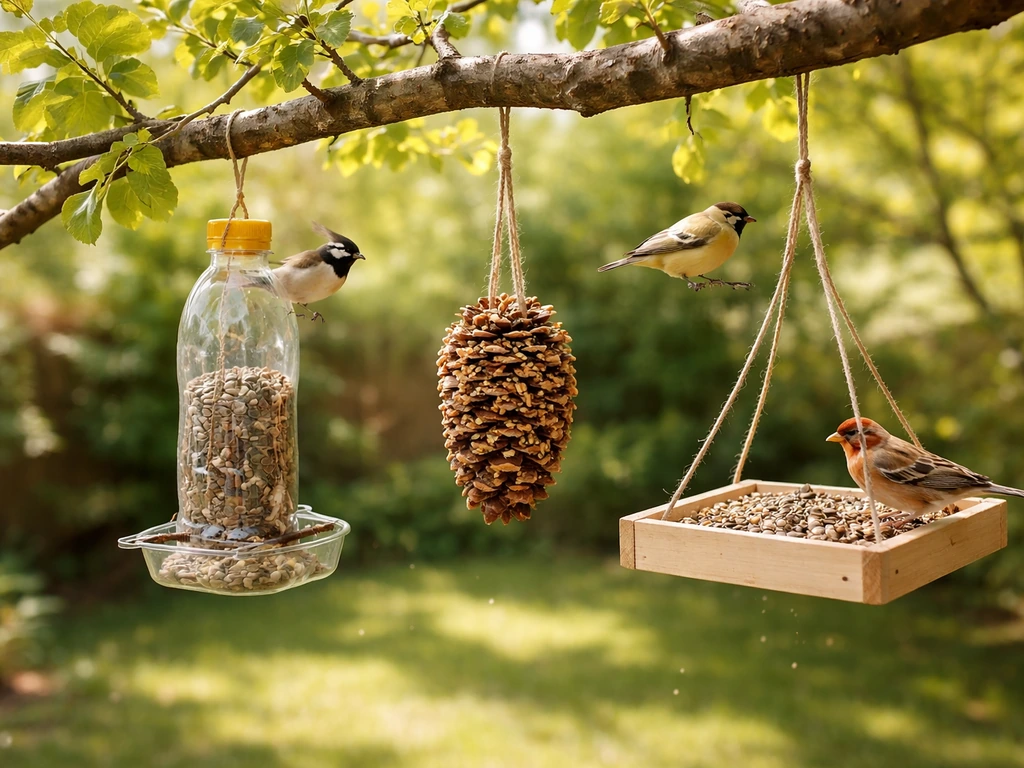
Best DIY feeder options and what birds they attract
Not every feeder works for every bird. Before you start cutting and drilling, think about who you actually want to feed. Different designs draw different species, and choosing the right one up front saves you a lot of frustration.
| Feeder Type | Best For Attracting | Difficulty to Build | Materials |
|---|---|---|---|
| Plastic bottle tube feeder | Finches, sparrows, chickadees | Easy | 2-liter or 1-liter bottle, wooden dowels or sticks, wire |
| Milk jug hopper feeder | Cardinals, juncos, finches, sparrows | Easy | Gallon milk jug, string or wire, sticks for perches |
| Pinecone feeder | Titmice, wrens, chickadees, nuthatches | Very easy (no tools) | Large pinecone, peanut butter or suet, birdseed |
| Suet cage feeder (wood frame) | Woodpeckers, titmice, Carolina wrens, nuthatches | Moderate | Scrap wood, hardware cloth or mesh, screws |
| Platform/tray feeder (wood) | Cardinals, doves, blue jays, juncos | Moderate | Scrap lumber, screen mesh, screws or nails |
Tube-style feeders (including bottle builds) mimic commercial tube feeders and attract small birds that cling well. Hopper-style feeders like the milk jug version work like a mini barn, holding more seed and drawing a wider range of ground-feeding birds to perch and forage. Suet feeders are especially valuable in winter, when birds like Tufted Titmice and Carolina Wrens need high-fat food. Platform feeders are the most open and attract the biggest variety, but they also expose seed to rain and need more frequent cleaning.
Easy step-by-step builds: bottles, milk jugs, and pinecones
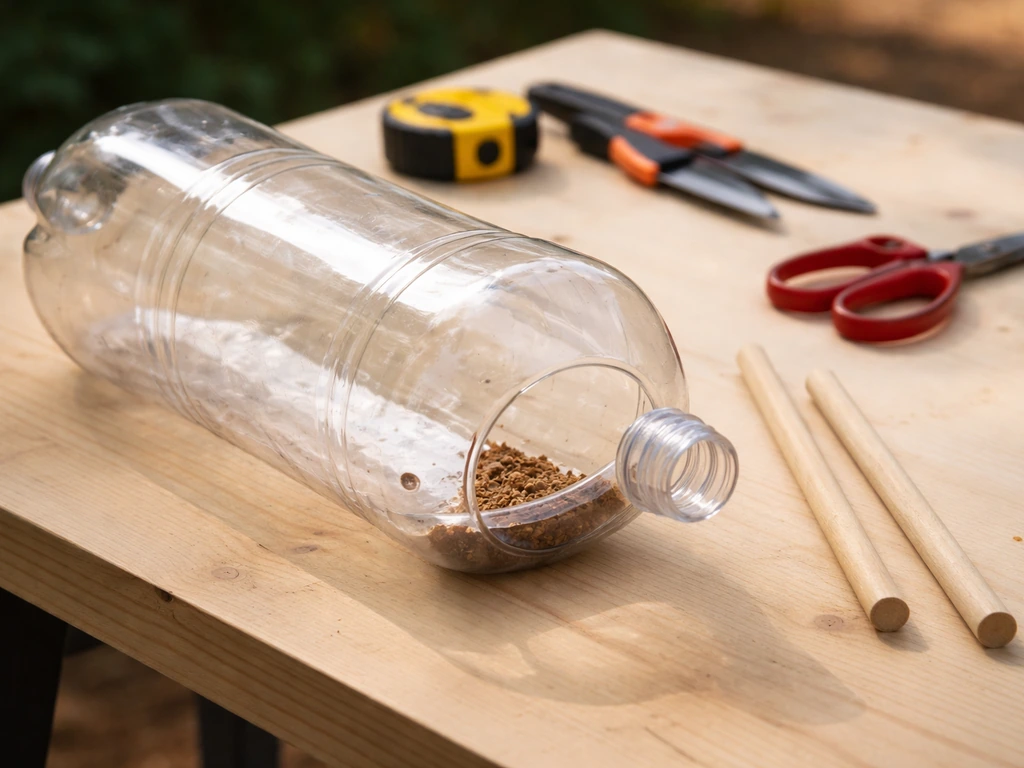
Plastic bottle feeder
This is the fastest build on the list and a great starting point if you've never made a feeder before. You'll need a clean 1-liter or 2-liter plastic bottle, two wooden dowels or sturdy straight sticks, a sharp knife or drill, and wire or strong string for hanging. Total build time: about 20 minutes.
- Wash and dry the bottle completely. Any residue can contaminate seed.
- About one-third of the way up from the bottom, poke or drill two holes directly across from each other. Make them just wide enough for your dowel or stick to pass through snugly. These are your perches.
- About a half inch above each perch hole, cut a seed port roughly a quarter inch in diameter. Birds will reach through the port to grab seed while standing on the perch below.
- Repeat this perch-and-port pair on the opposite side of the bottle, rotating about 90 degrees so you get four perches total.
- Drill or poke a small drainage hole in the very bottom of the bottle so moisture doesn't pool and rot your seed.
- Slide the dowels through the perch holes so they stick out evenly on both sides.
- Poke a hole through the cap, thread wire through it, and twist the wire into a secure hanging loop. Alternatively, wrap wire tightly around the neck of the bottle.
- Fill with sunflower seeds or mixed seed through the top opening, replace the cap, and hang.
Milk jug feeder
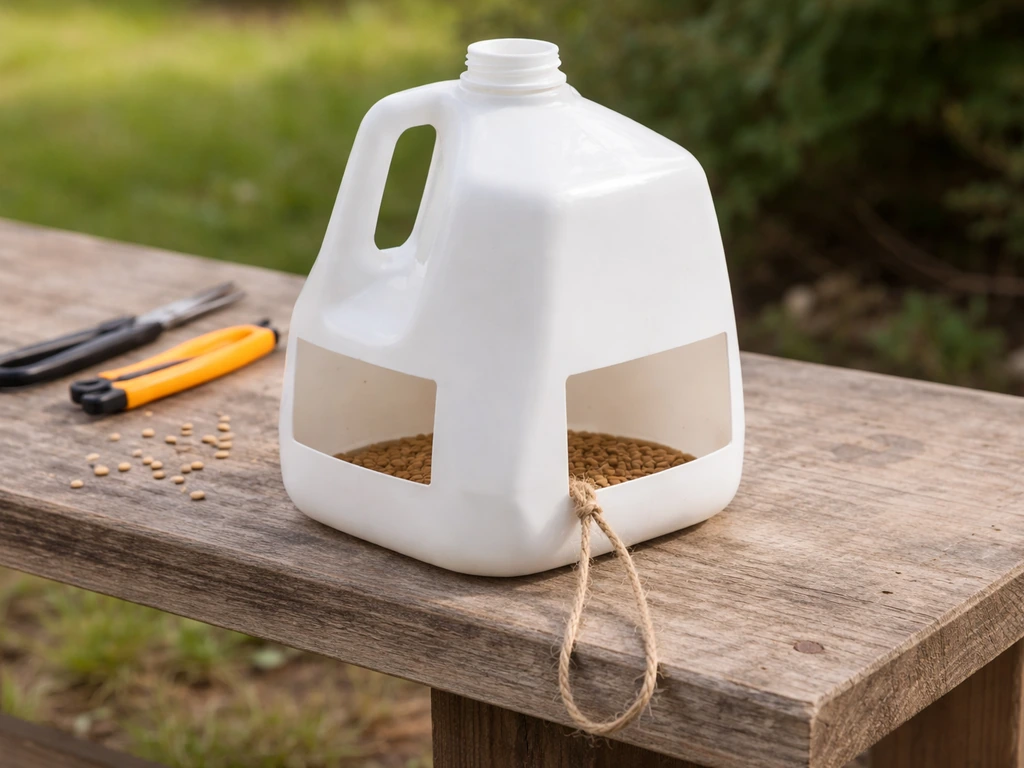
A gallon milk jug makes a surprisingly durable hopper-style feeder. It holds a good amount of seed and is easy to refill. You'll need a clean gallon jug, a marker, a sharp knife or scissors, a nail or hole punch, a couple of small sticks or dowels, and wire or rope. Build time: about 25 minutes.
- Rinse the jug and let it dry fully.
- On two opposite sides of the jug, draw and cut out a large rectangular opening, starting about two inches from the bottom. Leave at least an inch of plastic on all sides of the cut so the structure stays rigid. These are your feeding windows.
- Just below each feeding window, use a nail to poke a small twig-sized hole on both sides of the jug. Push a sturdy stick through both holes to create a perch that runs across the opening.
- Poke several small drainage holes in the very bottom of the jug so rainwater can escape.
- Thread wire or strong cord through the handle of the jug and tie a secure hanging loop.
- Fill with seed through the top opening (the cap stays on if you like, or remove it for easier refilling).
- Hang and watch. Cardinals and juncos tend to discover these quickly.
Pinecone feeder
This is the one you can do with kids in about ten minutes and zero tools. Grab a large pinecone with open scales, a jar of peanut butter (or sunflower butter or soy butter if you're avoiding peanuts), a bowl of mixed birdseed, and a piece of twine. If you're specifically looking for an option that skips peanut butter, see the related guide on how to make bird feeders without peanut butter. If the pinecone has sticky pitch on it, rub a little butter on your hands before handling it, and wash up afterward.
- Tie a piece of twine tightly around the top of the pinecone, leaving enough length to hang it from a branch.
- Use a spoon or butter knife to spread peanut butter (or your chosen alternative) into the crevices between the scales. Pack it in generously.
- Pour birdseed into a shallow bowl or plate, then roll the peanut butter-coated pinecone in the seed, pressing gently so seed sticks all over.
- Hang it from a branch at least five feet off the ground.
- Wash your hands well. Birds will find it, often within a day or two.
If you want to skip peanut butter entirely, you can pack a mixture of suet (solid animal fat, available cheaply from a butcher or grocery meat counter), birdseed, and a little cornmeal into the scales instead. It works just as well and holds together better in warm weather. For more alternatives to peanut butter in feeder builds, there are other approaches worth exploring if allergies or school environments are a factor.
Wood and sturdier feeder builds
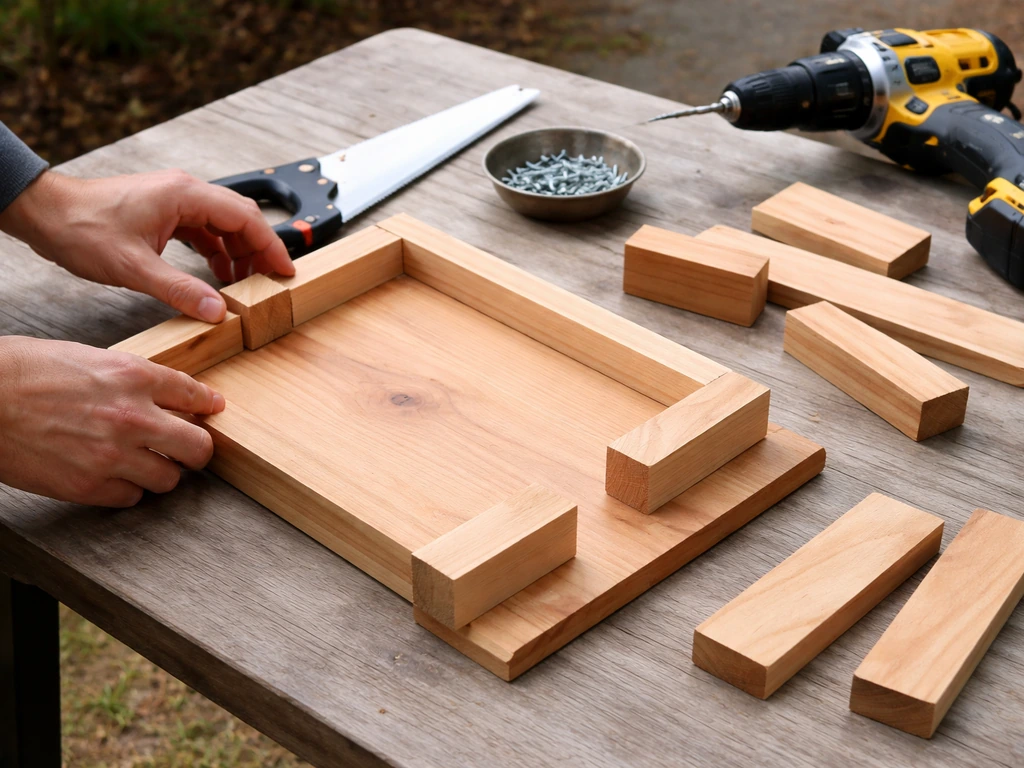
Bottle and jug feeders work well but they're not going to last more than a season or two, especially in harsh weather. If you want something that holds up for years and handles more seed volume, a simple wood build is the way to go. You don't need advanced woodworking skills. A basic platform feeder or a suet cage requires only a saw, a drill, some screws, and scrap lumber.
Simple platform feeder
Cut a piece of untreated cedar or pine to about 12 inches by 18 inches for the tray floor. Cedar is worth the slight extra cost because it naturally resists rot and warping. Attach short side rails (about an inch tall) around the perimeter using screws, leaving gaps at the corners so water can drain. Drill several small drainage holes in the floor as a backup. DIYBirdFeeder also recommends drilling drainage holes in the floor, which helps reduce the risk of standing water. To hang it, screw a short eye bolt into each corner, thread wire through all four, and bring the wires together above the tray into a single hanging point. Fill the tray with mixed seed or sunflower seeds. Birds that prefer platform feeding include cardinals, mourning doves, blue jays, and dark-eyed juncos.
Suet cage feeder
Build a simple rectangular frame from scrap 1x2 lumber, sized to hold a standard store-bought suet cake (roughly 4.5 by 4.5 inches). Staple or nail hardware cloth (half-inch mesh) across the front and back faces of the frame. The mesh lets birds cling and peck at the suet while holding it in place. Drill a pilot hole through the top of the frame and thread a wire loop through it for hanging. Suet feeders are especially productive in winter and attract woodpeckers, nuthatches, titmice, and wrens.
Durability tips for wood feeders
- Use untreated cedar or redwood whenever possible. Pressure-treated lumber contains chemicals that can harm birds.
- Pre-drill all screw holes to prevent the wood from splitting.
- Apply a food-safe linseed oil finish to exposed surfaces to slow weathering. Avoid paints or stains on interior surfaces where seed rests.
- Build drainage holes into every flat surface where water might collect.
- Use stainless steel or galvanized screws. Regular screws will rust and weaken the joints within a season.
- Check all connections each spring before refilling for the season and tighten any loose screws before birds start relying on the feeder.
How to hang and place your feeder for access and safety
Where you put the feeder matters almost as much as how you build it. Poor placement leads to squirrel raids, window collisions, and feeders that birds simply never discover. Get these basics right and you'll see birds faster.
Height and distance from structures
Hang feeders at least five feet off the ground. This keeps them out of easy reach of cats and most ground-level predators. For squirrel management (more on that in the next section), hang or mount feeders at least eight to ten feet away from any tree trunk, fence, deck railing, or structure a squirrel can jump from. Squirrels can clear surprising distances horizontally, so distance from launch points matters more than height alone.
Window distance to prevent collisions
Window collisions kill a lot of birds, and feeder placement is directly connected to that risk. Place feeders either within three feet of a window (so birds don't build up enough speed for a fatal impact if they do fly toward the glass) or at least 30 feet away. The dangerous middle zone, roughly four to 29 feet from a window, gives birds enough room to accelerate before hitting the glass. If you can only hang a feeder in that middle range, put window decals or tape on the glass to break up the reflection.
Visibility and shelter balance
- Place feeders where birds can see approaching predators. Open sightlines matter.
- Position feeders within 10 to 15 feet of shrubs or a brush pile where birds can retreat quickly if spooked. They won't use a feeder that feels exposed.
- Avoid placing feeders directly under large branches where cats can drop down on feeding birds.
- Face feeder openings away from prevailing wind to slow seed from blowing out and to protect birds while they're feeding.
Pest-proofing and preventing food waste
Squirrels, large aggressive birds, and ants are the three most common reasons a DIY feeder stops working well. Each one has a practical solution, and most of them cost very little to implement.
Squirrel-proofing
The honest truth is you can't fully squirrel-proof a feeder. What you can do is make access hard enough that they give up and look elsewhere. The two-part strategy is correct placement plus a baffle. If you're hanging a feeder from a wire, add a torpedo-style baffle above the feeder on the wire. If you're using a pole mount, slide a dome or cylinder baffle onto the pole so the top of the baffle sits at least four feet off the ground and as close to the bottom of the feeder as possible. Pair this with the distance rules mentioned above (eight or more feet from any jumping-off point) and you'll get very close to squirrel-free feeding. The placement matters just as much as the baffle itself.
Ants and other crawling insects
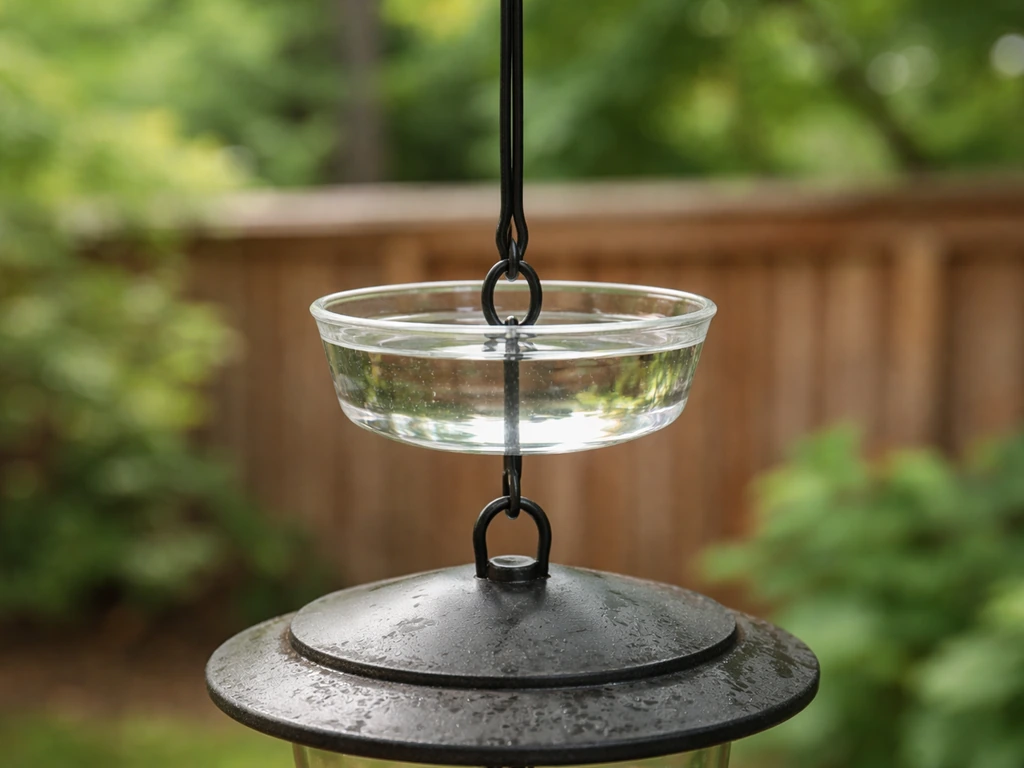
Ants are especially attracted to suet and peanut butter feeders. The simplest fix is an ant moat, which is a small cup that holds water and sits between the hanging wire and the feeder. Ants can't swim across it. You can buy them cheaply or make one from a small plastic container with a hole drilled through the bottom, threaded onto the hanging wire. Keep it filled with fresh water. Avoid using cooking sprays or oils on feeder poles to deter ants, as these can harm birds that preen oil off their feathers.
Reducing food waste
- Use seeds birds in your area actually eat. Mixes with a lot of milo or filler get tossed to the ground and spoil. Black oil sunflower seeds are the most universally liked and produce very little waste.
- Add drainage holes to every feeder design so moisture doesn't cause clumping and mold.
- Fill feeders with only as much seed as birds will eat in two to three days. Overfilling leads to old seed sitting out too long.
- Clean up spilled seed below the feeder regularly. It attracts rodents and can spread disease to ground-feeding birds.
- Use a tray or seed catcher below tube feeders to collect fallen seed rather than letting it pile on the ground.
Maintenance, cleaning, and refill routines
Dirty feeders spread disease between birds, and once that starts happening in your yard you'll notice visitation drop off. The good news is cleaning a feeder takes about ten minutes and you only need to do it well once a month, with a quicker rinse more often.
Weekly upkeep
Once a week, dump out any old or wet seed before refilling. Rinse the feeder with hot water and let it dry before adding fresh seed. This alone prevents most mold and clumping problems. Clean up any seed debris and droppings that have accumulated on the ground beneath the feeder.
Monthly deep clean
Once a month (or any time you notice sick-looking birds visiting), do a full disinfecting clean. Empty the feeder completely and scrub it with hot soapy water, using one to two teaspoons of dish soap per gallon of water. Rinse well, then soak in a ten percent bleach solution (one part bleach to nine parts water) for about 15 minutes. Rinse thoroughly two or three times until you can't smell any bleach, then let the feeder air dry completely before refilling. A damp feeder will cause seed to mold within days. Mix a fresh bleach solution each time you clean since bleach loses its disinfecting power after about 24 hours in water.
Refill strategy
- Check seed level every two to three days, especially in winter when birds feed more heavily.
- Always check for wet or clumped seed at the bottom before topping off. Adding fresh seed on top of old moldy seed wastes both.
- Store bulk seed in a sealed metal or thick plastic container with a lid to keep it dry and deter rodents.
- In very hot or humid weather, reduce fill amounts since seed spoils faster. In cold weather, you can fill more generously.
Troubleshooting: why birds aren't visiting and how to fix it
Building a feeder and then waiting and waiting with no birds is genuinely discouraging. Here are the most common reasons it happens and what to do about each one.
| Problem | Likely Cause | Fix |
|---|---|---|
| No birds after several days | Feeder is too exposed, wrong seed, or in a low-traffic area | Move it within 15 feet of shrubs or trees; switch to black oil sunflower seeds; give it two full weeks before moving again |
| Birds visit once and don't return | Seed is spoiled, wet, or moldy | Empty, clean, and fully dry the feeder; refill with fresh seed; add drainage holes if absent |
| Seed disappears fast but no birds seen | Squirrels or large birds are emptying it overnight or while you're away | Install a baffle; recheck placement distance from nearby structures; try a weight-sensitive or cage-style feeder |
| Feeder swings wildly and birds won't land | Hanging wire is too long or too thin, creating excess movement | Shorten the hanging wire; use a heavier gauge wire; stabilize with a second anchor point |
| Seed pours out too fast or spills constantly | Seed ports are too large or feeder has no drainage and is waterlogged | Reduce port size with a patch of tape and a smaller re-cut hole; add drainage holes; check that seed isn't swollen from moisture |
| Birds are hitting a nearby window | Feeder is placed in the dangerous 4 to 29 foot window zone | Move feeder to within 3 feet of the window or 30 or more feet away; add window decals or external screens |
| Ants are swarming the feeder | No barrier between hanging point and feeder | Add an ant moat above the feeder on the hanging wire and keep it filled with water |
One thing worth saying plainly: birds are creatures of habit, and it can take two to four weeks for a new feeder in a new location to get regular traffic, especially in spring and summer when natural food is abundant. If everything looks right (clean feeder, good seed, decent placement), the most likely fix is just patience. Portland’s community safety handout also recommends counting birds per time window to measure how attractive your feeder is. Winter is actually the easiest time to attract birds fast because natural food is scarce and birds are actively searching. If you're starting out in warmer months, put the feeder near existing plants that produce berries or seeds to give birds a reason to be in that area.
Once you've got your first feeder working, the natural next step is experimenting with different designs to attract a wider range of species. A pinecone feeder for wrens and titmice, a milk jug for finches and sparrows, and a wood platform for cardinals and doves can all coexist in one yard and turn a single backyard into a genuinely active feeding station. If you want to try something more decorative, a cookie cutter bird feeder is a fun option that still attracts plenty of backyard birds. Start with one build, get the placement and cleaning routine dialed in, and expand from there.
FAQ
What seed should I use first when I’m trying bird feeders you can make at home?
Start with a simple mixed seed or black-oil sunflower (often the easiest for new yards). If your feeder is tube-style, use smaller, cling-friendly seeds. After a week, switch based on who is actually visiting, rather than guessing.
How do I prevent mold when using homemade bottle or milk jug feeders?
Drain and fully dry the feeder before every refill, not just after deep cleans. In humid weather, refill more frequently with small amounts so seed does not sit damp for days.
Can I reuse a plastic bottle or milk jug feeder if it got chewed or cracked?
If the bottle or jug has sharp edges or large cracks where birds can get trapped, retire it. Replace the container part but keep your hanging system and baffle if it is still secure and clean.
Do I need to use a specific birdseed for suet feeders in winter?
Use suet that matches the birds you want, and keep the suet cage clean so it does not smear. Woodpeckers often prefer suet that stays firm, while smaller birds may need mesh access that lets them cling and peck comfortably.
How can I stop large birds from taking over platform feeders?
Reduce the openness a bit by using a feeder with partially enclosed sides, or switch part of your yard to tube or suet styles that favor smaller birds. Also consider seed choices that are less appealing to bulky ground-feeders.
What’s the safest way to hang homemade feeders to reduce predator risk and accidents?
Use hardware (like eye bolts or properly tied wire) that cannot loosen as materials dry. Avoid lightweight string alone, especially in wind, and ensure the feeder cannot swing into fences or tree branches where predators can access it.
How do I handle bird feeder placement if I have limited space near windows?
If you cannot meet the within-3-feet or 30-feet rule, add an external visual break like decals on the glass, and avoid placing the feeder directly where reflections are strongest. Recheck placement after a few clear days because sun angle changes the reflection.
Will a feeder still work if I don’t see birds right away?
Yes. New feeders often take 2 to 4 weeks to become “normal” in the area. Keep the feeder clean, use the same seed type consistently, and avoid moving it too often during the settling period.
How do I keep squirrels from defeating my homemade bird feeder?
Placement plus a baffle is the core solution, distance from jump-off points matters, and the baffle must sit close to the feeder’s bottom. Regularly check for gaps, overgrown branches, or new launch points created by nearby growth.
Can ants become a problem even if I’m not using peanut butter?
Yes, ants are still commonly drawn to suet-based setups and sticky residues. If ants show up, install an ant moat and keep it filled with fresh water, then remove any spilled seed around the base.
How often should I do a full disinfecting clean, and what if I skip a month?
Monthly deep cleaning is a good baseline, but if you notice sick-looking birds, increase frequency right away. If you skip extended periods, do not “just rinse,” instead scrub and fully disinfect before refilling.
What should I do if birds keep visiting but look unwell at my DIY feeders?
Stop refilling immediately, remove the old seed, and clean and disinfect the feeder thoroughly. Wash surrounding debris on the ground, because contaminated buildup can keep re-exposing birds even after the feeder looks clean.
Is it safe to use cooking sprays or oils on feeder poles to deter ants or squirrels?
Avoid them. Oils and sprays can transfer onto birds’ feathers when they preen, and that can harm them. Use physical barriers instead, like an ant moat and proper baffles.
How can I attract more bird species once the first feeder works?
Add a second feeder type that targets different feeding behaviors (for example, a suet cage for winter, a platform for bigger species, and a tube-style build for small clingers). Keep designs in similar locations so birds can learn the “food source map,” then adjust seed types based on visitors.