Build a pinecone or plastic bottle feeder this weekend, hang it 5 to 6 feet off the ground near a tree or shrub, fill it with black-oil sunflower seeds, and you will almost certainly have birds visiting within a few days. That's the fast-start version. The rest of this guide walks you through picking the right feeder for your goals, building it from materials you probably already have, learning what your local birds actually want, and keeping the whole setup clean and pest-free so it stays worth maintaining.
Create and Learn Bird Feeder: Build, Place, and Adapt
Marcus Brennan
17 May 2026
Pick a feeder type and decide which birds you want
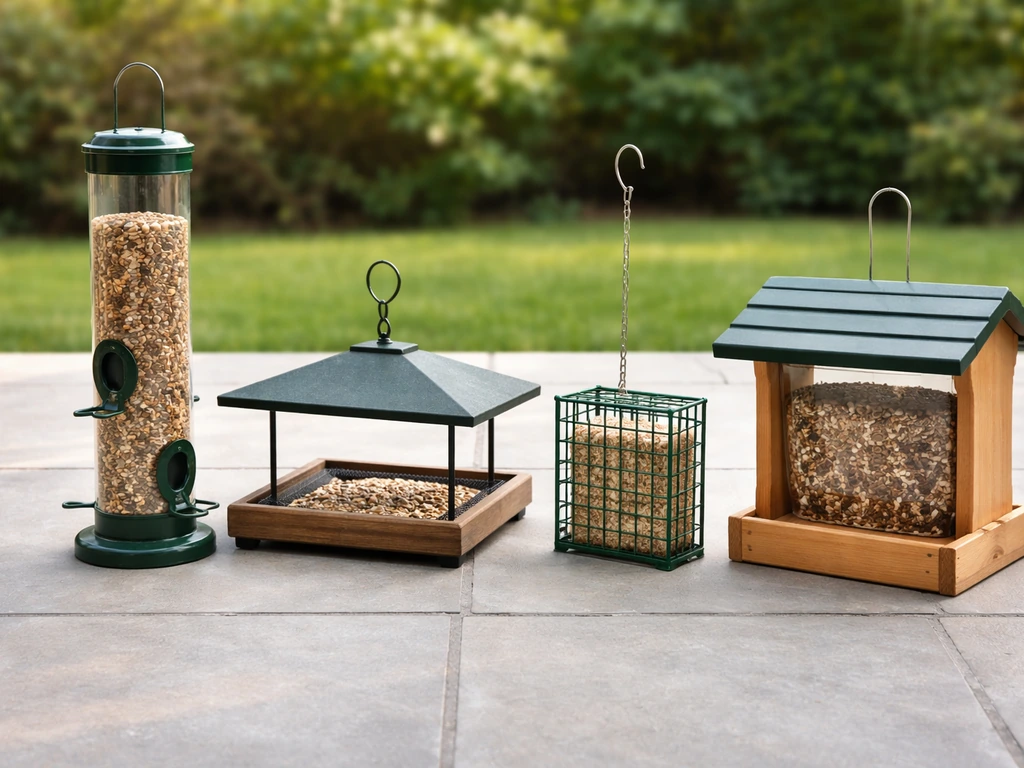
Before you start cutting wood or rolling out wire, think for two minutes about which birds you actually want to see. North American feeder birds fall into a few loose feeding-behavior groups, and matching your feeder type to those groups is the fastest way to get results.
| Bird Group | Examples | Best Feeder Type | Preferred Food |
|---|---|---|---|
| Ground feeders | Sparrows, juncos, towhees, doves | Platform or tray feeder | Mixed seed, millet, black-oil sunflower |
| Shrub/mid-canopy feeders | Finches, cardinals, chickadees | Tube or hopper feeder | Black-oil sunflower, safflower, nyjer |
| Clinging/bark feeders | Woodpeckers, nuthatches, wrens | Suet cage or log feeder | Suet, peanuts |
| Larger generalists | Jays, red-winged blackbirds, grackles | Hopper feeder | Sunflower, corn, peanuts |
If you want a broad mix of species, a hopper feeder (the classic barn-shaped feeder with a seed reservoir and a roof) is the single best investment of your time. It attracts almost everything a tube feeder does, plus larger birds like cardinals and jays. If you want to start simpler, a pinecone rolled in seed or a recycled bottle feeder will still bring in chickadees, finches, and nuthatches. Set a specific goal, even if it's just 'I want to see what shows up in my yard,' because it shapes every decision after this.
Build a feeder from materials you already have
You don't need a workshop or a budget. These four builds use common household items and take between 10 minutes and a couple of hours depending on what you're making. Start with whichever material you have on hand.
Pinecone feeder (10 minutes, no tools)
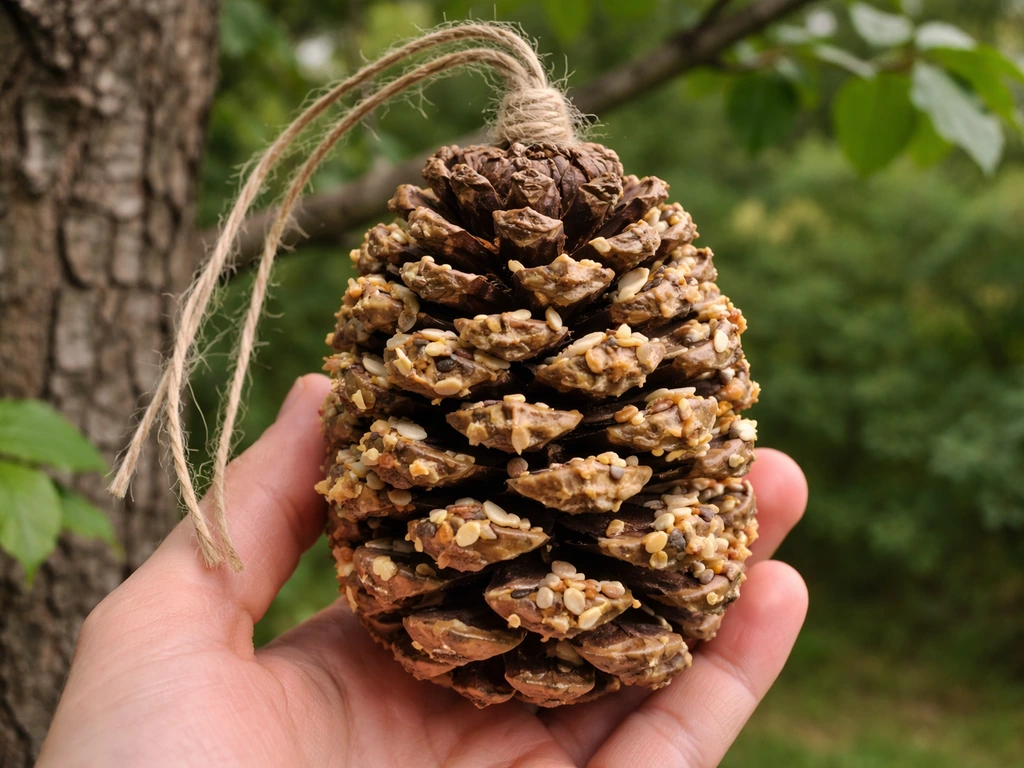
This is the fastest feeder you can make and it genuinely works. Tie a length of twine or paracord around the top of a large, open pinecone. Roll the pinecone in peanut butter (or, if you want to skip peanut butter, use softened suet or a seed-and-gelatin mix), then roll it in black-oil sunflower seeds or mixed seed until it's coated. Hang it from a branch at least 5 feet off the ground. Chickadees, nuthatches, and finches will find it. It's also a great project to do with kids, which is why it's a go-to for preschool and early-elementary age groups.
Plastic bottle tube feeder (30 minutes, basic tools)
A clean 2-liter plastic bottle makes a functional tube feeder. You'll need the bottle, a wooden dowel or a couple of chopsticks, a utility knife or scissors, and twine. Cut two small feeding holes about an inch wide on opposite sides of the bottle, roughly 4 inches up from the bottom. Push a dowel through both holes so it sticks out a few inches on each side as a perch. Cut a small fill hole near the top (or just remove the cap to fill, then replace it). Thread twine through the cap or around the neck to hang it. Fill with black-oil sunflower seeds. The bottle acts just like a commercial tube feeder, and you can make multiple ones for different seeds in different spots.
Milk jug platform feeder (20 minutes, scissors or knife)
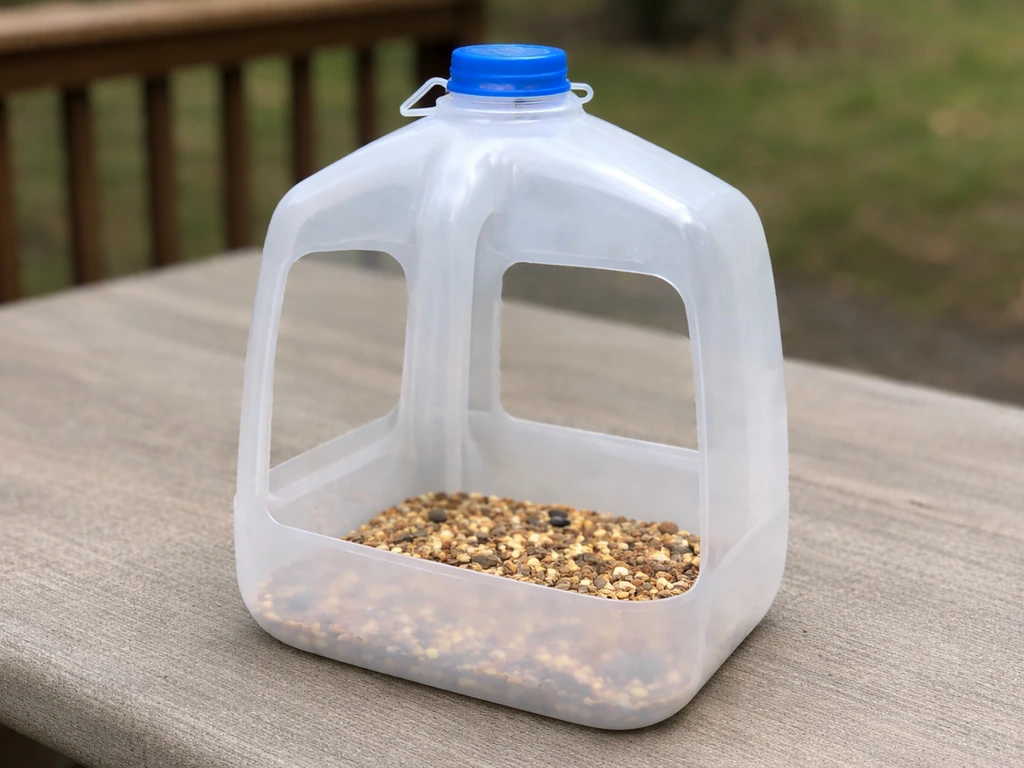
A clean plastic milk jug can become a small hopper or platform feeder. Cut large rectangular windows on two or three sides of the jug, leaving the bottom few inches intact to hold seed. Keep the handle intact so you can hang it directly, or thread twine through holes near the top. The open sides let birds land on the edges and access seed from multiple angles. This design is especially good for sparrows and juncos that prefer a flat surface over a small tube port. To make cookie cutter bird feeders, you can pour or press bird-safe seed and binder into cookie cutter shapes, then let them set before hanging sparrows and juncos. Poke a few small drainage holes in the bottom so rain doesn't pool and spoil the seed.
Simple wood platform feeder (1 to 2 hours, saw and drill)
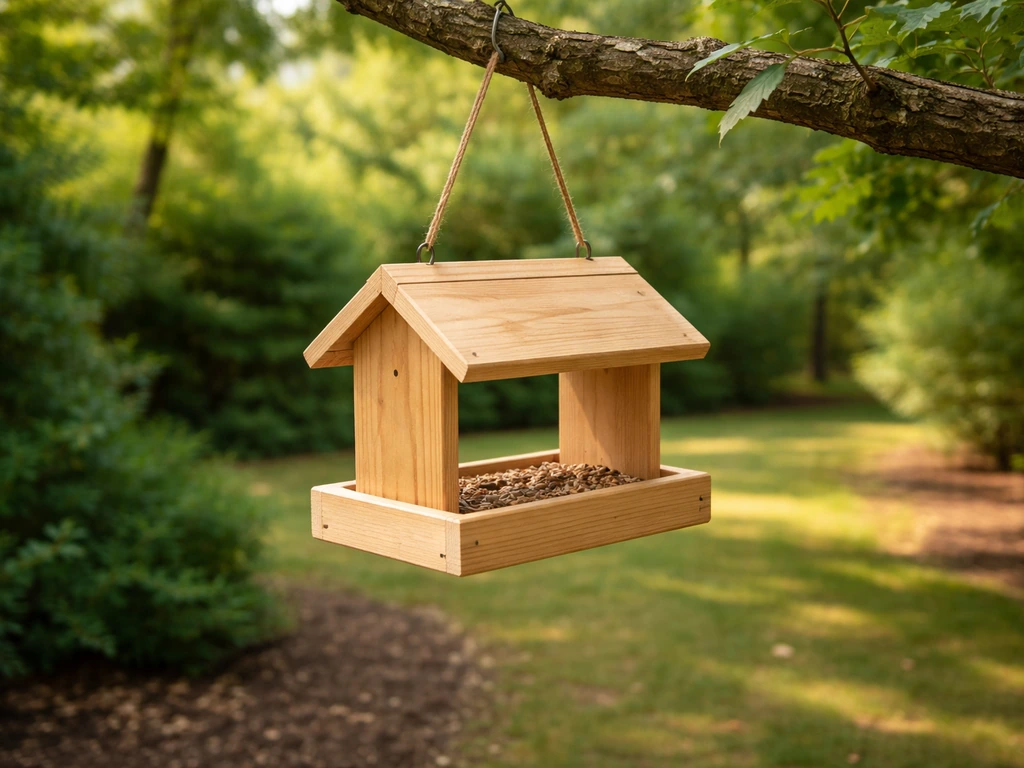
If you want something sturdier that will last several seasons, a basic wood platform feeder is the right move. Cut a piece of untreated cedar or pine into a rectangle, roughly 12 by 16 inches. Cedar is worth using if you can find scrap pieces because it handles moisture much better than pine. Nail or screw a thin lip around the edges (about 1 inch high) to keep seed from blowing off. Drill several small drainage holes in the floor. Attach two screw eyes to the top surface, run chain or heavy twine through them, and hang it from a shepherd's hook or tree branch. You can also mount it on a post. This feeder will attract the widest variety of birds because it mimics a natural flat surface with good visibility and easy landing.
Choosing fill and learning what your local birds actually like
Black-oil sunflower seed is the single best starting point for almost any feeder. The shells are thin enough for small birds to crack, the seeds are high in fat and protein, and nearly every common feeder bird in North America will eat them: chickadees, finches, cardinals, nuthatches, sparrows, and more. Buy a 20-pound bag and use it as your baseline.
Once you have that baseline going, you can start to layer in other foods based on what you observe. Suet (rendered beef fat, usually sold in cakes that drop into a wire cage) is the best cold-weather addition for woodpeckers, nuthatches, and wrens. It stays solid and safe up to about 90°F (32°C), so in warmer months you'll want a no-melt suet formulation or skip it in summer. Nyjer (thistle) seed in a fine-mesh sock or specialty tube feeder is almost irresistible to goldfinches and pine siskins. Safflower is worth trying if you want to discourage squirrels and grackles, since most of them don't like it, but cardinals love it.
The real learning happens when you watch the feeder for 10 to 15 minutes a few times a week. Keep a simple notebook or use the free Cornell Lab eBird app to jot down what species show up, what they're eating, and what they're ignoring. If a seed is consistently left behind and going stale, stop buying it. If a certain feeder position always has birds lined up while another sits empty, move the empty one. This iterative approach, adjusting based on what you actually see rather than what the bag says, is how you build a setup that works for your specific yard and region.
Where to hang it and how to do it right
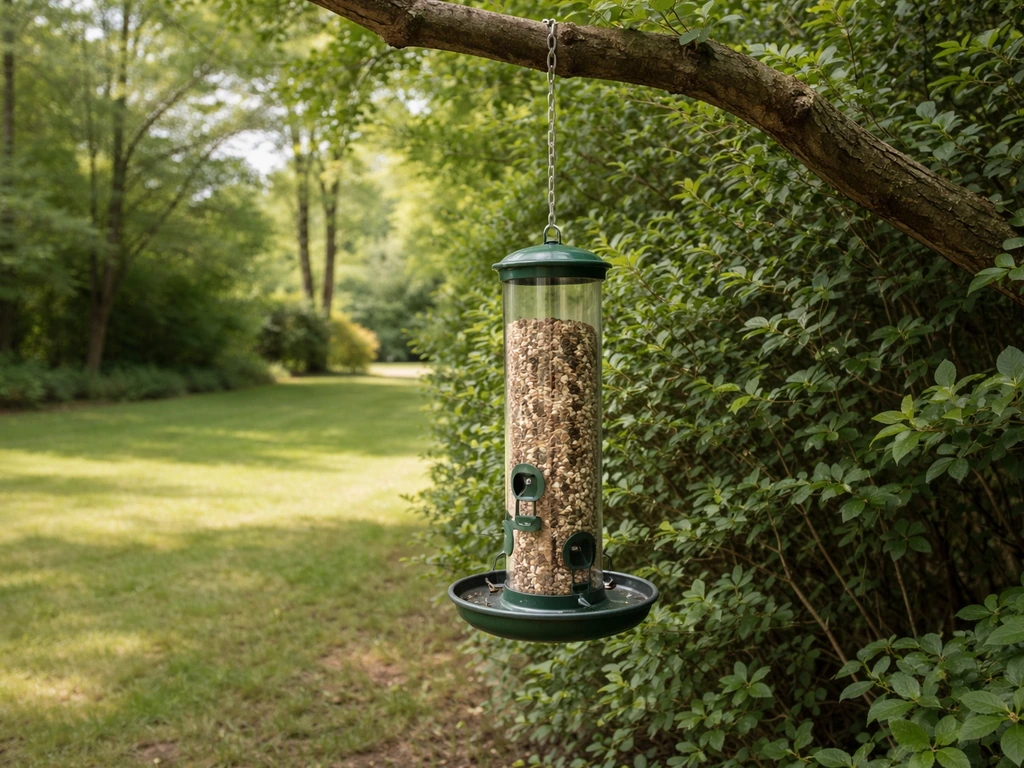
Placement is the part most beginners underestimate. You can build a perfect feeder and fill it with the right seed, and birds will still ignore it if it's in the wrong spot.
- Hang feeders within 10 feet of a tree, shrub, or hedge so birds have a quick escape route and a place to wait their turn. Birds won't stay long at a feeder that's totally exposed with no nearby cover.
- Keep feeders either very close to a window (within 3 feet) or far from one (more than 10 feet) to reduce window strike risk. The danger zone is the mid-range where birds build up speed before hitting glass.
- Aim for 5 to 6 feet off the ground for tube and hopper feeders. This puts food in sight of perching birds while making it harder (though not impossible) for ground-based predators.
- Platform feeders can go lower, around 3 to 4 feet, since the birds that prefer them (sparrows, juncos, doves) are ground-foraging species anyway.
- Suet feeders work best mounted on a tree trunk or hung from a branch on the shaded side of the yard, which helps the suet stay firm longer in warm weather.
- Face the feeder opening away from the prevailing wind direction so seed doesn't blow out and rain doesn't soak the interior.
- Use a shepherd's hook with a baffle below the feeder, or hang from a wire between two posts, to make squirrel access harder from day one.
For hanging hardware, a simple S-hook and heavy-gauge wire work fine for most DIY feeders. If you're hanging from a branch, use a wide fabric strap or rope looped around the branch rather than wire, which can damage bark over time. For heavier wood feeders, a lag eye bolt screwed into a wooden post is the most secure option.
Cleaning and maintenance so the feeder stays safe
A dirty feeder is worse than no feeder. Wet or old seed grows mold and bacteria that can kill birds. This is the part people skip, and it's the most important habit to build.
- Scrub the feeder with a solution of 1 part bleach to 9 parts water every two to four weeks. Rinse thoroughly and let it dry completely before refilling. A bottle brush helps for tube feeders.
- Check seed every few days, especially after rain. If seed is clumping, smells off, or has visible mold, dump it out entirely and clean before refilling.
- Remove and dispose of any uneaten seed from the ground below the feeder weekly. Ground seed attracts rodents and can harbor disease.
- In summer, reduce fill quantity so seed turns over within two to three days and doesn't sit long enough to go rancid.
- Inspect the feeder structure at each cleaning for cracks, rot, or rust that could trap moisture and breed mold.
If you're using a pinecone or recycled bottle feeder, the cleaning calculus is simpler: just replace it when it gets grimy. Making a new one costs almost nothing. This is actually one of the advantages of the DIY builds over expensive commercial feeders.
When birds don't show up (and what to actually do about it)
The most common beginner frustration is putting up a feeder and seeing nothing for days. Here's what's usually going wrong and how to fix it.
- It's too new: Birds are cautious about unfamiliar objects. Give it one to two weeks, especially if you just put it up. Activity picks up faster in fall and winter when natural food is scarce.
- No nearby cover: If the feeder is in the middle of an open lawn with no shrubs or trees within 15 feet, birds won't feel safe using it. Move it closer to vegetation.
- Wrong seed: Cheap mixed seed blends often contain milo, wheat, and red millet that most birds discard. Switch to straight black-oil sunflower seed and you'll see a difference quickly.
- The seed is old or wet: Stale seed loses its smell and nutritional appeal. Dump it and refill with fresh seed.
- Too much human activity nearby: A feeder right next to a frequently used door or patio may get ignored. Move it to a quieter corner of the yard.
- Seasonal timing: If you're starting in late spring or early summer, local birds may have abundant natural food and won't bother with your feeder yet. Fall and winter are the high-activity seasons.
If you've addressed all of the above and still have no visitors after two to three weeks, try adding a shallow dish of water nearby. A birdbath or even a ceramic saucer on a stump attracts birds independently and makes them aware your yard is a good resource. Once they're there for water, they'll notice the feeder.
Keeping squirrels, raccoons, and unwanted birds under control
No backyard bird feeding setup escapes this problem entirely, but you can manage it without spending a lot of money.
Squirrels
The most effective mechanical solution is a baffle, which is a dome or cylinder of smooth plastic that squirrels can't grip or climb past. Mount one below the feeder on a pole, or above it on a hanging wire. Squirrels can jump roughly 5 feet horizontally and 4 feet vertically, so hang feeders at least 8 feet from any tree, fence, or structure they can launch from. Switching some of your seed to safflower also helps, since squirrels find it unappealing but most songbirds don't mind it.
Starlings and house sparrows
European starlings are aggressive at suet feeders and can empty them in a day. Using an upside-down suet feeder (where the bird must cling below the cage to eat) stops most starlings while still allowing nuthatches, woodpeckers, and chickadees to feed comfortably. Virginia DWR recommends suet cages specifically designed to restrict starling access while keeping the target species happy. For tube feeders, short perches or no-perch designs favor small clinging birds and make it harder for larger invasive species to dominate.
Raccoons, deer, and bears
If you're in an area with raccoons or deer, bring feeders in at night or hang them high enough that reaching is impractical. If you're in bear country, the only reliable solution from spring through fall is to not feed birds, or to use feeders indoors (window-mounted suction-cup styles) during the active season. A feeder that attracts a bear is a serious problem, and no baffle fixes that.
Ants and wasps
Ants travel the hanging wire to reach nectar or seed. An ant moat (a small water-filled cup above the feeder on the hanger) stops them without chemicals. Wasps are drawn to sugary feeders; replacing hummingbird nectar every two to three days and keeping feeder ports clean reduces the attraction significantly.
What to do today to get started
If you want birds at your feeder as fast as possible, here's the sequence that works: Make a pinecone feeder or a plastic bottle feeder today using materials you have. Hang it within 10 feet of a shrub or tree, 5 to 6 feet off the ground. Fill it with black-oil sunflower seeds. Set a reminder to check it in three days and then again after a week. Note what birds visit, what they eat, and what they leave. In a few weeks you'll have enough real-world data from your own yard to decide whether to upgrade to a wood hopper feeder, add a suet cage, or try nyjer seed for finches. The learning is the point. The feeder is just the tool that makes it happen.
FAQ
How long should I wait before assuming my yard is “not working”?
If birds do not show up after 2 to 3 weeks, assume placement or competition is the issue, not the feeder design. Try moving the feeder a few yards, switching to black-oil sunflower seed if you changed foods, and adding nearby water. Keep note of activity at different times of day, especially morning.
Where exactly should I place the feeder for safety from predators and good visibility?
Aim for 5 to 6 feet off the ground and near cover like a tree or shrub, but avoid letting birds have a direct launch route from a nearby fence or branch. If you see birds being chased away quickly, reposition farther from predator paths and consider a baffle.
Can I use regular peanut butter on a pinecone feeder?
Yes, but use a peanut butter that is not flavored or mixed with additives, and avoid spreads that contain xylitol (toxic to animals). If it smells strongly or becomes messy, switch to softened suet or a seed-and-gelatin mix so the birds can reach clean nutrition.
How much seed should I put out at first?
Start with a small amount so you can evaluate what is being eaten versus wasted. Refill when seed is noticeably reduced, not after it sits for weeks. This helps you avoid moldy seed and reduces squirrel attention to “leftovers.”
What’s the best way to keep DIY bottle or milk-jug feeders from getting gross?
Use fresh, dry seed and keep the fill level low enough that it is exposed to air flow when rain hits. If you notice clumping, dampness, or an odor, discard the batch and rebuild or replace the feeder rather than trying to salvage it.
Do I need to change seed types seasonally?
It helps. Suet is a strong winter addition, but in warmer months it can soften and spoil, so swap to a no-melt suet product or skip suet entirely. In spring and summer, focus on sunflower and consider nyjer only if you specifically attract goldfinches or siskins.
How do I stop squirrels without chasing them off completely?
Use a baffle and increase hang height so squirrels cannot climb or jump comfortably from nearby structures. Then try safflower in small portions to reduce squirrel interest, while keeping black-oil sunflower as the reliable baseline for songbirds.
Why do starlings or other larger birds take over my feeder?
Some feeder shapes invite dominance. For suet, an upside-down suet feeder reduces access for starlings. For tube feeders, adding short perches or switching to designs that favor clinging birds can reduce the ability of larger, aggressive birds to monopolize the opening.
My feeder gets ants. What’s safe to use?
An ant moat (a small water-filled barrier above the feeder) is typically the simplest non-chemical option. Also wipe stray seed from the hanger area, because ants quickly follow trails once they find a consistent food source.
Are window-mounted feeders better in places with raccoons or deer?
They can be. If raccoons or deer are present, bringing feeders in at night and using window-mounted indoor styles during active seasons reduces risk. In bear country, the only reliable option is often not feeding at all during the active months, because no baffle prevents serious bear attraction.
How do I know which birds are actually eating versus just visiting?
Watch for 10 to 15 minutes during a typical feeding window and record two things: species present and what they pick up or discard. If you see consistent “ignoring” of a specific seed or feeder type, treat it as data and switch that component rather than continuing the same setup.
Should I clean the feeder even if it’s a DIY pinecone or bottle feeder?
For pinecones and many bottle feeders, replacement is often the easiest approach, especially once the surface becomes oily, moldy, or heavily soiled. For longer-lasting feeders (like wood), clean regularly and drill drainage holes so moisture does not sit on the floor.
Next Articles
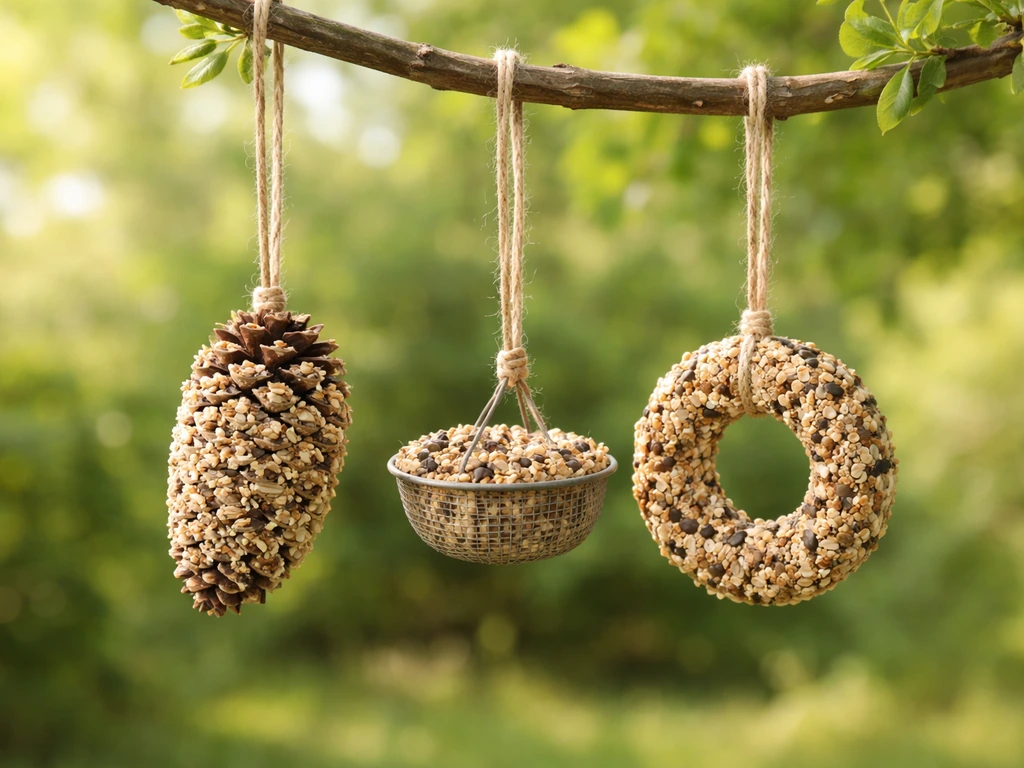
How to Make Bird Feeders Without Peanut Butter
Step-by-step homemade bird feeders without peanut butter, plus safe peanut-free pine cones and wreath and feeder mix gui
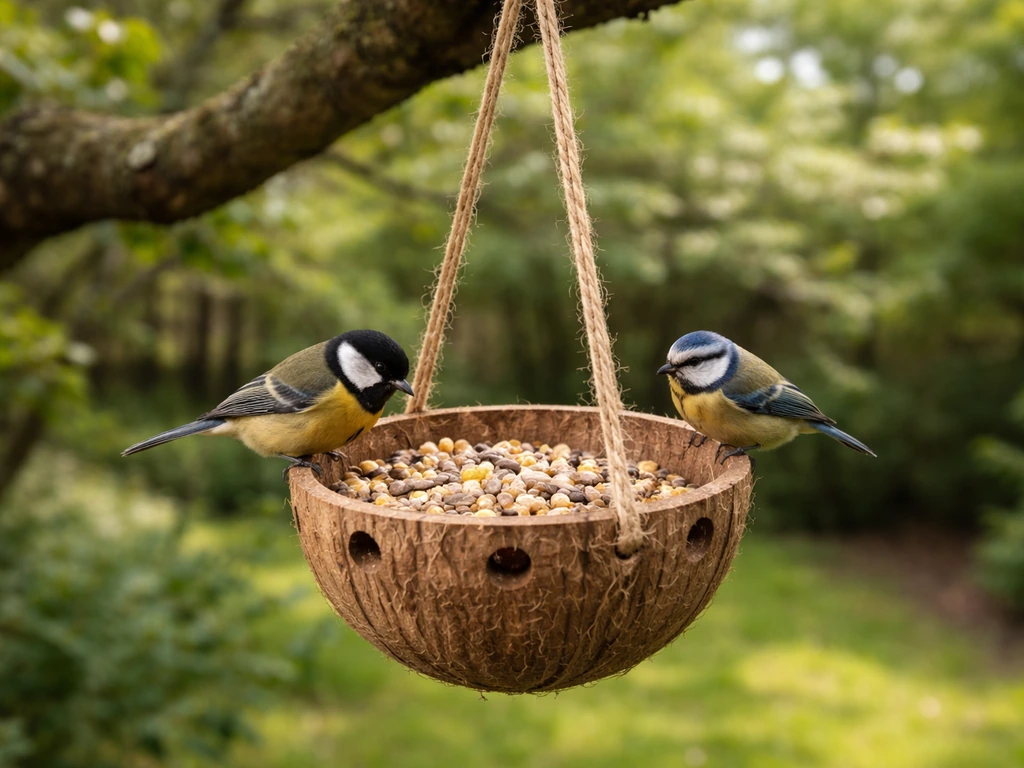
How to Make a Coconut Bird Feeder Step by Step
Step-by-step guide to turn a coconut shell into a hanging bird feeder, plus safe coconut oil options and maintenance tip
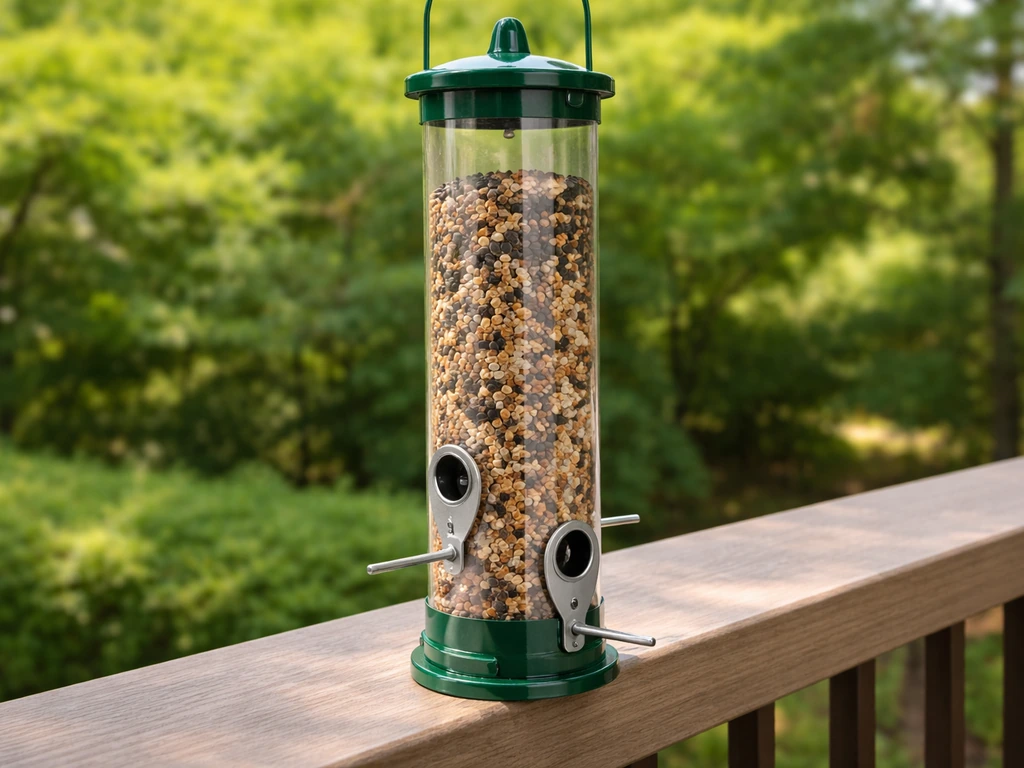
How to Fill a Tube Bird Feeder Step by Step
Step-by-step guide to fill a tube bird feeder without spills, prevent clogs, and set up for steady feeding and easy clea