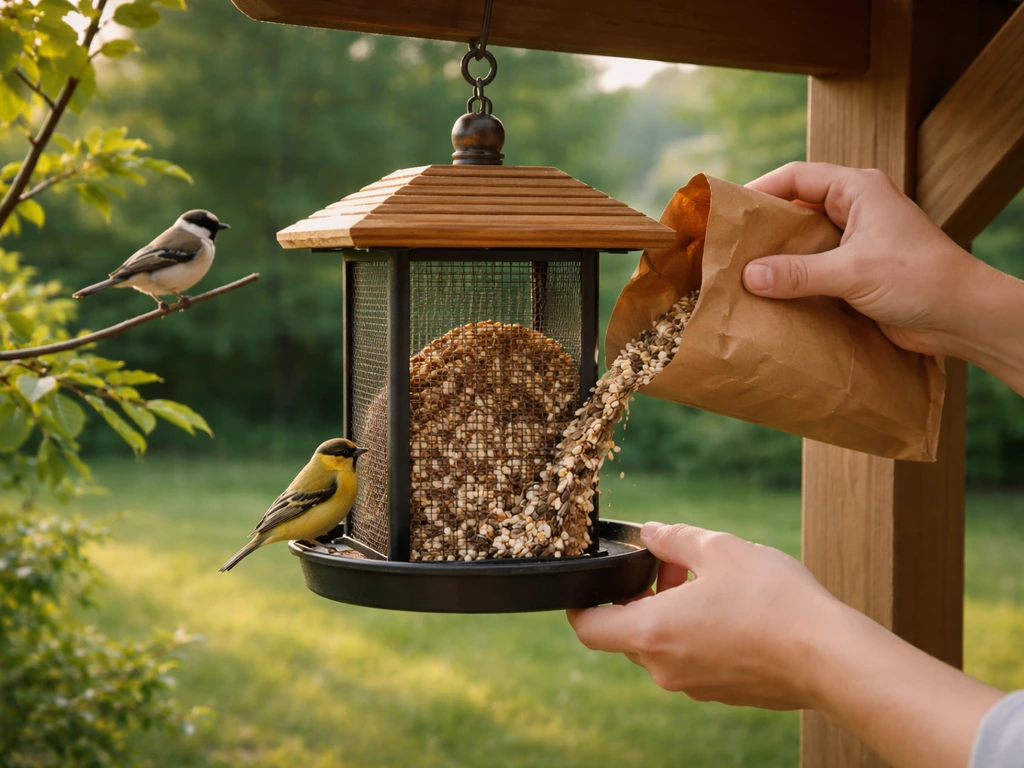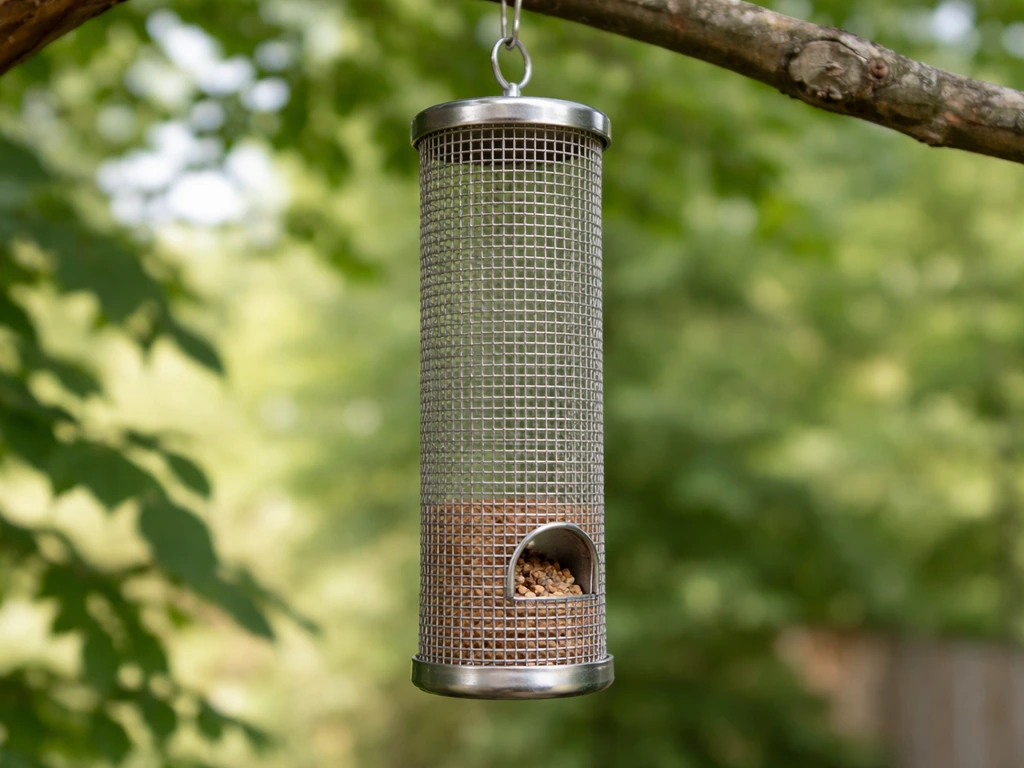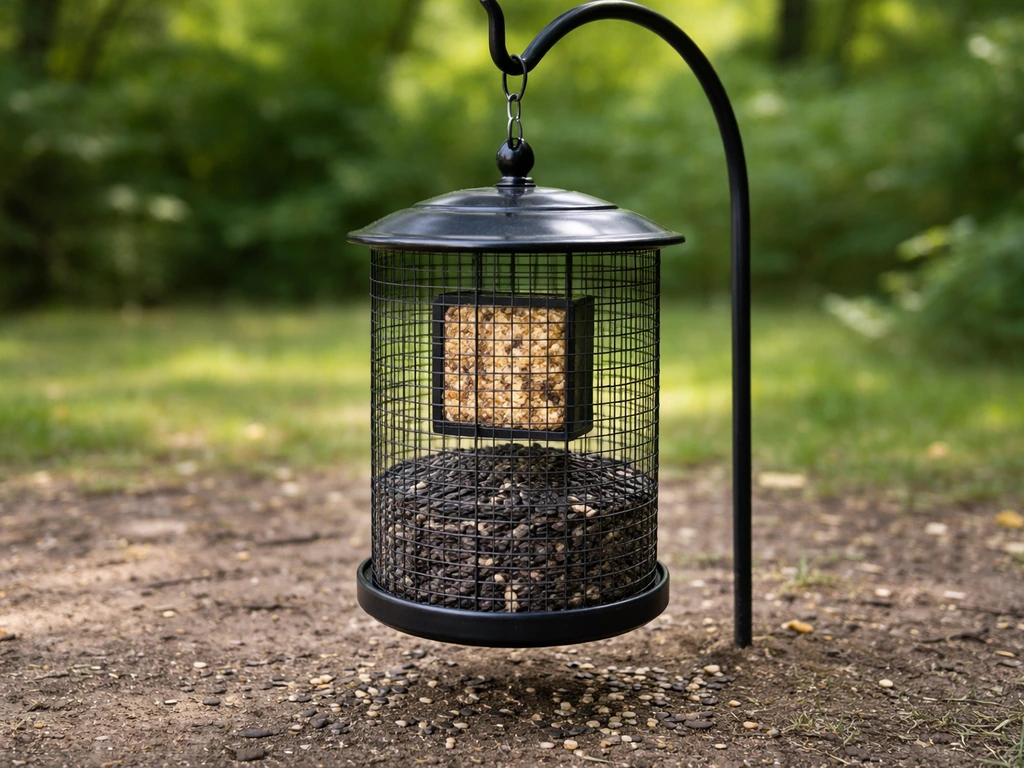
To fill a tube bird feeder, open the top cap (usually by pinching, twisting, or lifting depending on your model), pour your seed directly in from the top using a small scoop or funnel, fill it to about an inch below the top port, then lock the cap back on with a firm clockwise twist. That's the core of it. The rest of this guide covers which seed to use, how to avoid the common spilling mistakes, how to get the feeder dispensing correctly, and how to keep it clean so it doesn't clog up or grow mold. If you want a more DIY option, you can also make a coconut bird feeder and hang it in the same safe places for better viewing and consistent feeding.
How to Fill a Tube Bird Feeder Step by Step
Marcus Brennan
6 May 2026
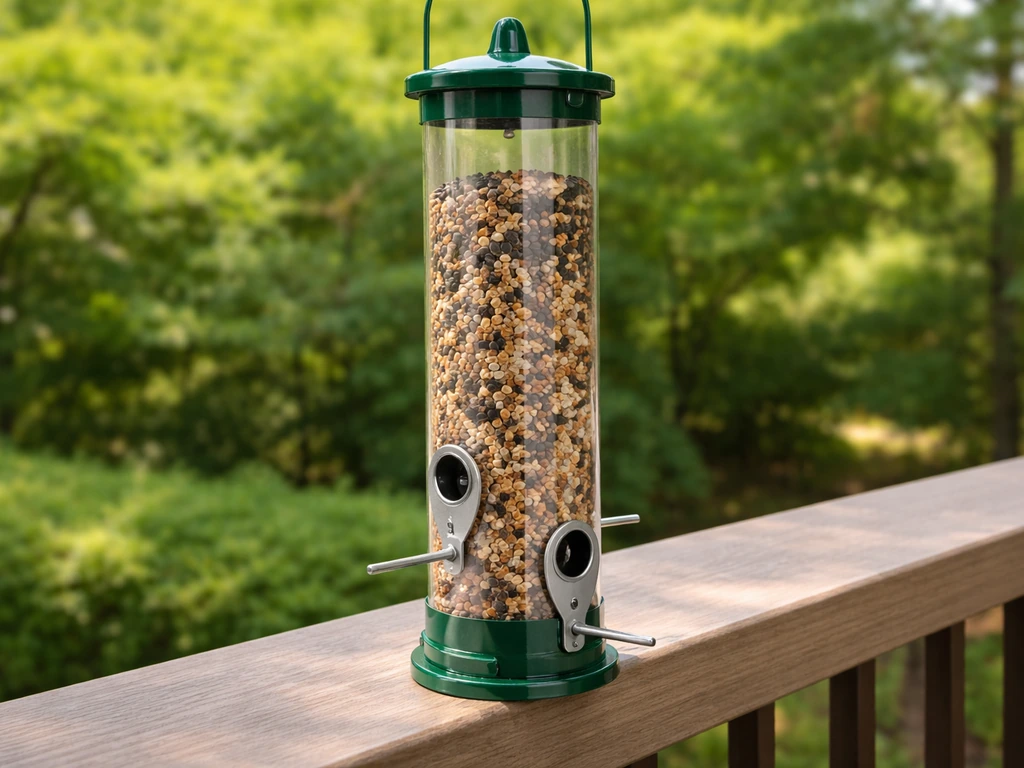
Choosing the right food for a tube feeder
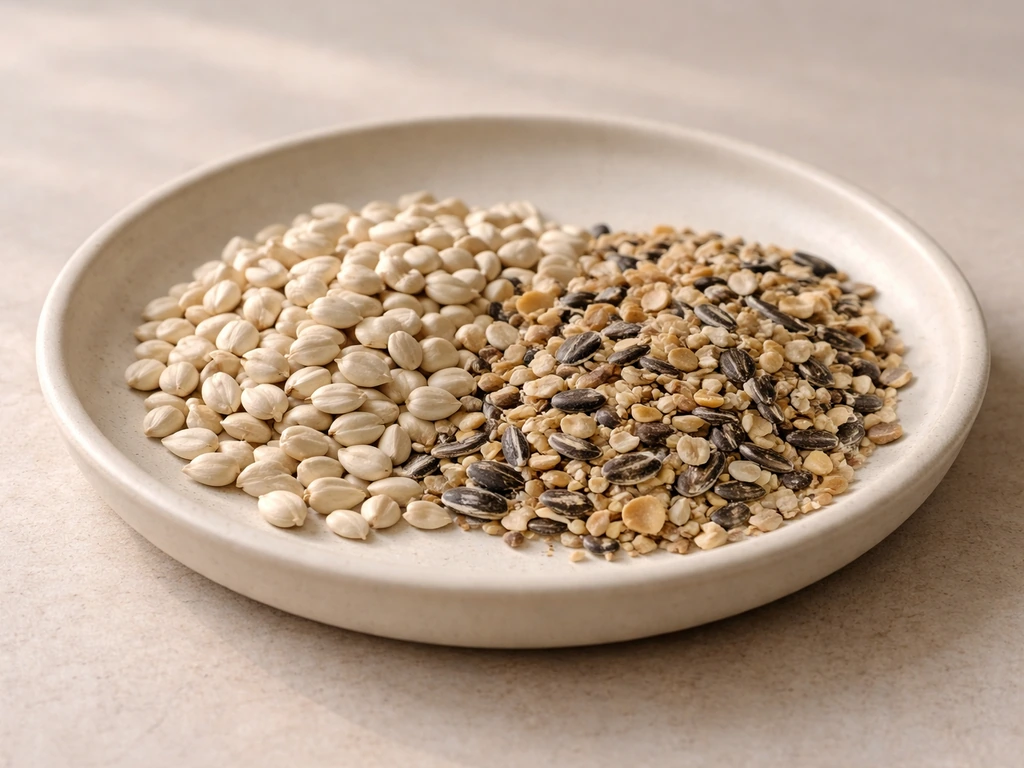
Not every seed works well in a tube feeder, and using the wrong one is the fastest way to end up with a clogged port or a feeder full of seed that birds ignore. The go-to choice is black-oil sunflower seed. It's thin-shelled, calorie-dense, and accepted by a huge range of backyard birds including chickadees, nuthatches, finches, and cardinals. It flows through tube ports reliably and doesn't clump easily when dry.
Safflower seed is another solid option for tube feeders. It's slightly larger than black-oil sunflower, so check your feeder's port size before loading it up, but it works well in most standard tubes and has the bonus of being less popular with squirrels. If you've been using striped sunflower seed and birds keep leaving it behind, switch to black-oil or hulled sunflower instead since both are more widely eaten and hulled seed leaves no shell debris in the tube.
One thing to be clear on: nyjer (also called thistle or nyjer) does NOT belong in a standard tube feeder. Nyjer seed is tiny and requires a specialty finch feeder with extra-small ports designed to hold it in place. If you pour nyjer into a regular tube, it either pours straight out of the ports, clogs them with fine debris, or both. If you want to attract goldfinches and house finches with nyjer, you need a dedicated nyjer feeder for that job. Wildbird seed mixes can also be hit or miss in tube feeders since the heavier components sink and lighter filler seeds (like milo) often go uneaten and sit in the tube getting stale.
| Seed Type | Works in Tube Feeder? | Best For | Notes |
|---|---|---|---|
| Black-oil sunflower | Yes | Chickadees, finches, nuthatches, cardinals | Best all-around choice; flows well |
| Safflower | Yes (check port size) | Cardinals, chickadees | Less appealing to squirrels |
| Hulled sunflower (chips) | Yes | Wide variety | No shell mess; can clump if wet |
| Striped sunflower | Sometimes | Larger birds like jays | Less accepted; may get left behind |
| Nyjer (thistle) | No | Goldfinches, house finches | Needs specialty finch feeder only |
| Mixed seed blends | Not ideal | Varies | Filler seeds go stale and block ports |
How to open and unlock a tube bird feeder
This is where most people get confused because tube feeders don't all open the same way. The exact method depends on your model, so if you have the manual, check it first. Perky-Pet even keeps a library of model-specific instruction PDFs on their website, which is worth bookmarking. That said, most tube feeders fall into one of three opening styles.
- Twist-lock cap: Twist the top cap counterclockwise to unlock it, then lift it straight off. To close, seat it back on and twist clockwise until you feel or hear it lock. The Squirrel X tube feeders use this system.
- Pinch-and-lift cap: Squeeze the sides of the cap together (usually two pinch points) and lift it up and away from the tube. Common on Perky-Pet's Panorama feeder.
- Pull-off cap: Some simpler tube feeders just have a friction-fit cap that lifts straight off with a firm upward pull. No twist needed.
One important rule regardless of the mechanism: always fill from the top. Never flip the feeder upside down and try to fill from the bottom. If you do that and then rotate it upright, seed spills out of every port well immediately. It's messy, wasteful, and can leave a debris trail that attracts the wrong visitors. Open the top, fill from the top, done.
Step-by-step: filling a tube feeder without spilling
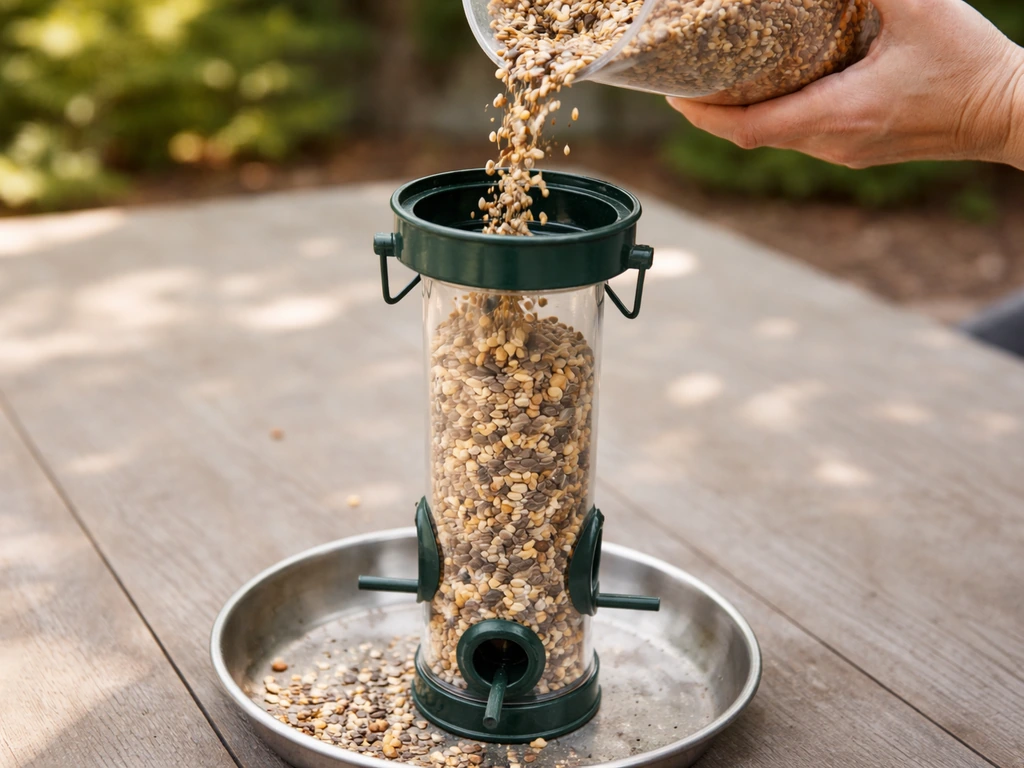
Spilling is the most common frustration with tube feeders, and it usually comes down to one of two things: filling technique or filling location. Here's the method that works cleanly every time. To refill a coconut bird feeder without a mess, open it correctly, pour slowly, and avoid overfilling the tube. Once you know how to fill without spilling, you can also focus on the building part if you're making your own tube bird feeder at home how to make a tube bird feeder.
- Take the feeder down from its hook or pole before filling. Trying to pour seed into a swinging feeder is a recipe for a mess. Set it on a flat surface or hold it steady.
- Have your seed ready in a container with a pour spout, or use a small garden scoop or a funnel that fits the opening. Wide-mouth funnels designed for bird feeders are cheap and genuinely useful here.
- Open the top cap using your model's specific method (twist, pinch, or pull as described above).
- Pour seed slowly and steadily into the tube. Aim for the center of the opening to avoid seed bouncing off the rim.
- Fill to about an inch below the top port hole. Overfilling right to the brim means seed can fall into the cap mechanism and jam it, or spill when you try to close it.
- If you spill any seed into the cap seating area, brush it clear before closing. Trapped seed here prevents a proper lock and can attract pests.
- Replace the cap and lock it securely. Give it a gentle shake to make sure it's seated. If seed falls out of the ports at this point, it's normal for a tiny amount, but a steady flow means the feeder is overfilled.
- Rehang the feeder carefully. Avoid swinging it aggressively after filling.
One more practical tip: fill your feeder only as much as birds will eat in a few days, especially in warm or humid weather. Filling all the way to the top sounds efficient, but seed sitting at the bottom of a full tube can get packed down, trap moisture, and start to clump before birds even reach it. In summer, half-full is often smarter than topped-off.
How to use a tube bird feeder once it's filled
Tube feeders are pretty self-operating once filled and hung, but understanding how they work helps you troubleshoot when they don't. Birds land on the perches, reach into the port holes, and pull out individual seeds from the bottom portion of the seed column. The upper seed gradually drops down as the lower portion gets eaten. This means birds are always feeding from the accessible lower zone, and filling strategy matters: a feeder that's only a quarter full still feeds birds fine as long as seed reaches the lowest ports.
After hanging the freshly filled feeder, give it a day or two before worrying that birds aren't visiting. They need to discover it first, especially if it's a new location. If birds were already visiting the spot regularly, they'll usually return within a few hours. If the feeder was cleaned and smells like bleach solution, that can temporarily put birds off, which is why thorough rinsing and full drying before refilling matters so much.
If seed isn't dispensing from the ports even though the feeder is full, press the tip of a pencil or a thin stick gently into each port hole to clear any clumped seed or debris blocking it. Wet weather is the most common cause of port blockage because rain or sleet can drive moisture into the ports and cause seed to swell and jam. After heavy rain, check each port and clear any blockages before birds give up on the feeder.
Placement and setup basics for tube feeders
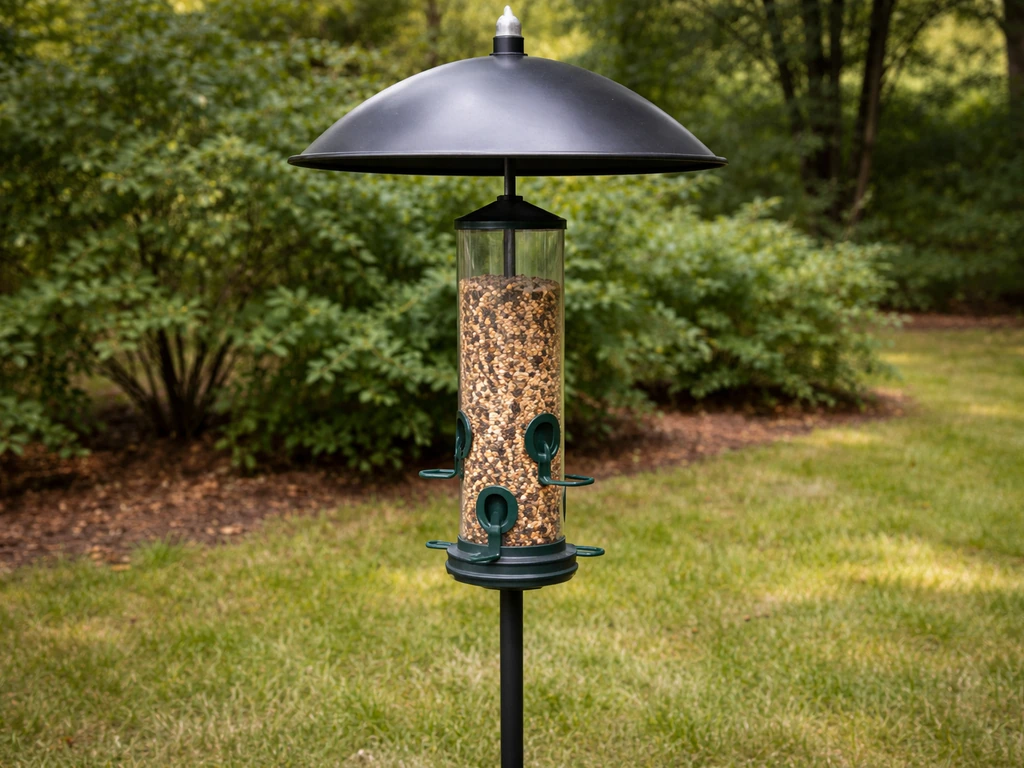
Where you hang a tube feeder directly affects how well it works and how long a fill lasts. The goal is to put it somewhere birds feel safe visiting, where squirrels have a hard time reaching it, and where it's sheltered enough to reduce weather-related port clogging.
For squirrel deterrence, placement distance is everything. Mount your tube feeder on a pole with a baffle at least 8 to 10 feet away from any tree, fence, roof edge, or other solid structure a squirrel can launch from. The pole itself should be at least 5 feet tall so a squirrel can't easily reach up and grab it from the ground. A dome-shaped baffle mounted on the pole just below the feeder is one of the most reliable deterrents available.
Window safety is also worth thinking about. Window collision prevention guidance advises placing feeders either more than 30 feet (10 meters) from a window or closer than 3 feet (1 meter) to reduce confusing reflections and collision risk Window safety is also worth thinking about.. Feeders placed within 3 feet of a window can actually cause more bird collisions because birds don't build up dangerous momentum in that short distance and can turn away in time. Feeders placed at about 10 feet from a window hit a kind of problematic middle distance where birds are still close enough to fly toward the glass at speed. Aim for either within 3 feet (mounted close to the glass) or more than 10 feet away from any large window.
For birds to feel comfortable feeding, place the feeder 12 to 15 feet from trees or shrubs so they have nearby cover to retreat to between visits, but not so close that squirrels can leap directly onto it. Partial shade helps too since full sun heats seed faster, which speeds up spoilage.
Cleaning, maintenance, and refilling routine
A tube feeder that isn't cleaned regularly will eventually clog, grow mold, and stop attracting birds no matter how good your seed is. The good news is the routine is simple and takes about 15 minutes once a month.
The monthly cleaning process
- Empty any remaining seed from the tube. Don't refill over old seed.
- Disassemble the feeder as far as it allows: remove the cap, any trays, and perches if they come off.
- Shake out loose debris, then hand-wash all parts with warm water and mild antibacterial dish soap.
- Use an old toothbrush or a bottle brush to scrub inside the tube and clean out each port hole individually. This is the step most people skip and then wonder why their feeder clogs.
- Rinse everything thoroughly with clean water. Soap residue can put birds off.
- Prepare a disinfectant solution of 9 parts water to 1 part bleach. Soak the feeder parts for a few minutes, then rinse very thoroughly again.
- Set everything out to air dry completely, or pat dry with a clean cloth and let it finish air drying. Do not refill while any part is still damp. Moisture plus seed equals mold, and mold creates exactly the kind of clumping that blocks ports.
- Reassemble and refill with fresh seed.
Preventing clogs between cleanings
The biggest clog culprits are moisture and overfilling. After any heavy rain or wet weather event, check the ports visually and poke a thin stick through any that look blocked. If the seed inside the tube smells off or looks clumped and dark, empty the whole feeder and start fresh rather than topping it off over bad seed.
Store your seed supply in a cool, dry place in a sealed container, well away from rodents. Moist or contaminated seed going into a clean feeder will undo your cleaning work fast. Mass Audubon recommends keeping seed storage airtight and out of reach of pests, which also means you're not accidentally introducing mold spores every time you refill.
How often to refill
In busy seasons like spring and fall migration, you may need to refill every few days. In slower periods, once a week is usually enough. The rule of thumb: if the feeder is empty, refill it. If it still has seed after two weeks, especially in warm weather, empty it, do a quick rinse, dry it, and put in a smaller amount of fresh seed. Project FeederWatch also recommends cleaning seed feeders about once every two weeks, and more often during heavy use or warm or wet conditions. Seed doesn't stay fresh forever just because it's sitting in a feeder.
If you also maintain other feeder styles around your yard, the filling and cleaning principles here overlap significantly. The seed selection and cleaning process is similar whether you're working with a tube feeder or dealing with a general bird feeder refill routine. The main thing that makes tube feeders unique is managing those ports, so keep that toothbrush handy.
FAQ
Why do my tube feeder ports dispense at different speeds or not all at once after filling?
After you fill from the top, tap or gently jiggle the feeder so seed settles and ports are not holding air pockets. If you still see uneven feeding, remove the cap and confirm the seed level reaches at least about an inch below the top of the ports, then re-cap firmly.
Can I use a seed mix instead of single seeds in a tube feeder?
Yes, but only if your feeder design allows it and the ports are not oversized for the material. Crushed or very fine seeds can sift into gaps and form clumps, so if you use a mix, prefer blends that include thin-shelled components like black-oil sunflower rather than dusty filler seeds.
Is it okay to just add more seed if the feeder got wet during a rainstorm?
Don’t top off seed that has been sitting after wet weather. Empty the feeder, wipe the tube, rinse, and fully dry before refilling, because moisture trapped in the lower section is what typically causes swelling and future port jams.
What should I do if I filled my tube feeder with nyjer or another wrong seed?
If you accidentally put the wrong seed in a standard tube, remove it right away. For example, nyjer can either pour out or pack into fine debris that blocks ports, so you’ll usually need to clear the ports individually before refilling with a tube-compatible seed.
Why aren’t birds visiting after I cleaned and refilled the feeder?
If birds stop visiting right after cleaning, rinse thoroughly and let the feeder dry completely before filling. Residual soap or bleach odor can deter birds for a short time, especially in a new or quiet location.
My tube feeder still has seed but birds ignore it. What’s the most likely cause?
Look for the feeder being too full in warm weather, or ports partially blocked by clumped seed. Even if the feeder isn’t empty, birds can only access the lower, reachable zone, so if seed is packed down and damp, you may need to empty and start fresh.
How much should I fill a tube feeder to avoid spoilage and clumping?
Start with a smaller amount and observe. In hot or humid weather, half-full often stays fresher and is less likely to compact, which means better port flow and fewer clumps.
Can I poke the ports to fix a clog, and how do I do it without damaging the feeder?
Use a tool sized for the port openings, and clear only the visible blockage gently. Avoid pushing so hard that you deform port parts, and always clean and dry the feeder after you clear jams, especially after wet weather.
How can I attract goldfinches without putting nyjer in a standard tube feeder?
If you want to attract finches that typically prefer nyjer, use a dedicated nyjer feeder with the correct port size rather than converting a standard tube. Tube feeders that are not designed for nyjer have a much higher risk of spill and blockage.
What if a baffle doesn’t stop squirrels from reaching my tube feeder?
If squirrels are still getting to the feeder, increase the barrier distance and verify the pole height plus baffle placement below the feeder. Also check there isn’t a nearby launch point, like branches or a roof edge, within the baffle’s reach.
How long should I wait after hanging a freshly filled tube feeder before assuming something is wrong?
After hanging, give it time, and check that the feeder is placed in a spot that feels safe, with nearby cover, but not so close to trees or shrubs that it’s an easy squirrel leap. Then refill smaller amounts so you are not feeding stale seed while birds decide.
What’s the best way to store seed so it doesn’t cause mold or clogs when refilling?
Store seed in a sealed container in a cool, dry place, and only pour what you need at refill time. If you notice clumping, off smell, or darkened seed, discard it and don’t mix it back into fresh seed, since contamination tends to keep cycling through the feeder.