Filling a bird feeder correctly takes about two minutes once you know the process, but getting it wrong means wasted seed, frustrated birds, or a feeder full of moldy clumps. Here is exactly what to do, from choosing the right seed to keeping the feeder in good shape between fills.
How to Fill a Bird Feeder: Step-by-Step Guide Today
Marcus Brennan
19 Apr 2026
Choosing the right feed and how much to use
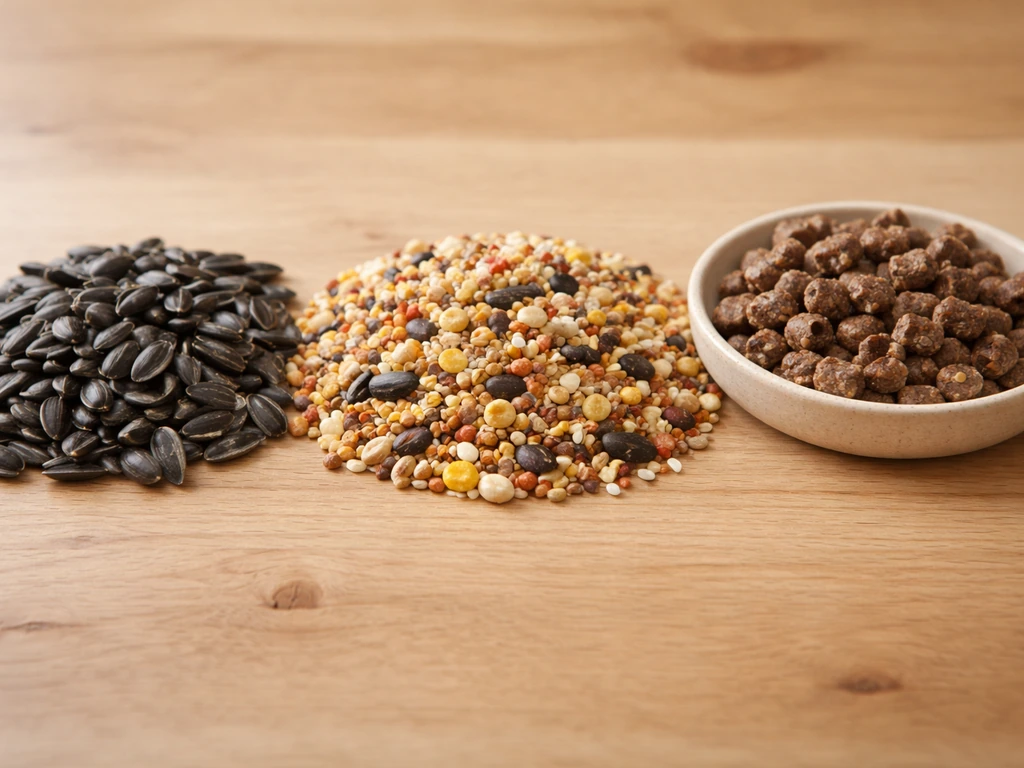
Black oil sunflower seed is the single best all-purpose choice for most backyard feeders. It has a thin, soft shell that smaller birds can crack open, and its oily meat is energy-dense year-round. If you only stock one type of seed, make it this. Hulled sunflower (no shell) is a cleaner option that finches and chickadees especially appreciate, and it leaves less debris on the ground beneath the feeder.
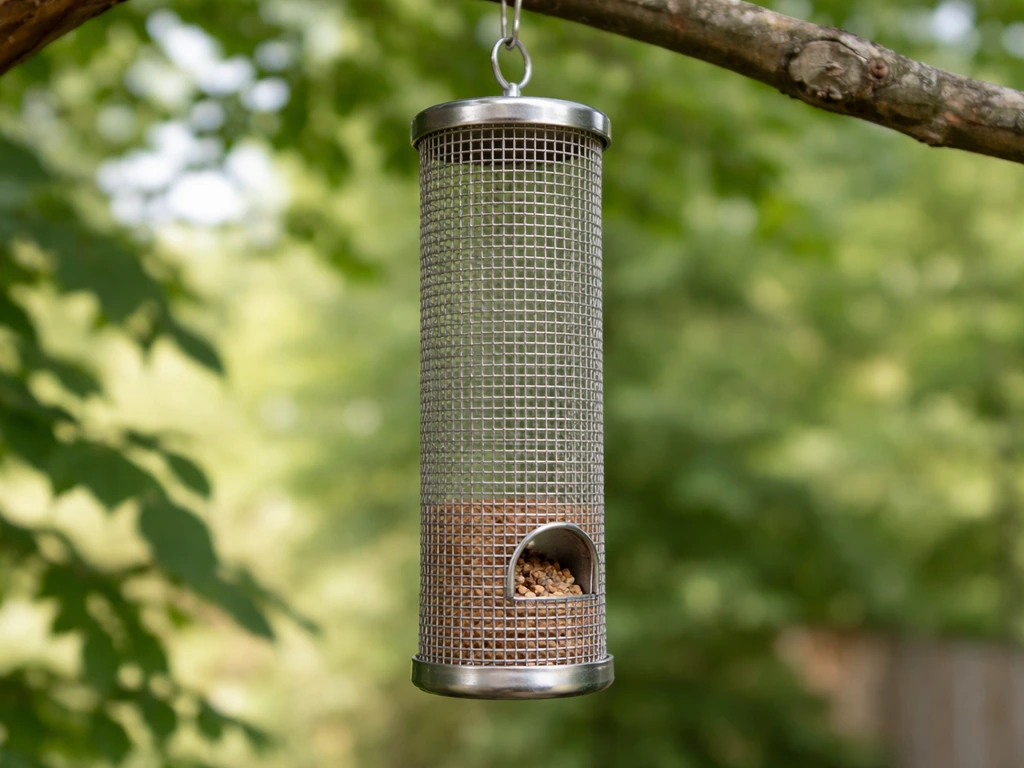
Beyond sunflower, the key rule is to match the seed to a dedicated feeder rather than mixing everything into one. Nyjer (thistle) seed draws goldfinches and pine siskins, but it needs a specialized tube feeder with tiny ports or a mesh thistle sock to dispense it properly. Peanuts work well in a mesh peanut feeder for jays, woodpeckers, and nuthatches. Mixing these seeds into a general hopper feeder usually results in birds flicking out what they do not want, which wastes feed and creates a mess below.
For suet feeders, use pre-formed suet cakes sized to your cage feeder. These are particularly good for woodpeckers, nuthatches, and chickadees, and you should hang them well off the ground to keep ground-feeding pests from reaching them easily.
How much to add depends on conditions more than anything else. In dry weather, filling a standard hopper or tube feeder about two-thirds full is a good baseline. It gives birds plenty of access while leaving room for you to check the seed level and quality without digging through a packed feeder. In rainy or humid weather, fill only a one- to two-day supply at a time. Wet seed spoils fast and can clump into a plug that blocks ports or the hopper opening entirely.
Step-by-step: how to fill a standard bird feeder
This process works for the most common feeder styles: tube feeders, hopper feeders, and platform feeders. The whole thing takes under five minutes. If you are learning the basics for this specific feeder, also review how to put bird seed in a bird feeder so you know the exact loading steps.
- Take the feeder down if possible. Filling on the ground or at a table is easier and less likely to result in spills than filling it while it hangs.
- Open the feeder fully. Remove the roof or lid, twist off the top cap, or unlatch the side panels depending on your feeder design.
- Check what's left inside. Remove any wet, clumped, or discolored seed before adding fresh seed on top. Adding fresh seed on top of old, damp seed is one of the most common mistakes, and it contaminates the new seed quickly.
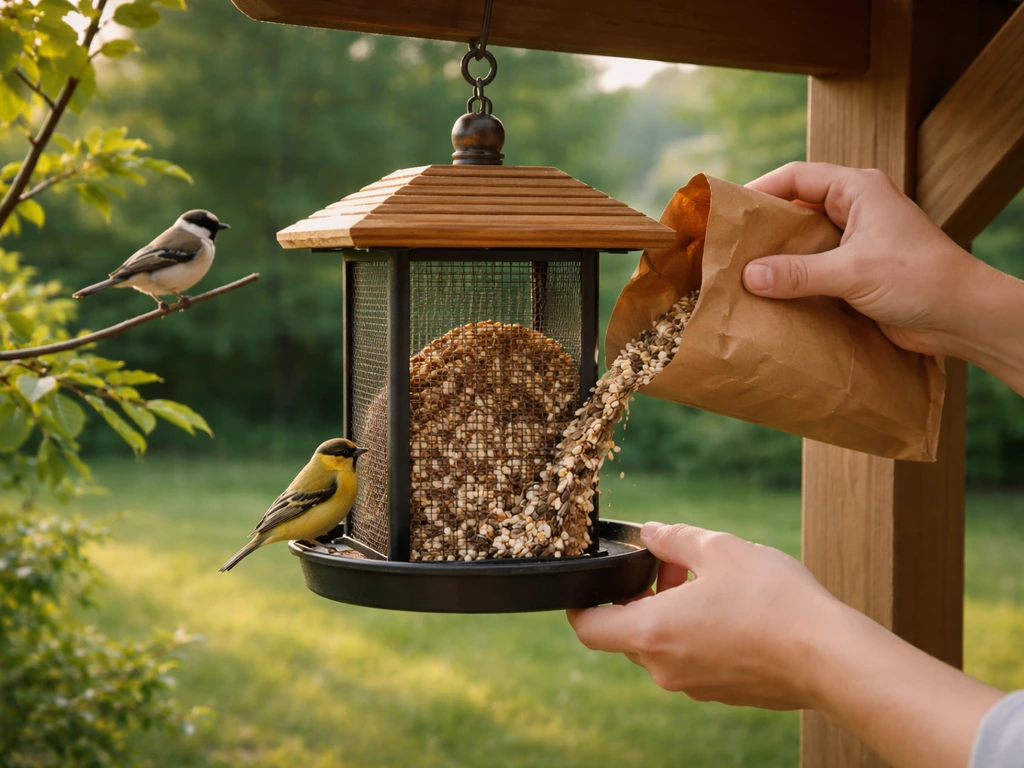
- Pour seed in using a small scoop or a dedicated seed dispenser. Avoid using the bag itself as a scoop, since seed spills everywhere and you lose track of how much you're adding.
- Fill to about two-thirds capacity in normal weather, or just a day or two's worth if rain is in the forecast.
- Close the feeder securely. A loose lid lets rain in and lets squirrels get better leverage.
- Rehang the feeder and wipe down any seed that landed on the outside with a dry cloth.
For tube feeders specifically, pour slowly and tap the tube gently as you go so the seed settles into the ports rather than forming a hollow column in the middle. After you pour slowly, check the level and avoid overfilling so the ports stay clear fill tube bird feeder. This matters most with nyjer seed, which is tiny and tends to bridge across the interior if poured too quickly.
Filling specific feeder types
Bird Buddy smart feeders
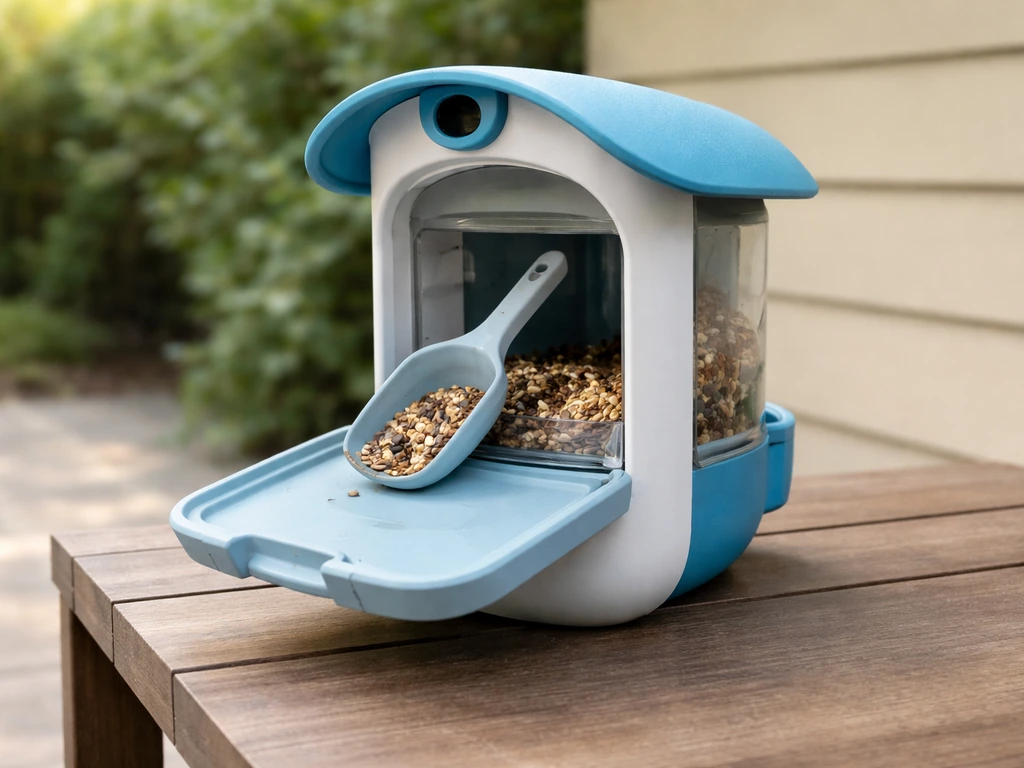
The Bird Buddy feeder has a seed container accessed through a rear hatch door at the back. Pop it open, use the included seed scoop to fill the container, and click it closed. The scoop is sized for the container, so one level scoop is about the right amount for a single fill. Do not overpack it: the camera and sensor components inside need air circulation, and jamming seed in too tight can prevent the feed from dispensing smoothly. If you want to rinse the seed container or scoop, a gentle spray from a garden hose works fine before you reassemble.
High bird feeders (out-of-reach placements)
A feeder mounted on a tall pole or hung from a high branch is great for pest-proofing but annoying to fill. The most practical solution is a pulley or counterweight hanging system, which lets you lower the feeder to fill it and raise it back up without a ladder. If you do not have a pulley setup, a lightweight step stool placed on stable ground is safer than a full ladder for most backyard heights. Carry seed up in a sealed container with a pour spout rather than an open bucket, and accept that you will spill a little. Alternatively, consider using a long-handled seed dispenser designed for high feeders. These look like a funnel on a stick and cost around $15 to $20 at most garden centers.
Brome feeders
Brome's Squirrel Buster line is worth a mention here because the seed requirements are strict depending on the model. The Squirrel Buster Finch, for example, is designed exclusively for Nyjer seed and should not be loaded with mixed seed or sunflower. Check your specific Brome model's requirements before filling. Brome also makes a product called Feeder Fresh, a desiccant you add to the seed to capture moisture inside the feeder. For hopper-style Brome feeders, add Feeder Fresh at the ends of the hopper as you pour in seed, since that is where moisture and spoilage tend to concentrate. For tube feeders, blend Feeder Fresh thoroughly into the seed in a separate container first (shaking it in something like a large resealable container works well), then pour the mixture in.
Bird feeder houses (hopper-style)
Hopper or house-style feeders have a covered reservoir that gravity-feeds seed to a tray. Lift the roof panel or open the fill door on top and pour directly into the reservoir. These feeders can hold a lot of seed, but that is not always an advantage. In wet or warm weather, seed at the bottom of a large hopper can sit for days before birds work down to it, and that lower layer is where spoilage starts. For house feeders in humid conditions, fill only halfway and check the bottom layer every few days. If it feels damp or has any off smell, empty the whole feeder and clean it before refilling.
How often to refill and how to do it without wasting seed
There is no universal refill schedule because it depends on how many birds you have, the feeder size, and the weather. A good rule of thumb: check the feeder every one to two days and refill when it drops below one-quarter full, rather than waiting until it is completely empty. An empty feeder for even a day or two can break the habit of birds visiting, especially in the first few weeks after you set it up.
To avoid wasting seed, never top off a feeder that still has seed in it without checking the existing seed first. Old seed sitting at the bottom will get buried and eventually rot. Instead, let the feeder get close to empty between fills so you are cycling through the seed regularly. If you consistently have leftover seed going stale before birds eat it, you are filling too much at once. Cut your fill amount in half and see if the turnover improves.
Storing your seed correctly between fills also makes a big difference. Keep it in a sealed metal or hard plastic container with a tight lid, away from direct sunlight and moisture. A galvanized metal trash can with a locking lid is cheap and squirrel-proof. Seed stored in open bags in a garage or shed will absorb humidity and go stale or moldy much faster.
Common filling mistakes that keep birds away
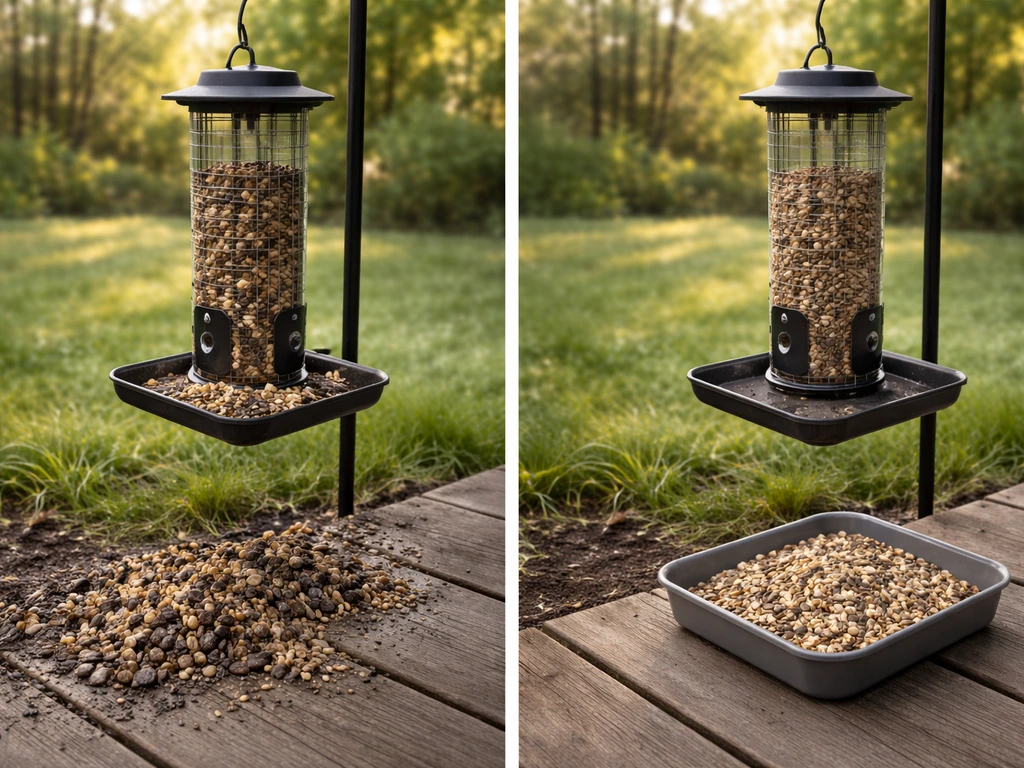
Most feeder problems trace back to a handful of consistent mistakes. Here are the ones I see most often, and what to do instead.
- Filling over old or wet seed: always remove stale seed before adding fresh. Smell the existing seed if you are unsure. Fresh seed smells neutral or slightly nutty. Sour or musty smell means it needs to go in the trash, not back in the feeder.
- Overfilling in wet weather: a feeder stuffed full in rainy conditions will have a block of solid seed within 24 to 48 hours. Fill less, fill more often.
- Using the wrong seed for the feeder type: mixed seed with millet and milo in a tube feeder with small ports will jam constantly. Match the seed to the feeder design.
- Blocking ports with clumped seed: if birds stop coming but you can see seed inside, check the ports. Push a toothpick or thin wire through each port to break any clumps blocking the opening.
- Placing the feeder in a spot with no cover nearby: birds want to see an escape route. A feeder in the middle of an open lawn with no shrubs or trees within 10 to 15 feet will get little traffic because birds feel exposed. Moving the feeder closer to a hedge or tree often fixes a low-visitor problem immediately.
- New feeders taking too long: if you just put up a new feeder, birds can take one to four weeks to discover and start using it consistently. Do not give up in the first week.
Clean-up and maintenance after filling
What you do right after filling matters as much as the fill itself. Any seed that spilled on the ground during filling should be raked up and disposed of, not left to sit. Piles of seed below the feeder attract rodents and ground-feeding pests quickly. Seed hulls that build up over time can also host mold and bacteria, so rake the area under the feeder regularly.
For the feeder itself, aim to clean it every two weeks under normal conditions. In warm or humid weather, step that up to once a week or even every few days if you notice any moisture getting inside. Cleaning is straightforward: disassemble the feeder completely, blank" rel="noopener noreferrer">soak or scrub with a solution of one part bleach to nine parts water, rinse thoroughly, and let it dry completely before refilling. This is important: putting seed back into a feeder that is still damp defeats the purpose of cleaning. Let it air dry for at least 30 minutes in the sun, or wipe it down with a dry cloth and leave it a bit longer. For deeper cleaning, Bird Feeder Fact Sheet (Birdnet) recommends making a 10% bleach solution (1 part bleach to 9 parts water), then rinsing and air drying blank" rel="noopener noreferrer">Let it air dry for at least 30 minutes in the sun.
Any seed that has gotten wet inside the feeder during use should be discarded entirely rather than spread on the ground. Wet seed that has begun to spoil can carry bacterial or fungal pathogens that are harmful to birds.
For pest control around the feeder, a water-filled moat hung above the feeder hook is one of the most effective ways to stop ants from reaching the seed. Squirrels are a bigger project, but hanging the feeder on a smooth metal pole at least five feet off the ground and four feet from any horizontal surface (a fence, branch, or roof edge) will stop most of them. A baffle mounted below or above the feeder adds another layer of protection.
If you have a tube feeder and want more specific guidance on the fill process for that style, or if you are working with a coconut shell feeder that needs a different approach for refilling, those setups have their own quirks worth knowing. For a coconut bird feeder, the fill method is a bit different from standard hoppers and tubes, so it helps to follow the coconut-shell approach coconut shell feeder. The core principle stays the same across all of them: fresh seed, right amount for the conditions, clean feeder, and consistent monitoring. Get those four things right and the birds will show up.
FAQ
What should I do if I accidentally top off a feeder that already has seed in it?
Only add fresh seed after you remove any old damp or spoiled seed you can see. If the feeder smells “musty,” feels sticky, or has visible clumps inside, discard the contents and clean the feeder first, then refill to the usual level for the weather (about two-thirds in dry conditions, less in humid/rainy weather).
Can I mix different bird seeds together in one feeder to attract more species?
Yes, but only if you keep the feeder clean and avoid mixing seed types that need different feeder styles. For example, sunflower can work in many standard feeders, but nyjer and peanuts generally need specialized ports or mesh feeders. If you want multiple species, set up separate feeders rather than combining everything in one hopper.
If I keep refilling but birds still seem picky, how do I know my fill amount is wrong?
Use a “close to empty” refill strategy. The goal is enough turnover that old seed does not sit at the bottom. If you routinely find seed still in the feeder after a week and it looks stale, cut your next fill amount in half and check again one to two days later.
Is it okay to rinse the seed container or scoop, and should I rinse the feeder too?
Rinse and dry is fine for seed-related parts like a scoop or container, but do not rinse the feeder interior unless you will clean and dry it thoroughly. After any rinse, let the feeder dry completely before refilling, since moisture left behind can start spoilage even if the feeder looks clean.
Why does my hopper feeder seem to spoil seed even when the weather is only a little humid?
Hoppers can be partially protective, but seed at the bottom still gets the worst of moisture and warm-air exposure. In humid weather, reduce fill height, and check the bottom layer every few days for dampness or odor. If it feels clumpy, empty, clean, and refill rather than trying to “skim off” the top.
My tube feeder keeps clogging at the ports. What fill technique should I change first?
If port blockages happen repeatedly, adjust your pour speed and avoid overfilling. Tap the tube gently as you fill so seed settles into the ports instead of bridging. For nyjer especially, pour slowly and check that the port area is clear before hanging the feeder back up.
How should I store bird seed between refills to prevent mold and clumps?
Yes, but be careful with how you store it. Keep seed in a sealed metal or hard-plastic container with a tight lid, away from sunlight and moisture, and never store it in open bags where humidity can soak in. If you notice mold or persistent clumping, discard that seed rather than trying to use it.
What if it rained while the feeder was open, and some seed got wet inside?
No, and it is one of the fastest ways to create a mold problem. Wet seed inside the feeder should be discarded, then you clean and dry the feeder fully before refilling with dry seed. Also rake up any spill on the ground so wet seed is not reabsorbed or reintroduced.
What is the safest way to refill a high-mounted bird feeder?
Yes, but it depends on your feeder design. Pulled-down filling helps you avoid overfilling by letting you see the level and ports. If you do not have a pulley, use a stable step stool on level ground, carry seed in a sealed container with a pour spout to reduce spills, and avoid filling while standing on unstable surfaces.
How do I tell whether the refill schedule is causing birds to stop visiting?
Watch behavior changes, not just the seed level. If visits stop for a couple of days after refilling, you may have waited too long while the feeder was empty, or you may have introduced stale seed. Refill before it hits empty, and if you have leftover seed becoming old quickly, reduce your refill size so turnover improves.
Next Article
How to Make a Wire Mesh Bird Feeder Step by Step
Step-by-step DIY wire mesh bird feeder: pick safe mesh, cut, assemble, mount, and troubleshoot seed, sharp edges, pests.