You can turn a fresh coconut shell into a working bird feeder in about an hour using a drill, some twine, and a handful of basic supplies. Cut or crack the coconut in half, clean and dry the shell, drill two hanging holes, fill it with suet mix or seed, and hang it from a branch at least 5 feet off the ground. That is the whole project. The steps below walk through each part in detail, including how to use coconut oil safely as a seed binder, how to hang the feeder so it stays stable, and how to keep it clean so it does not turn into a mold or pest magnet.
How to Make a Coconut Bird Feeder Step by Step
Marcus Brennan
14 May 2026
What you need before you start
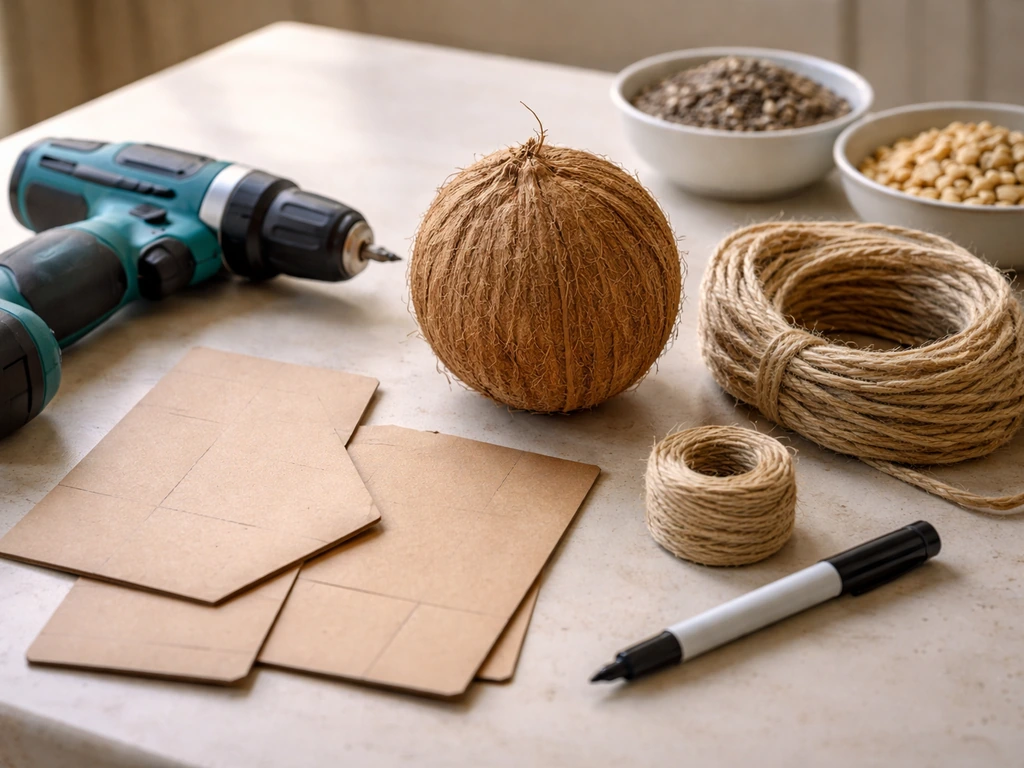
The materials list is genuinely short, which is one of the best things about this project. Most of it you either already have or can pick up at a grocery store for a few dollars.
- 1 fresh whole coconut (or pre-halved coconut from a grocery store)
- Drill with a 1/4-inch bit (a nail and hammer work in a pinch but are much slower)
- Hand saw or serrated knife (if you need to cut the coconut in half yourself)
- Natural jute twine, paracord, or thin wire (at least 18 inches)
- Coarse sandpaper (optional, to smooth any rough edges on the shell)
- Birdseed, suet, or a fat-and-seed mix for filling
- Coconut oil (optional, used as a seed binder or coating)
- A small bowl or spoon for mixing fill
- Dish soap, bleach, and clean water for initial cleaning
Skip any treated or painted twine. Birds can chew on hanging cords, so natural fiber or bare wire is the safer choice. Jute twine from the garden section is usually the cheapest and works perfectly.
How to crack, drain, and dry the shell
This step takes about 15 to 20 minutes and is honestly the messiest part of the whole build. Get it right here and the rest goes quickly.
- Find the three dark 'eyes' at the top of the coconut. Use a nail or screwdriver to poke through two of them, then drain the coconut water into a glass (it is fine to drink).
- Hold the coconut over a sink or outside and tap firmly around the widest middle section with the back of a heavy knife or a hammer. Rotate it as you go. After 8 to 10 solid taps around the equator, the shell usually cracks clean in half.
- If you want a cleaner cut (especially for a bowl-style feeder), use a hand saw or serrated bread knife. Saw slowly around the middle. It takes a few minutes but gives you a tidier edge.
- Scoop out the coconut meat. A butter knife works fine. Keep the meat if you want to eat it or mix it into the seed fill later.
- Rinse both shell halves with warm soapy water and scrub out any remaining white coconut flesh residue.
- Let the shells air dry completely before drilling or filling. This typically takes 2 to 4 hours in a warm spot, or overnight if your space is humid. Rushing this step leads to mold later.
If the shell smells at all sour or fermented when you crack it open, toss it and use a fresh one. A compromised coconut will cause the feeder to mold quickly no matter how well you maintain it.
Building the feeder: two simple designs
There are two approaches that consistently work well. Which one you build depends on what kind of birds you want to attract and how much work you want to put in. Penn State Extension summarizes that there are three main feeder types, hopper or house, tube, and tray or platform, and that different species prefer different feeder styles different birds you want to attract.
Design 1: hanging half-shell bowl
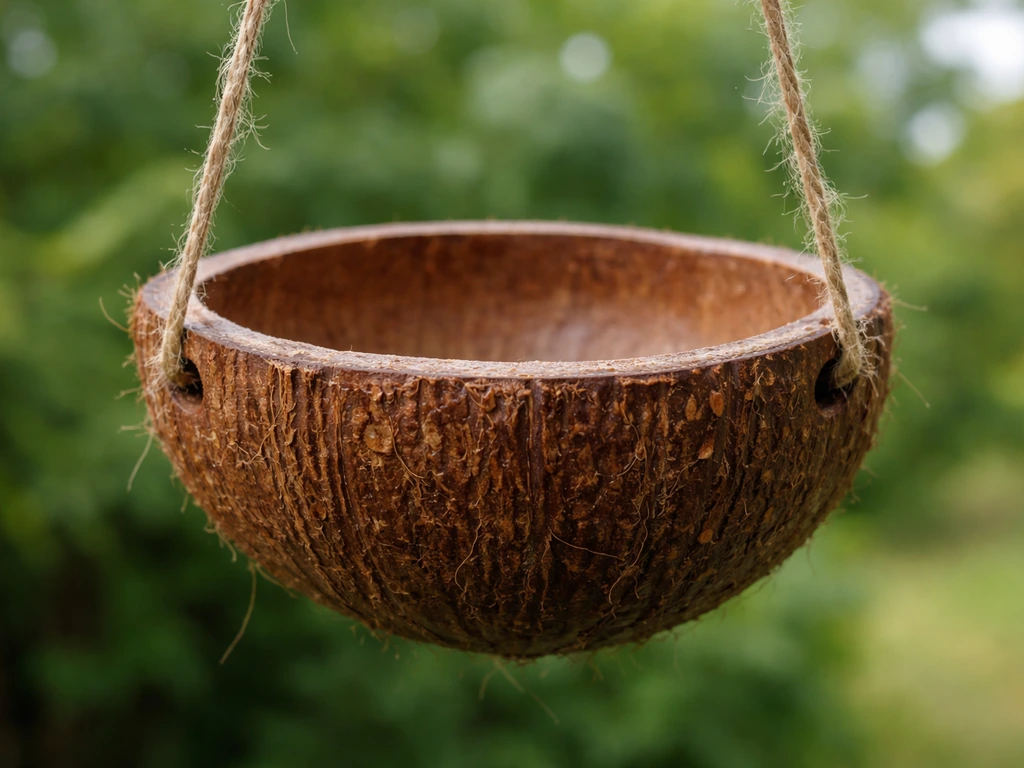
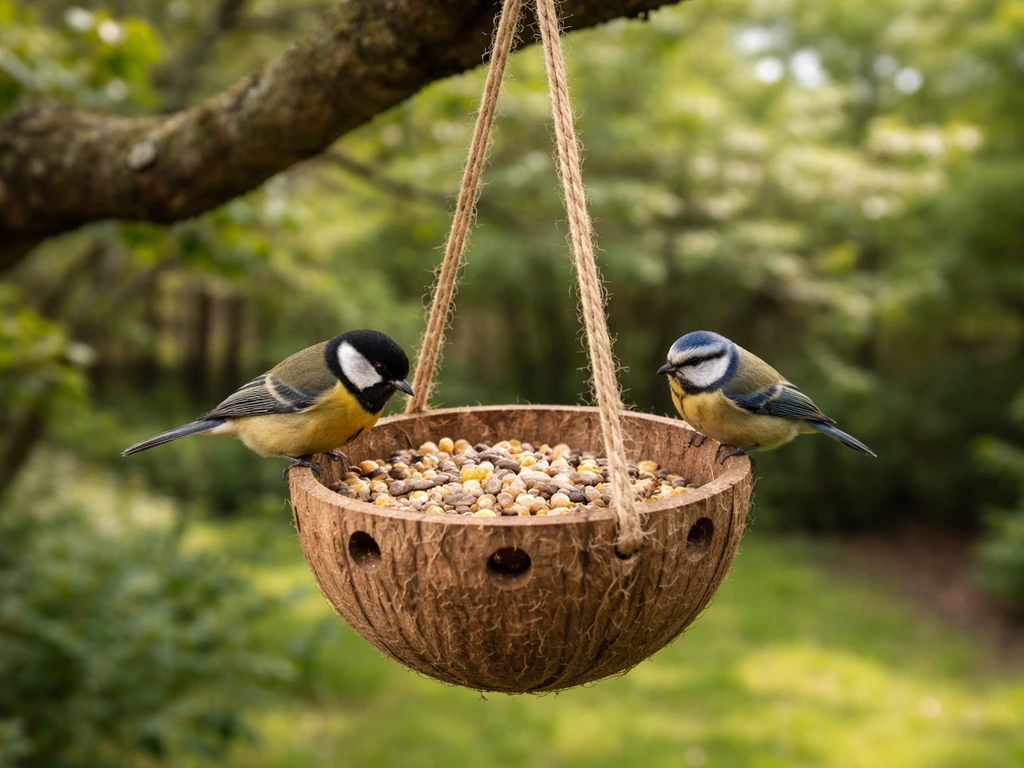
This is the most popular version and the easiest to build. Take one coconut half, shell side up and bowl side down. Drill two holes on opposite sides of the shell, about half an inch from the rim. Threading holes on opposite sides (rather than side by side) is important because it keeps the feeder balanced and prevents it from tipping and spilling seed every time the wind picks up. Fold your twine in half, thread one end through each hole from the outside in, and tie a knot on the inside so the cord cannot pull through. Bring both ends together above the shell and tie them off with a loop for hanging. Fill the bowl with seed or suet mix and hang it. Done.
Design 2: whole coconut hanging feeder with an entry hole
Leave the coconut whole instead of splitting it. Drain the coconut water through the natural eyes, then use a 1.5-inch spade or hole-saw bit to drill one or two entry openings in the side of the shell. These become the feeding ports. Drill a small hole through the top (through the eye area) and thread your hanging twine through it, knotting it securely inside with a large bead or extra knot so it cannot slip out. Fill through the entry holes with a suet or seed mix. This version is more weather-resistant because most of the seed is inside the shell, but it is also harder to refill and clean. It works well in rainy climates and naturally shelters smaller birds like chickadees and nuthatches.
For most beginners, the half-shell bowl is the better starting point. It is easier to fill, easier to clean, and lets you see exactly how much seed birds are eating. The enclosed design is a solid upgrade once you have gotten a feel for the project.
Using coconut oil: what it actually does and how to use it safely
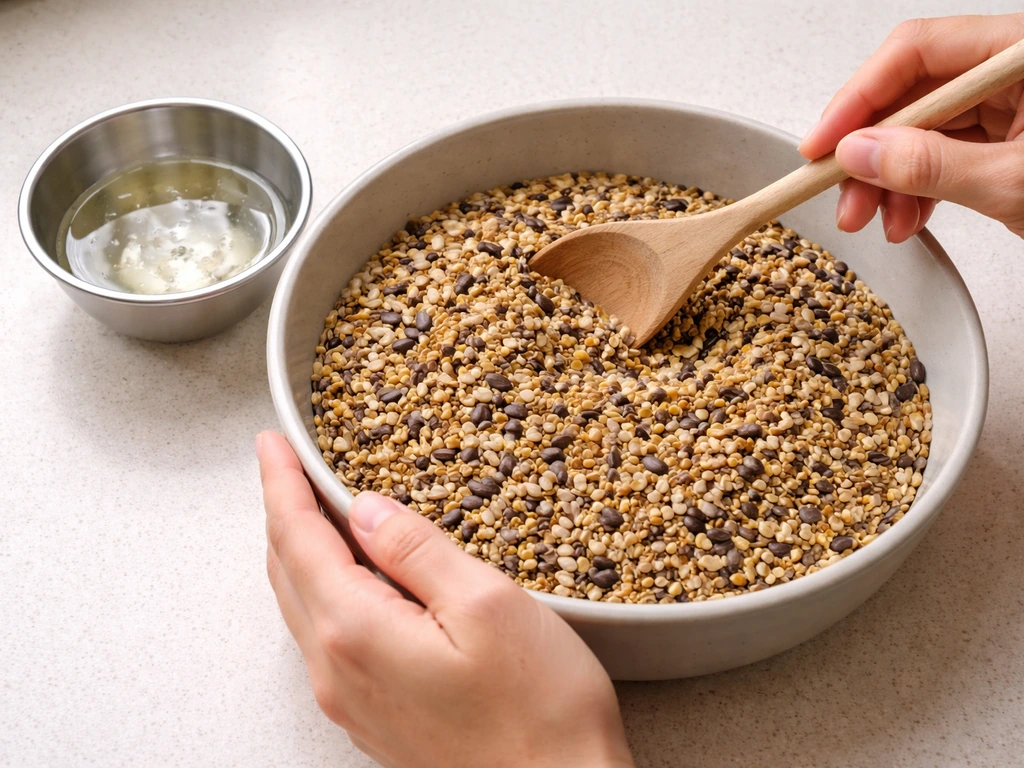
Coconut oil comes up in two different ways with this kind of feeder. First, some people use it as a binder to make a no-melt suet-style filling. Second, some sources suggest coating the outside of the shell to preserve the wood or deter insects. Here is what you need to know about both.
Coconut oil as a seed binder
Melt about two tablespoons of coconut oil and mix it with half a cup of birdseed, chopped unsalted peanuts, or dried fruit. Pour it into the shell bowl and let it set in the refrigerator for 30 to 60 minutes until solid. This creates a firm, easy-to-hang seed cake that birds can peck at. It works best in cool weather. Once temperatures climb above 75 to 80 degrees Fahrenheit, coconut oil melts and the mixture turns greasy and runny. In warm weather, skip the oil binder and just use dry seed or a commercial no-melt suet instead.
Safety cautions with coconut oil and birds
Use small quantities and replace the fill frequently. Coconut oil is a fat, and fats go rancid, especially in warm or humid conditions. Rancid oil smells unpleasant and can make birds sick. The U.S. EPA also notes that non-petroleum oils can still harm wildlife if ingested in quantity or if they contaminate a bird's feathers, so you want to avoid a situation where oil is dripping or pooling near the feeder. Never coat the outside of the shell or the hanging cord with oil since birds may brush against those surfaces and get oil on their feathers, which can compromise their insulation and waterproofing. Keep oil use limited to the fill mixture inside the bowl, use it only in cool weather, and replace the fill every 3 to 5 days.
When to skip the oil entirely
If it is summer, if you live in a humid climate, or if you just want to keep things simple, plain birdseed works great on its own. Black-oil sunflower seeds, safflower seeds, or a basic mixed seed blend will attract a wide variety of birds with zero oil maintenance to worry about.
Hanging the feeder and picking the right spot
Placement is one of those things that sounds obvious but makes a real difference in whether birds actually use the feeder. A few things to get right from the start will save you a lot of frustration.
- Height: hang the feeder at least 5 feet off the ground to keep it out of easy reach of cats and ground-level predators. Most backyard birds are comfortable feeding at 5 to 8 feet.
- Distance from windows: place it either within 3 feet of a window or more than 30 feet away. The 3-to-30-foot middle zone is where window strike deaths happen most often.
- Cover nearby but open feeding area: birds like to see a shrub or tree within 10 feet to retreat to if startled, but the feeder itself should be in a reasonably open spot so they can spot approaching predators.
- Stability: use the two-hole opposite-side drilling method described above. If you are hanging from a thin branch that sways, add a short wire loop between the branch and the twine so the feeder hangs straight and does not spin.
- Shade: partial shade extends how long the seed and any fat-based fill stays fresh. Direct sun all day accelerates spoilage, especially with oil-based fillings.
- Squirrel distance: if squirrels are a problem in your yard, hang the feeder at least 10 feet horizontally from any surface a squirrel could jump from and at least 5 feet below any branch overhead.
Keep in mind that open bowl-style feeders like the half-shell design attract birds that prefer flat feeding surfaces, including sparrows, finches, and doves. If you are hoping to attract chickadees, nuthatches, or woodpeckers, the enclosed whole-coconut design or a feeder with a bit of cover overhead will likely get more of their attention.
Keeping the feeder clean and avoiding common problems
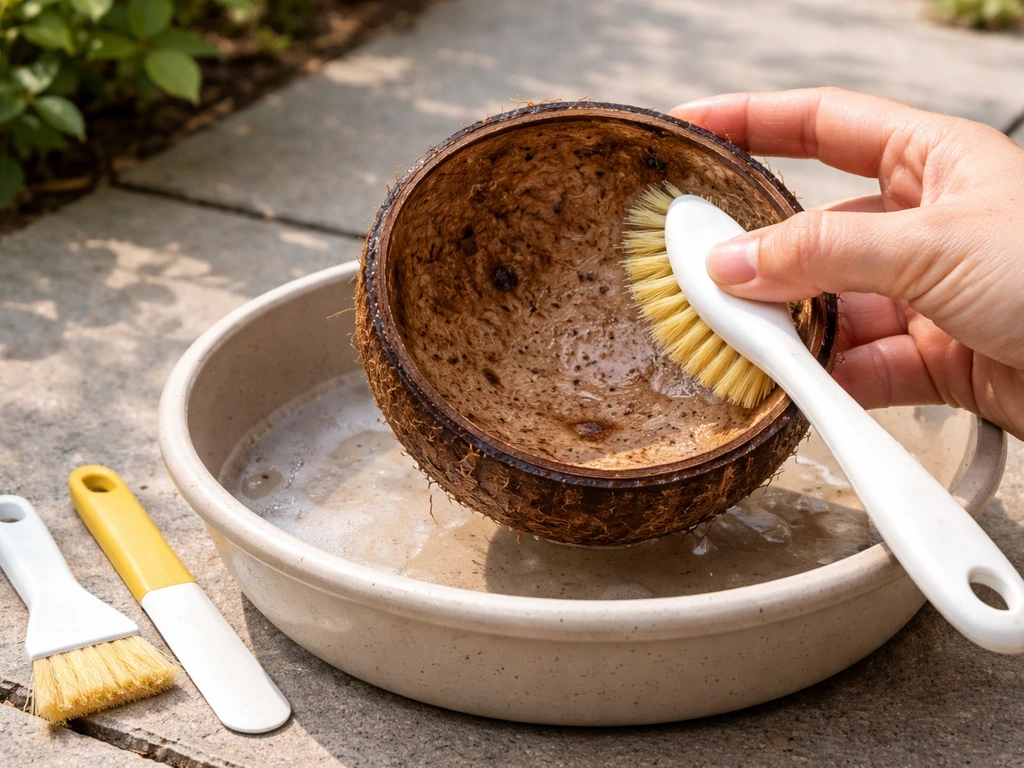
This is where most first-time coconut feeders run into trouble. The shell is a natural material, which means it molds faster than plastic or metal feeders if you are not on top of maintenance. The good news is that the cleaning routine is simple if you build it into your schedule from day one.
Regular cleaning schedule
Clean the feeder at least once every two weeks. In wet weather, bump that up to once a week. The U.S. Fish and Wildlife Service and Cornell Lab both recommend the two-week minimum, and every experienced backyard birder I know shortens that window when humidity is high. Wet seed is a fast track to mold and bacteria, which can make birds genuinely sick. Clemson HGIC also advises removing debris first by scrubbing the feeder before disinfecting, and notes that 10% bleach (1 part bleach to 9 parts water) is the most effective method for getting rid of salmonella on bird feeders Wet seed is a fast track to mold and bacteria.
- Empty any remaining seed or fill and dispose of it. Do not refill over old seed.
- Scrub the inside of the shell with a stiff brush and warm soapy water to remove any seed hulls, droppings, or residue. Debris removal before disinfection is critical because bleach cannot reach surfaces covered by gunk.
- Mix a cleaning solution of 1 part bleach to 9 parts water (roughly 2 oz bleach per gallon of water). Soak the shell in this solution for 10 minutes.
- Rinse thoroughly with clean water. Multiple rinses. Any bleach residue left in the feeder can harm birds.
- Let the shell air dry completely before refilling. This is not optional. Putting fresh seed into a damp feeder restarts the mold cycle immediately.
Fixing common problems
| Problem | Likely Cause | Fix |
|---|---|---|
| Mold appearing within days | Shell not fully dry before filling, or rain getting into open bowl | Let shell dry longer after cleaning; move feeder to a spot with some overhead cover or switch to the enclosed whole-coconut design |
| Oil fill turning runny or smelly | Temperatures above 75°F or fill left too long | Use oil-based fill only in cool weather; replace every 3 to 5 days; switch to dry seed in summer |
| Shell cracking or splitting | Natural drying out of the shell over time | Expect this after a few weeks outdoors; drill hanging holes away from any existing cracks; replace the shell when it starts to split |
| Squirrels or raccoons raiding the feeder | Feeder accessible from nearby surfaces or too low | Move feeder at least 10 feet from jump surfaces; consider a baffle on the hanging line |
| Birds not visiting | Feeder in a high-traffic or exposed location with no nearby cover | Relocate closer to shrubs or a tree edge; give it at least a week after moving before deciding it is not working |
| Seed spilling in wind | Single-point or same-side hanging holes causing tipping | Re-drill holes on opposite sides of the rim for balanced suspension; add a short stabilizing wire |
Ground maintenance matters too
Do not forget the area under the feeder. Old seed hulls, spilled fill, and droppings accumulate on the ground and can harbor the same mold and bacteria as the feeder itself. Sweep or rake the area under the feeder every time you clean or refill it. For step-by-step help on what to pour in and how to put the new fill back into place, see our guide on how to refill a coconut bird feeder how to refill coconut bird feeder. This also reduces the attraction for rats and other pests that feed on spilled seed at ground level.
How long will the shell last?
Realistically, a coconut shell feeder lasts 4 to 8 weeks outdoors before it starts to deteriorate significantly. Cracking, splitting, and eventual breakdown are normal for a natural material. The upside is that coconut shells are cheap and the build only takes an hour, so starting fresh with a new shell every month or two is totally reasonable. Some people keep a rotation of two or three shells so they always have a clean dry one ready to swap in. When you are ready to refill or replace it, the process of filling the new shell is straightforward, and managing that fill correctly on an ongoing basis is just as important as the build itself. If you want the fastest results, follow a simple how to fill bird feeder routine so the seed or suet stays fresh and easy for birds to eat filling the new shell.
FAQ
Can I coat the outside of the coconut shell or the twine to make it last longer?
Yes, but only if you plan for insects and rot. Remove any loose husk, let the shell fully dry, then skip outside coating. If you want added weather resistance, prefer the whole-shell (enclosed) design, which protects the bulk of the food from rain.
What should I do with a coconut oil seed cake during hot summer days?
Don’t. Suet cakes made with coconut oil can soften or melt in warm weather, and that creates greasy mess and faster spoilage. Use dry seed or a commercially made no-melt suet when temperatures are above about 75 to 80°F.
How do I prevent the twine from loosening or getting chewed at the knot?
Use the thinnest cord you can that still holds knots securely, and keep the knot and hanging loop inside the shell so birds cannot peck the connection points. Also check the hanging height and retie if you see fraying, since natural fibers can weaken after a few wet cleanings.
How can I tell if a coconut is too far gone to use for a bird feeder?
If your coconut smells sour or fermented after you open it, discard it. Also avoid shells that feel slimy on the inside or show dark spotting before you even add food, those signs usually mean the shell was compromised before drying.
Where should I hang it to reduce window collisions, squirrels, and rats?
For placement, keep at least several feet of clearance from windows, and avoid mounting where squirrels can launch directly onto the feeder line. If you have a feeder pole, choose a method that keeps the shell out of easy reach, since ground-level spilled seed plus easy access quickly becomes a rat and squirrel magnet.
What can I change if birds ignore my new coconut feeder?
If birds won’t use it right away, confirm the opening or bowl is not blocked by a tight knot, then try a seed type that matches the feeder style. For the half-shell bowl, start with black-oil sunflower, mixed seed, or small pieces of dried fruit, and keep the feeder closer to cover (shrubs or a nearby tree).
Can I adjust the drilled entry holes to attract different birds?
Yes, and the trick is to match openings to the target birds and your refill frequency. Small entry ports favor smaller birds, but they also clog more easily with fine seed dust. If you see ports narrowing, scrape and rinse the shell during cleaning instead of waiting for the next refill.
How do I know when to stop using the feeder because it’s growing mold?
Watch for mold by checking the bowl or ports for fuzzy growth, wet spots, and strong musty odor. If you spot it, empty immediately, discard the remaining fill, rinse and dry the shell thoroughly, then restart with a fresh batch rather than trying to “patch” the old food.
Why is mold happening even though I’m cleaning the coconut shell?
Pick fresh, dry fill and keep the bottom area clean. Even with weekly cleaning, spilled hulls and seed beneath the feeder can harbor moisture and bacteria. If you see frequent spillage, reduce overfilling and consider the enclosed whole-shell design.
How often should I replace the coconut shell, and is shell rotation worth it?
Replace the whole shell sooner if it starts to crack, split along drilled holes, or feels soft when you press gently. A rotating supply helps, so you can swap to a dry shell immediately while the damaged one is discarded.
What’s different about maintenance in rainy or humid climates?
Yes, and it changes your cleaning schedule. Rainy or humid weather increases moisture retention, so clean at least weekly and dry the shell fully before refilling. If the feeder stays wet overnight, empty and dry it sooner rather than waiting for a full week.
Can I add a simple cover or perch to attract more birds without harming them?
You can, but treat it as temporary. Keep an eye on whether the added “cover” blocks easy pecking and traps moisture under the shell. If you use any cover, avoid coatings on the shell or cord and ensure air can circulate so the inside does not stay damp.
Next Article
How to Fill a Tube Bird Feeder Step by Step
Step-by-step guide to fill a tube bird feeder without spills, prevent clogs, and set up for steady feeding and easy clea