Remove the lid or top of your feeder, pour seed in until it's about three-quarters full, reseal it, and hang it up. That's the core of it. But doing it well, without spilling seed everywhere, without soaking it in rain, and without inviting squirrels and rodents to the party, takes a little more thought. Here's everything you need to know to fill any common feeder type correctly, keep the seed fresh, and actually get birds showing up.
How to Put Bird Seed in a Bird Feeder Step by Step
Marcus Brennan
28 May 2026
Pick the right feeder type and bird seed for it
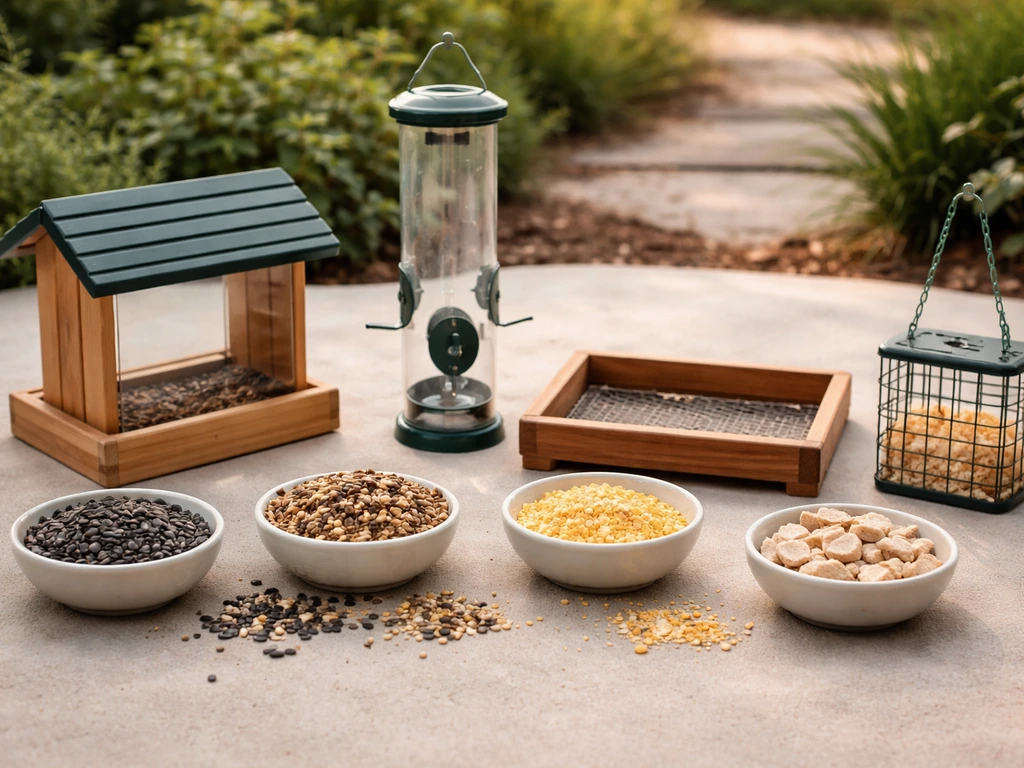
The single biggest mistake beginners make is pouring whatever seed they have into whatever feeder they own, hoping for the best. Different feeders are built around specific seed sizes and flow characteristics, so mismatching them causes jams, waste, and frustration fast.
blank" rel="noopener noreferrer">Black-oil sunflower seed is your best all-around choice. It's the most widely offered seed in North America, it's high-energy, and its thin shells make it easy for a huge variety of birds to crack open. If you only stock one seed, make it black-oil sunflower. It works in hopper feeders, tube feeders, and platform feeders without any fuss.
| Feeder Type | Best Seeds | Watch Out For |
|---|---|---|
| Hopper / House feeder | Black-oil sunflower, mixed seed, millet | Check for moisture buildup at the bottom |
| Tube feeder | Black-oil sunflower, safflower, nyjer (in nyjer-specific tubes) | Avoid sunflower hearts/chips — they clump and spoil in moisture-prone tubes |
| Platform / Tray feeder | Almost anything: sunflower, millet, peanut hearts, cracked corn | Seed exposed to rain; don't overfill in wet weather |
| Nyjer / Thistle feeder | Nyjer (thistle) seed only | Ports are tiny by design — using any other seed blocks them instantly |
| Suet cage | Suet cakes or suet plugs | Not for loose seed at all |
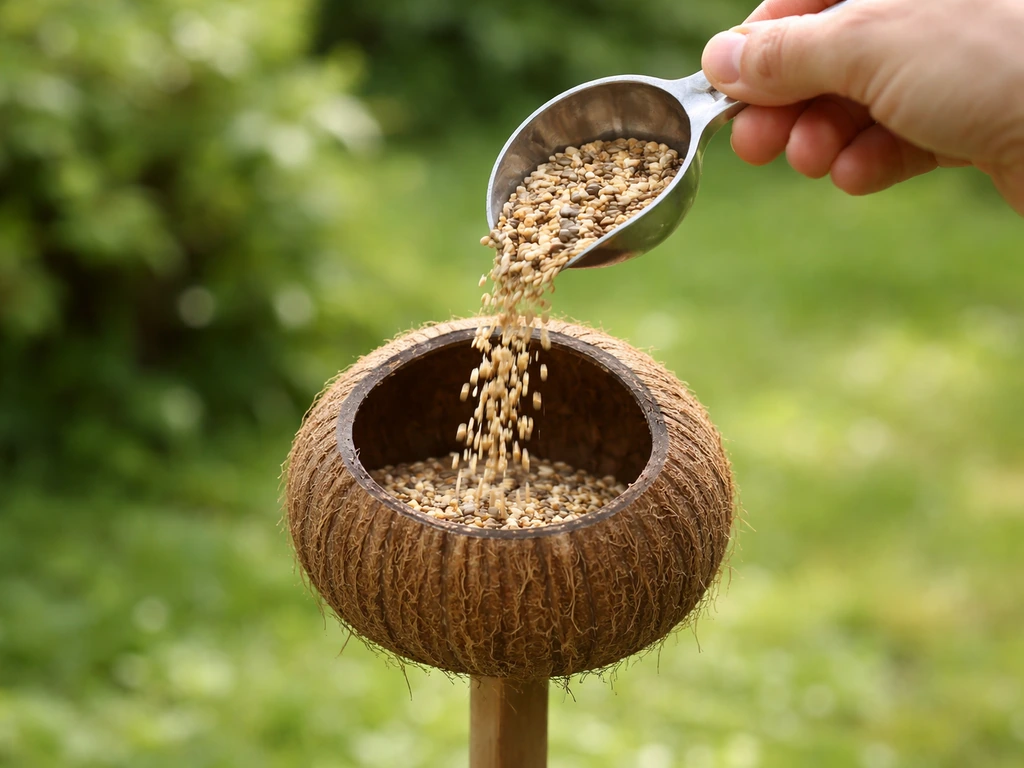
| Homemade pinecone or coconut feeder | Peanut butter mixed with seed, suet blends | These fill differently — press mix into gaps rather than pouring |
Nyjer seed deserves a special mention because it's so small it flows right out of standard feeder ports. You need a feeder built specifically for nyjer, with very small feeding holes, or you'll dump half the bag on the ground. Peanut hearts (shelled peanut pieces) are best in a small hopper or on a platform where birds can easily pick them up. And corn should only be offered in amounts birds can finish in a single day during wet or humid weather, because wet corn goes moldy fast.
How to load seed into common feeder styles
Each feeder design has its own loading quirks. Getting the technique right the first time saves you a lot of cleanup.
Hopper feeders
Hopper feeders are the classic house-shaped style with a roof, walls, and a trough where seed collects at the bottom. Most have a hinged or removable roof panel on top. To fill one: unlatch or lift the roof, pour seed directly in from a bag or scoop, and close it back up. Take the feeder down from its hook before you do this if it's hung high or in a tricky spot. It's much easier to fill on a flat surface than at arm's length in the air. Fill to about three-quarters capacity, not to the brim. Overfilling hopper feeders means seed presses against the dispensing slots and can jam, and any overflow just falls straight to the ground.
Tube feeders
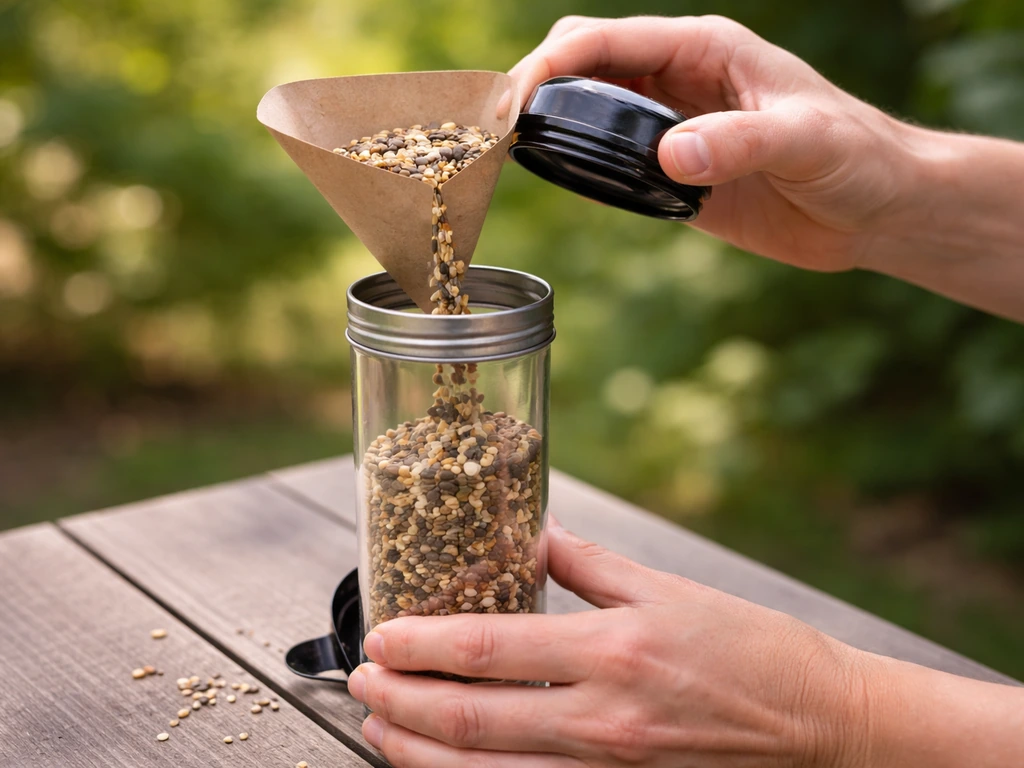
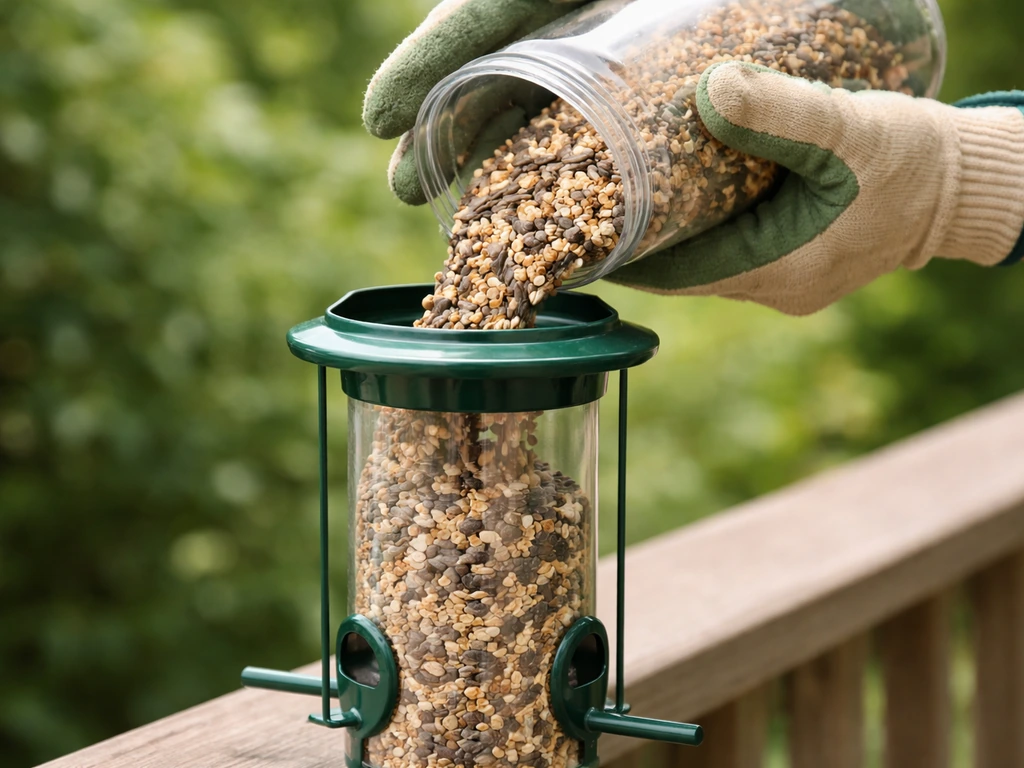
Tube feeders have a cap at the top that unscrews or pulls off. Take the cap off, use a scoop or a small funnel (a folded piece of paper works in a pinch) to pour seed in, and replace the cap. To make a tube bird feeder, you can use the same top-fill logic and cap-seating tips used for commercial tube feeders.
Funnels are genuinely useful here because the tube opening is narrow and it's easy to scatter seed all over yourself without one. Some manufacturers design their bottle-style tubes so you fill them upside-down: place the bottle on a flat surface, use the inverted lid as a funnel, load the seed, then flip the whole assembly right-side up and attach it to the feeder base. Check your feeder's specific instructions if it works this way.
If you're building your own tube feeder, the same top-fill logic applies.
Platform and tray feeders
Platform feeders are the simplest to fill: scatter seed directly onto the tray. No lids, no ports, no funnels needed. The tradeoff is that seed sits completely exposed. In dry weather, that's fine. In rain, it's a problem (more on that below). Because platform feeders attract the widest variety of birds, they're worth keeping around, but fill them with smaller amounts more frequently rather than loading them up and walking away.
Nyjer and thistle feeders
These work almost identically to standard tube feeders: remove the top cap, pour in nyjer seed using a narrow funnel, and reseal. The key difference is that nyjer is extremely fine and light. Even a small gap or loose cap will let it trickle out continuously. Make sure the cap is fully seated and tight before you hang the feeder back up.
Homemade and specialty feeders
If you've built a feeder from a plastic bottle, milk jug, or similar container, filling it depends on the design, but the principle is always the same: add seed through the largest opening available, use a funnel or makeshift cone to keep it tidy, and don't pack seed in so tightly that it can't flow toward the ports. For coconut shell feeders, you're typically pressing a suet or peanut butter and seed mixture into the cavity rather than pouring loose seed, which is a different process entirely. Coconut bird feeders usually use a compact suet or peanut-butter-and-seed mixture, so refilling means topping up that cavity rather than pouring loose seed coconut shell feeders. If you want a coconut bird feeder specifically, the filling process is different from pouring loose seed For coconut shell feeders.
How much to add and how often to refill
The three-quarters rule is a reliable starting point for almost every enclosed feeder style (hoppers, tubes). It gives seed room to settle and flow without jamming at the ports or overflowing. For platform feeders, a single shallow layer is plenty, maybe enough that the base of the tray is covered but seed isn't piled more than half an inch deep.
How often you refill depends on bird traffic and weather, not a fixed schedule. When you're just starting out, check the feeder every couple of days. Once you know how fast your local birds go through it, you'll naturally find your rhythm. A busy feeder in peak season (spring and fall migration) can empty in a day or two. A slower winter feeder might last a week. The real rule is this: refill when seed drops to about one-quarter full, and never let the feeder sit completely empty for long if you're trying to establish regular visitors.
In wet or humid weather, refill more frequently and in smaller amounts. Wet seed spoils fast, and a half-full feeder in rain is better than a packed feeder with moldy seed sitting at the bottom for days.
Preventing spills, bridging, and seed getting stuck
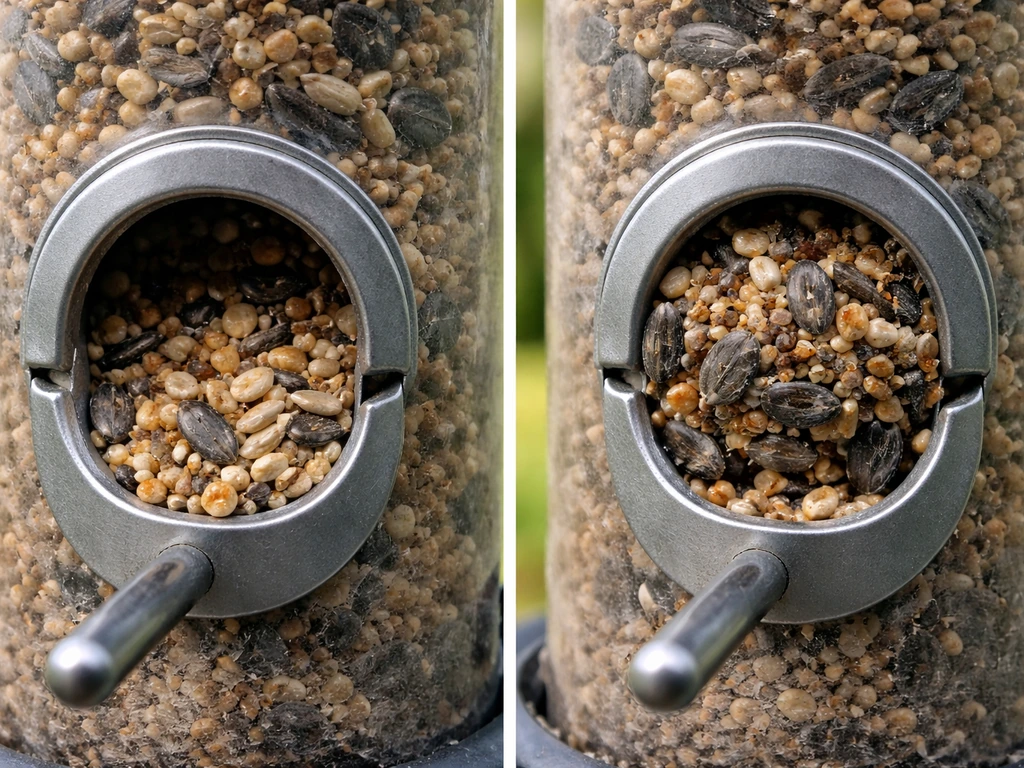
Bridging is when seed clumps together inside the feeder and forms a blockage, stopping flow to the ports even though there's still seed inside. It's frustrating but fixable. Moisture is almost always the cause: wet or humid conditions make seed stick together. Here's how to prevent it and deal with it when it happens.
- Don't overfill: seed packed too tightly has nowhere to shift when it gets slightly damp, so it bridges faster.
- Choose enclosed feeders (hopper or tube styles) in rainy climates, as they keep seed significantly drier than open platform designs.
- If a tube feeder port is blocked, tap the side of the feeder gently with your hand. This usually breaks up a light bridge immediately.
- For a stubborn clog at a port, a thin stick, chopstick, or even a pencil pushed through the port from outside usually clears it in seconds.
- Sunflower hearts and chips are more prone to clumping than whole seeds in tube feeders, especially where moisture can collect at the bottom. Stick to whole black-oil sunflower seed in tube feeders if bridging is a recurring problem.
- Keep the feeder level when hanging. A tilted tube feeder causes seed to pile unevenly and block ports on one side.
- To prevent spills while filling, bring the feeder to a waist-high surface, fill slowly, and use a funnel or scoop with a narrow spout. A wide pour from a bag is the fastest route to seed all over the ground.
Seed that spills on the ground isn't just wasted, it's a magnet for rodents, raccoons, and opossums. The U.S. Fish and Wildlife Service specifically flags discarded seed shells and spilled seed as a draw for rodents. Cleaning up spilled seed after every fill is a small habit that prevents a bigger pest problem later.
Quick maintenance right after filling
Filling the feeder is the perfect moment to do a quick once-over before you hang it back up. It only takes two or three minutes and it matters more than most people realize.
- Check for leftover old seed before adding new. If seed is clumped, discolored, or smells off, dump it. Never top-fill a feeder that already has stale or wet seed at the bottom. New seed on top of spoiled seed goes bad faster.
- Look for moisture inside. If the interior walls feel damp or you see dark spots, let the feeder dry completely before adding new seed. Audubon is direct about this: dry the feeder fully before refilling.
- Scrape out any accumulated hulls or debris from the tray or base. Hulls and droppings build up fast and can make birds sick.
- If the feeder is noticeably dirty (you can see buildup, the ports are grimy, or it's been more than two weeks since the last cleaning), do a proper clean before refilling. Scrub with a 9:1 water-to-bleach solution, rinse thoroughly, and let it dry completely. A 10-minute soak in the dilute bleach solution is an effective step for sanitizing before scrubbing.
- On a routine refill where the feeder looks clean and dry, a quick wipe of the ports and tray with a dry cloth is enough.
The standard cleaning recommendation from both All About Birds and Project FeederWatch is once every two weeks, but bump that up to weekly or more often in warm, wet weather or during heavy use periods. If there are reports of sick birds in your area, clean every time you refill. Moldy and spoiled seed is one of the main ways birds get ill at feeders, and droppings accumulating on trays make it worse.
Troubleshooting common problems and pest-related adjustments
Seed won't flow or ports stay blocked
If seed isn't coming out of the ports after a fresh fill, the most likely culprits are a bridge inside the feeder or a clog at the port itself. Tap the feeder body to break up bridging. Use a thin implement to clear the port. If this keeps happening, switch to a drier seed type or a feeder design with a seed deflector or agitator feature built in, which some quality tube feeders include specifically to prevent seed settling at the bottom.
Seed is getting wet and going moldy
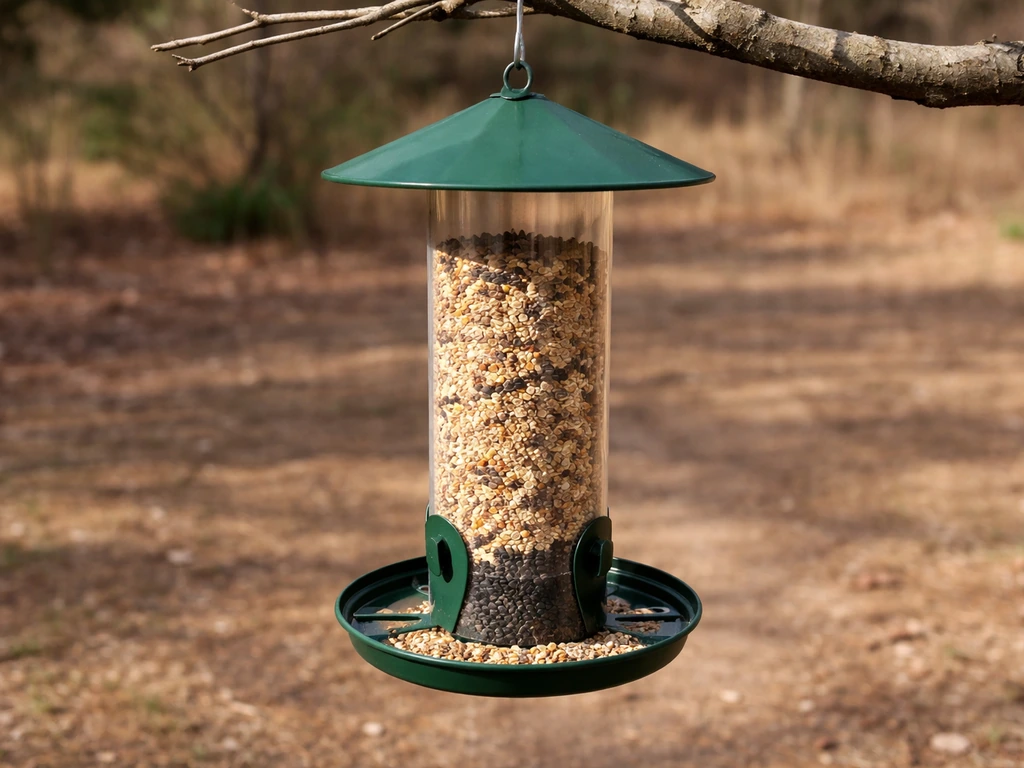
If you're finding wet, clumped, or moldy seed regularly, you have a moisture problem. Switch to a hopper or tube feeder with a proper roof if you're currently using a platform feeder. Minnesota DNR notes that wet birdseed develops mold and bacteria that can harm birds. Make sure the feeder's drainage holes (if it has them) aren't clogged. Reduce fill amounts in rainy periods and refill more often with fresh seed instead. And absolutely dump any seed that looks or smells wrong rather than leaving it in hopes birds will eat it anyway.
Squirrels are emptying the feeder
Squirrels are persistent and genuinely athletic. A baffle on the pole below the feeder, or a cage-style baffle above it if it's hanging, is the most reliable physical deterrent. Massachusetts Audubon recommends baffles both above and below pole-mounted feeders for the best protection. Placement matters too: keep feeders at least 10 feet from anything a squirrel can launch off (fences, trees, rooflines). One practical distraction strategy from Project FeederWatch: offer squirrels their own food station at the far end of the yard with peanuts or dried corn. It doesn't eliminate the problem, but it reduces the intensity of the assault on your bird feeder significantly.
Raccoons, opossums, or other wildlife showing up
If larger animals are raiding the feeder, spilled seed on the ground is usually part of the problem. Clean up fallen seed under the feeder regularly, use a seed-catching tray if your feeder doesn't have one, and consider bringing tube or hopper feeders inside at night if raids are happening after dark. K-State Extension notes that bird feeders can inadvertently attract raccoons and other wildlife when food is consistently available. Tightening up your spill situation and being thoughtful about placement goes a long way.
Birds aren't coming to the feeder
Give it a few days after a fresh setup. Birds need time to find a new food source. If you've been filling the same feeder for a while and birds suddenly stop visiting, check the seed quality first (stale or moist seed gets avoided), then look at whether something nearby has spooked them (a new cat in the yard, a change in nearby vegetation). A feeder that's too close to heavy foot traffic also gets ignored. In most cases, fresh seed in a clean feeder in a reasonable location brings birds back reliably. If you're still not getting takers, try black-oil sunflower seed if you haven't already, as it draws the broadest range of species.
Filling a bird feeder correctly doesn't take much time once you've done it a few times. The habits that matter most are matching your seed to your feeder type, not overfilling, keeping things dry, cleaning before you refill, and managing what falls on the ground. Get those basics right and you'll have active, healthy visitors coming back consistently.
FAQ
Can I add bird seed without emptying the feeder first?
Yes, but only if your feeder design allows it. For enclosed hoppers and tubes, adding seed to a partially filled feeder is fine if the existing seed is dry and not clumped, and you still keep the overall level around the usual fill limit (about three-quarters). Avoid topping off platform feeders during rain or when seed has been sitting damp, instead empty the tray, wipe it dry, then refill with fresh seed.
How long can a bird feeder be empty before birds stop coming?
Letting a feeder sit completely empty usually slows repeat visits, especially during cold snaps or migration. If you are trying to attract regulars, refill when seed drops to about one-quarter full rather than waiting until it is bone dry. If you must leave it empty briefly, clean the feeder and restart with fresh seed the next time.
How can I tell when bird seed has gone bad?
It depends on the seed type and whether it has been exposed to moisture. As a rule, discard anything that smells sour or musty, looks gray or fuzzy, or feels damp or crusted, even if only a little portion is affected. Also remove and replace “stale” seed that has been in place for weeks, especially in warm weather, since oils in many seeds can go rancid.
Why is seed leaking out of my feeder even when it’s capped?
If you see a lot of seed trickling out after filling, the most common causes are a loosely seated cap, a warped lid, or nyjer or fine seed flowing through a gap. Reseal the feeder, check that the cap is fully seated, and confirm you are using a feeder made for nyjer if you are feeding it. If the feeder still leaks, switch seed types or move to a different feeder style.
Should I wash or rinse bird seed before putting it in the feeder?
You generally should not rinse loose seed with water before loading it, because moisture strongly increases clumping and mold risk. If a bag looks dusty, only shake off loose dust or replace it. For tube and hopper feeders, keep the loading area dry, and refill more often with smaller amounts during humid weather.
What’s the best way to fill a DIY or unusual feeder opening without spilling?
For most tube and hopper feeders, stick to a top fill method using a scoop or narrow funnel so you control the flow and avoid scattered seed. If you are using a homemade container with a narrow opening, do not pack seed tightly, packed seed can block movement toward the ports. Filling with a funnel also reduces cleanup, and it lowers the chance of spilled seed attracting rodents.
How should I adjust refilling if it’s rainy or humid?
More frequent refills are usually better than one large fill, especially on platform feeders and in wet or humid weather. For example, instead of filling deeply once, aim for a shallow layer and refresh it after rain or when seed looks damp. This reduces mold, clumping, and the amount of spoiled seed birds might pick at.
What can I do if squirrels or raccoons keep raiding the feeder?
Yes. In addition to a physical baffle, avoid placing feeders where squirrels can launch close to the tray or ports (near fences, tree branches, and rooflines). If raids happen at night, bring tube or hopper feeders in after dark or use a seed-catching tray plus regular cleanup so you are not leaving easy-to-find spills outdoors.
My feeder is full, but birds aren’t visiting, what should I check first?
If birds don’t return after a fresh refill, first check for a quality issue (stale or moist seed), then check the feeder condition (clogged port, bridging, loose cap). Next, look for changes nearby that can spook them, like a new cat, new loud activity, or heavier foot traffic close to the feeder. Finally, give them a few days to rediscover the location after you change seed or feeder setup.
Next Article
How to Refill a Coconut Bird Feeder Fast and Clean
Learn how to refill a coconut bird feeder fast, clean, and mess-free, with feeding, cleaning, and pest-proof tips.