You can hang a bird feeder from your eaves using a screw-in hook, a J-bracket, or a hanging line secured to a eye bolt, and the whole job takes under 30 minutes with basic tools. The key is picking a solid mounting point in the eave wood (not just the soffit panel), getting the height right (roughly 5 to 6 feet off the ground), and keeping the feeder at least 3 feet from or more than 30 feet from any window so birds don't get hurt. Here's exactly how to do it.
How to Hang Bird Feeder From Eaves: Step-by-Step Guide
Marcus Brennan
16 May 2026
Best spots on your eaves for safe, bird-friendly placement
Not every inch of your eaves is equally useful. The goal is to find a spot that's structurally solid, gives birds a clear flight path, and doesn't put them at risk from predators or glass. Start by walking the perimeter of your house and looking for these things.
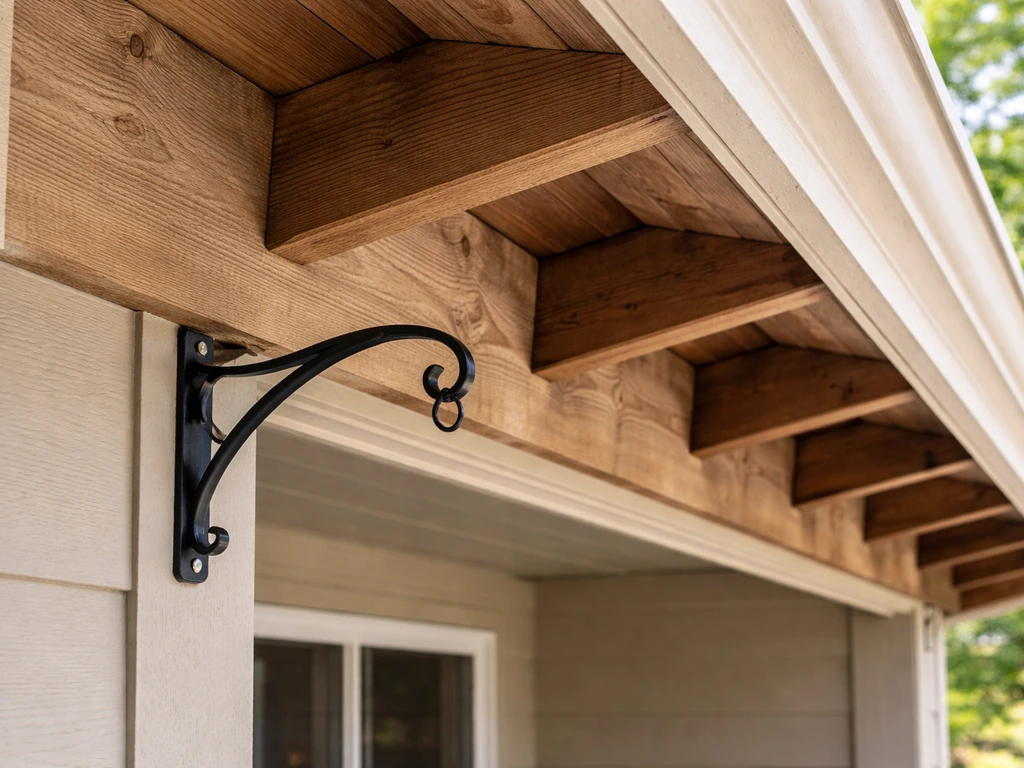
Look for the rafter tails first. These are the exposed wooden beams that stick out beyond the wall and support the eave overhang. They're almost always solid enough to hold a feeder hook without any reinforcement. If you have a finished soffit (the flat panel underneath the overhang), try to locate where the rafter tails sit behind it, you'll feel them by pressing on the soffit and finding the firm spots, or you can use a stud finder. Avoid mounting into thin vinyl or aluminum soffit panels alone; they'll flex and eventually pull through.
Once you've found structurally sound spots, think about the bird's experience. You want the feeder close enough to shrubs or a tree that birds feel safe darting in and out (the RSPB recommends accessible cover nearby), but not so close that a cat or hawk can ambush from cover.
RSPB advises placing feeders close enough to cover so birds can quickly dart away from danger, while keeping them safe from predators by not putting them too near places predators can hide close enough to shrubs or a tree that birds feel safe darting in and out.
About 10 feet of clearance from dense shrubs is a good rule of thumb from Audubon. Also avoid spots directly above a sitting area, patio furniture, or a door, seed hulls and droppings will make that area messy fast.
- Corner eaves tend to offer the sturdiest mounting points and more airspace around the feeder
- South- or east-facing eaves give birds morning sun and warmth, which they prefer in cooler months
- Avoid spots directly above HVAC units or vents — birds find the noise and airflow disorienting
- Stay away from areas where branches hang close overhead (squirrel launching pads)
- If you have gutters, keep in mind that a hanging feeder from the eave directly above can deposit hulls into the gutter — a few feet to the side avoids this
How to choose the right hanging method for your feeder and eaves
The hanging method you pick depends on two things: what your eave is made of and what kind of feeder you have. A heavy, seed-filled tube feeder needs a sturdier mount than a lightweight mesh sock. Here's a quick breakdown of the main options.
| Method | Best For | Max Load | Tools Needed | Notes |
|---|---|---|---|---|
| Screw-in eye hook | Lightweight feeders, finished wood eaves | Up to 10 lbs | Drill, 1/8" pilot bit | Cheap and simple; sink it into a rafter tail for best hold |
| J-bracket (arm bracket) | Heavier feeders, feeders that need to swing clear of the eave | Up to 25 lbs | Drill, screwdriver, level | Extends feeder outward; reduces seed mess on siding |
| Eye bolt + hanging line | Multiple feeders on one run, flexible positioning | Varies by cord rating | Drill, pliers | Use braided steel or weather-rated nylon line |
| Adhesive or tension hooks | Renters, temporary setups, very light feeders only | Under 3 lbs | None | Not reliable in wind or wet weather; not recommended for permanent setups |
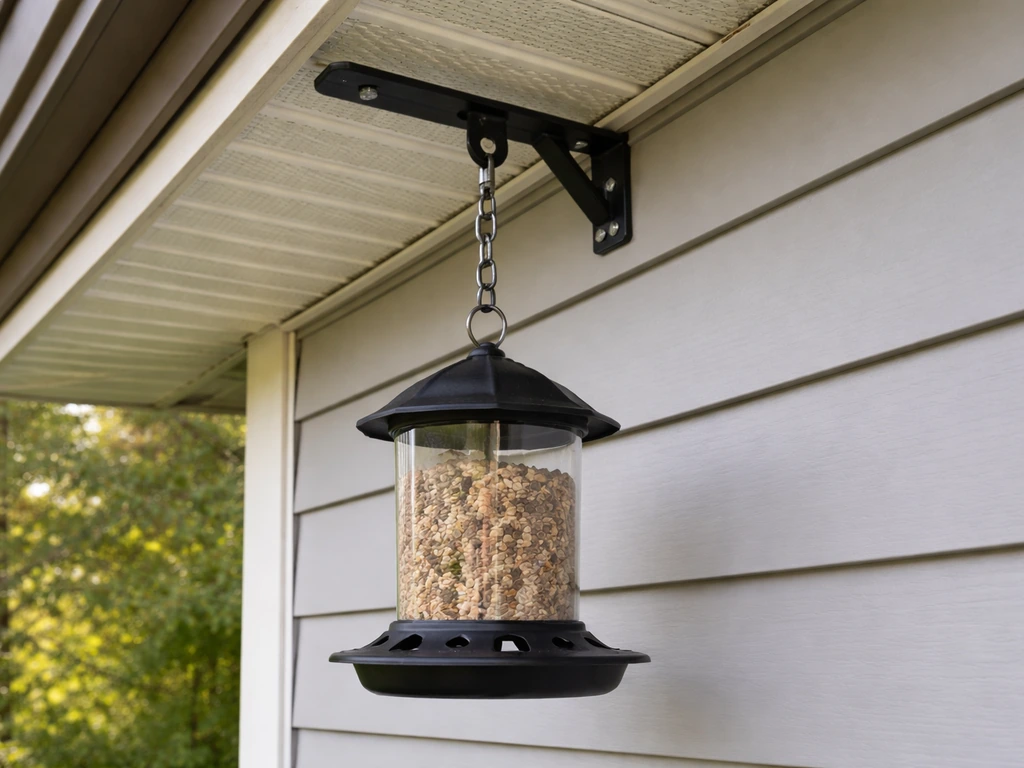
For most people, a galvanized screw-in eye hook (about $2 at any hardware store) threaded into a rafter tail is the fastest and most reliable solution for a single feeder. If you want to hang the feeder farther out from the wall to reduce seed scatter on your siding, a J-bracket is worth the extra few minutes of install time. If you're hanging multiple feeders or want to run a line across a stretch of eave, an eye bolt at each end with a taut cord between them gives you the most flexibility.
Step-by-step: installing hooks, brackets, or lines on your eaves
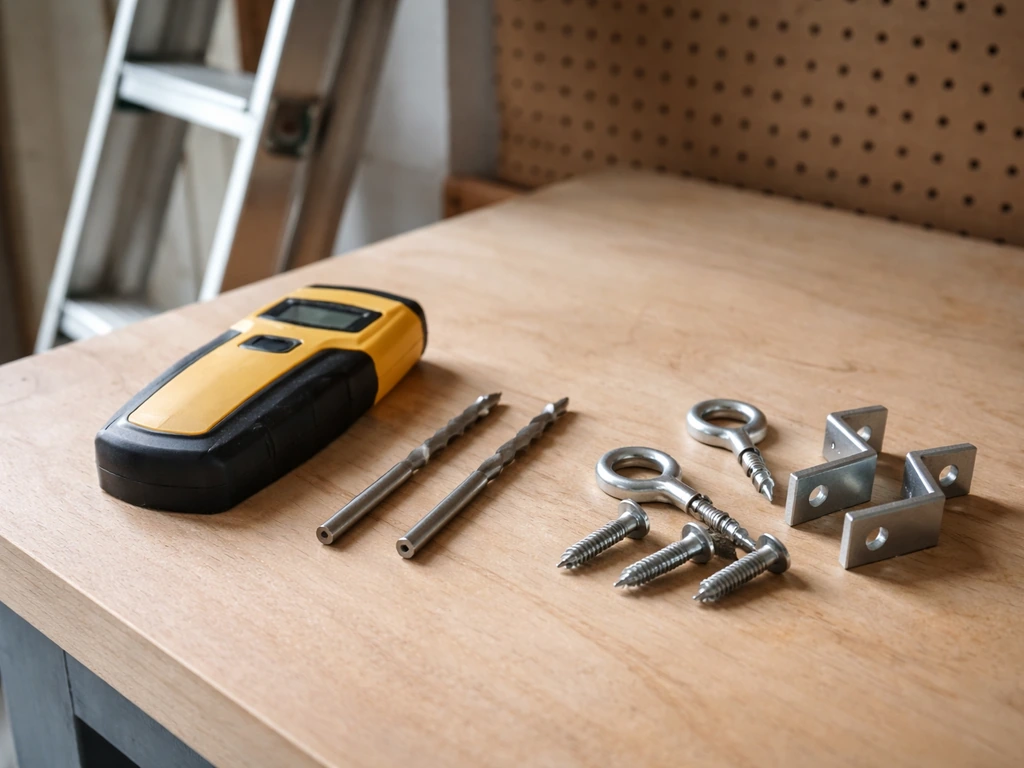
What you'll need
- Screw-in eye hook (3/8" diameter, at least 2" thread length) or J-bracket with included hardware
- Drill with 1/8" and 3/16" drill bits
- Stud finder or a thin screwdriver to probe for rafter tails
- Small level (a phone app works fine)
- Ladder tall enough to reach the eave comfortably
- Carabiner clip or S-hook to attach the feeder (makes removal for cleaning easier)
- Weatherproof wood glue or exterior sealant (optional but recommended)
Installing a screw-in eye hook
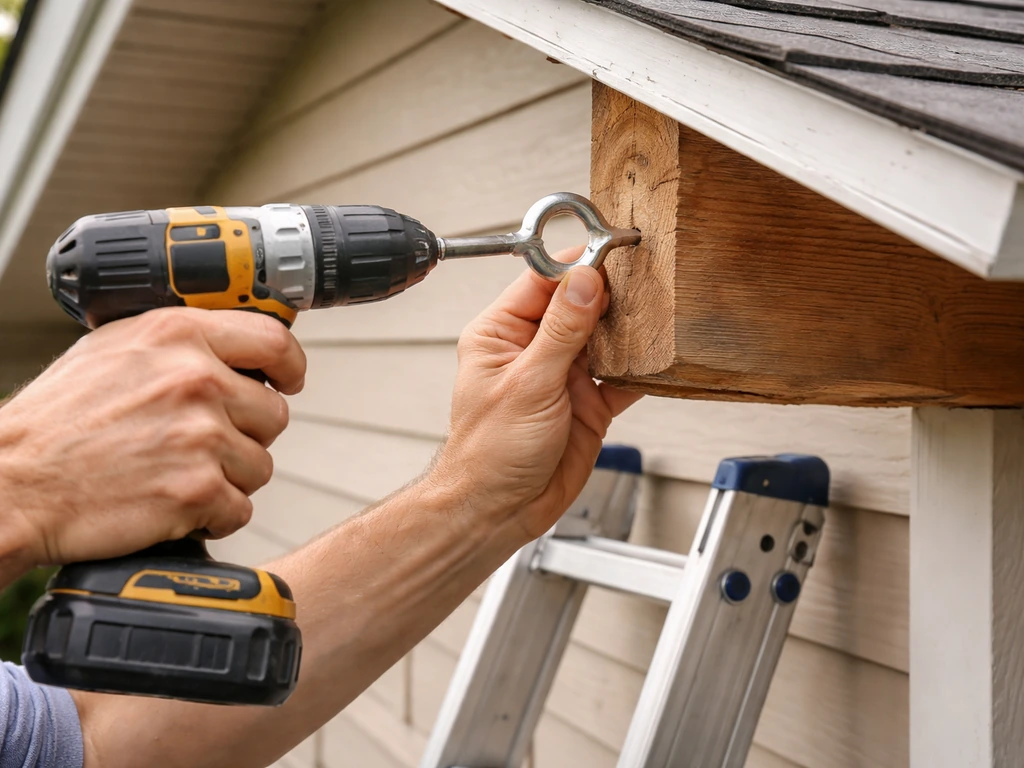
- Set up your ladder safely and locate the rafter tail at your chosen spot. Press on the soffit to confirm you're over solid wood, or measure from the roofline down — rafter tails are usually spaced 16 to 24 inches apart.
- Mark your spot with a pencil, then drill a 1/8" pilot hole straight up into the rafter tail, about 1.5" deep. This prevents the wood from splitting.
- Thread the eye hook in by hand until snug. For extra grip, use a screwdriver through the eye as a lever to tighten the last quarter turn. Don't overtighten.
- Optional: dab a small amount of exterior wood sealant around the base of the hook where it enters the wood. This keeps moisture out and extends the life of the mounting point.
- Clip an S-hook or carabiner to the eye, then hang your feeder. Give it a firm tug downward to test the hold before loading it with seed.
Installing a J-bracket
- Hold the bracket's mounting plate against the eave fascia board (the vertical board running along the edge of the roof) or directly against a rafter tail. Use a level to make sure the arm will extend horizontally.
- Mark and drill pilot holes for the screws — typically two or three mounting points. Use a 3/16" bit for most J-bracket hardware.
- Drive the screws in firmly. If you're mounting into fascia rather than a rafter tail, use 2.5" exterior wood screws to reach solid backing.
- Slide your feeder hook or hanging wire onto the bracket arm's end loop or hook point.
- Load the feeder lightly at first (half full) and check after 24 hours that nothing has shifted or loosened.
Running a hanging line between two eye bolts
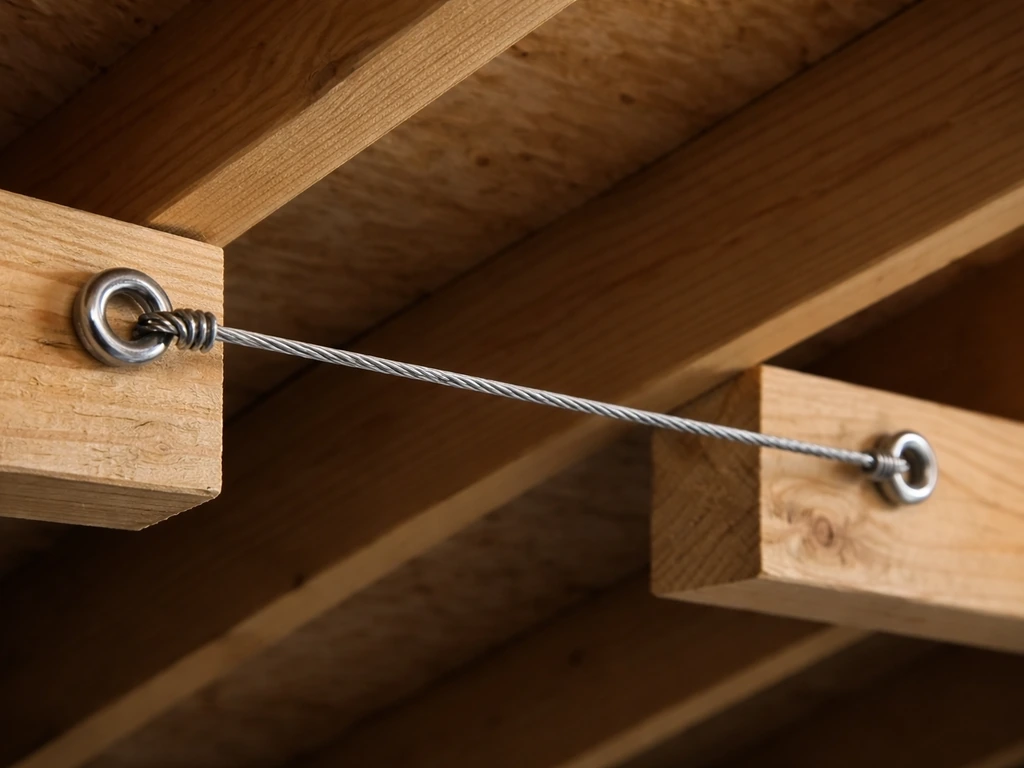
- Install two eye bolts (3/8" diameter, 3" thread) at each end of the span you want, threading them into rafter tails at each point.
- Run a length of braided galvanized wire (50 lb rated minimum) or weather-grade paracord between them. Pull it taut and secure each end with a knot or a ferrule crimp.
- Hang individual feeders from the line using S-hooks. Space them at least 18 inches apart so they don't knock together in the wind.
- Check the line tension after the first rain — nylon cord can stretch slightly when wet.
Getting the height, angle, and window clearance right
Height matters more than most people realize. Too low and the feeder becomes an easy target for cats and ground predators. Too high and you can't refill it safely or see the birds well. The practical sweet spot is between 5 and 6 feet off the ground, high enough to discourage casual cat approaches, low enough to refill from a short step stool.
Window clearance is the safety issue that catches a lot of people off guard. Birds can build up enough speed between a feeder and a window to cause a fatal collision if the gap is in the danger zone. Research from Cornell Lab's All About Birds describes the "rule of 3 or 30": hang the feeder either closer than 3 feet to a window or farther than 30 feet away. The zone in between, roughly 3 to 30 feet from glass, is where the real danger lies. Audubon's guidance reinforces this, that range gives birds enough room to reach full speed but not enough distance to slow back down before hitting glass.
In practice, eave-hung feeders are often close to the house, which means they're frequently inside that 3-foot safe zone or edging into the danger range. If your eave spot puts the feeder 4 to 25 feet from a window, either move it closer (hang it right below the overhang near the wall) or look for a different eave location farther along the roofline. Window decals or exterior tape on the nearby glass also help break up the reflection and reduce collisions if repositioning isn't possible.
Also think about angle and swing. A feeder hanging from a short hook directly into the eave will swing back and hit the siding in a strong wind. If your eave is less than 18 inches deep, use a J-bracket to push the feeder out past the siding line. Aim for at least 6 to 8 inches of clearance between the feeder body and the nearest wall or gutter.
Weatherproofing, stability, and keeping pests away
Weather and stability
Eave-mounted feeders actually have a natural advantage here, the overhang provides some rain cover. But wind is still a real problem. A feeder that swings and spins will shed seed everywhere, discourage skittish birds, and stress the mounting point over time. A few simple fixes make a big difference.
- Use a short hanger (4 to 6 inches) rather than a long chain — less swing arc in wind
- Add a stabilizer clip or rubber grommet between the feeder's hanger loop and the hook to dampen movement
- Choose feeders with weight-closing perches if squirrels are an issue (more on that below)
- Check all screws and hooks at the start of each season and re-tighten as needed — wood expands and contracts seasonally
- Seal any new screw holes or hook entry points with exterior wood sealant to prevent rot from moisture wicking in
Squirrels and other pests
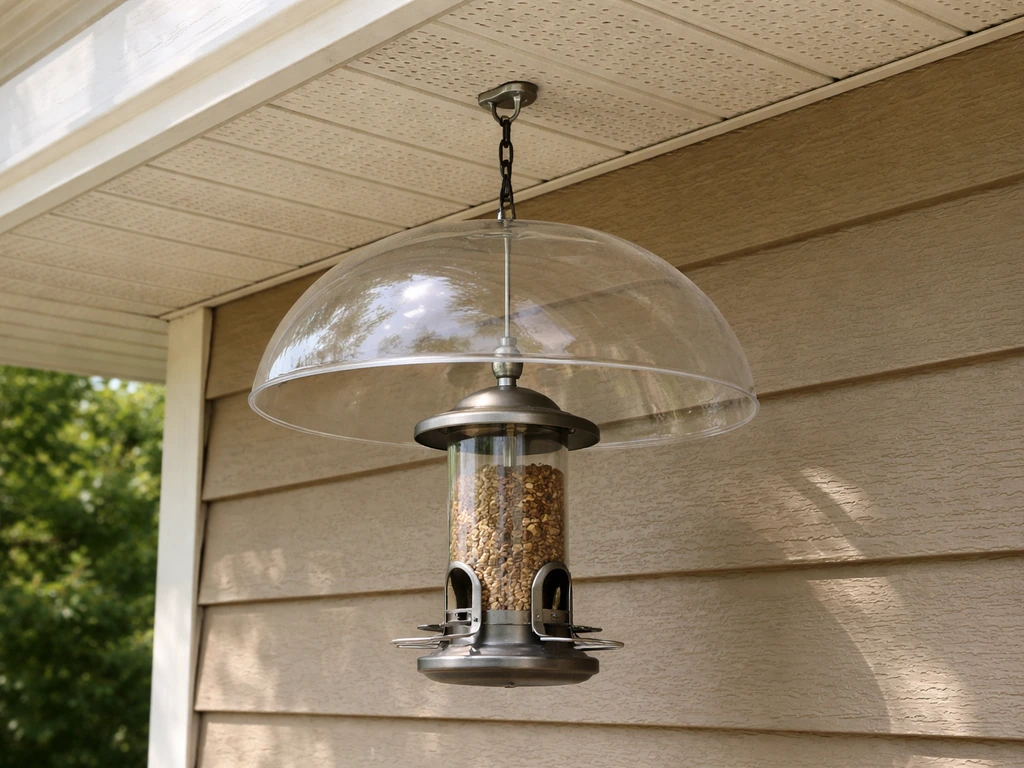
Squirrels are the main pest problem with eave feeders. The good news is that eaves are harder for squirrels to access than a feeder on a post, because they can't easily approach from below. The bad news is that squirrels are excellent leapers and will jump from a roofline or nearby tree onto the feeder if they get the chance. Audubon suggests keeping feeders at least 10 feet from trees or any structure a squirrel could launch from, which isn't always possible on a house. If your eave is within jumping distance of a tree, a squirrel baffle on the hanging line is your best defense, a dome-shaped baffle threaded onto the wire above the feeder blocks approach from above.
- Install a dome baffle above the feeder on the hanging wire to block squirrels descending from the roof
- Avoid using thick chains or ropes squirrels can grip and shimmy down
- Don't place the feeder directly below overhanging branches — even 10-foot leaps are within a squirrel's ability
- Use seed mixes without millet or corn, which attract more rodents and ground-feeding pests
- A tray or seed catcher beneath the feeder reduces ground mess that attracts rats and mice
Maintenance checklist and what to do if things go wrong
Once the feeder is up, it needs regular attention to stay safe and effective. Here's a simple checklist to work through every few weeks.
- Check the mounting hardware: tug gently on the feeder to test that the hook or bracket hasn't loosened. Re-tighten any hardware that feels soft or wobbly.
- Inspect the wood around the mounting point for signs of rot, splitting, or water staining — especially after a wet season.
- Clean the feeder every 1 to 2 weeks: remove old seed, scrub with a 10% bleach solution, rinse thoroughly, and let it dry before refilling. Wet seed mold is the number one reason birds stop using a feeder.
- Clear any seed hulls or debris from your gutters if the feeder is positioned near them.
- In winter, check that ice or snow buildup isn't weighing down a hanging line or blocking feeder ports.
- Watch for signs of swing damage on the siding — scuff marks or paint wear indicate the feeder is hitting the wall and needs a longer arm bracket.
Troubleshooting: why birds might not be using the feeder
If you've had the feeder up for more than a week and aren't seeing activity, don't assume the spot is wrong right away. Birds can take anywhere from a few days to a few weeks to find a new feeder, especially if it's in a new location. That said, here are the most common reasons a feeder gets ignored.
- The seed is stale or has gotten wet and clumped — birds will skip a feeder with old or moldy seed
- The feeder is swinging too much in wind, making birds nervous to land
- There's no nearby cover (a shrub or small tree within 10 to 15 feet) where birds can watch the feeder before committing to land
- A hawk or cat has startled the local birds recently — give it a few days after a predator incident
- The feeder is too close to a window and birds have had one near-collision, making them wary of the spot
- You're using the wrong seed for your local species — black-oil sunflower seed attracts the widest variety of North American backyard birds and is the safest default
If you want even more options for where to mount a feeder around the outside of your house, the approaches for deck railings, gutters, soffits, and balconies all involve slightly different hardware and constraints. The eave method here works well for most single-family homes, but if your eave access is limited or your setup is more like an apartment or condo situation, some of those other mounting approaches may be a better fit. The core principles, solid mounting point, right clearances, stable hang, clean seed, stay the same across all of them. If you're building a bird feeder for a balcony, you can apply the same mounting, height, and safety clearances that work for eaves bird feeder for balcony.
FAQ
Can I mount a bird feeder into the soffit panel instead of the rafter tails?
It’s better not to. Soffit panels are often thin and can flex or pull through over time, especially with seed weight and wind load. If the rafter tails aren’t easy to locate, use a stud finder or press-test from below to confirm a solid substrate before installing the hook or J-bracket.
What if I can’t get the feeder to be 5 to 6 feet high on my eaves?
Use the next closest safe option rather than going too low. If you must go lower for access, increase predator protection by mounting higher than any step stool you normally use, and choose a feeder type that has a sturdy perch guard. If you must go higher, plan for a stable refill setup, like a ladder placed so you can reach without leaning sideways into the feeder.
How do I reduce seed scatter onto siding and gutters?
Aim the hang so the feeder body sits slightly forward of the wall line, especially if the eave depth is limited. A J-bracket is designed for this. Also consider positioning the feeder closer to the wall (to reduce bounce-out) while still keeping the required window-safe distance.
My feeder swings and hits the siding in windy weather, what should I change?
First increase clearance, aim for 6 to 8 inches between the feeder and the wall or gutter, and move from a short direct hook to a J-bracket if the eave depth is under 18 inches. Then check tension and length on any cord setup so the feeder hangs with minimal play. Shortening the hang point often reduces swing.
What’s the best way to choose the window-safe location if all my eaves are close to glass?
Use the rule of 3 or 30, either closer than 3 feet to the window or farther than 30 feet away. If neither is possible, reposition along the roofline to change the actual gap, not just the visual sightline. If you can’t move it, use window treatments like decals or exterior tape to break up reflections, but still prioritize moving the feeder when feasible.
Should I remove feeders during heavy rain or snow?
You don’t need to remove them for normal weather, but protect the mounting and the seed. Heavy wet seed can increase weight and make feeders swing more, so check that the hook, J-bracket screws, or eye bolts remain tight after storms. If snow buildup clogs tray ports, swap to a feeder style that sheds moisture or use a seed formulation that dries less into clumps.
How far should the feeder be from shrubs or trees for safety?
Provide nearby accessible cover for birds to feel secure, but avoid giving predators a launch point. A common guideline is around 10 feet from dense shrubs, and if squirrels can launch from a tree or roofline, increase the distance further or use a squirrel baffle. When in doubt, choose a spot that balances bird approach cover with limited predator access.
Do I need a squirrel baffle for an eave-mounted feeder?
Not always, but it’s strongly worth it if the feeder is within squirrel jumping distance of a tree, roofline, or neighboring structure. Because eaves are higher, squirrels can still jump down and reach the feeder. A dome-shaped baffle on the hanging line can block approaches from above, and it’s often the simplest add-on when squirrels become an issue.
What feeder type is safest to hang from eaves?
For straightforward, stable mounting from a rafter tail, a single feeder like a tube feeder works well with a screw-in eye hook. Lighter sock or mesh feeders are easier on hardware, but they can catch more wind and twist. Match the mount strength to feeder weight, especially when the feeder is full and wet.
If birds don’t visit after I install it, how long should I wait and what should I check first?
Give it time, typically a few days to a few weeks for birds to discover a new location. Before concluding it’s the wrong setup, check for a clean seed supply, whether the feeder is too close to windows (noise and reflection can reduce visits), and whether wind is spinning the feeder. Also verify that the mounting point is secure, so it isn’t subtly shifting away from the intended hang position.
How often should I clean and refill an eave-mounted feeder?
Refill on your usual schedule, but do a quick cleaning routine regularly, especially after rain or when you see wet, clumped, or mold-prone seed. Seed hulls, droppings, and dampness can accumulate quickly under eaves, so wipe surfaces and check the feeder ports for blockage. More frequent cleaning is important if you place the feeder near patio seating or high-traffic areas where mess becomes noticeable.
Can I hang multiple feeders from one eave location?
Yes, but distribute weight and avoid crowding so each feeder can be refilled and doesn’t strike the others in wind. If you’re running a line across a stretch of eave, use an eye bolt at each end and keep the line taut to reduce swing. For safety, confirm each attachment point is into structurally solid wood, not just the soffit skin.