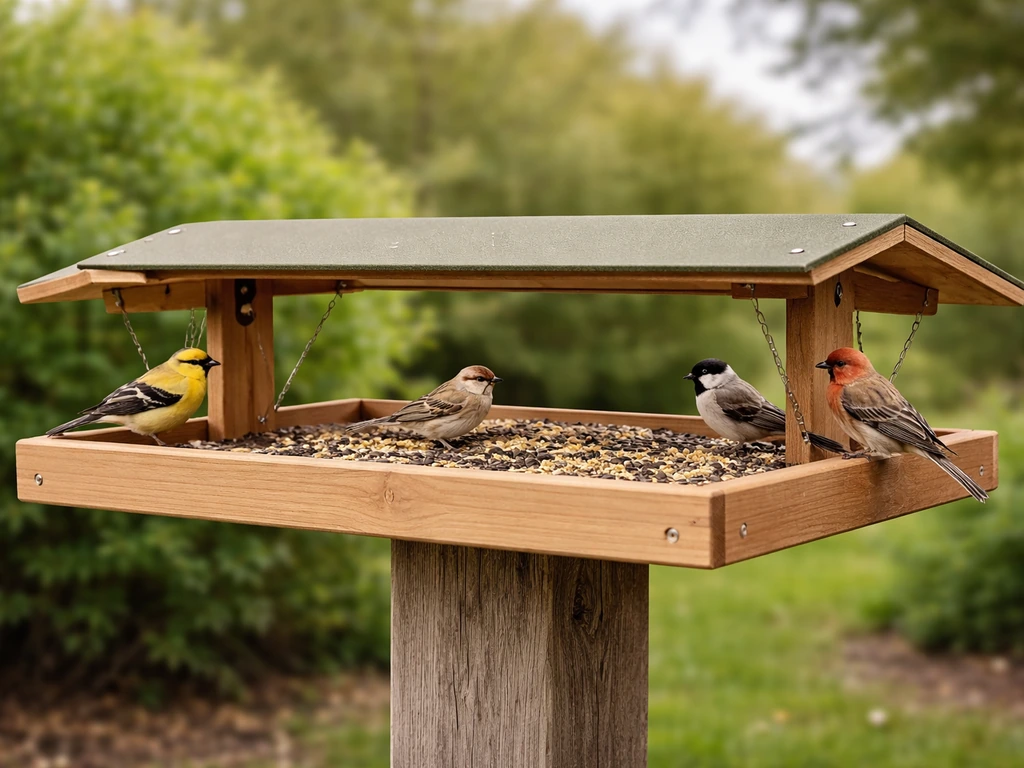
Build a simple open platform feeder from a single piece of cedar or pine board, roughly 12 inches by 18 inches, with low side rails and a wide landing area. That one design covers almost everything blue jays need: room to land, space to pick through seeds, and enough stability to hold a bird that weighs nearly 3 ounces and likes to throw its weight around. Fill it with black-oil sunflower seeds, peanuts in the shell, or whole kernel corn, hang or mount it at about 5 to 6 feet off the ground near the tree line, and you will almost certainly have blue jays on it within a few days.
How to Build a Bird Feeder for Blue Jays Step by Step
Marcus Brennan
2 Jun 2026
What blue jays actually need from a feeder
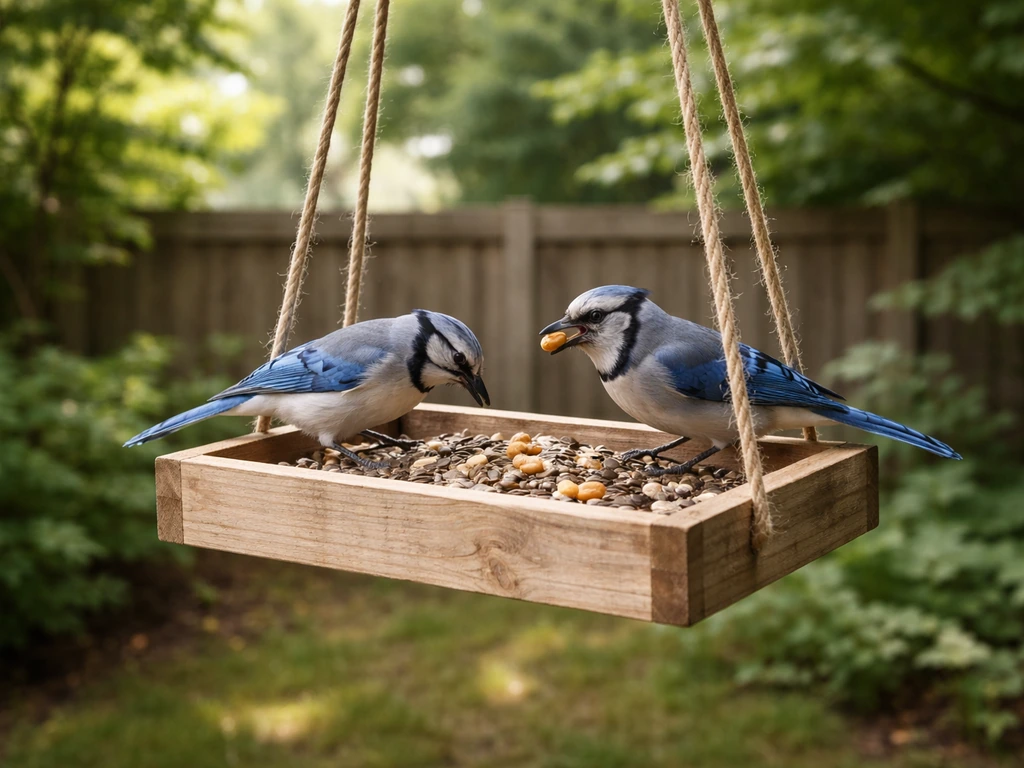
Blue jays are bigger and bolder than most backyard birds, and their feeding style is nothing like a finch or chickadee. They do not cling to small tube feeders. They land, scan, grab multiple seeds at once (sometimes stuffing 3 to 5 in their throat pouch), and either eat on the spot or fly off to cache them nearby. That behavior tells you exactly what the feeder design has to deliver.
- A wide, flat feeding surface of at least 12 by 16 inches so multiple birds can land without crowding each other off
- Enough structural stability to handle a bird dropping onto it from above, which blue jays do regularly
- Low or no obstructions around the edge so jays can approach from any angle and leave quickly if startled
- A surface that drains well, since seeds sitting in water get moldy fast and sick jays stop showing up
- Access to chunky food: peanuts in the shell, whole sunflower seeds, and shelled corn are all preferred over fine mixes
Blue jays forage everywhere from the ground up into the tree canopy, so they are flexible feeders. But they strongly prefer an open platform where they can see what they are eating and keep an eye out for threats. A hopper-style feeder with a narrow tray works too, but the wider the tray, the more comfortable they are.
Materials and tools you will need
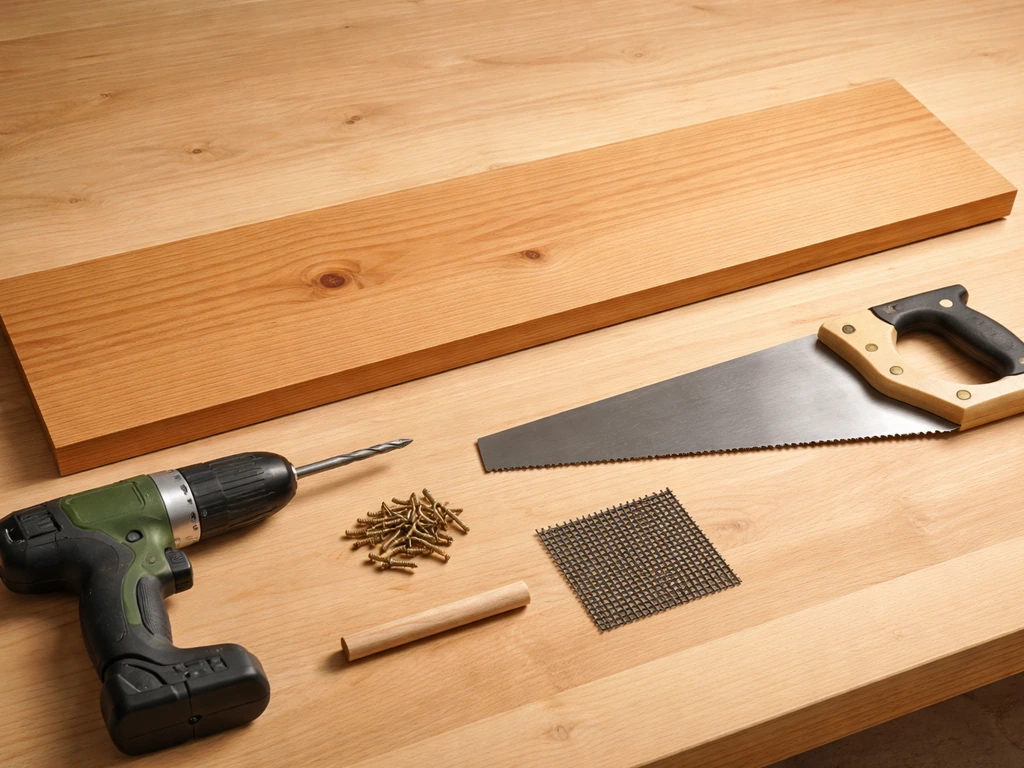
You do not need a full woodworking shop for this. A hand saw, a drill, and about an hour of your time is enough. Cedar is the best wood for outdoor feeders because it resists moisture and rot naturally, but a standard pine or pressure-treated board works if you seal it. Avoid any wood treated with chemicals on surfaces that will contact seed.
- One 1x12 cedar or pine board, at least 36 inches long (you will cut this into the platform and end pieces)
- Two 1x2 or 1x3 cedar strips, each about 18 inches long (these become the side rails)
- Small mesh or window screen scrap, roughly 12 by 18 inches, for the drainage layer (optional but highly recommended)
- 1.5-inch exterior wood screws or galvanized nails
- A 3/8-inch drill bit for drainage holes if you skip the screen
- Eye hooks or screw eyes, two or four of them, rated for at least 5 pounds
- Paracord or galvanized wire, at least 4 feet, for hanging (or a metal mounting bracket if you prefer to pole-mount it)
- Sandpaper, 80 or 100 grit
- Exterior wood glue (optional, for extra joint strength)
- Tape measure and pencil
If you want to skip the wood entirely, a recycled wooden produce crate or a large plastic tray from a hardware store can serve as a ready-made platform base. You would still add drainage holes and a hanging system, but the cuts are already done. For a beginner or a quick first build, that shortcut works well.
How to build it: step-by-step instructions
This build produces a hanging platform feeder roughly 12 inches wide by 18 inches long with 1.5-inch side rails. Total build time is about 45 minutes to an hour. If you want a wider view of wing span and measurements, follow this guide on how to build wingspan bird feeder for a larger platform.
- Cut the main platform: From your 1x12 board, cut one piece to 18 inches long. This is your feeding surface. Sand all edges smooth so you do not get splinters when handling it.
- Cut the end rails: From the same board, cut two pieces at 12 inches each. These will stand upright on the short ends of the platform to create a low wall that keeps seed from sliding off.
- Attach the end rails: Stand each 12-inch piece upright at the short ends of the platform, flush with the outer edge. Pre-drill two holes per joint to prevent splitting, then drive 1.5-inch exterior screws through the platform up into the base of each rail. Add a thin bead of exterior wood glue at each joint if you want extra strength.
- Attach the side strips: Lay your two 1x2 strips along the long edges of the platform. These sit flat, not upright, creating a low lip that keeps seeds corralled without blocking a jay's view. Screw or nail them down with two fasteners per strip.
- Add drainage: Drill six to eight 3/8-inch holes evenly spaced across the platform floor, or staple a scrap of window screen to the underside of the platform before assembly so water drains through the mesh instead of pooling. The screen option works better because it keeps smaller seeds from falling through while still draining.
- Sand everything again: Run 100-grit sandpaper over all surfaces, especially corners and edges. Blue jays are big enough that a rough edge can catch a foot.
- Install hanging hardware: Screw two eye hooks into the top edge of each end rail, centered, about half an inch from the top. Run paracord or wire through both eyes on one end and tie a loop. Repeat on the other end. Then connect both loops with a longer cord to create a single hanging point above the center of the feeder, or hang each end from a separate hook for a two-point suspension that keeps the tray level.
- Optional roof: If you live somewhere with heavy rain, you can add a simple pitched roof by cutting two triangular gable pieces and spanning them with a thin board or sheet of cedar shingles. A roof keeps seeds drier but reduces the open sightlines blue jays prefer. Start without one and add it later if rain is a consistent problem.
If you want a slightly larger build, scout feeder plans often use a 30-inch 1x12 as the base platform. That extra length gives you more surface area for larger flocks and lets you section off different food types. It is a good upgrade once you have the basic design working.
Perch design and food setup for blue jays
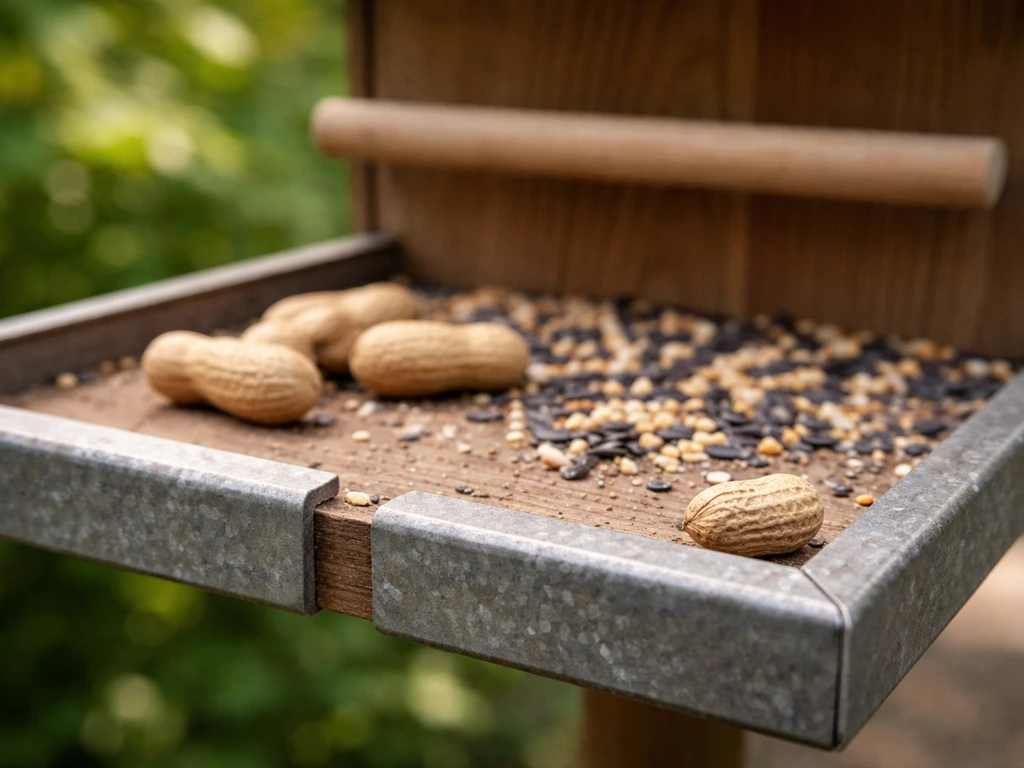
The platform edge itself acts as the perch. Blue jays land on the rail, shuffle inward to grab food, and sometimes brace a peanut against the rail with one foot while they crack it open. That foot-bracing behavior is real and worth designing for: keep at least one flat, wide rail edge where a jay can hold something down without sliding. A 1x3 rail is better than a dowel rod for this reason.
If you want to add a dedicated perch, screw a 3/8-inch wooden dowel horizontally across the outside of one end rail, about 2 inches below the platform surface. That gives smaller birds a place to wait their turn while also giving jays an external landing spot before they hop up. It is optional but useful if you want to observe a wider mix of birds.
For food, lead with black-oil sunflower seeds and peanuts in the shell. Blue jays are obsessed with peanuts and will return repeatedly once they find a reliable source. Whole kernel corn and shelled peanuts also work well. Suet is another good option, especially in colder months. Avoid mixed wild bird seed with lots of millet or milo filler: jays will ignore it and toss it off the tray looking for the good stuff, which just makes a mess and attracts pests.
Where to hang or mount it
Blue jays feel safest feeding near cover but not buried in it. The sweet spot is 5 to 6 feet off the ground, within about 10 feet of a tree or large shrub they can retreat to quickly. Do not push it right up against a tree trunk: that makes it easy for squirrels to jump onto it and hard for you to watch from the window.
- Hang it from a shepherd's hook pole set at least 5 feet high, or mount it on a 4x4 post sunk in the ground
- Keep it at least 10 feet from any branch, fence, or roof edge a squirrel could leap from
- Position it so you can see it clearly from inside your house, which helps you monitor activity and refill before it empties
- Face the open side of the platform toward your primary viewing angle so you get an unobstructed look at the birds
- Avoid spots with standing water directly below, since dropped seeds will decompose faster and attract rodents
- If you have multiple feeders, space them at least 10 feet apart so blue jays have room to claim feeding space without constant chasing
Hanging vs. pole-mounting comes down to your yard setup. A hanging feeder sways slightly in wind, which some people think deters squirrels, though in practice a determined squirrel will manage either way. Pole-mounting with a baffle is more reliably pest-resistant. If you can only do one, go with a pole mount and add a baffle.
Cleaning and refill routine
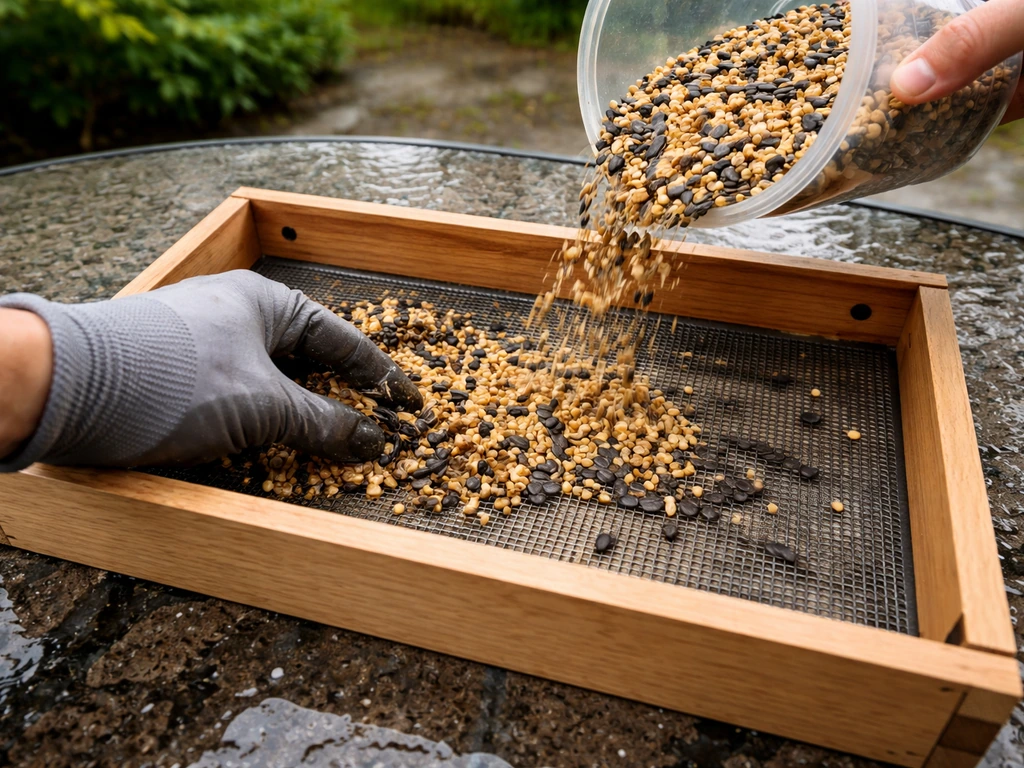
Platform feeders get dirty faster than enclosed feeders because they are exposed to rain, bird droppings, and wet seeds all at once. Letting seed sit in a damp tray is the fastest way to grow mold and spread avian disease, so cleaning needs to be a genuine habit, not an afterthought.
- Check the feeder every 2 to 3 days and remove any wet, clumped, or discolored seed before it molds
- Do a full scrub at least once a month: empty the tray, scrub it with a stiff brush, then soak or wipe it down with a solution of 1 part bleach to 9 parts water
- Rinse thoroughly with clean water and let the feeder air-dry completely before refilling, since residual bleach can harm birds
- Refill with fresh seed after every cleaning, not before, to avoid trapping old seed under new
- In hot, humid summer months, bump up your cleaning to every 2 weeks since seed goes bad faster
The screen or drainage holes you built in will help a lot, but they are not a substitute for regular cleaning. Think of the monthly bleach clean as the baseline and the every-few-days check as your ongoing quality control.
Troubleshooting and pest-proofing
Squirrels are emptying the feeder
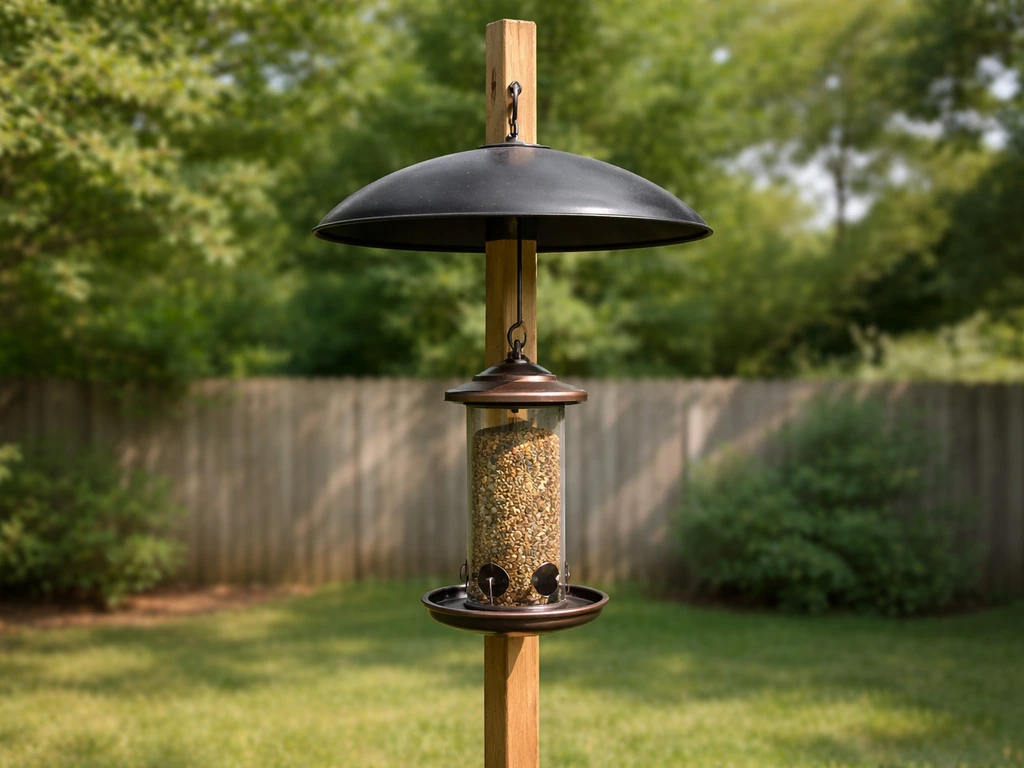
This is the most common complaint with open platform feeders, and it is fixable. The most effective single step is a pole-mounted baffle. A baffle is a dome- or saucer-shaped barrier that wraps around the pole below the feeder, preventing squirrels from climbing up. A second baffle above the feeder blocks squirrels from dropping down from tree branches. For a baffle to work, the squirrel has to be unable to cling to it, climb over it, or chew through it: look for metal baffles rather than plastic if you have persistent squirrels. Position the feeder pole at least 10 feet from any jumping-off point, and no setup will be completely squirrel-proof, but you can get very close with a pole, two baffles, and correct placement.
Grackles or starlings are taking over
Blue jays can hold their own against most birds, but large flocks of European starlings or grackles can crowd them out. The fix is to switch to whole peanuts in the shell rather than seeds. Starlings and grackles are less interested in shelled peanuts, while blue jays love them. You can also try offering safflower seeds: most large nuisance birds dislike the taste, but blue jays will eat them.
Blue jays are not showing up
Give it at least 5 to 7 days before making changes. Blue jays are cautious about new objects in their territory. Try adding a handful of peanuts in the shell to the tray, since the smell and visibility of peanuts is a strong attractant. Make sure the feeder is visible from above, not hidden under dense canopy, since jays scout from treetops before descending. Also check that there is a nearby perching tree they can retreat to.
Seed is getting wet and going bad quickly
If you skipped the drainage screen, add it now. Pull the tray apart at the base, cut a piece of window screen to size, and staple it to the underside of the platform with a staple gun. If that is too much rework, drill at least 8 to 10 drainage holes in a tight grid across the floor of the tray. You can also add a simple roof overhang using two scrap boards angled above the feeder: it does not have to be fancy, just enough to deflect direct rain. A rain-protected feeder is also a good use case for a slightly larger enclosed cage-style design, which keeps seed drier but works better for smaller birds than blue jays. If you are aiming for a more enclosed setup, follow the same drainage and perch ideas but use a cage-style enclosure so smaller birds still have access cage-style design.
Rodents are feeding below the feeder
Blue jays cache and scatter seed, so debris on the ground is inevitable. Rake up spilled seed every couple of days, and switch to a tray with higher side rails that reduces scatter. Avoid offering millet or mixed seed since the filler gets kicked to the ground and is exactly what mice and rats target. Sticking to peanuts and sunflower seeds produces much less ground waste.
Your first few days with the feeder
Once the feeder is up and loaded, spend a few minutes on day one and day two watching from inside. Note which birds arrive, how they approach, and whether the feeder stays stable when a jay lands. If it swings or tips, add a second hanging point or switch to a pole mount. If seeds are blowing off, raise the side rails by screwing an additional 1x2 strip on top of the existing ones. If the feeder is in the right location and stocked with peanuts, you will almost certainly see a blue jay within the first week. Once one jay finds it and caches a few seeds nearby, others will follow quickly.
Platform feeders are one of the most versatile DIY bird feeder builds you can make, and the same basic construction scales up easily if you want to go bigger for a mixed flock. This guide also shows how to scale the same approach into a big bird feeder that fits larger flocks scales up easily. The core skills here also translate directly to building a hopper feeder, adding a cage surround for small-bird protection, or constructing a dedicated bluebird feeding station. If you are also learning how to build a blue bird feeder, treat it as a separate feeding station so the setup and perch spacing match bluebird behavior bluebird feeding station. Start with this simple platform, watch how your jays use it for a week, and let their behavior tell you what to adjust next.
FAQ
What height should I use if I have a lot of predators or a busy yard?
Keep the platform at about 5 to 6 feet as the baseline, but place it within roughly 10 feet of cover so blue jays can retreat quickly. If your nearest cover is farther than that, consider moving the feeder closer to shrubs or adding a nearby perch tree rather than raising the feeder height higher, since higher placement can make escape harder.
Can I use wood that is pressure-treated or painted if I seal it?
Avoid any wood treated with chemicals on surfaces that will touch seed. If you are using standard pine or pressure-treated boards, use a food-safe exterior sealer on all seed-contact surfaces and let it fully cure before adding bird food. Even then, many DIYers prefer cedar to reduce residue and repeated re-sealing needs.
How do I prevent seeds from building up and turning into a sticky mess?
Use a tray design that drains, then keep cleaning frequent. If you notice seeds clumping from moisture, empty the platform, rinse and dry it, and then switch to a seed mix that resists dampness, like black-oil sunflower seeds and peanuts in the shell. Also consider adding a small roof overhang to deflect direct rain if the feeder sits where storms hit hard.
How much side rail is enough to reduce scatter from blue jays?
If you see sunflower seeds and corn kernels blowing off or spreading widely, raise the rail height by adding an extra 1x2 strip on top of the existing rails. Blue jays tend to shove and brace items, so taller flat rail surfaces help both stability and reduced ground waste.
Should I choose whole peanuts in the shell or shelled peanuts?
Whole peanuts in the shell are the better first choice if starlings, grackles, or other nuisance birds are common, because they tend to be less interested in shell peanuts. Shelled peanuts can work for attracting blue jays too, but they spoil and attract pests faster, so you will likely need more frequent cleanup.
Why are blue jays ignoring the feeder even though it is filled correctly?
Wait at least 5 to 7 days before assuming it will not work. Blue jays are cautious about new objects, and they also prefer feeders that are easy to spot from above, not hidden under dense branches. Check that there is nearby cover for safety and that the feeder sits stable when a jay lands, because movement or tipping can discourage repeated visits.
How do I handle stubborn squirrels if I already added drainage holes and screens?
Drainage and screens solve moisture and mold, not squirrel access. The most effective fix is a properly positioned pole-mounted baffle, ideally metal if squirrels are persistent. Also place the pole at least 10 feet from any jumping-off point, and consider using two baffles (one below and one above) so squirrels cannot climb past or drop onto the platform.
What if the feeder is getting moldy or seeds smell sour?
That is a sign the tray is staying wet. Clean immediately, remove all old seed, and ensure drainage holes are present and not clogged. If the platform was built without a screen, add a drainage screen under the tray or drill a tight grid of drainage holes, then reduce exposure to direct rain with a simple angled overhang.
Can I mount the feeder to a tree instead of using a hanger or pole?
You can, but tree mounting often creates easy squirrel access and makes placement awkward for safety distance. If you do not want to use a pole mount, keep the feeder clearly within 5 to 6 feet high, avoid putting it right against the trunk, and make sure there is a clear nearby retreat route. If squirrels are a problem, pole-mounted with baffles is the more reliably pest-resistant choice.
How do I stop starlings and grackles from dominating the feeder?
Switch the primary food to whole peanuts in the shell, since those nuisance birds are less likely to compete effectively with shell peanuts. You can also try safflower seeds, which many large nuisance birds avoid while blue jays often still eat them. Make changes gradually and give it 5 to 7 days.
Do I need to adjust the design for different weather or seasons?
Yes, at least in how you protect from rain and manage seed freshness. In wet or windy periods, more frequent seed checks are necessary, and a small roof overhang helps keep the tray from staying damp. In colder months, suet can be added, but keep it in a way that does not block drainage or increase wet buildup on the platform.
How often should I clean beyond the monthly bleach step?
Use a two-part routine: a baseline deep clean about monthly, plus an every-few-days inspection where you look for wet clumps, foul odor, or visible mold. If the feeder sits in direct rain or you see heavy use, shorten the inspection interval so you are not waiting for the next planned check.
Next Article
How to Build a Wingspan Bird Feeder Step by Step
Step-by-step guide to build a wingspan bird feeder, set it up safely, and maintain it with pest-proofing and troubleshoo