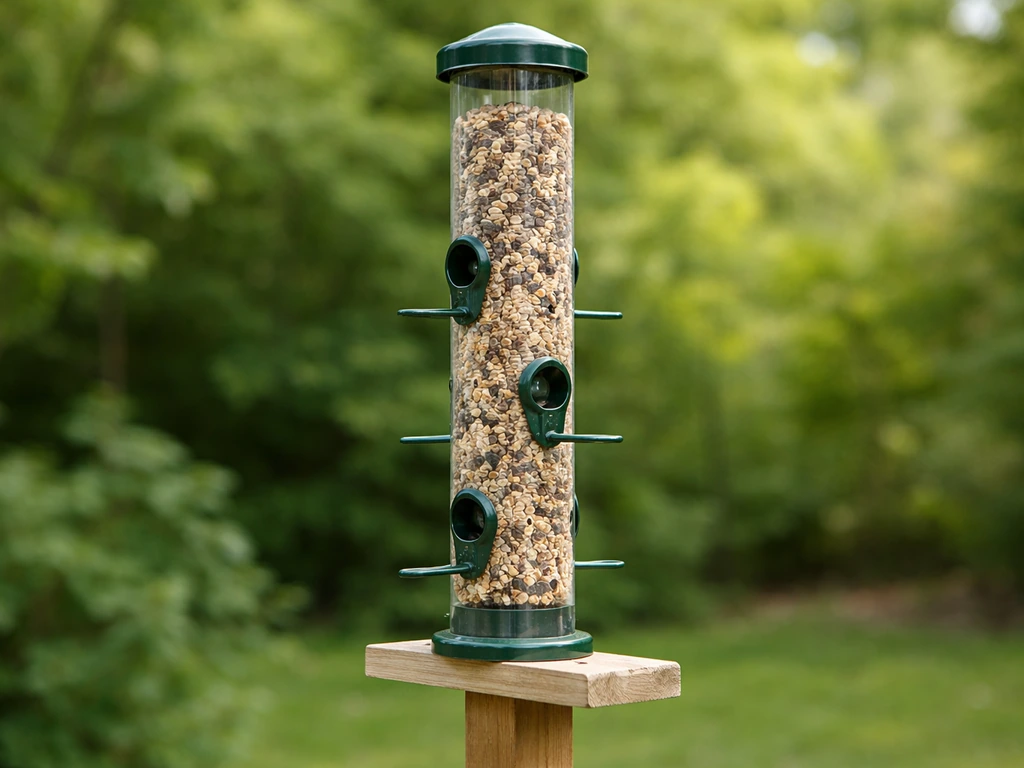
Hang a bird seed bell at 5 to 6 feet off the ground, at least 7 to 10 feet away from any surface a squirrel can jump from, and within a foot or two of natural cover like shrubs or a tree line. You can use the same basic hanging height and clearance ideas when learning how to hang a bird bottle so it stays safe from squirrels and weather. Use a sturdy shepherd's hook or a screw-in eye hook rated for at least 16 pounds, connect the bell with galvanized chain or a swivel clip, and make sure the hanger wire at the top of the bell is fully closed before you lift it. That's the whole job for most yards, and the rest of this guide is about doing it right the first time so you're not repositioning it a week later. If you want to go beyond a bell and tailor the setup for your exact feeder, also see how to make bird seed hangers for related DIY hanging ideas. If you want a similar approach but with a more specific bottle setup, review how to hang a bird bottle and adjust the placement for a iit bottle top bird feeder with hanger.
How to Hang a Bird Seed Bell: Step-by-Step Guide
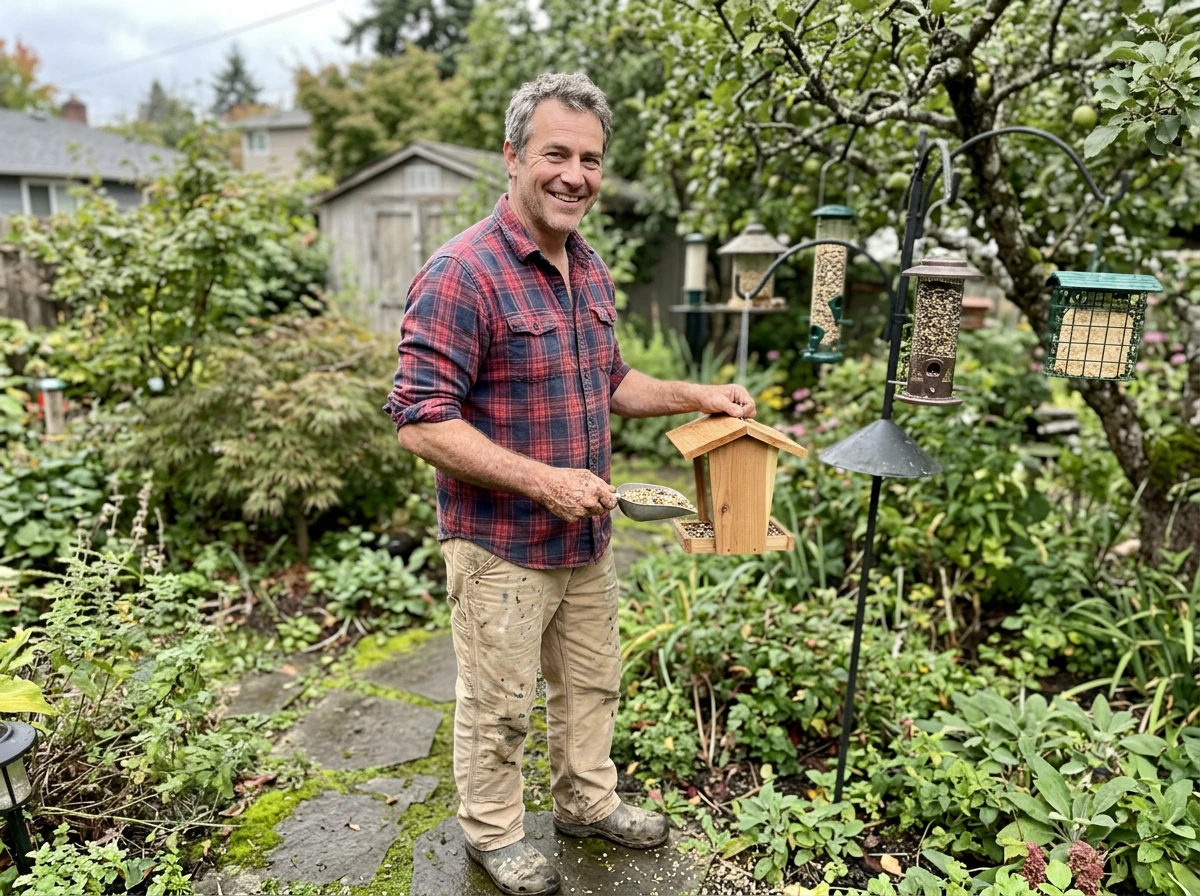
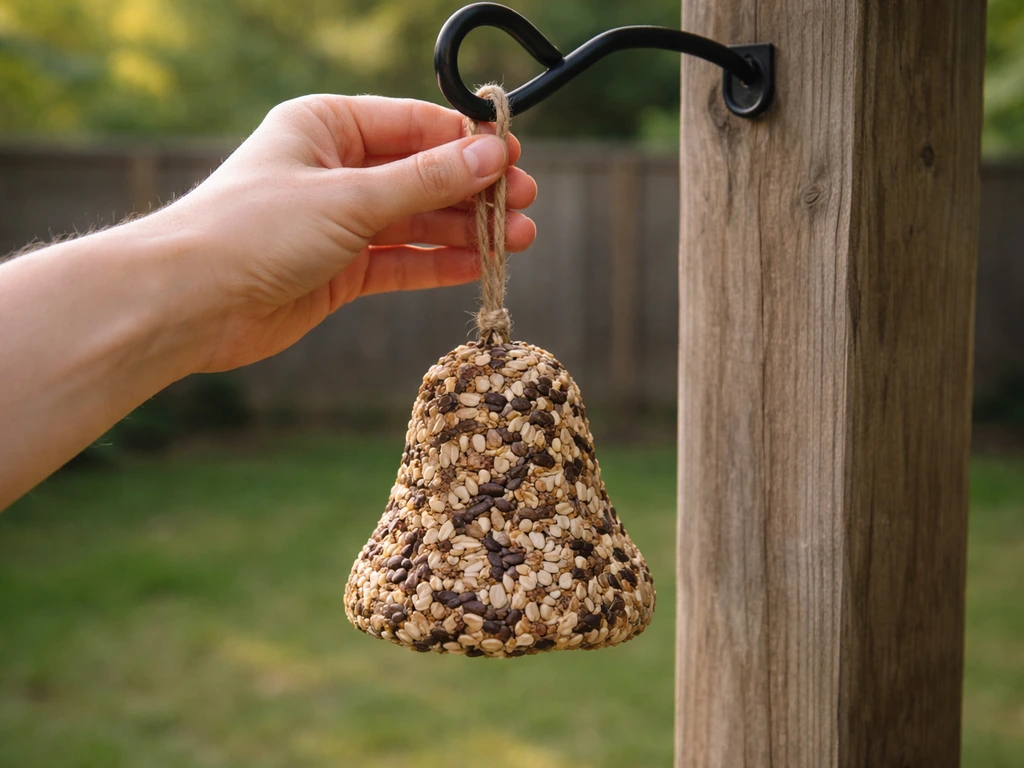
Pick the right spot before you buy a single hook
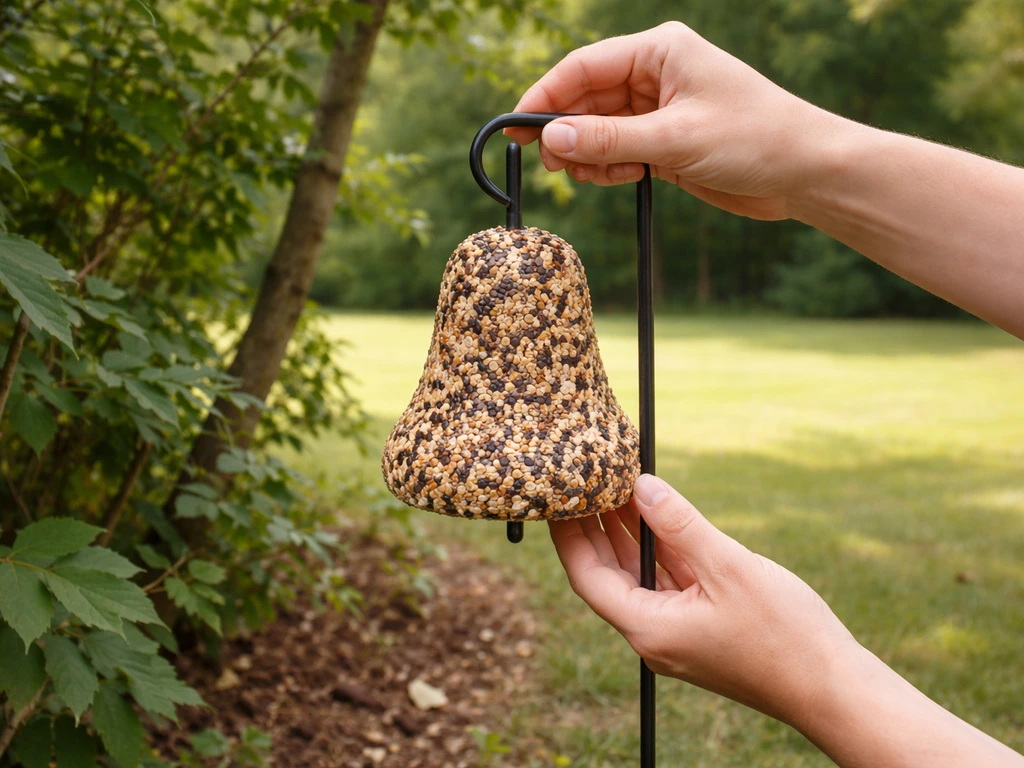
Location is where most people go wrong with bell feeders. The bell shape makes them light and easy to swing, which birds love, but it also means a bad spot makes them a squirrel snack or a weather casualty fast. Get the location right first and everything else gets easier.
Height: 5 to 6 feet is your target
Most general guidance lands at 5 to 6 feet off the ground, and that works well for seed bells. It keeps the feeder out of reach of cats and ground predators, puts it at a comfortable refilling height for most adults, and still lets small songbirds approach without feeling exposed. If you're specifically trying to deter squirrels, aim for at least 5 feet from the ground as a baseline, but height alone won't save you. Clearance from jump-off points matters more.
Clearance: use the 5-7-9 rule as a starting point
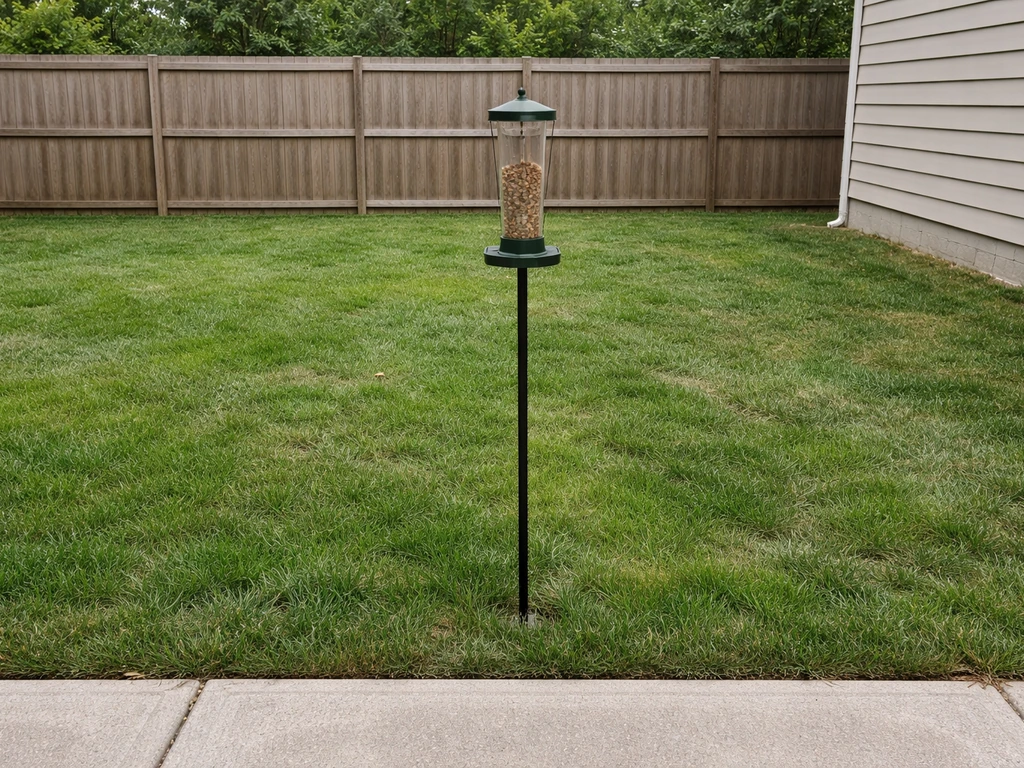
The 5-7-9 rule is a practical guide that's been proven in real backyards: hang your feeder 5 feet off the ground, 7 feet horizontally from any fence, deck, or railing a squirrel can launch from, and 9 feet away from any overhanging branch. Perky-Pet's own guidance pushes that even further, recommending at least 12 feet from a tree trunk or limb for their squirrel-resistant designs. You don't always have 12 feet to work with, but the further you can get from climbable structures, the better. A shepherd's hook in the middle of a lawn is genuinely the easiest way to hit all those numbers.
Cover: birds need an escape route nearby
Don't hang a bell feeder in the middle of an open field with no shrubs or trees within 30 feet. To hang a Mr. Bird Wildfeast wreath, follow the same placement, clearance, and squirrel-deterrent spacing principles, then use the proper hardware to secure it safely. Birds, especially the smaller songbirds that love bell feeders, need to feel like they can dart to cover if a hawk shows up. Audubon recommends placing feeders near natural cover, with a general target of 15 to 20 feet from shrubs or a brush pile. Audubon’s guide to bird feeders also emphasizes placing feeders near natural cover so birds can quickly escape to shrub or tree line areas blank" rel="noopener noreferrer">Audubon recommends placing feeders near natural cover. Close enough to feel safe, far enough that a ground predator can't use it as an ambush spot.
Window distance: closer or much further
If you're hanging the bell near a window (which is a perfectly good idea for viewing), either get it within 3 feet of the glass or put it more than 10 feet away. The dangerous zone is the middle range: a bird that flushes from a feeder 5 to 8 feet from a window is at speed by the time it hits the glass. Within 3 feet, birds haven't built up momentum. Beyond 10 feet, they're more likely to correct their flight path.
Choose your hanging hardware
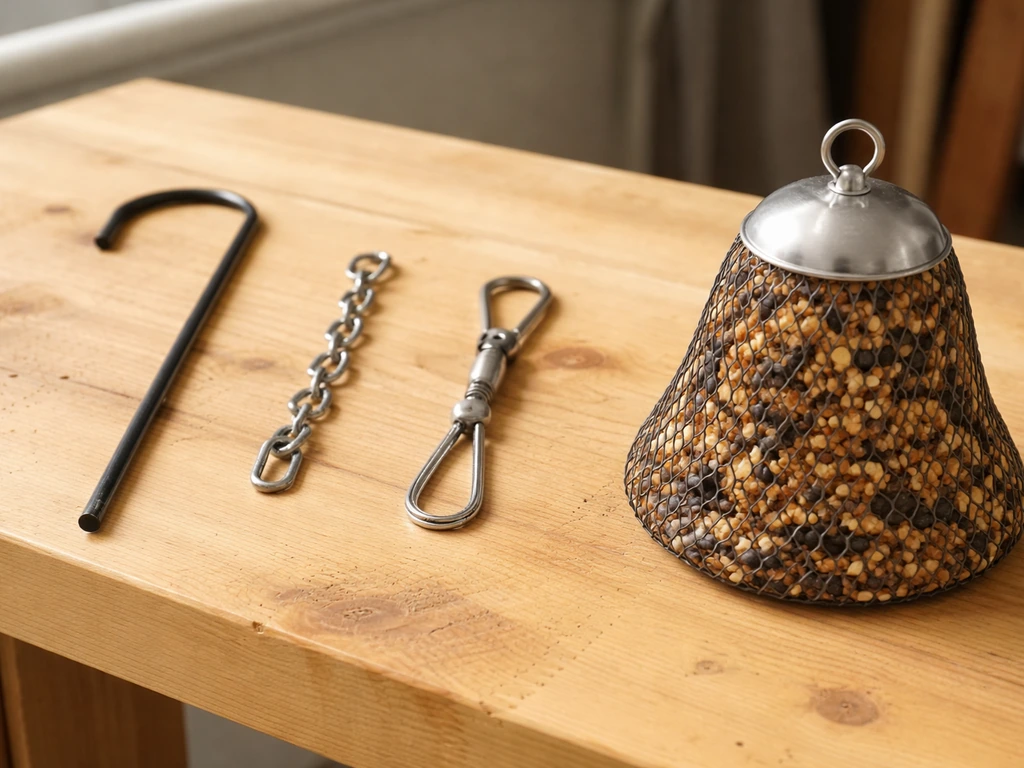
A seed bell is usually light, but don't cheap out on hardware. If you're using a bottle-top style feeder with a hanger, make sure the hanging hardware is strong enough and the top connection stays fully secure iit bottle top bird feeder with hanger. A bell full of compressed seed, soaked with overnight rain, and swinging in wind puts real stress on whatever you've attached it to. Here's what actually works.
| Method | Best For | Load Capacity / Notes | Sway Control |
|---|---|---|---|
| Shepherd's hook (single or double arm) | Open lawn, no existing structure | Most rated 15–25 lb; choose a staked or spiral-ground version for stability | Moderate; add a swivel clip to reduce twisting |
| Screw-in eye hook on eave or porch beam | Covered porch, shed overhang | Use a 3/8 in. or larger zinc-plated hook; check wood integrity first | Low sway; protected from weather |
| Tree branch hook or S-hook on limb | Existing tree with appropriate clearance | Use a branch at least 1 in. diameter; ensure clearance from trunk per 5-7-9 rule | Can sway more; pair with swivel |
| Chain and hook accessory (e.g., Perky-Pet 33 in.) | Adding drop length to any of the above | Rated 16 lb; good for adjusting hanging height | Neutral; use with swivel |
| Decorative beaded steel hook | Porch or garden aesthetic | Up to 35 lb rated (heavy-duty powder-coated steel) | Low; rigid enough to limit swing |
Add a swivel clip to stop twisting
This is a small addition that makes a big difference. A barrel swivel or snap swivel, the kind used for fishing line, slipped between your chain and the feeder's top wire lets the bell rotate freely without winding up the cord or chain above it. Wind hits a bell-shaped feeder from every direction, and without a swivel, the whole hanging assembly starts to spiral over time. A few swivels cost less than a dollar at most hardware stores and they genuinely solve the twisting problem.
Chain vs. cord vs. wire
Galvanized or vinyl-coated steel chain is the most durable option and resists rust better than bare steel wire. Nylon cord is fine for sheltered spots like a covered porch but degrades with UV exposure and can fray after a season outdoors. Thin wire works but can cut into a tree branch over time if you're looping it directly around a limb, so add a rubber sleeve or hook if you go that route. For most bell feeders, a 16 to 33 inch chain with a rated hook on top and a swivel clip at the bottom is the cleanest setup.
How to hang the bell feeder: step by step
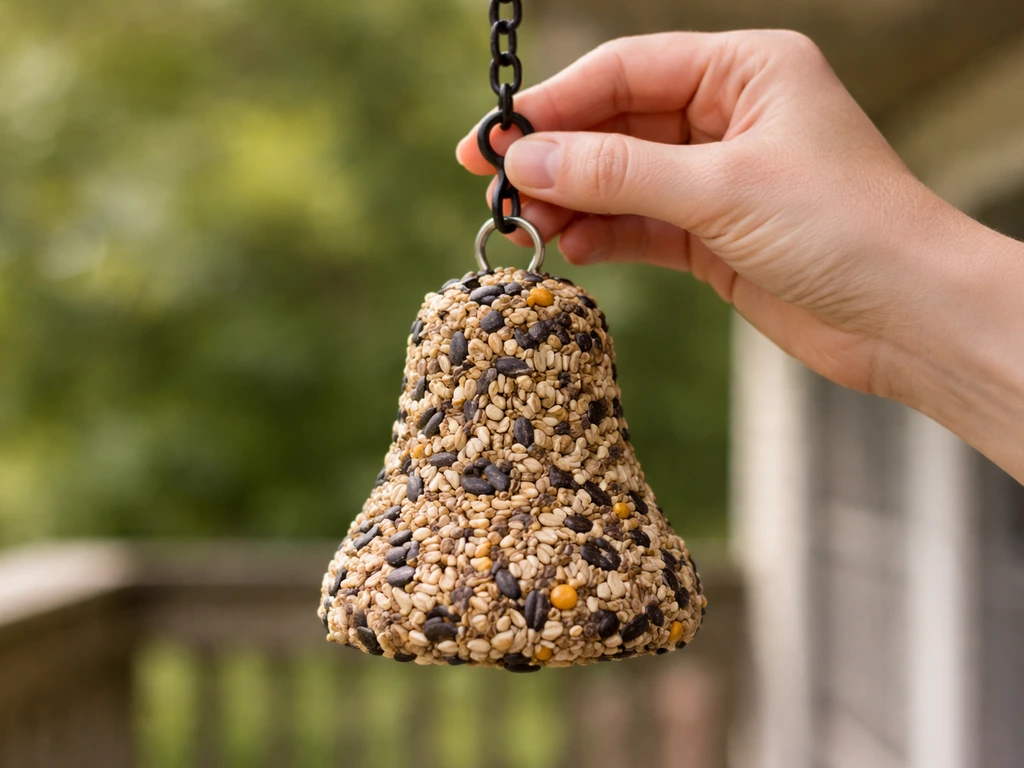
This whole process takes about 15 minutes once you have your hardware. Gather everything before you go outside so you're not making three trips back inside. If you are working with a seed wreath instead of a bell, the main goal is the same: mount it securely at the right height and in a safe location with nearby cover how to hang a bird seed wreath.
- Check the feeder's top wire loop or hanger before you do anything else. Most commercial seed bells come with a pre-formed wire hanger or a plastic loop. Squeeze that loop fully closed with pliers if there's any gap. A partly open hanger is the number one reason bells fall.
- Attach your swivel clip to the feeder's top wire. Snap it closed and give it a firm tug to confirm it's locked.
- Connect your chain to the swivel's top ring. If you're using a 33-inch hanging chain, this gives you a total drop of about 3 feet from your fixed hook, which is useful for getting down to a comfortable height from a high eave.
- Install your fixed hook at the hanging point. For a shepherd's hook, push the stake at least 12 inches into the ground (18 inches if your soil is soft). For an eye hook into wood, pre-drill a pilot hole slightly smaller than the hook's shaft, then screw it in by hand until fully seated.
- Hang the chain on the fixed hook and check that the hook gate is fully closed. Open hooks are a common failure point in windy conditions.
- Check the final height. The bottom of the bell should be at least 5 feet from the ground. If it's lower, shorten the chain or raise the hook point.
- Step back and check for clearance. Look up and around: is there a branch within 9 feet? A fence within 7 feet? A deck rail? Adjust position now before birds start visiting and you have to disturb them.
- Gently swing the feeder by hand to test stability. It should swing and return to center without the chain binding or the top wire slipping. If it twists more than one full rotation, your swivel isn't engaging properly, and you'll want to check that it moves freely.
Hanging from different yard setups
If you're working with a tree branch, look for one that's at least 1 inch in diameter and extends horizontally so the feeder hangs straight. Loop a short length of chain around the branch and connect it with an S-hook or quick-link rather than bare wire to avoid bark damage. For a porch railing or deck, a clamp-on hook works well and leaves no permanent holes. If you're on a covered patio, a screw eye into a joist overhead is probably the cleanest option and keeps the feeder out of direct rain, which is a real bonus for seed bell longevity.
Prevent the most common hanging problems
Too much sway and spinning
Some motion is fine and birds don't mind light swinging, but a bell that spins continuously or swings violently in wind will shed seed and discourage visits. The swivel clip handles spinning. For excessive swing, the fix is usually a shorter chain (less pendulum effect) or a more sheltered location. A fence corner, the lee side of a garden shed, or a spot partially blocked by larger shrubs cuts wind exposure significantly. The Wisconsin extension guidance specifically recommends sheltering feeders from prevailing winds, and it's practical advice worth taking.
The feeder falling
Falls usually come from one of three places: an open hook, a weak connection at the feeder's top wire, or a shepherd's hook that wasn't staked deep enough. Close every hook gate. Check the feeder's top hanger after the first rain because moisture can cause wire to slip in plastic loops. If your shepherd's hook wobbles when you push it sideways, add a second ground stake as a brace or switch to a heavier spiral-ground model.
Rain soaking the seed
Bell feeders are more exposed than tube or hopper feeders, so rain is a real issue. A covered porch or eave overhang is the best natural solution. If you're in the open, look for seed bells with a weather guard or dome that goes above the feeder (these slip onto the hanging chain and create a small roof). You can also DIY one from an inverted plastic saucer with a hole drilled through the center. Wet seed goes moldy fast and moldy seed is genuinely harmful to birds, so this isn't just an aesthetic fix.
Squirrels reaching the bell
Apply the 5-7-9 spacing first. If squirrels are still getting to it, add a baffle above the feeder on the chain. A cone-shaped squirrel baffle mounted on the chain a foot above the feeder makes it impossible for a squirrel to climb down to the bell. If you're on a shepherd's hook, a pole baffle mounted on the pole about 4 feet up is even more effective. Greasing the pole is a temporary fix that wears off and tends to mess up the local wildlife more than it helps.
Keep the feeder working: refill and maintenance
A seed bell doesn't need constant fussing, but ignoring it entirely for a season is a quick way to end up with a moldy block that birds won't touch and that can make them sick. The maintenance routine is simple once you build it in.
How often to clean
A good baseline is every two weeks for most seed feeders in normal weather. In hot, humid summers or wet springs, bump that to once a week. The U.S. Fish and Wildlife Service recommends weekly cleaning as a general rule, and that's worth following through summer. Audubon's guidance specifically calls for fully drying feeders before refilling, which is the step people most often skip. A damp bell that gets a fresh seed load on top is a mold incubator.
How to clean a seed bell feeder
- Remove any remaining seed from the bell, especially anything that looks clumped, wet, or discolored. Don't just top it off, actually remove the old seed first as Kaytee's own instructions recommend.
- Rinse the feeder hardware (hook, chain, any tray or cage) with hot water.
- For the bell itself, if it's a pressed seed block in a wire cage, remove the cage and scrub it with a brush, a 10% bleach solution (1 part bleach to 9 parts water), and rinse thoroughly.
- Dry everything completely before hanging back up or adding new seed. Leave it in the sun for 30 to 60 minutes if you can.
- While the feeder is down, inspect the top wire hanger, the swivel, and the chain for rust, corrosion, or wear. Replace anything that looks compromised before it fails mid-hang.
Keeping seed dry during use
If you notice the seed bell getting consistently wet, prioritize a more sheltered hanging spot or add a dome/weather guard above it. Feeders with any kind of drainage, like a mesh cage around the bell rather than a solid tray, handle rain much better. Homes and Gardens expert guidance points out that choosing feeders with drainage helps prevent the buildup of wet seed at the base, and that applies directly to bell-style feeders sitting in open wire cages.
Regular inspection points
- Top wire or plastic hanger loop: check for fatigue cracks or opening gaps after wind events
- Swivel clip: should spin freely; replace if it's seized with rust
- Chain links: look for rust spots, especially at connection points
- Hook gate: close and recheck every time you take the feeder down to refill
- Shepherd's hook stake: press the pole sideways after any ground freeze-thaw cycle to confirm it hasn't heaved loose
Birds still not visiting? Here's what to check
You've hung the bell correctly, the seed is fresh, and nobody is showing up. This happens, and it's usually fixable. Birds can take anywhere from a few days to a few weeks to find a new feeder, especially if it's in a spot they haven't been using before.
Location problems
If the feeder is too exposed with no nearby cover, birds will see it but not risk landing. Try moving it closer (within 15 to 20 feet) to a shrub, fence with plantings, or tree edge. Conversely, if it's buried inside dense brush, birds can't spot it or approach safely. You want visible from above, accessible from multiple angles, and quick cover within 20 feet.
Seed quality
Bell feeders with cheap filler seed (red milo, oats, wheat) often go ignored, especially by songbirds. Black-oil sunflower seed, millet, and nyjer attract the most species. If the bell you bought contains mostly filler, birds may physically pick around it. Next time, check the ingredient list before buying, or make your own seed bell with high-value seed.
The feeder is moving too much
Some movement is fine, but a bell spinning continuously or swinging erratically in the wind is a deterrent. Birds want a stable landing. Shorten the chain, add a swivel if you haven't, or move to a more sheltered spot. You can also add a small stabilizing weight (a large washer threaded onto the chain below the feeder) to reduce pendulum swing without adding bulk.
Too much human activity nearby
Feeders right next to a frequently used door, a busy pathway, or a dog run will stay empty for a while. Birds habituate to moderate human presence over time, but give a new feeder at least a week in a quieter spot before deciding it's not working.
The seed has gone bad
Birds will refuse moldy, rancid, or wet-clumped seed. If the bell has been out for more than a few weeks without visits, take it down, discard the remaining seed, clean the cage, let it dry fully, and start fresh with new seed. This is the most common fix when a feeder that previously worked suddenly goes quiet.
If you've worked through all of this and you're still not getting visits, it may just be a patience game. Keep the seed fresh, keep the location consistent, and give it a full two to three weeks before making any major changes. A bird seed wreath hung nearby can help draw initial attention to the area, since the larger visual footprint is sometimes easier for birds to spot first. A christmas wreath bird feeder can be a festive way to offer birds something extra while still keeping the feeding area visible. Once regulars find the zone, they'll investigate everything in it.
FAQ
What’s the best height if I have cats, but I also want smaller songbirds to feel safe?
Start at 5 to 6 feet as a baseline, then focus more on clearance than on going higher. If you raise the bell too much without increasing horizontal distance from jump points, squirrels may still get it and smaller birds may avoid it due to exposure. Place it near cover within about 20 feet so songbirds can dart in and out quickly.
How far from a fence or railing should the bell be if the squirrel can climb trees nearby?
Use the horizontal clearance rule, keep it about 7 feet from any squirrel launch point like a fence, deck railing, or similar structure, then also treat nearby tree branches as launch points. If branches extend toward the feeder, move the bell farther out so the “jump and land” line is longer, not just so the feeder is higher.
Can I hang the bell from a chain wrapped directly around a tree branch?
Avoid bare wire directly contacting bark long term, it can damage the branch and shift over time. Loop a short length of chain around the branch and connect with an S-hook or quick-link, or use a rubber sleeve on contact points. This helps keep the feeder aligned and reduces bark abrasion.
Why is my bird seed bell twisting even though I used chain?
The twisting usually comes from missing or poorly placed swivel hardware, the feeder wire at the top not staying fully closed, or a connection that’s too rigid. Add a snap swivel or barrel swivel between the chain and the bell’s top wire, and after setup, verify the top hanger gate is fully closed and that links move freely.
How do I prevent the seed bell from swinging too much in wind?
First, shorten the chain length, a shorter drop reduces pendulum swing and seed shedding. Second, reposition to the lee side of a larger shrub, fence corner, garden shed, or other windbreak. If the bell is near an exposed area, consider adding a weather-protecting dome that also reduces direct wind force.
What’s the safest window placement distance for a seed bell?
Don’t place it in the middle range. Use either within about 3 feet of the glass so birds do not build up speed, or more than 10 feet away so they have time to correct. If your yard forces a middle placement, choose a different location rather than relying on adjustments.
If squirrels are still getting to it, should I add a baffle or change the seed type first?
Change location or add a baffle first, because baffles directly address access. Then check seed value, if your bell uses mostly filler seed, birds may pick around it and squirrels may still dominate. For deterrence, a cone baffle mounted about a foot above the feeder usually performs better than grease-based quick fixes.
How can I tell if my bell feeder is getting too wet, even if I don’t see standing water?
Watch for consistently clumped seed, a heavier-than-usual feeder, and moldy or musty seed smell during refill. Wet seed can compact inside the bell and encourage mold even without visible puddles. If it’s staying damp, prioritize a sheltered spot or add a dome/weather guard above the bell.
How often should I clean and fully dry a seed bell?
A common baseline is cleaning about every two weeks, but in hot humid weather or wet springs, switch to weekly. The key step people often skip is letting the feeder dry fully before refilling, because dampness plus fresh seed creates a mold-prone environment.
My feeder was working, then suddenly birds stopped visiting. What should I check first?
Assume wet or rancid seed first, then hardware looseness. Take it down, discard old seed, clean the cage or bell components, dry them completely, and start fresh. Also inspect connections for slippage after rain, especially at the feeder’s top wire and any plastic loops.
How long should I wait before moving or changing anything?
Give it at least two to three weeks if the hardware and placement are correct, because new feeders can take days to weeks for birds to locate. If there’s no traffic and the location is too exposed or too deeply hidden in dense brush, adjust within the general target range of about 15 to 20 feet from nearby cover.
How to Make a Tube Bird Feeder Step by Step
Step-by-step how to make a tube bird feeder with materials, safe mounting, maintenance, and fixes for leaks and clogs.