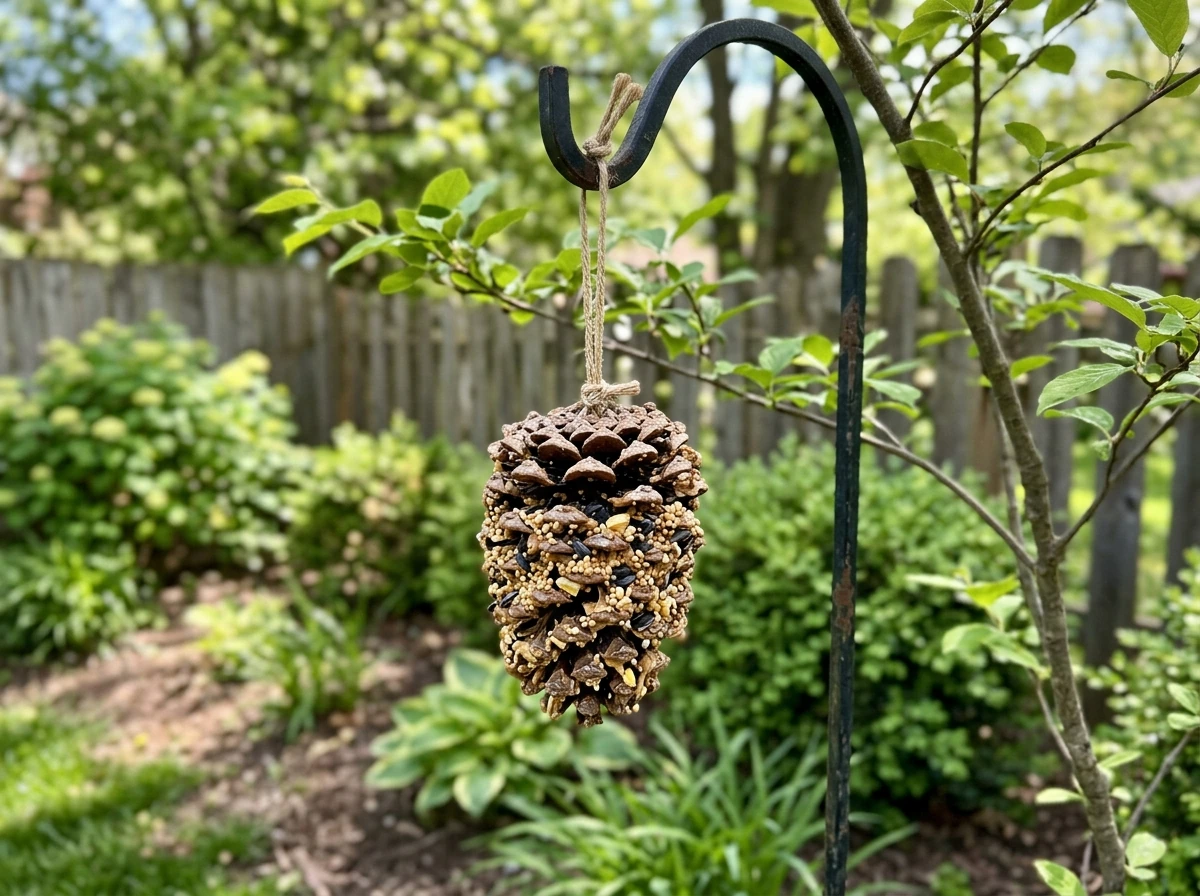
Hanging a suet bird feeder is genuinely one of the easiest feeder setups you can do in an afternoon. Grab a hook, pick a spot near some cover, and you're mostly there. But the details matter: the wrong hanging method for your feeder style leads to a feeder that spins, sags, or falls. The wrong location means birds ignore it or squirrels raid it constantly. This guide walks you through every decision, step by step, so you get it right the first time. If you want to build something a bit different, also follow the steps in how to make a hanging bird feeder for more hanging ideas.
How to Hang a Suet Bird Feeder: Step by Step Guide

Marcus Brennan
23 Mar 2026
Choose the right hanging setup for your suet feeder style
Not all suet feeders hang the same way, and matching your hanging method to your feeder style saves you a lot of frustration. Here are the main types you'll run into and what works best for each.
Wire cage feeders (the most common kind)
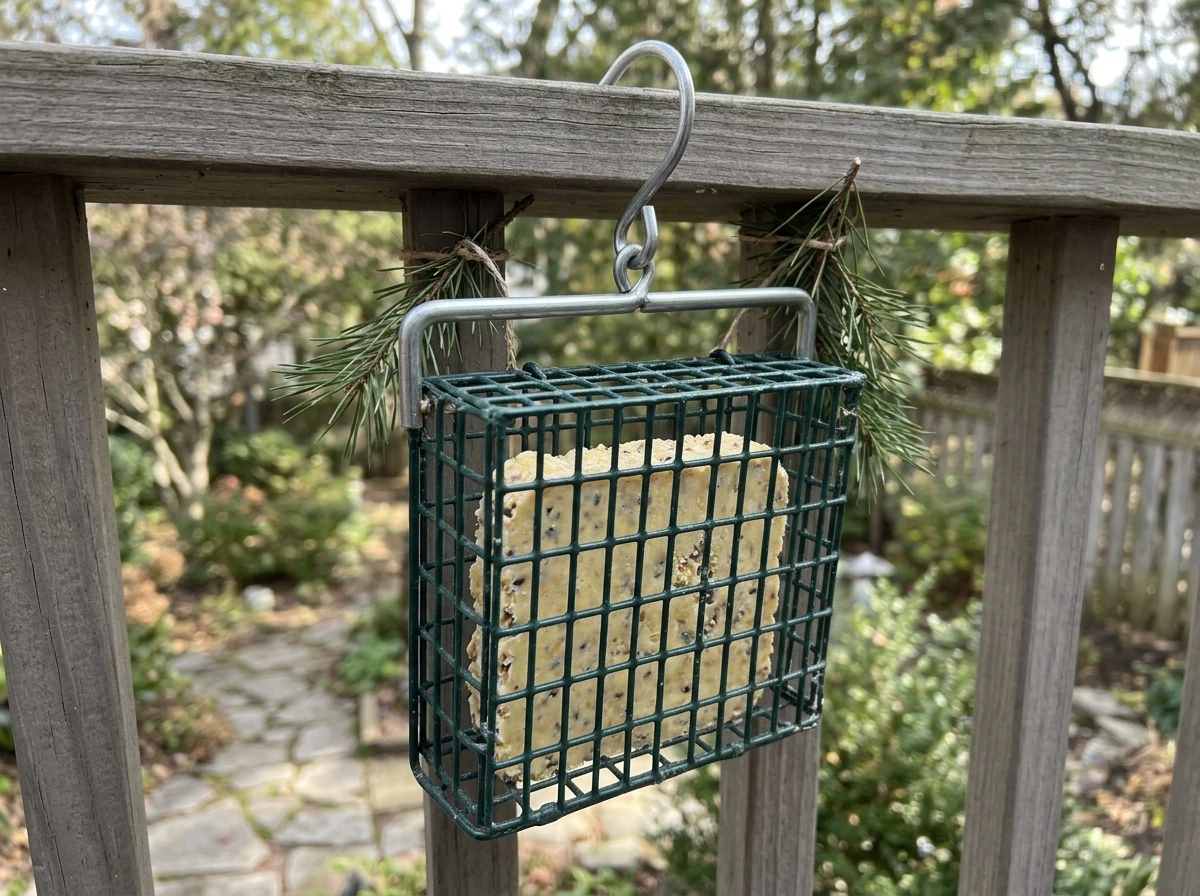
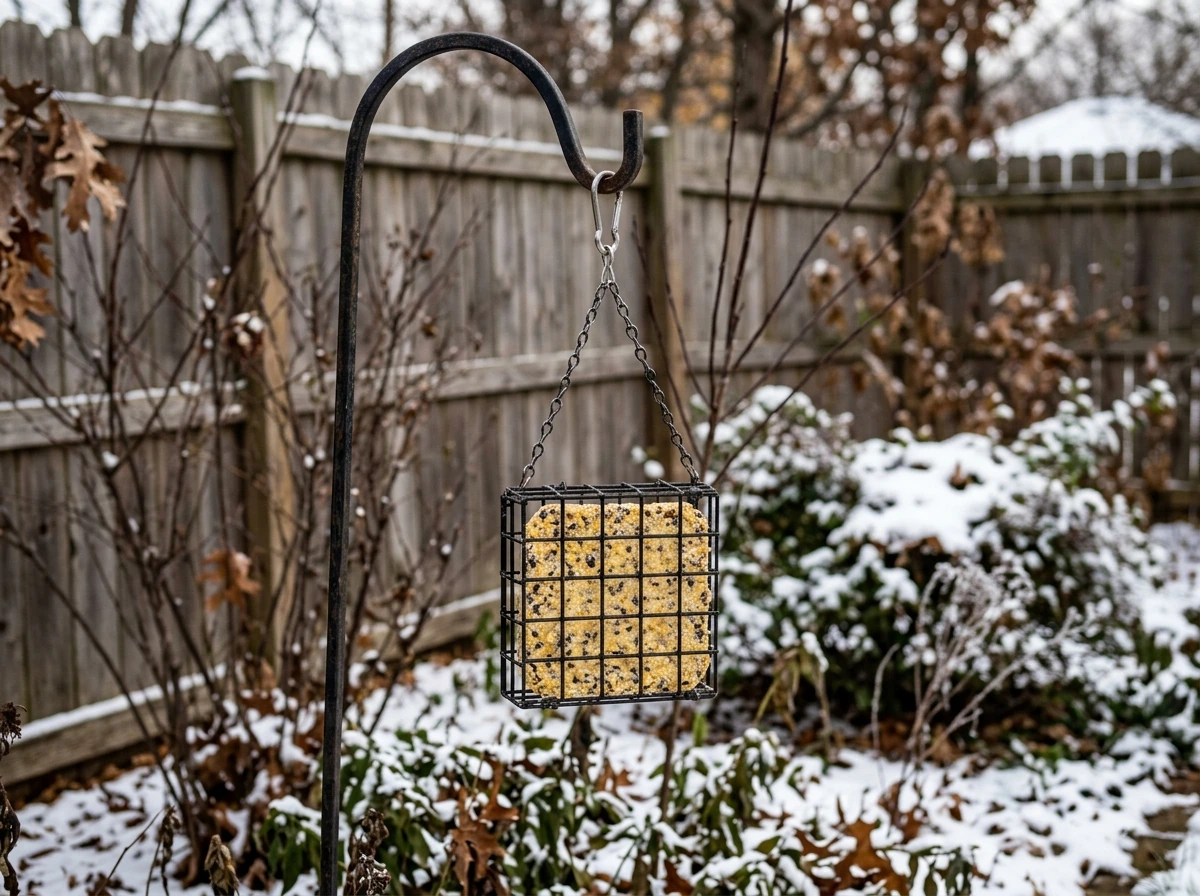
These are the rectangular plastic-coated wire baskets that hold one or two standard 12 oz suet cakes. Most come with a built-in metal hanger at the top, like the Audubon suet cage feeder style. That hanger is designed to slip directly onto an S-hook, a shepherd's hook, or a screw-in eye hook on a fence post or tree. If your cage feeder came with a chain, even better: chain gives you adjustable length and is much harder for squirrels to shimmy down than cord.
Cage feeders with chain and mounting screws
Some suet cages, like the Birds Choice model with mounting screws and a chain attachment, are designed to do double duty: hang from a hook using the chain, or screw directly onto a post or the side of an existing pole-mounted feeder. If you have a feeder pole already set up in your yard, the screw-mount option is rock solid and eliminates swinging entirely. Keep that in mind when you get to the stability section below.
Caged feeders with a slotted top (cable-through design)
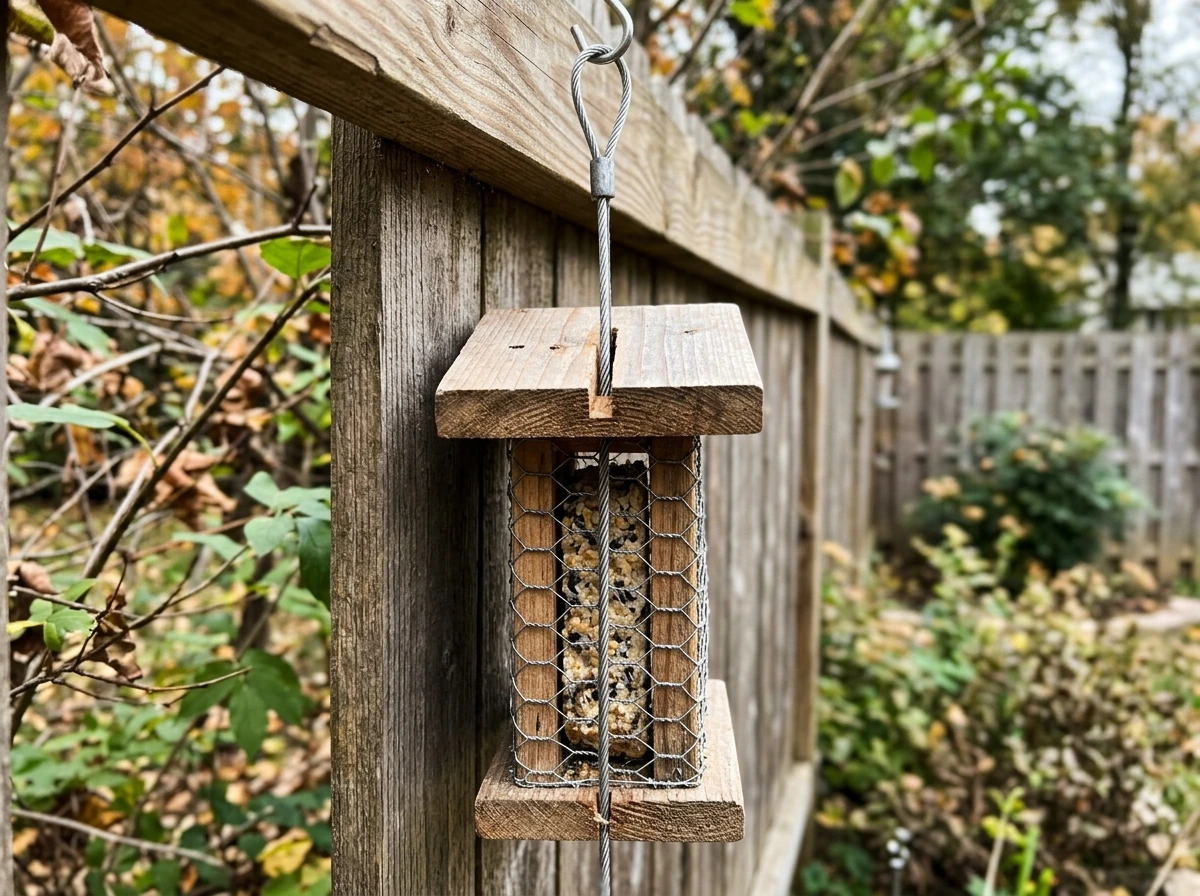
Some squirrel-resistant suet feeders, including certain Birds Choice wire-cage models, have a slotted top that lets a hanging cable thread straight through the feeder body. This is a clever design because it keeps the feeder flush against whatever surface it hangs from and limits side-to-side swing. If yours has this feature, use a steel cable or coated wire rather than a thin cord, since squirrels can chew through rope or twine pretty fast.
Platform feeders with suet inserts
Some platform feeders include a suet cage section on the side or underneath. These are usually hung from four corner chains meeting at a central ring, which attaches to a hook. The four-point suspension makes them more stable than a single-point hang, but the extra weight means you need a sturdier hook, ideally one rated for at least 5 lbs.
Quick hardware reference by feeder type
| Feeder Style | Best Hanging Hardware | Backup Option |
|---|---|---|
| Wire cage with built-in hanger | S-hook on shepherd's hook or eye hook | Single chain link loop |
| Cage with mounting screws + chain | Chain to S-hook, or screwed to post | Screw directly onto pole bracket |
| Slotted-top cable-through cage | Coated steel cable threaded through slot | Heavy-gauge wire (14 gauge or thicker) |
| Platform feeder with suet insert | 4-chain suspension to central hook | Bracket-mount to a post or fence |
Pick the best location and height for suet feeding
Suet attracts woodpeckers, nuthatches, chickadees, and wrens, and all of those birds have similar habits: they like to feel somewhat sheltered while they feed. That means your best placement is near a tree, large shrub, or fence, not out in the open middle of the yard. Aim for 5 to 8 feet off the ground. That's high enough that cats can't jump to it from the ground, but low enough that you can easily refill it without a ladder.
Avoid hanging suet directly above another feeder or a birdbath. Suet drips when it softens in warm weather, and that mess will contaminate your seed or water supply below it. Give it a few feet of clearance in every direction from other feeders if you can.
Window distance: the 3-foot rule
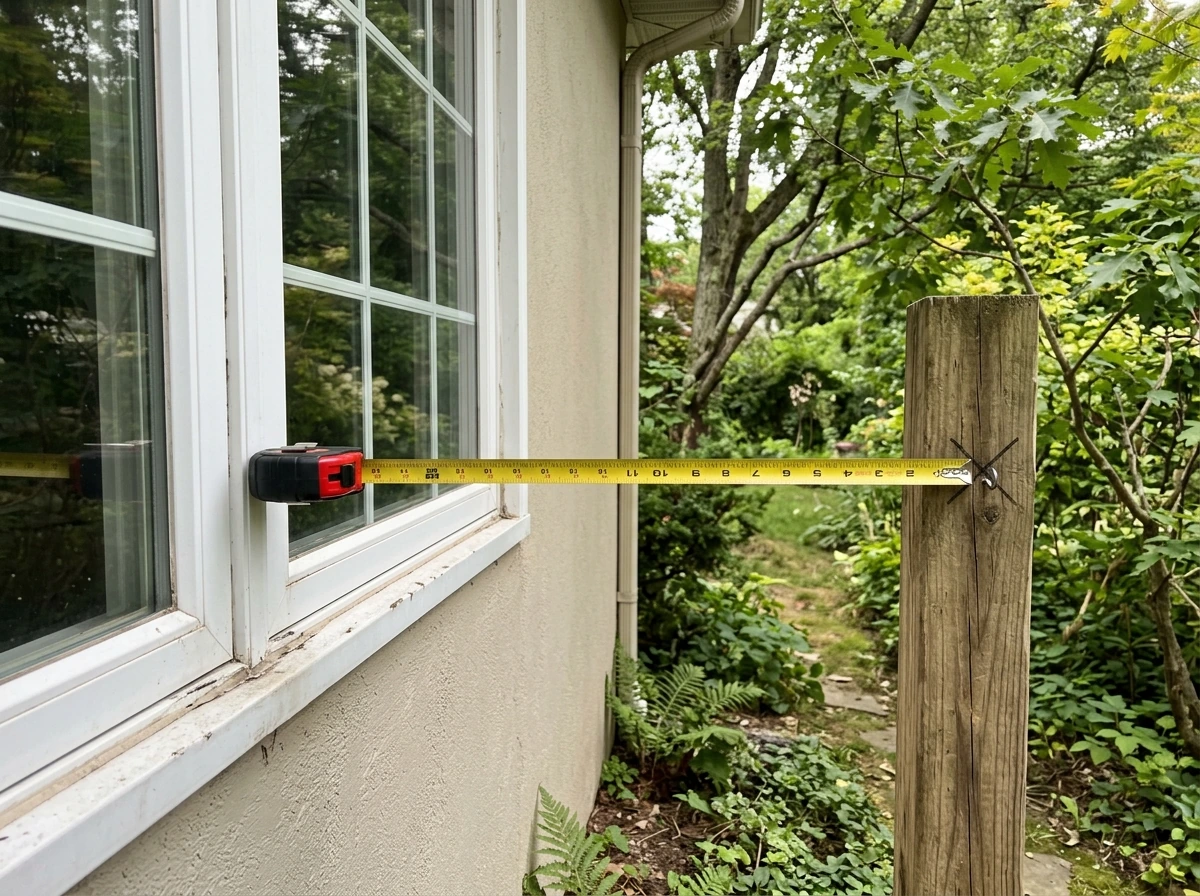
This one is important and often ignored. If you want to hang the feeder close to a window for a good view, keep it within 3 feet of the glass. That sounds counterintuitive, but the U.S. Fish and Wildlife Service and Michigan DNR both recommend this: a bird startled from a feeder that close to a window can't build up enough speed to be fatally injured if it strikes the glass. Feeders placed farther than 3 feet but closer than about 30 feet are actually the danger zone, because birds can hit full flying speed before impact. So go very close (under 3 feet) or reasonably far (30 feet or more).
Other location things to check before you hang it
- Stay at least 10 feet away from any power or utility lines
- Make sure the branch or hook attachment point is live (not a dead, brittle branch that could snap in wind)
- Position where you can see it from inside the house, but where the birds have a nearby escape route (shrub or tree within 10 feet)
- Avoid spots in direct afternoon sun if you're putting up suet in warm weather (March through September), since suet melts and goes rancid quickly in heat
- Shaded north or east-facing spots are best for suet in spring and summer
Step-by-step methods to hang and secure the feeder
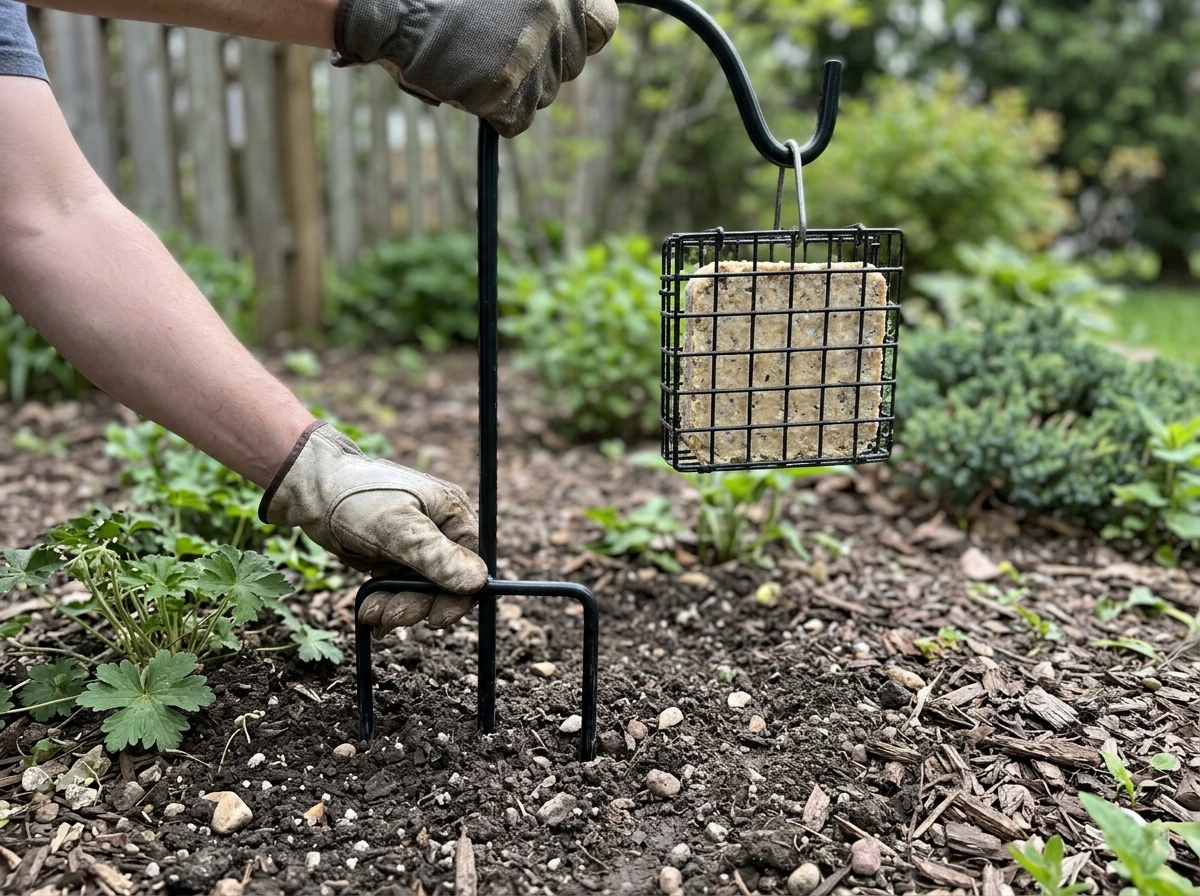
Pick the method that matches where you're hanging it. For a wall-mounted option specifically, you’ll want to use a sturdy bracket and the right mounting hardware for the feeder weight and weather how to make a wall mounted bird feeder. You don't need all of these, just the one that fits your spot.
Method 1: Shepherd's hook (easiest for beginners)
- Push the shepherd's hook into the ground at your chosen location, at least 12 inches deep so it doesn't wobble.
- If the ground is hard, use a rubber mallet rather than leaning on the pole, which can bend it.
- Attach an S-hook to the curved end of the shepherd's hook. Close the S-hook slightly with pliers so the feeder can't bounce off in wind.
- Hang the suet feeder's built-in hanger or chain loop over the S-hook.
- Give it a gentle tug to confirm it's seated properly before you walk away.
Method 2: Tree or fence with a screw-in eye hook
- Choose a live, sturdy branch at least 1.5 inches in diameter, or a fence post.
- Drill a pilot hole slightly smaller than the eye hook shank to prevent wood splitting.
- Screw in a galvanized or stainless steel eye hook by hand until it's flush with the wood surface.
- Attach an S-hook or a short length of chain to the eye hook.
- Clip or loop the feeder onto the chain, adjusting length to get your target height.
Method 3: Hanging from rope or wire (for existing structures)
If you already have a clothesline, pergola beam, or a dedicated feeder wire strung between two points, you can hang a suet feeder from it directly using a chain and S-hook. Use at least 14-gauge coated wire for the hanging line itself, not twine or basic rope, because squirrels chew through softer materials quickly. If you want to use rope, check out the guide on <a data-article-id="42D4F898-1ED2-4D9D-AC28-AAC2273A89D9">how to hang pine cone bird feeder</a> for the best knot techniques. If you want to use the same general hanging approach for non-suet setups, see how to hang pine cone bird feeder for comparable stringing, tie-off, and hang-height tips. If you’re learning how to hang a bird feeder with rope, focus on using the right knot and hardware so it stays secure and doesn’t swing too much. <a data-article-id="CD4482C1-5639-44E1-B276-51A4EF891E99">how to make a hanging bird feeder</a>
Method 4: Mounting directly to a post or existing feeder pole
If your feeder has mounting screws (like the Birds Choice cage-with-screws model), this is the most stable option available. Hold the feeder against the post at your target height, mark the screw holes with a pencil, pre-drill if needed, and drive in the screws. The feeder won't move in any wind, and there's no swinging or sagging to deal with. The tradeoff is that you need a pole or post already in place, and refilling can be slightly less convenient since the feeder doesn't swing away from the structure.
Adjustments for stability, swing, and safety
A suet feeder that swings wildly in the wind will discourage birds, especially woodpeckers, who need to brace their body against the feeder to feed. Here's how to dial in stability without making the feeder completely rigid (a little gentle movement is actually fine and doesn't bother most birds).
Reduce swing
- Shorten the hanging chain or rope: the shorter the hang, the less the feeder swings. Aim for no more than 6 to 8 inches of chain between the hook point and the feeder top.
- Add a stabilizer: loop a short length of wire or zip tie loosely from the bottom of the feeder to a nearby branch or post. It acts as a tether that dampens swing without locking the feeder completely in place.
- Use a cage feeder with a built-in tail prop (a horizontal perch bar at the bottom): this lets woodpeckers brace themselves and naturally reduces the rocking motion.
Prevent sagging or dropping
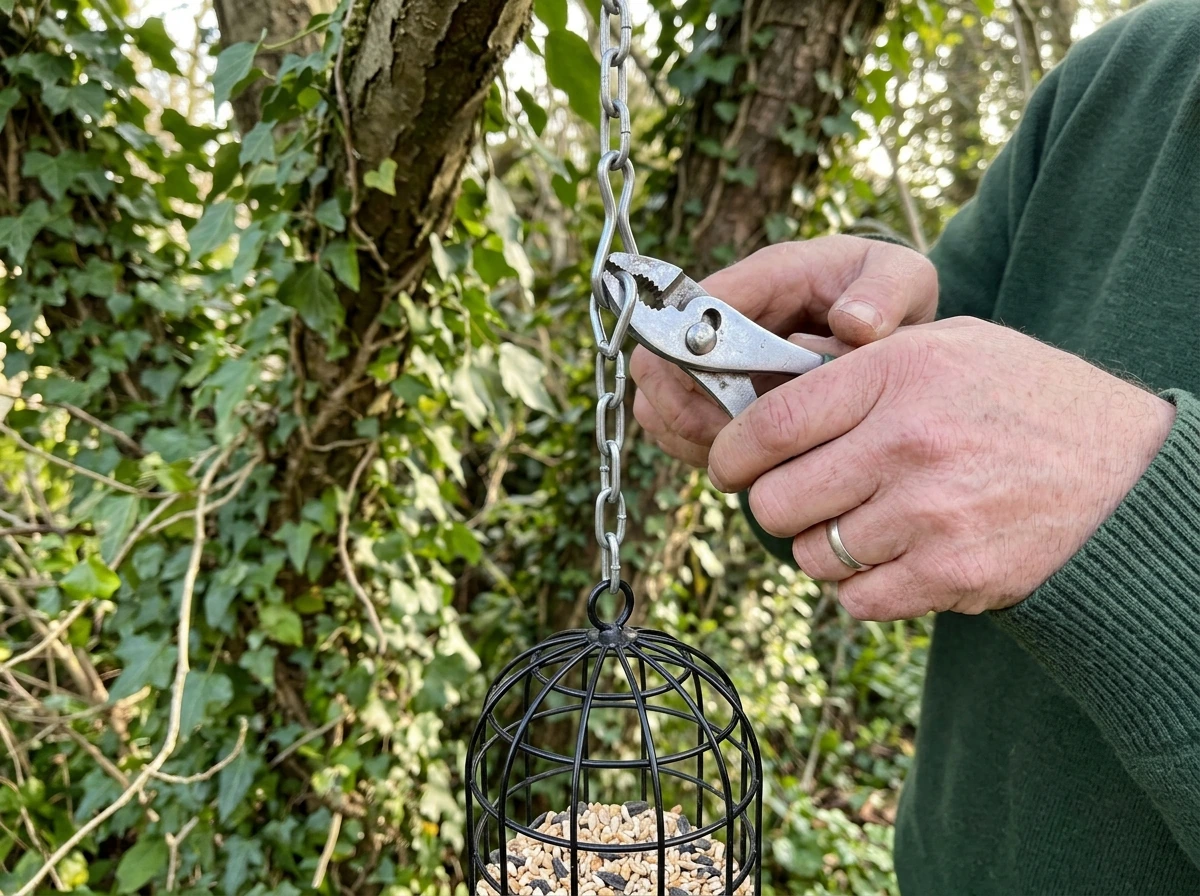
- Squeeze S-hooks partially closed with pliers after hanging the feeder so the loop can't work its way off the hook.
- If using wire to hang, twist the end back on itself twice and secure with a small wire nut or electrical tape.
- Check the anchor point (branch, eye hook, or pole mount) every 4 to 6 weeks. Wood swells and shrinks with moisture changes, and eye hooks can loosen over time.
- If you're in an area with heavy winds or ice storms, switch to a chain rather than wire or rope for winter months. Chain doesn't stretch, doesn't freeze brittle, and won't snap under load.
Safety checks before you call it done
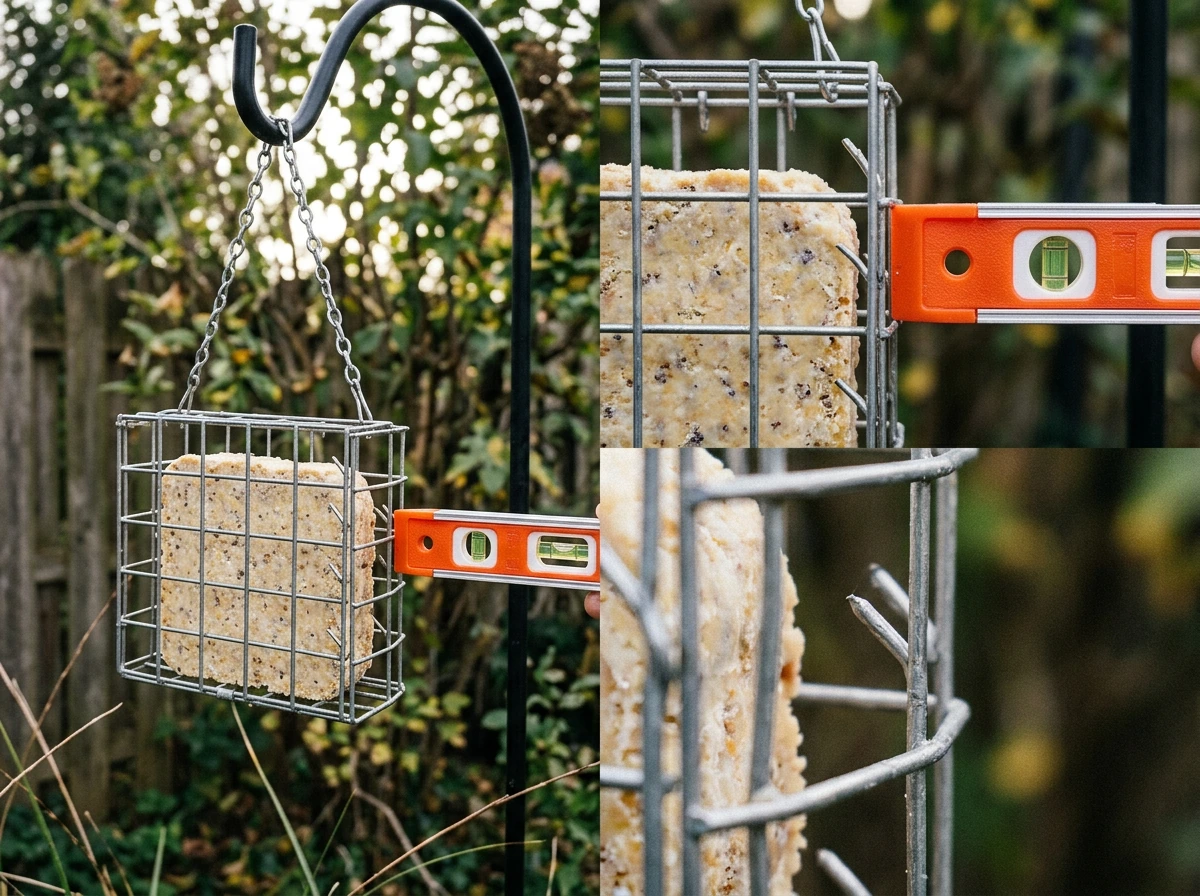
- Confirm the feeder hangs level (not tilted), so suet cakes don't slide out when the cage door opens
- Make sure any sharp wire ends from the cage or hardware are bent inward, not pointing outward where birds could cut themselves
- Test the latch on your suet cage door: it should stay firmly closed but be easy for you to open for refilling
Making it pest-resistant and predator-safe
Squirrels are the main challenge with suet feeders, and honestly they're more persistent than with seed feeders because suet is so calorie-dense. The most effective approach combines two things: a cage design that physically blocks squirrel access, and a baffle above the feeder on the hanging wire or pole. University of Nebraska-Lincoln extension guidance confirms this combination works better than either method alone.
Squirrel baffles
A dome or torpedo-style baffle mounted above the suet feeder on the chain or shepherd's hook prevents squirrels from climbing down to reach the feeder from above. Position the baffle at least 18 inches above the feeder. If you're on a pole system, use a wrap-around torpedo baffle on the pole itself, at least 4 to 5 feet off the ground. Make sure the feeder is also at least 8 to 10 feet away from any fence, tree trunk, or structure a squirrel could leap from.
Caged designs for squirrel resistance
Some suet feeders come with an outer wire cage that surrounds the suet basket, with openings large enough for small birds like chickadees and nuthatches but too small for squirrels to reach through. The Birds Choice squirrel-proof wire-cage suet feeder works this way. If your current feeder doesn't have this feature and squirrels are a consistent problem, it's worth the upgrade.
Cats and other predators
- Keep the feeder at least 5 feet off the ground and away from fences that cats can walk along
- Avoid hanging directly over dense low shrubs where cats can crouch and wait
- If you know there are hawks in your area, hang the feeder within 10 feet of a shrub or tree so birds have a quick escape route, but don't hang it so deep inside a bush that birds feel trapped
Deterring starlings and grackles
Starlings and grackles can dominate suet feeders and scare off the woodpeckers and nuthatches you actually want. An upside-down suet feeder solves this well: it holds suet on the underside of the cage, which requires birds to cling upside-down to feed. Woodpeckers, nuthatches, and chickadees do this easily. Starlings and grackles typically won't bother.
Maintenance and troubleshooting after you hang it
Keeping suet fresh
In cold weather (below 50°F), a standard suet cake can last 3 to 4 weeks without going rancid. In warm weather, that drops to a week or less, and melted suet can mat bird feathers in a way that's actually harmful. From late spring through early fall, either switch to no-melt suet (made with extra rendered fat that has a higher melt point), or only put out suet in the early morning and remove it before midday when temperatures peak.
Cleaning the cage
Suet cages don't need as frequent cleaning as seed feeders, but grease and mold do build up over time. Every 4 to 6 weeks, take the cage down, remove any leftover suet, and scrub with hot soapy water and a stiff brush. Rinse thoroughly and let it dry completely before refilling. A diluted bleach rinse (1 part bleach to 9 parts water) once a month keeps mold and bacteria under control.
Birds aren't using the feeder
Give it at least one to two weeks. Birds need time to discover a new food source. If it's been two weeks with no action, try these adjustments: move the feeder closer to a tree or shrub, check that the suet isn't rancid (sniff it, old suet smells sour or musty), and make sure the cage is positioned so birds can cling comfortably. Sometimes simply moving a feeder 10 to 15 feet makes all the difference.
Feeder is swinging too much
Shorten the chain, add a tether at the bottom of the cage, or switch to a screw-mount setup against a post. If it's hanging from a rope and swinging in every breeze, rope is your problem: switch to chain or coated wire, which has much less elasticity and swing.
Feeder keeps falling or the hook won't hold
This is almost always a hardware issue. A cheap S-hook straightens out under repeated load, especially if squirrels are yanking on the feeder. Upgrade to a heavier gauge S-hook (look for 12-gauge steel or thicker) and close it with pliers after hanging. If the eye hook in a tree is pulling out, the branch is too small or the wood is rotting: find a better anchor point.
Suet dripping onto things below
Move the feeder away from anything you don't want stained, and switch to no-melt suet during warm months. You can also hang a small tray below the feeder to catch drips, though this requires emptying it regularly.
Quick troubleshooting reference
| Problem | Most Likely Cause | Fix |
|---|---|---|
| Birds not visiting | Feeder too exposed or suet is old | Move closer to cover; replace suet |
| Feeder swings constantly | Chain too long or using rope | Shorten chain; switch to coated wire |
| Feeder falls off hook | Cheap or open S-hook | Upgrade to heavy-gauge S-hook, close with pliers |
| Squirrels raiding it | No baffle; feeder accessible from above or nearby branches | Add dome baffle; move 10 ft from jump points |
| Suet melting and dripping | Direct sun or warm weather | Shade location; switch to no-melt suet formula |
| Starlings dominating | Standard vertical cage design | Switch to upside-down suet feeder |
| Mold on cage wires | Infrequent cleaning | Monthly bleach rinse; let dry fully before refilling |
Once you've got the feeder up and birds are visiting, the hard part is done. Suet feeders are genuinely low-maintenance compared to seed feeders, and they pull in some of the most interesting backyard visitors you can get. If you're looking to expand your setup, check out the guides on hanging bird feeders in general, using a pulley system for high placements, or building your own hanging feeder from scratch. The same location and stability principles apply across all of them.
FAQ
What’s the first hardware part I should upgrade to prevent my suet feeder from failing or swinging?
When your suet feeder comes with an S-hook style hanger, the most squirrel-prone weak point is usually the hook itself. Use a heavier-gauge steel S-hook (around 12-gauge or thicker), close the open end with pliers after installation, and avoid any hook that twists freely under light hand pressure.
My suet feeder rotates or swings in wind, what’s the best way to reduce side-to-side movement?
To stop “invisible” movement, aim for minimal sway at the top connection. If you’re hanging from a shepherd’s hook or eye bolt, keep the hanging line straight (use chain or coated wire rather than rope), and consider adding a short tether at the feeder bottom so the cage stays aligned instead of rotating.
Can I hang a suet feeder from a tree branch, and how do I know the branch will hold?
If you have to hang from a branch, choose a healthy, thick branch rather than a thin limb near the end. A better target is a branch that holds firm without bending much, and if possible attach to the underside so the branch doesn’t rub the chain and gradually loosen it.
Squirrels are getting to the hanging line, not just the suet, how do I fix that?
If squirrels are chewing the cable, it’s usually because the line is rope, twine, or too thin rather than the feeder design. Switch the suspension to coated wire or steel cable, and if you can, position the feeder so the baffle or cage blocks any access path from above and from the side.
How high should I hang a suet feeder if I’m worried about cats or raccoons?
Don’t place the feeder so low that a cat or raccoon can reach it from a jump point. A practical rule is 5 to 8 feet off the ground, plus keep it at least several feet away from fences or trunks that create a “launch surface.”
Birds ignored my suet feeder for two weeks, what adjustments usually work fastest?
If birds aren’t using the feeder after about two weeks, start by checking suet condition and then adjust placement by 10 to 15 feet closer to cover. Also confirm the birds can cling comfortably to the cage orientation, because some models work noticeably better when positioned so small feet can grip the openings.
What should I do differently with suet in summer besides using no-melt?
During hot weather, use no-melt suet or limit exposure to early morning, and consider cleaning schedule changes. If you see grease pooling or the cage feels sticky, remove it sooner than usual and scrub before refilling, even if you have not reached the normal 4 to 6 week cleaning interval.
I want to see birds from a window, what if my yard layout won’t allow placing the feeder within 3 feet?
Yes, but be careful with the window distance. If you can’t get it within 3 feet, aim for 30 feet or more rather than the middle “danger zone,” and avoid positioning where birds will fly directly toward glass from a walkway or feeder-to-feeder path.
Starlings keep taking over my suet feeder, what’s the best alternative approach?
If starlings or grackles are dominating, an upside-down suet option is usually the most effective swap because it changes feeding posture. Otherwise, you can also reduce competition by choosing smaller openings that favor chickadees and nuthatches, and by keeping the feeder stable so it attracts targeted species rather than turning into a swinging perch.
Next Article
How to Make a Pinecone Bird Feeder Step by Step
Step-by-step how to make pinecone bird feeders with seed or peanut butter, plus prep, hanging, cleanup, and troubleshoot