Pick a spot at least 10 feet from your nearest window or within 3 feet of it, hang your feeder 5 to 6 feet off the ground on a pole with a baffle, fill it with black-oil sunflower seed, and you'll have birds visiting within a few days. That's the core of a solid backyard bird feeder setup, and everything below will help you dial in the details so it actually works long-term. Once you have the basics in place, you can fine-tune your bird feeder setup with the right location, food, and height to keep birds coming back.
Backyard Bird Feeder Setup: Step-by-Step Guide for Beginners
Marcus Brennan
28 Apr 2026
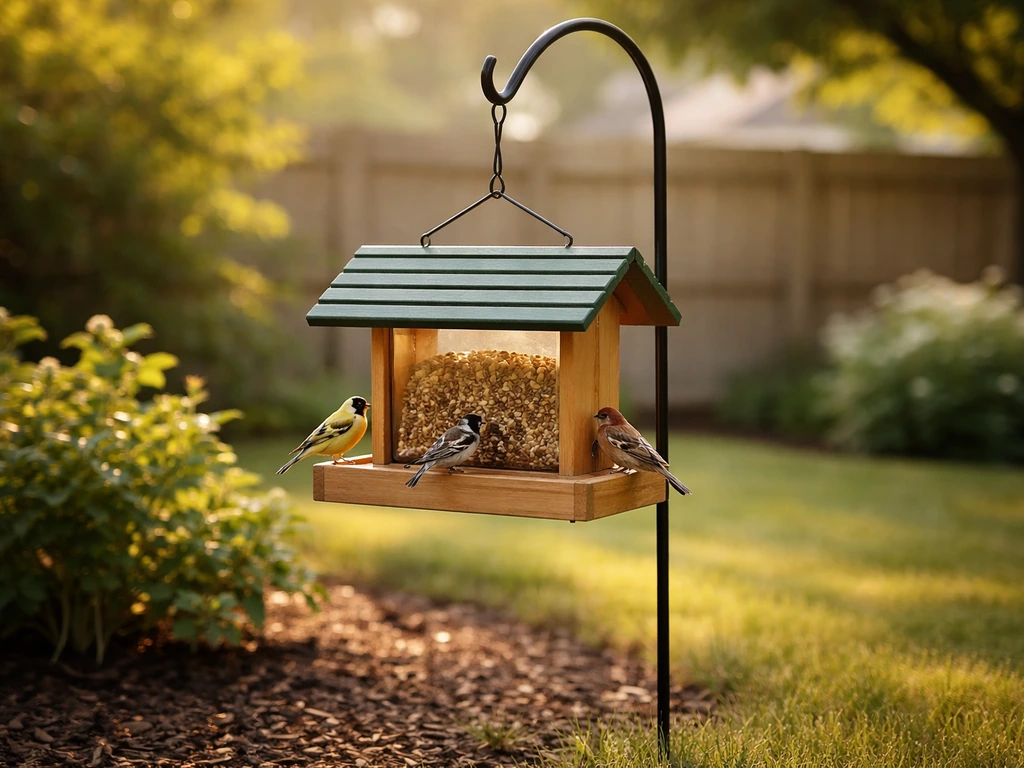
Choosing the right feeder type and food
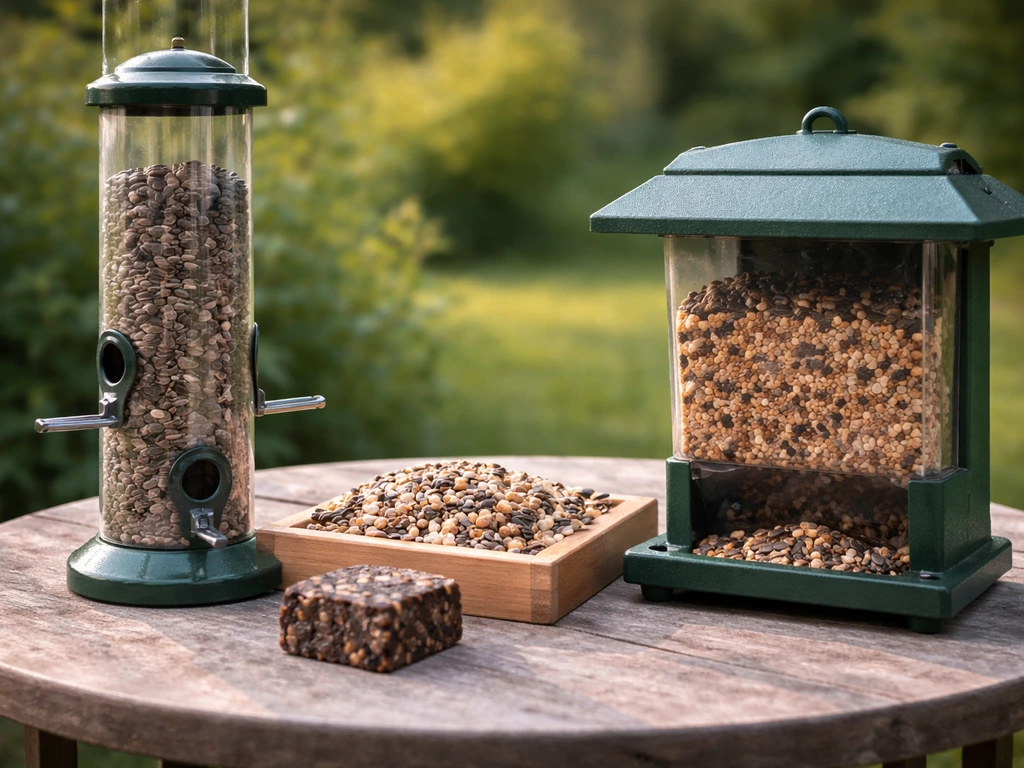
The feeder you pick should match the birds you want to attract and the food you plan to offer. Getting this pairing right from the start saves a lot of frustration later. Here's a practical breakdown of the main feeder types and what each one is best for.
| Feeder Type | Best Food | Birds It Attracts | Key Consideration |
|---|---|---|---|
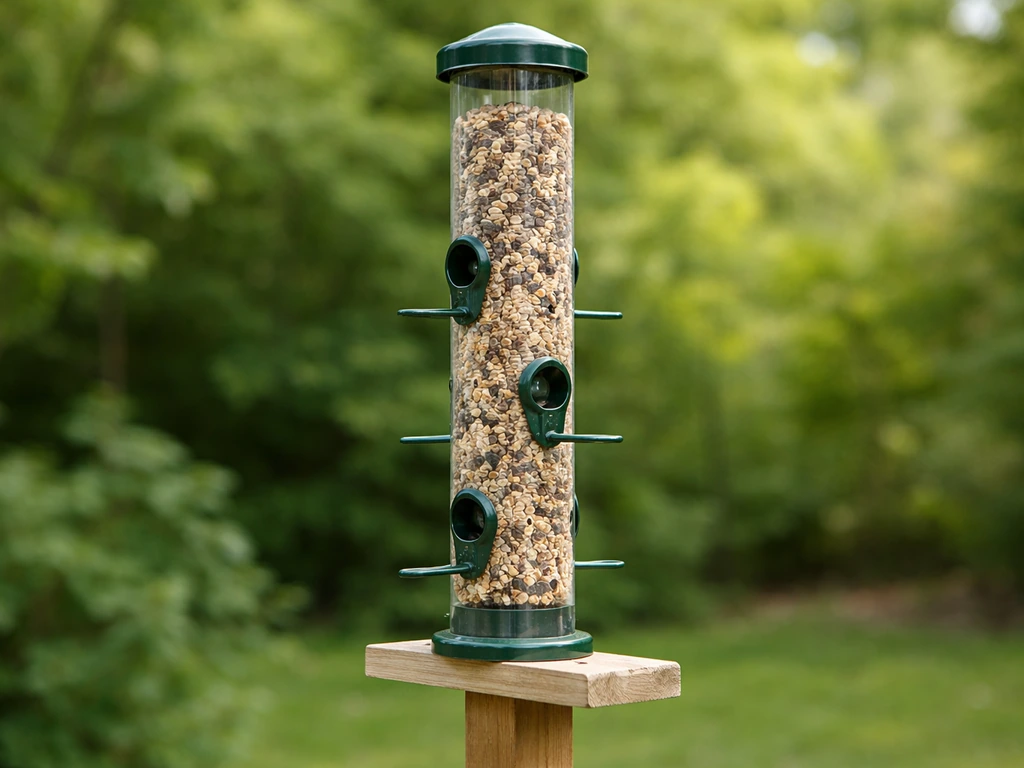
| Tube feeder | Sunflower seed, nyjer/thistle | Finches, chickadees, nuthatches | Multiple ports keep seed clean and dry; great beginner choice |
| Hopper/house feeder | Sunflower seed, mixed seed | Cardinals, jays, sparrows, many species | Holds a larger volume; needs regular cleaning to prevent mold |
| Platform/tray feeder | Mixed seed, millet, safflower | Ground-feeding species like doves, juncos | Prone to wet seed and mess; avoid spreading food on the ground instead |
| Suet cage feeder | Suet cakes | Woodpeckers, nuthatches, wrens | Only use raw suet in winter; it turns rancid fast in warm weather |
| Hummingbird feeder | Dye-free sugar water (4:1 water to sugar) | Hummingbirds | Must be cleaned every 3 to 5 days; skip the red dye |
If you're starting with just one feeder, a tube feeder filled with black-oil sunflower seed is the most reliable option. It keeps seed dry, limits waste, and attracts a wide variety of small songbirds. Avoid cheap mixed seed bags that are mostly millet filler unless you specifically want ground-feeding birds like sparrows and doves. Never put bread in a feeder. It has almost no nutritional value for birds and can cause real harm over time. Same goes for anything moldy or wet.
For food quality, mealworms are a great addition if you want to attract bluebirds or robins, but offer them in small amounts at a time in a clean, dedicated dish so they don't escape and so you're not overfeeding. If you're adding a suet cage, wait until temperatures are consistently below 50°F before putting raw suet out. Rendered or commercial suet cakes hold up a little better in warmer weather, but even those should be monitored.
Picking a safe, effective backyard location
Location is where most people get tripped up. It's tempting to put the feeder wherever it looks nice from your kitchen window, but a few placement decisions will make or break your setup from both a bird-safety and a bird-attraction standpoint.
The biggest hazard is window collisions. Homes with bird feeders are statistically at double the risk for bird-window collisions compared to homes without them. The fix is straightforward: place your feeder either within 3 feet of a window (close enough that birds can't build up speed if they flush toward the glass) or more than 10 feet away. That middle distance, roughly 4 to 9 feet from a window, is the danger zone where birds have enough room to accelerate but not enough awareness to avoid the glass. If you're placing near a window, applying window decals or tape strips on the outside of the glass helps further reduce strike risk.
Beyond the window rule, look for a location that offers these features:
- Nearby shrubs or trees within 10 to 15 feet so birds have cover to retreat to, but not so close that squirrels can use them as a launch pad
- Good visibility from multiple angles so birds can spot the feeder and watch for predators while feeding
- Some shelter from prevailing wind, especially in winter, to keep food from blowing off and to make feeding less miserable for small birds
- At least 8 to 10 feet from any fence, tree trunk, or structure a squirrel could jump from
- Away from areas where cats patrol or could hide in nearby ground cover
Hanging and placement methods, and how high to go
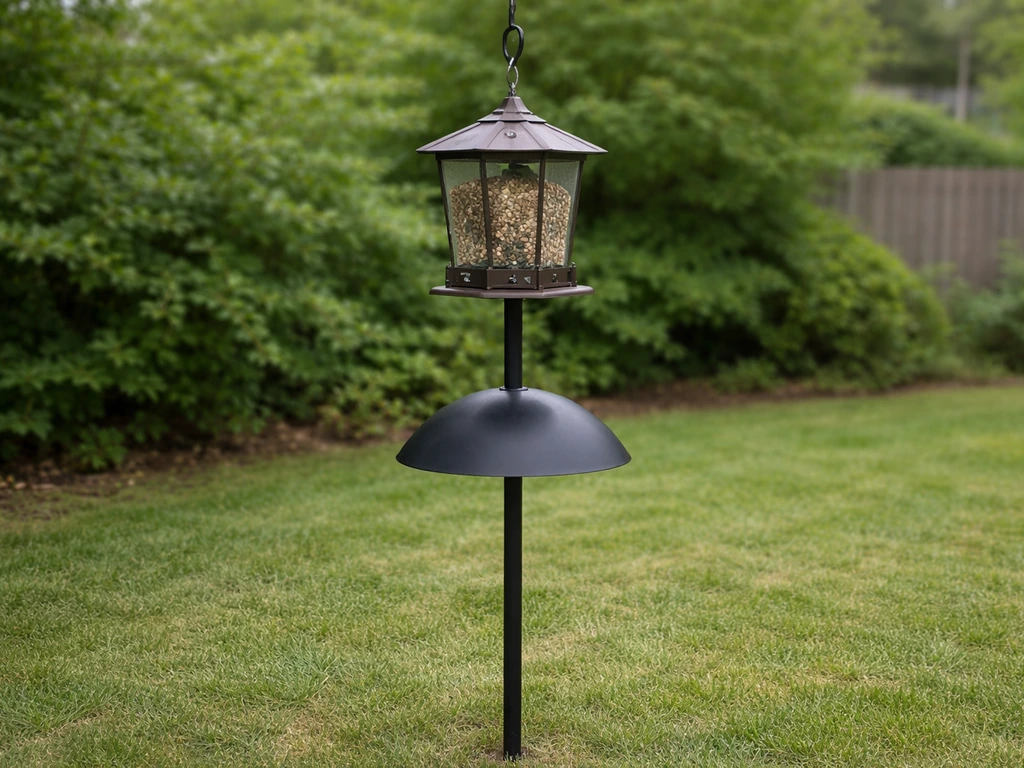
How you hang or mount your feeder matters almost as much as where you put it. A feeder that wobbles, tips, or is too easy to raid will frustrate you and the birds. Here are your main options:
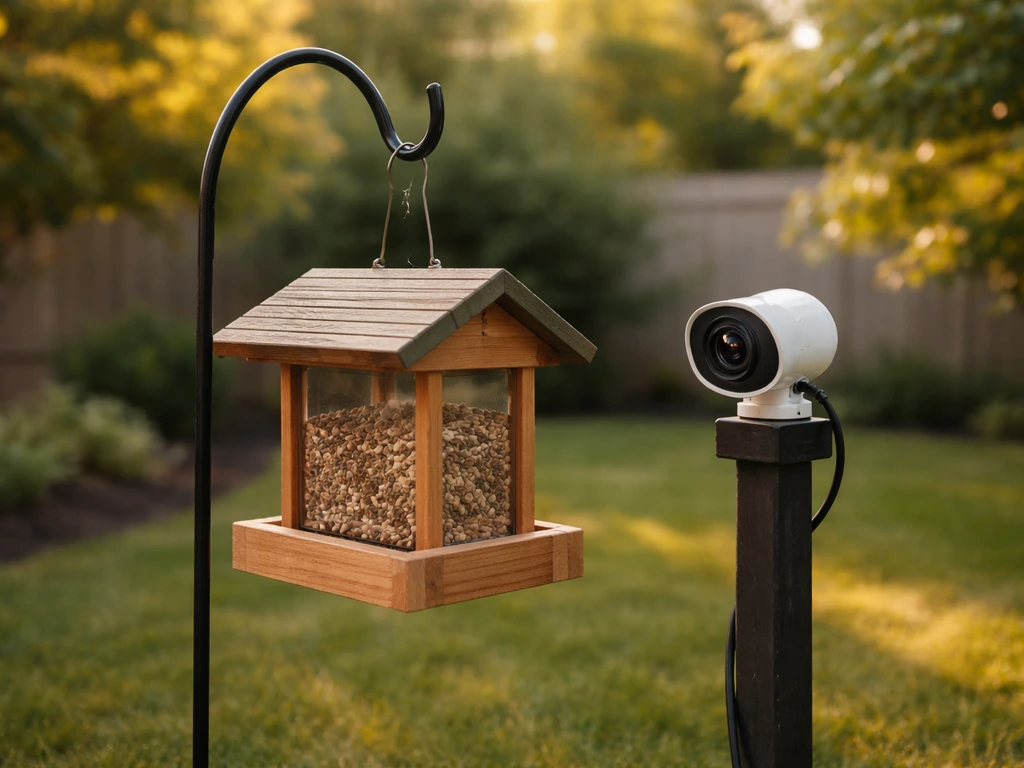
- Freestanding pole with a baffle: the most reliable setup. Use a 1-inch diameter metal pole pushed firmly into the ground. Attach a squirrel baffle at 4 to 5 feet up the pole. Mount the feeder at the top so it sits at about 5 to 6 feet off the ground.
- Hanging from a tree branch: works well but makes squirrel-proofing harder. Use a shepherd's hook or hang from a wire with a hanging baffle above the feeder.
- Deck-mounted or rail-mounted: a good option for small yards or apartments with balconies. Clamp-on pole mounts attach to deck railings and can still hold a baffle.
- Window-mounted feeders: these use suction cups and attach directly to the glass. Since they're within 3 feet by definition, they sidestep the collision risk. Great for close-up viewing.
For height, the general rule is 5 to 6 feet off the ground for hanging feeders. Ground-feeding platforms should be elevated at least 2 to 3 feet to reduce predator access and keep seed out of moisture. Suet feeders do well mounted on a pole at about 5 feet or hung from a sturdy branch at similar height. If you're hanging from a branch, the feeder should be at least 5 feet below the branch itself so squirrels can't reach down and grab it.
Step-by-step feeder setup walkthrough
This is the part you can follow right now. Budget about 30 to 45 minutes for a basic pole setup, less for a hanging feeder from a branch. Here's exactly what to do:
- Choose your feeder type and buy or build it. If you're buying, a basic tube feeder with 4 to 6 ports runs $15 to $30 and will last years with cleaning.
- Pick your location using the window-distance rule and the squirrel-distance rule: more than 10 feet from windows (or within 3 feet), and at least 8 to 10 feet from trees, fences, and structures.
- Install your pole. Push a metal shepherd's hook or mounting pole at least 18 to 24 inches into the ground so it's stable. If the soil is hard, use a stake driver or a mallet with a protective block.
- Attach your squirrel baffle to the pole at 4 to 5 feet off the ground. Wrap-around cone baffles and torpedo baffles both work well. Make sure it's snug so squirrels can't spin it aside.
- Hang or mount your feeder at the top of the pole. If using a tube feeder, leave the bottom cap latched securely. Fill it with seed through the top, leaving about an inch of headroom so the lid closes cleanly.
- Add a tray or catch-tray beneath the feeder if your model supports one. This reduces seed falling to the ground, which attracts rodents and ground-feeding pests.
- Step back and check the feeder from the house. Make sure you can see it clearly and that it doesn't look directly in line with a window reflection.
- Wait. Birds typically find a new feeder within 1 to 7 days. In a new yard or area with little existing bird activity, it can take 2 to 3 weeks. Patience is part of the process.
DIY feeder builds using common household materials
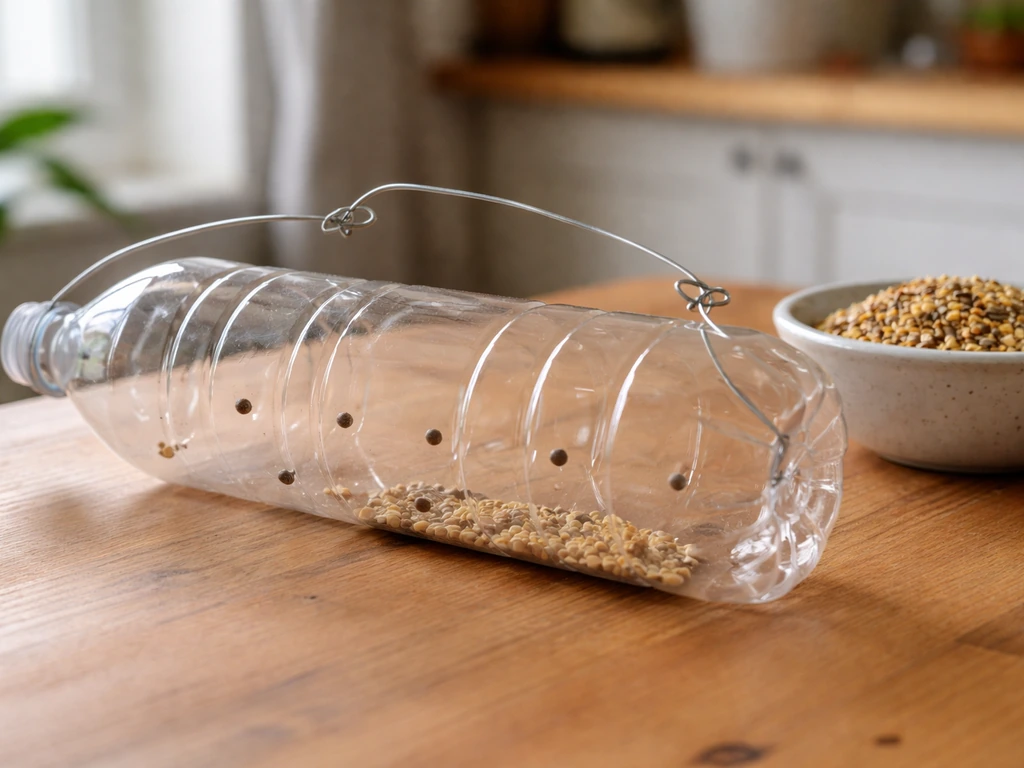
You don't need to buy a feeder to get started. Some of the most effective feeders I've used were made from things that would have gone in the recycling bin. Here are four solid builds you can put together today. If you want to make a bird feeder from scratch, use this guidance to learn the key steps and choices DIY feeder builds.
Plastic bottle tube feeder
Take a clean 1- or 2-liter plastic bottle and drill or burn 4 to 6 small feeding holes (about 3/8 inch wide) spaced a few inches apart around the lower portion of the bottle. Push a wooden dowel or pencil through just below each hole to create perches. Run a wire or twine through the bottle cap area and hang it from a branch or pole. Fill with sunflower seed through the top before sealing. The seed flows down to the holes as birds feed. Replace the bottle every month or two since plastic can degrade and crack.
Milk jug platform feeder
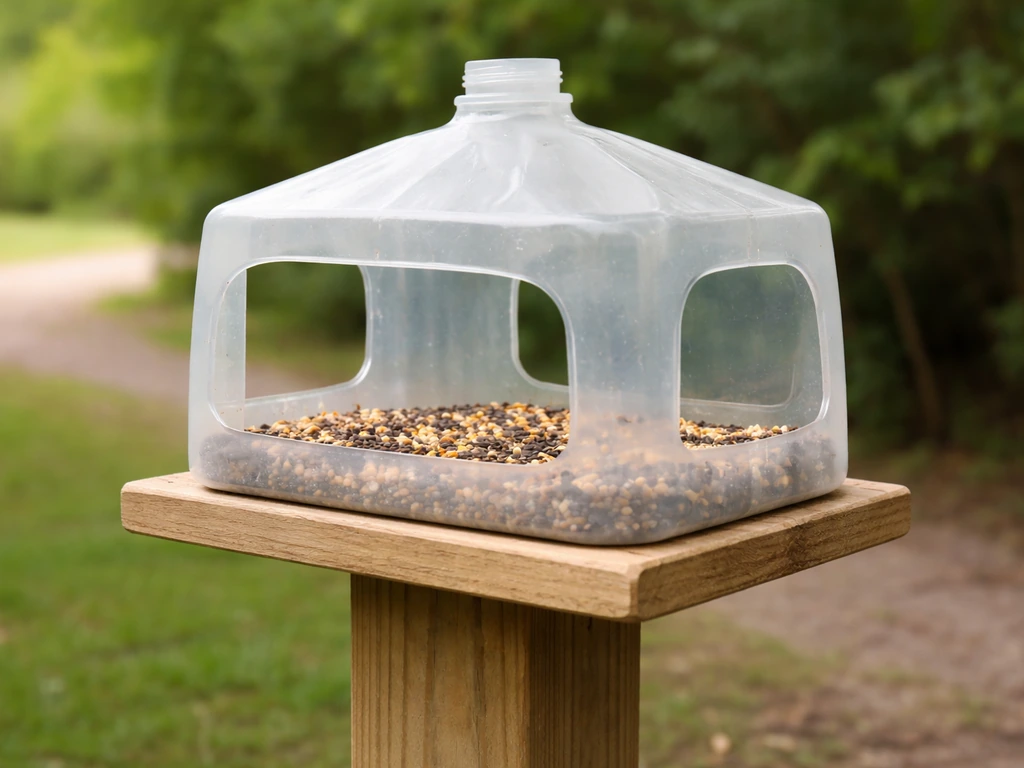
A clean plastic gallon milk jug makes a decent covered platform feeder. Cut large windows into two or three sides of the jug, leaving the bottom intact as a seed tray (about 2 to 3 inches deep). Punch a few small drainage holes in the bottom so water doesn't pool. Run rope or wire through the handle and hang from a branch at 5 to 6 feet. Spreads seed a bit, which attracts a wider variety of species. Swap it out when the plastic gets brittle or discolored.
Pinecone suet feeder
This is the easiest build on this list and a great one to do with kids. Tie a length of twine around the base of a large, open pinecone. Mix together peanut butter and rolled oats (or use commercial suet) and press it firmly into the scales of the pinecone. Roll it in birdseed if you like. Hang it from a branch. It works well in cold weather; in summer, the fat base can get rancid fast, so skip this one when it's warm.
Wooden platform feeder
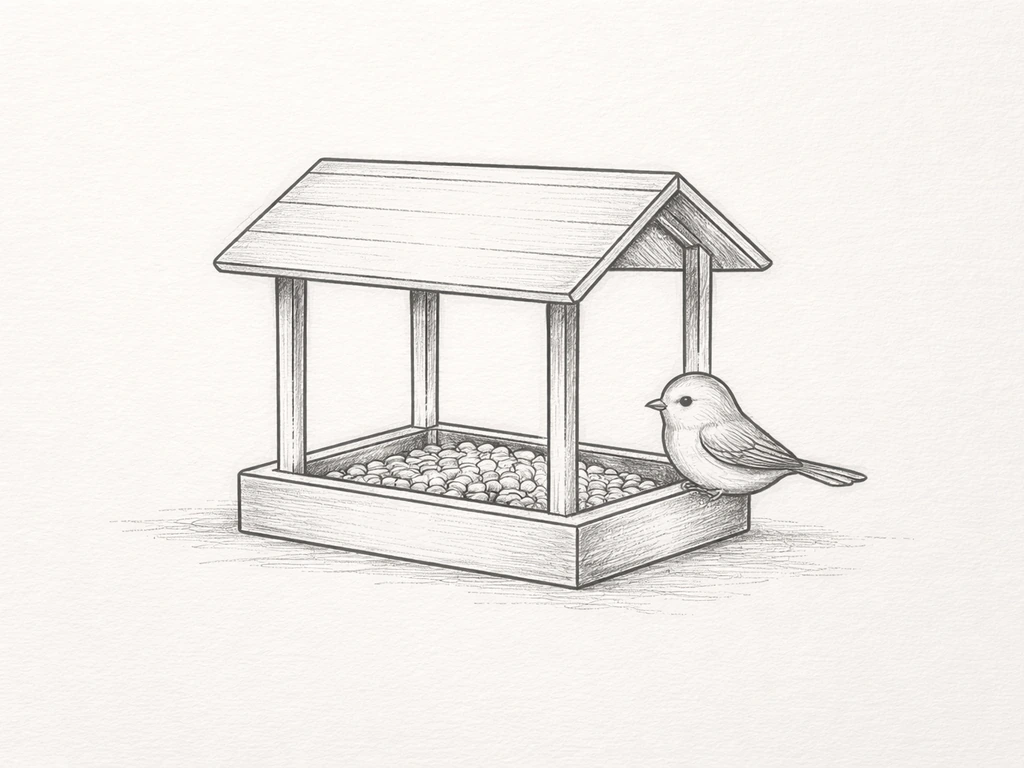
If you have basic woodworking tools, a simple platform feeder takes about an hour. Cut a piece of untreated cedar or pine to roughly 12 by 16 inches for the tray floor. Add 1-inch-tall side rails on three sides (leave one side open for cleaning) using small wood screws. Drill a few 1/4-inch drainage holes in the floor. Screw a small eye hook into the center top and hang with wire or rope. Cedar holds up to weather best. Avoid pressure-treated wood since the chemicals can be harmful to birds. Once built, set it up on a pole or hang it using the same guidelines as any other feeder.
Pest-proofing and bird-safety troubleshooting
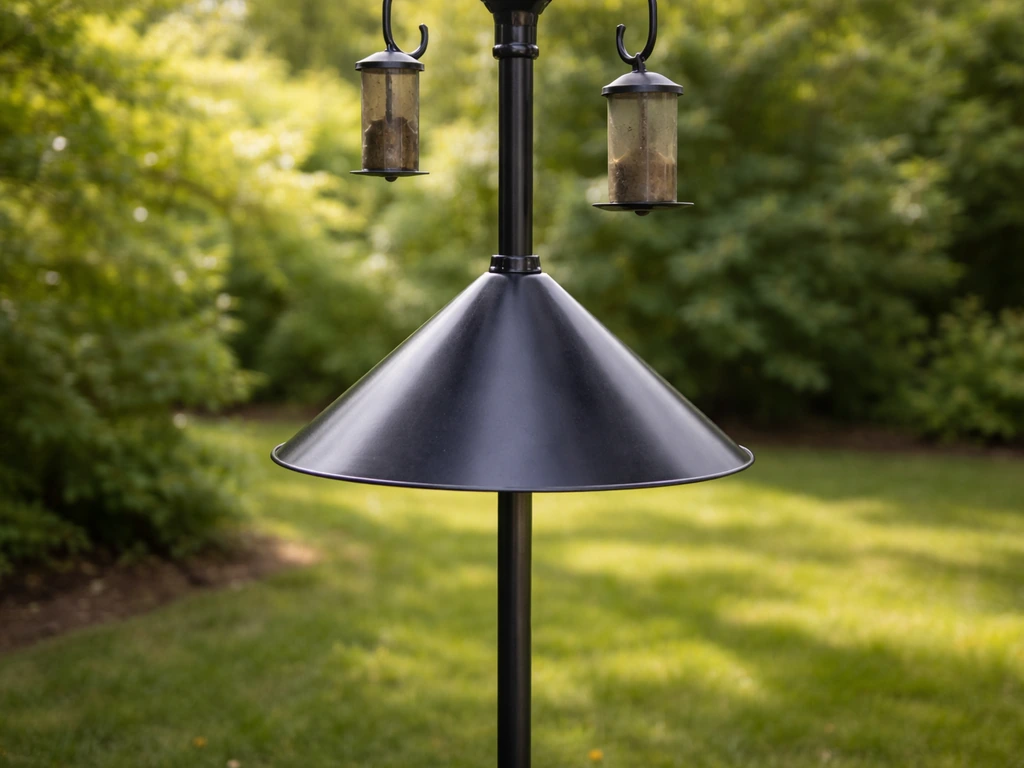
Squirrels are almost guaranteed to find your feeder. So are raccoons, bears in some regions, and starlings or house sparrows if you live in an area with high populations. Here's how to deal with each honestly, because some of these solutions work better than others.
Squirrels
The pole-plus-baffle system is far and away the most effective approach. Place the pole at least 8 to 10 feet from any tree, fence, or surface a squirrel can jump from. A cone or torpedo baffle at 4 to 5 feet on the pole stops climbers. Squirrel-resistant feeders with weight-sensitive ports also work, though they cost more. Avoid just moving the feeder slightly closer to a tree or wall thinking it won't matter. It will. Squirrels can clear 8 feet horizontally from a standing jump and drop from above too.
Raccoons and bears
If you're in bear country, bring feeders in at night from spring through fall, or take them down entirely during peak bear activity season (typically April through November depending on your region). Raccoons respond to baffles but are strong enough to defeat flimsy setups. A heavy metal baffle and a securely latched feeder lid are your best bets. Store extra seed in a metal, rodent-proof container, not a plastic bin.
Window collisions
If birds are hitting your windows, the feeder is almost certainly in that dangerous middle range of 4 to 9 feet from the glass. Move it to within 3 feet of the window or more than 10 feet away. Adding window decals (dots, stripes, or patterns) on the exterior glass surface at roughly 2-inch intervals also significantly reduces strikes. The FWS has a bird-collision reduction toolkit with additional mitigation strategies if this is an ongoing problem in your yard.
Birds aren't coming
If it's been more than two weeks and you're seeing nothing, run through this checklist: Is the seed fresh? Old or wet seed smells off and birds avoid it. Is the feeder visible with some cover nearby for birds to feel safe? Have you seen cats or hawks in the area recently? Is the feeder in a high-traffic human zone where birds get spooked frequently? Try relocating to a quieter part of the yard, adding a birdbath within 10 to 15 feet, or placing a small brush pile nearby as cover. Sometimes simply switching from a filler-heavy mixed seed to pure black-oil sunflower makes a dramatic difference within days.
Disease and sick birds
If you see sick or lethargic birds at your feeder, take it down immediately and clean it thoroughly before putting it back up. Discard any remaining seed, especially anything that's wet or clumped. Feeders can become disease transmission points when multiple birds congregate, especially if the feeder is dirty or seed is allowed to sit wet. During disease outbreak alerts in your area (your state wildlife agency will often post these), it's better to take feeders down for 2 to 4 weeks than risk spreading illness.
Maintenance, cleaning schedule, and seasonal adjustments
A feeder you don't clean is worse than no feeder at all. Mold, bacteria, and wet seed can sicken and kill the birds you're trying to help. The good news is that a solid cleaning routine takes about 10 minutes once you have the process down. Iowa DNR recommends regularly cleaning bird feeders, waterers, and baths to avoid unintentionally spreading disease among birds.
Cleaning schedule
- Seed feeders (tube, hopper, platform): clean every two weeks under normal conditions. If you notice sick birds or suspect disease, clean twice as often.
- Hummingbird feeders: clean every 3 to 5 days in warm weather, more often above 80°F. Change nectar at every cleaning.
- Suet cages: clean monthly, or whenever the cage has visible buildup. Replace suet if it looks soft, oily, or discolored.
- Ground beneath feeders: rake up spilled seed and husks at least once a week. Rotting debris on the ground attracts rodents and spreads disease.
For cleaning, mix a solution of 1 part bleach to 9 parts water. Disassemble the feeder, discard old seed, scrub all surfaces with a brush, soak in the bleach solution for a few minutes, then rinse thoroughly and let it air dry completely before refilling. Residual moisture in a feeder is a fast track to mold. If you prefer, a hot dishwasher cycle also works well for feeders that fit and are dishwasher-safe.
Seasonal adjustments
Spring and summer bring hummingbirds (starting around April in most of the US), more frequent nectar changes due to heat, and the need to pull raw suet since it spoils quickly in warm weather. If you're running a hummingbird feeder, skip the red dye in your nectar. The standard recipe is 4 parts water to 1 part plain white sugar, boiled to dissolve, then cooled. Don't overfill the feeder beyond what hummingbirds will drink in a few days.
Fall is when you want to make sure everything is freshly cleaned and ready for migrating birds passing through. Species you rarely see in summer will show up for a few days. Keep feeders stocked and clean during September and October for the best migration viewing.
Winter feeding is one of the most impactful things you can do for local birds, especially in cold climates. High-calorie options like suet, peanuts, and sunflower seed give birds the fat and protein they need during cold snaps. Check feeders more often in winter since birds eat faster and seed can get buried under snow or ice. Brush off snow from platform feeders after storms so birds can access food when they need it most.
Once your feeder is up and running reliably, you'll probably find yourself wanting to refine things: trying different seed types to attract specific species, experimenting with feeder styles and positions, or even building more feeders from scratch. That hands-on tuning is half the fun. The setup you have today is just the starting point. If you want to keep improving results, use this bird feeder tutorial to refine your setup step by step The setup you have today. To match these feeder tips with drawing skills, you can also learn how to draw birds to a bird feeder in simple steps.
FAQ
How long should I wait after setting up my backyard bird feeder before I see birds?
Most new feeders start getting visits within a few days, but it can take 1 to 2 weeks in slower areas. If there is still no activity after 2 weeks, switch to fresh black-oil sunflower seed, confirm the feeder is visible from a safe perch nearby, and check that seed is staying dry (covered feeder or sheltered location).
Can I use seed mixes if I want a wider variety of birds?
You can, but mixes often include large amounts of millet filler that some birds ignore, which increases waste and attracts unwanted birds. If you want variety without the frustration, start with black-oil sunflower as your base and only add small supplements (like mealworms) when you know the species you are targeting.
What’s the best way to keep seed from getting wet under rain or snow?
Use a feeder design that sheds water (covered hopper for seed, or a platform with drainage holes on DIY builds). If you see clumping or a stale, damp smell, dump it and refill with dry seed. In winter, check after storms and remove packed snow so birds can reach food quickly.
Where should I place a feeder if I have multiple windows in view?
Apply the window collision rule for the closest window, not the most convenient one. If two windows are within the 4 to 9 foot “danger zone,” consider relocating the feeder, or move it to within 3 feet of one window (so birds cannot build speed) while placing decoys or decals on the outside of that specific glass.
Do I need a baffle even if I have squirrels-proof feeder ports?
Squirrel-resistant ports help, but they are not always enough alone. A properly sized baffle on the pole is a strong baseline because it blocks multiple access routes, especially for squirrels that jump from fences or nearby branches. If squirrels are persistent, rely on both (baffle plus a sturdy, well-latched feeder).
How can I stop ants or other insects from taking over the seed?
Avoid leaky feeders and keep seed dry, since insects move in fast when seed is damp. Clean the feeder promptly, and if you use a pole setup, ensure there are no gaps where insects can access food from the outside. If ants are a recurring issue, consider switching to a feeder that is fully covered from above.
What should I do if birds start looking sick or dying at the feeder?
Remove the feeder immediately, discard remaining seed (especially wet or clumped seed), and thoroughly clean all parts before putting it back. During local disease outbreak alerts, it is safer to pause feeding for a couple of weeks so you do not concentrate birds at a transmission point.
Is it safe to leave the feeder out year-round?
Yes for most seed feeders if you keep cleaning and protect against moisture, but change food types by season. For example, raw suet should be avoided in warm periods and hummingbird nectar needs more frequent refreshing in heat.
How often should I clean my backyard bird feeder?
Do a quick clean whenever you notice wet seed, clumping, or foul odors, and do a deeper wash at least routinely, for example after heavy rain, long gaps in visits, or any time birds appear sick. After cleaning, fully air dry before refilling because leftover moisture accelerates mold.
Can I feed hummingbirds and seed birds from the same feeder station?
You can, but keep nectar and seed separate and prevent mixing. Use a dedicated hummingbird feeder and refresh nectar on the schedule required by your temperature. Also position it so that splashing seed or spilled nectar does not turn into a messy, insect-attracting puddle near the station.
What is the correct nectar recipe and how do I avoid spoilage?
Use plain white sugar with a 4:1 water-to-sugar ratio, heat just enough to dissolve, then cool. Do not add dyes, and do not overfill, because in warm weather you need to empty and refill quickly to prevent fermentation.
How do I handle winter placement if the ground freezes or snow covers the food?
Keep checking after storms, brush off snow from platform trays, and choose a feeder location that stays reachable during bad weather. Also consider elevation, because seed buried under ice becomes inaccessible even if the feeder remains filled.
Will bird feeders attract cats or other predators?
They can, especially if the feeder is close to cover that predators use. Place the feeder in a way that gives birds nearby refuge (shrubs or brush) but does not create a direct ambush path for cats. If you see frequent hawks or cats, temporarily relocate the feeder to a calmer spot and consider adding bird cover farther away from predator approach routes.