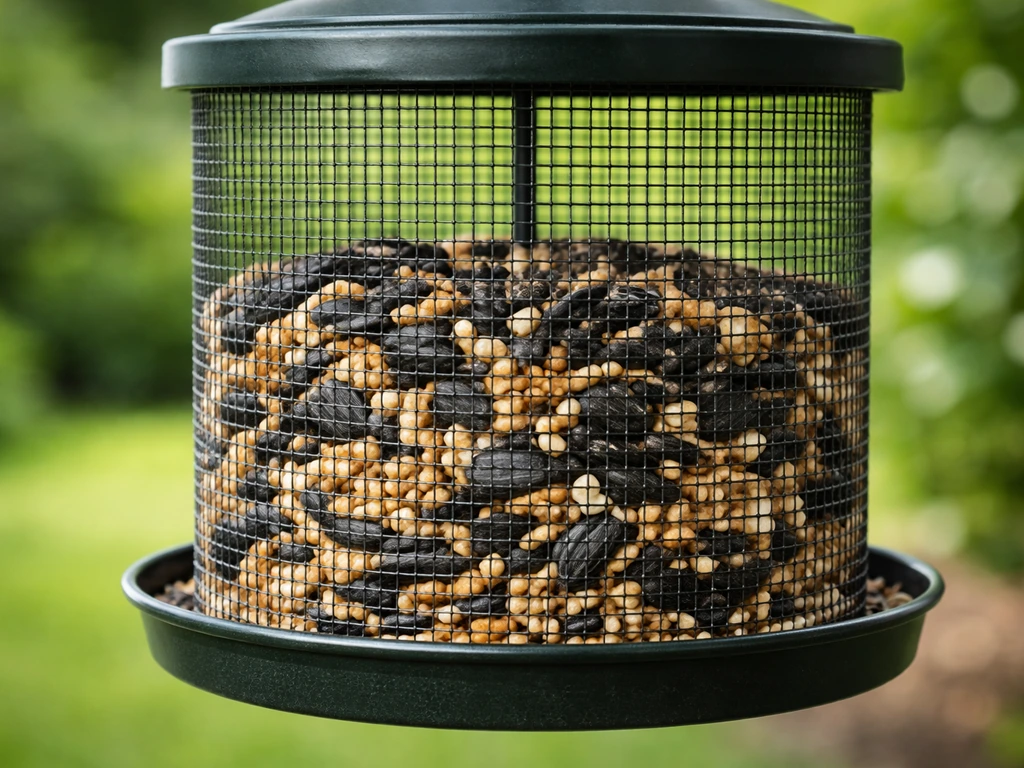
The best things to put in a mesh bird feeder are black oil sunflower seeds, nyjer (thistle) seed, and whole or shelled peanuts, depending on the mesh size. Black oil sunflower is the all-around winner: small, thin-shelled, high in fat, and loved by chickadees, cardinals, finches, grosbeaks, and sparrows. blank" rel="noopener noreferrer">Nyjer seed works well in fine-mesh tube-style feeders with tiny ports. Whole peanuts go into larger-opening metal mesh feeders. Get those three right and you'll have a busy feeder within a day or two.
What to Put in a Mesh Bird Feeder: Safe Fill Options
Marcus Brennan
20 May 2026
Best foods to put in a mesh bird feeder
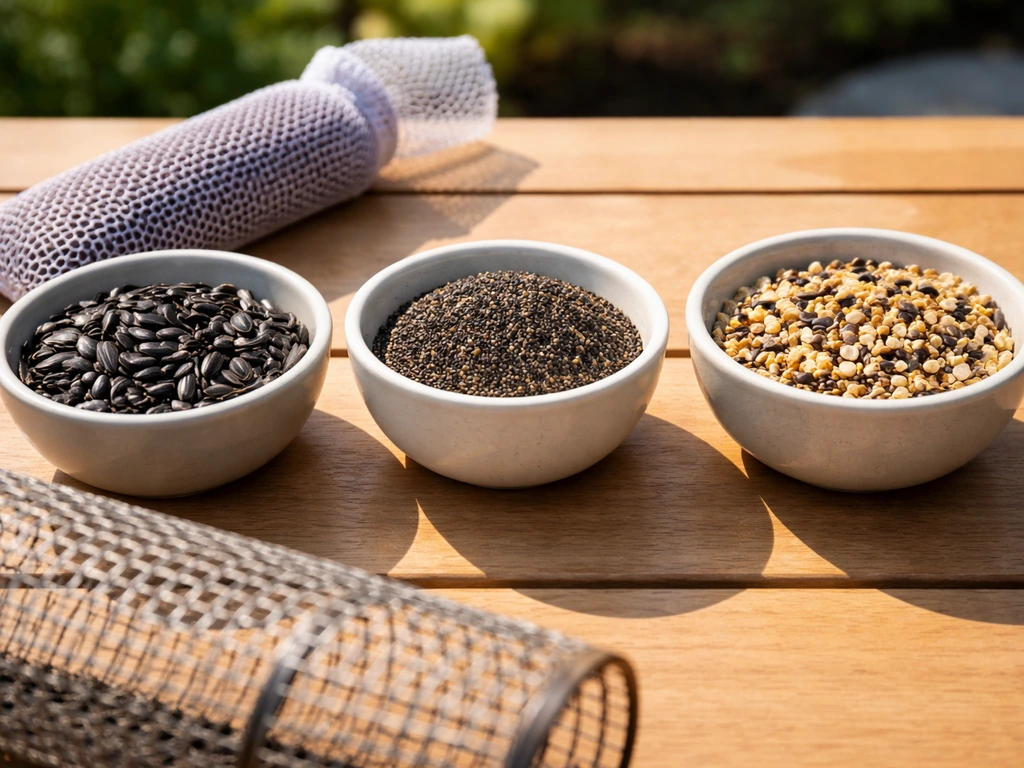
Mesh feeders come in a few different styles, and the right fill depends on which one you have. The most common types are fine-mesh nyjer socks or tubes, medium-mesh cage feeders, and larger-opening metal mesh cylinders for peanuts. Each one is built around a specific type of food, and using the wrong fill in the wrong feeder is the number one reason people end up with a mess or a feeder that goes ignored.
Black oil sunflower seed is the most versatile option. The seeds are small enough to sit neatly in medium-mesh feeders without falling through, and their thin shells mean smaller birds can crack them easily. They're also high in fat and calories, which makes them especially valuable in cold months. I've had chickadees show up within hours of filling a mesh cage feeder with black oil sunflower for the first time.
Nyjer seed (sometimes called thistle) is the go-to for finches, pine siskins, and redpolls. It's a tiny, oil-rich seed that needs a fine-mesh feeder or a tube feeder with very small ports to stay contained. The classic nyjer sock, which is essentially a fine mesh bag, is designed specifically for this seed. American goldfinches in particular are addicted to nyjer and will cling upside down on a sock feeder to get at it.
Whole peanuts or peanut hearts work well in larger-opening metal mesh tube feeders. The mesh holds them in place while birds like blue jays, woodpeckers, and nuthatches pick pieces through the openings. The BTO recommends this exact setup because it forces birds to peck at the peanuts rather than carrying a whole one away, which reduces waste and keeps the feed in the feeder longer. Just make sure the mesh openings are small enough that no bird can pull out a full peanut in one go.
Seed types and mixes that attract common backyard birds
If you want to attract a variety of species with one feeder, black oil sunflower is still your best single seed. Project FeederWatch lists it as one of the top feeder foods for cardinals, chickadees, finches, and sparrows, which covers most of the birds people are hoping to see. A medium-mesh cage feeder filled with black oil sunflower will do more work than any fancy mix.
That said, here's a quick breakdown of which seeds pull in which birds, so you can tailor your fill to what you actually want in the yard:
| Seed / Food | Best Feeder Type | Birds Attracted |
|---|---|---|
| Black oil sunflower | Medium mesh cage or tube | Chickadees, cardinals, finches, sparrows, grosbeaks |
| Nyjer (thistle) | Fine mesh sock or small-port tube | American goldfinch, pine siskin, redpoll, house finch |
| Whole peanuts | Large-opening metal mesh tube | Blue jay, woodpecker, nuthatch, titmouse |
| Peanut hearts (shelled) | Medium mesh tube with small openings | Chickadees, nuthatches, wrens, woodpeckers |
| Sunflower chips (hulled) | Medium mesh cage | Most feeder birds; no shell mess under feeder |
Seed mixes can work in mesh feeders, but you have to read the label. A good mix for mesh feeders is mostly black oil sunflower with some safflower or sunflower chips. Avoid cheap mixes that are mostly milo, wheat, or red millet. Those fillers end up on the ground uneaten, and the wasted seed draws mice and rats. If you're buying a mix, check that the first ingredient is black oil sunflower or nyjer, depending on your feeder style.
What not to put in mesh feeders (avoid these foods)
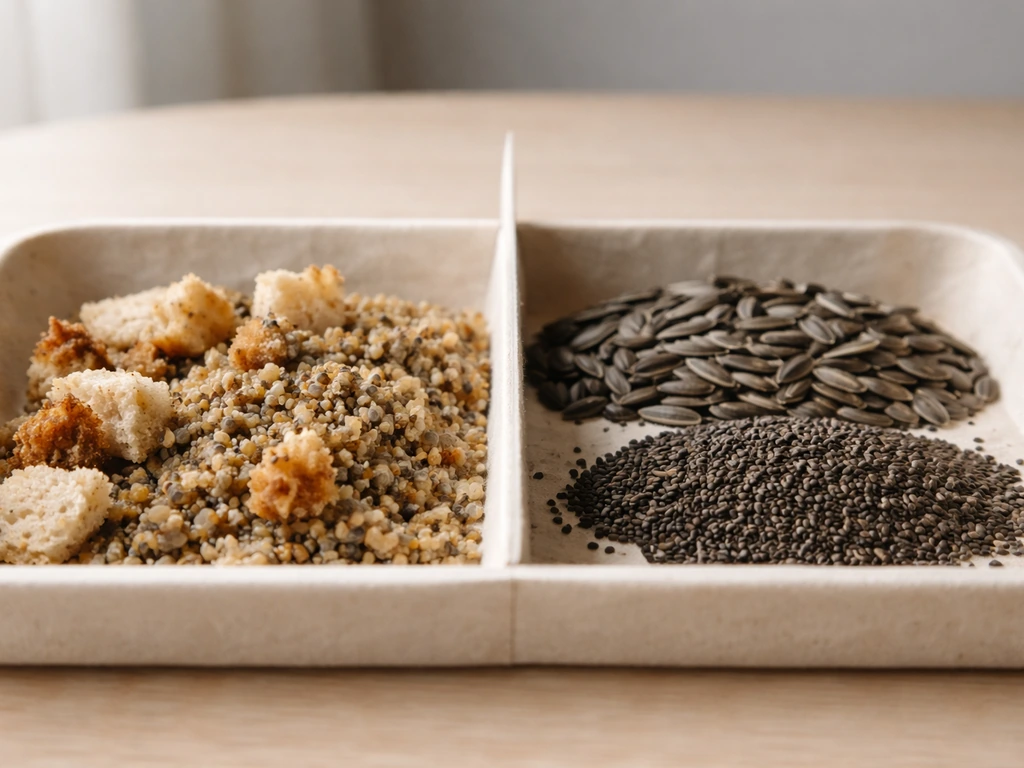
Some foods that seem like good ideas will either fall straight through the mesh, rot fast, or attract the wrong visitors. Here's what to skip:
- Bread and baked goods: they go moldy quickly, offer almost no nutrition, and can swell in a bird's crop. Not safe and not worth it.
- Suet or suet blocks: these are for suet cage feeders, not mesh feeders. Suet will clog a mesh feeder, turn rancid in warm weather, and make a greasy mess.
- Cracked corn: the pieces are often too large for smaller mesh openings, and loose corn in warm or damp conditions molds quickly. It also attracts squirrels and grackles more than most backyard songbirds.
- Cheap filler seeds (milo, red millet, wheat): most North American feeder birds ignore them. They sit in the feeder, get wet, and mold. You're just paying for waste.
- Fruit pieces or soft foods: not designed for mesh feeders. They'll rot, block the mesh, and smell. Use a platform feeder or dish for fruit.
- Nyjer seed in a large-mesh feeder: if the openings are too big, nyjer falls straight through. It's expensive seed, so don't waste it in the wrong feeder.
- Salted or flavored nuts: salt is harmful to birds. Only ever use plain, unsalted peanuts.
A good rule of thumb: if the food is wet, sticky, or has pieces smaller than the mesh openings, it doesn't belong in a mesh feeder. Mesh feeders are built for dry, sturdy seeds and nuts that can hold their shape while birds peck at them.
How to fill a mesh feeder correctly (amount and setup tips)
One of the most common mistakes is overfilling. It feels generous, but a packed feeder holds moisture, seeds at the bottom don't get eaten before the ones at the top are refreshed, and before long you've got a compacted, moldy brick inside the feeder. A better approach is to fill only about two-thirds full, especially in damp or humid weather.
How fast you refill depends on how busy your feeder is and the season. In spring and fall migration, a popular feeder can go through seed quickly. In midsummer, activity slows down. As a starting point, check the feeder every two to three days. If it's been mostly untouched after four or five days, dump what's left and start fresh rather than letting it sit and sour.
- Empty the feeder completely before each refill, don't just top it off. Old seed at the bottom gets wet and packs down.
- Check the inside for damp or clumped seed before adding new fill. If anything is wet or discolored, clean the feeder before refilling.
- Fill to about two-thirds capacity, not all the way to the top.
- Hang the feeder in a spot with some shade and airflow. Full sun accelerates seed going rancid. A spot that gets morning sun and afternoon shade is ideal.
- If you're using a nyjer sock, squeeze it gently before hanging to break up any clumped seed inside.
- Place the feeder at least 10 feet from dense shrubs or fences to reduce how easily squirrels can jump to it. For more ideas on pest-proofing, feeder positioning and hanging method matter a lot.
For peanut mesh feeders specifically, hang them where you can easily see when they run low. Peanuts are popular and go fast with the right birds, but they also go stale and rancid faster than sunflower seed. Don't let them sit more than a week, even in dry weather.
Troubleshooting: mess, low visits, and seed waste
Birds aren't visiting
Give a new feeder at least a week before you worry. Birds need time to discover it, especially if there are no other feeders nearby. Make sure the feeder is visible and not completely surrounded by obstacles. If you've had the feeder up for two weeks with zero action, check the seed: if it smells off or feels damp, dump it and start fresh. Old or rancid seed is the number one reason birds skip a feeder they'd otherwise visit.
Seed is falling out
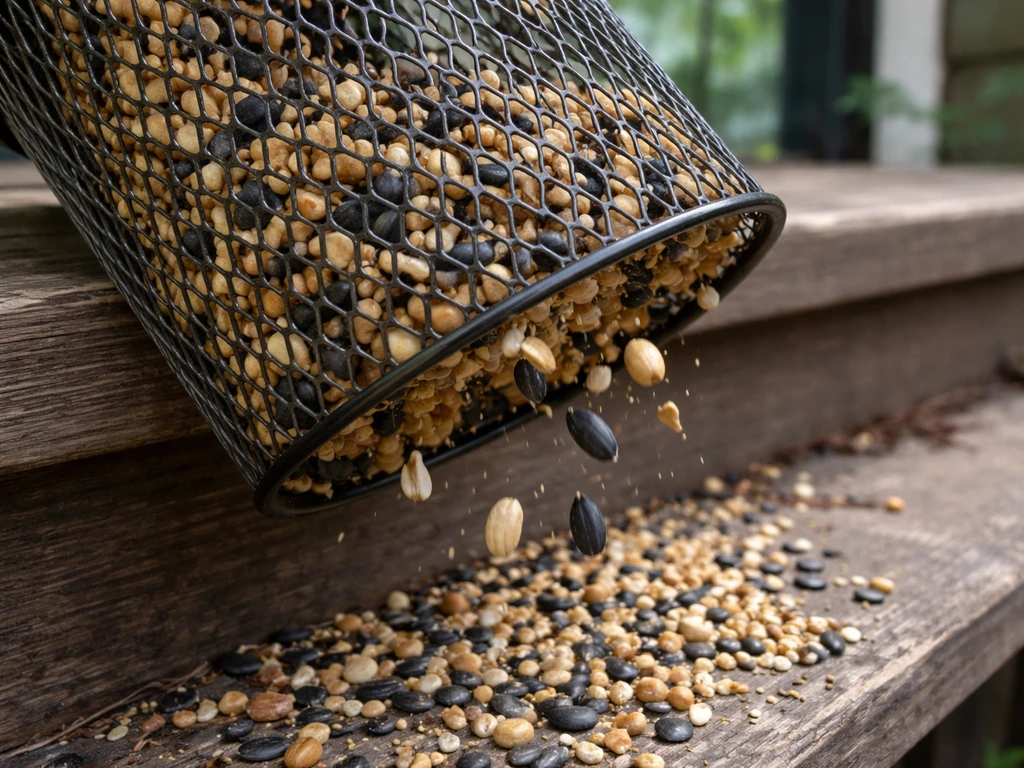
This almost always means the mesh openings are too large for the seed you're using. Nyjer seed in particular is notorious for this. If you're losing a lot of seed to the ground, either switch to a finer mesh feeder or switch to a chunkier seed like sunflower chips or peanuts that won't fall through. A small tray attachment underneath can also catch what drops, which reduces waste and keeps the ground cleaner.
Squirrels and large birds taking over
Mesh cage feeders with a surrounding wire cage (the kind designed to exclude squirrels and large birds) are worth the investment if you're dealing with this problem. The cage lets small birds like chickadees and finches get in while blocking squirrels and bigger birds like starlings. Placement matters too: feeders on a pole with a baffle beat hanging feeders for squirrel resistance. If you're building or modifying your own setup, wire mesh construction can be adapted for pest-proofing, which is worth exploring further. If you plan to make your own wire mesh bird feeder, focus on a sturdy frame, secure mesh spacing, and pest-proof placement how to make a wire mesh bird feeder.
Seed getting wet and clumping
This is almost always a placement issue. If rain is blowing in from one direction and soaking the feeder, move it to a spot with more overhead cover or hang it under an eave. You can also try a feeder with a wider roof or top cap. If the seed gets wet, don't just add dry seed on top. Dump it out, dry the feeder, and refill with fresh seed. Wet seed molds fast and moldy seed is genuinely dangerous for birds.
Cleaning and maintenance to prevent mold and pests
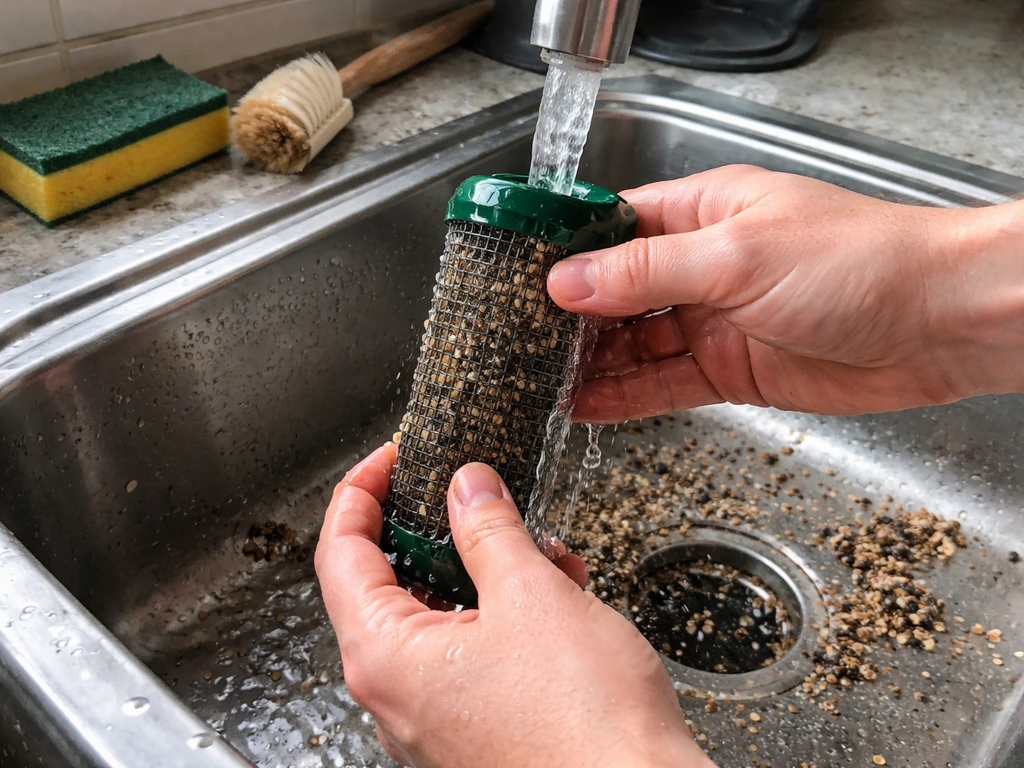
Most mesh feeders can be cleaned in about ten minutes if you do it regularly. Let the cleaning slip for a month and it turns into a much bigger job, with caked-on seed hulls and mold that takes real scrubbing to remove.
- Clean the feeder every one to two weeks in warm, humid weather. In cold dry weather, once a month is usually fine.
- Disassemble the feeder as much as it allows. Most mesh feeders come apart into a mesh tube or cage and end caps.
- Soak in a solution of one part white vinegar to nine parts water for about ten minutes. This handles mold and bacteria without leaving chemical residue that's harmful to birds.
- Scrub with a small bottle brush or old toothbrush, especially inside the mesh where seed husks collect.
- Rinse thoroughly with clean water until no vinegar smell remains.
- Let the feeder dry completely before refilling. Putting seed into a damp feeder is what causes most mold problems in the first place.
- While the feeder is drying, rake up the seed shells and droppings below the hanging spot. Old husks on the ground attract mice, and damp piles can harbor mold spores.
Nyjer socks and fabric mesh bags are a bit different. These are disposable-ish: once the mesh starts to fray or the bag has developed a persistent smell, replace it rather than trying to rehabilitate it. They're inexpensive enough that swapping them out every season makes more sense than scrubbing them.
One more thing worth knowing: if you ever see birds acting lethargic or sitting fluffed up near your feeder, take the feeder down immediately, clean it thoroughly, and don't put it back up for at least a week. Sick birds are a signal that something in the feeder environment is harboring disease. A clean feeder and fresh seed resolve most of these situations quickly.
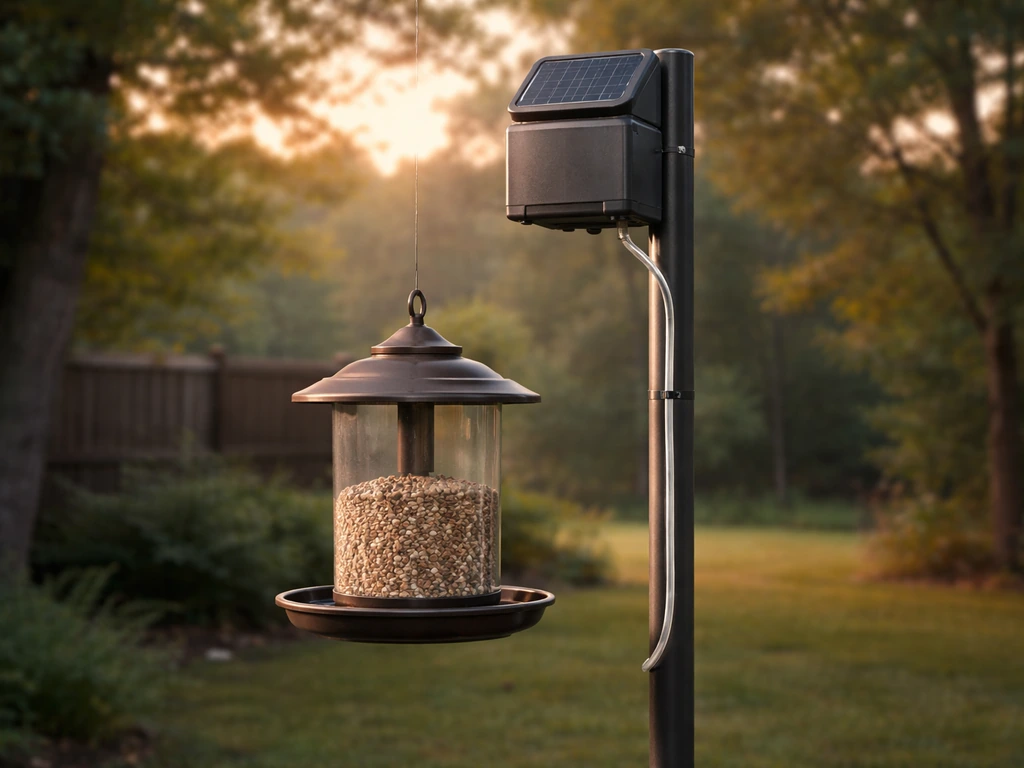
Once you've got the feeding side dialed in, it's worth thinking about how the feeder is hung and positioned, because even the best-filled feeder won't perform well if it's in the wrong spot or swinging in the wind so much birds can't land on it. The physical setup and the fill work together, and getting both right is what turns a mesh feeder into something your yard birds actually rely on. If you need a DIY metal feeder, focus on durable mesh and a sturdy housing so the seed stays protected and birds can access it easily. If you’re using a wire bird feeder, stick to dry, sturdy seeds and nuts that won’t fall through or spoil quickly. If you want to electrify a bird feeder for pest control, use a purpose-built system and follow the manufacturer’s safety instructions how to electrify a bird feeder.
FAQ
Can I put suet, peanut butter, or mealworms in a mesh bird feeder?
Generally no. Suet and peanut butter are soft or sticky, mealworms are perishable, and the mesh design is meant for dry seeds that stay intact as birds peck. If you want those foods, use a feeder style meant for them (such as a suet cage or a separate platform/tray).
What should I use if my mesh openings are bigger than average and I keep losing seed?
Switch to a chunkier, shape-holding option like black oil sunflower chips or whole peanuts (for the larger-opening style). If you are currently using nyjer, it is especially prone to leaking through larger openings, so pair nyjer only with a fine-mesh tube or sock.
Is it safe to top off with fresh seed instead of emptying a feeder?
For dry seeds you can top off in mild weather, but do not keep adding over time if any hulls are compacted or if the feeder has been sitting untouched. A quick rule is, if you notice dampness, clumping, or a musty smell, dump the contents, clean, and refill with fresh seed.
Can I use a seed mix if I’m not sure what birds are visiting?
Yes, but only if the mix’s first ingredient is black oil sunflower or nyjer, depending on your feeder. Avoid blends that start with milo, wheat, or red millet because the smaller leftovers tend to spill and attract rodents.
How do I choose between black oil sunflower, sunflower chips, and peanuts for the same mesh feeder?
Match food hardness and size to mesh spacing. Sunflower seed is the most flexible, sunflower chips work when you want less waste, and peanuts need larger openings. If you are seeing seed falling through, that usually means the food is too small for the mesh or the mesh is too large for that seed.
What should I do if the feeder is getting wet from rain or sprinklers?
First, fix the setup by adding overhead cover (move it under an eave or use a feeder with a better top cap). Second, if the seed has been exposed, do not just add dry seed on top, empty it, dry the feeder, and refill. Wet seed molds quickly and can put birds at risk.
How long can peanuts sit in the feeder before they should be replaced?
Peanuts stale and turn rancid faster than sunflower. Even in dry weather, replace them about weekly, and discard sooner if they smell off, feel oily or tacky, or look darker than usual.
Do I need to rinse the mesh before refilling after cleaning?
Usually no. After brushing out hulls and debris, let the feeder fully air-dry before refilling. Leaving moisture in the mesh increases mold risk, especially with humid weather and finch-friendly fine-mesh bags.
My nyjer socks start to smell or look dirty, should I wash them?
Replace them when they fray or when a persistent odor develops. Fabric and sock-style feeders are harder to truly sanitize once the fibers hold onto oils and residue, and swapping them out seasonally is typically more reliable than trying to rehabilitate them.
What if birds seem to avoid the feeder even though it’s full?
Wait a bit only after confirming the seed is fresh and dry. If it has been up about two weeks with no visits, check for dampness, musty odor, or stale/rancid feed, and make sure the feeder is visible with landing space. Then clean and restart rather than continuing to top off a possibly spoiled supply.
How can I reduce waste and keep spilled seed from attracting rodents?
Use the right seed for the mesh size (so it does not fall through), avoid overfilling, and consider a tray or small catch attachment to collect what drops. Also empty and refresh before seed compacts, because packed hulls can prevent birds from reaching fresh food and increase ground spill.
Next Article
How to Electrify a Bird Feeder Safely: Steps and Safety
Step-by-step, bird-safe guide to electrify a feeder using solar or low-voltage deterrents, with wiring, mounting, and ma