The most effective way to stop wild birds from eating your chicken feed is to switch from any open-trough or open-port feeder to a design that physically blocks access: either a weight-activated treadle feeder that only opens when a chicken steps on it, or a covered bucket/tube feeder with small ports sized so wild birds can't reach the feed inside. If you build or adapt one of those two designs, and place the feeder correctly, wild birds stop being a problem almost immediately.
How to Make a Bird Proof Chicken Feeder Step by Step
Marcus Brennan
15 May 2026
Why wild birds keep getting into your chicken feeder
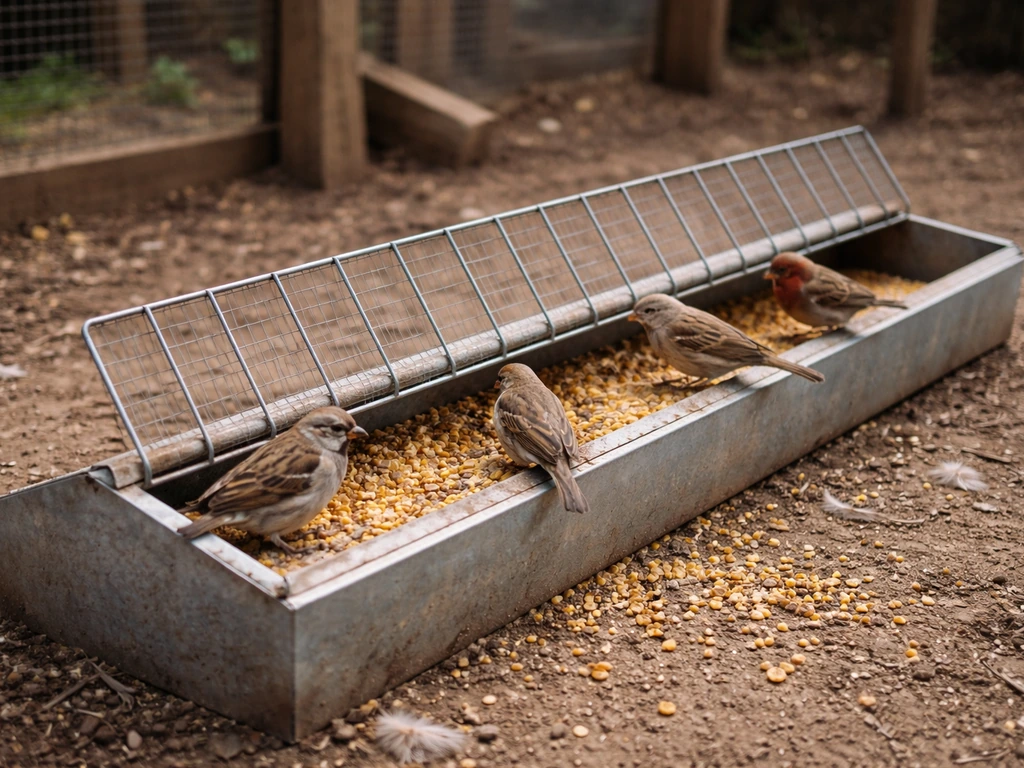
Wild birds aren't clever thieves. They're opportunists, and most standard chicken feeders hand them every opportunity imaginable. Open troughs leave feed completely exposed. Wide port holes on bucket feeders are easy for sparrows, starlings, and pigeons to land on and eat from directly. Hanging feeders with flat rims or step edges give birds a comfortable perch to sit and snack. Even a covered feeder with a lip or ledge can become a launching pad if birds figure out the angle.
The other big draw is spilled or scattered feed on the ground around the feeder. Wild birds will ignore a perfectly sealed feeder above and just forage the scraps below, which still counts as a win for them. So bird-proofing means addressing both the feeder design itself and the environment around it. Fix one without the other and you've only solved half the problem.
Design principles that actually keep wild birds out
There are really three levers you can pull when designing or modifying a feeder: port size, perch design, and whether the feed is physically covered or gated. The best feeders use all three together.
Port size and feed access
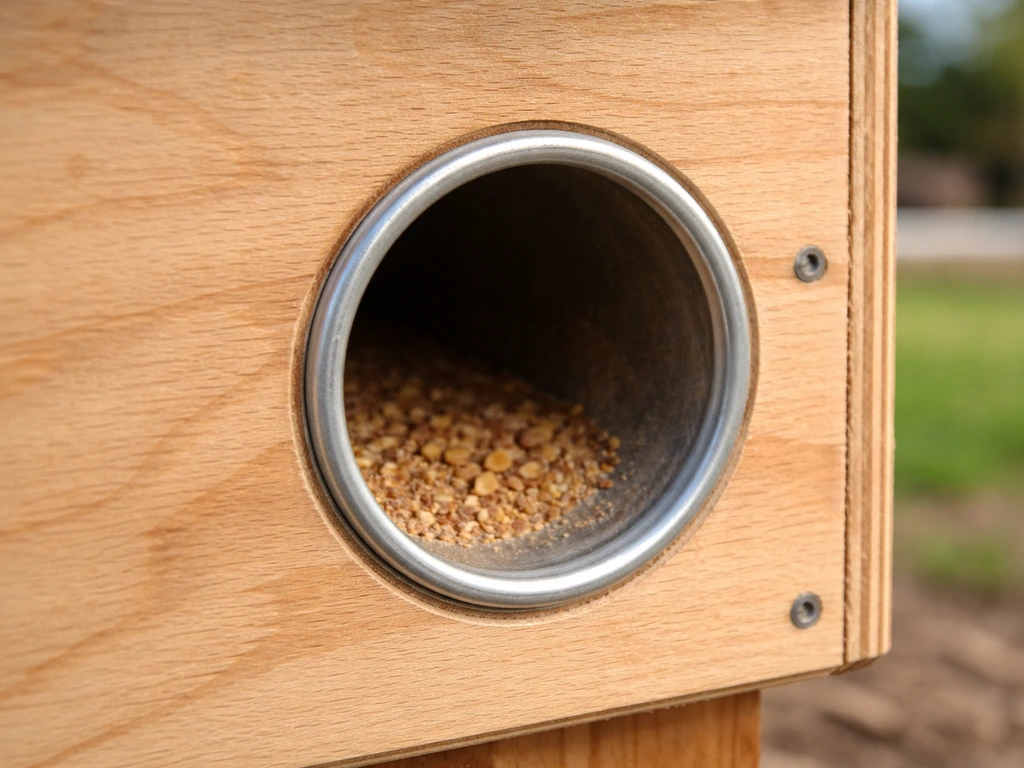
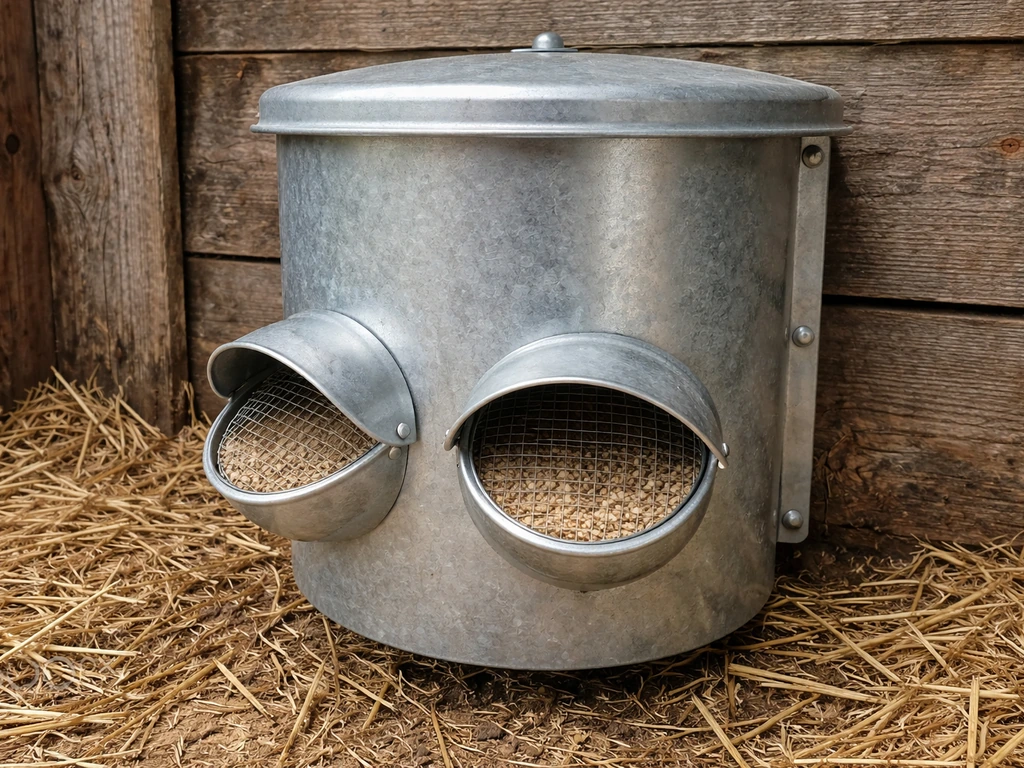
Feeding ports should be just large enough for a chicken's beak to reach feed, but not wide enough for a small bird to enter or perch on the edge. For tube and bucket designs, holes drilled around 1.5 to 2 inches in diameter work well. The feed sits recessed inside, and a starling or sparrow can't comfortably hook onto the rim and scoop it out. Think of it like the "eye" hole approach used in tube-style chicken feeders: the bird gets a small window into the feed, not a buffet table.
Covers and lids
Any feeder where the feed is visible and reachable from above is going to attract birds. A solid lid or angled roof that covers the feed chamber eliminates the dive-in problem. The lid needs to close fully when the feeder isn't being actively used. Treadle feeders do this automatically because the gate drops shut the moment the chicken steps off. For bucket and tube feeders, a tight snap-on lid or hinged cover does the same job, as long as it can't be nudged open by a pecking bird.
Perches and anti-perch measures
Flat ledges, rims, and horizontal surfaces near the feeder opening are an invitation. If a bird can land and stabilize itself, it can eat. One practical fix borrowed from wild bird feeder design is the "log roller" concept: attaching a round dowel (half-inch wooden dowel rod works well) above or along any ledge so birds can't get footing. For chicken feeders, this means avoiding flat lips on feeding troughs and using curved or angled surfaces instead. If your current feeder has a flat edge, a piece of PVC pipe or a dowel zip-tied along it can make that perch slippery and useless.
How to build a bird-proof chicken feeder from common materials
You've got two solid DIY paths here: a modified 5-gallon bucket feeder with restricted ports, or a basic treadle-style feeder built from scrap wood. If you also want to stop wild birds from accessing the feed, the same core idea can be applied to learn how to make a bird proof dog feeder bird-proof chicken feeder. To keep a wooden bird feeder from warping or rotting, follow waterproofing steps like sealing all exposed wood and using a weather-resistant finish before you assemble it modified 5-gallon bucket feeder with restricted ports. The bucket version takes about an hour and costs almost nothing if you have a spare bucket. The treadle feeder takes half a day and a small hardware investment, but it's the most effective long-term solution.
Option 1: The restricted-port bucket feeder
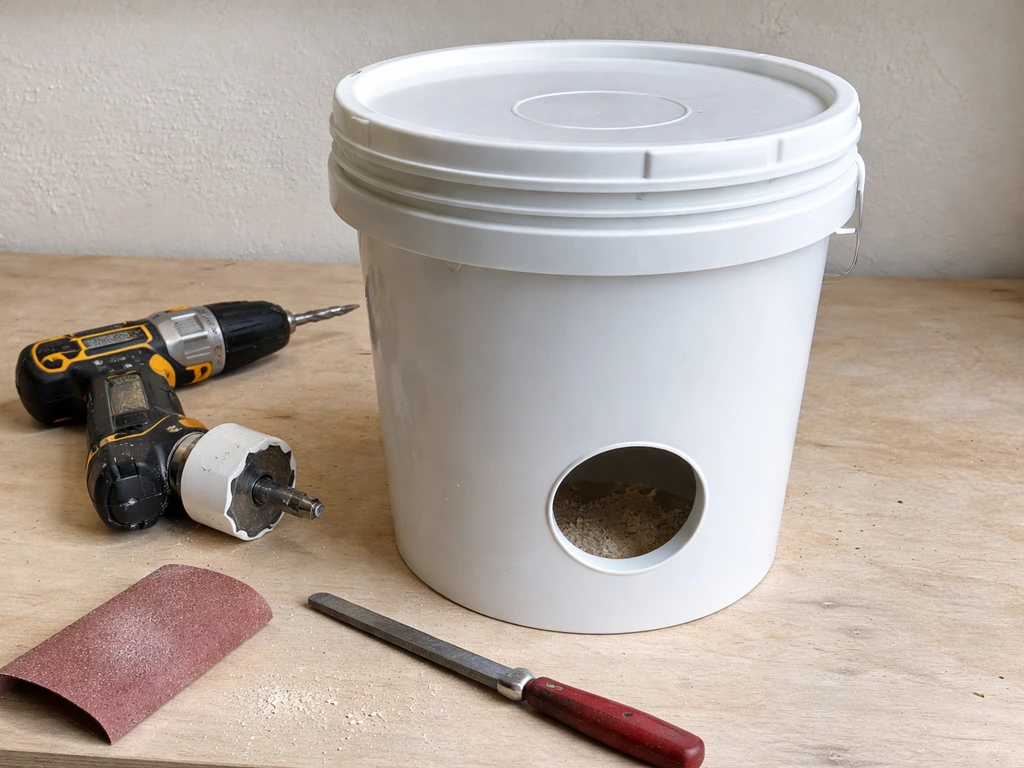
This is the quickest build and works well for most backyard flocks. Here's what you need and how to do it:
- 1 x 5-gallon food-grade bucket with a snap-on lid
- A drill with a 1.5-inch hole saw bit (or a sharp spade bit)
- A round file or sandpaper to smooth edges
- Optional: a short length of PVC pipe to use as a collar around each port
- Mark 4 to 6 port holes evenly around the lower third of the bucket, about 2 to 3 inches up from the base. This keeps the holes recessed enough that birds hovering outside can't easily reach in.
- Drill each hole carefully. Go slow and keep the drill steady to avoid cracking or deforming the plastic. A hole saw gives a cleaner edge than a spade bit, but either works. File the edges smooth so chickens don't cut their beaks.
- If you want an extra layer of protection, cut short collars from PVC pipe (about 1 inch long) and press them into each hole so the port tube extends slightly inward. This makes it even harder for birds to reach the feed from outside.
- Fill the bucket with feed, snap the lid on tightly, and hang it from the handle at a height where chickens can reach the ports comfortably (roughly beak height for your flock, usually 12 to 18 inches off the ground for standard breeds).
- Check the lid closure every day for the first week. A lid that pops off even slightly is enough for a starling to exploit.
Option 2: A basic DIY treadle feeder
A treadle feeder works on simple physics: the chicken steps on a platform, its weight opens a feed gate, and when it steps off the gate closes. If you're specifically trying to figure out how to make a bear-proof bird feeder, the same idea of using access controls and closures carries over, but you'll need bear-rated materials and hardware how to make a bear proof bird feeder. Wild birds are too light to activate it. You can buy commercial versions, but a basic wooden version is buildable with scrap lumber and a few hinges.
- A wooden box (scrap plywood or 1x6 pine boards) for the feed trough chamber, roughly 18 inches long and 6 inches wide
- A hinged lid that sits over the trough and acts as the gate
- A step platform (treadle) connected to the lid via a simple lever arm or direct hinge linkage
- 2 x galvanized hinges
- Screws, wood glue, and sandpaper
- Optional: a small rubber stopper or scrap foam to cushion the lid closure and prevent noise
The basic mechanism connects the treadle (step platform) to the lid so that pushing the treadle down lifts the lid. When the chicken steps off, gravity drops the lid closed. The step platform needs to be wide enough for a chicken but positioned so the leverage ratio means a bird weighing under about 1 pound (the typical weight of a sparrow, starling, or pigeon) can't generate enough force to open the gate. Most chicken breeds weigh 5 to 10 pounds, so that ratio is easy to achieve. Grit magazine's DIY treadle guides and the Grit community have good pivot-point diagrams if you want to get more precise, but honestly: build it, test it with your lightest hen, and adjust the pivot point until it works. Expect the chickens to take 2 to 3 days to learn to use it. Don't give up on the feeder in the first 48 hours.
Hardware, lids, and perch modifications that make a real difference
Whether you're building from scratch or modifying an existing feeder, the hardware choices matter more than most people expect.
| Component | What to Use | Why It Works |
|---|---|---|
| Lid closure | Snap-lock lid or spring-loaded latch | Prevents birds from nudging the lid open when not in use |
| Port covering | 1/4-inch galvanized hardware cloth over wide openings | Blocks small birds from squeezing through gaps |
| Perch surfaces | Round dowel rod (1/2 inch diameter) along any flat ledge | Makes landing unstable for smaller birds |
| Gate/treadle mechanism | Galvanized hinges with a rubber stopper buffer | Ensures quiet, complete closure every time |
| Feed tube interior | PVC collar pressed into each drilled port | Recesses the feed surface further from the opening |
| Hanging hardware | S-hook and steel chain rather than rope or wire | Reduces swing that wild birds can exploit to land |
One thing people overlook is the gap between the lid and the feeder body. Even a quarter-inch gap is enough for a sparrow to wedge its head in. If your lid doesn't sit flush, add a thin foam weather-strip seal around the rim. It's a two-dollar fix that makes a big difference. Similarly, if you're using hardware cloth over any opening, use 1/4-inch mesh rather than 1/2-inch. Smaller birds, especially sparrows, can squeeze through a 1/2-inch opening without much effort.
Where and how to place the feeder to reduce bird access
Placement is underrated. Even the best-designed feeder will see more wild bird activity if it's hung near trees, shrubs, or fence posts that give birds a staging area to watch and wait from. Wild birds prefer to perch nearby and then fly to the feeder. Remove the perches and you remove a lot of the traffic.
- Hang or position the feeder away from trees, shrubs, and overhanging structures by at least 10 feet if possible. Birds won't fly far into an open area if they feel exposed.
- Keep the feeder inside the chicken run if you have one. A covered or enclosed run is a natural barrier that most wild birds won't enter.
- Set the feeder height so chickens can access it comfortably, but not so low that ground-foraging birds can reach it from below. For standard breeds, beak height while standing is ideal.
- Remove or sweep spilled feed from the ground daily. Ground scatter is often the bigger draw for wild birds than the feeder itself.
- Avoid placing the feeder directly under a roof overhang or beam that wild birds could perch on and drop down from.
If you're using a hanging feeder, use steel chain instead of rope. Rope gives birds something to cling to and swing from, and it also degrades faster. A smooth chain hanging from a single hook gives wild birds no grip and no staging platform. If you also need to keep larger animals out, you can pair the feeder setup with a buildable bear-proof bird feeder pole so the birds and the feeder stay protected build a bear-proof bird feeder pole. This is similar to the hanging logic used in squirrel-proofing bird feeders, and it works just as well for starlings and pigeons.
One more placement note: if wild birds are a persistent problem despite a good feeder design, consider whether you're also leaving feed out overnight. Locking the feeder or removing it after dusk removes the overnight foraging opportunity and also discourages the early-morning bird crowd from establishing a feeding habit at your coop.
Testing, troubleshooting, and keeping it working long-term
Once you've built and placed your feeder, spend the first few days watching it. You're looking for three things: whether your chickens are actually using it, whether any wild birds are still getting in, and where the weak spots are.
If wild birds are still getting in
- Check every gap around the lid and ports with your fingers. If you can feel airflow or see light, a small bird can probably squeeze in or reach through.
- Watch which birds are getting in and how. Larger birds like pigeons usually exploit wide ports or flat ledges. Small birds like sparrows exploit gaps and loose lids. The fix depends on the bird.
- If a treadle feeder isn't working, re-check the pivot point. The step platform may be too sensitive and opening under the weight of a pigeon or heavy starling. Move the pivot point closer to the feed gate to require more weight.
- Add hardware cloth over any port or gap wider than 1/4 inch as a quick patch while you work on a more permanent fix.
- If birds are landing on top of the feeder and then reaching down, add an angled roof piece that prevents them from standing on top.
If your chickens aren't using a treadle feeder yet
This is normal. Most flocks take 2 to 3 days to learn the treadle mechanism. For the first few days, you can prop the treadle open slightly so the lid stays ajar, letting them smell and see the feed. Gradually reduce the prop over 3 days until they're activating it themselves. Don't leave it propped open overnight.
Ongoing maintenance checklist
A bird-proof feeder that isn't maintained stops being bird-proof. The moving parts on a treadle feeder can corrode or stiffen. Lids can warp. Drilled ports can crack. Here's what to check regularly:
- Weekly: Wipe down the inside of the feed chamber and check for mold or feed residue buildup. Residue in the base of a tube or bucket feeder can gum up port openings and create new entry gaps as it degrades.
- Weekly: Test the lid or gate closure by pressing lightly. It should spring shut cleanly without sticking. If it sticks, clean the hinge and apply a small amount of food-safe lubricant.
- Monthly: Inspect all drilled ports for cracks. Plastic feeders in outdoor conditions can crack at the port edges over time, especially in cold weather, turning a 1.5-inch port into a 2.5-inch gap.
- Monthly: Check all hardware cloth patches for torn mesh or loose staples. Replace any section with a hole larger than 1/4 inch.
- Monthly: Inspect latches, snap closures, and S-hooks for rust or deformation. Galvanized hardware holds up well, but it's worth checking.
- After heavy rain: Check that the lid still seats properly. Warped wood or swollen plastic can cause a lid that fit perfectly in dry conditions to gap in wet ones. Sand or shim as needed.
The honest truth about bird-proofing is that it's not a one-time fix. Birds are persistent and they will probe any weakness that develops over time. But if you start with a solid design (recessed ports, tight lid, no perch surfaces, good placement) and do a quick monthly check, you'll stay ahead of the problem without much effort. Check and clean the feeder regularly as recommended by Birdnet’s feeder fact sheet, since proper cleaning helps preserve feeder function. Most people who stick with a treadle feeder or a well-built bucket feeder report that wild bird visits drop off sharply within a week because the birds stop bothering once they realize there's nothing easy to eat.
If you're dealing with other pest-proofing challenges around the coop or yard, a lot of the same logic applies to building feeders that handle different threats. The weight-activation and physical barrier principles here overlap significantly with approaches used for bear-proofing and rodent-proofing setups, and the port-sizing ideas connect to dove-proof and perch-control designs as well. Once you understand the core framework, adapting it for different intruders gets a lot easier.
FAQ
Can I make an existing feeder bird proof just by adding a lid or cover?
Yes, but you still need access control. If you only add a cover to an open trough, birds can still grab feed when they can reach down to it. For best results, keep feed recessed behind small ports (bucket or tube) or use a gated lid that closes fully when your chickens step off (treadle).
How do I know my treadle feeder is really bird-proof and not just “almost”?
You can test with a lightweight substitute. For treadle feeders, press down the platform using a forearm or a small, known weight (like a sealed water bottle plus something to hold it flat) to confirm birds under about 1 pound cannot trip the gate. If the lid opens, shift the pivot point or move the latch so more chicken weight is required.
Why do birds still get in even after I built it with ports and a cover?
Common weak spots are a lid that does not seat flush, any gap around the rim, and hardware mesh that is too open. If you see birds with their heads inside the feeder, seal the perimeter with a thin weather-strip and use smaller hardware cloth mesh (1/4-inch rather than larger openings) on any openings.
Can I prop a treadle feeder open to help chickens learn faster?
Yes, but only if the chickens can still operate it easily. You can leave a feeder slightly accessible during training for 2 to 3 days, but do not leave it propped open overnight. Once chickens reliably step on and off, ensure the lid fully closes by gravity every time.
What should I do if my chickens refuse to use the feeder after I build it?
If your chickens are not using it, reduce the “friction” of learning: keep it close to where they already eat, ensure the treadle is stable and not overly stiff, and position the feeder so a chicken can see feed through the small opening without being able to reach from a perch. Also consider offering a small amount of feed during the day so they investigate.
Does feeder placement matter more than port size?
Usually, yes. If birds are still visiting, remove nearby perching options and staging areas like fence posts, shrub edges, and overhangs. Switching rope to smooth steel chain on hanging setups also reduces bird leverage and swings that help them access openings.
How often should I inspect a bird-proof feeder to keep it effective?
Winter and wet-season changes can loosen things. Check for warped lids, cracked drilled ports, and gate/linkage stiffness caused by moisture. A quick monthly check of the lid seating, the latch alignment, and the treadle pivot prevents birds from exploiting new gaps.
What if birds ignore the feeder but eat spilled feed on the ground?
You are on the right track. Feeders that rely on weight activation tend to deter birds, but stray scattered feed around the base will still attract them. Use a tray or place the feeder so spilled feed stays minimal, and clean up under the feeder so birds do not learn that the “floor” is the easy option.
What size should my feeding ports be for preventing sparrows or starlings?
No, avoid using openings larger than necessary for chicken beaks. The article approach targets recessed, small “window” ports around 1.5 to 2 inches for tube or bucket designs. Larger holes, or flat surfaces that let birds perch and hook feed, will defeat the design quickly.
Can I use the same bird-proof treadle idea for larger animals like bears?
Yes, but adjust your expectations. Treadle mechanisms are designed so lightweight birds cannot trigger the gate, while heavier animals might. If you are worried about larger wildlife, you will need bear-resistant materials and reinforced hardware, but you should still keep wild bird access blocked through gated or covered feed chambers.