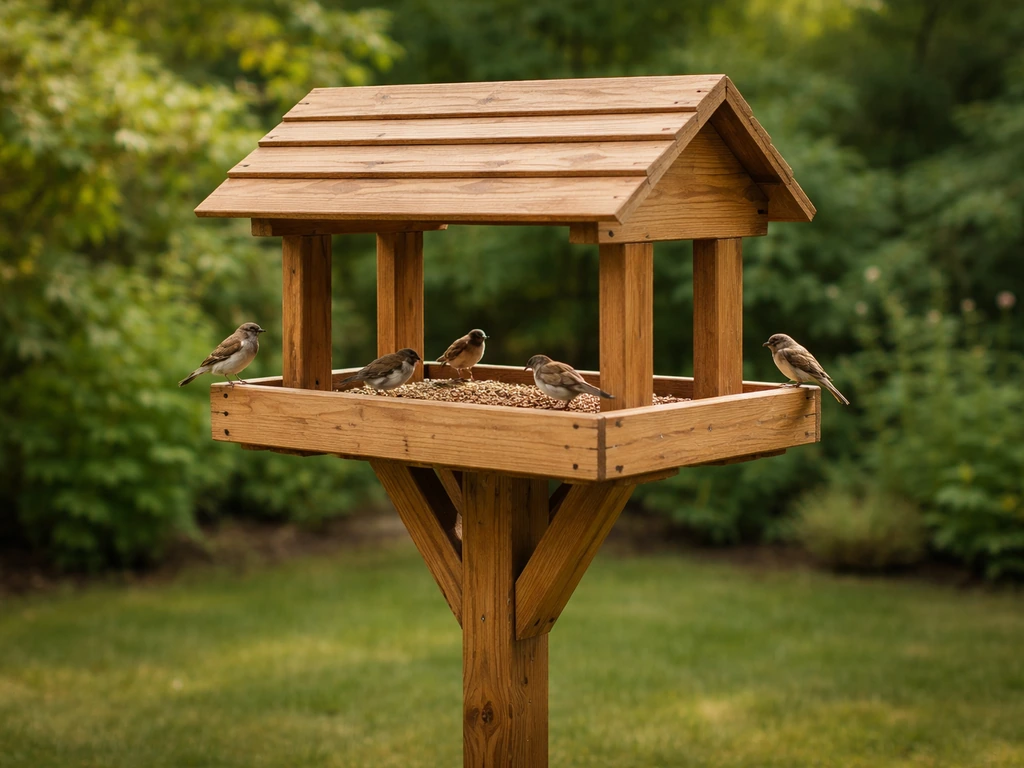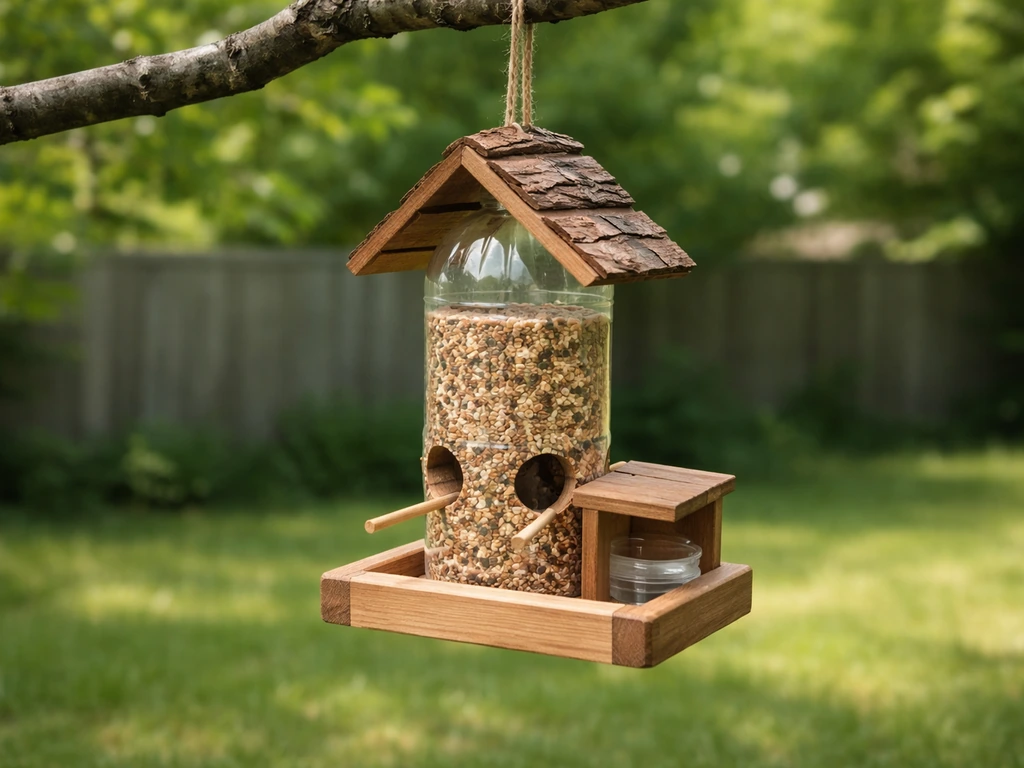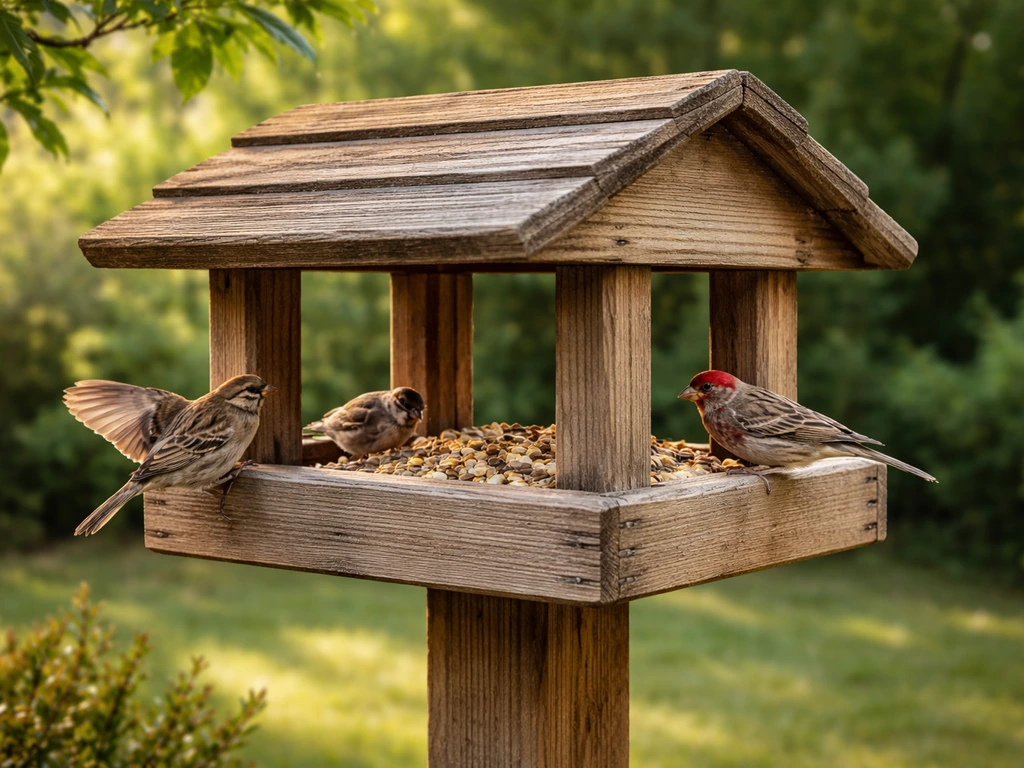
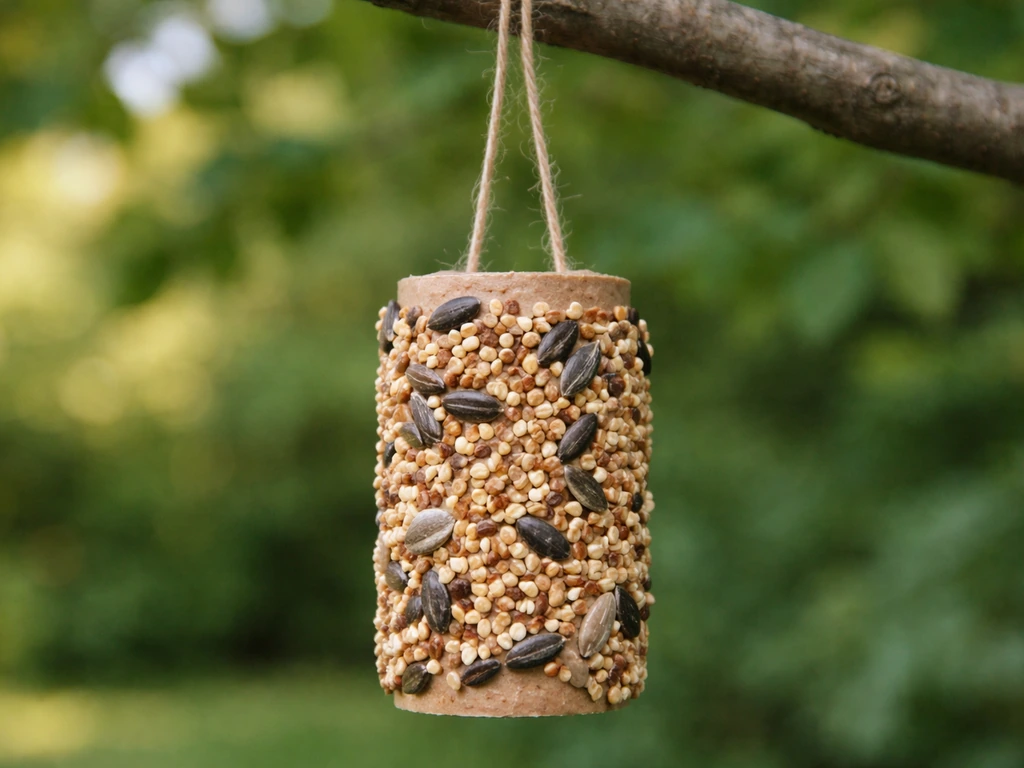
You can make a working bird feeder from a toilet paper roll in about five minutes using peanut butter and bird seed. To make a bird feeder with paper, use a toilet paper roll as the holder and follow the steps below for coating, seeding, and hanging. If you want a twig-style feeder instead, you can build one using simple branches and a sturdy frame make a working bird feeder. If you want a quick, practical guide, use these steps for how to make a bird feeder post from a simple household tube. If you want a more eye-catching version, learn how to make a bird feeder stand out of wood instead. Roll the tube in peanut butter, coat it in seed, thread some twine through the top, and hang it from a branch. That's the core of it. If you want something a bit more substantial that lasts a day or two longer outdoors, you can use a lard-and-seed mix instead. Both versions attract chickadees, nuthatches, and sparrows reliably, and they cost almost nothing to make.
How to Make Bird Feeders Out of Toilet Paper Rolls
What you'll need before you start
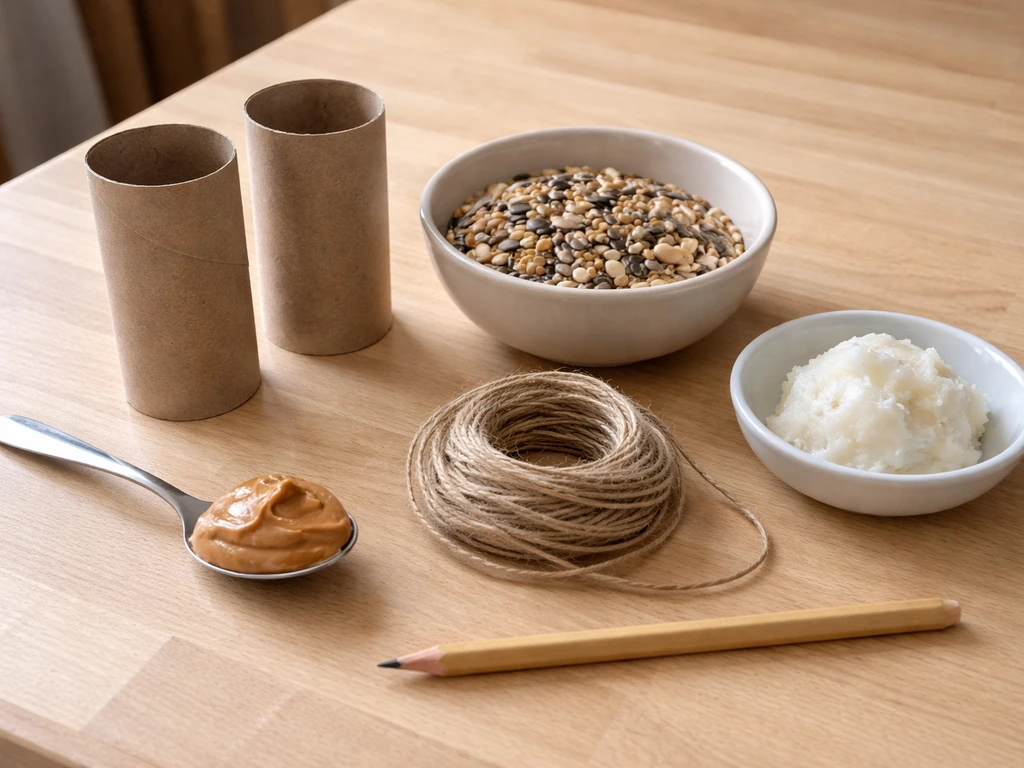
The beauty of this project is that most of what you need is already in your kitchen. Here's what to gather before you begin:
- One or more toilet paper rolls (cardboard tubes from paper towels work too, just cut them down to about 4 inches)
- Peanut butter, smooth or chunky (unsalted, no added sweeteners is best, but standard peanut butter works fine)
- Lard or solid vegetable shortening (for the lard version)
- Mixed bird seed, black-oil sunflower seeds, or hulled sunflower seeds
- A butter knife or old spoon for spreading
- Twine, jute rope, or any sturdy string at least 12 inches long
- A pencil or chopstick for punching holes
- A shallow plate or baking tray to roll the tube in seed
- Optional: wax paper or a plastic bag to handle the finished feeder without making a mess
One note on peanut butter: the U.S. Fish and Wildlife Service confirms birds eat peanut butter readily, but avoid anything with xylitol (a sweetener in some natural brands) as it's toxic to wildlife. Plain peanut butter from any grocery store is fine. You don't need much, maybe a couple of tablespoons per roll.
Step-by-step: the classic peanut butter and seed feeder
This is the simplest version and perfect if you want to get something up today. The whole build takes under 10 minutes.
- Take your toilet paper roll and use a pencil to punch two holes about an inch from one end, directly opposite each other through the tube.
- Cut a piece of twine about 12 inches long and thread it through both holes so equal lengths stick out each side. Tie the two ends together in a knot above the roll to form a hanging loop. Make sure the knot is secure before moving on.
- Use a butter knife to spread peanut butter generously all over the outside of the tube. Cover the full surface, getting into the natural texture of the cardboard so seeds have something to grip. Don't be shy, a thin coat means seeds fall off quickly.
- Pour your bird seed onto a shallow plate or baking tray and roll the coated tube through the seeds, pressing gently so they embed into the peanut butter. Rotate the roll and keep pressing until the entire peanut-butter surface is covered in seed.
- Pick up the feeder by the twine loop and check for bare patches. Dab a little extra peanut butter on any gaps and press more seed in.
- Hang the feeder by looping the twine over a branch or hook. You're done.
That's really it. The Natural History Museum recommends the same basic approach: peanut butter first, then roll in seed until the coating is fully covered. NASA's Climate Kids version does the same thing and notes that the peanut butter is specifically what makes seeds stick rather than fall to the ground on the first gust of wind.
Step-by-step: the lard-and-seed version (better for cold weather)
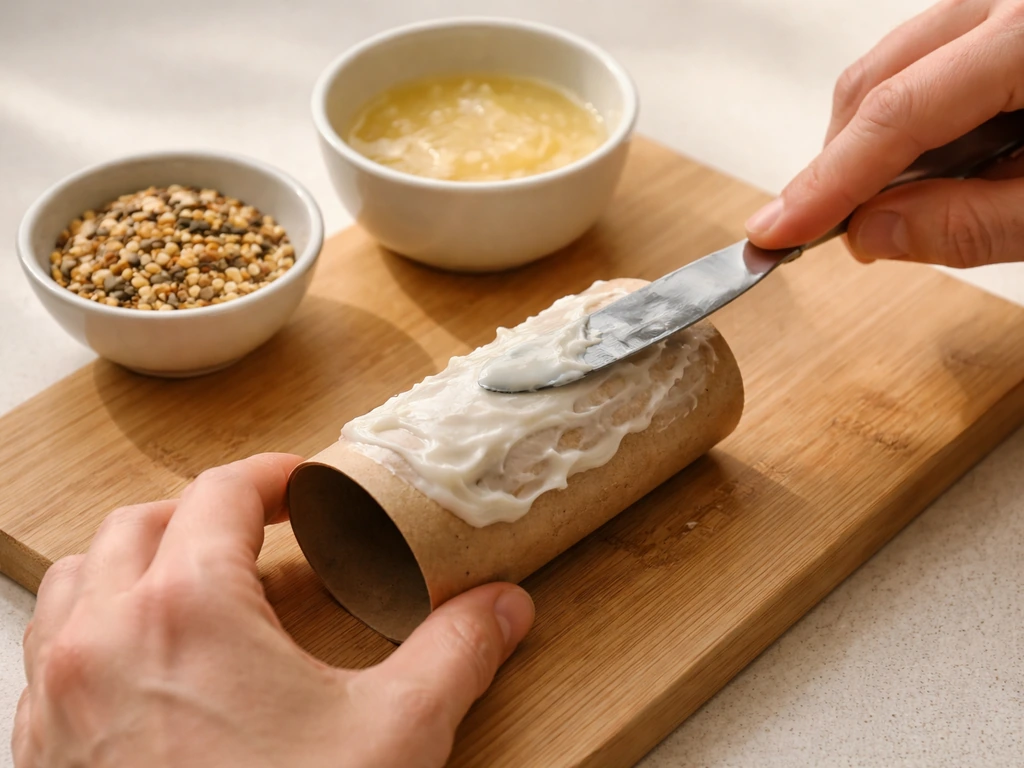
The lard version takes a little more prep but holds up better in cool weather and gives birds a high-fat energy boost that's especially valuable in winter and early spring. Think of it as a homemade suet stick.
- Punch your hanging holes and thread the twine first, exactly as in the peanut butter method above. Do this before you add any fat so your hands stay clean.
- Gently melt about half a cup of lard in a small saucepan over low heat. You're not cooking it, just softening it until it's liquid. Remove from heat immediately once melted.
- Stir in roughly a quarter cup of peanut butter (optional but it helps binding) and then mix in a generous cup of mixed bird seed, black-oil sunflower seeds, or a combination. You can also add oats, chopped unsalted peanuts, or dried mealworms. The goal is a thick, seedy paste.
- Let the mixture cool until it's thick enough to hold its shape when scooped but still spreadable, roughly the texture of cold peanut butter. If you're in a hurry, put it in the fridge for 10 to 15 minutes.
- Use a butter knife or spoon to pack and press the lard-seed mixture all over the outside of the tube. Really work it in. You can also carefully stand the tube upright, seal one end with a piece of tape or pinch it closed, and pour the mixture inside the tube before it sets completely. This makes a fat cylinder of suet inside the roll.
- Once coated (or filled), roll the tube through additional dry bird seed on a plate to add a final outer seed layer that birds will hit immediately.
- Place the finished feeder on wax paper and refrigerate for at least 30 minutes, or leave it outside in cool weather for an hour, until the lard has fully solidified. This is important: a warm, soft feeder will slide off the tube or drip onto the ground.
Important safety note: use plain lard or solid vegetable shortening only. Avoid bacon drippings or any cooked meat fat, which can carry pathogens and go rancid quickly. Commercially available lard from the baking aisle is the right choice. A recipe from the Middle Fork Willamette resource calls for one cup of liquid meat fat (lard) mixed with seeds like sunflower, hemp, and pumpkin, which matches this approach well.
How to dry, set, and hang the feeder safely
The peanut butter version doesn't need any drying time. It's ready to hang immediately after rolling in seed. The lard version absolutely needs to set before you hang it, otherwise the mixture slides off the cardboard, seeds scatter on the ground, and you've wasted both food and effort.
For the lard feeder, 30 minutes in a refrigerator is usually enough. In temperatures below 45°F outside, you can skip the fridge and just leave it on a cool surface for an hour. You'll know it's ready when you can hold it horizontally and the coating doesn't sag or shift.
For hanging, thread the twine over a branch that has some flex to it (which makes it harder for squirrels to run out and grab the feeder). A branch that's at least 5 feet off the ground is ideal. The feeder should hang freely so it spins slightly in the wind, which birds don't mind but makes it a trickier target for squirrels. If you're hanging multiple rolls, space them a few inches apart so birds don't crowd each other out.
Which seed to use and what birds will show up
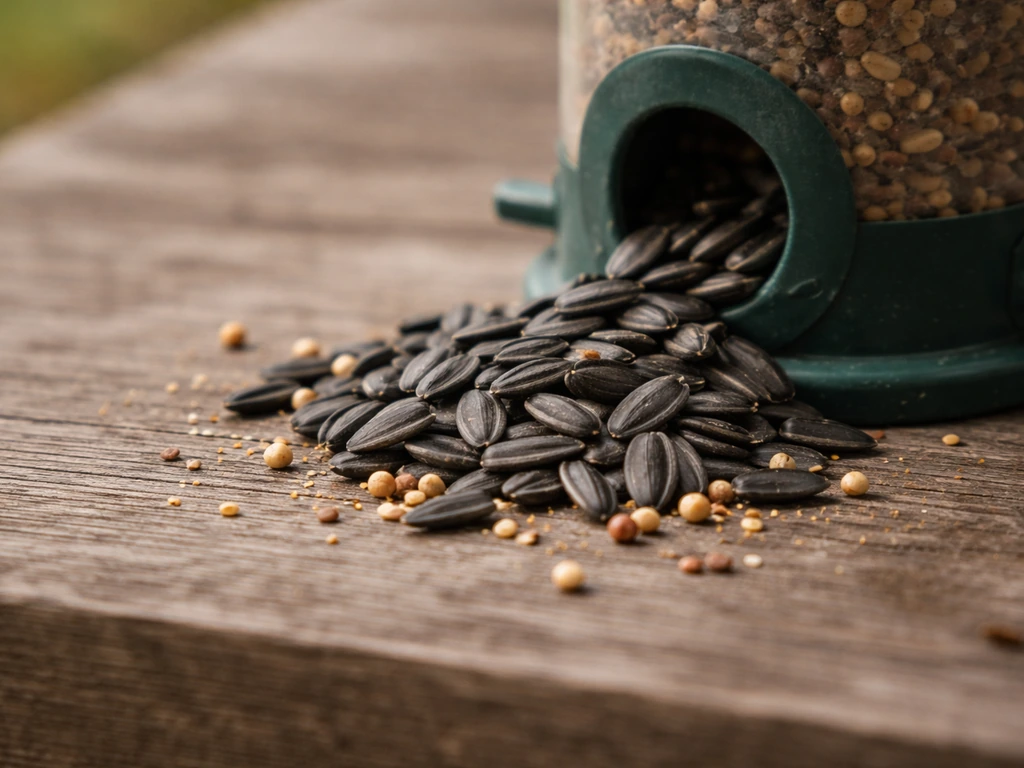
Black-oil sunflower seeds are the best all-around choice for this type of feeder. The shells are thin enough that small birds like chickadees crack them easily, and nearly every common backyard species will eat them. Hulled sunflower seeds (no shell) work even better because birds eat them faster and there's no shell debris on the ground.
A standard mixed bird seed with millet and milo works well too, especially for attracting sparrows, juncos, and doves. Avoid nyjer (thistle) seed for this feeder: the seeds are so fine that they fall straight through a toilet paper roll coating and end up on the ground rather than in a bird's beak.
If you want to attract bluebirds specifically, dried mealworms are worth adding to the mix. Project FeederWatch calls mealworms one of the only foods that reliably brings bluebirds in. Press a few into the peanut butter coating alongside your seed.
As for which birds you'll see: chickadees and nuthatches are almost guaranteed visitors, often within the first few hours. Titmice, house sparrows, house finches, and downy woodpeckers are very common too. The peanut butter-to-seed combination appeals broadly, so don't be surprised if you get a varied crowd.
| Seed Type | Best For | Works on Toilet Roll Feeder? |
|---|---|---|
| Black-oil sunflower | Chickadees, nuthatches, finches, sparrows | Yes, great choice |
| Hulled sunflower | Most backyard species | Yes, excellent |
| Mixed seed (millet/milo) | Sparrows, juncos, doves | Yes, works well |
| Dried mealworms | Bluebirds, chickadees, titmice, wrens | Yes, press in alongside seed |
| Nyjer (thistle) | Goldfinches, pine siskins | No, too fine, falls through |
Placement: how to keep squirrels (and other pests) from stealing everything
Placement is where most people go wrong with any feeder, and a toilet paper roll feeder is especially vulnerable because it's lightweight and easy to knock around. Squirrels are remarkably athletic: Mass Audubon notes they can jump six feet straight up and launch themselves to a feeder from ten feet away horizontally. That means a feeder hanging from a branch that's close to a fence, roof, or thick tree trunk is basically an open invitation.
Audubon Magazine recommends placing feeders at least 8 to 10 feet from anything solid, including trees, buildings, fences, and walls. Tufts Wildlife Clinic adds a specific distance to keep from brush piles, evergreen trees, and dense shrubs: at least 12 feet. Both recommendations exist for the same reason: squirrels use those structures as launch pads.
Beyond squirrels, North Carolina Wildlife notes that feeders can also attract raccoons, rodents, and bears. A toilet paper roll feeder is too small to concern a bear, but raccoons and rats will absolutely eat fallen seed off the ground. Clean up any dropped seed below the feeder regularly to avoid drawing them in.
- Hang at least 5 feet off the ground so cats and raccoons can't reach from below
- Keep the feeder at least 10 feet horizontally from any fence, trunk, building, or solid structure squirrels can launch from
- Position away from dense shrubs or brush piles within 12 feet
- Hang from a thin, flexible branch rather than a thick one squirrels can easily run along
- Avoid placing directly above a patio or deck where fallen seed and droppings become a nuisance
Maintenance, mold, and when to replace the feeder
Let's be honest: a toilet paper roll feeder is not meant to last weeks. The cardboard gets wet, softens, and eventually falls apart. That's normal and expected. Think of it as a single-use or short-use feeder that you make fresh every few days, which is actually a good thing because it forces you to refresh the food before it has a chance to go bad.
In dry weather, a peanut butter-and-seed feeder can last three to five days before birds pick it clean or the cardboard weakens too much. In wet or humid weather, that window shrinks to one or two days. The lard version holds up a bit better in cool dry conditions because the fat forms a mild moisture barrier, but once it rains, both versions need replacing.
Mold is the main health risk. The Minnesota DNR is direct about this: wet bird seed commonly develops mold and bacteria in wet weather, which can make birds sick. The U.S. Fish and Wildlife Service specifically warns that salmonella grows in moldy, wet seed. Check the feeder every day or two. If the seed looks dark, smells off, or the cardboard has gone soggy and seed is clumping in wet masses, take it down and replace it. In the r/birdfeeding thread about bad bird seed, people discuss how to spot moldy or wet seed and what to do next, including removing questionable seed before it makes birds sick take it down and replace it.
Common problems and quick fixes
- Seeds falling off immediately: your peanut butter layer was too thin. Redo it with a thicker coat and press seeds in firmly rather than just rolling gently.
- Roll splitting or collapsing: the tube got wet too fast, or you packed too much weight into it. Switch to a paper towel tube cut shorter, which is sturdier, or use two toilet paper rolls nested together.
- Lard mix not setting: your mixture was too warm when you applied it, or the ratio of fat to seed is off. Add more seed to stiffen the mix and refrigerate longer before hanging.
- No birds visiting in the first few days: birds need time to discover a new feeder. Be patient for 3 to 7 days, make sure the feeder is visible from open sky (not hidden in dense foliage), and try adding some seed to the ground nearby to draw birds in initially.
- Mold or clumping seed: replace the feeder immediately. Clean up any seed that fell to the ground below. The Minnesota DNR suggests sprinkling a thin layer of lime (about a quarter inch) on the soil beneath feeders to reduce bacteria buildup from droppings and old seed.
- Squirrels stripping the feeder in minutes: recheck your placement distances. If you're already at 10 feet from solid structures, try hanging the feeder from a longer, thinner cord so it swings more freely when a squirrel lands on it.
Because this feeder is made from recycled material and costs almost nothing to build, don't stress about replacing it frequently. Making a new one every few days is faster than cleaning a conventional feeder and ensures birds always have fresh food. If you want a sturdier DIY option, you can also learn how to make a bird feeder out of pallets. If you enjoy this kind of quick build, it's worth exploring other waste-material feeder options like plastic bottle or milk jug feeders that hold up longer in rain, or a more durable wood feeder if you want something that lasts a whole season. If you want a feeder that lasts even longer, a wood bird feeder is a great option.
FAQ
Can I use a paper towel roll instead of a toilet paper roll for this feeder?
Yes, but the roll is usually wider and longer. Cut it to a manageable length (about the height of the birds you want to attract), then thread twine through the top and make sure the coating layer is thick enough that the seed sticks. Wider rolls can fall less easily, but they may also attract more squirrels because there is more surface area to grab.
What if my peanut butter is runny or “natural,” does it still work?
Runny or separated peanut butter can still work, but mix it well before coating so it forms an even sticky layer. If it’s very liquid, warm it slightly to make it spread more consistently, then roll in seed right away so the coating doesn’t dry unevenly.
How do I keep the seeds from falling off when I hang the feeder?
Press and roll slowly so the seed fully embeds in the sticky coating. If seeds keep dropping, use a thicker coat (more peanut butter or lard in small amounts) and let the roll sit 1 minute after coating so the outer surface becomes tackier.
Is it safe to feed birds if I accidentally used peanut butter with xylitol?
No. Remove the feeder and do not offer it again. Xylitol is toxic to birds even in small amounts, and you should replace with plain peanut butter (or switch to the lard version) before putting up any new feeder.
Can I use other nut butters like almond butter or sunflower seed butter?
Often, but only if they are free of xylitol and not blended with sweeteners that could be harmful. If you use almond or other nut butters, check the label first and expect a slightly different texture, you may need a heavier coating to prevent seed drop.
Will this feeder attract larger birds too, and will that cause problems?
It can, especially with sunflower seeds. If larger birds perch and knock the roll around, try spacing feeders farther apart and hang the rolls slightly higher. Also keep the seed mix simple (sunflower or standard mixed seed) so the birds that arrive first are less likely to fling loose seed everywhere.
What should I do if squirrels keep stealing the feeder?
Move the feeder farther from solid launch points (trees, fences, roof edges) and ensure it hangs freely so it can spin, which makes grabbing less effective. If the feeder keeps getting pulled down, switch to the lard version for a firmer coating and consider hanging from a branch with more flex (so it swings when squirrels pull).
Do I need to put the feeder in direct sunlight or shade?
Shade is usually better for reducing spoilage and mold risk. Sunlight can heat the cardboard and speed breakdown, and when the seed gets damp, warmth can worsen mold growth. Aim for a spot with good airflow and keep it away from dripping eaves or sprinkler spray.
How often should I refill the seeds, or should I replace the whole roll?
Replace when the cardboard softens, seeds clump from moisture, or the coating looks wet and messy. With this design, it’s usually faster to make a fresh roll than to clean and reuse, especially after rain. If only a small amount is left and the roll is still dry and intact, you can re-coat and re-roll, but only if you don’t see mold or off smells.
What seed mix works best if I want maximum variety of small birds?
Black-oil sunflower seeds are a strong default because most common small backyard birds can crack them easily. If you want more variety, use a mixed seed that includes millet for sparrows, but skip very fine seeds that can fall straight through, and avoid mixes that include nyjer for this specific roll feeder.
Why do I sometimes see mold quickly even on short outings?
Mold can start fast when moisture accumulates from humidity, mist, or a sprinkling location. If you notice dark seed, damp clumps, or any musty smell, remove the feeder immediately and discard it. Recheck daily during wet weather rather than waiting several days.
Can I add mealworms for bluebirds if I’m using the lard version?
It’s possible, but lard feeders set firmer and mealworms might not stay embedded as easily. If you use mealworms, press them into the sticky surface immediately before the feeder sets, and check more frequently because any uneaten protein can increase odor and spoilage if it gets wet.
Is there a way to make the feeder slightly sturdier without a whole new project?
You can use multiple rolls together as a single unit by tying or lightly gluing (only if fully dry and food-safe) several toilet paper rolls side by side before coating. That increases stability, but still keep placement squirrel-resistant and monitor for moisture breakdown since cardboard will eventually fail.