To refill a coconut bird feeder, start by figuring out how yours opens, dump or scrape out any old food, give it a quick rinse and dry, then pack in fresh seed, suet, or coconut-based mix depending on the feeder style. The whole process takes about 5 to 10 minutes once you have a rhythm, and doing it right keeps birds coming back and stops mold from building up inside the shell.
How to Refill a Coconut Bird Feeder Fast and Clean
Marcus Brennan
22 May 2026
First, figure out what kind of coconut feeder you have
Coconut bird feeders come in a few genuinely different formats, and the refill method changes depending on which one you have. Getting this right first saves a lot of fumbling around outside.
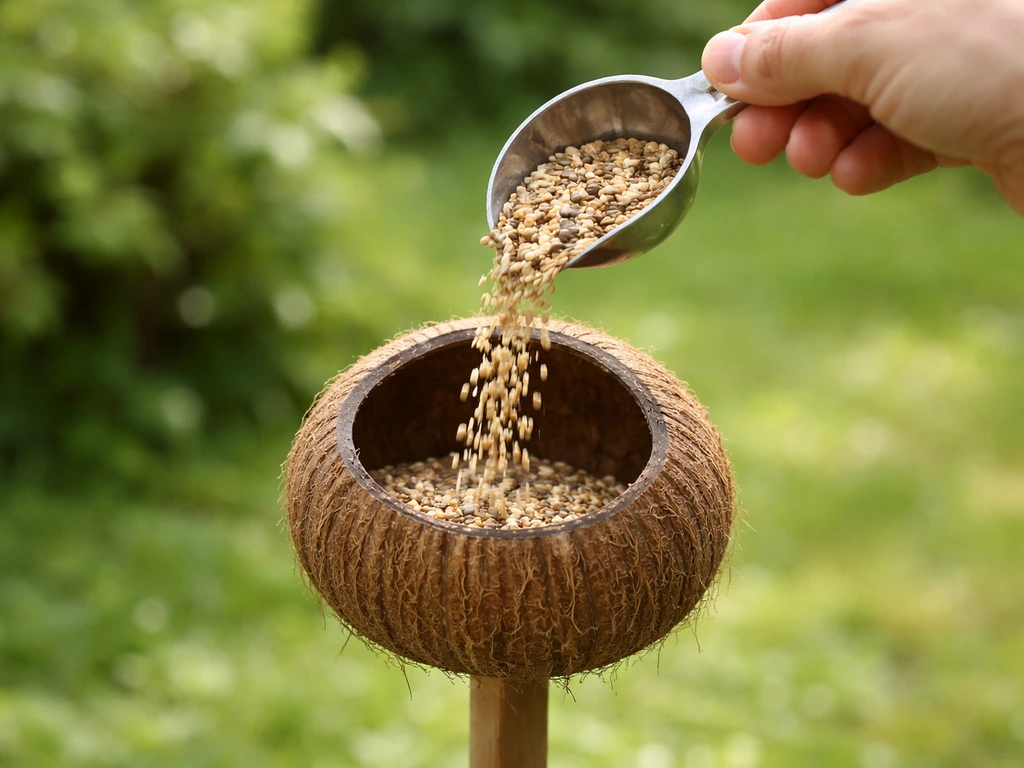
- Coconut half shell feeder: A halved coconut shell used as an open bowl or hanging cup. These are the simplest to refill because the food is just laid into the open cavity. Many DIY versions fall into this category.
- Whole coconut feeder with a drilled hole: A whole coconut shell with one or more small holes drilled in the sides or bottom, sometimes stuffed with suet or seed mix. Refilling means scooping out old food and re-packing through the existing holes, or opening a pre-cut plug if one was made.
- Coconut suet feeder or coconut-cased suet cake: A commercially sold feeder where the shell holds a compressed suet or seed cake. When the cake runs out, you either replace the insert or pack in new suet mix. The shell itself is the housing, not consumed.
- Coconut fiber or coconut-themed feeder: A feeder made of other materials but styled to look like a coconut, or a standard tube or platform feeder wrapped in coconut fiber. These refill just like their underlying feeder type (tube, platform, etc.) and the coconut element is just aesthetic.
If you made your own coconut feeder from scratch, check how it opens before you hang it back up. Some DIY coconut feeders have a simple loop of cord at the top with no removable parts, meaning you have to take it down to refill. Others have a screw-in plug or a loose-fitting cap. Knowing your access point before you start will save you a trip up and down the ladder.
Pick the right food for your feeder style
Not every food works in every coconut feeder, and using the wrong fill is one of the most common reasons birds stop showing up. Here is what works well in each type.
| Feeder Type | Best Fill Options | Avoid |
|---|---|---|
| Coconut half shell (open bowl) | Black oil sunflower seed, mixed seed, mealworms, chopped fruit, suet crumbles | Whole peanuts (can roll out), fine millet (blows away easily) |
| Whole coconut with drilled holes | Suet mixed with seed, peanut butter blended with cornmeal, packed fat-based mixes | Loose seed (won't stay packed), wet or fresh fruit (rots fast inside) |
| Coconut suet cake feeder | Replacement suet cakes sized to fit the shell, homemade suet poured and set in a mold | Loose seed not bound with fat (falls through gaps) |
| Coconut fiber or styled feeder | Whatever the underlying feeder type calls for (seed, suet, nyjer, etc.) | Nothing specific, but match to feeder mechanics, not shell appearance |
For most open half-shell coconut feeders, black oil sunflower seed is the single best all-around choice. It attracts the widest range of birds, including chickadees, nuthatches, finches, and woodpeckers, and it stays put in a curved shell better than smaller seeds do. If you want to target specific birds, add mealworms for robins and bluebirds, or swap in nyjer seed for goldfinches. In winter especially, suet or a peanut-butter-and-cornmeal mix is a high-energy option that birds will actively seek out.
How to refill a coconut feeder without making a mess
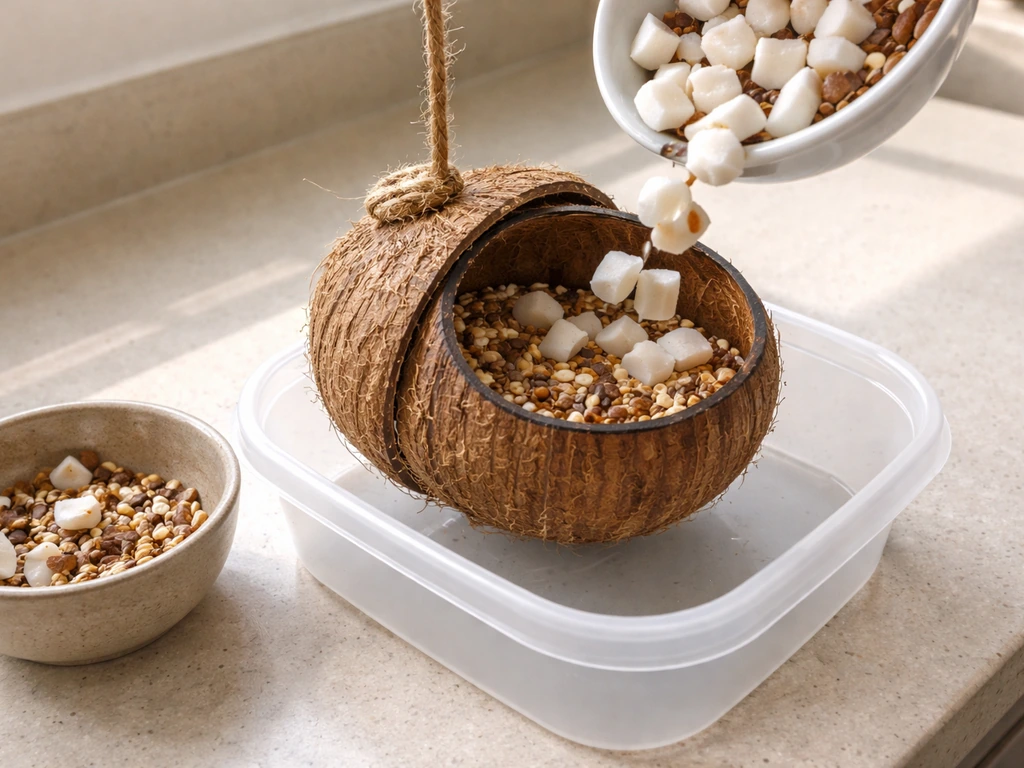
This process works for most coconut shell feeders. After you choose your feeder type, use the correct method for how to fill tube bird feeder so you do not waste seed or spill it everywhere. Budget about 10 minutes the first time, and 5 minutes once you know the routine.
- Take the feeder down. Do this before opening it or trying to scoop out old food. Trying to refill a hanging feeder while it swings around wastes time and makes a mess on the ground below.
- Hold the feeder over a trash bag or compost bin and dump out all remaining old food. Even if it looks okay, any food that has been sitting in the feeder for more than two weeks (or has been rained on) should be discarded entirely.
- Use an old spoon or small stiff brush to scrape out any stuck-on seed, suet residue, or bird droppings from inside the shell. Pay attention to corners and the edges near drilled holes.
- Rinse the shell with warm water and let it air dry for a few minutes, or wipe it dry with a clean cloth. Do not refill a wet feeder as moisture causes seed to mold within days.
- Use a small scoop, a folded piece of paper as a funnel, or a zip-lock bag with one corner snipped off to pour seed cleanly into the shell. For whole-coconut feeders, use a spoon to pack suet mix through the holes.
- Avoid overfilling an open half-shell feeder. Fill to just below the rim so seed does not scatter in the first breeze. For packed suet feeders, press firmly so the mix holds together.
- Re-hang the feeder. Check that the hanging cord or wire is still secure and not fraying before sending it back up.
A tip that saves cleanup time: lay an old tray or baking sheet under the feeder on the ground when you are refilling over a patio or deck. Any seed that spills lands on the tray instead of in the cracks, and you can tip it into the feeder or the trash without bending down to pick up individual seeds.
Clean and inspect the feeder every single time you refill
This step is easy to skip when you are in a hurry, but it matters a lot for bird health. Birds can get sick from moldy seed and contaminated feeders, so a quick inspection before each refill is genuinely worth the extra two minutes.
Quick check every refill
- Look for any dark, clumped, or slimy seed. This is mold, and the whole batch needs to go.
- Check for bird droppings inside the shell or around the rim. These contaminate food quickly.
- Inspect the coconut shell itself for cracks, soft spots, or rot. A natural coconut shell will eventually degrade, and a cracked shell can trap moisture and grow mold faster.
- Check the hanging cord, wire, or chain for fraying, rust, or weak knots before re-hanging.
Deep clean every two weeks (or more often in summer)
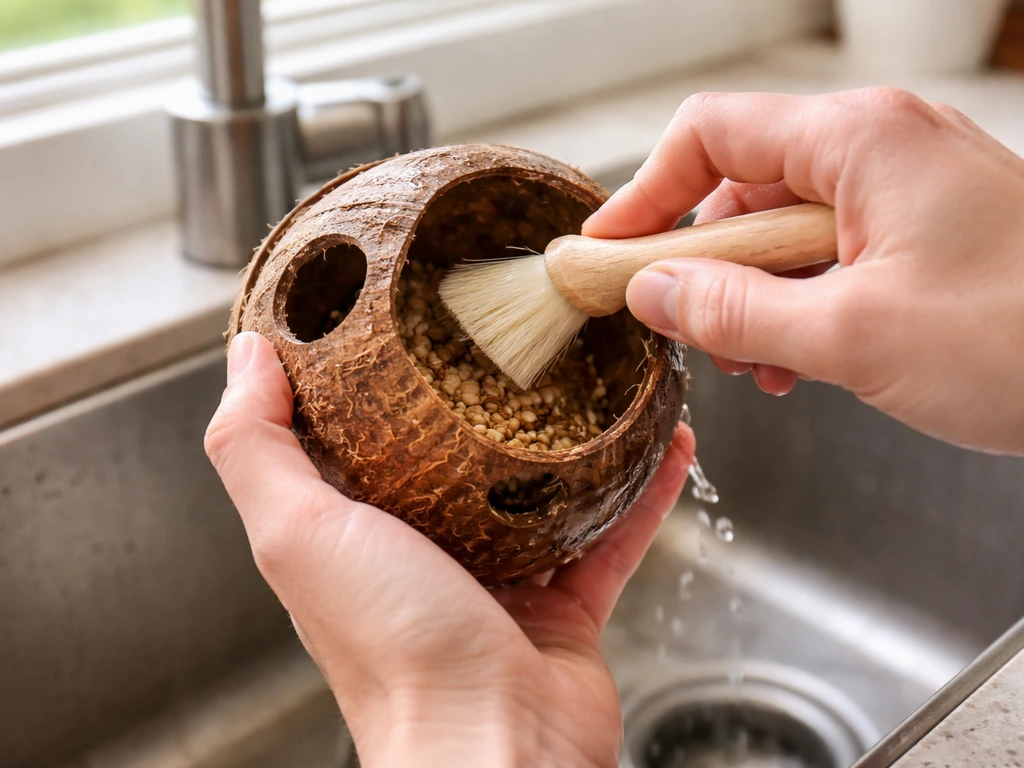
Project FeederWatch recommends cleaning seed feeders roughly every two weeks, and more often during warm or damp conditions. For a coconut feeder, the natural shell material means you need to be a bit more careful than with plastic or metal, but the process is straightforward. Mix a 10% bleach solution: 1 part household bleach to 9 parts water. Soak the shell in the solution for 10 minutes, then scrub with a stiff brush, rinse thoroughly with clean water, and let it dry completely before refilling. The drying step is critical. A feeder that goes back up damp will develop mold in the food within a few days, especially in summer heat.
If you are concerned about the bleach affecting a natural coconut shell, rinsing several times with clean water after soaking is enough to remove any residue. Some people prefer white vinegar as a gentler alternative for routine cleaning, though the bleach solution is more effective at killing bacteria and mold spores that can make birds ill.
When things go wrong: spills, clogs, and birds ignoring the feeder
Seed keeps spilling out
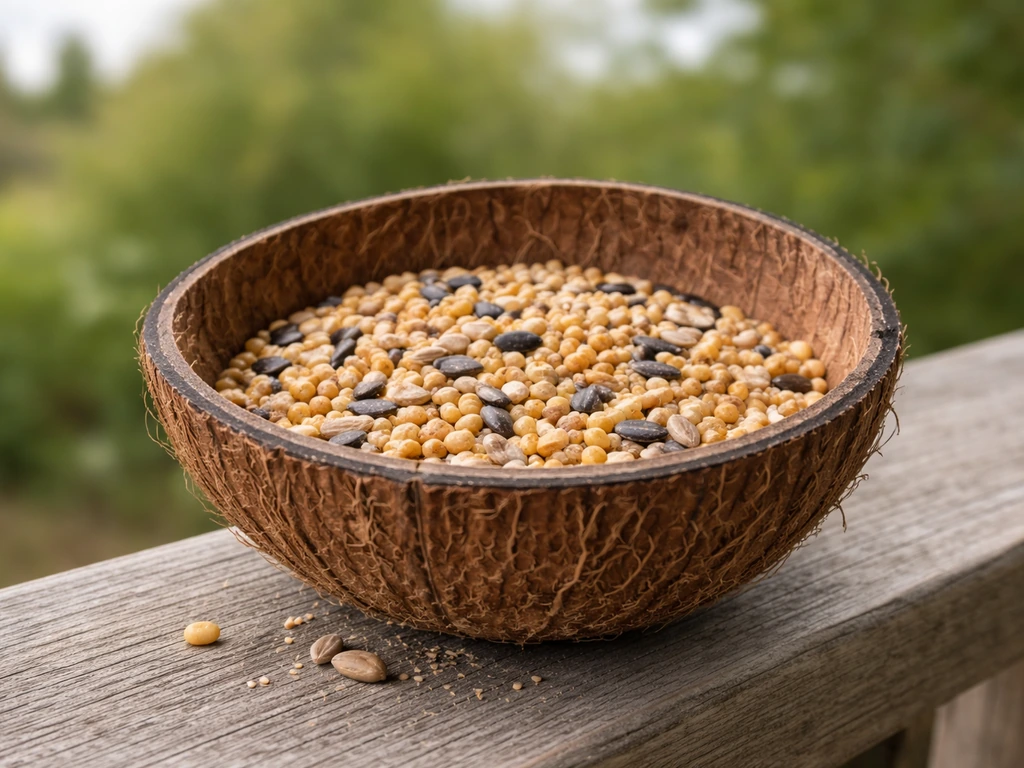
This is the most common complaint with open half-shell feeders. A few fixes that actually work: fill the shell no more than two-thirds full so wind does not scatter seed off the rim, switch to a heavier seed like black oil sunflower or safflower rather than lightweight millet, or try mixing the seed with a small amount of unflavored gelatin dissolved in water to bind it loosely (it will break apart naturally as birds feed). You can also add a small lip or rim to a DIY coconut feeder using a strip of wood glued around the edge.
The holes in a whole-coconut feeder are clogged
Suet and seed mix can harden or swell with moisture and plug the holes. Use a wooden skewer, a chopstick, or a thin screwdriver to gently clear the blockage from the outside. Then take the feeder down, empty it fully, and repack with slightly drier or coarser mix so it does not compact as tightly. In warm weather, suet-based mixes can also melt and re-set in a denser, more impenetrable mass. Switching to a no-melt suet formula in summer prevents this.
Birds were using the feeder but stopped after a refill
This usually comes down to one of three things: the food type changed, the feeder smells like bleach from cleaning (let it air out longer before re-hanging), or the feeder was moved to a new spot. Birds are creatures of habit and they memorize feeder locations. If you had to relocate the feeder, give them several days to find it again. You can also temporarily scatter a small amount of seed on the ground directly below the new location to draw their attention upward to the feeder.
No birds at all, even after waiting
Check the placement. Coconut feeders are often hung in spots that look great to humans but feel exposed or unsafe to birds. Birds strongly prefer feeders that are within 10 to 15 feet of a shrub, tree, or dense plant cover where they can duck if a predator appears. A feeder hanging in the middle of an open yard, far from any cover, will get much less traffic than the same feeder placed near a hedgerow or garden border.
How often to refill, how to store the extra food, and how to keep pests out
Refill frequency
How fast your feeder empties depends on bird traffic, feeder size, and weather. As a starting point, check the feeder every 3 to 4 days. In winter, high-traffic feeders may need topping up every day or two. In slower seasons, you may go a week before it needs attention. The rule of thumb: never let food sit in the feeder for more than two weeks, even if it has not all been eaten, because it can go stale or moldy. If you consistently have leftover food after two weeks, you are filling the feeder too full and should reduce the amount per refill.
Storing extra seed and suet
- Store birdseed in a sealed metal or hard plastic container with a lid that locks. Metal garbage cans with clip lids work well and resist rodents.
- Keep the container in a cool, dry place, ideally indoors or in a shaded garage. Heat and humidity accelerate mold and rancidity.
- Do not store seed in the bag it came in once opened. Paper and thin plastic bags are not rodent-proof and allow moisture in.
- Suet cakes should be kept refrigerated if not used within a week, or frozen for longer storage. Thaw in the fridge before use, not on the counter.
- Buy seed in quantities you can use within 4 to 6 weeks. Bulk buying is economical, but seed older than 2 months can lose nutrition and develop off-smells that birds detect and avoid.
Pest-proofing and placement
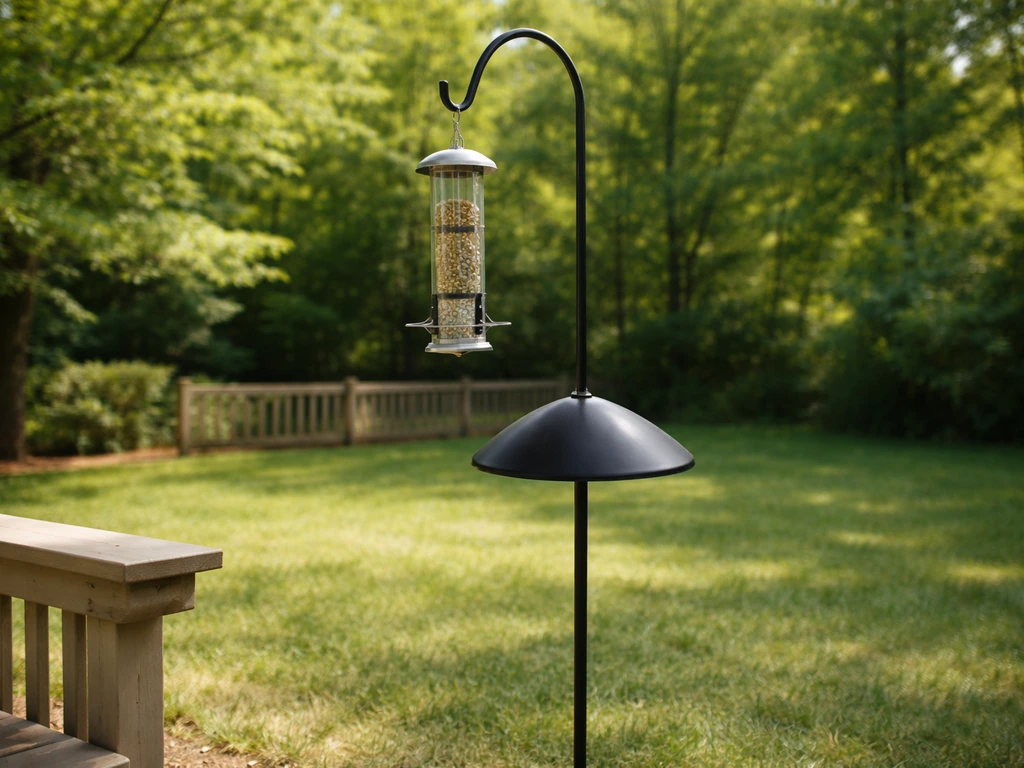
Squirrels, rats, and ants are all drawn to the same things birds are. A few practical steps make a real difference without having to move your feeder to an inconvenient spot.
- Hang the feeder at least 5 feet off the ground and at least 10 feet away from any surface a squirrel can leap from, including fence rails, tree branches, and roof edges.
- Add a squirrel baffle above the hanging point. A dome-shaped baffle mounted on the wire or hook above the feeder prevents squirrels from reaching down into it.
- For ants, apply a thin line of petroleum jelly or hang an ant moat (a small water-filled cup) on the wire above the feeder. Ants will not cross water or a sticky barrier.
- Clean up seed that falls to the ground under the feeder every few days. Ground-level debris is the main thing that attracts rats and mice, not the feeder itself.
- Avoid filling with cracked corn or milo if you are having rodent problems. Squirrels and rats are especially attracted to these grains. Straight sunflower seed or safflower attracts songbirds but is less appealing to most rodents.
Once you have the refill routine down, maintaining a coconut feeder takes almost no time. If you are wondering how to make a tube bird feeder, the key steps focus on building a sturdy tube, adding drainage, and protecting the feeding ports from clogging coconut feeder takes almost no time. The two-week cleaning schedule is the most important habit to build, and everything else follows from keeping the food fresh and the shell dry. Get those two things right and the birds will keep finding their way back every season.
FAQ
Can I refill a coconut bird feeder without taking it down from the hook or bracket?
Sometimes, but only if yours has a true opening you can access safely. If the feeder needs a screw cap, plug, or shell removal to reach the food, take it down first to avoid spilling and to do a quick mold check on the inside of the shell.
What should I do if I see clumps or crust inside the coconut shell after a few days?
Clumps usually mean moisture in the feeder or condensation trapped in the shell. Empty it completely, remove any stuck food, and clean with your usual method, then repack using drier mix. If you are using suet, switch to a blend labeled no-melt for warm weather.
How long should I wait after using bleach before putting the feeder back out?
After rinsing thoroughly, let the shell air dry fully in a ventilated area. If you still smell bleach, wait longer before re-hanging, since strong odors can deter birds. A fully dry shell is more important than the exact clock time.
Is white vinegar a good substitute for the bleach step on coconut feeders?
Vinegar can help with routine cleanup, but it is less aggressive against mold spores and bacteria than a bleach solution. If your feeder has any visible mold, musty odor, or blackened buildup, bleach is the safer choice for that round of cleaning.
How do I prevent wind scattering when refilling an open half-shell coconut feeder?
Do not overfill. Keep the shell no more than about two-thirds full, and choose heavier seed like black oil sunflower or safflower instead of lightweight mixes. Also refill on a calm day if possible.
Can I mix different foods in the same refill, or will that cause problems?
You can, but only within reason and with similar moisture behavior. For example, seed mixes generally work well together, but pairing very oily seed with suet can lead to messier cleanup. If you rotate foods, do it gradually across refills so birds adjust and residue does not build up.
What’s the fastest safe way to clear clogged holes if a coconut suet feeder is sticking?
Use a wooden skewer, chopstick, or thin screwdriver from the outside to gently dislodge the plug without cracking the shell. Once cleared, take the feeder down, empty it fully, and repack with a slightly drier or coarser blend to reduce repeat compaction.
Why do birds stop coming after I clean and refill, even though the feeder looks fine?
Common causes are a change in food type, bleach odor residue (from not airing out enough), or a recent change in location. If you moved it, give birds several days to rediscover it, and you can briefly scatter a little seed below the new spot to guide them.
How often should I refill if the feeder is still partially full?
Do not let food sit longer than about two weeks. Even if it looks mostly intact, seed can go stale or develop mold in the shell. If you consistently have leftovers after two weeks, reduce the amount you add each refill.
Do coconut bird feeders need drainage or ventilation to stay mold-free?
Yes, as much as the feeder design allows. If your coconut shell collects water or condensation, you will see mold sooner. Ensure the shell dries completely before refilling, and if your feeder has any drainage features, keep them clear during cleaning.
What can I do if squirrels or rats are emptying my coconut feeder?
Try a heavier seed mix, keep the feeder filled less per visit to reduce wasted access, and consider a squirrel-resistant mounting setup. If relocating is the only option, place it near cover birds can use quickly, but still ensure it is not an easy access point from nearby branches.
Is it safe to refill on a rainy day?
Better to wait. Rain increases moisture inside the coconut and can start spoilage immediately. If you must refill during wet weather, only do it after the shell is dry, and check the feeder more frequently afterward.
Next Articles
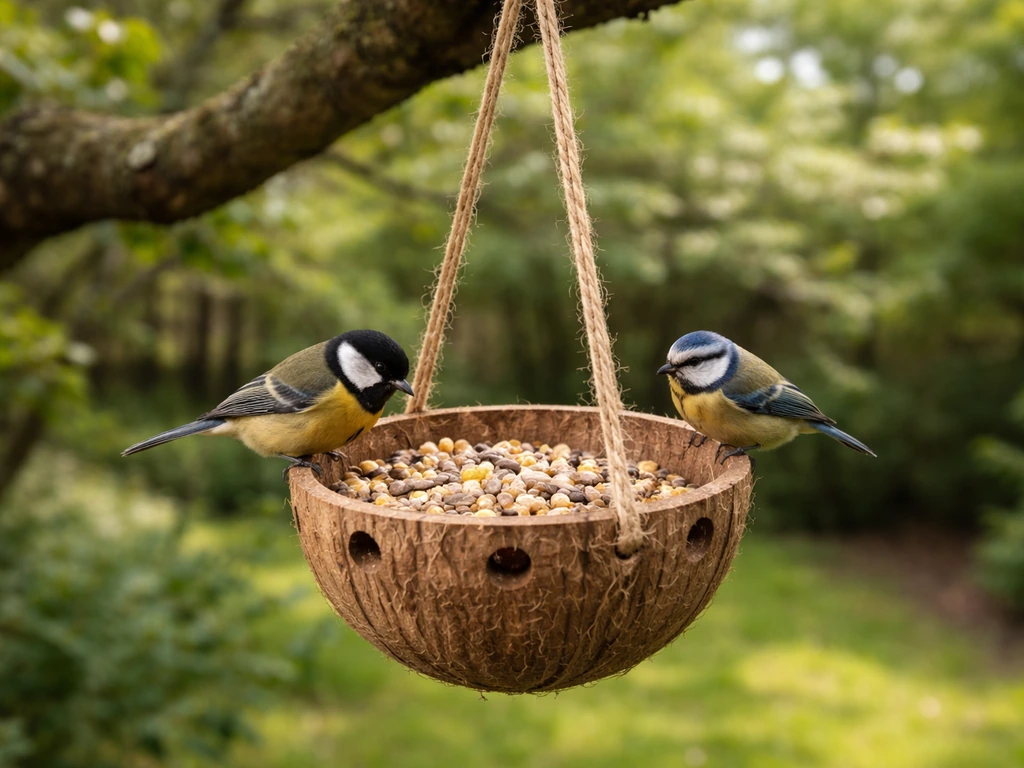
How to Make a Coconut Bird Feeder Step by Step
Step-by-step guide to turn a coconut shell into a hanging bird feeder, plus safe coconut oil options and maintenance tip
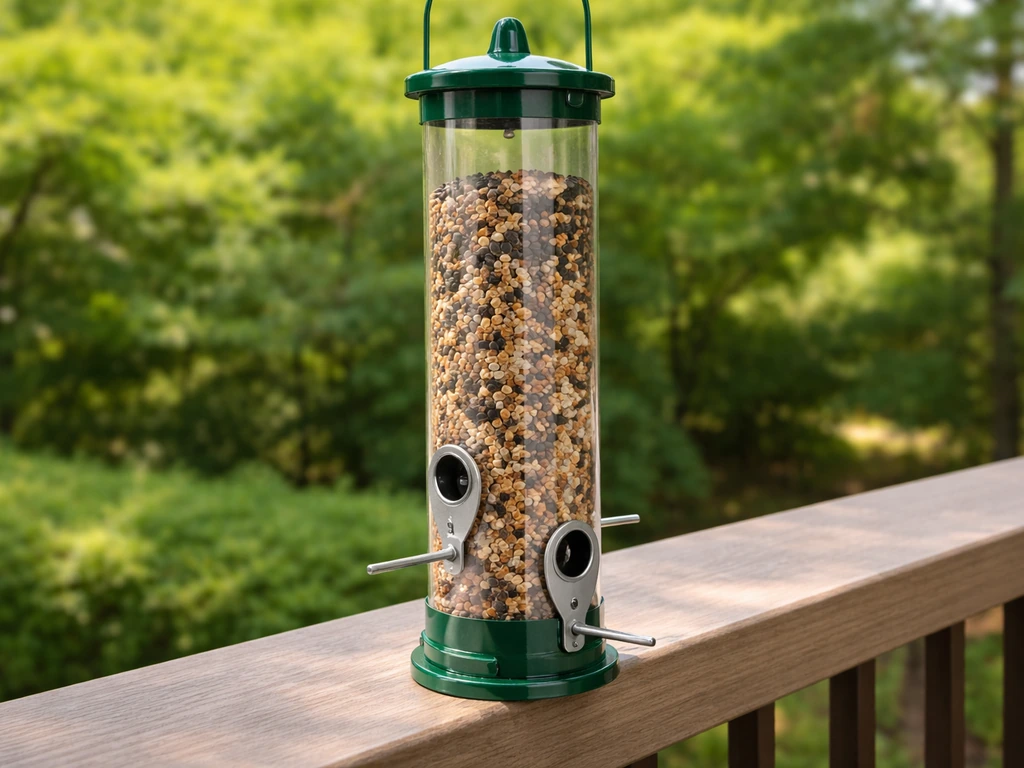
How to Fill a Tube Bird Feeder Step by Step
Step-by-step guide to fill a tube bird feeder without spills, prevent clogs, and set up for steady feeding and easy clea
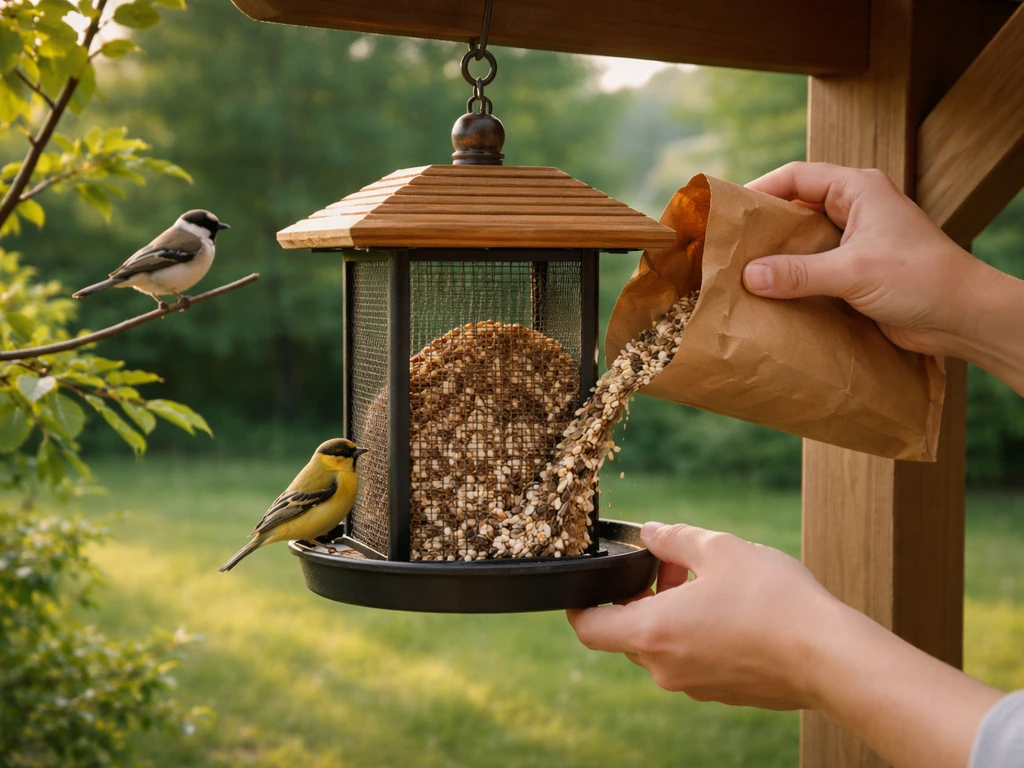
How to Fill a Bird Feeder: Step-by-Step Guide Today
Step-by-step how to fill and refill bird feeders, choose the right seed, safe amounts, prevent spills, and troubleshoot