A bird feeder cage is a partially enclosed feeder structure, usually a tube or box feeder surrounded by a wire or slatted outer frame, that lets small birds reach the seed while blocking squirrels, larger birds, and weather. You can build a functional one in an afternoon using scrap wood and hardware cloth, or even a recycled plastic bottle and some chicken wire, with no special skills required. The key decisions are picking the right cage design for the birds you want to attract, sizing your openings correctly so the right visitors can get in (and the wrong ones can't), and mounting it in a spot where squirrels can't make the leap.
How to Make a Bird Feeder Cage: Step-by-Step Build
Marcus Brennan
11 Jun 2026
Pick the right cage-style feeder design first
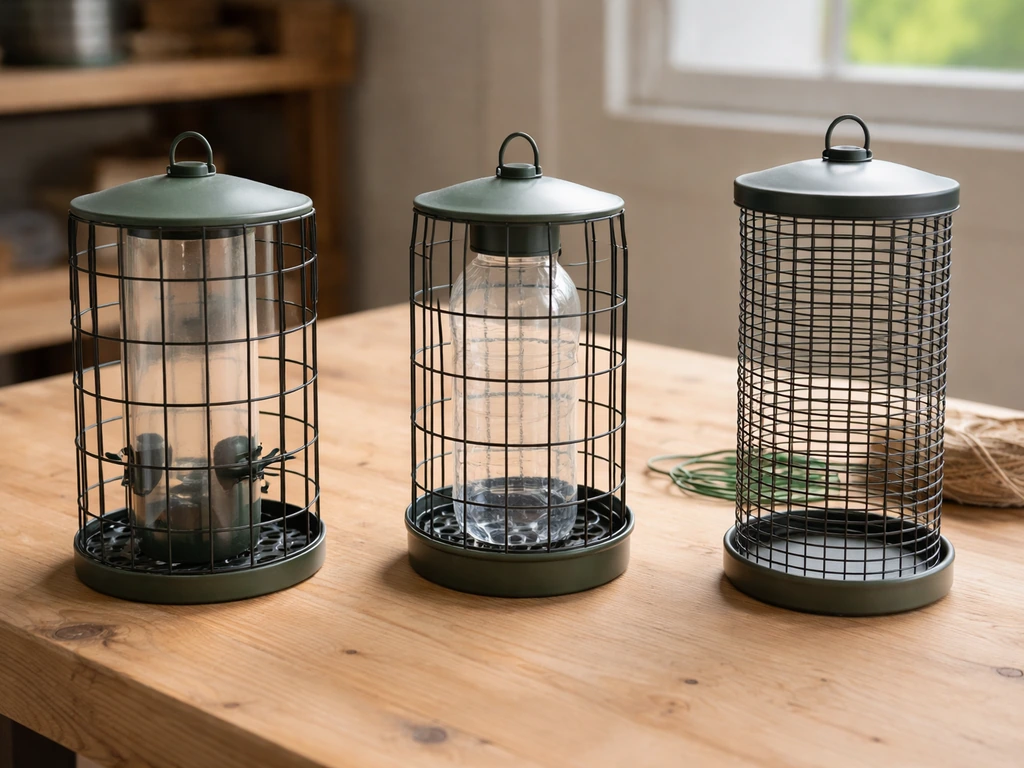
Before you cut a single piece of wood or wire, figure out what you're actually building and why. The term "cage feeder" covers a few different approaches, and choosing the wrong one means frustration later.
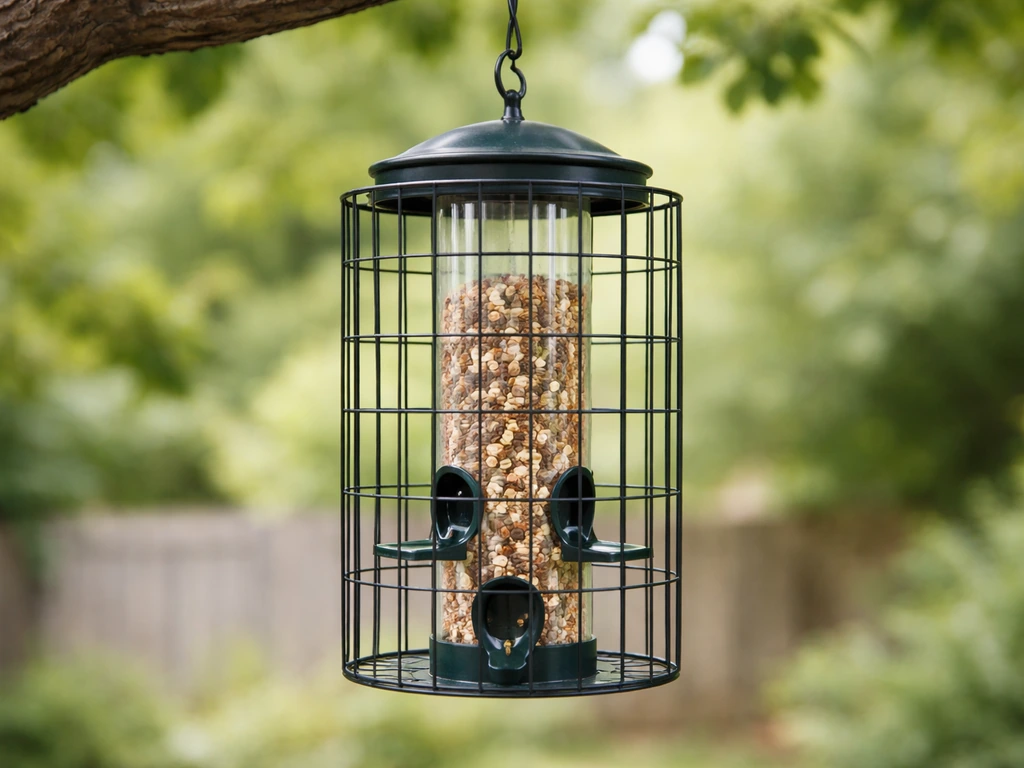
- Caged tube feeder: a standard tube feeder (plastic or wood) surrounded by a wire cage with openings sized for small birds like finches, chickadees, and nuthatches. Squirrels and large birds like starlings physically can't fit through the cage to reach the ports.
- Caged hopper or box feeder: a wooden hopper with an outer wire frame. More seed capacity, good for mixed flocks, but heavier to hang.
- Wire mesh cage feeder (open-fill style): a simple cylinder or box made entirely from hardware cloth or welded wire mesh, filled directly with seed. Minimal construction, great for peanuts or suet balls.
- Repurposed container cage feeder: a plastic bottle or milk jug mounted inside a wire frame. Budget-friendly, quick to build, easy to replace when worn out.
The opening size is the most important design decision. Research from UNL Extension puts the sweet spot for small songbird access at around 1.25-inch openings in the outer cage. That's wide enough for a chickadee or finch to slip through, but too tight for a squirrel's body or the head of a grackle. If you go bigger, you lose the squirrel-resistant advantage. If you go smaller, you'll exclude birds you probably want. Keep that number in mind through every build option below.
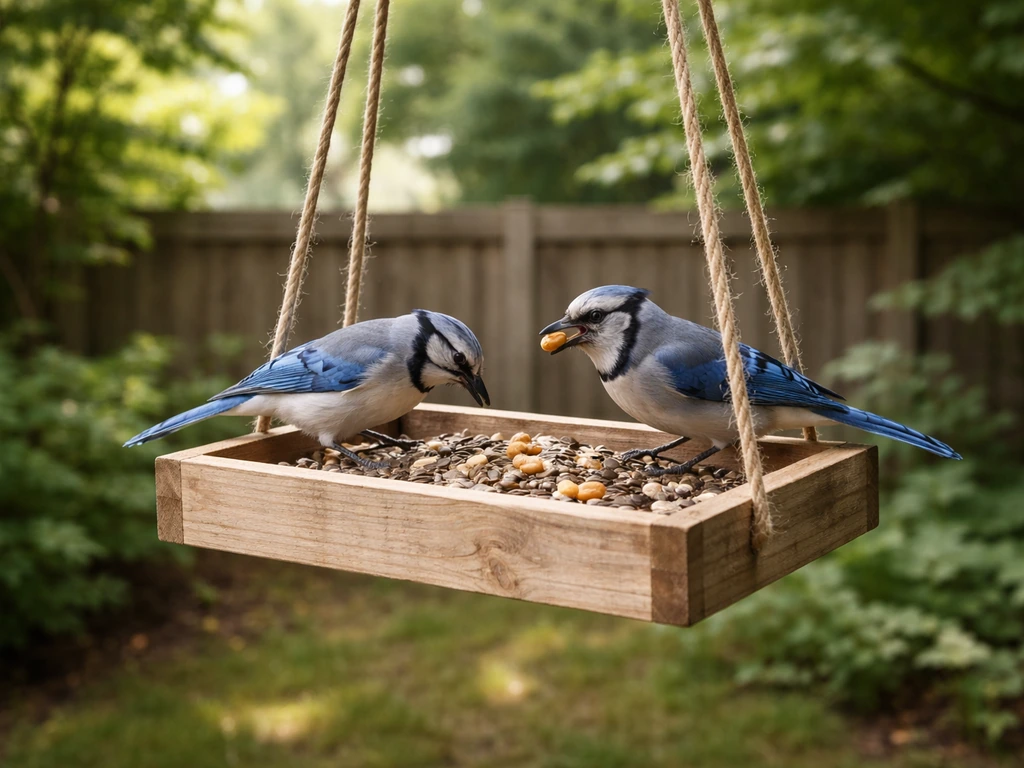
If you're also interested in building feeders tailored to specific species, like bluebirds or blue jays, those call for very different designs with open trays and different food types. A cage-style feeder is specifically the right move when squirrels are your primary problem, or when you want to selectively attract smaller songbirds over larger, more aggressive species.
Materials, tools, and what's actually safe for birds
You don't need much, but the materials you use matter. Birds peck at surfaces and spend a lot of time in contact with the feeder, so some shortcuts that seem harmless are actually risky.
Safe materials
- Untreated pine, cedar, or redwood for any wooden parts birds will contact. Cedar and redwood are naturally rot-resistant and a better choice for the long term.
- Galvanized or stainless steel hardware cloth (1/4-inch or 1/2-inch mesh) or welded wire mesh for the cage frame.
- Plastic (PET or HDPE) bottles or milk jugs for the seed reservoir in budget builds. Rinse thoroughly before use.
- Stainless steel or galvanized screws and staples. Avoid regular zinc-coated or bare steel that will rust quickly.
- Natural sisal or braided nylon rope for hanging. Avoid thin monofilament, which is dangerous for birds.
What to avoid
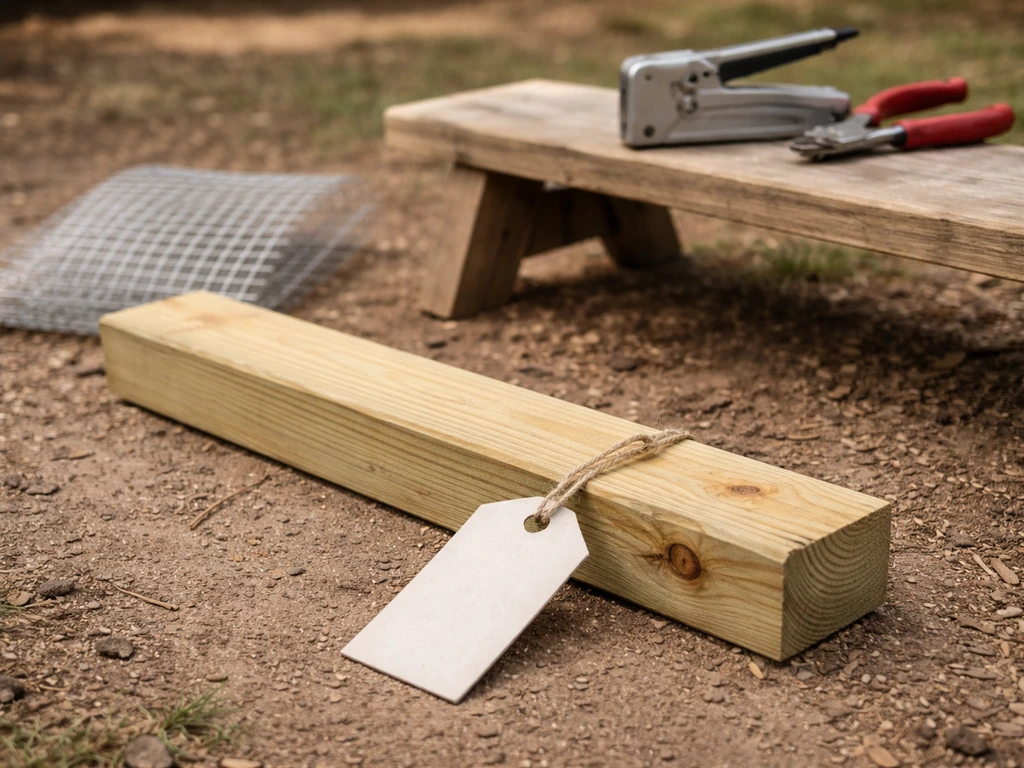
- Pressure-treated lumber for any surfaces birds contact directly. NestWatch notes that there's limited evidence on off-gassing harm, but the precautionary approach is to avoid it for interior or perch surfaces.
- Lacquers, unknown adhesives, or chemical dyes on any bird-contact surface. If a glue or finish isn't explicitly listed as bird-safe, skip it.
- Bare galvanized wire with zinc coating that's still actively off-gassing (new galvanized wire can be rinsed with a vinegar solution to neutralize surface oxidation before use).
- Thin or sharp wire edges left unfinished. Fold or tape all cut wire edges to prevent injury to birds and your own hands.
Tools you'll need
- Wire cutters or tin snips for cutting mesh
- Staple gun with 1/4-inch or 3/8-inch staples for attaching mesh to wood
- Hand saw or circular saw for cutting wood pieces
- Drill with bits (1/4-inch and 3/8-inch most useful)
- Pliers for bending and securing wire ends
- Sandpaper (80 and 120 grit) for smoothing wooden edges
- Measuring tape and pencil
Step-by-step build options
Pick the build that matches what you have on hand. All three options are tested, beginner-friendly, and take two hours or less from start to finish. If you want to attract more species, the best approach is to build a Wingspan-style bird feeder with properly sized openings and a sturdy cage frame Wingspan-style bird feeder builder.
Option 1: Wood frame caged feeder (most durable)
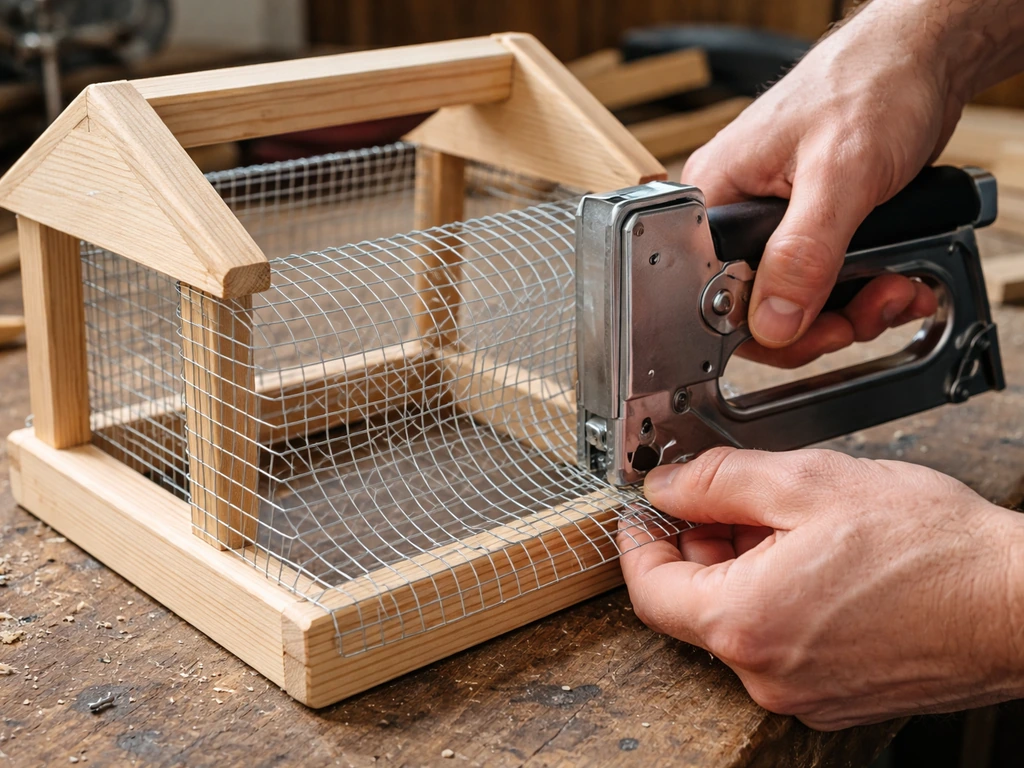
This is the most rewarding build if you have even basic woodworking experience. It lasts for years and looks great. Budget roughly $15 to $25 in materials if you're buying new, or much less if you have scrap wood and a roll of hardware cloth.
- Cut your wood pieces: two side panels (6 inches wide x 10 inches tall), a roof panel (8 inches wide x 10 inches deep), a floor panel (6 inches square), and a back panel (6 inches wide x 10 inches tall). Use 1/2-inch or 3/4-inch cedar or pine.
- Sand all edges smooth, especially any surface a bird might perch on or rub against.
- Assemble the box: attach the back panel to the two side panels with 1.5-inch galvanized screws. Attach the floor. Leave the front open for now.
- Drill seed-access holes in the sides or back at roughly 2-inch diameter. These are your inner ports where seed will be accessible through the cage.
- Cut a piece of hardware cloth (1/2-inch mesh) to fit the front face of the box, about 7 inches wide x 10 inches tall. Use wire cutters and fold all cut edges back 1/4 inch with pliers.
- Staple the hardware cloth to the front face using your staple gun, pulling it taut. Make sure no sharp wire ends are exposed inside or outside the feeder.
- Attach the roof panel with a small piano hinge or two small strap hinges so you can open it to fill the feeder. A simple hook-and-eye latch keeps it closed between fills.
- Drill two small holes near the top corners of the roof for your hanging wire or rope.
- Optional: Apply one coat of an exterior-grade, water-based (latex) stain to the outside surfaces only, not the inside where birds contact the wood. Let it cure fully (at least 48 hours) before hanging.
Option 2: Plastic bottle cage feeder (free or near-free)
This is the build to start with if you're not sure you'll stick with the hobby, or if you just want something up this weekend. A 2-liter bottle or a large milk jug works well as the seed reservoir, and the chicken wire cage keeps squirrels off it.
- Clean and dry a 2-liter plastic bottle thoroughly. The cap will be the top; you'll suspend it from a hook through a hole drilled in the cap.
- Drill or melt 4 to 6 seed-access holes around the lower half of the bottle, about 1/2-inch in diameter for sunflower or mixed seed. Make them slightly oval (1/2-inch high by 3/4-inch wide) to improve seed flow.
- Drill small holes just below each seed port for a 1/4-inch wooden dowel perch. Cut 3-inch dowel sections and push them through the holes. A dab of wood glue on each side keeps them in place.
- Cut a piece of chicken wire or hardware cloth into a rectangle long enough to wrap around the bottle and form a cylinder, plus about 2 inches of overlap. The height should match the bottle length.
- Roll the wire into a cylinder around the bottle, leaving about 1 to 1.5 inches of space between the wire and the bottle surface. Twist the overlapping edges together to close the cylinder.
- Cut two circles of wire mesh slightly larger than the bottle diameter to cap the top and bottom of the cylinder. Bend the edges over and pliers-crimp them to the main cylinder to close it off.
- Thread a sturdy zip tie or a length of wire through the bottle cap and up through the top mesh cap to create a hanging loop. Reinforce with a second zip tie if needed.
- Fold all cut wire edges inward so nothing sharp protrudes.
Option 3: Wire mesh cylinder feeder (for peanuts or suet balls)
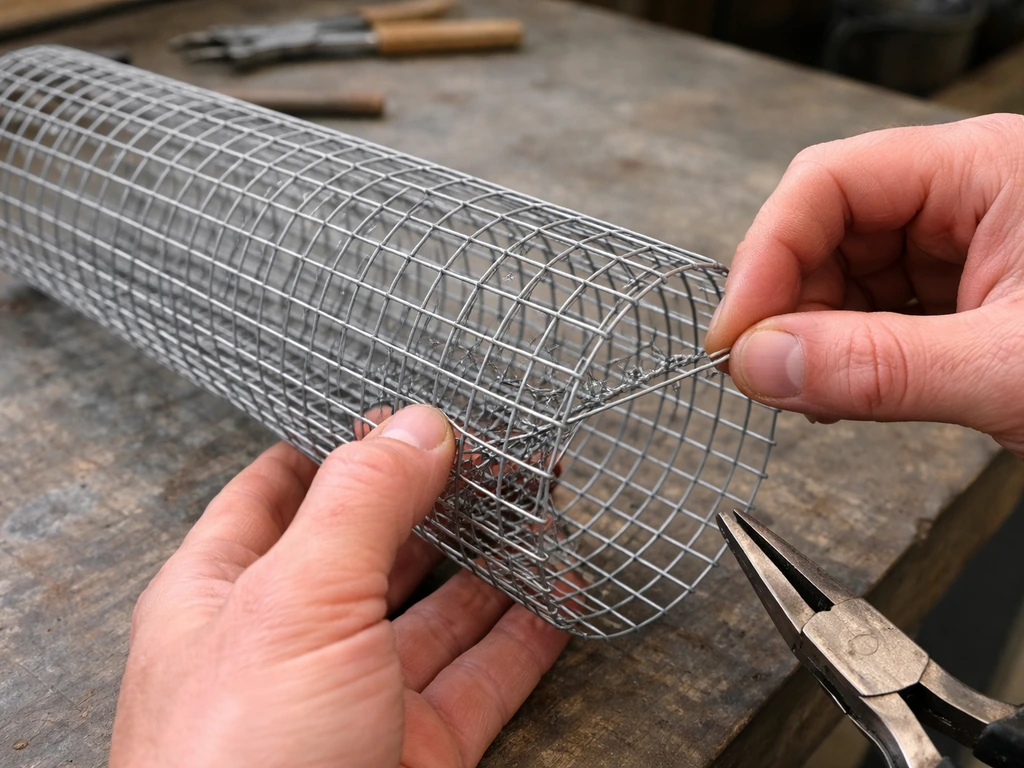
If you're not interested in a seed reservoir and just want to offer peanuts in the shell, suet balls, or mealworm cakes, a simple wire cylinder is the fastest cage feeder you can make. It takes about 20 minutes.
- Cut a 12-inch by 18-inch rectangle of 1-inch welded wire mesh or hardware cloth (1-inch openings are ideal for peanuts in shell; go smaller for other foods).
- Roll the rectangle into a cylinder and use pliers to twist the cut ends together to form a seam. Fold every sharp edge inward.
- Cut two circles of mesh, slightly larger than the cylinder opening, for top and bottom caps. Crimp them onto the cylinder with pliers.
- Attach one cap with a small metal spring clip instead of crimping it permanently. This becomes your fill door. Pop it off to load food, snap it back on.
- Thread a length of braided wire or nylon rope through the top cap for hanging.
Perches, feed access openings, and keeping weather out
These details separate a feeder that works from one that birds ignore or that falls apart after the first rainstorm.
Getting the openings right
Opening size directly affects seed waste. Virginia Tech's research makes clear that if small seeds are offered through large openings, seeds fall out every time a bird jostles the feeder. For sunflower seeds, make ports about 1/2-inch diameter. For mixed seed with smaller millet or safflower, use slightly smaller ports around 3/8-inch. For the outer cage itself, target that 1.25-inch mesh opening to allow small birds while excluding squirrels and big birds.
Perch placement
Place perches about 1/2 inch below each seed port so a bird can land comfortably and reach up to the opening. Use 1/4-inch wooden dowel cut to 3-inch lengths for a wood feeder, or sections of natural branch for a more rustic look. Don't make perches too long or they give larger birds a stable landing platform. Keep them under 4 inches long on a squirrel-resistant design.
Weather-proofing
- Extend the roof by at least 2 inches beyond the front and sides so rain doesn't drive straight into the seed ports.
- Drill two or three 1/4-inch drainage holes in the floor of any enclosed feeder so pooled water can escape.
- If you're using a plastic bottle design, the bottle itself is naturally waterproof. Focus on keeping the cap tight to prevent rain from filling the bottle from the top.
- On wood feeders, lightly sand any spot where water might pool (corners, perch holes) to prevent grain-swelling that traps moisture.
- Avoid painting interior wood surfaces. Paint can peel and chip into seed, and an unpainted cedar interior actually resists mold better than a painted one when kept dry.
How to hang and place your feeder cage
Where you hang this thing matters as much as how you built it. A great feeder in a bad location will get dominated by squirrels or ignored by birds entirely.
Picking the right spot
- Hang the feeder at least 5 feet off the ground, which puts it above most cat-jumping range and gives birds a flight escape path.
- Keep it at least 10 feet from the nearest tree branch, fence top, or roof edge. Squirrels can jump horizontally up to 10 feet from a launch point.
- Position it within 3 feet of a window or more than 30 feet away from windows to reduce bird-window collision risk. The middle-distance zone (5 to 30 feet) is where most collisions happen.
- Place it near dense shrubs or a tree edge so birds have a quick escape route, but not so close that squirrels have a direct launch pad.
Hanging hardware that actually holds
- Use a heavy-duty screw-in hook (rated for at least 25 lbs) in a soffit, eave, or tree branch. Don't trust light picture-hanging hooks outdoors.
- For pole mounting, a 1-inch diameter steel or aluminum pole driven 18 inches into the ground is stable enough for a lightweight cage feeder. Add a cross-arm bracket at the top to hang from.
- Braided wire (16-gauge or heavier) or thick nylon paracord are both good hanging options. Avoid thin string that degrades fast in UV or gets chewed by squirrels.
- If you're hanging from a branch, a pulley system makes it much easier to lower the feeder for cleaning and refilling without needing a ladder.
Installing a squirrel baffle on the hang point
Even a caged feeder benefits from a baffle above it. Multiple sources, including guidance from the Wild Bird Habitat Store and The Faunalist, recommend positioning the bottom of an overhead baffle at least 4 feet above the ground and directly above the feeder. The baffle should be wide enough (at least 15 to 18 inches in diameter) that a squirrel can't reach around it. If you're using a pole, mount the baffle on the pole about 4 to 5 feet up, below the feeder, to block climbing.
Cleaning, maintenance, and seasonal setup
This is the part most people skip, and it's also the part that matters most for bird health. Dirty feeders spread disease through contaminated seed ports and perches, exactly the surfaces birds push their faces into repeatedly.
How often to clean
Penn State Extension recommends scrubbing feeders with soap and disinfectant once a week to keep disease risk low. The Iowa DNR puts a minimum at once per month with a 10% bleach solution. Realistically, weekly is ideal in warm, humid months when mold grows fast, and monthly is acceptable in cold, dry winter conditions. If you ever see clumped or discolored seed, sick-looking birds nearby, or visible mold, clean immediately regardless of schedule.
The cleaning process
- Empty all old seed and debris completely. Shake out any compacted seed from ports.
- Scrub the feeder inside and out with warm soapy water and a stiff brush. Get into the port holes and perch sockets.
- Disinfect using one of these proven methods: soak in 1 part bleach to 9 or 10 parts water for 10 to 15 minutes (Virginia Tech, MSU Extension, Iowa DNR, and UNH Extension all back this ratio and timing), or use a 1:1 white vinegar and water solution as a gentler alternative if bleach is unavailable.
- Rinse thoroughly with clean water. This step is non-negotiable. Bleach residue in seed ports can harm birds.
- Air dry completely before refilling. A damp feeder with fresh seed is a mold factory. Even 30 minutes of drying time helps; overnight is better.
Seasonal maintenance
- Spring: do a full deep-clean after winter and inspect wire connections for rust or loosened crimps. Replace any hardware cloth that's developing rust spots.
- Summer: clean more frequently (weekly), reduce seed quantity per fill to prevent spoilage in heat, and check for wasp nests building inside enclosed feeders.
- Fall: inspect perches and seed ports for wear, tighten any loose screws or staples, and re-treat exterior wood surfaces if needed before cold and wet weather.
- Winter: use a feeder with a wider roof overhang or add a temporary rain/snow shield (a simple inverted pie plate works), and clear ice or compacted seed from ports after storms.
Pest-proofing and fixing common problems
Even with a good cage design, things go wrong. Here's what you'll actually encounter and how to deal with it.
Squirrels are still getting to the seed
If squirrels are reaching the inner seed container despite the outer cage, the cage openings are probably too large or the feeder is within jumping range of a launch point. All About Birds (Cornell Lab) recommends using squirrel guards or baffles and feeder designs that use an outer cage around the feed ports to prevent squirrels from reaching the seed. First, verify your cage mesh is at or below 1.25-inch openings (the UNL Extension target for excluding squirrels while allowing small birds). Then check your placement: measure the distance to the nearest branch, roof, or fence. If you're under 10 feet, move the feeder. Add an overhead baffle mounted so its bottom sits at least 4 feet off the ground, positioned directly above the feeder.
Large birds are dominating the feeder
Starlings, grackles, and jays won't fit through a proper 1.25-inch outer cage. If they're still getting to the seed, they're likely feeding from the outside in (reaching through large ports), or the cage design isn't fully enclosing the seed access area. Reduce your inner port size to 1/2-inch and make sure the outer cage extends at least 2 inches beyond every inner port so large birds can't reach through from outside.
Seed is clogging or going bad fast
Clogged ports are usually a moisture problem. Check that your drainage holes are open, your roof overhang is sufficient, and you're not overfilling. Seed goes bad faster than most people expect in warm weather. Tube or cage feeders with smaller reservoirs actually have an advantage here because you use up the seed faster before it spoils. Fill only what birds will consume in two to three days during summer.
Birds aren't visiting at all
Give it time first. New feeders in new locations can take one to three weeks for birds to discover. If it's been longer, consider the seed type: black-oil sunflower seed attracts the widest variety of small birds and is your best starting point for a cage feeder. Make sure no cats are hanging around underneath the feeder. Also check that nearby cover (shrubs, trees) is within about 10 to 15 feet so birds feel safe approaching.
Quick problem-solution reference
| Problem | Most likely cause | Fix |
|---|---|---|
| Squirrels reaching seed inside cage | Cage openings too large or feeder within jump range | Use 1.25-inch or smaller mesh; move feeder 10+ feet from launch points; add baffle |
| Large birds accessing ports | Outer cage doesn't fully cover port area | Extend cage 2 inches beyond every port; reduce port size to 1/2 inch |
| Seed clogging ports | Moisture buildup or overfilling | Add drainage holes; reduce fill amount; check roof overhang |
| Seed spoiling quickly | Heat or damp conditions | Fill less at a time (2-3 day supply); clean weekly in summer |
| Wire cage rusting | Galvanized wire reacting to moisture over time | Replace hardware cloth annually; use stainless mesh for longer life |
| No bird visitors | Feeder is new or seed type is wrong | Wait 2-3 weeks; switch to black-oil sunflower seed; ensure nearby cover |
Building a cage feeder is genuinely one of the most practical backyard bird projects you can take on, especially if squirrels have been wrecking your previous setups. Start with the simplest build that fits what you have on hand, get it hung in a smart location with a baffle, and commit to a real cleaning schedule. From there, it's easy to iterate: swap out mesh size, try a bigger reservoir, or build a second feeder targeting a different species. If you're thinking about expanding to feeders designed for specific birds like bluebirds or larger builds suited to jays, those call for open tray designs rather than cage enclosures, which is a whole different direction worth exploring once this cage feeder is running smoothly. Blue jays often prefer feeding stations that match their size, so a blue-jay-specific setup may include different port dimensions and perches than a small-songbird cage feeder.
FAQ
What outer cage material and wire gauge should I use to keep squirrels from bending or breaking it?
Choose hardware cloth that stays rigid when tugged, a galvanized or vinyl-coated wire is easier to resist rust. Before assembly, test the mesh by pressing it with your palm and lightly pulling, if it flexes a lot, add a sturdier wood or metal frame so the squirrel cannot deform openings over time.
How do I confirm my opening sizes are correct after building, not just “about right”?
Measure the actual clear openings, not the nominal mesh size. Use a ruler or calipers to check from edge to edge where a bird would pass, and confirm inner ports match your target diameter (for small songbirds about 1/2 inch) while the outer mesh stays at the smaller “squirrel-blocking” size.
Should I build the cage feeder with a hinged door or removable section for easier cleaning?
If you can, design one side to open or unscrew, it makes weekly scrubbing realistic. Build the seed container so you can access ports and perches without working through the mesh, which reduces missed grime around the landing surfaces.
Can I use the same cage feeder for sunflower seeds and small mixed seed, or do I need to change openings?
You can offer both, but you may need to adjust port size to reduce waste. For mixed seed with smaller types like millet or safflower, smaller ports (around 3/8 inch) help prevent seed from dropping when birds jostle the feeder, otherwise you may see heavy ground scatter.
Why do birds stop visiting after rain, even if the feeder isn’t broken?
Wet seed can mold quickly and some birds avoid feeders that look messy around the ports. Ensure the roof overhang keeps the seed ports from getting direct rain, confirm drainage is clear, and consider shorter fill intervals during wet spells so the seed never sits damp.
Do I really need perches if the feeder already has ports birds can reach?
Perches matter because they control how birds position themselves and how much seed gets pushed out. If you skip perches, birds may cling to the cage awkwardly, increasing wasted seed and squirrel leverage, keep perches short (about 3 inches in many builds) so larger birds do not get a stable landing platform.
What’s the best way to stop squirrels if they’re climbing the pole or jumping from a nearby structure?
Install an overhead baffle and remove jump access points. Check for branches, rooflines, fences, or lattice within roughly 10 feet and move the feeder if close access exists. If you are using a pole, mount the baffle high enough that squirrels cannot reach the bottom edge from the ground or a nearby surface.
How can I tell whether the problem is too-large openings versus birds feeding from outside?
If birds are feeding but squirrels are also getting in, opening size or enclosure completeness is likely. Look for signs of seed being reached through gaps outside the cage, confirm the outer cage overlaps the inner access area by a couple inches past each inner port so large birds cannot reach through.
What should I do if the feeder is attracting the wrong birds, like grackles, jays, or starlings?
First verify you built a true “outer cage” barrier, not an outer frame with gaps. Then tighten the inner access by reducing inner port size (for many builds, around 1/2 inch) and extend the outer cage past every inner port so birds cannot insert heads or hands from the outside.
How do I prevent seed from going stale when I’m away from home or feeding only a little?
Use the smallest reservoir size that matches your likely consumption, and limit refills to what birds will finish in about 2 to 3 days during warm weather. If you travel or can’t refill often, switch to formats that use smaller batches rather than large, slow-maturing seed piles.
Is bleach cleaning safe for birds, and how do I handle the cleanup correctly?
Use disinfectant according to dilution targets, but always rinse thoroughly so no strong chemical residue remains. After disinfecting, let the feeder dry fully before refilling, and scrub the ports and perches where birds repeatedly push their faces.
Can I mount the feeder near a window, and will the cage help with bird strikes?
A cage feeder does not address collision risk, it mainly blocks access to seed. If you hang near windows, reduce strike risk by adding window treatments or changing placement so birds do not fly into glass while approaching the feeder.
How long should I wait before concluding birds won’t use my new cage feeder?
Give it time in the local area, commonly 1 to 3 weeks for discovery after switching locations or seed type. If no activity occurs after that, reassess seed choice (black-oil sunflower seed is a common starter), nearby cover distance, and ensure no cats can ambush birds from under the feeder.