To hang a mason jar bird feeder safely and effectively, you need a jar with a securely fitted lid ring, reliable hanging hardware (chain, cord, or a shepherd's hook), a spot at least 5 feet off the ground, and a stable mount that won't let the feeder swing wildly or tip in the wind. Get those four things right and birds will find it within days. Get them wrong and you'll be chasing a broken glass jar across your lawn after the first storm.
How to Hang a Mason Jar Bird Feeder: Step-by-Step
Marcus Brennan
19 May 2026
Choosing the right mason jar feeder setup
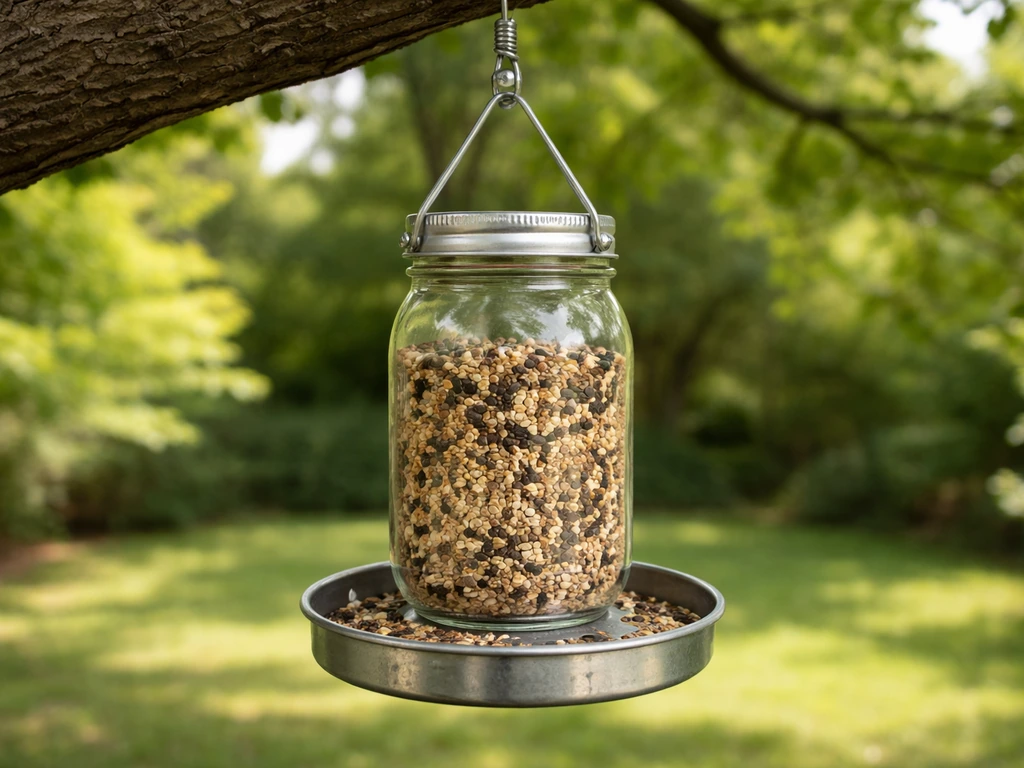
Before you hang anything, you need to know what kind of mason jar feeder you're working with, because not all setups are the same and the differences affect how you hang it. There are two main versions: a DIY build where you drill your own lid and add perch hardware, and a pre-made commercial assembly (like those sold by Jarfeeder and similar brands) where the hardware is precision-manufactured. Either works well, but they require slightly different prep steps.
For a DIY version, the most common configuration uses a 1-quart wide-mouth mason jar with a lid ring. The wide-mouth format is important because it gives you a bigger opening to work with when drilling seed ports and attaching perch hardware. A standard 1-quart jar holds enough seed to last several days without constant refilling, which is the sweet spot for most backyard setups. For a commercial assembly, the feeding ports and perch bar holes are machined to within about 1/100 of an inch accuracy, so the parts slot together precisely. That precision matters because misaligned ports mean seed jams and birds can't feed.
When choosing between DIY and pre-made, think about your time and skill level. A DIY build is cheaper and gives you more flexibility in jar size and seed type, but drilling glass-adjacent materials requires care and the right bit. A pre-made kit removes the drilling step but costs more upfront. Either way, the hanging hardware that comes with or that you add to the lid ring is what determines how stable the feeder will be once it's up.
How to assemble a hang-ready mason jar feeder
Parts you'll need
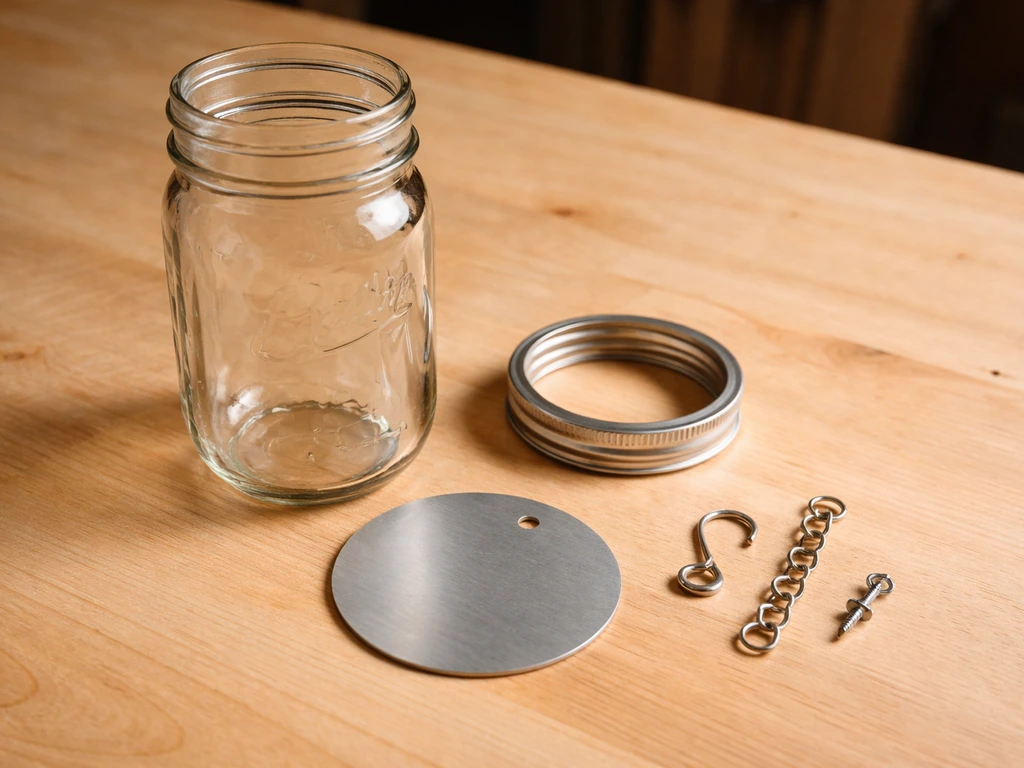
- 1-quart wide-mouth mason jar with lid ring (the ring only, not the flat lid insert if your feeder design uses a custom base plate)
- Custom base plate or DIY lid insert with seed ports drilled in (1/16-inch holes work well for small seeds like nyjer and mixed seed)
- Perch hardware: a thin wooden dowel or metal rod threaded through pre-drilled holes in the lid ring or base plate
- Hanging hook or chain eyelet screwed into or clamped onto the lid ring
- Stainless steel chain, paracord, or wire rated for at least 5 lbs (the jar plus seed can weigh 2 to 3 lbs when full)
- S-hook or carabiner clip for attaching to a hanging point
Assembly steps and safety notes
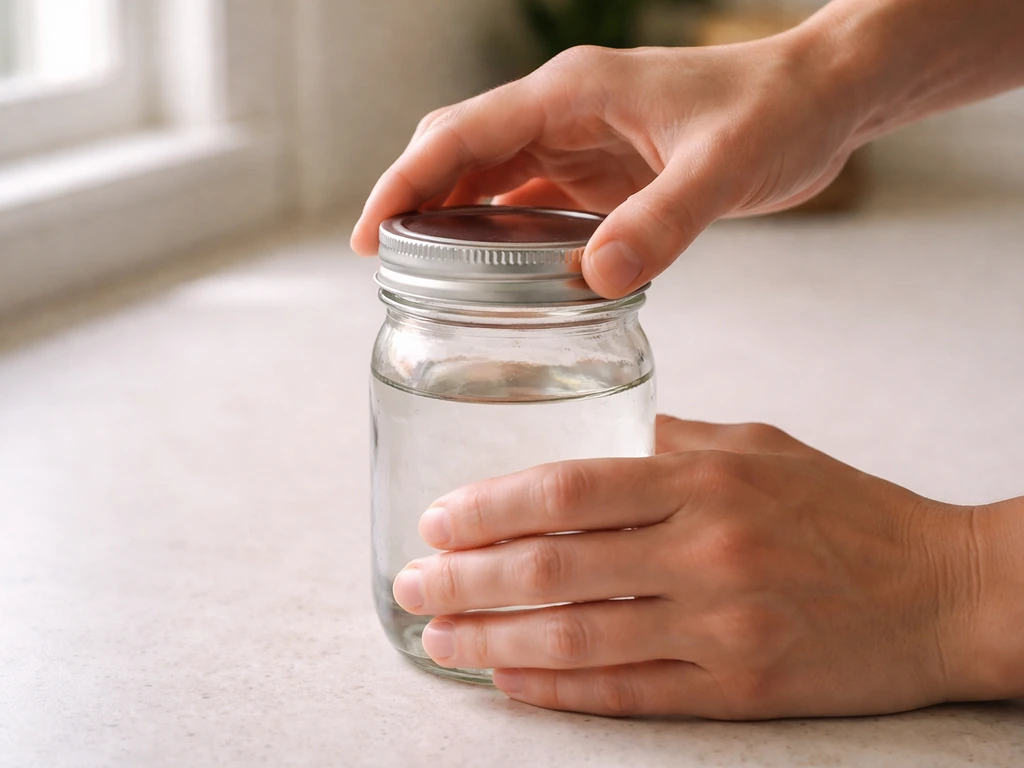
If you're drilling your own lid ring or base plate, ask for help if you're not comfortable with a drill, especially if you're doing this project with kids (seriously, an adult should handle the drill). Drill four 1/16-inch holes through the lid ring where your seed ports will be, and two opposing holes for the perch dowel. Use a drill press or clamp your work down so it doesn't spin. Drill slowly and keep the bit perpendicular to avoid cracking.
When assembling the jar, tighten the lid ring firmly by hand but do not over-tighten it. Over-tightening stresses the glass threads and makes the jar far more prone to cracking, especially when the jar expands slightly in summer heat. Dropping the jar or letting it swing into a hard surface (like a fence post or its own hanging chain) can also break it, so handle the assembled feeder carefully from the moment you add the jar. I learned this the hard way when a feeder I was carrying bumped its own chain against the jar and cracked it before it even got hung up.
Once assembled, do a quick fill test before hanging. Fill it with seed, invert it, and check that seed flows out of the ports slowly when the jar is inverted. If seed pours freely, your ports are too large. If nothing comes out at all, the ports are blocked or too small. You want a slow, gravity-controlled trickle so the tray below the lid stays full without wasting seed.
Best methods to hang it
The hanging method you choose depends on where you're putting the feeder and how much stability you need. Here's a straightforward comparison of your main options:
| Method | Best For | Stability | Notes |
|---|---|---|---|
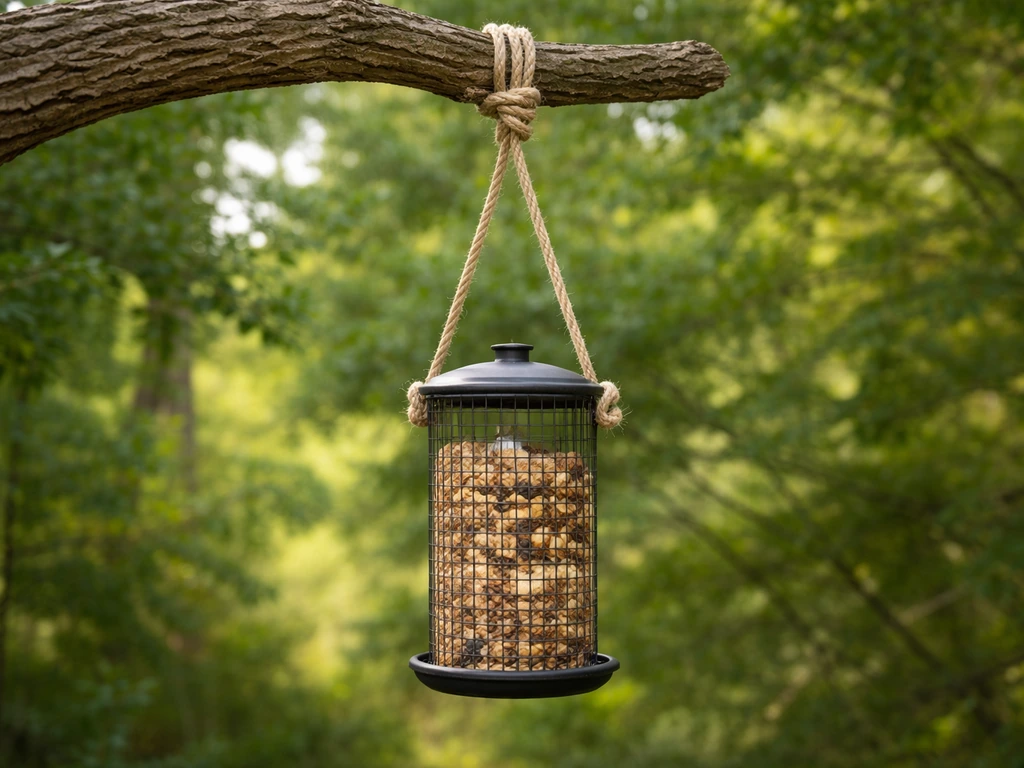
| Paracord or rope | Trees, pergolas, overhangs | Moderate (swings in wind) | Easy to adjust height; cord degrades in UV over time, check yearly |
| Stainless steel chain | Trees, hooks, poles | Good (less stretch) | Heavier but more durable; chain links can trap debris, rinse occasionally |
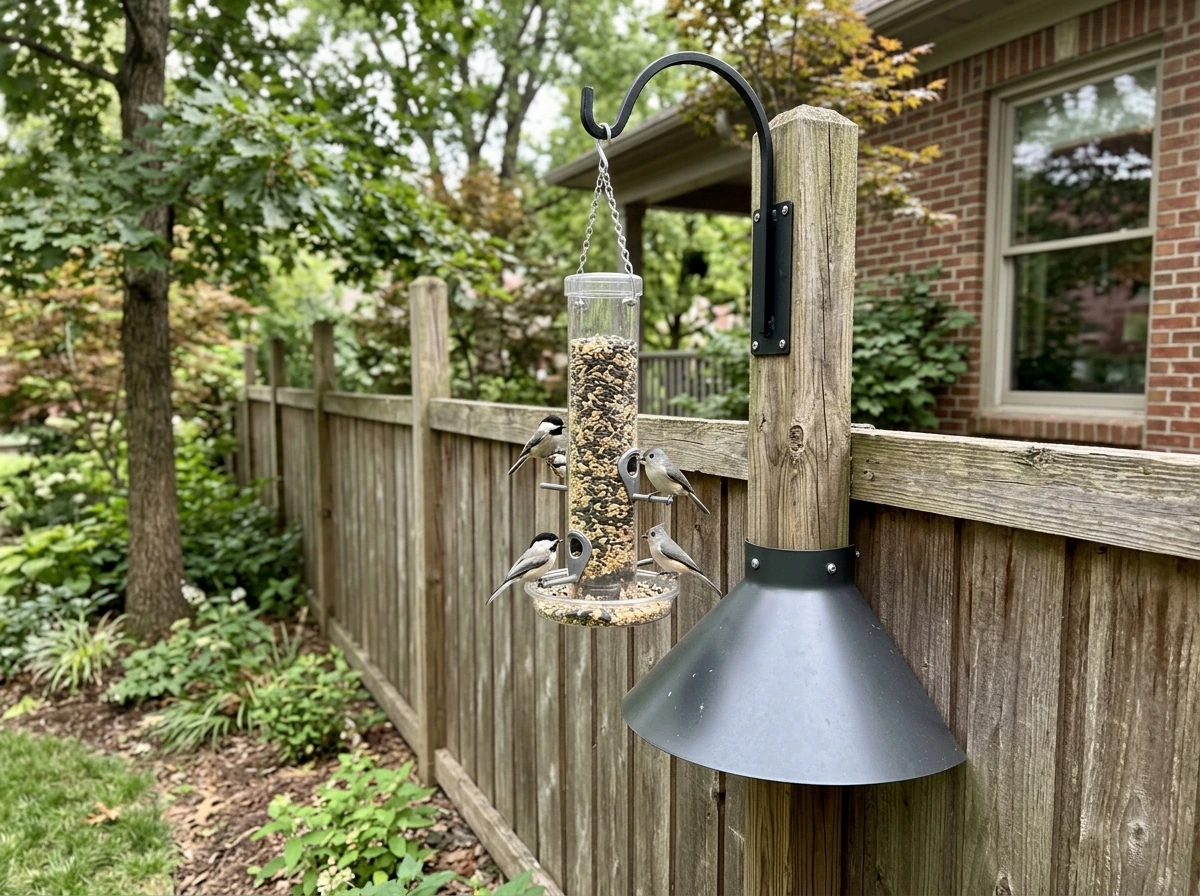
| Shepherd's hook | Lawns, gardens, open areas | Very good (fixed pole) | Best squirrel-baffle compatibility; easy to reposition; no tree needed |
| Wall bracket/arm | Fences, decks, walls | Excellent (rigid mount) | Ideal where poles aren't practical; hardware must be rated for outdoor use |
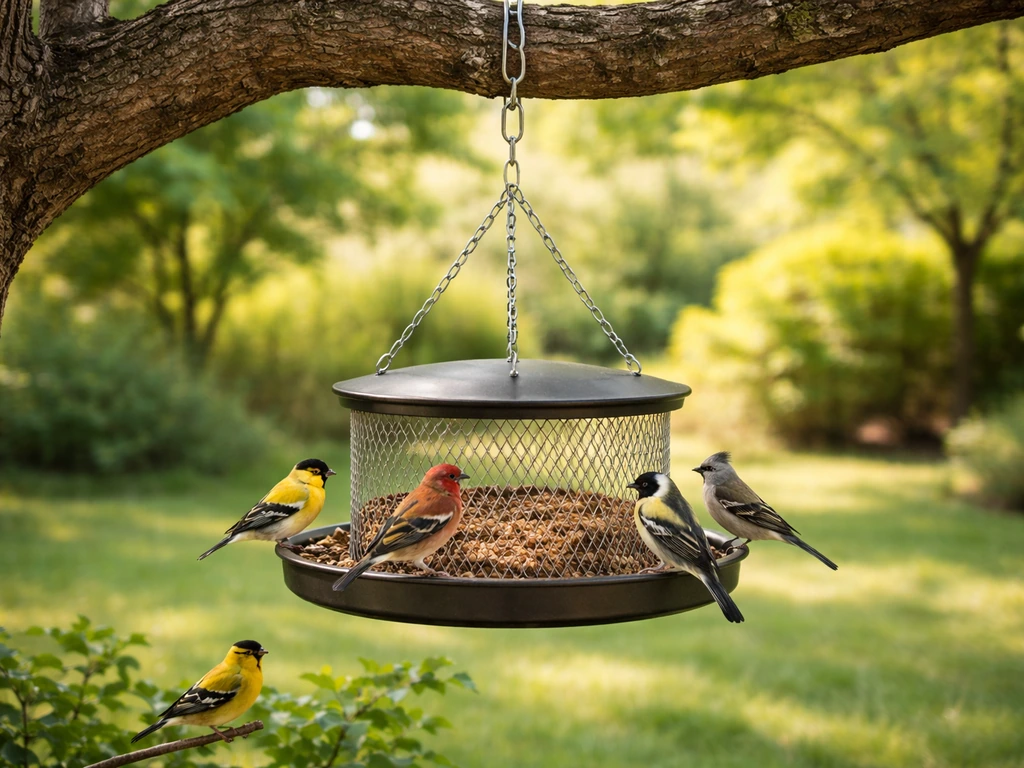
| Hanging from a branch | Established trees | Moderate (depends on branch) | Use a branch at least 1 inch diameter; add a squirrel guard above |
My personal go-to is a shepherd's hook with a baffle, because it gives you control over height, easy access for refilling, and the best options for squirrel-proofing. If you're hanging from a tree or pergola with rope, use paracord rated for at least 50 lbs and check it every spring for fraying or UV damage. If you want step-by-step instructions for hanging your mason jar feeder with rope, follow this guide for the rope type, tie-off, and stability checks hang a bird feeder with rope. For chain, a simple stainless steel jack chain from a hardware store works fine and won't rust out like plated chain does after a wet season.
However you hang it, always use an S-hook or locking carabiner as the connection point between your hanging line and the feeder's eyelet. This makes it easy to take the feeder down for cleaning without dismantling the whole setup. Hanging a mason jar feeder with rope specifically is a common approach covered in detail in related guides on this site. If you need more detail on the full wall-mounted build, see our guide on how to make a wall mounted bird feeder. If you want an easy, hang-ready setup, follow the same steps for hanging a mason jar feeder and safety checks first hang-ready mason jar feeder. If you're still figuring out the safest height and placement, use the tips for how to hang a suet bird feeder as a starting point for keeping birds comfortable and protected.
Placement: where to hang it for birds to actually use it
Height and distance from windows
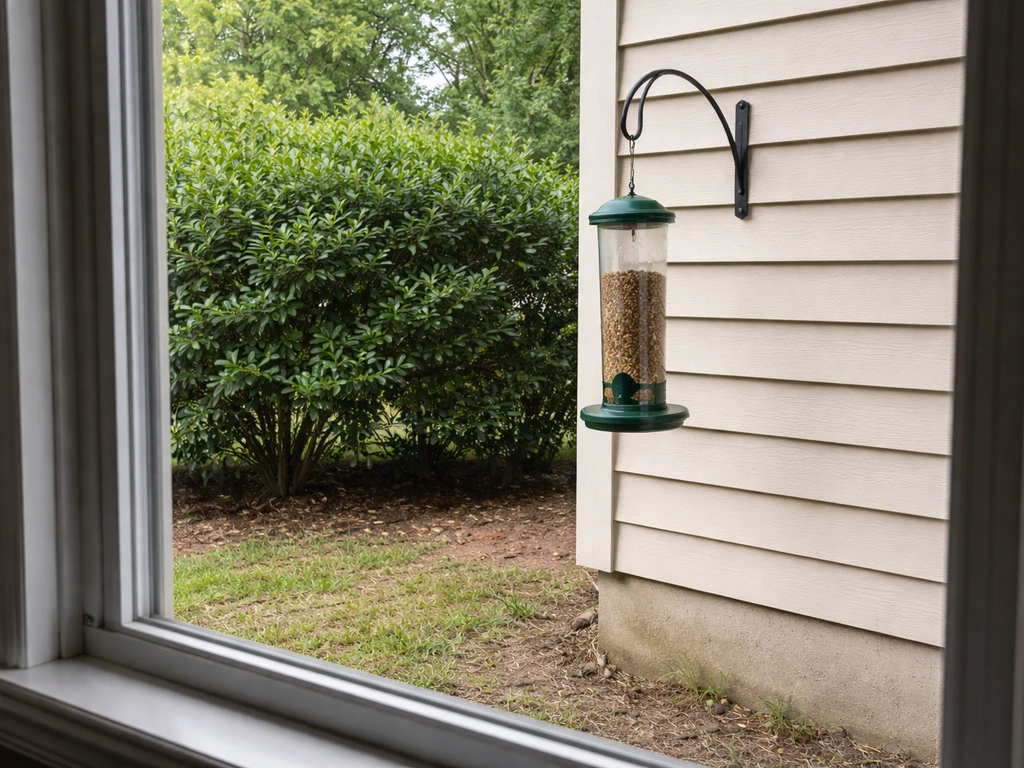
Hang the feeder at least 5 feet off the ground. This keeps it out of easy reach of cats and most ground-level disturbances, and it's the baseline height recommended for safe bird feeding. For window distance, you have two safe zones: within 3 feet of a window, or more than 30 feet away. The reasoning is that birds flushed from a feeder less than 3 feet away don't have room to build up enough speed for a fatal window collision. Beyond 30 feet, they're far enough that the window isn't a surprise. The danger zone is 3 to 30 feet from a window, where birds are flying fast but still close enough to hit the glass hard.
Cover, visibility, and approach
Place the feeder within 10 to 15 feet of a shrub, hedge, or tree. Birds like small finches and chickadees prefer to have escape cover nearby. If the feeder is completely in the open with no nearby cover, birds may avoid it, especially if they're new to the area. At the same time, don't hang it so deep inside a bush that birds can't approach or spot it easily from above. A partially sheltered spot, like the drip line of a tree or the edge of a shrub border, is the sweet spot.
For species-specific placement, most small seed-eating birds (finches, sparrows, chickadees, nuthatches) will use a mason jar feeder hung at eye-level or slightly above. If you're targeting finches specifically, a nyjer-seed setup hung 5 to 6 feet high in a partially sunny spot works well. Avoid hanging the feeder directly over a patio or seating area unless you enjoy seed hulls in your coffee.
Weatherproofing and secure mounting tips
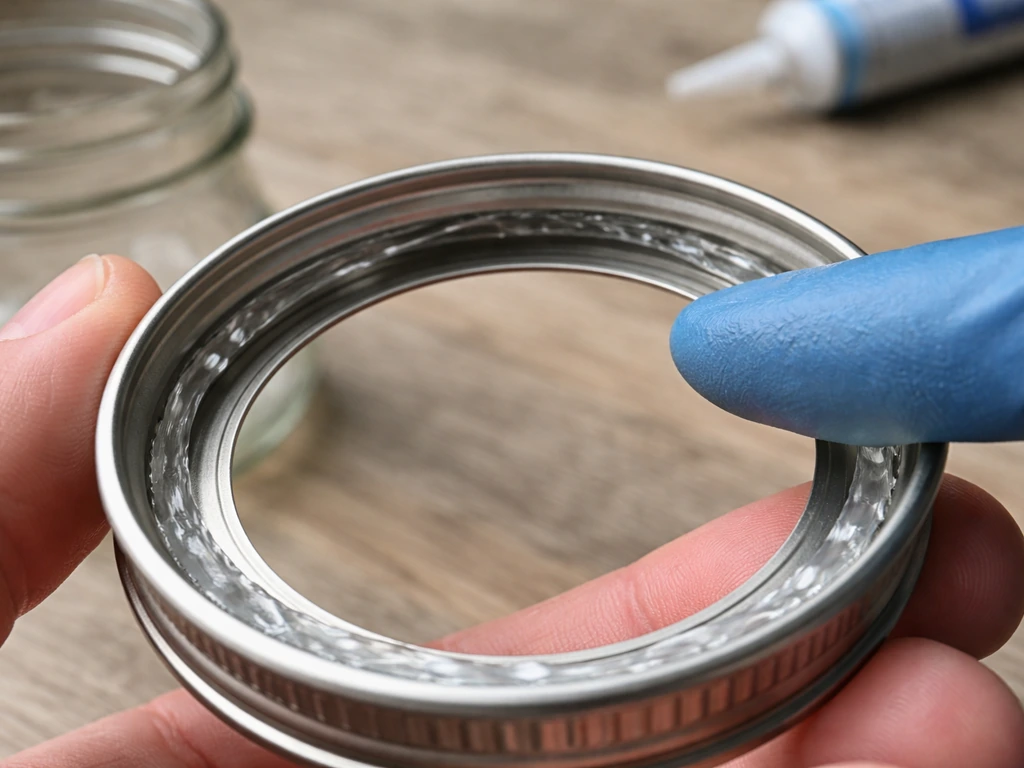
A mason jar feeder is more weatherproof than it looks, but only if the assembly is tight and the hang is stable. The biggest failure points are the lid ring seal (where rain gets into the seed), the hanging hardware (which can loosen or corrode), and the swing of the feeder itself (which causes impact damage in wind).
- Apply a thin bead of waterproof silicone sealant around the inside edge of the lid ring before threading it onto the jar if you're getting rain intrusion. Do not seal the seed ports.
- Use stainless steel or galvanized hardware throughout. Zinc-plated hooks and chains rust within one season in wet climates and can contaminate seed.
- Add a dome baffle or small roof above the feeder if you're in a rainy climate. Even a simple 8-inch diameter plastic dome suspended 6 to 8 inches above the feeder dramatically reduces how much rain hits the seed tray.
- Limit swing by using a shorter hanging length. A 6 to 10 inch chain between the branch or hook and the feeder moves far less in wind than a 2-foot drop. If you want more height flexibility, attach the long cord to a fixed point and use only a short chain at the feeder end.
- For shepherd's hook mounting, press the pole at least 18 inches into the ground and check it after the first heavy rain. Loose poles tilt and put lateral stress on the hanging hardware.
- If you're using a wall bracket, use exterior-rated screws into a stud or masonry anchor. A bracket mounted only into siding will pull out under the combined weight of the feeder and wind load.
Troubleshooting common issues
The feeder wobbles or swings too much
Excess swing is almost always a hanging length problem. Shorten the chain or cord between the hanging point and the feeder to reduce the pendulum effect. If you're still getting extra movement, a pulley lets you raise and lower the feeder with steadier control, which can help reduce swinging pendulum effect. If it's still swinging laterally, try adding a second attachment point a few inches away on the same branch or bracket so the feeder hangs from two points instead of one. This creates a small spreader bar effect and dramatically reduces rotation and sway.
Seed is getting wet or moldy
Wet seed is the most common problem with mason jar feeders and it's a real health risk for birds. Mold and bacteria thrive in damp seed, especially in humid or rainy weather. If you're seeing clumped or discolored seed in the tray, empty the feeder immediately, scrub it clean, and add a dome baffle above it before refilling. Drill a small drainage hole (1/16 inch) in the lowest point of the seed tray if water is pooling there. Don't let wet seed sit, it goes bad fast.
Squirrels are raiding it
Squirrels are persistent and surprisingly clever, but a properly installed pole baffle stops most of them. Mount the feeder on a shepherd's hook, slide a cone-shaped or torpedo-style baffle onto the pole at least 4 to 5 feet off the ground, and make sure the feeder is at least 8 to 10 feet from any tree, fence, or structure a squirrel could jump from. Squirrels can sometimes pull a hanging feeder closer to them if there's enough slack in the line, so keep your hanging cord or chain taut. A cage-style external guard around the jar is a secondary option if you can't get the pole position right.
Birds aren't using it
Give it one to two weeks. Birds need time to discover a new feeder, especially if it's in a new spot. If nothing is showing up after two weeks, try moving it closer to existing cover, adding a birdbath nearby (birds are drawn to water), or switching seed types. A fresh mix of black oil sunflower seed is the most universally attractive option for feeder birds in most of North America. Also check that your seed ports are actually dispensing seed and not clogged.
The jar cracked or broke
This almost always comes down to impact or over-tightening. A cracked jar needs to be replaced immediately, both for the birds' safety and yours. Keep a spare wide-mouth quart jar on hand so you're not without a feeder while you source a replacement. When you reinstall, double-check your hanging setup so the jar can't swing into a hard surface, and back off the lid ring tightness by about a quarter turn.
Maintenance and seasonal care
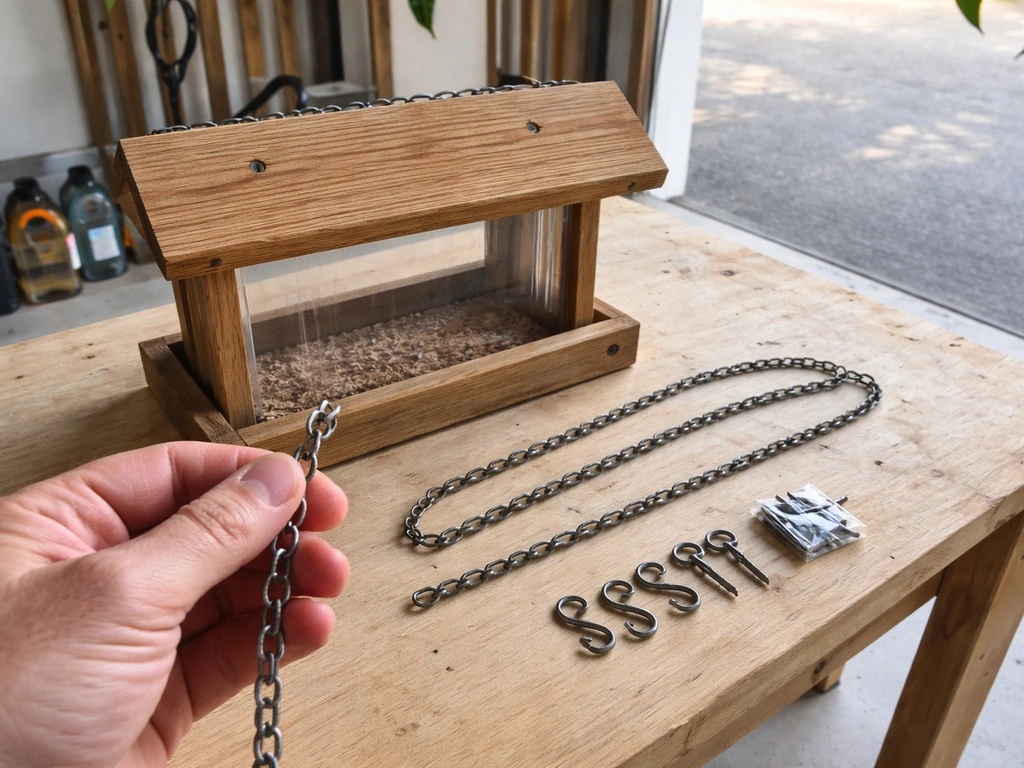
Clean the feeder every two weeks as a baseline. In hot or humid weather, bump that to once a week because mold grows faster when it's warm and damp. To clean it, empty out all old seed, disassemble the jar from the lid hardware, and scrub both with a bottle brush using a solution of 2 ounces of bleach per 1 gallon of water. Rinse thoroughly until there's no bleach smell, then let everything air dry completely before reassembling and refilling. Refilling a wet feeder is one of the most common reasons seed goes bad quickly.
Check the hardware every month during active use. Look for rust on chain or hooks, fraying on any cord or rope, and loosening in the lid ring or hanging eyelet. Replace anything that looks questionable. A corroded hook or frayed cord failing while the feeder is full is how you end up with a shattered jar and no feeder at all.
Seasonally, think about what changes in your yard. In winter, check more frequently because wet or freezing seed can block ports and the jar is under more stress from temperature swings. In spring and summer, increase cleaning frequency and consider moving the feeder to a shadier spot if it's in direct afternoon sun, which heats the seed and speeds up spoilage. In fall, if you're in a cold climate, decide whether you'll keep feeding through winter. If you do, make sure your hanging hardware is cold-weather rated and that your shepherd's hook hasn't shifted as the ground softened and refroze.
Mason jar feeders are genuinely easy to maintain once the setup is dialed in. Mason jar feeders are genuinely easy to maintain once the setup is dialed in how to make pinecone bird feeder. The main things that go wrong are all preventable: wet seed from a missing baffle, a cracked jar from a swing setup that's too loose, squirrels from a pole that's too close to a jump point, and dirty feeders from skipping the biweekly clean. Fix those four things and you'll have a feeder that works reliably season after season.
FAQ
Can I hang a mason jar feeder by the jar only (without using the lid hardware)?
If your feeder uses a lid ring with ports, the safest approach is to keep the ring as the only jar-to-hardware interface. Attach your hanging line to the jar’s eyelet or the lid hardware connection point, not directly to the glass. If there is no dedicated eyelet, use an S-hook or locking carabiner with the hardware designed for the feeder, then test stability before adding seed.
What seal or adhesive can I use instead of the lid ring so the jar won’t leak?
Avoid replacing the lid ring with glue, tape, or epoxy. Those materials can fail in heat, and they can trap moisture inside the threaded area. A properly fitted lid ring should be tightened firmly by hand only, then left alone, so the seal stays intact without stressing the glass threads.
How do I know if my drilled seed ports are the right size?
For a slow, gravity-controlled feed, the ports should be sized so seed trickles rather than dumps. If seed pours freely, birds may get more hulls and the tray can empty too fast. If nothing comes out, the ports are likely undersized or the holes are blocked by a burr from drilling, so ream lightly (or clean the burr) and redo the seed flow test.
What connection hardware should I use between the hanging line and the feeder?
Use an S-hook or locking carabiner so you can remove the feeder for cleaning without dismantling the whole hang. Also keep at least a little slack out of the connection so the feeder does not pendulum swing. If the jar rotates a lot in the wind, switch to a two-point hang (slightly spread attachment points) rather than adding longer rope.
Is it safe to hang the feeder near a window if it’s under an overhang?
Yes, but you still need the same safety distances. Use the 3-foot or 30-foot window rule, and avoid placing the feeder so it drops seed onto a walkway where cats ambush. If you are under a roof overhang, also check that rain cannot splash into the lid area and that the baffle still covers the seed access point.
How should I adjust hanging and maintenance during freezing weather?
If you live somewhere with hard freezes, do not assume the feeder will stay safe all winter. Check hardware more often for loosening, watch for blocked ports from damp seed that freezes, and consider moving to a shadier spot in milder winter days to slow spoilage. Replace any corroded or stiffened chain, because cold makes materials less flexible.
Can I use a different mason jar size, like a smaller or regular-mouth jar, with the same feeder design?
Do not use the wide-mouth jar if your feeder design was made for a different mouth size or different port layout. Mixing jar sizes can create misalignment, leading to seed jams or poor sealing. If you change jar size, rerun the fill test (invert and check flow) and confirm the perch hardware lines up with the drilled holes.
What’s the right fix if my mason jar feeder starts getting damp or moldy seed?
If seed is clumping, mold is often already starting. Empty the feeder immediately, scrub all parts, and let them fully air dry before refilling. Then add or verify the baffle placement and consider a small drainage hole only if your tray design allows it, since poor drainage can turn one rainy day into ongoing spoilage.
How do I stop squirrels if they keep reaching the feeder anyway?
Squirrels can fail a setup when the feeder is too close to a jump point or when the hang is too slack. Make sure the baffle is on the pole at least 4 to 5 feet off the ground, and keep the feeder 8 to 10 feet from any tree, fence, or ledge they can reach. Keep the cord or chain taut so they cannot pull the feeder toward themselves.
My feeder swings a lot in wind, what’s the best adjustment?
If the feeder is in a windy area, shorten the hanging length and reduce pendulum movement. If you are already using a short line and it still swings side to side, add a second attachment point on the same branch or bracket to prevent rotation. Replace any stretched rope or worn chain links, since slight sag increases sway.
What should I do if birds don’t find the feeder after a week or two?
Yes, and it’s usually a placement or seed-attraction issue rather than a “bird problem.” Try moving closer to existing cover, add nearby fresh water, and switch to black oil sunflower seed if you are not already using it. Also confirm the ports are dispensing by doing another invert flow test, since clogged or misdrilled ports can make it look like birds are not interested.
How often should I clean a mason jar bird feeder, and does bleach work safely?
Clean it on schedule, and do not let it sit wet. The baseline is every two weeks, but if you are in hot and humid conditions, bump it to weekly because bacteria and mold accelerate. Always rinse thoroughly after bleach cleaning until there is no bleach odor, then air dry completely before refilling.