You can build a Christmas wreath bird feeder in about an hour using a wire wreath frame, natural greenery or dried materials, and a few handfuls of bird-safe seed or suet. The result is a feeder that looks great hung on a fence or tree in winter and actually works, giving birds multiple spots to land, peck, and perch through the cold months.
How to Make a Christmas Wreath Bird Feeder Step by Step

Marcus Brennan
17 May 2026
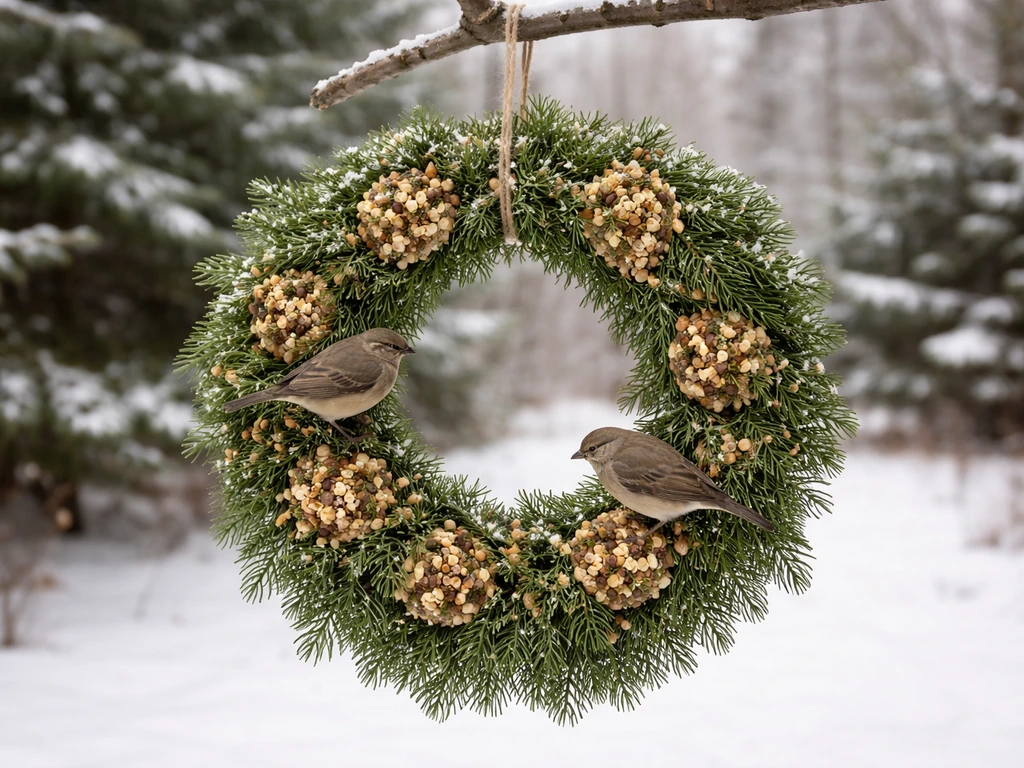
What you need before you start
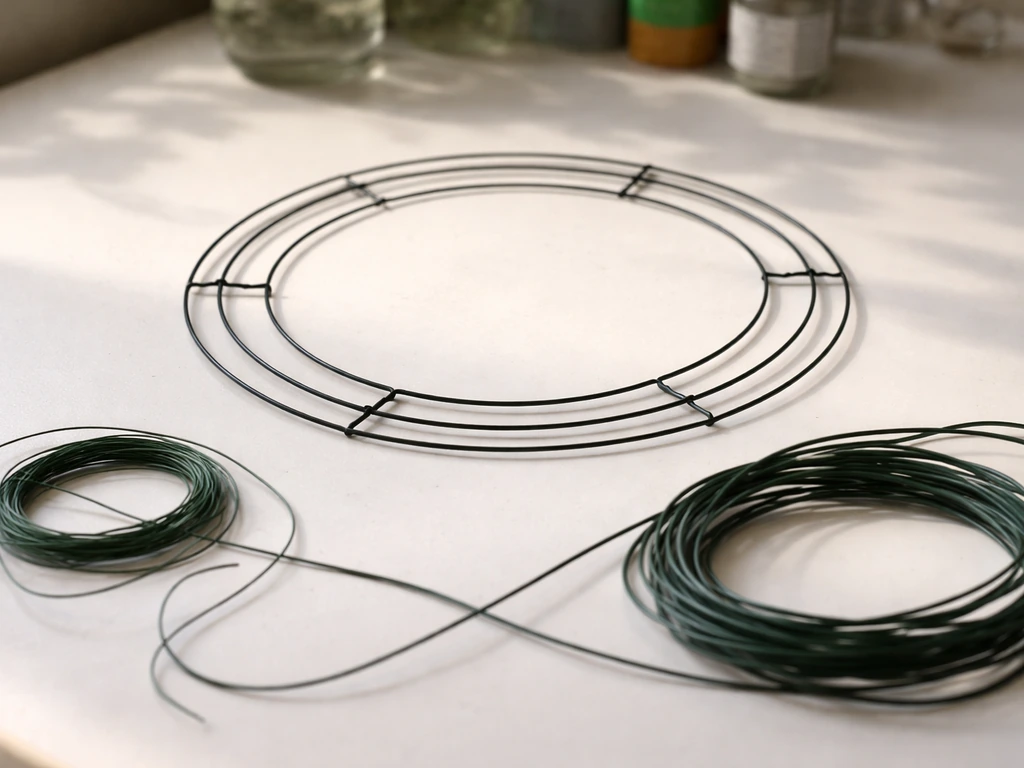
The good news is you probably already have most of this. A wire wreath frame (8 to 12 inches is a practical size) is the foundation, and you can find them at craft stores for a couple of dollars or reuse a wire coat hanger bent into a ring. Beyond that, keep the materials list simple and focused on what birds and cold weather actually demand.
- Wire wreath frame, 8 to 12 inches diameter (or a shaped coat hanger)
- Floral wire or thin garden wire for binding
- Natural greenery: fresh or dried pine, spruce, cedar, or eucalyptus branches (avoid holly berries and plastic décor)
- Suet or fat mix (homemade lard-based or commercial suet cake)
- Sunflower seeds, peanuts in shells, or a winter seed mix
- Small mesh bags or pieces of natural burlap (to hold loose seed on the wreath)
- Pine cones (optional, for rolling in suet and pressing into the frame)
- Heavy-duty outdoor twine or jute rope for hanging
- Wire cutters and pliers
- Scissors or pruning shears for trimming greenery
- Mixing bowl and spoon if making a fat/suet mix from scratch
Skip anything made from foam, plastic mesh, or synthetic ribbon. Those materials can trap birds' feet or toes, especially in freezing weather, and they don't hold up in rain and snow anyway. Stick with natural materials you can replace easily when the wreath degrades over the season.
Picking the right design before you build
There are two main ways people set up a wreath-style feeder: flat against a wall or window, or hanging freely from a branch or hook. Both work, but they suit different situations and bird species.
Window-mounted vs. free-hanging wreath
| Style | Best for | Bird access | Main risk |
|---|---|---|---|
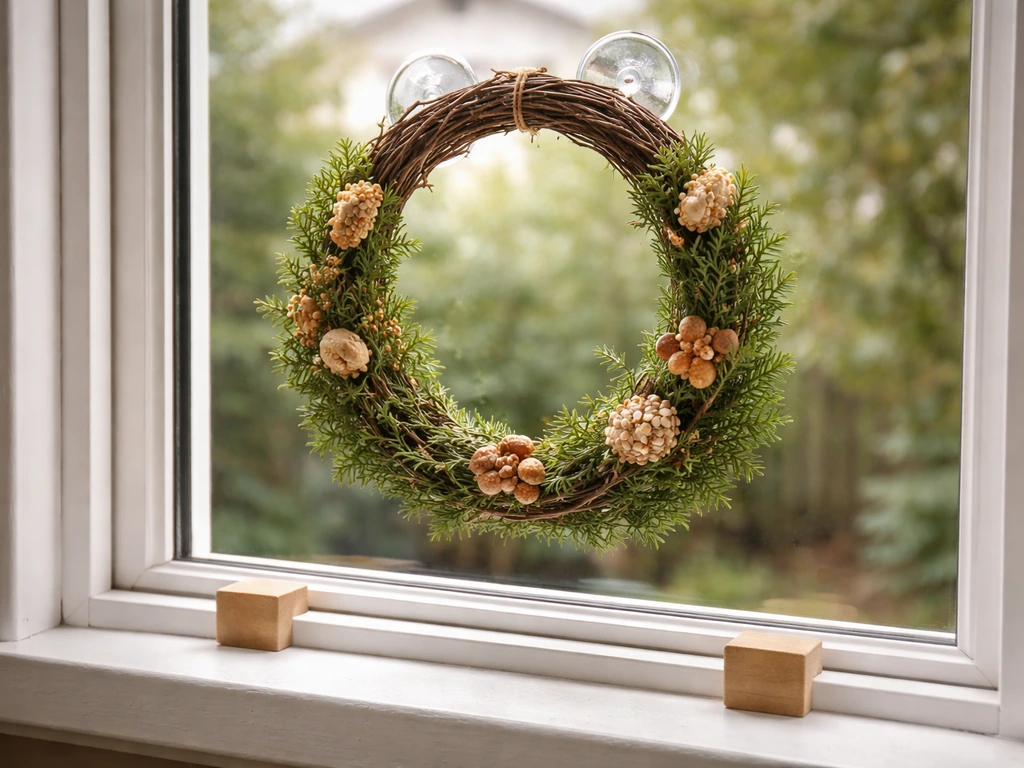
| Window-mounted | Small yards, close viewing | Birds land on frame and peck at suet/seed pressed into greenery | Window collisions if placed at the wrong distance |
| Free-hanging | Open gardens, fences, tree branches | Birds can approach from all sides; more species | Swings in wind, may need a stabilizing branch or second anchor point |
If you go the window route, placement distance really matters. Audubon's guidance is clear: hang a feeder either within about 3 feet of a window or more than 30 feet away from one. At 3 feet or closer, a bird that startles can't build up enough speed to injure itself if it hits the glass. At 30-plus feet, they're far enough to avoid treating your window as a flight path. Anything in between (say, 10 to 20 feet away) is the danger zone. For a wreath specifically, 3 feet or less is the easiest to manage.
Whichever style you choose, build in at least three or four clear landing points around the frame where birds can grip comfortably. An iit bottle top bird feeder with hanger is another simple hanging option if you want to try a different style beyond a wreath feeder. The wire frame itself works as a perch, but adding a few short horizontal twig sections wired across the bottom half of the wreath gives smaller birds like chickadees and nuthatches a much easier time feeding.
Step-by-step: building the wreath feeder
Budget around 45 to 60 minutes for your first build. It goes faster than you'd expect once the materials are in front of you. If your suet mix needs to set, do that the night before so it's firm by the time you're ready to assemble.
- Shape your frame if needed. If you're using a wire wreath form, it's already set. If you're bending a coat hanger, form a circle roughly 10 inches across and twist the hook end into a hanging loop at the top.
- Make your suet or fat mix. Melt one cup of lard or beef suet in a saucepan over low heat. Stir in one cup of peanut butter until smooth. Remove from heat and mix in two cups of plain oats, one cup of sunflower seeds, and half a cup of cornmeal. Pour into a shallow dish or silicone mold and refrigerate until firm (ideally overnight). Once solid, break or cut into chunks that fit between the wire sections of your frame.
- Press suet chunks into the frame. Work around the wire form, pressing firm suet pieces directly between the wire ribs so they sit snugly. Don't worry if they're not perfectly even. Leave some open wire sections as landing spots.
- Attach greenery. Cut pine, spruce, or cedar branches into 4 to 6-inch sections. Use floral wire to bind them onto the frame in small bunches, overlapping each bunch slightly to cover the wire. Keep about a third of the frame open (bottom portion) to stay clear for perching and easy bird access.
- Add seed pockets. Fill small mesh bags or folded burlap squares with sunflower seeds or a winter mix. Wire these into the greenery at two or three points around the wreath. Alternatively, press whole shelled peanuts directly into the suet or tuck them between branches.
- Attach pine cones. Roll any extra pine cones in softened suet, then roll them in birdseed. Wire them into the lower half of the wreath for an extra food source and visual texture.
- Add twig perches. Cut a few straight twigs about 5 to 6 inches long. Wire them horizontally across the bottom third of the wreath, spaced a few inches apart, so birds have a stable place to grip while they eat.
- Thread your hanging cord. Cut about 18 to 24 inches of heavy jute or outdoor twine. Loop it through the top of the frame twice and tie a secure knot, leaving enough length to hang from a hook or branch at the height you want.
- Let the whole thing set in a cool spot for 30 minutes before hanging so the suet firms back up from the warmth of your hands.
What to fill it with and how to get birds interested
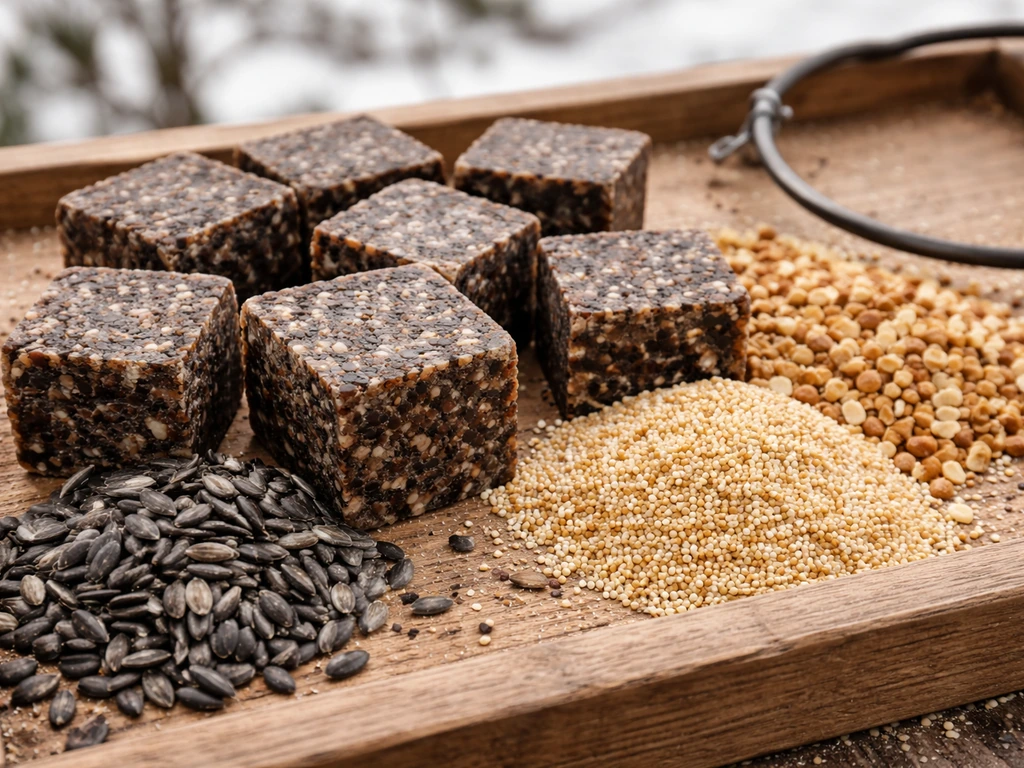
Winter is exactly when birds need high-fat, high-calorie food, so this is one type of feeder where suet really outperforms plain seed. That said, a combination of suet and seeds draws the widest variety of winter visitors.
Best winter food options for a wreath feeder
| Food type | Best birds attracted | Notes |
|---|---|---|
| Lard/suet mix (homemade) | Woodpeckers, chickadees, nuthatches, wrens | Stays firm in cold; goes rancid faster above 50°F |
| Commercial suet cake pieces | Same as above | Convenient; check label for no-melt formula in warmer spells |
| Black oil sunflower seeds | Finches, sparrows, chickadees, cardinals | Highest bang for your buck; fits well in mesh pockets |
| Shelled peanuts | Blue jays, woodpeckers, nuthatches | High fat content; great winter option |
| Mixed winter seed | Wide variety | Avoid cheap mixes with lots of milo or wheat; birds often ignore them |
To get birds to notice a new feeder, try sprinkling a small amount of loose seed on the ground directly beneath it. Birds feeding on the ground will look up and spot the wreath. You can also rub a bit of peanut butter onto the bare wire sections so the smell carries. Chickadees and nuthatches are usually the scouts; once they find it, other species follow. Give it three to five days before you decide it's not working.
One note on suet in warmer weather: if you're building this in fall or early winter and temperatures are still regularly above 50°F, use a no-melt commercial suet cake rather than a homemade lard mix. Homemade suet softens fast in warmth, can coat birds' feathers, and spoils quickly. Once consistent cold settles in, homemade mixes are fine.
Hanging it, placing it, and setting it up for winter
Hang the wreath at least 5 feet off the ground. If you are wondering how to hang a bird seed wreath safely, follow the height and placement tips so birds can feed with less risk from predators. That's Audubon's minimum for reducing predator access, and it's a good rule of thumb regardless of whether cats or squirrels are your main concern. Higher is generally better as long as you can still reach it easily for refilling and cleaning. If you are wondering how to hang a Mr. Bird Wildfeast wreath specifically, follow the same spacing and height tips, then ensure it is stable and easy to reach for refilling and cleaning how to hang mr bird wildfeast wreath.
Where to hang it
- Near a tree with natural cover nearby: birds prefer feeders within 10 to 15 feet of a shrub or branch they can retreat to quickly if startled
- Sheltered from prevailing wind: the north or west-facing side of a fence, wall, or hedge protects suet from temperature swings and keeps seeds from blowing out
- In a spot you can see from inside: you'll monitor it more often, refill it faster, and actually enjoy watching it
- Away from high-traffic areas like doors and driveways: winter birds are easily startled and may abandon a feeder that has constant human activity nearby
In very cold or snowy climates, consider hanging the wreath under a shallow overhang, porch roof, or large evergreen branch. If you're wondering how to hang mr bird wildfeast wreath models, the same placement ideas like using an overhang or evergreen branch to protect from snow apply here too. This keeps heavy snow from burying the food and extends how long it stays fresh between your checks. If you live where ice storms hit, bring the wreath inside during freezing rain events. Ice-coated suet and seeds can injure birds' beaks and feet.
If you want to hang multiple wreaths or pair this feeder with other styles like a seed bell or a seed wreath, spacing them at least 5 to 6 feet apart reduces competition and territorial squabbling, especially with more aggressive species like house sparrows. A seed bell is just another suspended option, and you can hang it using similar spacing and placement tips so birds can feed safely.
Keeping it safe, clean, and pest-free
This is where a lot of homemade feeders quietly fail. The build is the fun part, but the ongoing maintenance is what actually keeps birds healthy and coming back. A wreath feeder has some unique challenges because it has a lot of surface area, natural materials that trap moisture, and food pressed into tight spaces.
Cleaning schedule and method
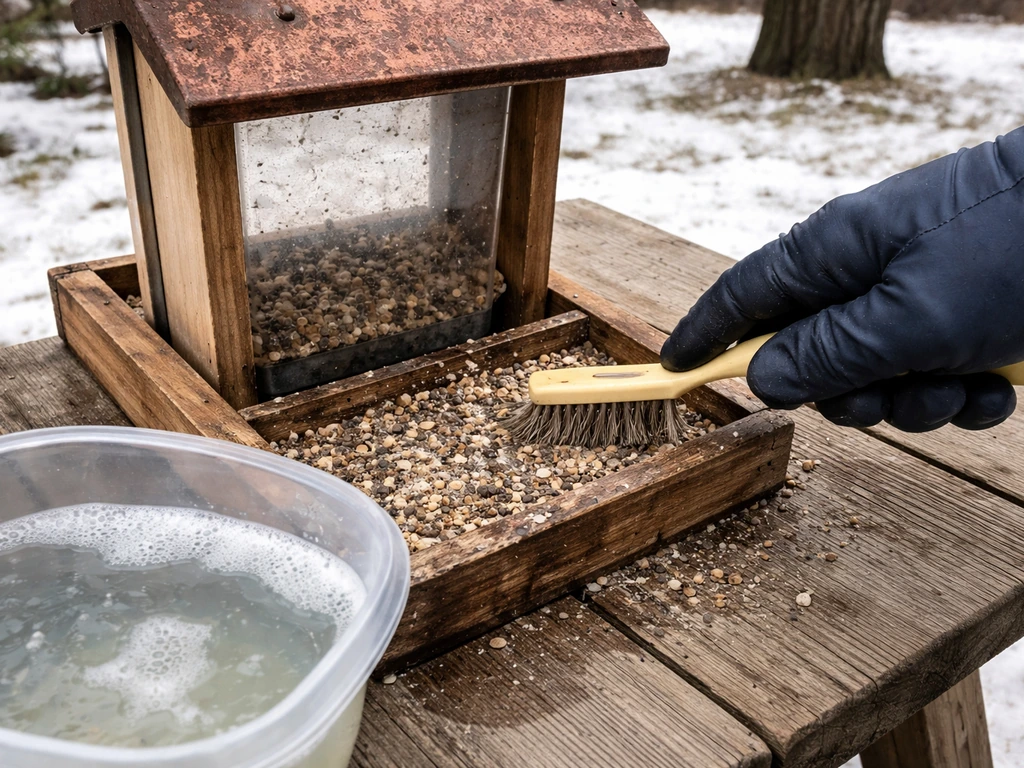
Plan to clean the feeder every two weeks as a baseline. All About Birds recommends cleaning feeders about once every two weeks, and more often in heavy use or wet weather or if there are salmonella reports or sick birds.
That's the schedule recommended by both Cornell Lab's All About Birds and the U. S. Fish and Wildlife Service for seed and suet feeders. In wet weather or if you notice sick or lethargic birds nearby, bump that up to once a week.
For a wreath-style feeder, cleaning means removing the old food, discarding any moldy greenery, and wiping down the wire frame. Use a dilute bleach solution (1 part bleach to 9 parts water) on the metal frame sections, rinse thoroughly, and let the frame air dry completely before rebuilding. Do not refill a damp feeder. Mold grows fast in cold, wet conditions when there's residual moisture.
Because the greenery and suet portions aren't cleanable in the same way a plastic or wood feeder is, treat those as disposable. When you clean the frame every two weeks, replace the suet and seed entirely and refresh the greenery. This is actually one of the advantages of a wreath feeder: it encourages regular full rebuilds rather than just top-offs, which keeps the food genuinely fresh.
Always sweep up fallen seed and suet scraps under the feeder after cleaning. Old seed on the ground can mold, attract rats, and spread disease. A light raking every few days between cleanings is enough to stay on top of it.
Dealing with squirrels and other pests
- Squirrels: a wreath is harder to squirrel-proof than a tube feeder, so location is your main lever. Hang it from a thin branch they can't run along, or use a smooth metal hanging wire instead of a thick rope they can grip and shimmy down.
- Starlings and house sparrows: they love suet and will dominate a feeder. Use a suet mix with hot pepper flakes (capsaicin) added. Songbirds don't react to it, but starlings and many invasive species don't like the irritant and often move on.
- Insects and wasps: in warmer stretches of winter, suet can attract insects. Move the feeder to a shadier, cooler spot and temporarily switch to a drier seed-only mesh bag while temperatures stay mild.
- Mold and spoilage: always press suet firmly onto the frame rather than leaving loose clumps. Loose chunks fall, sit on the ground, and go bad fast. When in doubt, smell the suet before refilling. Fresh lard-based suet smells neutral. Rancid suet smells noticeably sour or sharp.
If birds aren't coming
Give it three to five days minimum. If nothing has visited after a week, try these adjustments one at a time: move it 5 to 10 feet closer to a tree or shrub, add a small water source nearby (even a shallow dish refreshed daily), or switch from a mixed seed pocket to straight black oil sunflower seeds, which almost no backyard bird can resist. Also check that the feeder isn't swinging excessively. A wreath that spins or swings wildly in the wind can make birds nervous about landing. A second anchor point at the bottom, tied loosely to a fence rail or branch, settles the movement and makes it much easier for birds to use.
FAQ
Can I add extra greenery or decorative items to my bird feeder wreath without making it unsafe?
Yes, but only if you do it in a way that still keeps birds’ feet and toes clear. If your wreath uses suet or thick seed blocks, make sure there is open wire or twig perch space around them, and avoid burying birds in soft greenery where they can slip or get coated in warm, melting fat. If you must add a fresh perch later, tie small, smooth twigs across the lower third of the frame, not over the densest food area.
What seed and suet type should I use if birds aren’t eating from the wreath yet?
For seed, black oil sunflower and small-seeded mixes tend to work best because they dry quickly and reduce waste. If you are using suet, choose a no-melt option when daytime temps are consistently above about 50°F, and keep the suet portion pressed firmly so it does not crack and fall apart onto the ground. Once it is consistently cold, you can switch to homemade suet.
How do I know when my wreath feeder is too moldy to reuse, and what should I replace first?
To reduce mold, do a full rebuild sooner if the feeder stays damp. Signs include a musty smell, gray/white fuzz on seed or greenery, and clumps that look wet or sticky rather than dry. In those cases, discard all loose seed, replace the suet and greenery, wipe the wire again, and do not refill until the frame is fully air-dry.
What should I do if squirrels or aggressive birds keep taking over the wreath feeder?
If squirrels or larger birds are dominating the feeder, add barriers to perch access rather than just blocking the food. Try tightening placement near a tree/shrub edge so they have less open approach space, use a second stabilizing tie point to prevent swinging, and consider switching to a tighter suet style where birds peck from perches but can’t rake loose seed aggressively. For persistent issues, add a baffle to the hanging support above the wreath.
Is it safe to rub peanut butter on the wreath frame, and how much should I use?
Stop using peanut butter if it gets messy or smeared onto birds’ feathers. If you use it, apply only to bare wire sections in a thin layer and clean off any residue during the next scheduled wipe-down. Also place it so birds can feed without stepping through thick, sticky spots that trap seed and moisture.
Can I protect the wreath from rain or snow with waterproofing or coatings?
Yes, but skip the spray-on glues and wet coatings. Only use dry, bird-safe plant materials and wire that remains flexible, not brittle, when cold. If you want weather protection, focus on placement under an overhang and use disposable greenery, then rebuild more often in wet storms rather than trying to seal the feeder.
What happens if I can’t clean or refill the wreath bird feeder for a week?
If you’re away for longer than a week, keep in mind that wreath feeders can go from “fresh” to “damp” faster than enclosed feeders due to lots of surface area. Plan for either weekly maintenance before you leave, or temporarily reduce the amount of greenery so there is less material holding moisture, then rebuild when you return.
How can I tell if my wreath is moving too much for birds to feel safe, and how do I fix it?
Wreath feeders often need more frequent adjustments when wind is strong because landing confidence depends on stable perches. If the wreath twists or swings, add a second anchor point at the bottom and shorten any loose hanger sections so the frame stays aligned. Birds will usually return within a few days after stability improves.
What are the most common reasons birds ignore a newly made wreath feeder?
Unusual behavior like birds hovering, vocalizing at the feeder but not feeding, or abrupt abandonment can mean the food is unsuitable or the environment is unsafe. First check for dampness, mold, or melting suet, then confirm placement is within safe distance of escape cover (close enough that birds can retreat quickly, not so close that windows are a hazard). Finally, switch from mixed seed to black oil sunflower to standardize what birds can quickly consume.