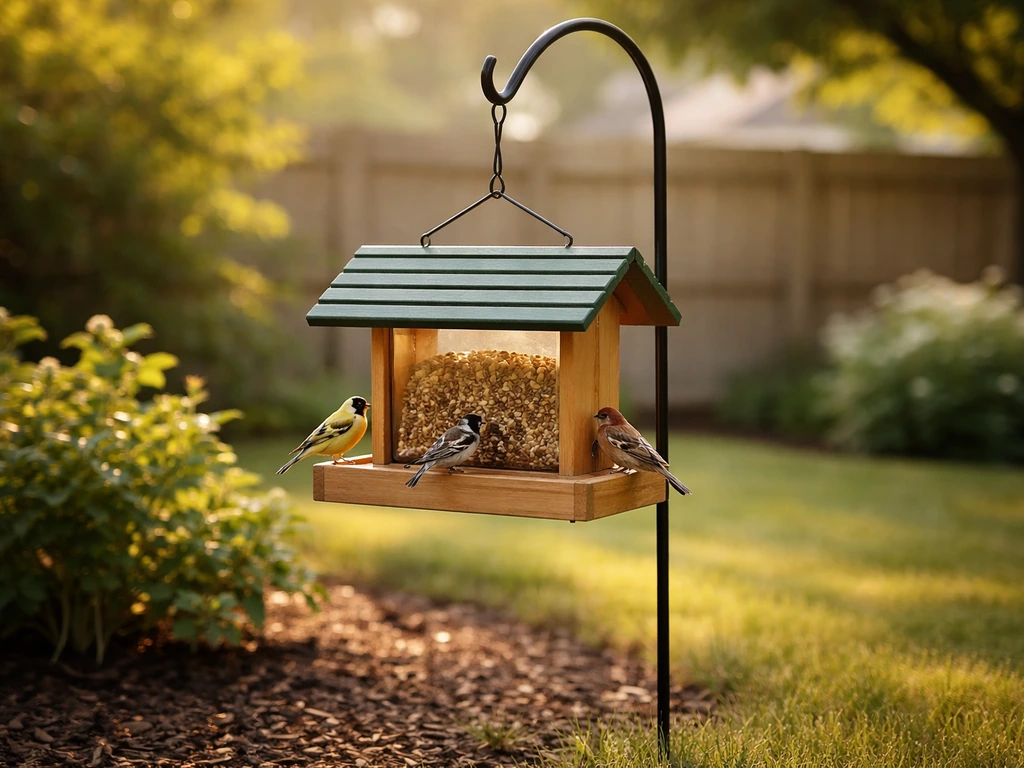
Birds will show up within a few days if you get three things right: put the feeder somewhere birds already feel safe, fill it with food they actually want, and keep it clean enough that they come back. Most people who set up a feeder and see nothing for weeks are usually making one or two fixable mistakes, and this guide will help you spot them fast.
How to Draw Birds to a Bird Feeder: Quick Setup Tips
Marcus Brennan
18 May 2026
Quick diagnosis: why birds aren't coming yet
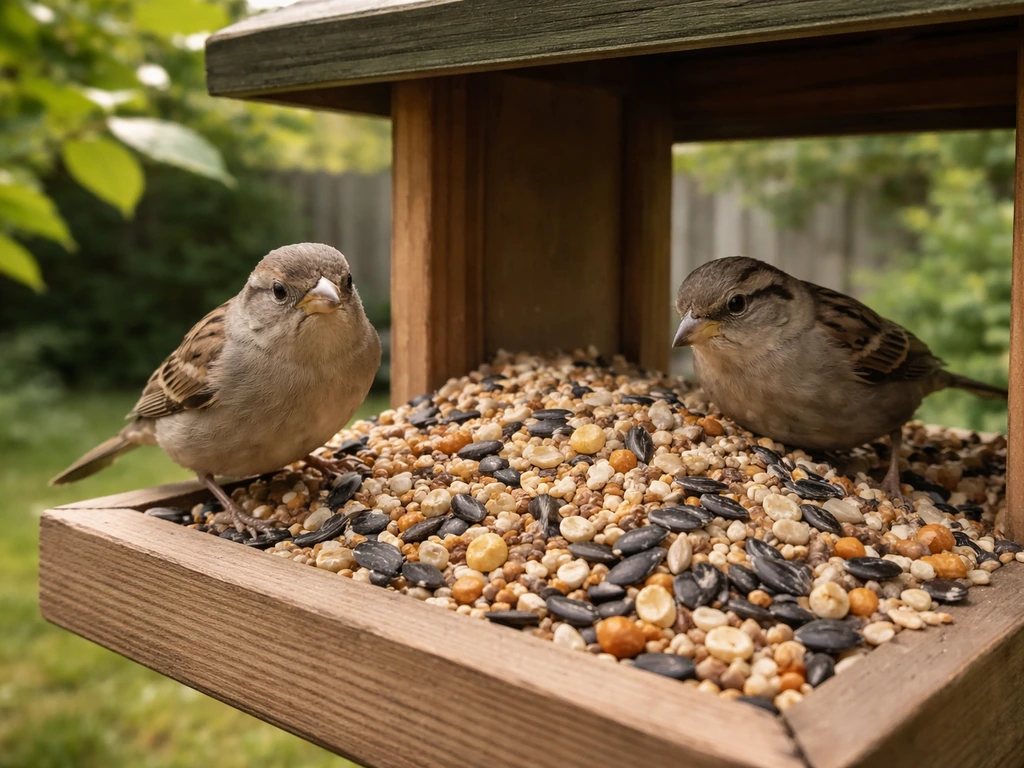
Before changing anything, run through this quick checklist. The most common culprits are bad placement, wrong food, or a feeder that's been sitting untouched long enough for the seed to go stale or moldy. Birds have sharp senses and won't touch spoiled food.
- Feeder is too exposed with no nearby cover (shrubs, trees) for birds to feel safe approaching
- Seed mix is a cheap filler blend with milo, oats, or wheat that most backyard birds simply ignore
- The feeder has been up for less than a week (birds need time to discover it)
- Squirrels or large aggressive birds are dominating and scaring smaller species away
- Old, wet, or moldy seed is sitting in the feeder
- The feeder is placed at a window-collision risk distance (roughly 3 to 30 feet from a window)
- There's no water source nearby
Check each of these before spending money on new gear. Often the fix is free: empty the feeder, refill with fresh seed, and move it a few feet closer to a shrub or tree. Often the fix is free: empty the feeder, refill with fresh seed, and move it a few feet closer to a shrub or tree, which is also the kind of quick step-by-step shown in a bird feeder tutorial. If you've only had it up a few days, just wait it out a little longer. Birds in new areas typically discover feeders within one to two weeks.
Choose the right feeder type and food
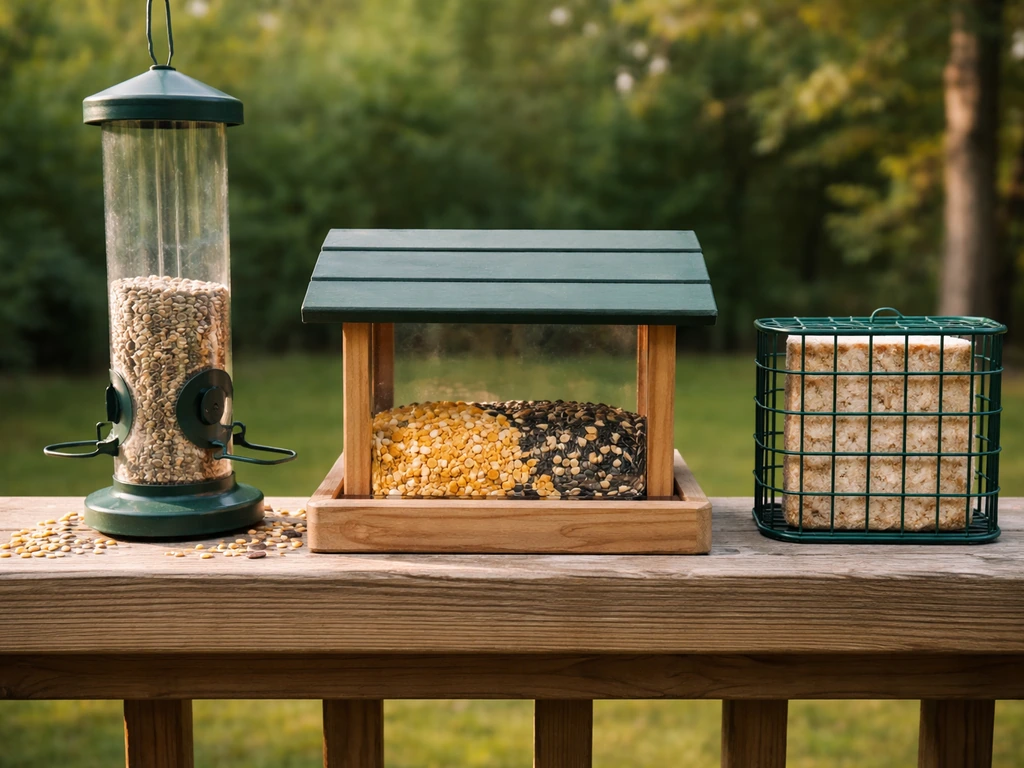
Matching feeder style to food type to the birds you want is the single biggest lever you can pull. A tube feeder packed with cheap mixed seed is a common waste of money. Get specific and you'll see results faster.
The feeder types that actually work
Tube feeders work great for small perching birds like chickadees, finches, nuthatches, and titmice. Fill them with black-oil sunflower seed and you'll cover a wide range of common backyard visitors. Hopper or platform feeders suit shrub and treetop feeders like cardinals and jays. For ground-feeding species like mourning doves and juncos, a flat tray or even a clean, flat board on the ground works. Suet feeders mounted well off the ground are the go-to for woodpeckers, nuthatches, chickadees, and wrens, all of which are insect-eating birds that go for high-fat foods.
The foods worth buying
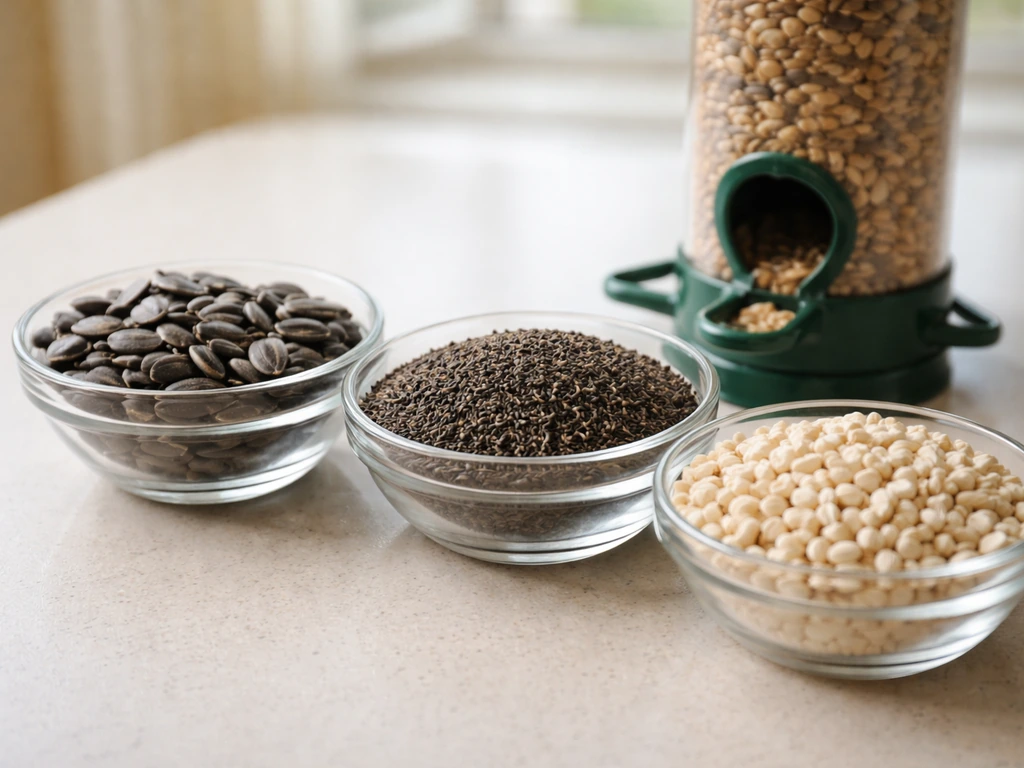
Skip the all-purpose mixes that are mostly milo and filler grains. Most songbirds toss those aside and it just makes a mess. The seeds that actually pull birds in are black-oil sunflower (the single best all-around choice), safflower, white millet, and nyjer (also called thistle). [Nyjer is particularly effective for American Goldfinches](https://edis.
ifas. ufl. edu/publication/UW192) and other finches and requires a specific tube feeder with tiny ports. Suet cakes are excellent in cooler months and attract a different mix of species than seed does.
If you're going for hummingbirds (mid-spring through fall in most of the U. S. ), make your own nectar: 1 part plain white sugar dissolved in 4 parts boiling water, cooled before you fill the feeder. No honey, no red dye, no additives.
| Feeder Type | Best Food | Birds Attracted |
|---|---|---|
| Tube feeder | Black-oil sunflower, nyjer | Chickadees, finches, nuthatches, titmice, siskins |
| Hopper/platform feeder | Black-oil sunflower, safflower | Cardinals, jays, finches, woodpeckers |
| Suet cage | Suet cakes (plain or peanut butter) | Woodpeckers, chickadees, nuthatches, wrens, orioles |
| Ground tray | White millet, sunflower chips | Mourning doves, juncos, sparrows, towhees |
| Hummingbird feeder | 1:4 sugar-water nectar | Hummingbirds |
| Nyjer/thistle tube | Nyjer seed | American Goldfinch, house finches, redpolls |
One thing to avoid completely: bread, cooked rice, and sugary human food. The U.S. Fish & Wildlife Service flags these as potential sources of harmful bacteria and mold that can cause respiratory disease in birds. Stick to the seed and suet options above and you're on solid ground.
Best feeder placement: height, visibility, and safety
Where you hang the feeder matters as much as what's in it. Get this wrong and birds will spot the feeder but never feel safe enough to land.
Height and distance from cover
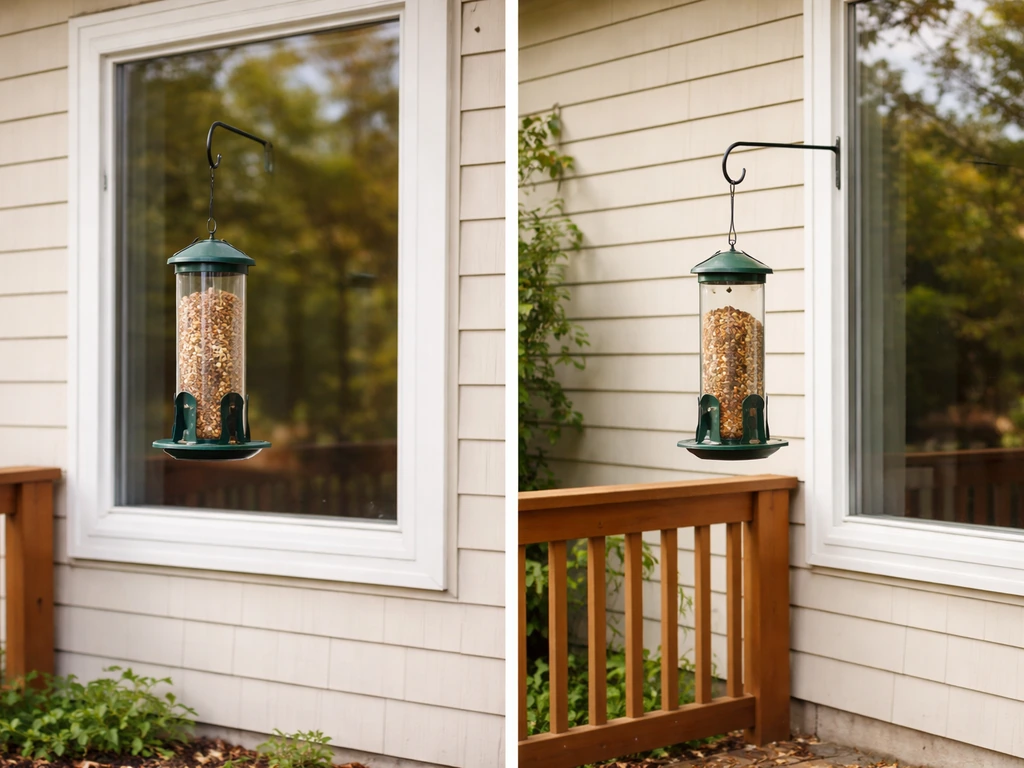
Aim for at least 4 to 5 feet off the ground. This height puts the feeder out of easy reach of ground predators like cats while still being accessible and visible to birds. Place the feeder within about 10 feet of natural cover like a shrub, hedge, or tree. Birds use that cover as a staging area: they'll perch there, check that the coast is clear, then fly in to feed. Too much open space between cover and the feeder and they won't bother.
Window collision risk
This one trips people up. The safe zone is either very close to a window (within 3 feet, so a bird can't build up fatal speed if it startles) or well beyond 30 feet away. The danger zone is that middle range of roughly 3 to 30 feet, where birds fly at full speed and hit glass hard enough to be killed. If you're working with limited yard space, a window-mounted suction-cup feeder placed right against the glass is actually safer than hanging one 10 feet out.
Add a water source
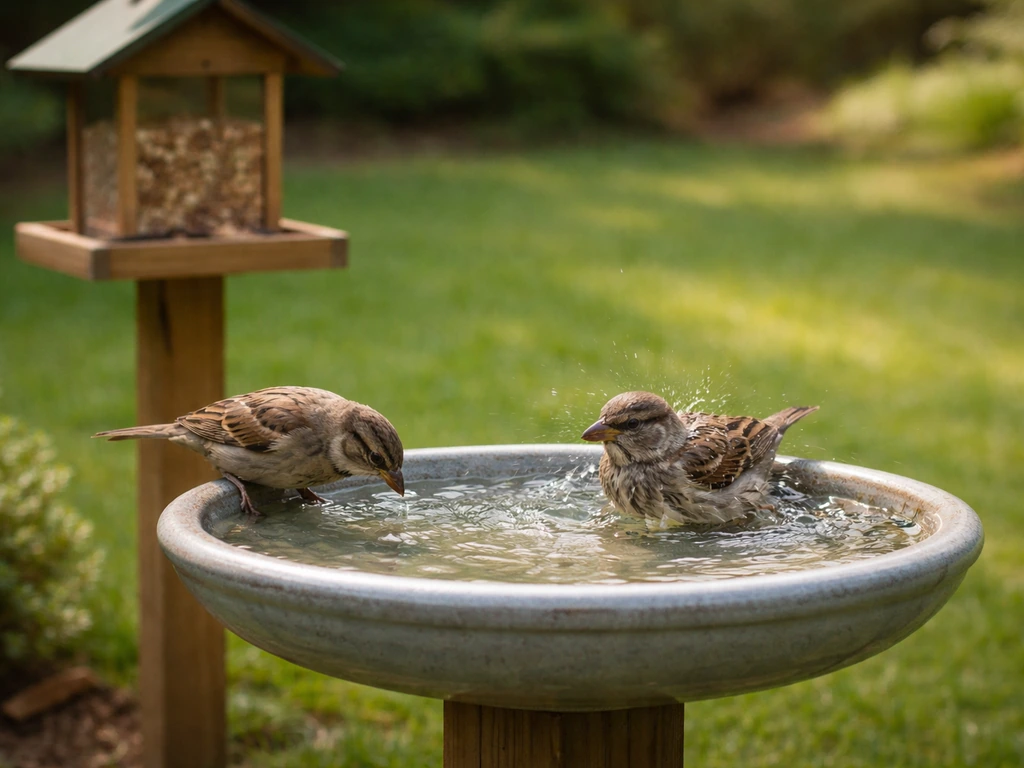
A birdbath or shallow water dish placed near (but not directly under) the feeder can double how many birds visit your yard. Birds need water for drinking and bathing year-round. Keep it clean and fresh, and never add salt to prevent freezing in winter as that's harmful to birds.
How to seed and schedule feeding for faster visits
Fill the feeder consistently, especially in the first few weeks. Birds are creatures of habit and once they find a reliable food source, they'll return daily. Let the feeder go empty for several days in a row and they'll drop it from their route.
Top off the feeder every two to three days, or daily if you're seeing heavy traffic. Only put out as much food as birds can eat in a couple of days, especially in warm or wet weather when seed can mold quickly. In the early days, a partially filled feeder actually works in your favor because it forces you to refresh the seed more often, keeping it attractive.
For hummingbirds, timing is critical. They feed every 10 to 15 minutes and visit huge numbers of flowers and feeders daily. That means a feeder that runs dry even for a short stretch can break the habit. Especially in peak summer, check hummingbird feeders daily and swap out the nectar every two to three days (or sooner in hot weather) because it ferments fast.
Morning is when bird activity peaks, so make sure the feeder is full before sunrise. If you refill in the evening, you'll be set for the busy morning window. That said, birds feed throughout the day, so don't stress too much about the exact timing once they've found your feeder.
Maintenance and cleaning to keep food fresh and safe
A dirty feeder is one of the fastest ways to stop birds from visiting and to spread disease among the ones that do. Clean your feeder at least once every two weeks as a baseline. During heavy use, wet or humid weather, or if you hear about salmonella outbreaks or see sick birds in your area, step that up to weekly or more.
- Empty the feeder completely and dispose of any old, wet, or clumped seed
- Rinse with warm water to loosen debris
- Scrub all surfaces, ports, and perches with a brush using a dilute bleach solution (1 part bleach to 9 parts water, no stronger)
- Rinse thoroughly several times until no bleach smell remains
- Let it air dry completely before refilling, because moisture sitting in the feeder accelerates mold growth
- Refill only with fresh, dry seed
When you're choosing or building a feeder, pick a design that actually comes apart easily so you can get into every corner. If you also want to know how to draw one, start by sketching the main shape of the feeder body, then add the perches and the seed tray details how to draw a bird feeder. A feeder you can't clean properly is a feeder that will eventually harm the birds visiting it. Tube feeders with wide removable bases and hopper feeders with lift-out trays are easiest to maintain.
Also check the area below the feeder regularly. Spilled seed on the ground can attract rats, and seed hulls can build up into a damp, moldy mess. Rake or sweep under the feeder every week or two.
Pest-proofing so birds aren't scared away
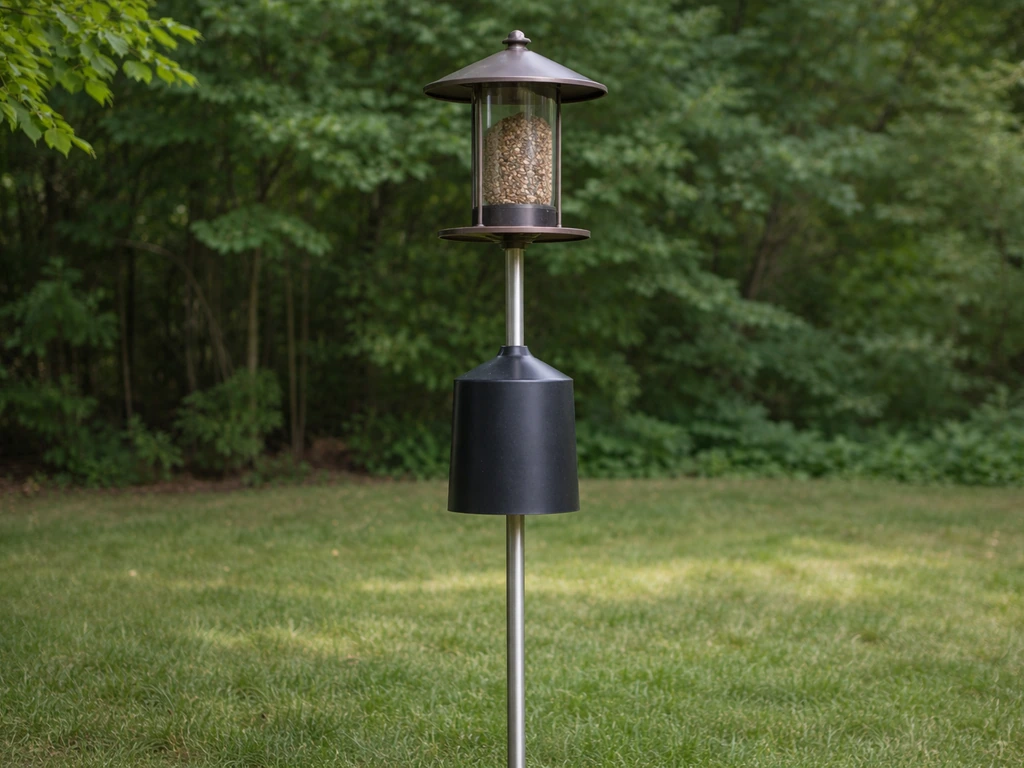
Squirrels are the main offender, and they don't just eat the food: they scare smaller birds away and can destroy feeders entirely. The good news is you can get very close to squirrel-proof with a couple of targeted moves.
Baffles and pole mounting
The most effective setup is a smooth metal pole with a baffle mounted on it. The baffle needs to be large enough that a squirrel can't reach around it (an inverted cone baffle should be at least 13 inches in diameter) and positioned so a squirrel landing on it tips it and slides off. Make sure the pole is at least 10 feet away from trees, fences, or structures that squirrels can leap from, because they can jump surprisingly far. A cage around the feeder is another option: it lets small birds through but physically blocks squirrels from reaching the seed.
Food choices that help
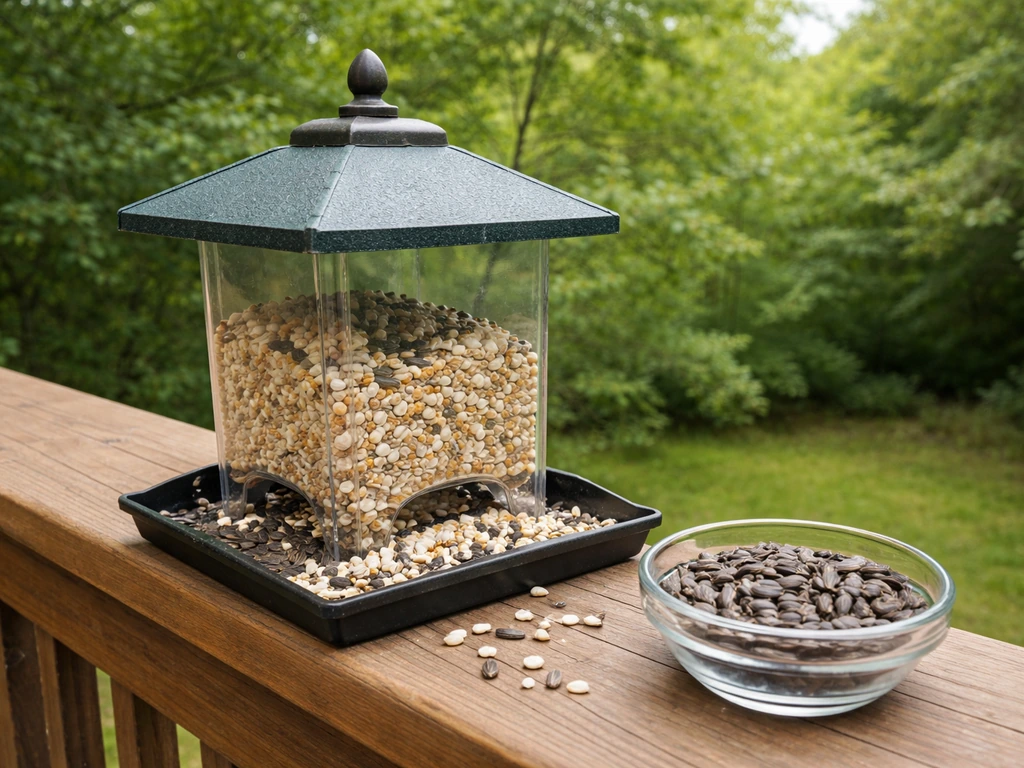
Safflower seed is one of the few seeds that many squirrels dislike but that birds like cardinals and chickadees readily eat. Switching part of your mix to safflower can reduce squirrel interest without sacrificing bird visits. Nyjer seed in a tube feeder with tiny ports also tends to be naturally squirrel-resistant because squirrels struggle to extract it efficiently.
Bigger birds and other pests
If European Starlings or House Sparrows are monopolizing the feeder, switch to a tube feeder with shorter perches, which favors smaller birds. Avoid platform feeders if these species are a problem in your area. For rats, the main fix is keeping the ground under the feeder clean and not letting seed pile up overnight. Use a no-waste seed mix (hulled sunflower chips and nyjer) to cut down on shells that accumulate below.
Troubleshooting for different bird species and conditions
Not seeing the specific birds you want? The issue is usually a mismatch between feeder type, food, or habitat. Here's how to think through it by species and situation.
Goldfinches not showing up
American Goldfinches are strongly drawn to nyjer (thistle) seed and need a tube feeder with fine ports designed for it. If you're using a standard tube feeder with sunflower seed, they may visit occasionally but won't reliably flock to it. Also note that goldfinches in many regions are most abundant in spring and fall migrations, so timing matters.
No woodpeckers
Woodpeckers want suet, and they want the feeder mounted well off the ground on a tree trunk or pole where they can cling vertically. A suet cage hung from a branch often gets ignored; one strapped to a tree trunk or a tall pole gets action fast. Peanut-butter suet can also pull in cardinals and jays as a bonus.
Hummingbirds not finding the feeder
Hummingbirds are highly visual and are attracted to red. Most commercial hummingbird feeders are already red, but if yours isn't, tie a red ribbon near it to help them spot it. Make sure the nectar ratio is correct (1 part white sugar to 4 parts water), that you're in the right season for your region, and that the feeder is clean and fresh. A feeder with fermented or cloudy nectar will be avoided. If native red or orange flowering plants are nearby, even better: plants like trumpet vine, bee balm, or salvia act as natural attractants.
Birds disappear after a few weeks
This is common in late spring when natural food becomes abundant again and in late summer when birds are less social and travel in smaller groups. It doesn't mean you did anything wrong. Keep the feeder clean and stocked. Many of those birds will be back in fall when natural food gets scarce, and they'll remember your feeder was reliable.
Cold or stormy weather and no visitors
During heavy snow or very cold snaps, birds actually need feeders more than ever, but they may hunker down and feed less frequently. Keep the feeder clear of snow and ice so they can access it. High-calorie foods like suet, peanut-butter suet, and black-oil sunflower seed are especially valuable in winter because birds burn more energy staying warm. If you're also troubleshooting your feeder setup itself during this time, the window bird feeder approach can be a good option because it lets you observe birds up close and verify they're actually finding the food. If you want a smooth bird feeder setup from the start, focus on safe placement, the right food, and consistent cleanliness feeder setup itself.
The overall strategy here is straightforward: match the food to the birds, place the feeder where birds feel safe, keep everything clean and fresh, and protect the setup from pests. Most people who stick with those basics see reliable visitors within a week or two, sometimes faster. If you're still waiting, go back to the diagnosis checklist at the top and work through it again. One small adjustment, moving the feeder closer to a hedge, swapping in fresh seed, or adding a baffle, is usually all it takes.
FAQ
I’m trying to draw birds to my bird feeder, but I don’t know what to put out first. What’s the best all-around starting setup?
If you want a quick win, use the “wide-appeal” combo: a tube feeder filled with black-oil sunflower, placed within about 10 feet of cover, and kept filled on a steady schedule for at least 10 to 14 days. Then adjust by species, because changing both food and placement at once makes it hard to know what worked.
How can I tell if birds are being attracted but not comfortable enough to land?
If birds are active but not landing, it’s often a safety and access issue. Move the feeder closer to cover by a few feet, and check perches for wobble or awkward heights. Also confirm the feeder is not directly in line with a predator route (like a clear walkway) where birds hesitate to approach.
What’s the safest way to avoid stale or moldy seed while I’m trying to get birds to my feeder?
Use a “small-batch” refresh rule: only put out what will be eaten in 2 days (3 max if it is cool and dry). In hot or wet weather, switch to daily topping, and discard any seed that looks clumped, smells off, or shows early mold.
Should I move the feeder immediately if birds aren’t showing up, or give it time?
Yes. Birds often learn a feeder’s location when it stays consistent. During troubleshooting, change one variable at a time, and keep the feeding schedule regular. If you must move the feeder, shift it gradually (a few feet over a week) rather than relocating far away overnight.
Is the “safe near the window or far away” placement advice always practical for a yard with limited space?
No, not if the goal is to attract birds to a single feeder reliably. Window suction-cup feeders can reduce the strike risk when placed right against glass, but they also tend to limit which species can use them. If you try one, pair it with correct food and make sure there is safe cover nearby so birds still feel secure while approaching.
Can I mix foods in the same feeder to attract more species faster?
Start by choosing the feeder first, then the food. If you offer nyjer, use a tube feeder with tiny ports, otherwise you will mainly waste seed. Likewise, suet usually requires a suet feeder format, and ground feeders require a flat surface they can land on easily.
What’s the most effective way to stop squirrels from ruining my bird-feeder visits?
If squirrels are the main problem, baffles and pole spacing are usually more effective than adding “more” seed. Keep the pole far from jump routes (trees, fences, ledges), and consider a cage feeder that allows small birds through while blocking squirrels from reaching seed directly.
Do birds actually use a water dish if I already have the feeder, and where should I put it?
Most bird-friendly water options work, but avoid anything that can trap or harm birds. A shallow, clean dish placed near but not directly under the feeder helps, and in winter you should keep water accessible without using harmful additives like salt.
Why am I getting some birds, but not the species I want, even though the feeder is full?
If you have a lot of birds but one feeder type attracts only a few species, check for a mismatch: finches often need nyjer, ground birds need trays, and woodpeckers respond to vertical suet setups. A quick adjustment is to add a second feeder matched to the species you want rather than changing everything at once.
What changes should I make for feeding during very cold weather or heavy snow?
During cold snaps, birds may visit less frequently but still need high-energy food. Keep suet and black-oil sunflower available, clear snow and ice so they can access the food, and avoid letting the feeder stay empty for long stretches.
I’m seeing birds come and go. Does that mean my setup is failing?
In many regions, feeder activity spikes in waves, especially around migration. If you see “temporary disappearances,” keep the feeder clean and stocked, don’t panic-adjust daily, and reassess after 1 to 2 weeks, because returning birds may be responding to shifting natural food sources.
How do I know whether my cleaning habits are helping or accidentally making birds avoid the feeder?
Birds can be turned off by smell and residue. Clean on schedule, remove old seed that sits wet, and scrub parts that contact seed or nectar so they don’t build a sticky film. If you notice repeated avoidance after cleaning, check that no detergent residue remains, and rinse thoroughly.
I’m trying to draw hummingbirds in. How do I prevent the nectar from going bad and ruining the visits?
For hummingbirds, the key is freshness and correct ratio. Use the exact sugar-to-water mix, keep the feeder clean, and plan to check daily in hot weather, since cloudy or fermented nectar will be avoided. Also confirm seasonal timing in your area, because feeders can sit unused outside the migration window.
Next Article
Backyard Bird Feeder Setup: Step-by-Step Guide for Beginners
Step-by-step backyard bird feeder setup: choose feeders and food, place safely, DIY builds, fix pests, and maintain all