You can build a working tray bird feeder in about an hour using a piece of scrap wood, a handful of hardware, and basic tools you almost certainly already own. If you are trying to make a cardboard bird feeder instead of a wooden one, the approach is different but you can still build something safe and effective for backyard birds. The finished feeder will sit flat, drain after rain, and attract a wider variety of birds than almost any other style you can make at home, including cardinals, blue jays, mourning doves, juncos, and sparrows. Here's exactly how to do it, from cutting the first board to hanging it safely outside. If you want a budget, kid-friendly build, you can also learn how to make a bird feeder out of an egg carton using the same tray-style concept how to make a bird feeder out of egg carton.
How to Make a Tray Bird Feeder: Step by Step Guide
What a tray bird feeder actually is (and why you might want one)
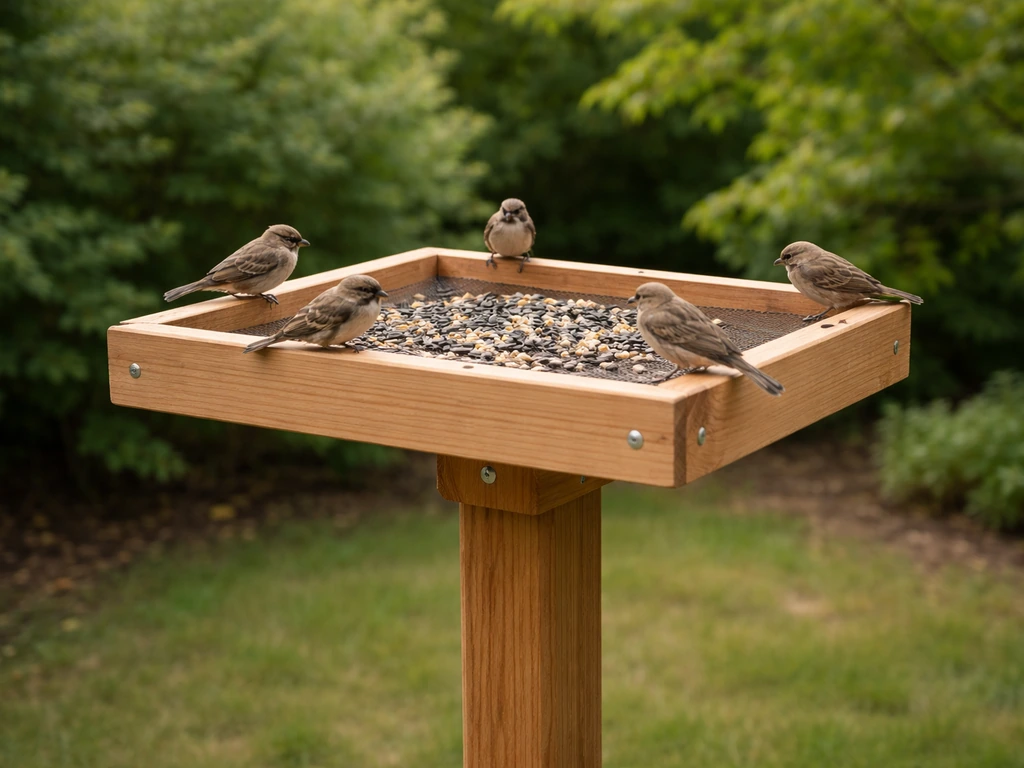
A tray feeder, also called a platform feeder, is just a flat raised surface where you spread seed directly. There are no feeding ports, no tubes, no tricky auger mechanisms. You pour seed on the tray, birds land and eat. That simplicity is the whole point.
Compared to a tube or hopper feeder, a tray is easier to refill (no funnel needed), easier to clean, and accessible to a much larger range of species. Ground-feeding birds like mourning doves and dark-eyed juncos that won't touch a tube feeder will use a tray without hesitation. Cardinals strongly prefer the wide, stable landing platform. Blue jays and grosbeaks, which are too big and clumsy for narrow perches, show up regularly too.
The main trade-off is exposure. Because the tray is open, seed can get wet in bad weather and squirrels have an easy time accessing it. Both problems are solvable with a few simple design choices and smart placement, which this guide covers in full.
If you're already thinking about catching seed that falls below a feeder, that's a slightly different project. A tray feeder is the primary feeding surface; a seed catcher tray attaches below an existing feeder to collect fallen seed. This guide focuses on building the standalone tray feeder itself.
What you'll need: materials and tools
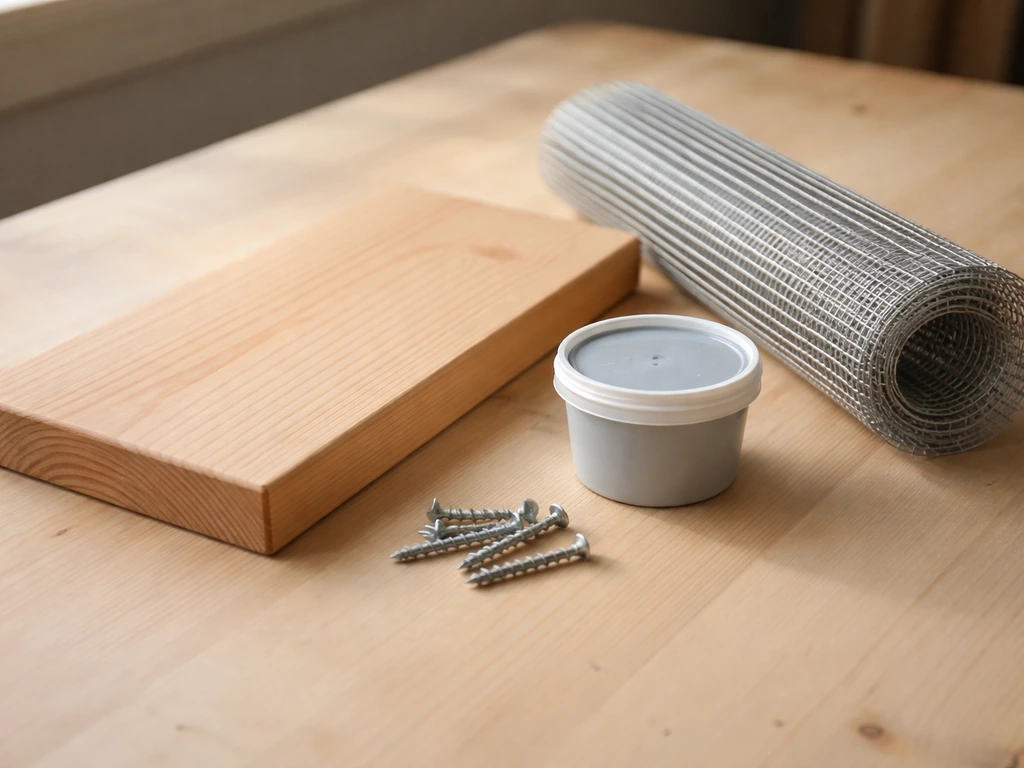
You don't need to buy much. The core of this feeder is a flat wooden tray with a lip around the edges to keep seed from blowing off, plus a mesh or drainage layer so rainwater doesn't pool. Here's what to gather before you start.
Materials
- One piece of exterior-grade plywood or cedar board, roughly 12 x 16 inches and at least 1/2 inch thick (cedar is ideal because it resists rot; a scrap from any home project works fine)
- Four strips of wood for the side rails, about 1 inch wide and 3/4 inch tall (these form the lip to hold seed in place)
- Small piece of 1/4-inch hardware cloth or galvanized metal mesh, cut to fit inside the tray (this is your drainage layer; you can skip it for now and drill drain holes instead)
- Exterior wood glue
- 1-inch wood screws (about 12 to 16)
- Eye bolt or screw hook if hanging, OR a 4- to 5-foot wooden or metal post if mounting on a pole
- Paracord, chain, or wire rated for outdoor use (for hanging versions)
- Exterior wood sealant or linseed oil (optional but extends the feeder's life significantly)
- Sandpaper, 80- or 120-grit
Tools
- Saw (handsaw, circular saw, or jigsaw)
- Drill and bits
- Measuring tape and pencil
- Square
- Wire cutters (if using hardware cloth)
- Staple gun or small U-shaped staples (to secure mesh inside the tray)
Total cost if buying everything new is usually under $20. If you have scrap wood and a drill, you may spend nothing at all.
Step-by-step: building your tray feeder
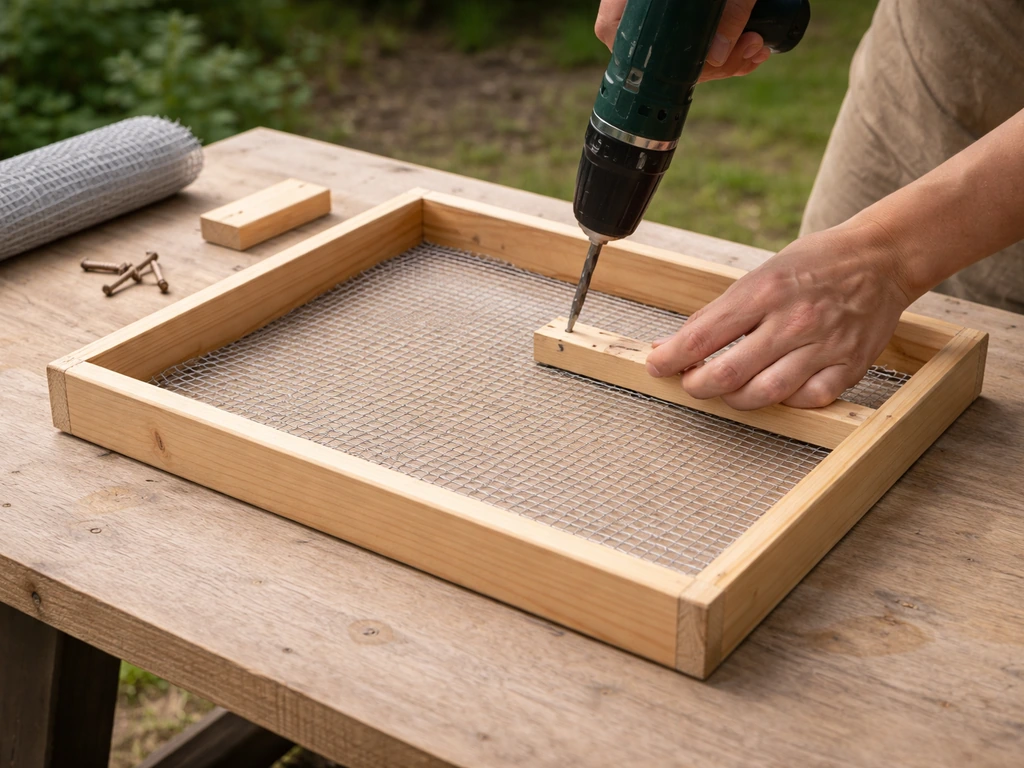
Plan on about 45 to 60 minutes for the build itself, plus drying time if you apply sealant. The steps below produce a simple, sturdy tray that handles real outdoor conditions.
- Cut your base board to size. A 12 x 16-inch base is a good starting point: large enough for several birds to eat at once but not so big it becomes heavy or awkward to hang. Sand any rough edges so birds won't catch their feet.
- Cut your four side rails. Two pieces should match the 16-inch length of the base (the long sides), and two should match the 12-inch width minus the thickness of the two long rails (so they fit snugly between them). Aim for rails about 3/4 to 1 inch tall. This lip keeps seed on the tray without forming a wall that blocks birds from landing.
- Drill drainage holes if you're not using mesh. Use a 1/4-inch drill bit and make at least 8 to 10 holes across the base, spaced evenly. Water drains out, seed stays put. This step alone prevents the most common problem with tray feeders: pooled water turning seed into a moldy mess.
- If using hardware cloth, cut a piece to fit inside the tray walls. Staple or tack it to the base surface so it sits flat. Mesh drainage is more effective than drill holes and lets fine debris fall through too.
- Attach the side rails. Apply a bead of exterior wood glue to the bottom edge of each rail and press it to the base. Reinforce with 1-inch screws driven through the base from underneath, one screw near each end of each rail. Wipe away any glue squeeze-out before it dries.
- Add hanging or mounting hardware. For a hanging version, drill a hole near each corner of the base and thread paracord or wire through, knotting it securely underneath. Tie the four lines together above the tray to a central ring or carabiner. For a pole mount, screw two small angle brackets to the underside of the base so it can sit flat on top of a post.
- Apply exterior sealant or linseed oil to all wood surfaces. This step is optional but strongly recommended, especially if you're using standard plywood. Let it dry fully (at least 24 hours) before putting seed in, so birds aren't exposed to wet chemicals.
- Do a quick safety check before hanging. Run your fingers along all edges and corners. Nothing should snag. Screws should be flush or slightly countersunk. The tray should sit flat with no wobble.
Mounting and hanging: getting it stable and keeping pests honest
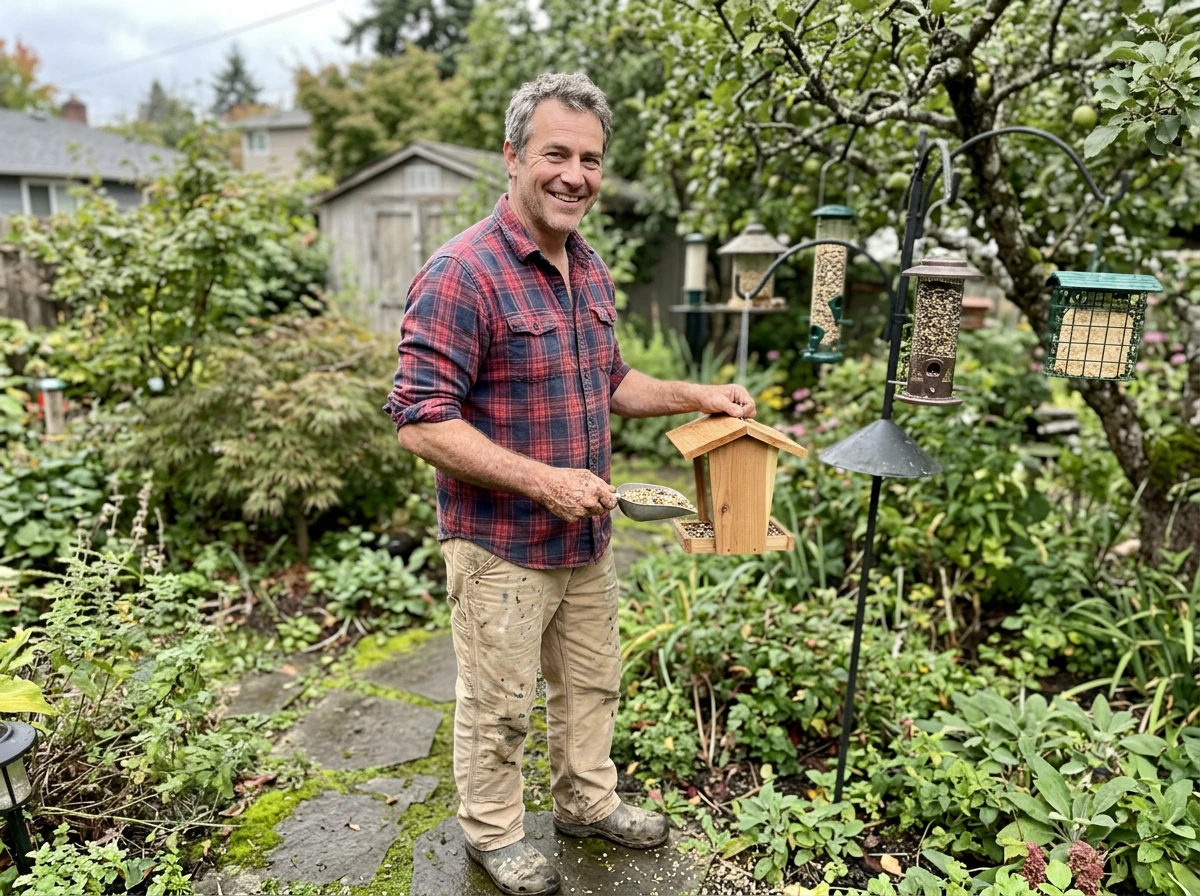
How you mount your tray matters more than most people expect. A feeder that swings wildly in wind will spill seed constantly and spook birds. One that's too low is a gift to cats and squirrels. Here are your main options and honest notes on each.
Hanging from a tree branch or hook
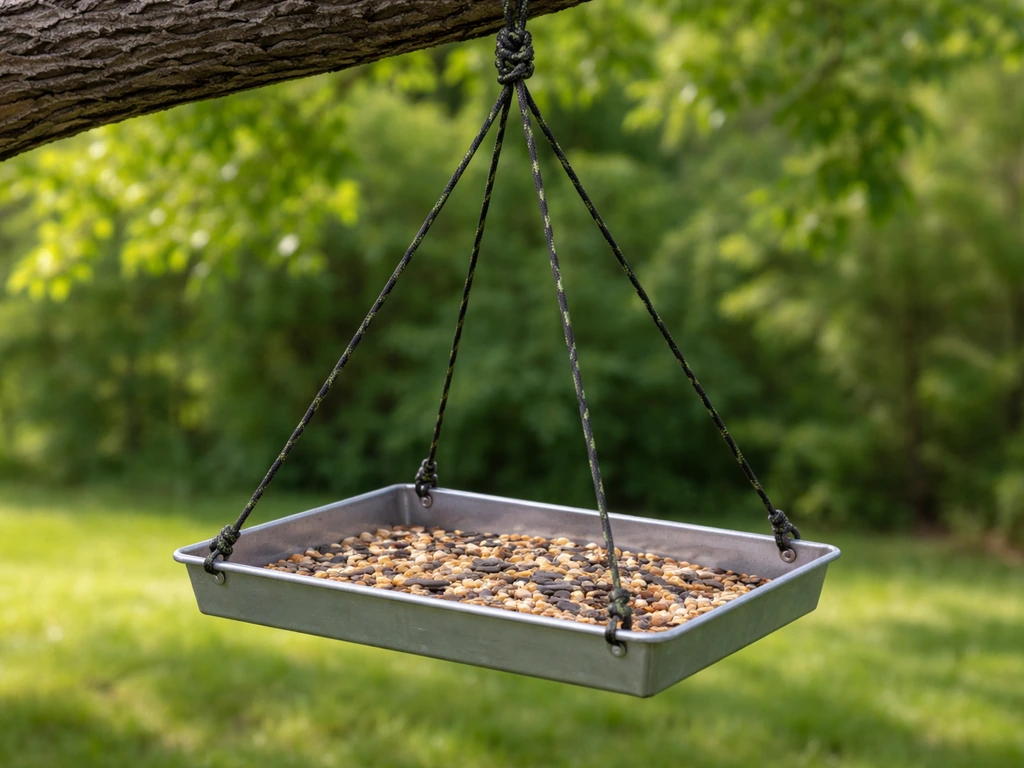
This is the easiest setup. Run four equal lengths of paracord or chain from the tray corners, gather them at a central point, and hang from a sturdy hook or branch. The main problem: hanging trays swing in wind, and squirrels can easily shimmy down a rope or chain. If squirrels are a priority concern for you, a pole mount with a baffle is a better choice.
Pole mounting with a baffle
A smooth metal pole with a cone or cylinder baffle installed below the tray is the most reliable squirrel deterrent available. The baffle needs to be at least 4 feet off the ground, and the pole should be at least 8 to 10 feet away from any structure (fence, shed, tree branch) that a squirrel can launch from. If either of those clearances isn't possible in your yard, a baffle won't do the full job, and you'll need to lean on other strategies like safflower seed or hot pepper in the mix.
Railing or deck mount
You can clamp or screw your tray directly to a deck railing or fence post. This is very stable and easy to reach for refilling. The downside is that it's usually the easiest access point for squirrels and cats. Keep this in mind if pest pressure is high in your yard.
Regardless of mounting method, aim for a height of at least 5 to 6 feet off the ground. This gives birds a clear sightline while making it harder for ground-level predators to surprise them, and meaningfully reduces access for cats.
Where to put your tray feeder
Placement is where a lot of people make avoidable mistakes. Two things matter most: bird safety around windows and visibility for the birds themselves.
Window strikes are the biggest risk for any feeder. The safest zones are either very close to a window (within 3 feet, so a startled bird can't build lethal speed before hitting the glass) or far away from any window (more than 30 feet). The danger zone is anywhere in between, where birds have enough distance to accelerate to a fatal speed but are still aimed at a reflective surface. If your best placement option falls in that middle range, add window decals or break up the reflection with window tape.
Beyond window safety, tray feeders work best in a semi-open spot. Birds need to see approaching predators, so placing the feeder in the middle of dense shrubs isn't ideal. But you also don't want it so exposed that there's no nearby cover for birds to retreat to quickly. A position 10 to 15 feet from a shrub or small tree is a solid compromise: birds can feed in the open and dash to cover in seconds.
Because tray feeders attract cardinals, blue jays, and mourning doves in particular, they work especially well near low shrubs and at a height where these medium to large birds feel comfortable landing. Tray/platform feeders can attract ground-feeding birds like cardinals, mourning doves, juncos, and sparrows Because tray feeders attract cardinals, blue jays, and mourning doves in particular. If you're hoping to draw cardinals specifically, shade and proximity to berry-producing shrubs is a bonus.
Keeping it clean, dry, and working well
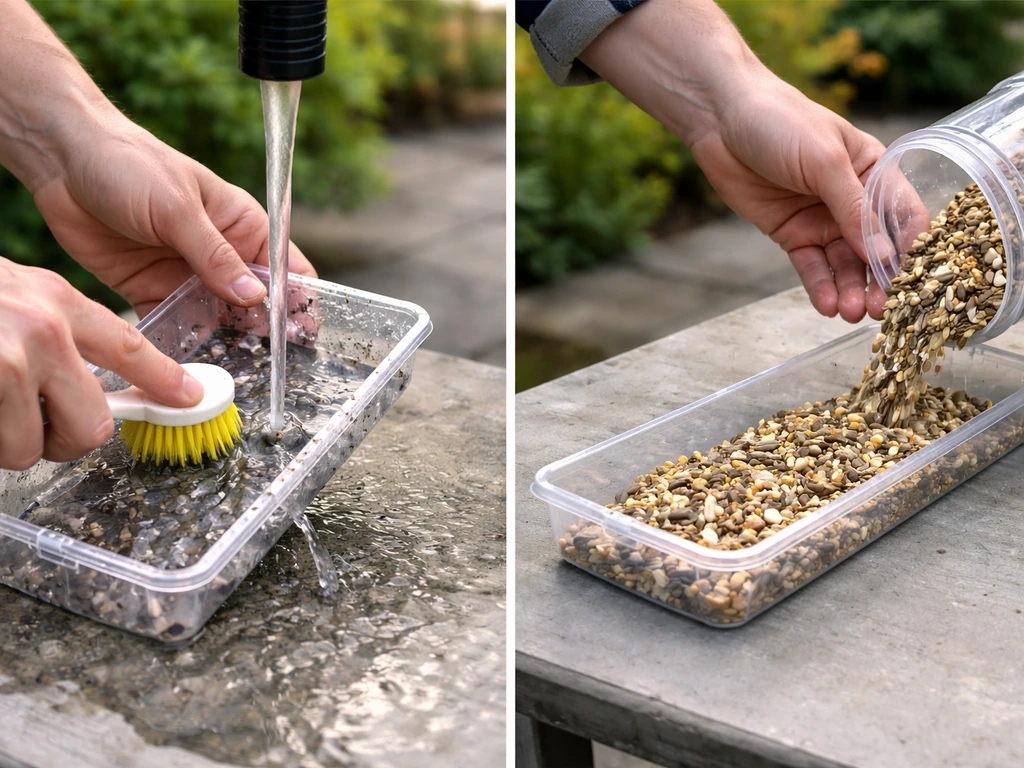
This is the part most people skip, and it's where a lot of well-intentioned feeders go wrong. Wet, moldy seed is genuinely dangerous to birds. A dirty tray is a disease vector. Cleaning your feeder regularly isn't optional if you care about the birds using it.
Cleaning schedule
Clean your tray feeder at least once a month. During wet seasons or if you notice any visible mold, bump that up to every two weeks. The cleaning process is simple: scrub the tray with hot soapy water to remove debris and old seed, then soak the whole tray in a solution of 1 part bleach to 9 parts water for about 10 minutes. Rinse thoroughly with clean water and let the feeder dry completely before refilling. A feeder that's still damp when you add seed will get moldy faster than one you let dry in the sun for an hour first.
Refilling and wet seed
After any significant rain, check the tray before just adding more seed on top. If the existing seed is clumped, soggy, or has a gray-green tint, throw it out entirely and start with dry seed. Don't try to dry it out and reuse it. Moldy seed can cause serious respiratory problems in birds, and no amount of sunshine rescues seed that's already started to turn. Your drainage holes or mesh bottom help a lot here, but they're not magic: a heavy downpour will still leave surface moisture.
Common problems and how to fix them
| Problem | Likely Cause | Fix |
|---|---|---|
| Seed keeps getting wet and molding | No drainage, or tray is in a low spot that collects rain | Add or enlarge drainage holes; consider a roof (a simple piece of acrylic or plywood on posts above the tray works well); move to a spot with better exposure to sun and breeze |
| Squirrels dominating the tray | Feeder too close to launch points, or no baffle installed | Move pole at least 8–10 feet from structures; install a cone baffle at least 4 feet off the ground; switch to safflower seed, which squirrels dislike |
| Tray swings and spills seed in wind | Hanging lines too long or uneven | Shorten the cords so the tray hangs closer to the attachment point; add a small weight underneath the tray to stabilize it; switch to a pole mount |
| Birds not showing up | Feeder is too exposed or too close to heavy foot traffic | Move feeder closer to natural cover; give it 1–2 weeks for birds to discover it; check that no neighborhood cats are patrolling the area |
| Wood rotting faster than expected | Untreated wood exposed to rain | Apply exterior sealant or linseed oil annually; consider rebuilding the base in cedar if it fails early; cedar resists rot far better than standard plywood |
One last note: if you're getting into feeder building beyond this project, a tray feeder is a great foundation. The same construction principles apply to a enclosed bird feeder box, which adds walls and a roof for weather protection, or to specialty feeders designed for specific species like cardinals. If you want a simpler beginner build, you can also turn a shoe box into an enclosed bird feeder with a clear opening and drainage holes enclosed bird feeder box. If you want a bigger, more weather-protected project, you can adapt these ideas to make a feeder designed for cardinals specifically specialty feeders designed for specific species like cardinals. The tray you just built is also one of the simplest feeders to adapt into other forms as your skills and interest grow.
FAQ
What wood should I use, and what should I avoid for a tray bird feeder?
Use exterior grade scrap wood that can tolerate moisture, like cedar or pressure treated lumber. Avoid plywood that has been soaked before sealing, and skip any wood with unknown coatings or stains that could flake into the seed. If you use raw softwood, plan on sealing it well on the underside and edges, then keep the top tray surface food-safe and not tacky.
How thick should the tray boards be so it stays flat and doesn’t warp?
Aim for a tray surface that is rigid, typically around 3/4 inch (about 18 to 20 mm) boards for most small-to-medium feeders. Thin strips tend to cup after repeated wetting and drying, which leaves gaps where seed collects and gets moldy.
Do I need to seal the tray, and is there a sealant I should not use?
Sealing helps with rain and cleanup, but keep it compatible with outdoor use and let it fully cure before filling with seed. Avoid sealants that remain soft or have strong odors, and don’t use products meant for food contact surfaces unless the label confirms safe use around animals. If you seal, focus on the sides, underside, and lip, and consider leaving the feeding surface with minimal finish if birds are pecking it directly.
What size drainage holes or mesh should I use to prevent pooling?
Use enough open area that water can pass through quickly, but not so much that seed falls under the tray before birds can reach it. A common approach is small holes combined with a drainage layer (like mesh) that still supports seed. Test-fit after building, by running water through once and checking that the tray drains within minutes rather than hours.
How do I stop seed from blowing off the tray in wind beyond having a lip?
Increase effective containment by making the lip slightly taller and consider adding a shallow front and side “guard” that leaves a clear landing area for birds. Also place the feeder so prevailing wind isn’t hitting it head-on, and avoid locations directly in the path of open walkways where gusts funnel.
Can I use safflower seed or other mixes to reduce waste and squirrel activity?
Yes, safflower often deters many nuisance species while still attracting cardinals and some other birds. However, if squirrels are persistent, seed choice alone may not fully solve the problem, especially on an open tray. The most effective combination is squirrel resistant height plus a baffle or placement away from easy launching points.
How much seed should I put on the tray at once?
Start with a thin layer rather than deep piles, especially during humid or rainy stretches. A smaller quantity dries faster and reduces how much turns moldy if the weather changes. When you notice birds eating quickly, you can refill more often instead of maintaining a heavy bed of seed.
How can I tell if the tray is contaminated and needs more than basic cleaning?
If you see lingering grime, a persistent musty smell, or any sign of fuzzy growth on the tray or around drainage areas, do a deeper clean and consider replacing the drainage mesh layer if it’s stained or porous. Don’t just rinse, scrub with hot soapy water first, then do the disinfecting soak as described, and dry completely.
Is it safe to refill during wet weather, or should I empty it first?
In wet weather, treat refill as a quick check, not a top-off. If the seed is clumped, has color changes, or feels damp, empty it and start fresh with dry seed after cleaning the tray. Top-ups with damp seed are a common reason tray feeders trigger mold problems.
How do I prevent birds from starving if I accidentally mixed in bad seed?
Remove any visibly moldy or clumped portions immediately, then switch to a fresh batch that you store dry. If birds stop visiting after a weather event, try a smaller amount of fresh seed in the center of the tray once the feeder has been dried thoroughly.
What height and distance should I aim for if I want to reduce cat risk but still attract cautious birds?
Keeping the feeder at least 5 to 6 feet off the ground helps, but also consider sightlines and escape cover for birds. If your feeder is near dense bushes, medium birds can feel secure, but keep it away from dense cover that squirrels use to launch and from any spot cats can reach by climbing or jumping. When in doubt, increase distance from climbing access points like fence tops and thick branches.
How do I handle neighbors’ or my own concern about mess under the tray?
Tray feeders naturally drop hulls and some seed, so plan for easy cleanup. Place it where dropped seed is not a nuisance, use a removable catchable area below if you already have one, and do a light sweep after heavy visits or storms. If mess becomes a real issue, consider pairing the tray feeder with a separate seed catcher setup rather than changing the tray design.
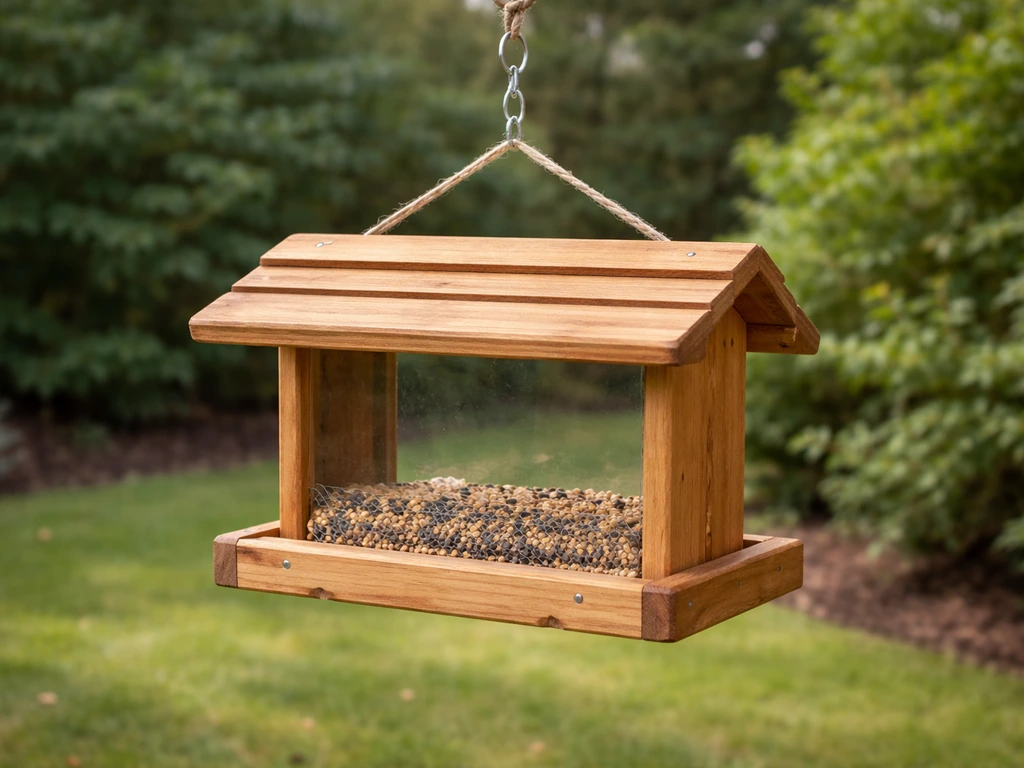
Step-by-step guide to build a weatherproof bird feeder box, hang it safely, add seed, and prevent soggy seed and pests.
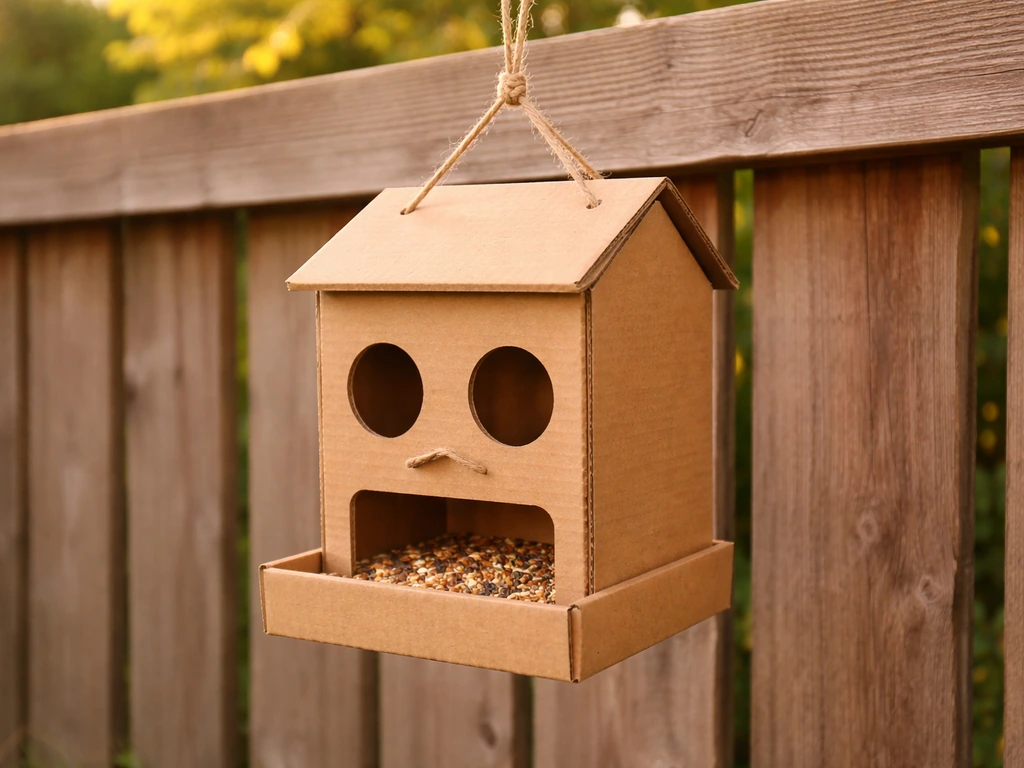
Step-by-step cardboard bird feeder build with supplies, safe assembly, hanging tips, weatherproofing, and maintenance fi
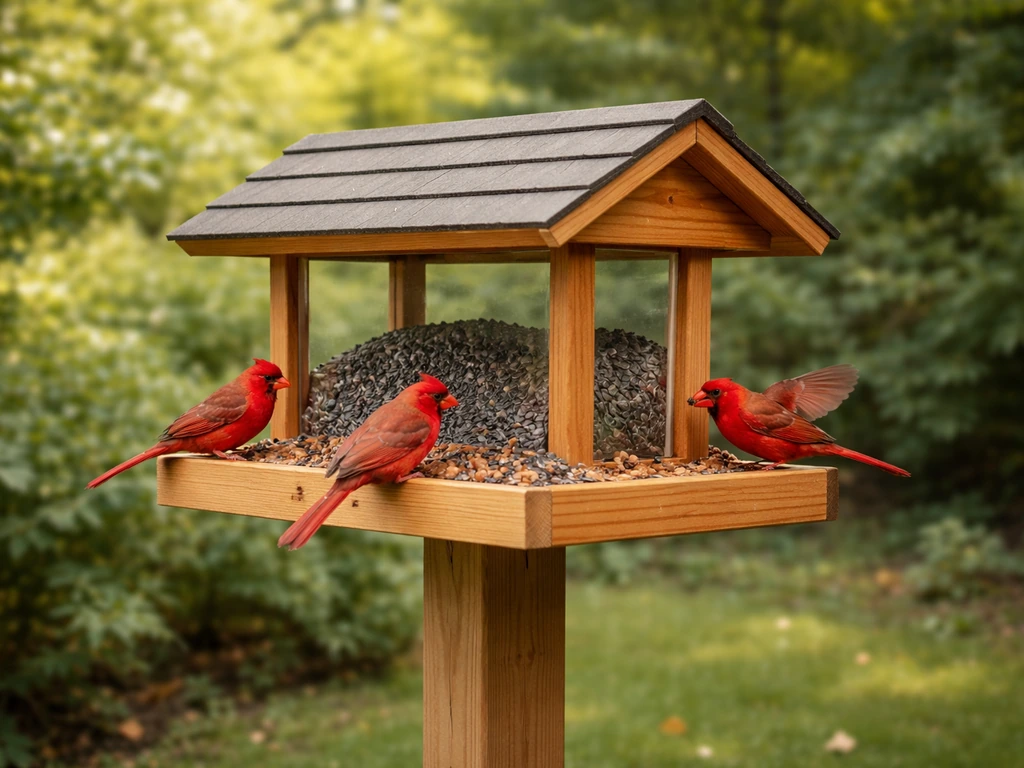
Step-by-step guide to build a durable cardinal bird feeder with easy materials, placement tips, and seed setup.