Hang your bird feeder at least 5 feet off the ground, within 10 feet of shrubs or trees for cover, and either within 3 feet of the nearest window or more than 30 feet away. That combination covers the three biggest placement mistakes people make: feeders too low for cats to ignore, feeders too exposed for nervous birds to approach, and feeders in the collision "kill zone" that sends birds straight into glass. Get those three numbers right and you'll have birds visiting within a few days.
Bird Feeder Where to Hang It: Best Spot and Height Guide
Marcus Brennan
28 May 2026
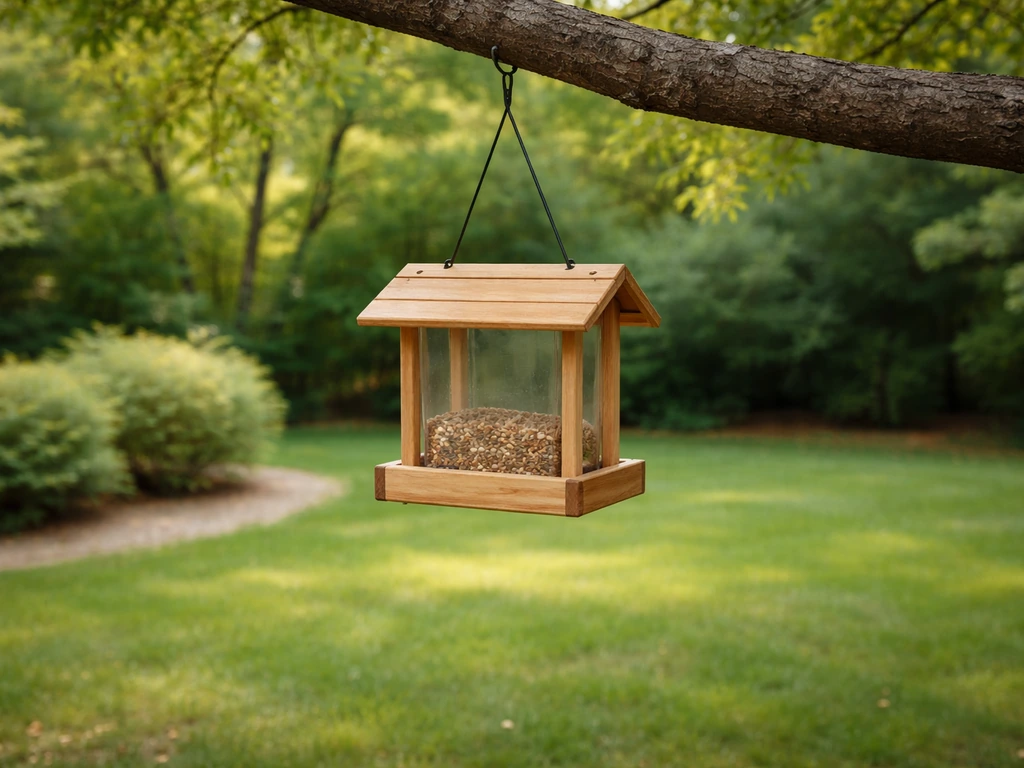
Quick checklist for choosing a safe spot
Before you drive a single hook into anything, run through this list. It takes about two minutes and saves a lot of repositioning later.
- At least 5 feet off the ground (ideally 5 to 8 feet for most songbirds)
- Within 3 feet of a window OR more than 30 feet away — nothing in between
- Within about 10 feet of natural cover like shrubs, dense hedges, or small trees
- At least 10 feet horizontally from any branch, fence rail, deck railing, or rooftop edge that a squirrel could launch from
- Not directly over a patio, walkway, or seating area where seed mess and droppings will be a problem
- Visible from inside your home so you can enjoy it and monitor it easily
- Accessible enough for you to refill and clean it without hauling out a ladder every time
That last point is one beginners underestimate. A feeder hung at 12 feet in a gorgeous tree location will go moldy and empty because refilling it is a pain. Make it convenient for yourself first.
Best height and distance rules
Height off the ground
Five feet is the practical minimum for keeping cats from ambushing birds as they approach. Most songbirds, chickadees, finches, nuthatches, sparrows, are comfortable feeding anywhere from 5 to 8 feet. Ground-feeding birds like juncos and doves actually prefer feeders closer to the ground or platform feeders set at about 2 to 3 feet, so if you want to attract them, a low tray feeder is a second option rather than moving your main feeder down.
The window distance rule (this one really matters)
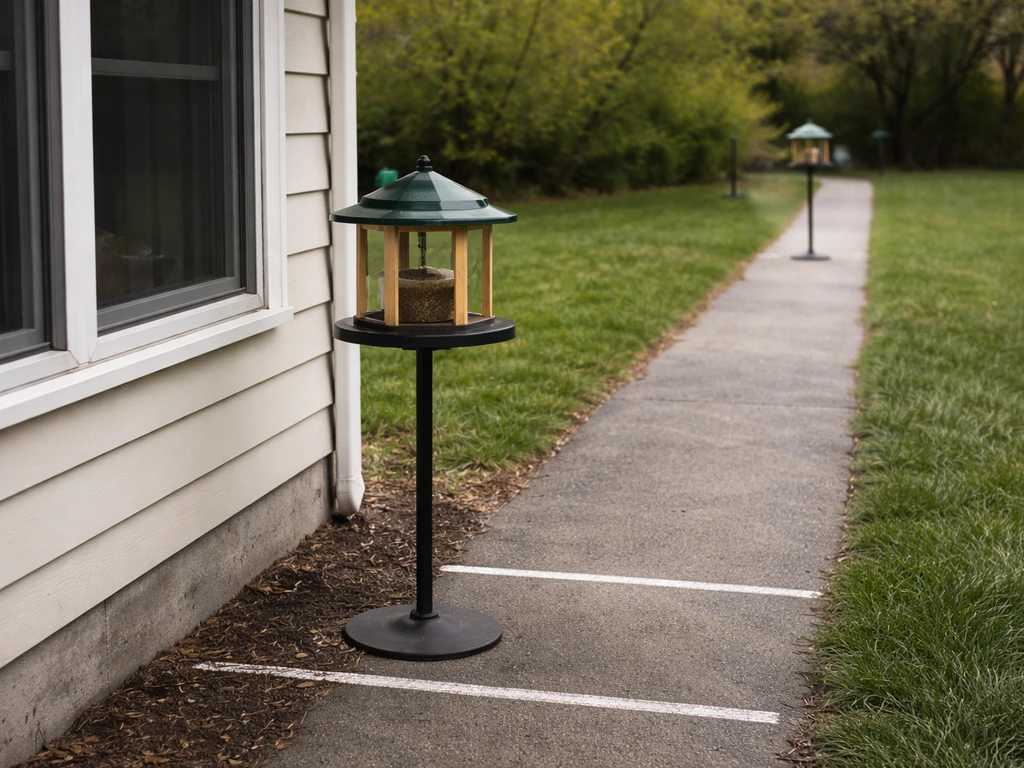
Place your feeder blank" rel="noopener noreferrer">within 3 feet of a window or more than 30 feet away. That sounds counterintuitive at first. The logic is that a bird leaving a feeder 3 feet from glass doesn't have enough space to build up lethal speed before impact. A bird at 30-plus feet has time to see and avoid the reflection. The danger zone is everything between 3 and 30 feet: birds are flying at full speed and glass looks invisible to them. Both Audubon and the Washington Department of Fish and Wildlife use this exact 3-foot/30-foot guideline, and blank" rel="noopener noreferrer">Cornell Lab adds that window treatments like tape strips or decals help too, regardless of feeder distance.
Distance from cover
Birds want a quick escape route. University of Nebraska-Lincoln Extension research suggests keeping feeders within about 10 feet of cover like shrubs or dense plantings. That's close enough for birds to bolt to safety when a hawk appears, but far enough from the actual branches that squirrels can't use those branches as a jumping platform. Think of it as a clearing with a nearby refuge, not a feeder buried inside a bush.
Hanging methods and hardware
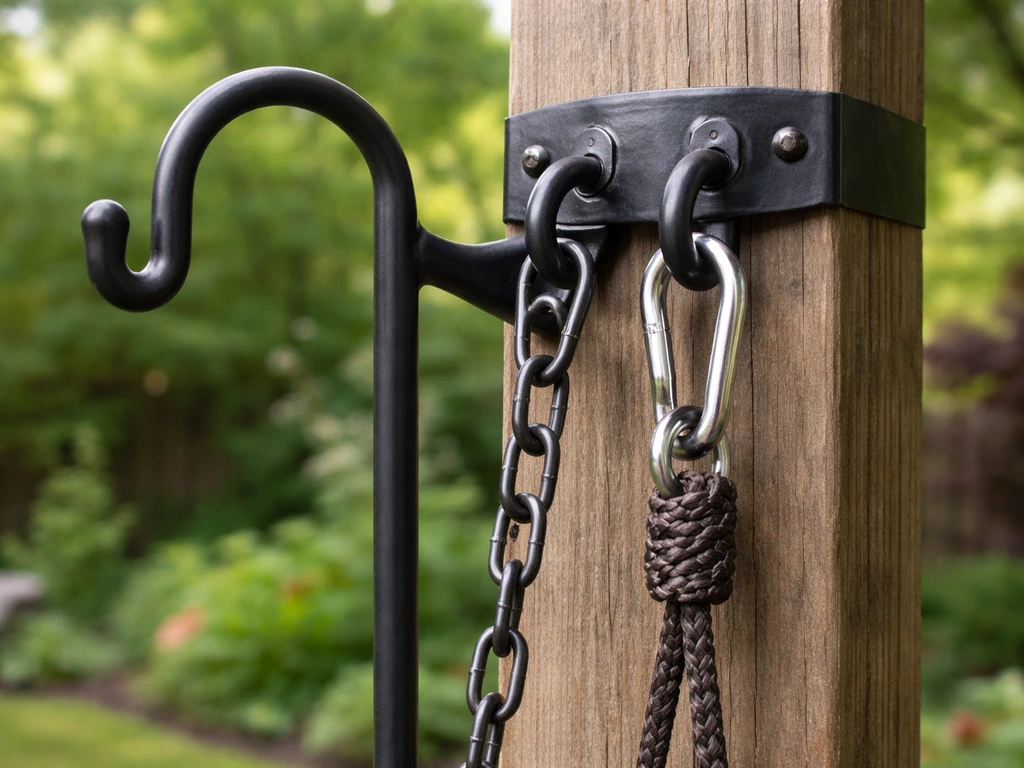
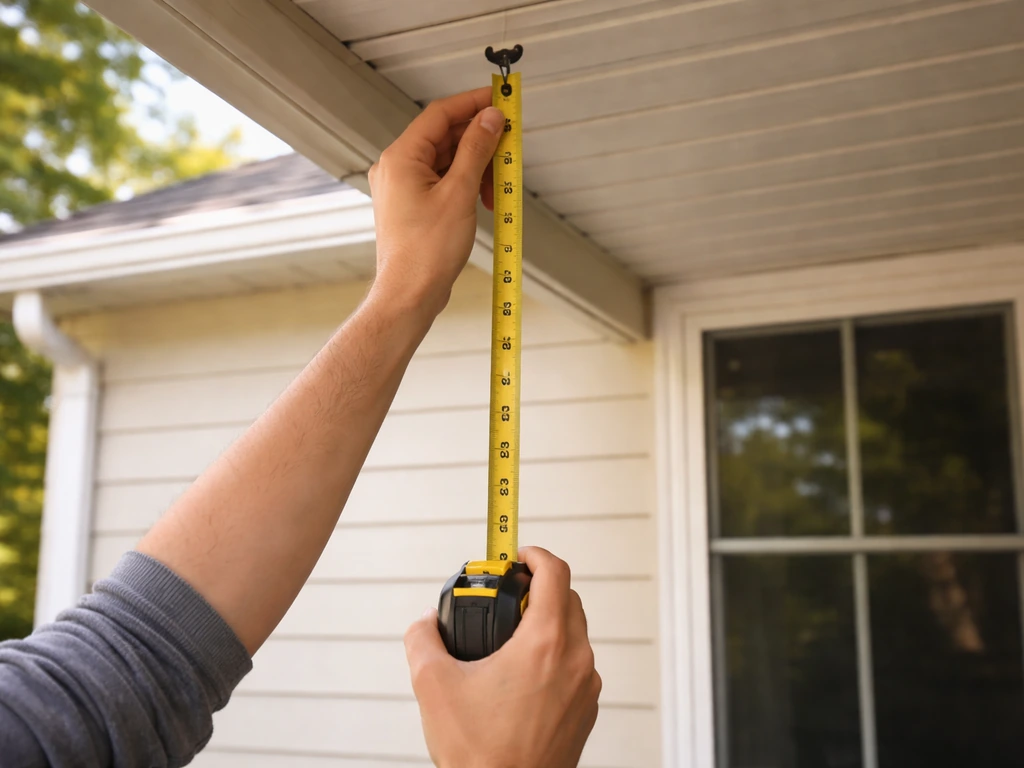
How you hang a feeder affects stability, squirrel resistance, and how easy it is to take down for cleaning. Here are the main options with honest pros and cons. If you want to hang it from a soffit, use a secure mounting method rated for outdoor loads and keep the feeder at a safe height and distance from windows how to hang a bird feeder from soffit.
| Method | Best For | Squirrel Resistance | Ease of Refill | Notes |
|---|---|---|---|---|
| Shepherd's hook pole | Most yards, no trees required | Good with a pole baffle | Very easy | The most beginner-friendly setup; place 10 ft from any structure |
| Tree branch hook | Established trees | Low without baffle | Moderate | Use a branch hook + dome baffle above the feeder |
| Deck or railing mount | Small yards, patios, balconies | Low (squirrels walk up railing) | Very easy | Needs a specialized clamp bracket; pair with a baffle |
| Rope or wire from eave/soffit | Porch or overhang situations | Moderate if hung far enough out | Moderate | Works well for lighter feeders like pinecone or bottle designs |
| Freestanding pole with multiple arms | Multiple feeders | Good with baffle on pole | Easy | Space arms at least 18 inches apart to reduce fighting |
For a DIY feeder made from a plastic bottle, milk jug, or pinecone, a simple S-hook on a shepherd's hook is all you need. These lighter feeders don't require heavy-duty hardware. Heavier wood feeders benefit from a proper screw-eye rated for the weight, plus a locking carabiner if you want easy removal for cleaning.
If you're working with a deck railing, an eave, a gutter, or a soffit, the hanging approach changes significantly depending on the surface. Each of those situations has its own quirks around load-bearing, weatherproofing the attachment point, and keeping the feeder stable in wind.
How placement affects pests and seed mess
Squirrels
Squirrels are the most common reason people move feeders after the first week. The rule from UNL Extension is straightforward: keep the feeder at least 10 feet horizontally from any branch, roof edge, fence, or deck rail, and at least 5 feet off the ground. Squirrels can jump roughly 8 to 10 feet horizontally and 4 feet vertically from a standing position. If you can't meet that 10-foot clearance because your yard is small, a baffle is non-negotiable. FeederWatch recommends a tilting or wrap-around baffle of at least 18 inches in diameter on the pole, positioned about 4 feet off the ground so squirrels can't climb past it.
Rats and mice
Seed on the ground is the real problem with rodents, not the feeder itself. Place your feeder over a surface you can rake or hose down, use a tray catcher under the feeder to catch dropped hulls, and switch to no-waste mixes (hulled seeds like sunflower hearts) if ground spillage is persistent. Keeping the feeder 5-plus feet up helps, but cleaning beneath it regularly matters more.
Ants
Ants reach feeders by climbing the pole or rope. An ant moat, which is a small water-filled cup that slides onto the hanger above the feeder, stops most ant invasions on hanging feeders. Keep the moat filled and position it above the feeder, not below. Avoid hanging feeders from tree branches where ants already have a highway directly from the bark.
Seed spillage and mess
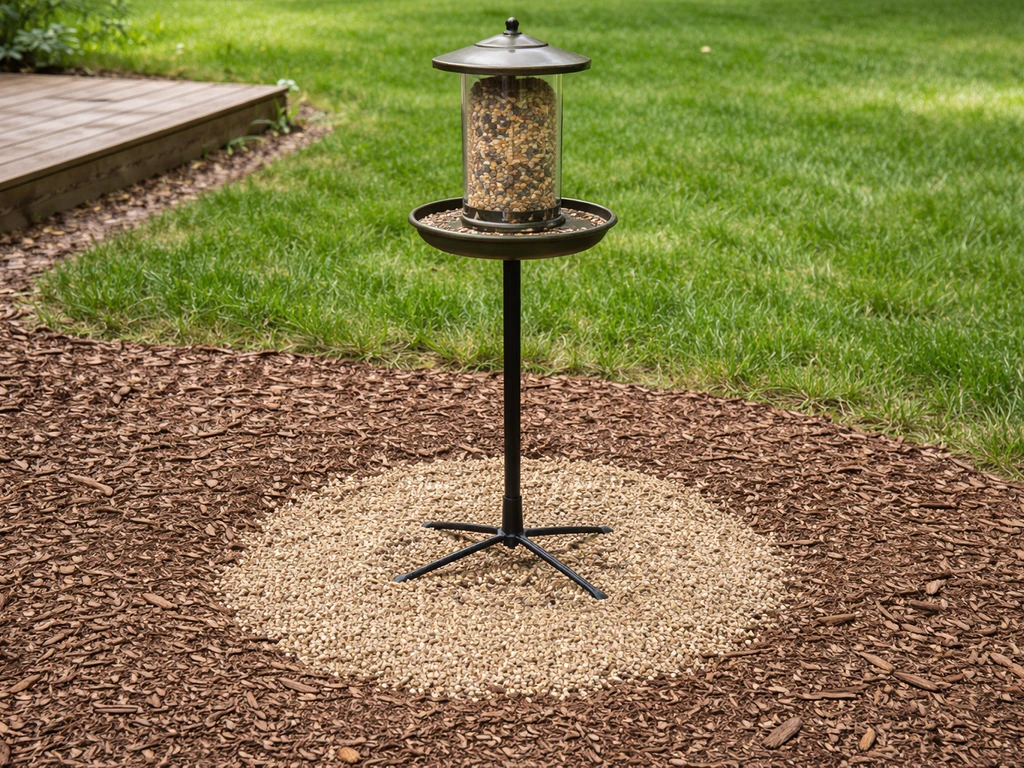
Don't hang your feeder over a wooden deck or a spot where you sit outdoors unless you enjoy sweeping seed hulls every morning. A grassy patch or mulched garden bed under the feeder is ideal because dropped seed either gets eaten by ground-feeding birds or decomposes without creating a mess you have to clean. If you're using a plastic bottle or milk jug feeder, the hole size matters a lot here: too large and seed pours out in the wind; keep feeding ports small and sized to your seed type.
Species-friendly placement tweaks
Once your main feeder is up and working, you can start fine-tuning placement for specific birds. Different species have different comfort levels with height, exposure, and proximity to cover.
| Bird Type | Preferred Feeder Height | Cover Proximity | Feeder Style Notes |
|---|---|---|---|
| Chickadees, nuthatches, titmice | 5–8 ft | Close to shrubs or tree edge | Tube or hopper feeders; comfortable near human activity |
| Finches (house, gold) | 5–8 ft | Moderate — some open space okay | Tube feeder with small ports; nyjer/thistle seed works best |
| Cardinals | 4–6 ft | Within 5 ft of dense shrubs | Platform or hopper; prefers lower, sheltered spots |
| Juncos, sparrows (ground feeders) | Ground to 2 ft | Near ground-level cover | Tray or platform close to ground; scatter some seed on ground too |
| Woodpeckers | 6–12 ft | Near tree trunks | Suet cage or cylinder feeder attached to or near a tree |
| Orioles, hummingbirds | 5–7 ft | Open but near flowers or vines | Nectar feeders in partial sun; away from heavy foot traffic |
If you want to attract a wider variety of species, the most effective thing you can do is run two or three feeders at different heights and distances from cover, rather than a single "perfect" feeder. Spreading feeders at least 10 feet apart also reduces competition and bullying between species.
Weather, sun, and water considerations
Direct afternoon sun accelerates seed spoilage, especially in summer. Position feeders where they get morning light (birds are most active then anyway) but some shade from midday onward. East-facing or north-facing spots are usually better than southwest-facing ones. If you're in a hot climate, this becomes critical for nectar feeders: hummingbird and oriole feeders in full afternoon sun can ferment nectar within a day or two.
Wind is a bigger problem than most people expect. A feeder hanging in a wind tunnel between two buildings will spin, spill seed constantly, and frustrate birds that can't land steadily on it. Look for a spot with natural windbreak from a fence, hedge, or building corner. If you want to hang a feeder from a gutter, use the right hardware and make sure the attachment stays secure in wind and rain hang a bird feeder from a gutter. That also keeps the feeder drier in rain. If you're hanging from eaves or a soffit overhang, you're in good shape for rain protection, but make sure there's drainage in the feeder itself so pooled water doesn't rot your seed or, for wooden feeders, the feeder body.
A birdbath within 10 to 15 feet of your feeder is a significant upgrade for attracting birds, but apply the same window-distance rule to it that you use for the feeder. Running or dripping water is even more attractive than a still bath, and it helps birds find your setup faster when they're new to your yard.
Troubleshooting: birds aren't showing up, or the wrong ones are
Birds not visiting at all
Give it one to two weeks before you panic. Birds need time to discover a new food source, especially in a new yard. If nothing has happened after two weeks, check these things in order: Is there natural cover within 10 feet? Is the seed fresh (old or wet seed is ignored)? Are there cats or dogs regularly near the feeder? Is the feeder in heavy human foot-traffic? Fixing any one of those usually unlocks activity within a few days.
One dominant bird is chasing everyone else away
House sparrows and starlings are the usual culprits. The fix is to add a second feeder at least 10 to 15 feet away from the first, ideally around a corner or with visual separation (a shrub between them). The dominant bird can only guard one feeder at a time. Also consider feeder style: tube feeders with short perches exclude larger bullies that need a platform to balance on.
Squirrels are still getting to it
Double-check your 10-foot clearance from all sides, not just one. People often measure from the nearest branch and forget about a fence post 9 feet away on the other side. If clearance is genuinely impossible in your yard, switch to a weight-sensitive squirrel-proof feeder design, or add a 18-plus-inch dome baffle on the pole below the feeder. Both approaches work; the pole baffle is usually cheaper.
Seed is getting wet and moldy fast
This is almost always a drainage or exposure problem. Make sure your feeder has drainage holes at the bottom. If you built a DIY wood feeder, drill a few 1/4-inch holes in the floor of the seed tray. Reposition to a spot with more overhead protection from rain: under a tree canopy, close to an eave overhang, or even add a simple roof baffle above the feeder. In humid climates, fill with smaller amounts of seed more frequently rather than topping off a big reservoir every week.
Cleaning is becoming a nightmare
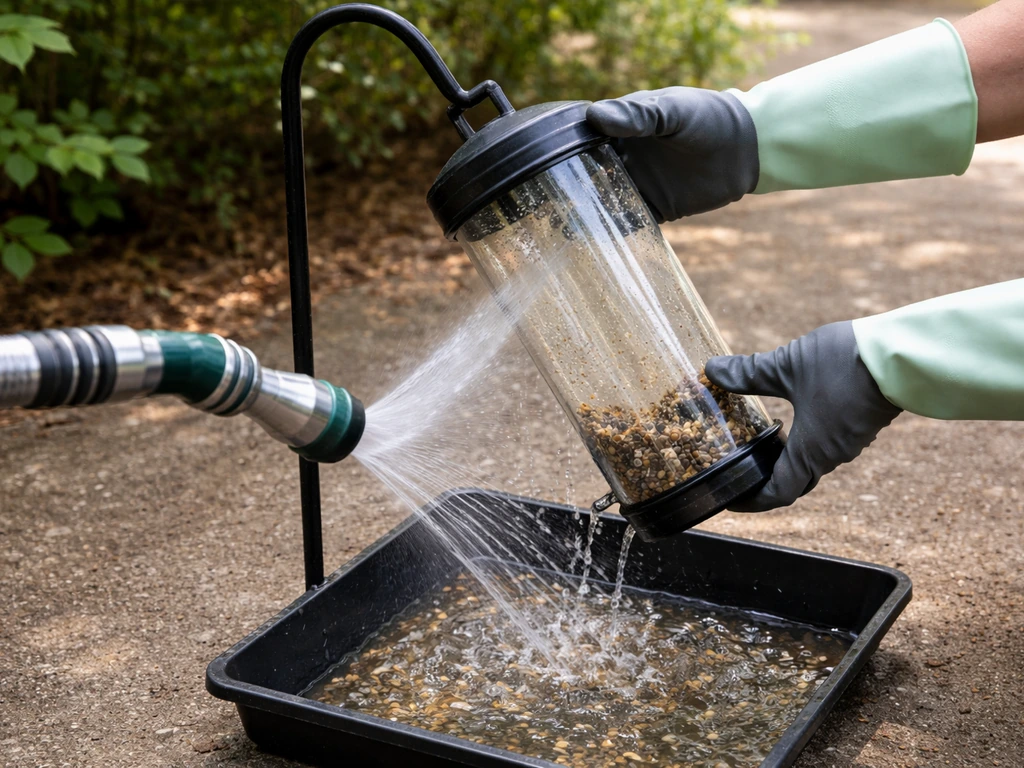
If your feeder location makes cleaning a chore, you'll delay it and end up with sick birds. The fix is mostly about access: lower the feeder or switch to a shepherd's hook that lets you lift the feeder down easily. After you pick a safe balcony spot, you can follow these same hanging and window rules while learning how to make a bird feeder for balcony use how to make bird feeder for balcony. Feeders should be cleaned every one to two weeks in warm weather, more often if you notice any black mold or slimy seed. A quick scrub with a 10-percent bleach solution, a thorough rinse, and complete drying before refilling is the standard protocol. DIY feeders made from plastic bottles or milk jugs are actually easier to clean than many store-bought wooden designs, which is a real practical advantage.
FAQ
Can I hang a bird feeder on a balcony railing or small deck without hurting birds or attracting squirrels?
Yes, but follow the same safety distances and use the right mounting. Hang the feeder from a structure that is secure in wind, keep it at least 5 feet high, and still maintain the 3-foot/30-foot window guideline (or more distance from glass if you can). If you can’t achieve safe clearance in a balcony or small patio layout, switch to a squirrel-proof, weight-sensitive feeder or add a baffle designed for the specific pole diameter.
What if my feeder keeps swinging or spinning in the wind?
Avoid placing it where it will sway into hard surfaces like siding, railing posts, or the window frame. Sway increases seed spill and makes birds reluctant to land. Aim for a mounting point that stays vertical (stable pole or rigid mount), and if the feeder spins easily in your yard, relocate to a spot with a natural windbreak or add a proper baffle to protect it from side-to-side movement.
I measured 3 feet from one window, but what about other nearby glass?
Measure from the actual flight path around the window, not just the closest spot on the feeder. If the feeder is 3 feet from glass on one side but there’s another glass surface within the 3 to 30 foot range (for example, a bay window or door with panels), you still need to treat that whole area as the collision zone. When in doubt, reposition so all nearby windows are either very close (around the 3-foot mark) or comfortably farther than 30 feet.
How long should I leave the feeder in one spot before relocating it?
For the first setup, don’t move it every day. Plan for at least 7 to 14 days for birds to discover the new food source, then adjust only one major factor at a time, such as increasing cover proximity (within about 10 feet), improving drainage to reduce spoilage, or moving farther from squirrels’ jumping platforms. Frequent re-hanging can reset bird learning and make it harder to judge what’s wrong.
Is it okay to hang the feeder over a patio or near where people sit outdoors?
Use a surface that won’t trap wet seed and create rot. A tray catcher underneath helps with hulls, but also make sure the catch area is easy to rake or hose. If you must hang near an outdoor sitting area, choose a spot where dropped seed lands on gravel, mulch, or a cleanable mat rather than wood decking.
What’s the best compromise if my yard layout forces me to place the feeder in the 3 to 30 foot range?
If you only have one feasible window-distance option, the best fallback is to reduce the attractiveness and exposure of the “in-between” zone. Keep the feeder positioned so birds have cover within about 10 feet to escape quickly, and use window treatments on the glass to make collisions less likely. The goal is to avoid leaving birds flying at full speed through the 3 to 30 foot gap without a visual cue.
My feeder is high, but I still see lots of rodents. What should I change first?
If rodents are persistent, first switch to a no-waste mix (hulled seeds like sunflower hearts) to reduce ground litter, then pair that with frequent cleaning of hulls and seed scatter. Keeping the feeder at least 5 feet up helps, but it won’t solve the issue if spillage remains. Consider a feeder design with a tray that minimizes debris, and clean beneath it every few days until activity drops.
How do I prevent ants if an ant moat doesn’t fully solve the problem?
Ant moats work best when they’re positioned above the feeder and kept full, so they interrupt the ant route rather than letting ants reach the hanger area. If ants show up anyway, check whether you have nesting insects near the mounting point or whether the feeder is connected by a direct line like twine, branches, or a continuous surface from ground level.
I found a great hanging spot, but it’s hard to clean. Is that still worth it?
If the feeder is in a hard-to-reach location, cleaning schedule usually becomes the limiting factor, and that affects bird health more than perfect placement. Choose a height and mounting method you can maintain, ideally a setup that lets you lift the feeder down for thorough cleaning within 1 to 2 minutes. If you can’t comfortably clean it, pick a closer-by spot with the same height and window distance rules.
What’s the most common clearance mistake people make when placing a feeder for squirrels?
Measure clearance all around the feeder at bird level, including fences, roof edges, deck rails, and any branches you may not notice from one side. A common miss is assuming a 10-foot gap on one direction covers the entire pole. If clearance truly can’t be achieved, add a purpose-built baffle (at least about 18 inches) or select a squirrel-proof feeder design instead of relying on positioning alone.