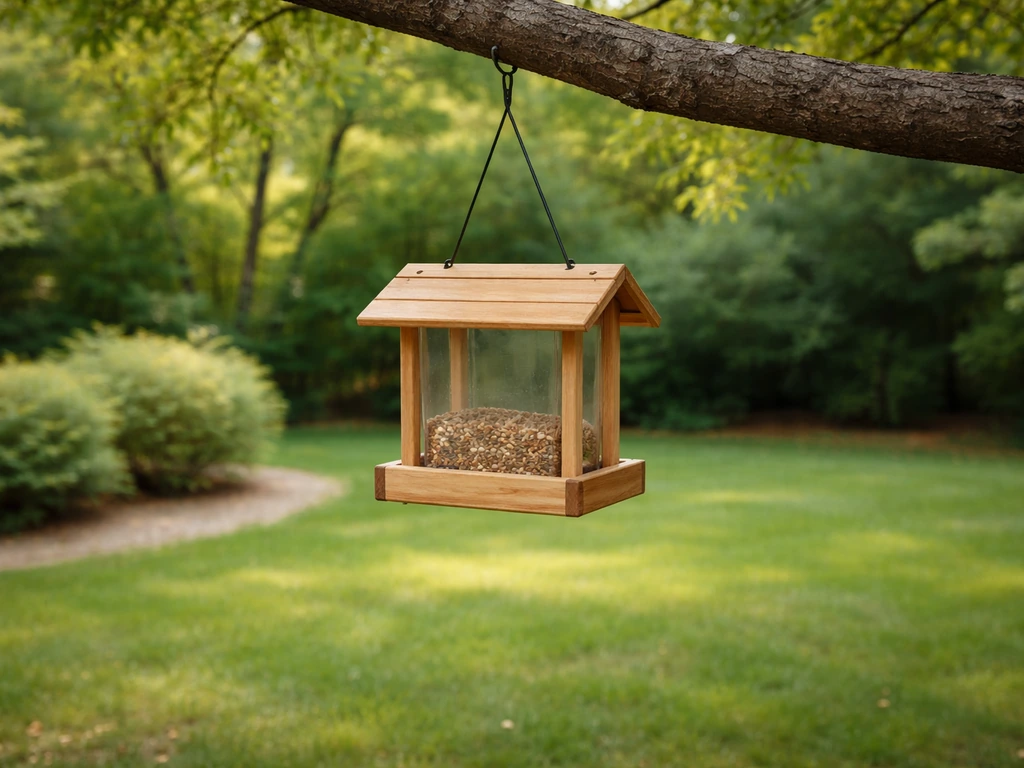
Yes, you can hang a bird feeder from a gutter, and it works well when you pick the right spot and use hardware that grips the gutter without puncturing it. The key is positioning the feeder near a gutter support bracket (not in a weak mid-span section), using a rated hook or strap that clamps onto the gutter lip, and keeping the total loaded weight under 15 lbs. Do that and you'll have a stable, bird-friendly setup that doesn't trash your gutters.
How to Hang a Bird Feeder From a Gutter Safely
Marcus Brennan
29 May 2026
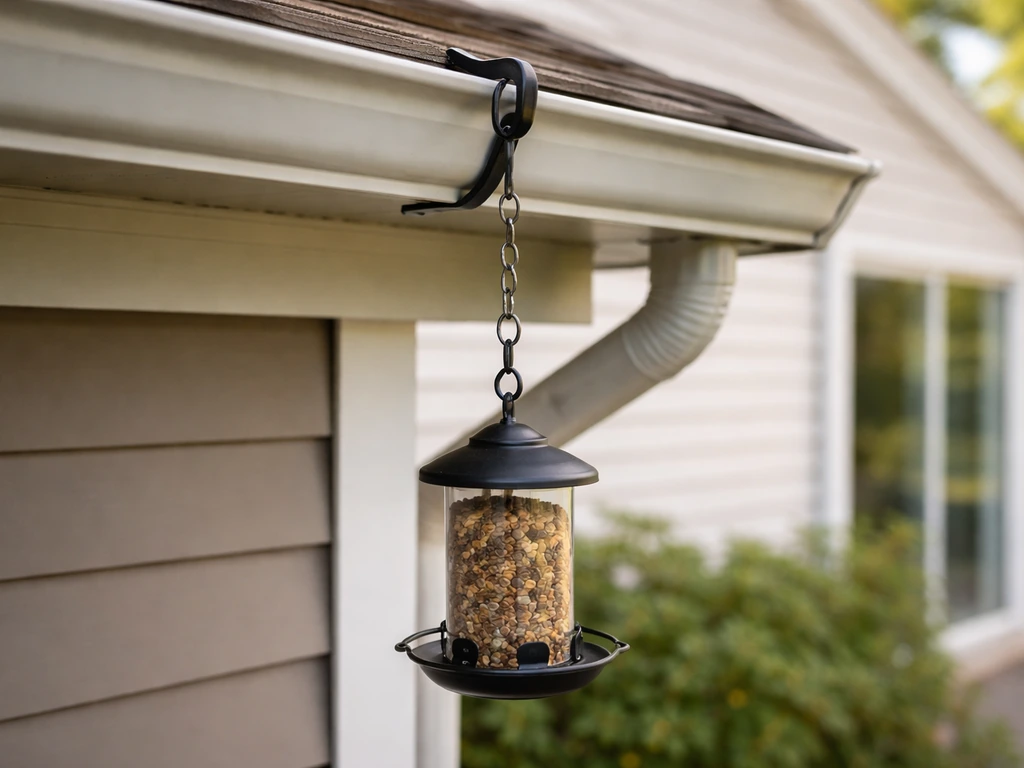
Is your gutter actually a good place to hang from?
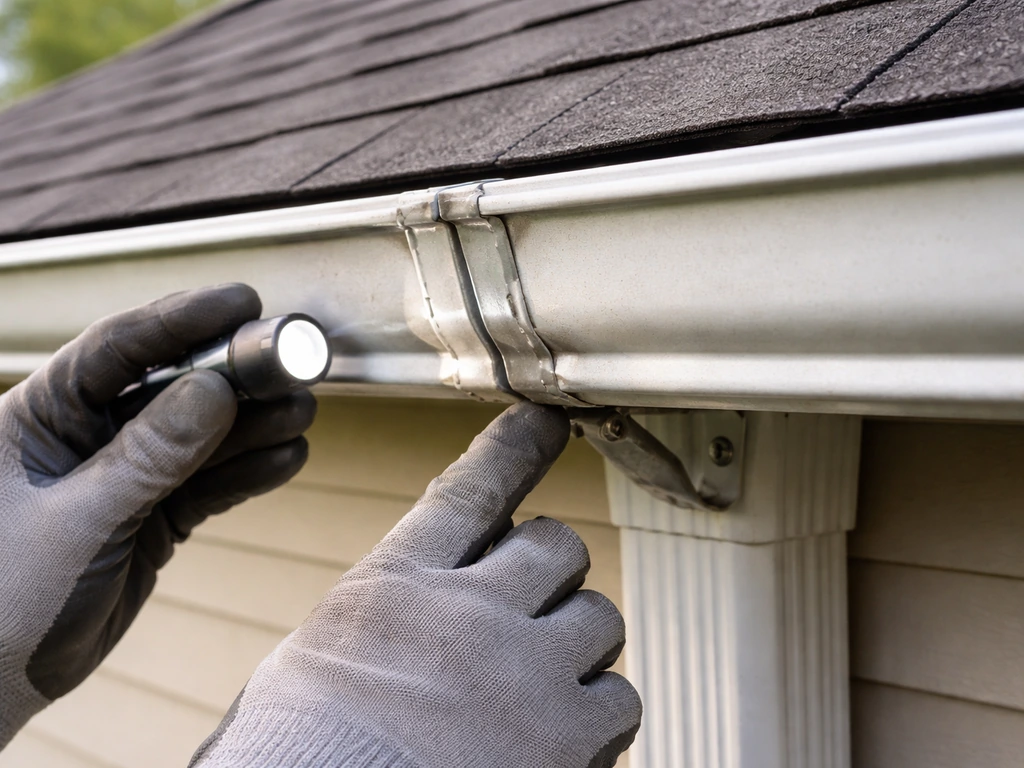
Before you grab a hook, spend two minutes checking your gutter's condition. Not every gutter can handle extra load, and the last thing you want is a collapsed section or a cracked seam. Here's what to look for:
- Material and age: Aluminum K-style gutters (the most common type in the US) are generally solid candidates if they're in good shape. Old plastic or vinyl gutters that are brittle, cracked, or sagging are a collapse risk and should be skipped entirely.
- Hanger spacing and condition: Look up at the inside of the gutter. If you can see the hidden hangers screwed through to the fascia or rafter tails, those are your strongest points. Hanging near a hanger anchor is safer than hanging over a long unsupported span.
- Seams and joints: Check corner miters, end caps, and seam joints for rust stains, gaps, or watermarks. A gutter that's already leaking is a gutter that doesn't need any extra stress or new attachment points.
- Sag or flex: Push gently on the front lip. If the gutter flexes dramatically or shifts position, the hangers behind the fascia may already be failing. Fix those first.
- Location: A sheltered southeastern exposure is ideal. Birds prefer a sunny, wind-protected feeding spot, and that orientation also reduces how much the feeder swings in bad weather.
If your gutter passes those checks, you're good to move forward. If you're dealing with a badly aging plastic run or a section with obvious damage, consider hanging from the eaves or soffit instead, which gives you a more solid anchor point without putting load on the gutter channel itself. If your gutter is aging or has visible damage, you may be better off using eaves instead, which is covered in our guide on how to hang a bird feeder from eaves. If you want the same kind of stable support, learning how to hang a bird feeder from soffit can be a safer alternative to relying on worn gutters.
What you'll need
The hardware list is short, but the choices matter. Using the wrong hook or a random screw-through approach can damage the gutter or create a leak path you'll regret come the first heavy rain.
| Item | What to look for | Approximate cost |
|---|---|---|
| Gutter hook or S-hook | Rated hooks marketed for gutters often hold up to ~15 lbs. Use one rated for the full loaded weight of your feeder. | $5–$12 |
| Gutter clamp (clamping style) | Bird B Gone-style gutter clamps grip surfaces up to 3/4" thick without drilling. Ideal for keeping the gutter intact. | $8–$15 for a pack |
| Galvanized or stainless steel hanger strap | 3/4" galvanized perforated strap (like Sioux Chief or Oatey types) is weatherproof and can be looped around the gutter lip and tightened. Massive rated load for its size. | $6–$10 for a short section |
| Snap hook or carabiner | A Duncraft-style universal utility hanger or a basic carabiner rated to 20 lbs lets you remove the feeder quickly for cleaning. | $4–$10 |
| Squirrel baffle (torpedo or cone style) | Mounts above the feeder on the hanging cord. Hang the feeder 8–10 inches below the baffle per Perky-Pet's spec. | $12–$25 |
| Chain or braided steel cable | Adds length between gutter and feeder. More stable than thin cord in wind. Cut to the length you need. | $5–$10 per foot at hardware stores |
| Weatherproof sealant (optional) | Geocel 2320 Tripolymer or similar rated from -40°F to 180°F. Only needed if you use any hardware that creates a hole near the gutter. | $8–$12 |
One feeder per hook is the right approach. Stacking two feeders on one attachment point doubles the swing load and accelerates wear on the gutter lip. If you want multiple feeders along the same roofline, space them apart with individual mounting points near separate gutter hangers.
Three mounting methods, step by step
Pick the method that fits your gutter type and how permanent you want the setup to be. All three avoid drilling through the gutter channel, which is the most important rule to follow.
Method 1: Hook over the gutter lip (simplest, removable)
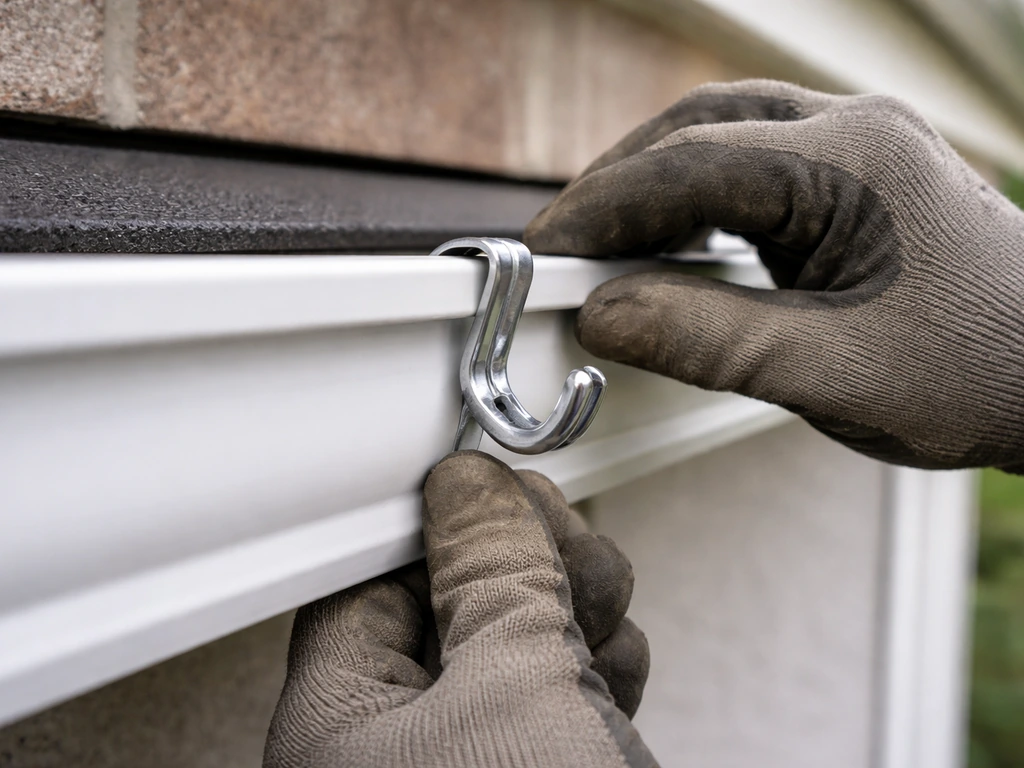
- Locate the nearest gutter hanger bracket by looking at the outside of the gutter. You'll often see a small screw or the slight ridge of a hidden hanger. Position yourself within a few inches of that point.
- Take an S-hook or a purpose-made gutter hook and loop the top curve over the front lip of the gutter. Make sure the hook's opening faces inward so it can't ride off the edge.
- Hang a short length of chain or braided cable from the lower end of the hook.
- Attach your feeder's hanging loop to the bottom of the chain with a snap hook or carabiner. This lets you pull the feeder down easily for cleaning.
- Gently tug the whole assembly to confirm nothing shifts. If the hook slides along the gutter lip, crimp it slightly with pliers so it stays in place.
Method 2: Gutter clamp (most secure without drilling)
- Choose a gutter clamp designed to grip surfaces up to 3/4" thick. Open the clamp jaws and slide them over the front lip of the gutter, again positioning near an existing hanger anchor.
- Tighten the clamp screw by hand, then snug it down with pliers. You want firm contact with the gutter lip, not a white-knuckle over-tighten that dents aluminum.
- Thread your chain or cable through the clamp's hanging eye.
- Attach the feeder using a snap hook and test by applying slow downward pressure. There should be zero movement at the clamp.
- In winter climates, check this clamp at the start of each cold season. Ice expanding 9–10% by volume can loosen hardware that was tight in fall.
Method 3: Hanger strap wrap (best for heavier feeders or hopper styles)
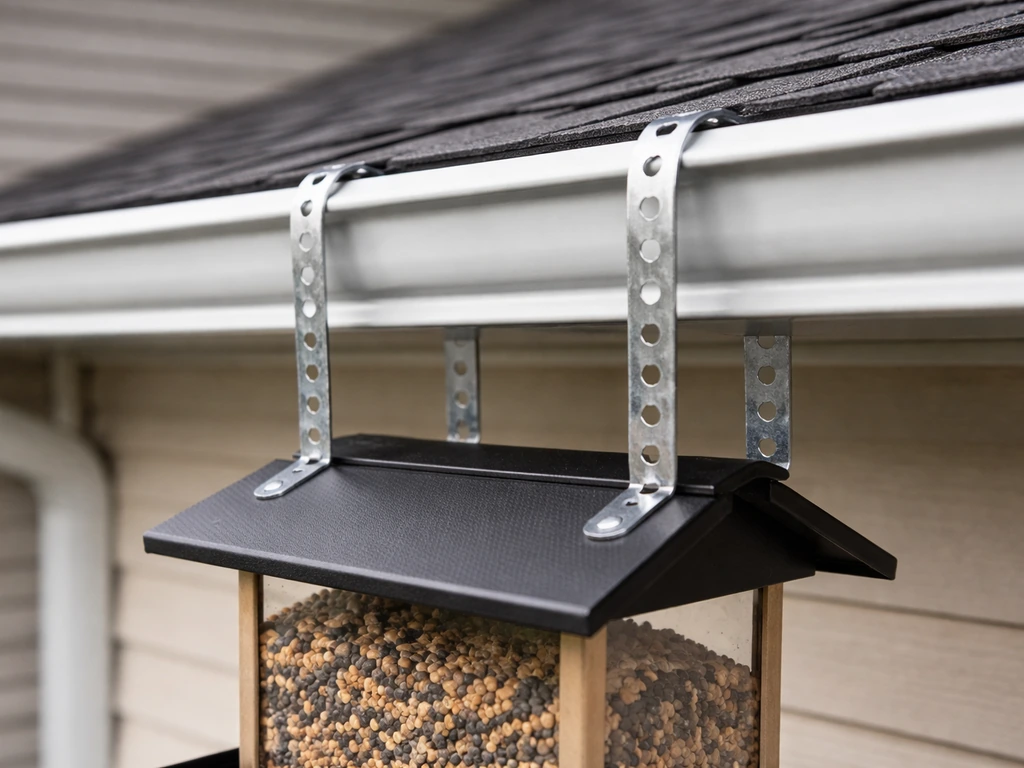
- Cut a 12–16 inch section of 3/4" galvanized perforated hanger strap.
- Loop it over the back of the gutter and through the gutter channel so both ends hang below the front lip. This distributes load along the gutter body rather than just the lip edge.
- Bring both strap ends together below the gutter front, thread them through a bolt or S-hook, and bend the strap tails back on themselves to lock the loop. The perforations make it easy to lock at any length.
- Hang your chain and feeder from the bolt or hook. This method handles heavier tube and hopper feeders confidently.
- Check the strap every season for rust. Galvanized steel holds up well outdoors, but if you see orange staining, replace it.
Weight, wind, and keeping things stable
A tray feeder loaded with sunflower seeds can easily hit 5–8 lbs. A large hopper feeder full of mixed seed can push 12–15 lbs. Gutter hooks marketed for bird feeders are typically rated around 15 lbs each, and universal utility hangers like Duncraft's are rated to 20 lbs. Stay under those numbers with a buffer. If your feeder filled to the top exceeds 12 lbs, use the hanger strap method or move to a dedicated shepherds hook post instead.
Wind swinging is the other main issue. A feeder that swings hard can loosen hooks over time and stress the gutter lip. A few things that genuinely help: keep the hanging chain short (8–12 inches from gutter to feeder top is enough), add a short section of rigid conduit or a wooden dowel between the gutter attachment and the feeder hook to reduce pendulum motion, and choose tube or hopper feeders over open tray styles in exposed locations since they have lower wind drag. A southeastern-facing spot on the house is naturally more sheltered from prevailing wind.
In cold climates, ice is a real concern. Water collecting in the gutter near your attachment point freezes and expands, which can push on hooks and clamps. Check and re-tighten hardware every fall before the first freeze. If you used a sealant anywhere near the gutter (say, to fill a gap near a clamp), make sure it's rated for sub-zero temps. Geocel 2320 Tripolymer handles from -40°F to 180°F without cracking and is worth the few extra dollars in freeze-thaw regions.
Height, spacing, and getting birds to actually use the feeder
Gutters on a standard single-story home sit roughly 8–10 feet off the ground, which puts a feeder hanging 12 inches below the gutter at 7–9 feet up. That height works fine for most songbirds. If you are building a bird feeder specifically for a balcony, focus on safe mounting and easy access for refilling so it stays stable in everyday use how to make bird feeder for balcony. For tube feeders, the perch ports just need to be accessible from open air, so the birds can approach from below or the side without obstruction. For a bird feeder, choose a spot that’s sheltered from strong wind and positioned at a height that matches the birds you want to attract bird feeder where to hang it.
Window collision risk is worth thinking through. Ornithologists consistently recommend placing feeders either closer than 3 feet from a window (so a bird that hits doesn't build enough momentum to injure itself) or more than 30 feet away. Hanging from the gutter puts most feeders in the 6–15 foot range from windows, which is the worst collision zone. If your feeder will end up in that middle range, apply window collision tape or decals to the nearest glass.
Also think about the approach path. Birds want a clear flight path to the feeder and nearby branches or shrubs to land on and survey before committing. If the gutter section you've chosen puts the feeder flush against the siding with no open approach, birds will ignore it. Aim for a feeder position that floats in open air with a shrub or tree within 5–10 feet for cover.
Keeping squirrels off and preventing rot
Squirrels are excellent climbers and persistent problem-solvers. Hanging from a gutter doesn't automatically protect the feeder since squirrels can walk along the roofline and drop down onto it. The most effective single addition is a torpedo-style squirrel baffle installed on the hanging chain above the feeder. Position the feeder 8–10 inches below the bottom of the baffle (Perky-Pet's official spec) so squirrels can't reach around it. Make sure no nearby branch or roof overhang lets them bypass the baffle by jumping directly onto the feeder from the side.
Mold and rot come from wet seed sitting in the feeder or collecting on the ground below. This is especially bad after rain, when soggy hulls and seed casings become a breeding ground for bacteria that can harm birds and attract rodents. Wet weather can lead to mold and bacteria on wet seed, so Minnesota DNR recommends cleaning up fallen seeds and disinfecting feeders to prevent bacteria buildup. A few practical habits prevent most of this:
- Use a feeder with drainage holes in the base so rain doesn't pool. Tube feeders with mesh bottoms are better in wet climates than tray feeders.
- Fill the feeder with only as much seed as birds will eat in 2–3 days. Less seed sitting around means less spoilage.
- Clean the feeder once a month using a 10% bleach solution (roughly 1 part bleach to 9 parts water). Scrub all surfaces, rinse thoroughly, and let it dry completely before refilling.
- Rake up spilled seed and hulls on the ground below the feeder weekly. Decomposing seed attracts raccoons, rodents, and can spread disease back to visiting birds.
- At the start of each season, do a full inspection: remove the feeder, clean it, check all hardware for rust or wear, and reseat any hooks or clamps that have shifted.
When things go wrong: common problems and fixes
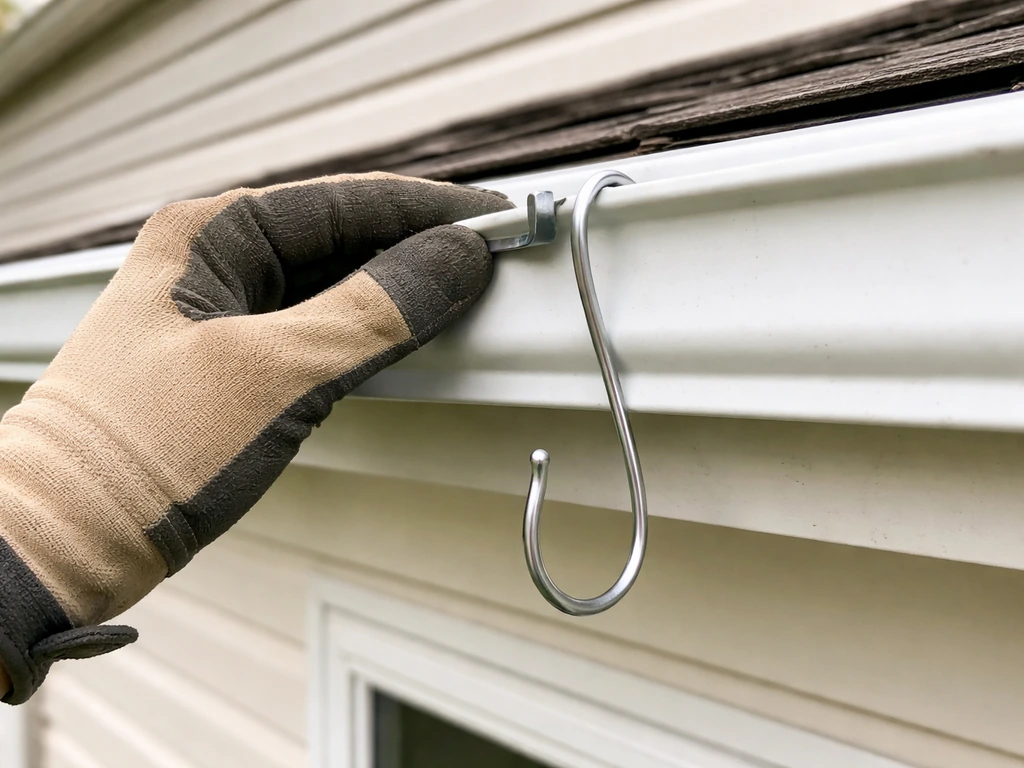
Even a well-set-up gutter hang can develop problems. Here's what usually goes wrong and how to fix it without starting over.
| Problem | Likely cause | Fix |
|---|---|---|
| Hook slides or migrates along the gutter lip | Smooth hook on a smooth gutter edge with no stop | Crimp the hook slightly with pliers or add a rubber-coated wire twist on both sides of the hook to act as a stop. |
| Gutter flexes or bows when feeder is loaded | Hanging in a mid-span section with no bracket support behind it | Move the attachment point to directly above or adjacent to a hidden gutter hanger. Check that the hanger screws are still biting into the fascia. |
| Feeder swings excessively in wind | Long chain, light feeder, or exposed location | Shorten the chain to 8–12 inches. Switch to a heavier hopper-style feeder, or add a small S-hook extender with a rubber stop to dampen motion. |
| Water or leak appears near the attachment point | A clamp screw or accidental hole compromised the gutter lip | Remove the hardware. Clean and dry the area. Apply a flexible tripolymer sealant rated for your climate range. Reinstall using a no-drill clamp method. |
| Birds aren't using the feeder | Wrong approach path, too exposed, wrong seed, or feeder too high for species | Relocate to a spot with nearby cover within 5–10 feet. Check seed freshness. For a feeder over 9 feet up, consider dropping it lower using a longer chain. |
| Squirrels keep reaching the feeder | Roofline access or baffle installed at wrong spacing | Check for any roofline jump point above the feeder. Re-space the baffle so feeder hangs 8–10 inches below the baffle base. A 24-inch torpedo baffle gives more coverage than a small cone. |
| Gutter section cracks or shows new damage | Feeder load over time on an already aging plastic gutter | Remove the feeder immediately. Repair the gutter or replace the section. Move the feeder to a shepherds hook, deck railing mount, or hang it from the eaves/soffit where you have a more solid structural anchor. |
When the gutter just isn't the right spot
Not every home's gutter is worth rigging up for a bird feeder. If your gutters are old, plastic, or already showing wear, the risk to the gutter isn't worth it. The good news is you have solid alternatives that stay close to the house: hanging from the soffit or eaves gives you a fixed, structural anchor point that's completely independent of the gutter channel, and a deck railing mount puts the feeder at a more accessible height with easy cleanup below. Each approach has its own hardware and placement considerations, but they all solve the same core problem of getting a feeder close to the house without relying on a component that was designed purely for water management.
If you do stick with the gutter hang, revisit the setup twice a year: once in spring after freeze-thaw season, and once in fall before cold weather arrives. Tighten, inspect, clean, and re-bait. A five-minute checkup twice a year is all it takes to keep a gutter-hung feeder running reliably and keep your gutters in the shape they were in before you started.
FAQ
Can I hang a bird feeder from a gutter if my gutter is vinyl or aluminum?
Yes, but only if the feeder attachment still grips the gutter lip securely and you stay in the rated load range. If your gutter has a different lip shape or the hangers slip when you pull down by hand, switch to a soffit or eaves anchor instead, since painted aluminum and some vinyl gutters can deform under clamp-style hardware.
Is it okay to drill a hole and screw the feeder directly into the gutter?
Don’t use a “screw-through” method. Even if it feels solid, a screw can create a leak path along the seam or drive water behind the gutter edge during heavy rain. If you already drilled, the fix is to replace damaged sealants and then verify water tightness by running a hose for several minutes at the attachment point.
My gutter-hung feeder swings a lot, what should I adjust first?
If your setup wobbles, it usually means the attachment point is on a weak section or the chain length is too long. Shorten the chain until the feeder sits about 8 to 12 inches below the gutter lip, then add the rigid conduit or dowel spacer between the gutter attachment and feeder hook to reduce pendulum swing.
How do I calculate whether my feeder weight is safe for a gutter hook rating?
Use the “one feeder per hook” rule, but also consider the dynamic load. Even one heavy hopper can bounce when birds land repeatedly, so keep a buffer below the rating (for example, do not run near 15 lbs total loaded weight). If you need more capacity, add additional hang points instead of increasing the load on one attachment.
What should I do to keep the clamp from slipping after rain or seed spills?
Clean and dry the gutter surface before clamping, especially if there is pollen, leaves, or oxidation on the lip. After wet seed, residue can make clamps grip worse over time, so rinse the attachment area and re-check tightness after the first rainy day.
What can I do if the feeder attracts ants or other insects after I hang it on the gutter?
If you get ants, wasps, or other insects around the feeder, the most effective step is to stop wet feed from accumulating and to clean the area below where hulls collect. Replace mixed seed that’s clumping, empty and scrub the tray or hopper, and avoid overfilling, since overflow increases insect activity.
Will a gutter-mounted feeder automatically be squirrel-proof?
Hanging from the gutter does not guarantee good predator protection. For the best results, install the baffle on the hanging chain above the feeder, and confirm there is no nearby branch, roof edge, or overhang that lets squirrels bypass the baffle by dropping or jumping from the side.
What changes should I make for gutter hanging in heavy snow or ice climates?
In very heavy snow or ice conditions, you need to re-check hardware after thaw cycles and ensure the feeder line is not pulling ice off the gutter lip. If ice builds near the attachment, move the feeder to the eaves or soffit anchor point, since freeze-thaw pressure can loosen clamps even when they are rated.
Do I really need window decals when the feeder is on a gutter?
The recommended window-safety range depends on where the feeder ends up. If your gutter hang puts the feeder in that middle zone (about 6 to 15 feet from windows), apply window decals or collision tape, and consider moving the feeder closer than 3 feet or farther than 30 feet if your layout allows.
How close to the siding should a gutter-hung feeder be for birds to use it?
For tube or hopper feeders, ensure the ports are unobstructed from the approach side so birds can enter without bumping the gutter edge or siding. If the feeder sits too close to the wall, birds may avoid it, even when it’s in a safe height range, so aim for open air with cover nearby.
Next Article
Bird Feeder Where to Hang It: Best Spot and Height Guide
Step-by-step guide on where to hang a bird feeder, including best height, distances, safety, pest control, and setup tip