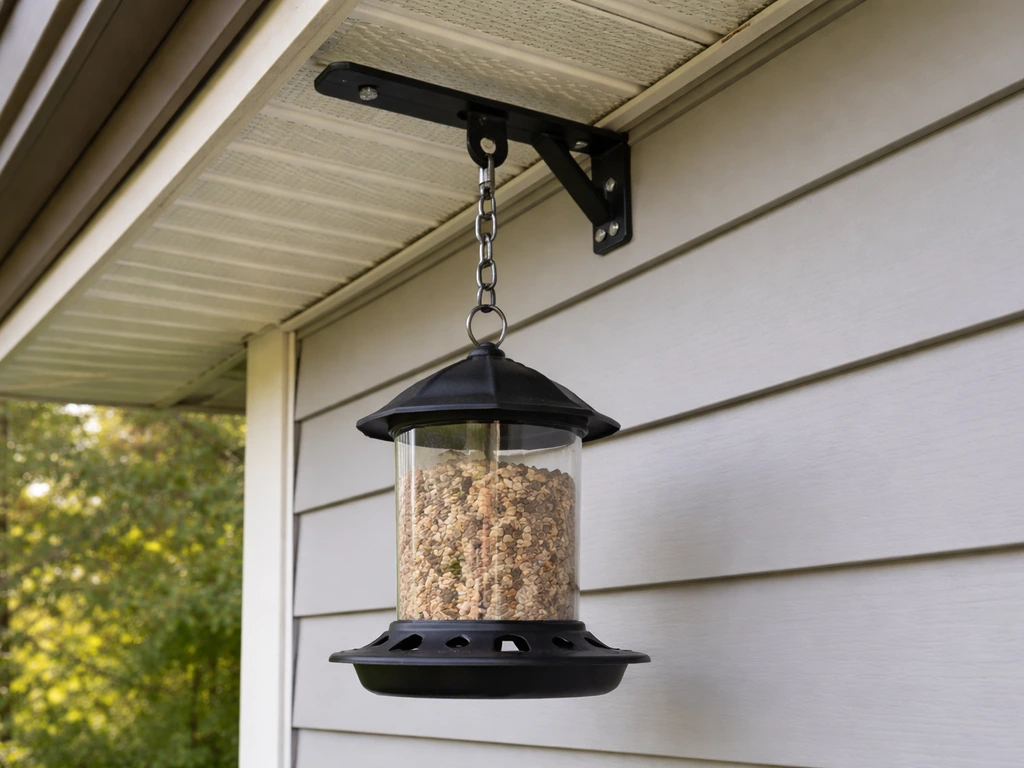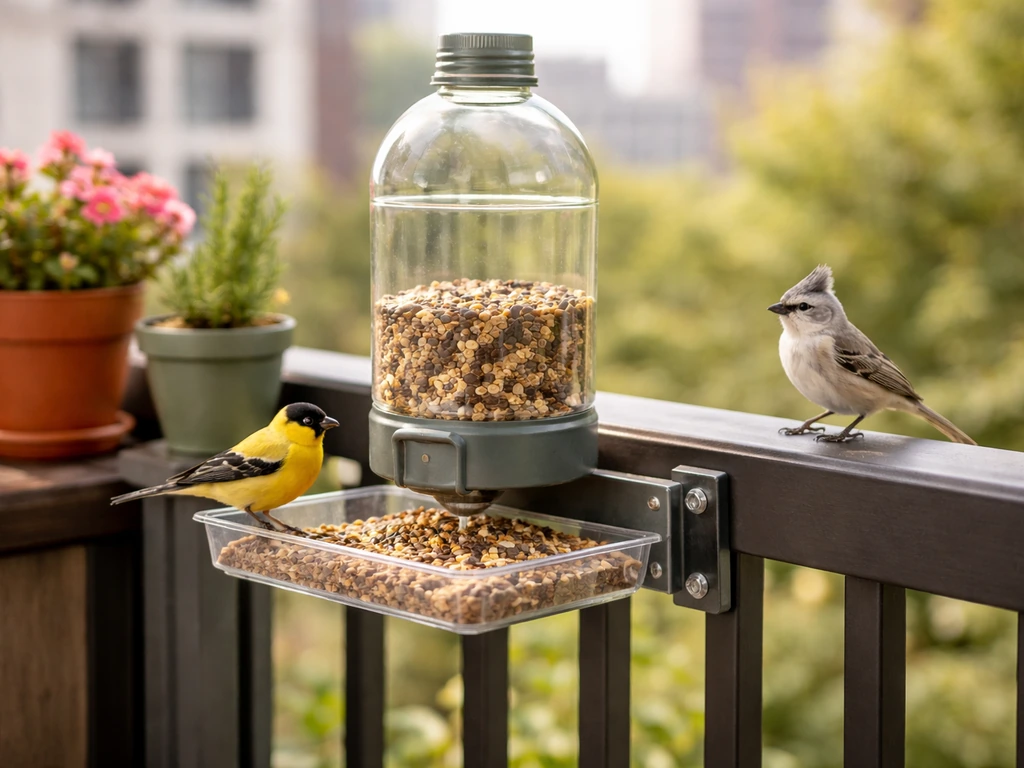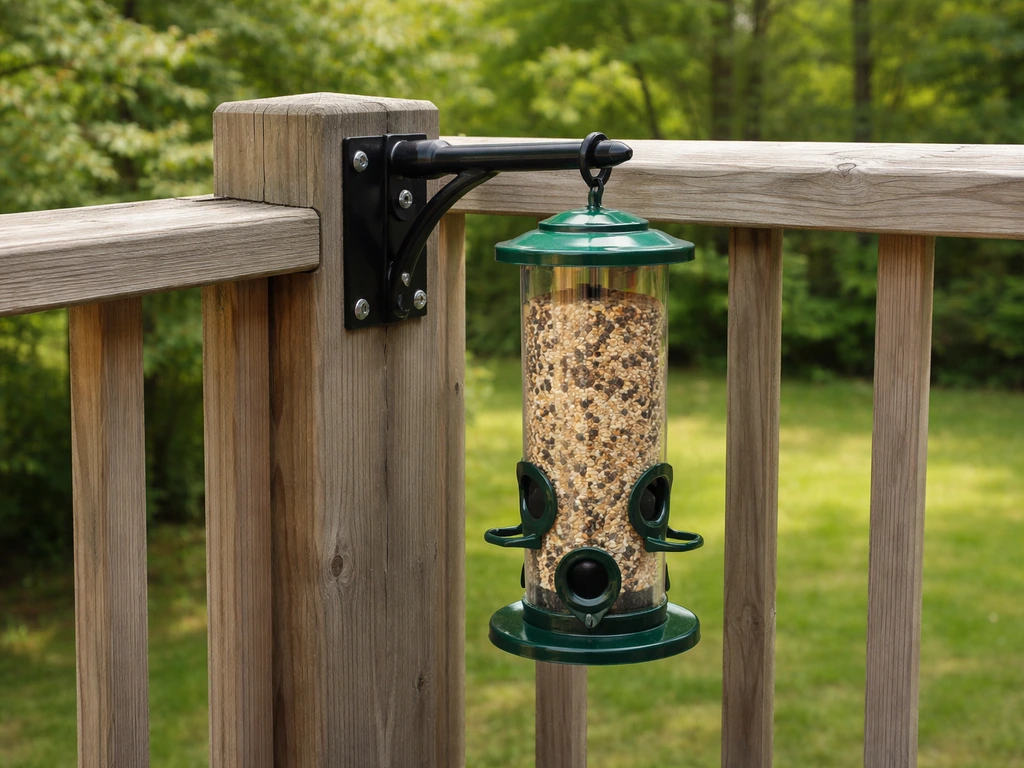
You can hang a bird feeder from a soffit, but the key is making sure you're fastening into something solid rather than just the vinyl or aluminum panel itself. Find a rafter tail or structural backing above the soffit, use the right hook or mount for your feeder's weight, and you'll have a setup that stays put through wind and rain. Here's exactly how to do it, from choosing hardware to keeping squirrels off and birds coming back. If you're looking for the exact steps to hang a bird feeder from eaves, this article walks through the process from hardware choice to keeping squirrels away.
How to Hang a Bird Feeder From the Soffit Safely
Marcus Brennan
23 May 2026
What soffit hanging actually means (and when it makes sense)
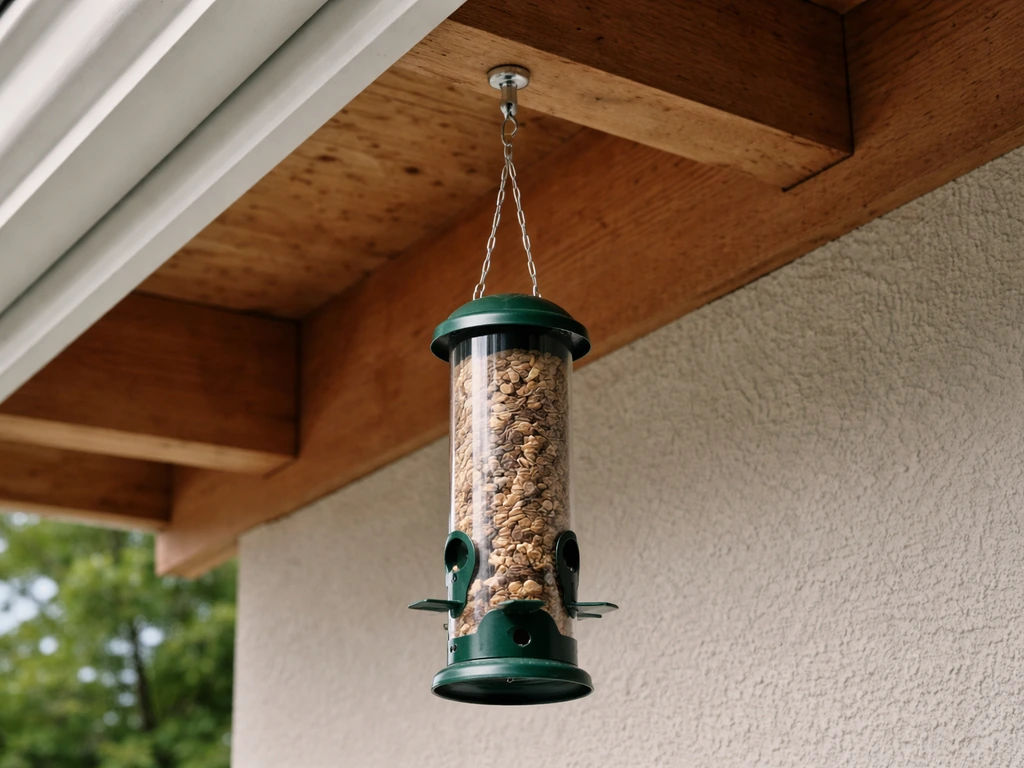
The soffit is the finished underside of your roof overhang, sitting between the outer wall of your house and the fascia board at the roofline. It's usually made of vented vinyl, aluminum, or wood, and it covers the rafter tails that stick out past your exterior wall. When people talk about hanging a bird feeder from the soffit, they mean attaching a hook or bracket up there so the feeder dangles down in a visible, sheltered spot right outside a window or door.
It's a genuinely smart location. The overhang gives the feeder some rain protection, the height keeps it away from ground-level predators, and if you pick the right window, you get a great view from inside. The challenge is that a lot of soffits look solid but aren't built to bear much weight on their own. Vented vinyl panels in particular are designed to flex and allow airflow, not to act as mounting surfaces. If you push a screw or hook straight into a vented vinyl panel without hitting anything structural behind it, you'll get a loose, wobbly setup that pulls out over time.
Soffit hanging works best when your soffit is solid wood, or when you can locate a rafter tail or backing board directly above the vinyl or aluminum panel. It also works well with no-drill clip-style soffit hooks designed to roll into the seam between panels, provided your feeder is light enough. A small tube feeder or suet cage is a good candidate. A heavy hopper or platform feeder loaded with seed is a different conversation.
Pick the right feeder type and mounting hardware
Not every feeder is well-suited to a soffit hang. The main variable is weight, both the feeder itself and a full load of seed. A suet cage weighs almost nothing. A small tube feeder filled with nyjer seed is light. A large hopper or platform feeder loaded with black oil sunflower seed can easily hit 5 to 10 pounds. Your mount needs to handle the maximum loaded weight plus some wind-load buffer.
| Feeder Type | Typical Loaded Weight | Recommended Mount |
|---|---|---|
| Suet cage | Under 1 lb | No-drill soffit clip hook or light screw hook into rafter |
| Tube feeder (small) | 1 to 3 lbs | No-drill soffit clip or screw hook into rafter tail |
| Tube feeder (large) | 3 to 5 lbs | Screw hook into rafter tail or structural backing |
| Hopper feeder | 5 to 10 lbs | Heavy-duty screw hook or eye bolt into rafter tail only |
| Platform/tray feeder | 5 to 12 lbs | Not ideal for soffit; bracket mount into rafter or fascia preferred |
For hardware, you have two main routes. The first is a no-drill soffit hook, sometimes called a soffit hanger or vinyl siding hook. These products have a curved or rolled edge that slides into the groove or seam between soffit panels so you don't need to drill a hole. They work well for light feeders, but pay attention to the stated weight limit and keep in mind that soffit panel strength varies house to house. If the seam is flimsy or the panels are old and brittle, even a light feeder can cause them to deform over time.
The second route is a screw hook or eye bolt driven directly into a rafter tail or a backing board above the soffit. This is the stronger option and the one I'd recommend any time you're hanging something heavier than a couple of pounds. A 3/8-inch or 1/2-inch eye bolt with a nut on the back side is as solid as it gets. For most feeders, a heavy-duty screw hook with at least 1.5 inches of thread engagement into solid wood is plenty. Add an S-hook or a short length of chain between the hook and the feeder so you can adjust height and remove the feeder easily for cleaning.
What you'll need before you start
- Stud finder or a thin probe/awl to locate rafter tails above the soffit
- Tape measure and pencil for marking
- Drill with a bit sized slightly smaller than your screw hook's thread diameter
- Heavy-duty screw hook (3/8-inch shank, galvanized or stainless steel) or eye bolt with washer and nut for heavier feeders
- No-drill soffit clip hooks if you're going the no-hole route for a light feeder
- S-hooks or quick-link connectors (at least two, so you can swap feeders easily)
- Lightweight chain or braided steel cable, 12 to 24 inches (optional but useful for height adjustment)
- Squirrel baffle (torpedo or dome style) if squirrels are a concern in your yard
- Exterior-grade wood sealant or dab of silicone caulk to seal any drilled hole
- Step ladder tall enough to comfortably reach your soffit
- Safety glasses
- Work gloves
Most of this costs under $20 if you're buying a screw hook, a couple of S-hooks, and some chain. The baffle is the bigger investment, usually $15 to $40 depending on style, but it's worth it if squirrels are active in your area. Skip the cheapest no-name screw hooks at the discount bin and get galvanized or stainless steel hardware. Rust weakens the threads and can stain your soffit.
How to install a soffit mount and hang the feeder
Step 1: Find the rafter tail
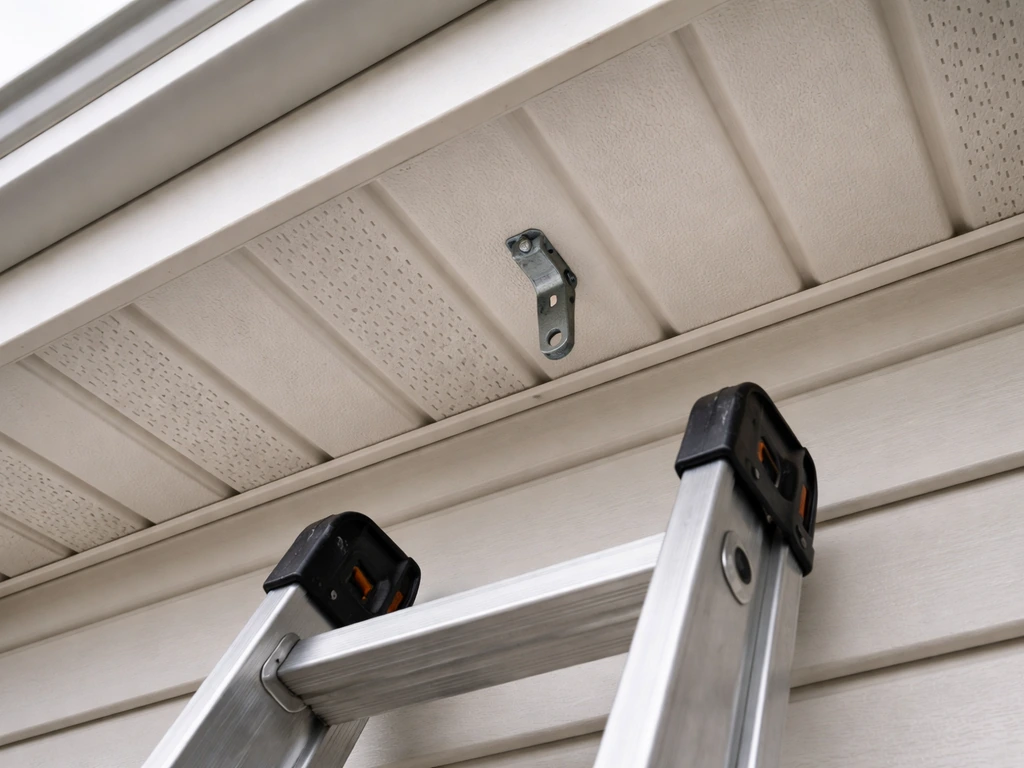
Set up your ladder and take a close look at the underside of the soffit from below. On many houses you can see subtle lines or slight bumps in the soffit panel where the rafter tails run. Use a stud finder set to its standard mode and slide it across the soffit surface. When it beeps or lights up, mark the spot with a pencil. If your stud finder isn't giving you a clean reading (vinyl can be tricky), use a thin awl or a small finish nail to probe gently along the line where you expect a rafter. You'll feel solid resistance when you hit wood versus empty space behind the panel.
Step 2: Choose your exact hanging spot
Once you've confirmed a rafter tail location, think about where you actually want the feeder to hang. You want it visible from a window or door, positioned where birds can approach from multiple directions, and in a spot that won't swing into your house wall or a window during wind. Mark the spot on the rafter tail, not just the panel.
Step 3: Drill the pilot hole
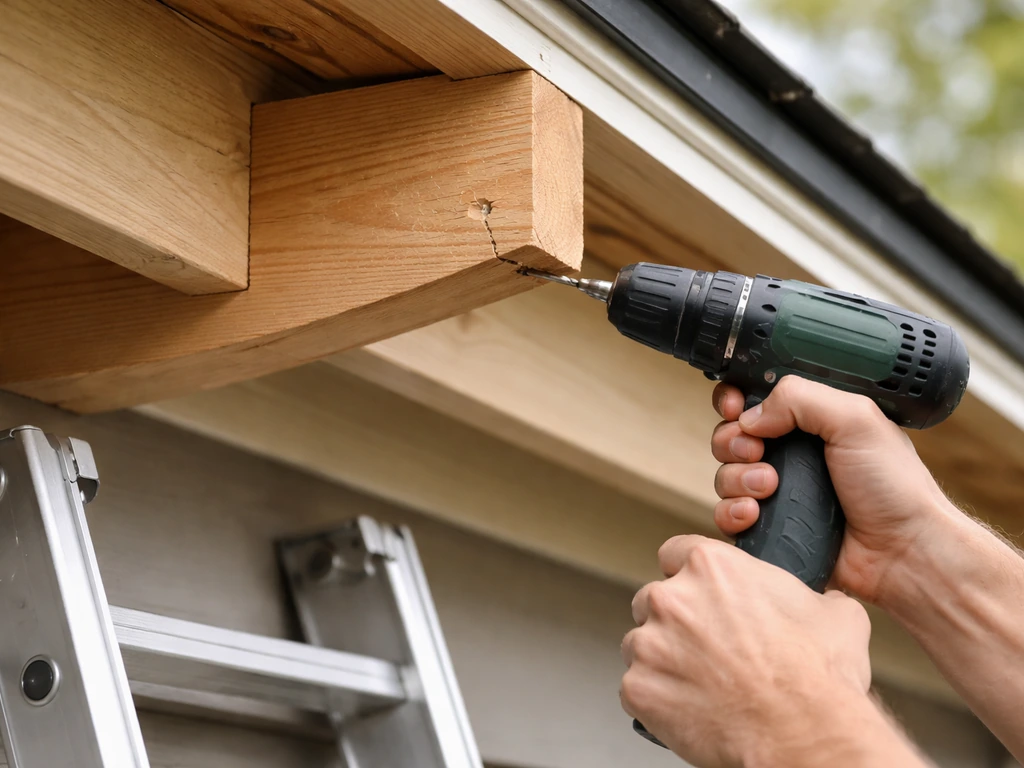
Use a drill bit about 1/16-inch smaller than the shank of your screw hook. Drill straight up into the rafter tail to a depth of about 1.5 to 2 inches. If you're going through a vinyl panel first, drill slowly to avoid cracking or splitting the vinyl. A sharp bit at moderate speed works better than a dull bit at high speed here.
Step 4: Install the hook
Thread the screw hook in by hand first to get it started, then use a pair of pliers or a screwdriver through the eye to get the last few turns. You want the hook snug and flush, with no wobble. Apply a small bead of exterior silicone caulk around the base of the hook where it enters the wood to seal out moisture. Let it cure before loading the feeder.
Step 5: Attach chain or cable and hang the feeder
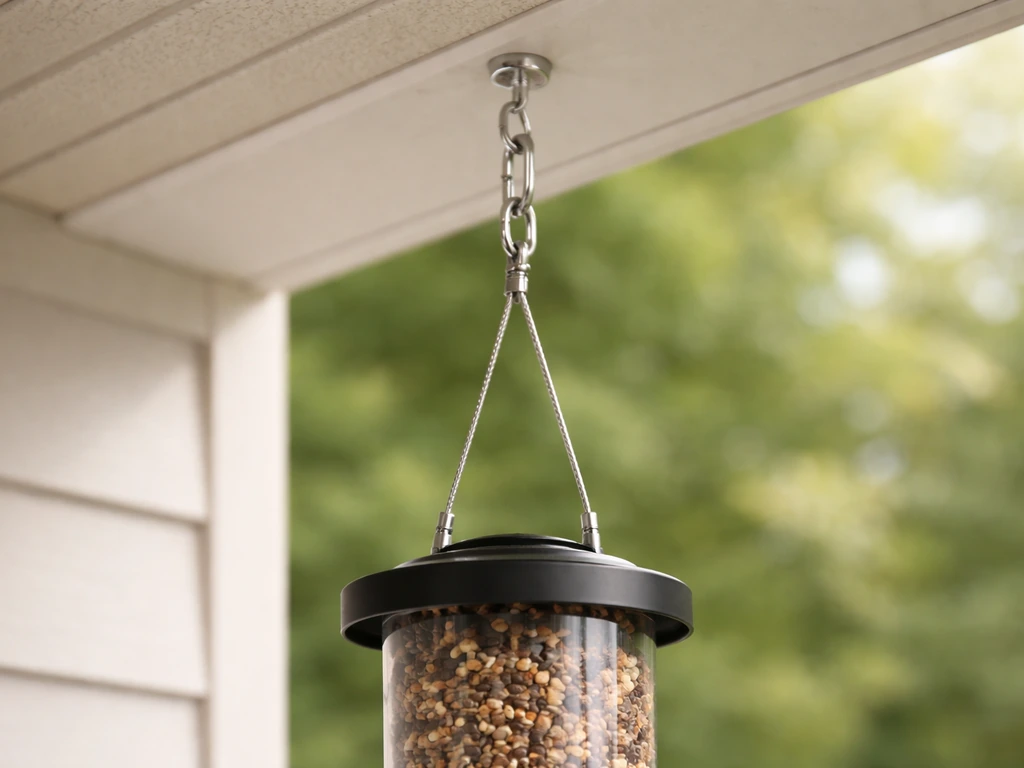
Clip a length of chain or braided cable to the screw hook using an S-hook or quick-link. Hang your feeder at the bottom of the chain using another S-hook. Test the hang by gently pushing the feeder side to side and checking for any movement in the hook above. If the hook spins or pulls, back it out, enlarge the pilot hole slightly, and drive the hook into fresh wood at a slightly different angle. Fill the feeder with seed only after you're confident the mount is solid.
Using a no-drill clip instead
If you're going with a no-drill soffit hook, slide the curved or rolled lip into the groove between two soffit panels and rotate it until it seats firmly. Most clip-style hangers come with specific instructions for engagement depth. Tug downward firmly before hanging anything. These work well for feeders under about 3 pounds, but check the manufacturer's listed weight limit and don't push past it.
Getting the height and placement right for birds
Height matters more than most people expect. For a hanging feeder under eaves, aim for the bottom of the feeder to sit at least 4 to 5 feet off the ground. That keeps it above easy squirrel reach from below and above most cat-jump range. Too high (above 7 feet or so) and smaller birds feel exposed approaching it; too low and you'll have constant ground-predator pressure.
Window placement is where a lot of new feeder owners get tripped up. Birds that see sky reflection in a window will fly toward it, and a feeder placed at a mid-range distance from glass can actually make collisions more likely because the bird has room to build speed before impact. The safest approach is to place the feeder either within 3 feet of the nearest window or more than 30 feet away. If your soffit hang puts the feeder right outside a window at close range, that's actually ideal. If you're still unsure on positioning, a bird feeder where to hang it guide can help you pick the safest spot for your yard. A bird that bumps the glass from 2 feet away doesn't have enough momentum to injure itself seriously. If you can't get that close, go for maximum distance instead. If reflections are still a concern, adding a window screen or collision-deterrent tape to the glass helps break up the reflection.
Think about bird approach angles too. Feeders under deep eaves can be partially shaded, which some species prefer, but the feeder shouldn't be tucked so far back under the overhang that birds can't see it from a distance or feel safe landing. Leave at least 2 to 3 feet of clear airspace below and in front of the feeder so birds have an easy flight path in and out.
Weatherproofing and keeping the setup stable
One of the benefits of soffit placement is natural weather protection, but the mount itself still needs to handle rain, wind, and temperature swings. Your silicone seal around the screw hole is the first defense against water getting into the rafter wood and causing rot over time. Check that seal every spring and reapply if it's cracked or missing.
Wind is the main cause of feeder sway and wear on the hook. A short chain of 12 to 18 inches keeps the feeder close to the soffit and reduces swing. If you're in a spot that gets consistent wind, replace the chain with a rigid hanging arm bracket mounted into the fascia or soffit edge instead. Letting the feeder swing hard repeatedly stresses the hook threads and will eventually loosen the mount.
For the feeder itself, choose one rated for outdoor use with drainage holes in the base so water doesn't pool in the seed tray. Tube feeders with metal ports hold up much longer than ones with plastic ports that crack in cold temperatures. If you live in a climate with freezing winters, pull down any ceramic or glass feeders before the first hard freeze and swap in metal or high-density plastic alternatives.
Troubleshooting the most common problems
The feeder wobbles or the hook is loose
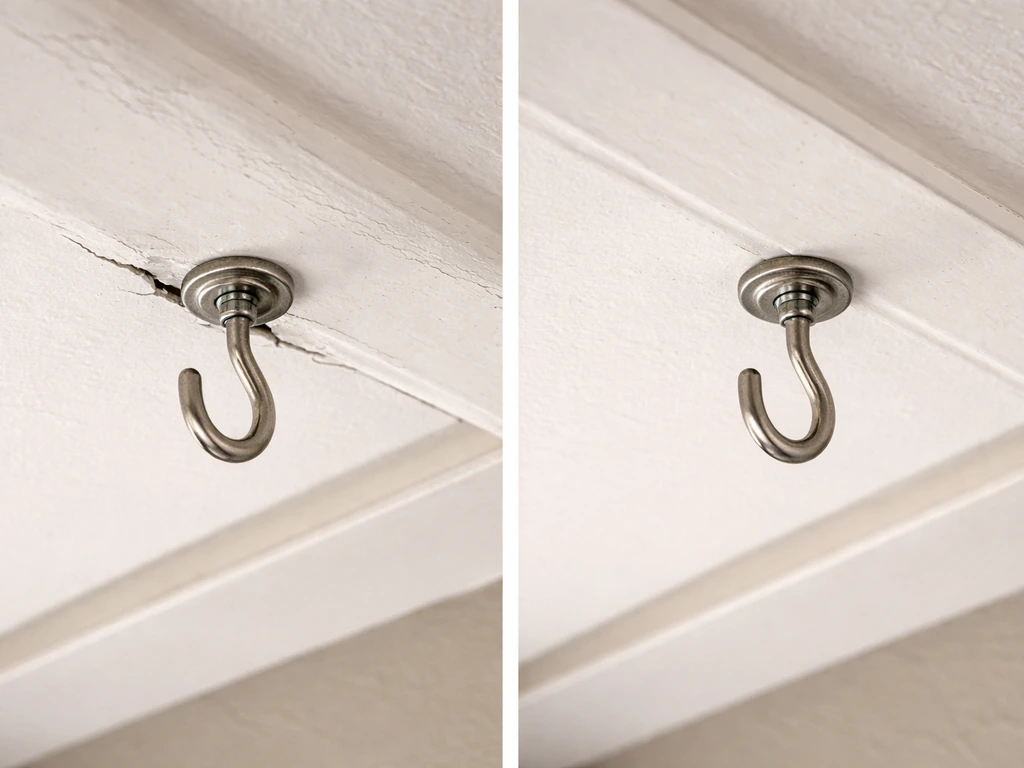
This usually means the screw hook didn't get enough thread purchase in solid wood, or you hit the edge of a rafter rather than the center. Remove the hook, probe around for the thickest part of the rafter, fill the old hole with an exterior wood filler or a toothpick-and-glue trick, and redrive into a fresh spot with a proper pilot hole. If the hook keeps backing out, step up to an eye bolt with a nut and washer on the back side of the wood for a locked-in fit.
The soffit panel is cracking or deforming around the mount
This is the classic sign that you're not actually in a rafter and the panel is bearing the load instead. Stop, remove the load, and find the structural backing. If your soffit has no accessible rafter tails (some modern soffits are boxed in this way), look at attaching a small bracket to the fascia board at the roofline edge instead, since the fascia is solid wood.
Squirrels are getting to the feeder
A soffit-hung feeder is harder for squirrels to reach from below, but they'll climb your house wall, walk along the soffit, or jump from a nearby tree or fence. The fix is a dome or torpedo baffle installed on the hanging chain above the feeder. Position it so the bottom of the feeder hangs roughly 8 to 12 inches below the baffle hub. The baffle needs to be wide enough that a squirrel can't lean past the edge and reach down to the feeder. Keep in mind that if you're near a tree or a second-floor deck railing, squirrels may still launch directly onto the feeder from above, so clear jump distance is part of the equation too.
Birds aren't coming to the feeder
Give it time first. Newly installed feeders in a new spot can take a few days to a couple of weeks before local birds discover them. Make sure you're using fresh seed appropriate for your region's bird species (black oil sunflower seed attracts the widest variety of backyard birds in most of North America). Check that the feeder isn't so tucked under the eaves that it's invisible from nearby perching spots. If there are no trees or shrubs within 5 to 10 feet, birds may feel too exposed landing there. Planting or placing a temporary perch (a natural branch in a pot works fine) about 5 feet away gives birds a staging spot before they commit to the feeder.
Seed is getting wet and molding
Even with soffit coverage, wind-driven rain can wet a feeder. If you're seeing moldy or clumped seed regularly, the feeder design may be the problem. Switch to a tube feeder with a weather guard or rain dome mounted above it, and check that all drainage holes are clear. Dump and replace seed after any significant rain event rather than letting it sit.
Maintenance and adjusting through the seasons
Clean the feeder about every two weeks as a baseline. If you're in a wet climate or using a platform-style tray, check it weekly. For a deep clean, mix a disinfecting solution of 1 part bleach to 9 parts water (roughly 2 ounces of bleach per gallon of water). Scrub all surfaces, rinse thoroughly, and let the feeder dry completely before refilling. Putting a wet feeder back up just grows mold faster. Don't forget to clean the area below the feeder too, since dropped seed hulls and droppings can attract rodents and harbor disease, which is especially important under eaves where debris tends to collect.
Every spring and fall, get up there on the ladder and check the mount itself. Look for rust on the hook, cracking or separation in the silicone seal, and any deformation in the soffit panel around the mount point. Tighten anything that's worked loose. A hook that feels even slightly wobbly in October will feel much worse by March after a winter of wind and freeze-thaw cycles.
Season also affects what birds need from your feeder. In winter, high-fat options like suet and sunflower seeds are more valuable to birds trying to maintain body heat. In spring and summer, switching to or adding nyjer (thistle) attracts finches, and a protein-rich seed mix helps nesting birds. Consider having a second hook ready so you can swap feeder styles without having to redo your mount each time.
If you've been thinking about adding more feeder spots around your property, a soffit mount pairs well with other hanging locations. Deck railings, gutters, and eave brackets each have their own tradeoffs in terms of bird visibility, squirrel access, and ease of refilling. If a soffit mount is inconvenient, a gutter-mounted approach can be a related option to compare before you decide on the final placement, including how to hang bird feeder from gutter gutters. If you are considering the deck railing option instead, use a railing mount or bracket made for outdoor loads and secure it to solid structural parts deck railings. The soffit location tends to be one of the most set-it-and-forget-it options once the mount is solid, which makes the upfront work worth doing right.
FAQ
Can I hang a bird feeder directly from the soffit material without hitting a rafter tail?
It’s not recommended. Even if the soffit panel looks thick, vented vinyl and many aluminum soffits are designed to flex, so a direct attach point often loosens over time. The safer approach is to locate a rafter tail or backing board and mount there, or use a no-drill soffit hook only when the feeder is truly light and the product’s weight rating matches your exact loaded weight.
How do I know if my soffit is vented vinyl versus solid/wood, before drilling?
Look for vented channels or perforations near the underside and check whether the soffit panels meet in seams that can move. If you can’t confirm by inspection, probe gently with a small finish nail or awl near where you plan to mount; you’re trying to feel if you’re reaching wood quickly versus running into hollow space behind a flexible panel.
What should I do if my screw hook hole ends up a little off-center in the rafter?
If it feels loose or wobbles, don’t keep tightening. Remove the hook, check for fresh solid wood around the pilot area, then redrive into the thickest part of the rafter. Fill the old hole with exterior wood filler (or a toothpick-and-glue method) and re-drill with the correct slightly smaller pilot hole so the new mount gets proper thread purchase.
Is a no-drill soffit hook safe for heavier feeders like a hopper or platform?
Usually not, unless the manufacturer explicitly rates the hook for your feeder’s maximum loaded weight and your soffit seams are strong. Platform and hopper feeders can exceed several pounds when full, and wind movement adds extra stress. For heavier loads, screw-based mounting into solid rafter wood (or an eye bolt with a backing nut) is the more reliable choice.
How much chain length should I use to reduce sway?
A good starting point is 12 to 18 inches of hanging chain so the feeder stays close to the soffit while still allowing comfortable access for birds. If your spot is consistently windy and the feeder swings hard, consider a more rigid hanging arm mounted to solid structure to reduce repeated thread stress.
What is the best height to hang the feeder from a soffit?
Aim for the bottom of the feeder about 4 to 5 feet off the ground for typical yards. This reduces easy squirrel reach from below and keeps cats less able to spring upward. Avoid going too high (where smaller birds feel exposed) or too low (where predators and more aggressive ground activity increases).
How close should the feeder be to windows to avoid collisions?
Use the 3 feet or 30 feet rule of thumb. If your soffit hang places the feeder within about 3 feet of the nearest window, that close range usually reduces collision risk because birds do not build speed. If you cannot do that, placing it 30 feet or more away, or adding window deterrents like screen or collision tape, helps break up reflections.
Do I need a baffle even if the feeder is under the eaves?
Often yes, because squirrels can climb the wall, walk along the soffit, and jump from nearby structures. A dome or torpedo baffle installed above the feeder on the hanging chain is most effective when the feeder sits roughly 8 to 12 inches below the baffle hub, so squirrels cannot lean over and reach down.
How often should I clean a soffit-hung feeder?
Check and clean on a baseline of about every two weeks, then increase to weekly if you’re in a wet climate or using a platform-style tray that collects moisture and debris. Also clean up spilled seed and hulls under the feeder since buildup attracts rodents and can increase disease risk, especially under overhangs where debris accumulates.
What should I do if seeds keep molding after wind-driven rain?
First confirm the feeder has proper drainage holes and that they are clear. If rain frequently reaches the tray, switch to a tube feeder with a weather guard or rain dome, and dump and replace seed after major rain events instead of letting wet seed sit and grow mold.
How do I adjust the feeder height after it’s already mounted?
Use the chain and S-hooks for easy adjustments. Change the effective hanging height by adding or removing chain links or repositioning the S-hook where it connects to the feeder, then re-test by gently pushing side to side to ensure the mount above stays tight and does not show wobble.
How can I test that my mounting point is safe before loading it with seed?
After installation, test for movement by gently pushing the feeder side to side while empty. If the hook spins, shifts, or the seal flexes, stop and correct the mounting before adding seed. Only fill with seed after confirming the mount feels solid and fully seated into structural wood.