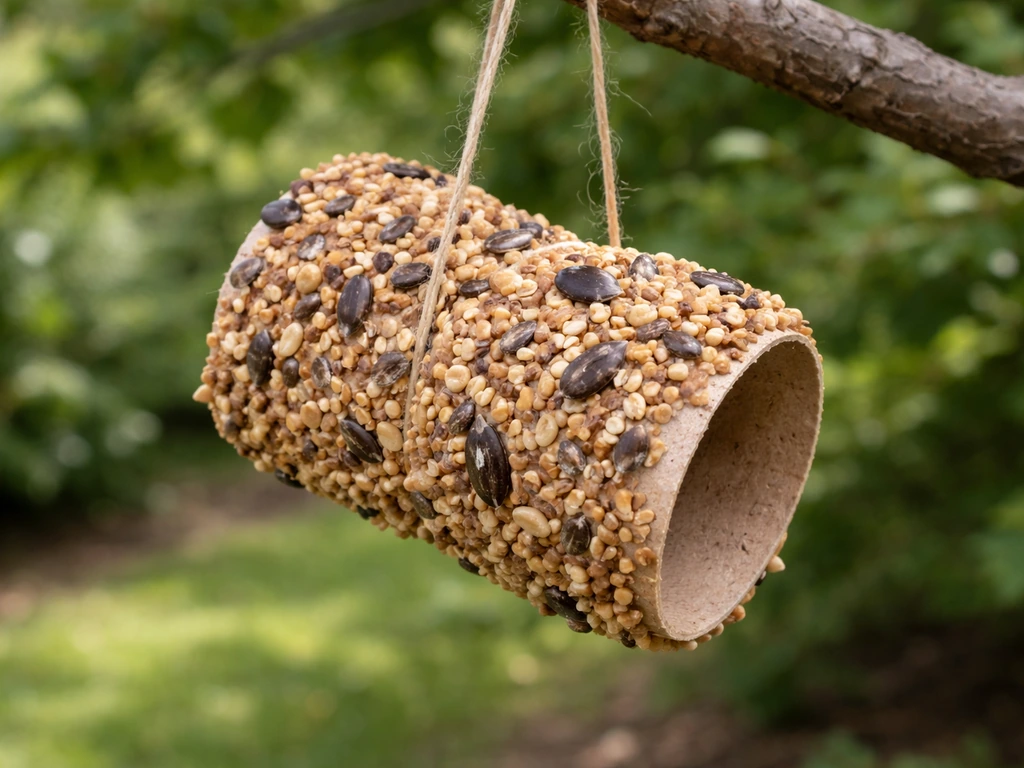
You can absolutely make a working bird feeder with paper today, but let's be honest about what works best: a toilet paper roll or paper towel roll as the main body, coated in peanut butter and rolled in birdseed. That's the classic, proven version. Flat paper on its own won't hold up long enough to be useful, but a cardboard tube gives you enough structure to hang, fill, and actually attract birds. It's a 10-minute project with materials you probably already have at home.
How to Make a Bird Feeder With Paper Step by Step
Marcus Brennan
11 May 2026
What you'll need
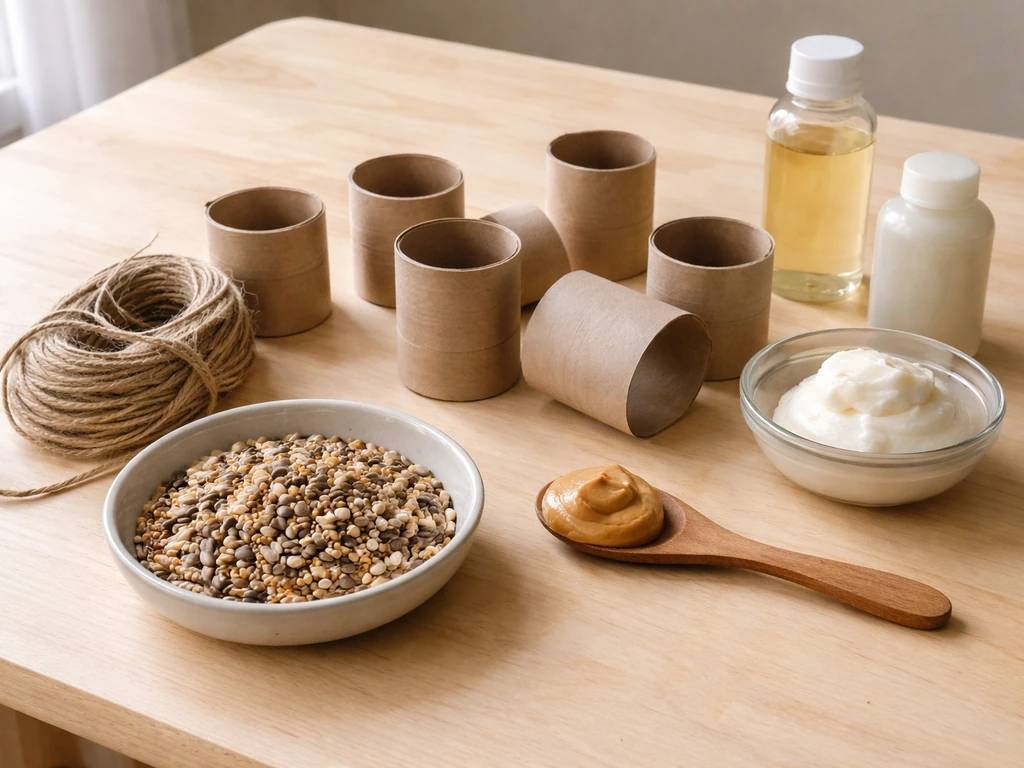
The materials list is short and almost entirely free if you've been saving recycled household items. Here's exactly what to gather before you start:
- 1 or 2 toilet paper rolls (or a paper towel roll cut into thirds for a larger version)
- Peanut butter, plain shortening, or suet (peanut butter works best for sticking seed)
- Mixed birdseed, black oil sunflower seeds, or millet
- A length of twine, jute cord, or thin rope (about 12 to 18 inches)
- A butter knife or spoon for spreading
- A shallow tray or plate for rolling the roll in seed
- Optional: a sheet of wax paper or a plastic bag to coat the inside of the tube for a bit of moisture resistance
- Optional: acrylic sealant spray or mod podge for extra weather protection (more on this below)
One note on peanut butter: use the plain, unsalted variety if you can. Heavily salted or flavored spreads aren't ideal for birds. Natural peanut butter with no additives is the safest choice.
How to build it, step by step
This build takes about 10 to 15 minutes including drying time. You can make two or three at once since the process is the same either way.
- Thread your twine through the center of the toilet paper roll from one end to the other, leaving several inches hanging out of each end. Tie a knot at the bottom end so the cord doesn't pull through.
- Use a butter knife to spread a generous layer of peanut butter or shortening all over the outside of the roll. Get into the edges and don't leave bare patches, since seed sticks where the coating is.
- Pour your birdseed onto a shallow plate or tray. Roll the coated tube through the seed, pressing gently so seed sticks to every side. Rotate it a few times to get good coverage.
- Shake off any loose excess seed over the tray so it doesn't fall off and attract ground pests right under your feeder.
- If you want a bit more weather resistance, let the feeder sit for 5 minutes, then give the outside a light spray of clear acrylic sealant. Let it dry fully before hanging.
- Bring the two ends of the twine together at the top and tie them in a loop. That loop is your hanger. Make sure the knot is secure enough to hold the feeder's weight when wet.
That's it. You now have a ready-to-hang feeder. If you want to make it more of a craft project (especially with kids), you can decorate the roll with non-toxic paint or natural dyes before you apply the peanut butter, just make sure any paint is fully dry first.
Where to hang it so birds actually find it
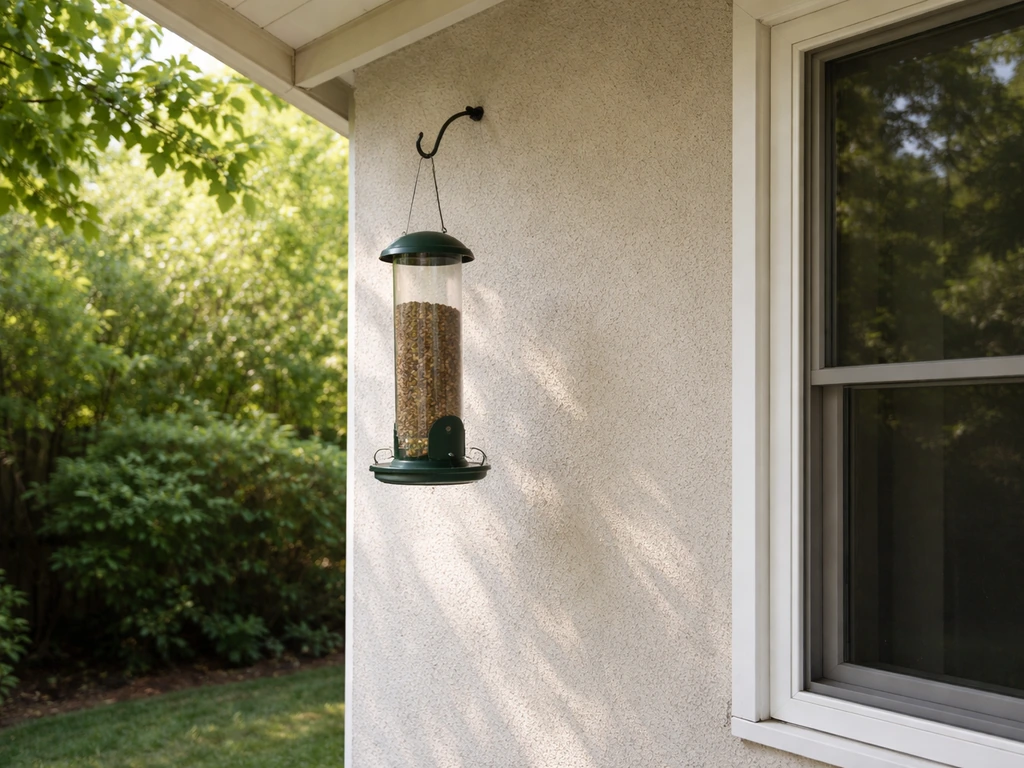
Placement makes a bigger difference than most people expect, and there are two things to get right: height and distance from windows. The window distance is the part most people skip, and it matters for bird safety.
The safest rule comes from research backed by All About Birds, Audubon, and the Washington Department of Fish and Wildlife: hang your feeder either within 3 feet of a window or at least 30 feet away. Feeders within 3 feet don't give birds enough room to accelerate into the glass if they're startled, so collisions are much less dangerous. Feeders placed 30 feet or more away give birds enough visual separation from window reflections so they're less likely to strike the glass at all. The worst zone is anywhere between 3 and 30 feet from a window, so avoid that range if you can.
For a paper-roll feeder specifically, hang it from a tree branch, a shepherd's hook, or a porch overhang using the twine loop. If you want to expand beyond paper rolls, learn how to make a bird feeder with twigs for a natural, stick-built design. Aim for about 5 to 6 feet off the ground so cats can't easily reach it, and look for a spot with some nearby tree cover so birds feel safe approaching. Open, exposed spots can work, but birds prefer having a branch or shrub nearby to retreat to between visits.
Making it last longer in wet weather
Here's the honest truth: a plain toilet paper roll will start to soften after the first rain. That's just the nature of paper. But there are a few things you can do to extend its life without spending any money.
- Hang it under a roof overhang, porch, or a tree canopy that provides some cover from direct rain.
- Line the inside of the tube with a strip of wax paper before threading your twine through. It won't make the roll waterproof, but it slows moisture absorption from the inside.
- Apply a thin coat of mod podge or clear acrylic sealant over the seed-coated exterior once everything is dry. This creates a light barrier against light rain and morning dew.
- If you have a paper towel roll instead of a toilet paper roll, use that. The extra thickness buys you noticeably more time before it softens.
- Make two or three feeders at once. Swap them out every few days, especially after heavy rain. Rotate them and let wet ones dry out fully before recoating.
Realistically, even a well-protected paper roll feeder has a lifespan of about a week in dry weather and just a few days when it rains regularly. Think of these as low-commitment, rotating feeders rather than a permanent installation. If you want something built to last, a wood feeder is the way to go. But for a quick, accessible project, the paper roll version genuinely works.
Keeping birds safe and pests away
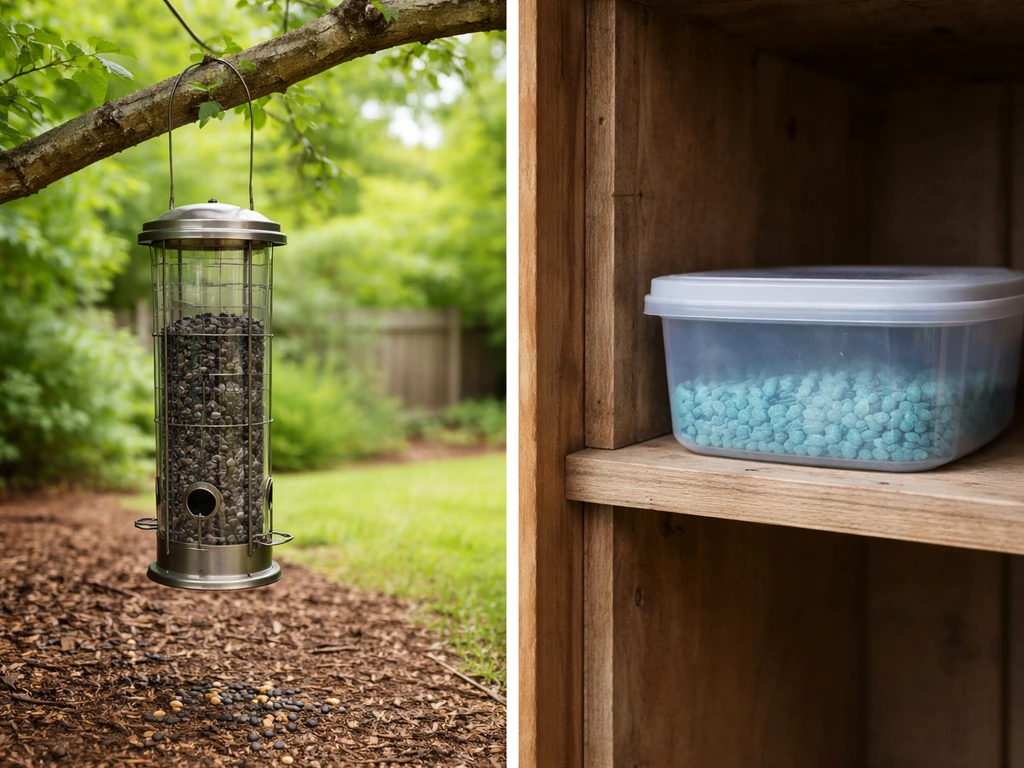
Seed choices that attract the right birds
Black oil sunflower seeds are the single best all-around choice for attracting a wide variety of backyard birds. Mixed seed works well too, especially blends with millet for ground feeders and sparrows. Avoid seed mixes with a lot of filler grains like red milo, which most songbirds ignore and which ends up on the ground attracting rodents. Peanut butter on its own will attract chickadees, nuthatches, and woodpeckers even without additional seed, so don't stress if you run out of the mix.
What to avoid putting on or near the feeder
- Avoid heavily salted peanut butter or any peanut butter with xylitol (a sweetener that is toxic to many animals).
- Don't use dyed or chemically treated paper as part of the feeder body. Plain cardboard or unbleached paper is safest.
- Don't let wet seed sit on or around the feeder. Wet seed molds quickly, and moldy seed can make birds sick. Minnesota DNR notes that mold and bacteria form quickly on wet birdseed, so spot-check the area around the feeder after rain.
- Skip the bread, crackers, or processed human food. These don't provide birds with meaningful nutrition and can attract unwanted pests.
Keeping squirrels and other pests in check
Squirrels are the main pest challenge with any feeder. Massachusetts Audubon points out that squirrels can jump about six feet straight up, so hanging a feeder low on a shepherd's hook without a baffle is basically an open invitation. For a paper roll feeder, the simplest approach is to hang it high enough and far enough from tree trunks and branches (at least 10 feet from any jumping-off point) that squirrels have trouble reaching it. A squirrel baffle mounted on the pole below the feeder also helps significantly. Audubon notes you can't make any feeder completely squirrel-proof, but smart placement and a baffle gets you close. If squirrels are persistent, try offering safflower seed instead of sunflower, since most squirrels find it less appealing.
Cleaning up between feeder rotations
Since paper roll feeders get replaced regularly, you don't have to worry about cleaning the feeder body itself the way you would with a plastic or wood feeder. But you do need to keep the hanging area and ground beneath it clean. Rake up or remove fallen seed hulls and debris regularly, especially in wet weather when they decompose and grow mold or bacteria. Project FeederWatch recommends cleaning seed feeders at minimum every two weeks, and more often in wet or hot weather. If you ever switch to a reusable paper-based structure (like a waxed cardboard tray feeder), blank" rel="noopener noreferrer">soak it in a solution of 1 part bleach to 9 parts water for 10 minutes, then rinse thoroughly and dry completely before refilling. That ratio is recommended by Audubon, Cornell Lab, and the National Wildlife Health Center consistently. All About Birds recommends using blank" rel="noopener noreferrer">a dilute bleach solution for cleaning bird feeders, with a maximum ratio of 1 part bleach to 9 parts water and a 10-minute soak.
When you're ready to go further
A paper roll feeder is a genuinely great starting point, especially if you want something up today with zero cost. But if you catch the bird-feeding bug (and most people do), it's worth thinking about what comes next. A wood feeder lasts years and holds more seed. If you want a step-by-step plan, you can learn how to build a bird feeder out of wood and make it weather-ready a wood feeder lasts years and holds more seed. A feeder made from a plastic bottle or milk jug is nearly weatherproof and free to make from recycled materials. For those who want to keep the eco-friendly, recycled-materials approach going, there are solid builds using all kinds of waste materials that go well beyond paper rolls. If you want more ideas on how to make bird feeder with waste material, the rest of the article can help you choose a simple, weather-friendly build waste materials. The paper version just proves the concept and gets birds coming to your yard while you plan your next build. If you want to try a bigger DIY project later, you can also make a pallet bird feeder using reclaimed wood.
FAQ
Can I make a bird feeder with flat paper sheets instead of a tube or cardboard roll?
Flat paper usually fails because it absorbs moisture and tears quickly, especially after rain. If you want to use paper but keep it durable, fold it into a reinforced pocket or line a paper container with waxed or plastic-lined cardboard, then apply the peanut butter only to the seed-contact area.
What’s the best way to keep the peanut butter from making a mess in my yard?
Let the roll sit briefly after coating so the peanut butter firms up, then hang it in a sheltered spot. If you notice heavy dripping, use a thinner layer and press seed firmly into the tacky surface rather than letting excess peanut butter run.
Is salted or flavored peanut butter ever okay?
It’s better to avoid salted and flavored spreads because additives and higher salt can be harder on birds. If that’s all you have, use a small test batch first and remove the feeder after a day to see if birds avoid it.
How do I prevent birds from getting stuck in peanut butter or seed clumps?
Use small, evenly distributed seed so birds can grip the mix without large sticky chunks. If the seed looks like it’s forming a thick paste, refresh the feeder and apply a lighter peanut butter coat next time.
What kind of birdseed should I use if I want different species?
Black oil sunflower is the most broadly attractive, but you can also add millet to catch sparrows and some ground-feeding birds. Skip blends with lots of filler grains, because uneaten pieces under the feeder can draw rodents and create extra cleanup.
How high should I hang the feeder if I also want to reduce cat risk?
Aim for about 5 to 6 feet, then make sure there’s not a clear path for cats to reach it from nearby branches or fences. A spot with nearby shrubs or tree cover also helps birds feel safe when approaching.
What should I do if I put the feeder near a window and I’m still seeing birds hit the glass?
Rehang it using the window-distance rule (within 3 feet or at least 30 feet) and also reduce glare by avoiding direct reflection angles. If you can’t move it, consider adding window film or decals temporarily until collisions stop.
How do I handle rain so I don’t end up with a moldy mess?
Check the feeder more frequently after wet weather, because the paper roll softens quickly. Once it starts sagging, replace it rather than trying to dry it out, and rake up hulls and debris the same day to prevent mold growth.
How often should I clean around the paper feeder, even though I’m not cleaning the roll itself?
Clean at least every couple of weeks, but in hot or wet periods do it every week or more often. Remove fallen hulls and seed so you reduce bacterial growth and lower the chance of rodents feeding on the leftovers.
Can I reuse a paper-roll feeder after it breaks down?
Usually no, because paper becomes weak, absorbs moisture, and can harbor grime even if it looks okay. Replace the roll when it loses structure, and keep reusing the same hanging setup (twine, hook, branch point) to make the project faster next time.
What if squirrels keep getting to it despite hanging it higher?
Check for climbing routes, like nearby tree limbs or trunks within easy jump reach. Add a squirrel baffle under the feeder and consider switching to safflower seed, which many squirrels find less appealing than sunflower.
Is it safe for birds to drink and eat right after a feeder is decorated with paint or dyes?
Only if the decorative paint or dye is fully dry and non-toxic. Avoid coatings that stay tacky or have strong chemical odors, and don’t let decoration products get into the seed-peanut butter contact area.