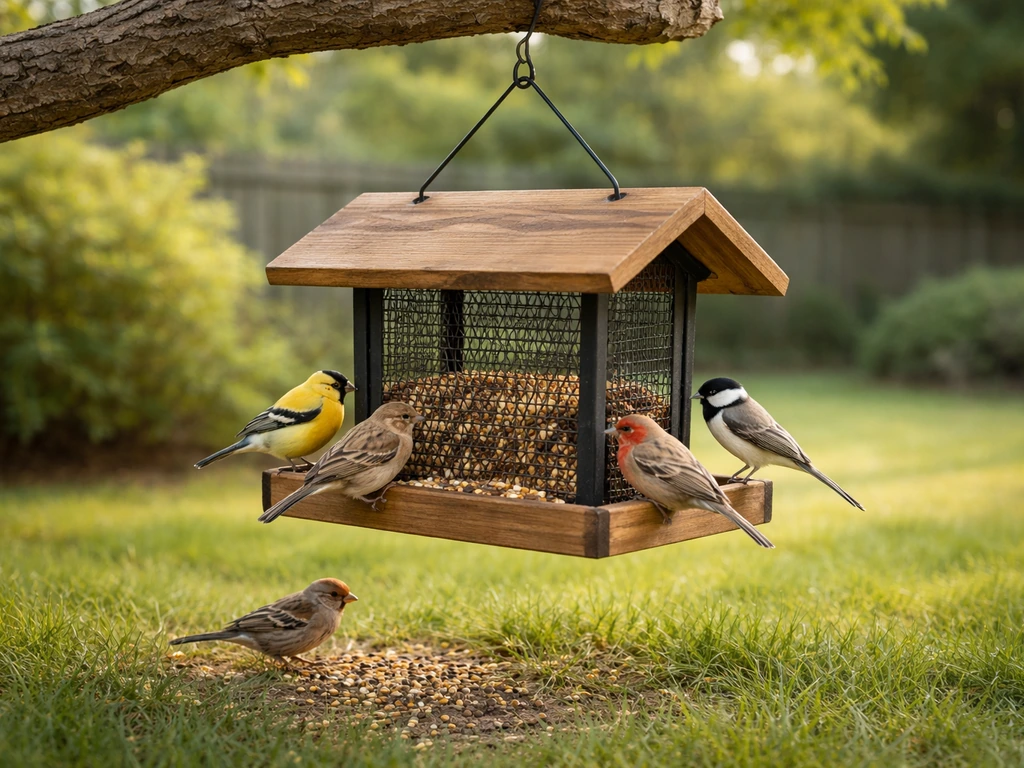
Buy a tube feeder or hopper feeder if you want to attract the most common backyard songbirds like cardinals, chickadees, and finches. Fill it with black-oil sunflower seed, hang it at least 5 feet off the ground and 10 feet from your windows, and add a squirrel baffle. That setup works in most yards, most of the time. The rest of this guide fills in the details so you pick the right model, avoid the cheap traps, and actually have birds visiting within a few days of setting it up.
How to Buy a Bird Feeder: Beginner Shopping Guide
Marcus Brennan
9 Jun 2026
Choose the right feeder type for the birds you want
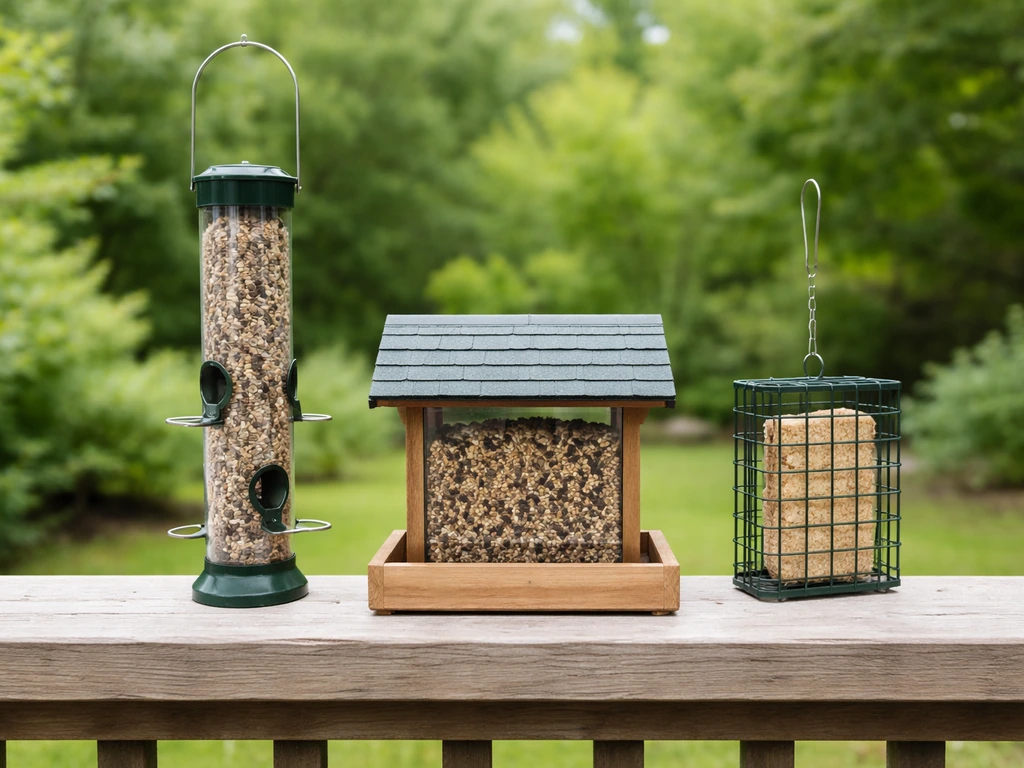
The feeder type matters more than most people realize, because different birds feed in different ways. A woodpecker clings vertically to a suet cage. A cardinal prefers to perch and crack open seeds. A hummingbird needs a nectar port it can hover at. Get this wrong and you'll have a feeder full of seed that nobody touches.
| Feeder Type | Best For | Recommended Seed/Food | Watch Out For |
|---|---|---|---|
| Tube feeder | Chickadees, finches, nuthatches | Black-oil sunflower, nyjer/thistle | Port size must match seed type |
| Hopper feeder | Cardinals, blue jays, juncos, sparrows, mourning doves | Millet, sunflower, cracked corn, peanut kernels | Larger birds can crowd out smaller ones |
| Platform/tray feeder | Widest variety of seed-eating birds, ground feeders | Cracked corn, millet, black-oil sunflower | Most vulnerable to squirrels and rain |
| Suet cage | Woodpeckers, nuthatches, chickadees, cardinals | Commercial suet cakes | Raccoons and squirrels target these too |
| Nectar feeder | Hummingbirds | Sugar water (1 part sugar, 4 parts water) | Needs cleaning every 2-3 days in warm weather |
If you're just starting out and want the broadest appeal, a hopper or tube feeder filled with black-oil sunflower seed is genuinely hard to beat. It's described as an all-around favorite for a reason: cardinals, chickadees, finches, and sparrows all go for it. If you want to pull in ground-feeding birds like doves, quail, or juncos, add a shallow platform feeder or simply scatter some cracked corn and millet on the ground nearby. Cracked corn is easier for smaller birds to manage than whole kernel corn, so it's the better default.
Tube feeders work especially well for smaller songbirds because the port size and seed type act as a natural filter. A tube feeder with ports sized for black-oil sunflower will let chickadees and finches feed while making it awkward for larger, pushier birds. Just confirm before you buy that the ports on a specific model match the seed you plan to use. Some tube feeders are designed only for nyjer (thistle) seed and have very small ports. Put sunflower in one of those and nothing comes out.
What to check before you buy
Material: plastic vs. metal vs. wood
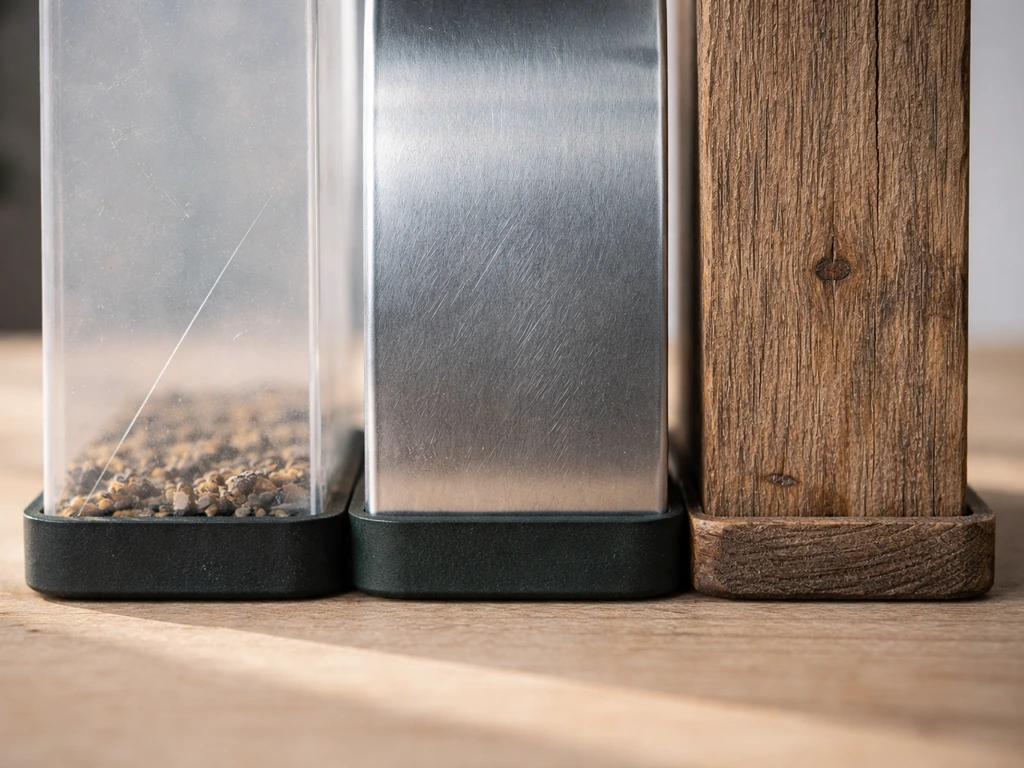
Plastic feeders are the most common and the cheapest. They're fine for getting started, but thin plastic cracks in cold winters and warps in direct summer sun. If you're in a climate with extreme temperatures, look for UV-resistant polycarbonate or a feeder with metal components at the stress points (ports, roof, hanger). All-metal feeders last longer, resist squirrel chewing better, and are easier to disinfect. Wood feeders look great but need regular sealing or they'll rot, especially if they collect wet seed. A good rule: if the wood feeder doesn't have drainage holes in the tray, skip it.
Capacity: how much seed does it hold?
Bigger isn't always better. A feeder with a large capacity sounds convenient, but if seed sits in it for more than a week without birds finishing it, you'll end up with moldy, clumped seed that's actually harmful to birds. For most backyards, a tube feeder holding around 1 to 1.5 pounds of seed is plenty to start. You want to refill it often enough that seed stays fresh, not so often that it feels like a chore.
Ease of cleaning
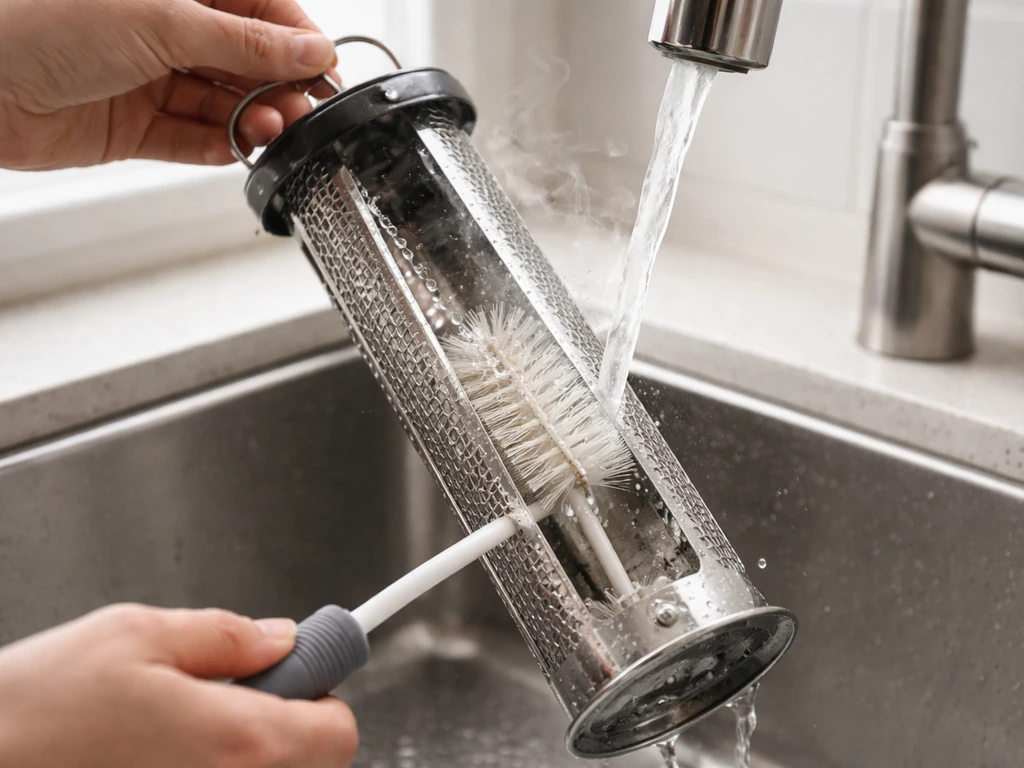
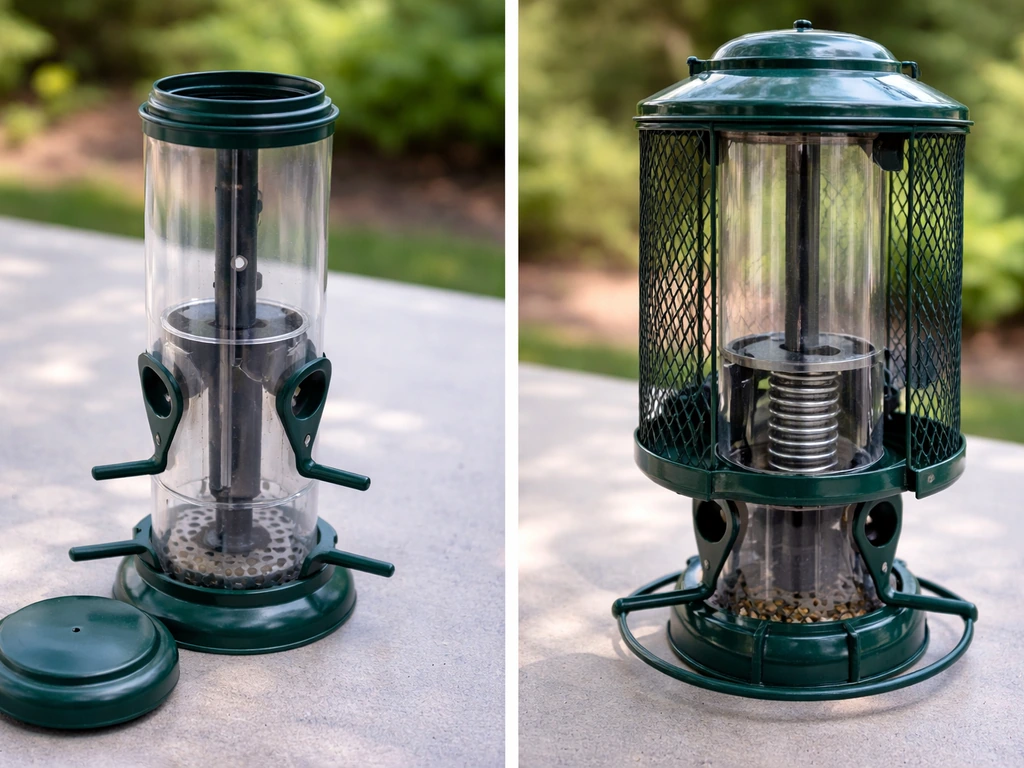
This is the one most buyers skip and then regret. Seed feeders should be cleaned at least once a week with hot water and a bottle brush. Moldy or spoiled food can make birds sick, and wet seed that clumps inside the feeder also discourages birds from feeding. Before you buy, ask yourself: can I actually take this apart? Does it have a wide enough opening to get a brush inside? If the listing shows a sealed, narrow tube with no removable bottom, cleaning it properly is going to be miserable. Look for feeders with a twist-off or pop-off base, or at minimum a removable top and bottom.
Weather resistance
Wet seed is one of the fastest ways to ruin a feeder season. Rain gets into poorly designed feeders, soaks the seed, and mold forms within a day or two in warm weather. Look for a feeder with a wide roof overhang that extends past the ports or tray, drainage holes in any tray or platform section, and a design that doesn't pool water at the bottom. If you're buying a platform feeder specifically, mesh-bottom platforms drain far better than solid wood or plastic trays.
Pest-proofing and no-mess features to look for
Squirrels are the main issue for most backyard feeders, but raccoons, starlings, and house sparrows can also become persistent problems. The good news is that pest-proofing features are built into some feeders now, and they actually work when implemented correctly.
Weight-activated closures
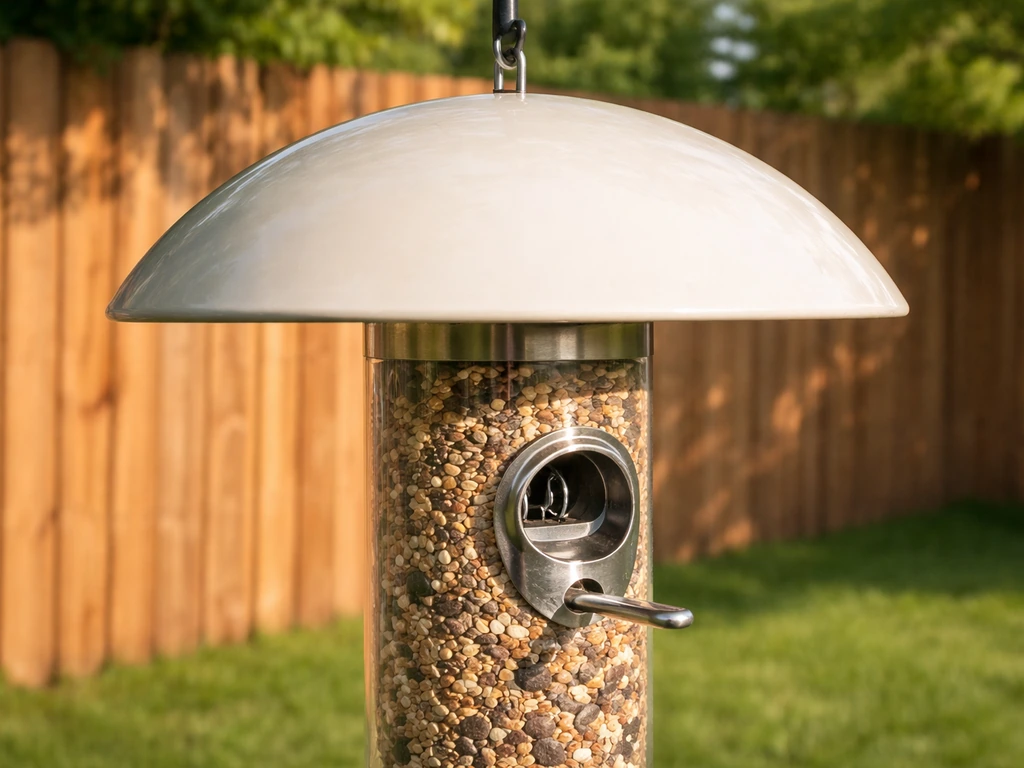
Weight-activated feeders are one of the most effective designs available. Products like the Brome Squirrel Buster use a mechanism that slams the seed ports closed when something heavier than a typical songbird lands on the feeder. Squirrel sits down, ports close, squirrel gets nothing. Home Depot's feeder guides also describe hopper models where a central seed chamber closes when a heavier animal steps onto the platform. These work well but cost more, typically in the $40-$80 range. If you're tired of refilling a feeder that squirrels drain overnight, that cost pays for itself fast.
Baffles: hanging and pole-mounted
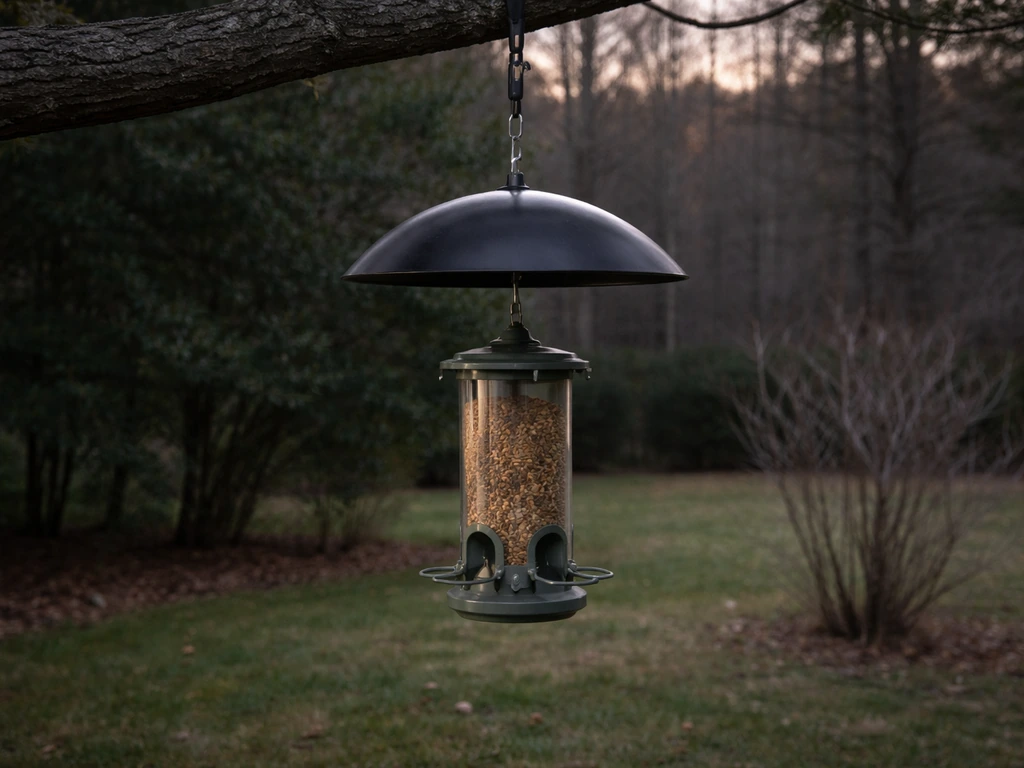
A squirrel baffle is a physical barrier, either a dome above a hanging feeder or a cone/cylinder on a pole below a mounted feeder. For hanging feeders, the baffle should sit about 8 to 10 inches above the feeder itself. For pole-mounted setups, the pole-mount baffler needs to be high enough off the ground that squirrels can't jump over it, typically at least 4 to 5 feet up. All-metal baffles are worth the extra few dollars because squirrels will chew through plastic ones given enough motivation. When hanging from a tree branch, position the feeder at least 12 feet horizontally from any trunk or limb so squirrels can't just jump across.
Built-in deterrents for suet feeders
Some suet feeders are designed with built-in raccoon and squirrel deterrents, meaning no separate baffle is needed. These typically feature a cage design that limits access from the sides or top. If raccoons are a problem in your area, a feeder marketed specifically as raccoon-proof is worth looking for, since standard suet cages are easy pickings for a determined raccoon.
Mess and ant management
Seed hulls and debris falling below a feeder attract ground pests and create a cleanup job. No-mess seed mixes (shelled sunflower, hulled millet) help a lot. For ant issues on nectar feeders, look for models with a built-in ant moat, which is a small water-filled cup above the feeder ports that ants can't cross. For seed feeders, keeping the ground below the feeder raked and clean is the simplest fix.
How to buy online or in-store without getting the wrong model
Online shopping for bird feeders has one big trap: the product photos look great but the listing leaves out critical details. Here's what to confirm before you click buy.
- Seed compatibility: the listing should explicitly state which seeds the feeder is designed for. A tube feeder designed for black-oil sunflower has different port sizing than one for nyjer. Don't assume.
- Capacity in pounds or ounces, not just 'large' or 'standard'. A 1.25 lb capacity tube feeder is a concrete, useful spec.
- Material at stress points: look for mentions of metal ports, metal hangers, and UV-resistant plastic rather than just 'durable plastic'.
- Cleaning access: look for 'removable base', 'twist-off bottom', or 'easy clean' in the description. If those words aren't there, check the Q&A section.
- Mounting hardware included: some feeders ship without a hanger, hook, or pole. Confirm what's in the box.
- Warranty or return policy: reputable brands offer at least a one-year warranty. No warranty often means low-quality construction.
In-store buying at a garden center, hardware store, or wild bird specialty shop gives you the chance to physically open the feeder, check how it comes apart, and judge the weight and build quality yourself. Specialty bird stores often have staff who can tell you what's selling well locally for your specific region and target species. That's genuinely useful if you're new to this. Big-box stores carry a wider range of prices but often stock lower-quality imports alongside solid brands, so checking the brand name and reading a few reviews before you go saves time.
A few brands with consistent reputations worth knowing: Perky-Pet, Brome, Droll Yankees, and Woodlink. That doesn't mean every model from those brands is perfect, but they're less likely to fall apart after one season. Avoid feeders with no brand name, no model number, and listings with only stock photos.
Match the feeder to your yard setup
Height and location
The minimum safe height for a hanging feeder is 5 feet off the ground. This keeps it out of easy reach of cats and reduces ground-predator access. For pole-mounted setups, 5 to 6 feet is a practical range that also makes it easy for you to refill without a step stool. Place the feeder in a spot that gets some morning sun and has a clear line of sight from at least one window in your house. You want to actually see the birds. Partial shade in the afternoon is helpful in summer since it slows seed spoilage.
Window distance and collision prevention
Window strikes kill a lot of birds, and feeder placement directly affects the risk. The safest options are placing the feeder either within 3 feet of a window (so birds haven't built up enough speed to seriously injure themselves if they do hit the glass) or more than 10 feet away (so birds have time to see the window as an obstacle and veer off). The 3-to-10-foot range is actually the most dangerous zone. A feeder mounted directly on a window frame or within arm's reach of the glass is a legitimate option if your yard doesn't have good pole or branch locations.
Hanging vs. pole vs. tray: which mounting style fits your yard
Hanging from a tree branch works fine if the branch is sturdy and you can position the feeder at least 12 feet away from the trunk. Use a proper S-hook and add a dome baffle above the feeder. A dedicated feeder pole in an open area of the yard gives you the most pest-control flexibility, since you can add a pole-mount squirrel baffler and position the feeder exactly where you want it. Tray or platform feeders work best on a post at around 3 to 4 feet high for ground-feeding species, or mounted on a railing. For a deck or patio setup, a clamp-on pole that attaches to a railing is an easy solution that requires no digging.
Spacing multiple feeders
If you're planning more than one feeder, keep them at least 5 to 6 feet apart so dominant birds (like blue jays) can't guard all feeders at once. Putting a suet cage on a separate tree or post from your seed feeder is a natural way to attract different species without one crowd blocking another.
Setup, first fill, and troubleshooting after purchase
Unboxing and first setup
Before filling it for the first time, rinse the feeder with warm water and let it dry. Some feeders have manufacturing residue or plastic odors that birds can be sensitive to. Check that all parts are present, the ports open and close correctly if it's a weight-activated model, and the hanger or mounting hardware is secure. If you bought a pole-mount setup, follow the assembly instructions before digging the post hole so you know exactly where each piece goes. For specific guidance on how to assemble a Roamwild bird feeder, double-check the parts list and connect the base, tube, and mounting hardware as shown in the manual follow the assembly instructions.
First fill
Fill it about halfway for the first fill rather than to the top. This keeps seed from sitting too long if it takes a few days for birds to discover the feeder. Use fresh seed from a recently opened bag. Old seed that's been sitting in a warm garage for months is one of the most common reasons a new feeder doesn't attract birds. Birds have a good sense of smell and will often reject stale or rancid seed.
Birds not showing up in the first few days
This is completely normal. Birds in your area need time to discover a new food source. It can take anywhere from a few days to two weeks for the first regulars to find it, especially in summer when natural food is abundant. Aim for fresh seed, consistent placement, and good visibility from open sky so you can learn how to start a bird feeder effectively and get reliable visits within a few days.
Be patient, keep the seed fresh, and resist the urge to move the feeder around during that first week. Consistency helps. If nothing visits after two weeks, check that the feeder is visible from open sky (not buried under heavy foliage), the seed is fresh, and there are no cats or other disturbances nearby during daylight hours.
Seed getting wet or moldy
If seed in the feeder gets wet, don't try to dry it out and reuse it. If you suspect your feeder is causing wet, moldy seed, you can fix it by improving drainage, reducing rain exposure, and cleaning promptly seed getting wet or moldy. [Empty it into the trash and clean the feeder before refilling. ](https://birdnet.
org/wp-content/uploads/2026/02/Bird-Feeder-Fact-Sheet. pdf) Moldy or bacteria-laden seed can cause serious illness in birds. After cleaning, figure out why it got wet: is the roof overhang too small? Is the feeder positioned where rain blows in from the side?
Sometimes repositioning the feeder a few feet is enough to fix it. [Also clean up any seed debris on the ground below the feeder](https://www. fws. gov/sites/default/files/documents/2025-01/01.
29. 2025-learn-more-about-bird-feeding-vyfwc. pdf), since wet seed on the ground is just as problematic.
Wrong birds showing up, or the right ones not showing
If you're getting house sparrows, starlings, or pigeons but not the cardinals and chickadees you wanted, the seed mix is often the culprit. Mixes with a lot of milo (a red round seed) attract house sparrows and not much else. Switch to straight black-oil sunflower or a mix that's mostly sunflower and you'll filter out the less desirable visitors. If you want specific species like woodpeckers or nuthatches, add a suet cage near the seed feeder. For goldfinches, a separate tube feeder with nyjer seed does better than sunflower.
Persistent squirrel problems
If squirrels are still getting to the feeder after you've added a baffle, work through this checklist: Is the feeder more than 12 feet from any tree limb or trunk? Is the pole baffle at least 4 feet off the ground? Is the hanging baffle within 8 to 10 inches of the feeder? Squirrels are patient and creative, and they will exploit any gap in your setup. Sometimes the only fix that holds long-term is switching to a weight-activated feeder that physically closes the ports on contact.
Ongoing cleaning routine
Clean seed feeders at least once a week during warm, wet weather and every two weeks at minimum during dry winter months. Use hot water and a bottle brush to scrub the inside, then let it dry completely before refilling. A dilute bleach solution (1 part bleach to 9 parts water) once a month helps disinfect the feeder and prevent bacteria buildup. If you're getting into assembling, disassembling, or upgrading your feeder setup over time, the related topics of how to take apart a bird feeder and how to fix a bird feeder are worth having on hand as your backyard setup grows.
FAQ
Can I put any seed in any feeder I buy?
Yes, but only if you can match the seed to the port size and feeder type. Nyjer (thistle) requires very small ports (and a tube designed for it), while sunflower needs larger ports. If you put the wrong seed in the wrong tube, the feed ports can clog or keep most birds out.
If I add a roof over my feeder, will any feeder work in rainy weather?
Generally no. If your feeder design does not have proper drainage in the tray or platform, seed can stay damp and mold quickly, even with a roof. A practical test is to gently tilt and shake the feeder after rain, if water pools at the bottom and cannot escape, treat it as a high-risk design.
Birds are not showing up yet, should I relocate the feeder?
Instead of moving the feeder often, change one variable at a time. Keep placement stable for about a week, but you can swap seed types (for example black-oil sunflower to a mostly sunflower mix) or adjust the baffle if it is clear squirrels are bypassing it. Constant moving can delay visitation because birds learn locations slowly.
How do I reduce window strikes after I already placed the feeder?
If you see persistent birds feeding at one window-adjacent spot but also notice collisions, the safest adjustment is to move outside the 3 to 10 foot risk zone or within 3 feet to reduce sustained impact speed. Also avoid placing the feeder where plants reflect sky patterns, since that can trick birds.
What’s the fastest way to tell if my seed is too old to attract birds?
Use a simple freshness check: if the seed smells rancid, looks oily or clumped, or you find moldy pockets, throw it out. Old seed is a common reason feeders stay empty, and birds often reject stale sunflower even if the feeder is full.
How should I clean a weight-activated feeder differently than a regular tube feeder?
Most seed feeders can tolerate basic raking and occasional spot cleaning under the feeder, but full dishwashing is different. If you see wet seed, clean immediately and sanitize, then let the parts dry completely before refilling. For weight-activated feeders, keep the moving parts dry and free of residue so they seal properly.
Can I run both a seed feeder and a ground-feeding setup at the same time?
Yes, but avoid mixing too many offerings at once because it complicates troubleshooting. If you want ground feeders too, add the platform or scattered seed, but keep it close enough for small birds while still using baffles to prevent squirrel access. Start with one feeder type, then add a second after visits are stable.
How do I choose feeder capacity without causing stale or moldy seed?
Don’t assume “bigger” means “better” if the feeder is hard to clean and holds stale food. A good rule is to choose a size where you can refill before seed sits over a week without active feeding. In hot weather, aim shorter refill cycles to prevent clumping and spoilage.
My tube feeder has ports, but sunflower is not feeding properly, what went wrong?
Yes, and it is usually a compatibility issue. If the port size is designed for nyjer, black-oil sunflower can bridge or jam, stopping flow. Before buying, confirm the manufacturer states a specific seed range for that model and check reviews mentioning seed flow.
What are the most common reasons a squirrel baffle fails?
If a baffle is in place and squirrels still get in, the likely causes are height and gap control. Common fixes are moving the feeder farther from tree limbs, raising the baffle to the correct off-the-ground height for your pole setup, and ensuring the baffle is tight enough that squirrels cannot find a climbing line.
When should I stop troubleshooting and switch to a weight-activated feeder?
Even with a baffle, consider a “backup” deterrent for extreme cases. A weight-activated feeder can stop access when squirrels sit down, and it is especially helpful if squirrels are persistent and patient. This is often faster long-term than endlessly adjusting traditional barriers.
What should I check in the store to know the feeder is actually easy to clean?
If you buy in-store, open it and check the cleaning access immediately. Look for a twist-off or removable base/top, a wide opening for a bottle brush, and a parts layout that allows full disassembly. Listings that look tidy online sometimes hide narrow openings that make weekly cleaning unrealistic.
How do I protect birds from cats when choosing feeder height and location?
If cats are a concern, prioritize placement and mounting over perfect baffle design. Keep the feeder high enough that you still meet the minimum hanging height, and choose a location where you cannot see a cat stalking from cover directly under the feeder. If the feeder is reachable, birds may avoid it even if seed is correct.