The most useful things to put on a bird feeder pole are a squirrel baffle (mounted 4 to 5 feet off the ground), an ant moat (hung above the feeder), and a weather guard or dome to keep seed dry. Those three additions solve the biggest problems most backyard birders run into: squirrels raiding the feeder, ants invading seed or nectar, and wet seed going moldy after every rain. Get the placement right alongside those accessories, and you'll have a setup that actually works.
What to Put on a Bird Feeder Pole: Baffles, Ants, and More
Marcus Brennan
4 May 2026
Pole placement and stability basics
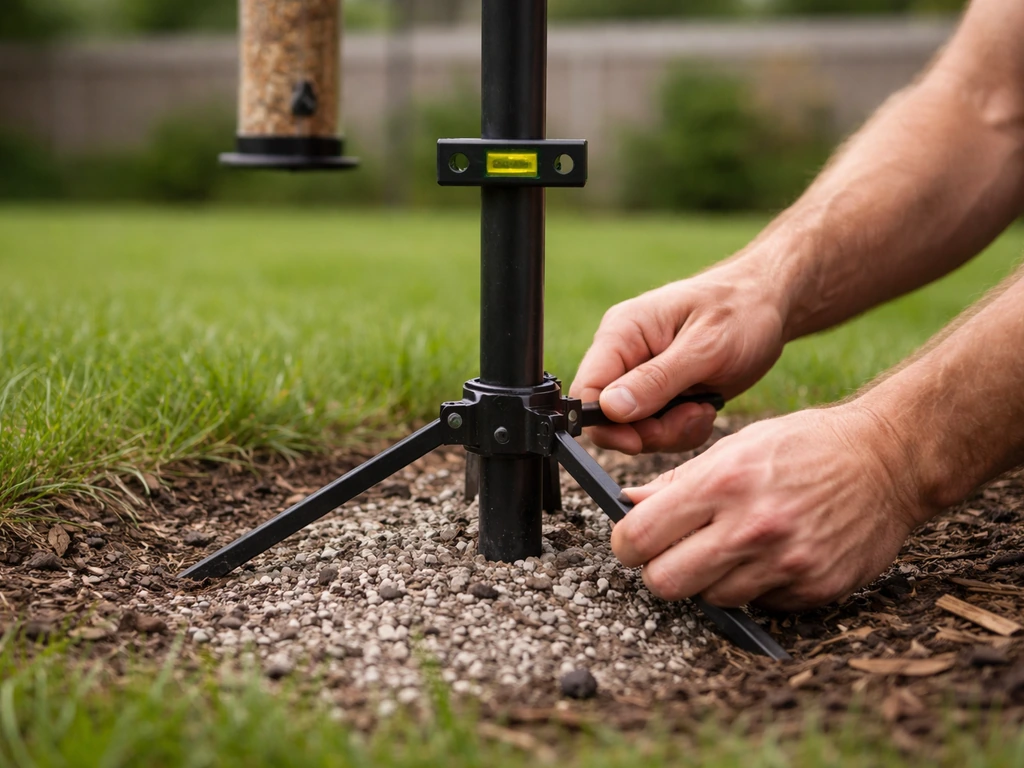
Before you attach anything to the pole, the pole itself needs to be in the right spot and firmly in the ground. For the full step-by-step process, see our guide on how to put a bird feeder pole in the ground. A wobbly pole defeats every accessory you put on it, and a pole in the wrong location defeats every squirrel deterrent you buy. Bury the pole at least 1 foot into the ground to keep it stable, which means a 6-foot pole gives you about 5 feet of working height above ground. That's enough room for a baffle, a feeder, and a weather guard without things getting crowded.
Location matters just as much as depth. Squirrels can jump roughly 4 feet straight up and much farther horizontally from a running start, so the pole needs to be well clear of anything they can use as a launch pad. The general rule most wildlife experts agree on: keep the pole at least 8 to 10 feet away from trees, fences, deck railings, rooflines, and any other structure a squirrel can climb and leap from. A handy shortcut is the 5-7-9 rule: feeder about 5 feet off the ground, pole at least 7 feet from fences or decks, and at least 9 feet from overhanging branches. It's a practical starting point even if you can't hit every number perfectly.
If the pole leans or wiggles after a few weeks, that's a sign it wasn't buried deep enough or the soil is too loose. Packing the hole with gravel before backfilling helps a lot in sandy or clay-heavy soils. Keeping the pole straight is worth fixing early because a leaning pole changes the height and angle of your baffle, which can create gaps squirrels will exploit.
What to put on the pole to deter squirrels
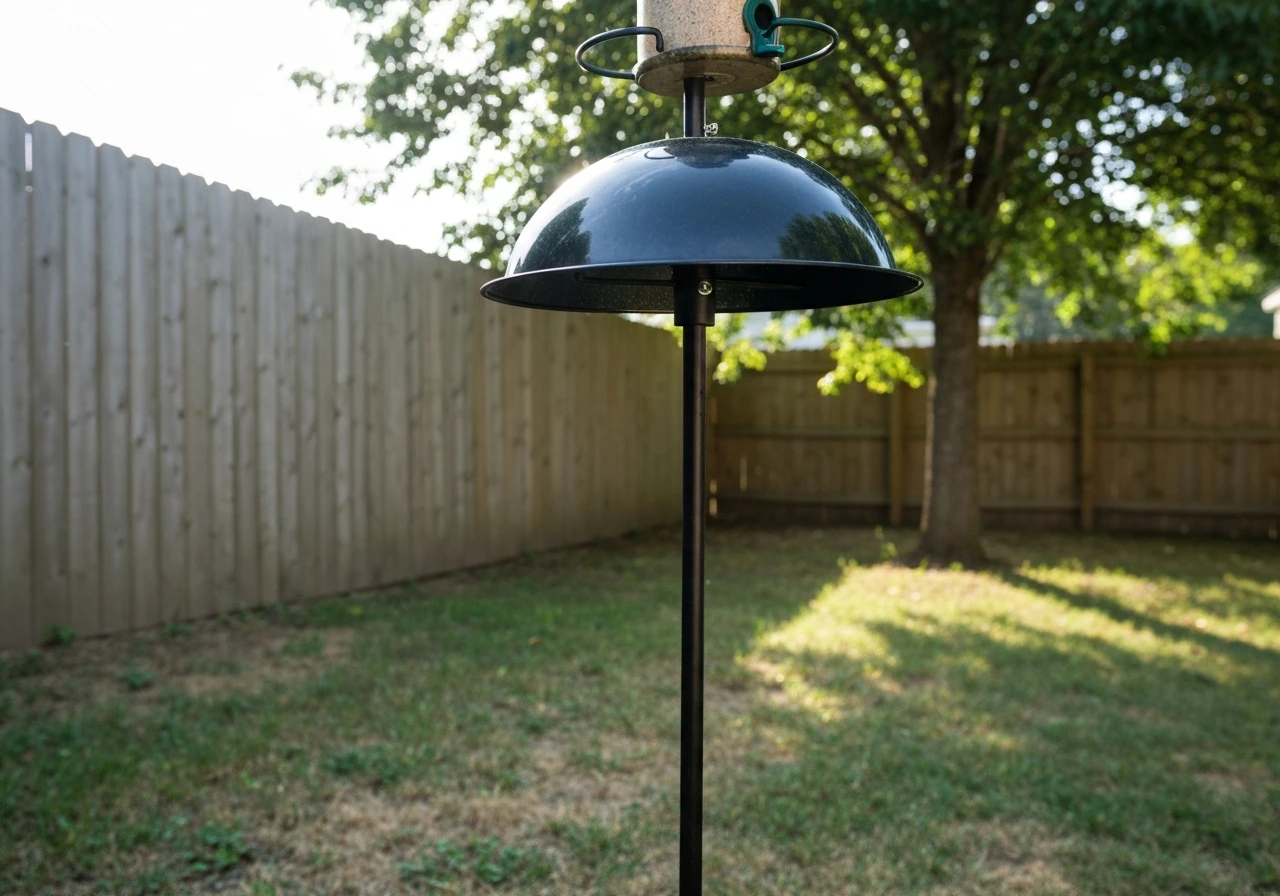
The single most effective thing you can mount on a feeder pole to stop squirrels is a baffle. A baffle is a physical barrier, usually a dome or cylinder shape, that blocks squirrels from climbing up the pole or dropping down from above. Nothing else comes close to its track record in real-world backyards.
Mount the baffle so its lowest edge is at least 4 to 5 feet off the ground. Squirrels can jump about 4 feet vertically from a standing position, so anything lower than that is just an obstacle they'll clear easily. Perky-Pet's installation guides put the sweet spot between 4 and 5 feet, and that matches what I've found works in practice.
Once the baffle is in place, hang the feeder so the bottom of the feeder is roughly 8 to 10 inches above the bottom edge of the baffle. If your feeder wire is too long, shorten it so the feeder hangs at the correct height and stays more stable shorten bird feeder wire. That gap prevents squirrels from reaching around the barrier and grabbing the feeder.
Beyond baffles, some people try pole grease or Vaseline to make the pole slippery. Avoid those approaches entirely. blank" rel="noopener noreferrer">Petroleum-based greases and oils can get onto a bird's feathers, which destroys the feather's insulating ability and puts the bird at serious risk of hypothermia. The EPA has documented this problem with petroleum oils on birds, and multiple ornithology groups specifically warn against greasing poles with Vaseline. The baffle is the right tool for this job. If you're wondering about the best grease for a bird feeder pole, skip it and rely on a baffle instead since greases and oils can harm birds best grease for bird feeder pole.
Baffle vs squirrel guard: which one should you use
These two terms get mixed up constantly, so here's the practical difference. A pole baffle mounts directly on the pole below the feeder and physically blocks a squirrel from climbing up. A squirrel guard (sometimes called a cage guard) wraps around the feeder itself and limits access to the feeding ports based on the animal's size. They solve the same problem from two different angles.
| Feature | Pole Baffle | Squirrel Guard/Cage |
|---|---|---|
| Where it goes | On the pole, below the feeder | Around the feeder itself |
| How it works | Physically blocks climbing | Restricts port access by body size |
| Works against jumpers? | Yes, if pole is placed correctly | No, squirrels can still reach the guard |
| Works on hanging feeders? | No (pole-mounted only) | Yes |
| Best for | Pole-mounted setups in open areas | Hanging feeders or as a backup layer |
| Cost range | $15 to $40 typical | $10 to $35 typical |
If you have a pole-mounted feeder in an open yard and you can position the pole the recommended 8 to 10 feet from structures, go with a pole baffle. It's the more complete solution because it stops squirrels before they ever reach the feeder. A squirrel guard is better as a secondary layer or when you're dealing with a hanging feeder on a branch or hook where a pole baffle isn't an option. Using both together on a pole-mounted setup gives you the strongest protection, but in most yards a well-placed pole baffle alone does the job.
Reducing seed waste and keeping food dry
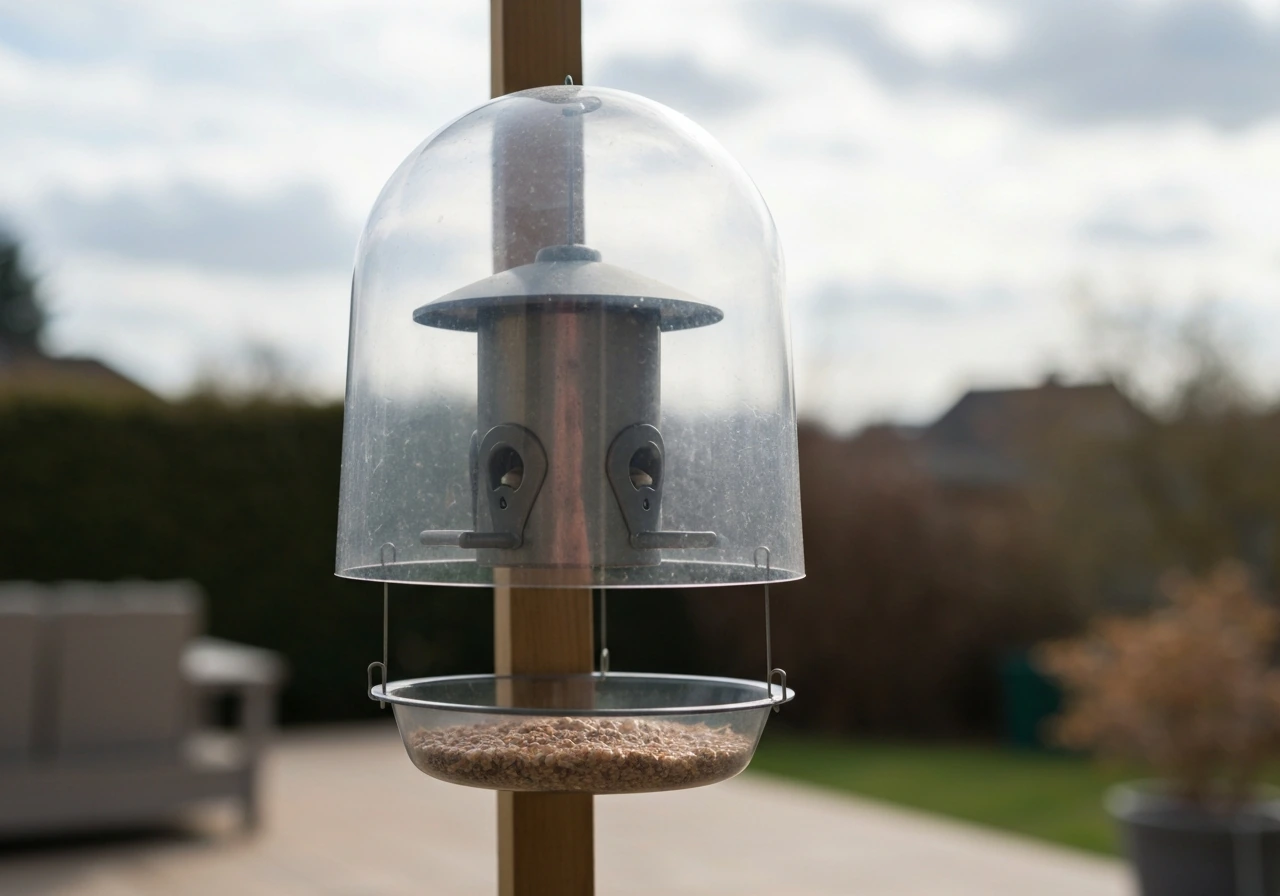
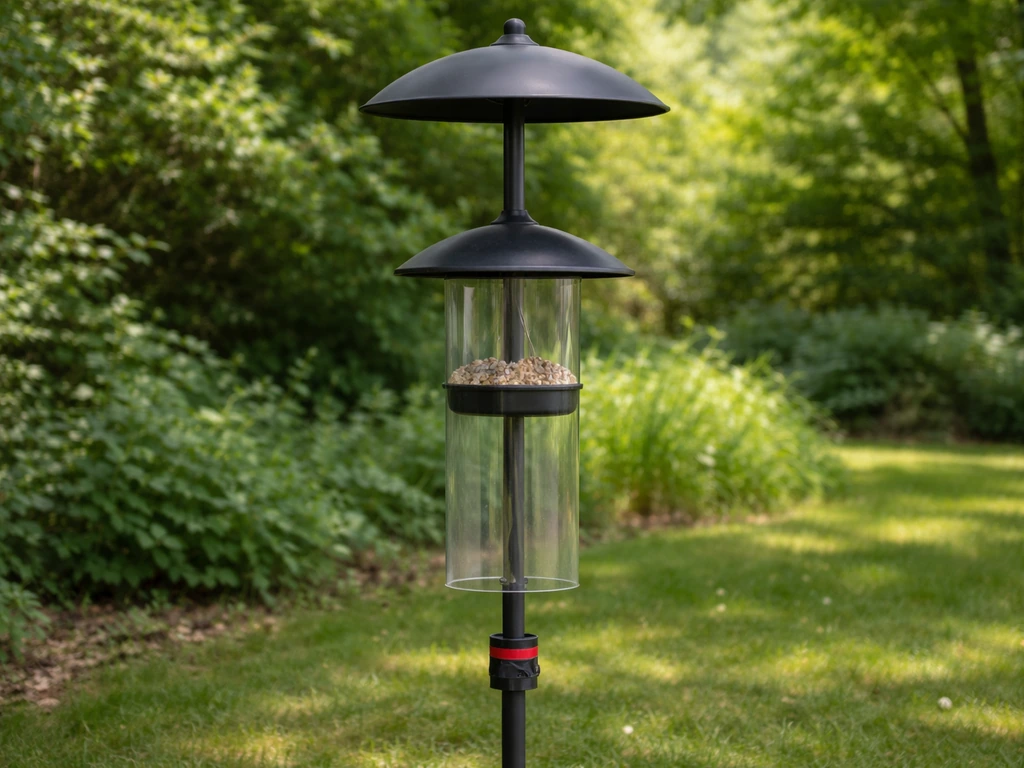
A weather guard or dome is the second most useful thing to add to a pole setup. It mounts above the feeder and acts as a roof, blocking rain and snow from soaking seed directly. Wet seed clumps, molds quickly, and can make birds sick, so keeping it dry is genuinely important, not just a convenience. Most weather guards slide onto the pole and hang on a hook above the feeder, and they double as a squirrel deterrent from above when sized correctly.
Seed catchers (tray-style attachments that hang below the feeder) help with waste from birds tossing seeds out while foraging. They collect the spill rather than letting it pile up on the ground, which reduces the mess that attracts mice, rats, and other pests. If you don't want to buy a seed catcher, a wide-lipped platform tray feeder mounted lower on the same pole lets ground-feeding birds clean up the spillage themselves.
Cleaning the feeder regularly is just as important as any accessory. Wet or old seed at the bottom of a feeder breeds mold and bacteria fast. Aim to clean seed feeders at least once every two weeks using hot water and a stiff brush, then rinse thoroughly and let the feeder dry completely before refilling. Putting wet seed back into a wet feeder is one of the fastest ways to create a mold problem. Also rake up seed debris under the pole every week or so. Rotting hulls on the ground attract pests and can spread disease to birds that forage near your setup.
Ants and other insects: what to put on the pole
Ants are mostly a problem for nectar feeders like hummingbird setups, but they'll also raid seed feeders if the opportunity is there. The most reliable solution is an ant moat, which is a small cup that hangs above the feeder and fills with water. Instructables also describes building an ant moat as a water-filled barrier using a step-by-step approach. Ants can't cross the water barrier, so they never reach the feeder. Many hummingbird feeders come with a built-in moat at the top; if yours doesn't, you can buy a separate attachable moat for a few dollars and hang it between the pole hook and the feeder.
Keep the moat filled with plain water and check it every few days in hot weather since it evaporates quickly. Don't add soap, oil, or any chemical to the moat water. Some people try to put cooking oil or petroleum jelly on the pole to stop ants, but those substances create the same bird-harm risk as grease for squirrel deterrence. Plain water in a moat is the safest and most effective ant barrier available.
For seed feeders where ants are climbing the pole itself, a separate sticky or water-based ant trap placed on the pole below the feeder can intercept them. Look for products specifically labeled as bird-safe. Avoid any insecticide spray on or near the pole because residue can transfer to birds that land on the feeder or to seed that spills onto the pole surface.
Safe materials and what to avoid putting on your pole
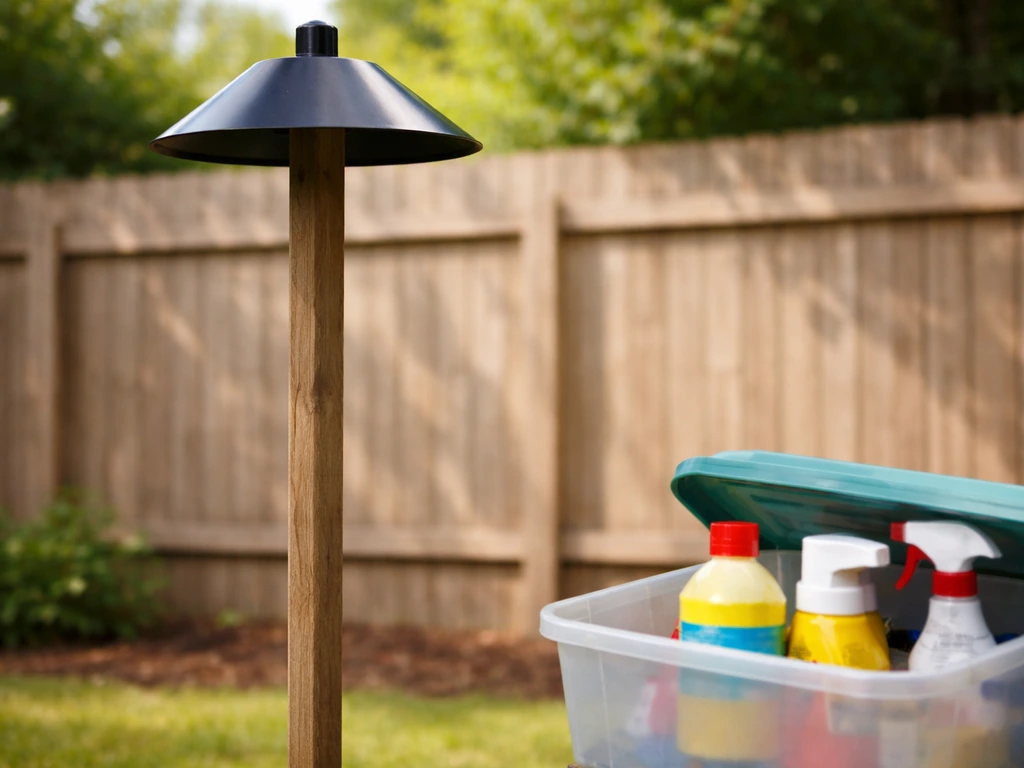
Birds are vulnerable to a surprising number of common household substances, so it's worth being clear about what's safe and what isn't before you start experimenting with DIY deterrents.
- Safe: Metal baffles and guards (powder-coated or plain steel/aluminum), plastic domes and weather guards, water-filled ant moats, plain water as a cleaning agent with mild dish soap (rinse thoroughly)
- Safe: Wooden or metal platform trays and seed catchers attached to the pole with standard hardware
- Avoid: Petroleum jelly (Vaseline), motor oil, cooking oil, WD-40, or any oil-based substance applied to the pole surface where birds may contact it
- Avoid: Capsaicin-based sprays applied directly to pole metal that birds perch on (seed-mixed versions are different and used differently)
- Avoid: Glue traps or sticky pest strips anywhere near the feeder or pole where birds could land on them
- Avoid: Insecticide sprays on or around the pole, feeder, or ground below
The core principle is simple: if a substance can coat feathers or be ingested, it has no business being on a bird feeder pole. Oils are the biggest repeat offender here. Even substances that seem harmless, like cooking spray, can mat feathers and strip out the natural oils birds need for waterproofing and warmth. Stick to physical barriers, and you'll never have to worry about harming the birds you're trying to attract.
Common setup mistakes and how to fix them fast
Most failed setups come down to a handful of very fixable mistakes. Here's what to look for and what to do about each one.
- Baffle mounted too low: If squirrels are still getting past your baffle, the first thing to check is height. If the baffle's bottom edge is below 4 feet, slide it up. Most baffles clamp onto the pole and can be repositioned in minutes.
- Pole too close to structures: If squirrels are launching from a fence, tree, or deck railing and landing on or above the baffle, no baffle height will fix it. Move the pole farther out, ideally 8 to 10 feet from the nearest launch point. This is the most common reason setups fail after working fine at first.
- Feeder hanging too close to baffle edge: If the feeder is hanging directly at the baffle's edge or rim, squirrels can reach around the barrier. Adjust so the feeder bottom is 8 to 10 inches inside the baffle's coverage area.
- Ant moat running dry: If ants are suddenly back in a hummingbird feeder, check the moat first. It probably evaporated. In summer heat, a small moat can dry out in two to three days. Top it off every time you check the feeder.
- Wet seed sitting in the feeder: If birds are ignoring the feeder or you notice clumping, pull the seed out, clean the feeder with hot water, dry it fully, and refill with fresh dry seed. A weather dome above the feeder helps prevent this from recurring.
- Pole leaning over time: A leaning pole changes your baffle geometry and creates gaps. If the pole has shifted, pull it, repack the base hole with gravel, and replant it straight. It's a 20-minute fix and worth doing before adjusting anything else.
- Squirrel guard trapping a bird: Cage-style guards with small gaps can occasionally catch a small bird. If you're running a cage guard, make sure the mesh openings are large enough for your target birds to exit easily from any angle, and check the feeder daily for the first week after installing one.
If you're still troubleshooting after going through this list, the next things to look at are how the pole is anchored (a related challenge covered in depth separately) and whether the baffle size is large enough for your pole diameter. A baffle that's too small for a thick pole can leave a gap at the mounting point that squirrels figure out within a day or two. Most baffles fit poles up to about 1 inch in diameter; check the spec before buying.
Getting the pole setup right takes a little trial and error, and that's completely normal. The most important things are keeping the baffle at the right height, placing the pole far enough from anything a squirrel can jump from, and using a water moat for ants rather than any kind of grease or spray. Get those three things dialed in and almost everything else is just fine-tuning.
FAQ
Can I put a baffle lower than 4 to 5 feet if my squirrels are small or slow?
It usually backfires. Squircuits can clear about 4 feet vertically, so dropping the baffle below that height creates a climb-and-drop route. If you cannot raise the baffle, use an additional second layer like a properly sized squirrel guard on the feeder ports.
What if my pole is thicker than 1 inch and the baffle says it fits up to 1 inch?
Avoid it. A baffle that does not closely match the pole diameter can leave a gap around the mount, which squirrels exploit quickly. Look for a baffle rated for your exact pole diameter, or use a baffle model that includes an adjustable seal or collar.
How do I know the feeder height above the baffle is right?
Aim for the feeder bottom to sit roughly 8 to 10 inches above the bottom edge of the baffle, then check from a squirrel’s perspective: if a squirrel can reach the feeder from the baffle edge or grab around the barrier, lower the feeder adjustment by shortening the hanging wire or raise the baffle within the recommended range.
Should I use both a pole baffle and a squirrel guard if I already have a baffle?
In many yards the baffle alone is enough, but using both can help in high-squirrel-pressure areas or when branches or other launch points are unavoidable. If you can keep the pole well away from climbing surfaces, start with the baffle, then add a guard only if squirrels are still getting access.
My weather guard is shaped like a roof, but squirrels still seem to reach the feeder from above. What’s wrong?
Most often the guard is not sized correctly or sits too low, allowing a squirrel to get a handhold under the edge. Confirm the guard fully blocks the approach above the feeder and does not leave an open gap between the guard rim and the pole area near the feeder.
Do I need a seed catcher, and will it attract more pests?
A seed catcher reduces waste buildup, which usually lowers pest attraction compared with letting hulls accumulate. The key is emptying it frequently, because a full catcher can become a food source for mice and rats if it stays loaded.
How often should I clean a feeder if birds don’t seem to be visiting much?
Clean on a schedule anyway. Mold and bacteria can build up even when activity is low, especially in damp weather. At minimum, follow the every-two-weeks routine, and do an extra clean after heavy rain or if you notice clumping or musty odor.
What can I do if ants keep finding the feeder even with an ant moat?
First, confirm the moat stays filled with plain water and has continuous contact, no dried gaps. In hot or windy weather check every few days because evaporation breaks the barrier. Also inspect the attachment points, if ants are getting to a side route, reposition the moat so it hangs directly between the pole hook and feeder.
Is it safe to add soap or oil to the ant moat water to slow insects down?
No. Stick with plain water. Soap or oil can increase residue on birds if it splashes and can reduce the effectiveness of the moat barrier, plain water is the safest option and is typically the most reliable.
Can I trap ants with sticky tape on the pole instead of using an ant moat?
Sticky traps can work for pole-climbing ants, but use products labeled as bird-safe and place them where birds cannot access. Avoid insecticide sprays or anything that can transfer residues to feathers or to seed that falls onto the pole.
What should I do if the pole leans a bit after installation?
Fix it early. A leaning pole shifts the baffle’s angle and height relative to the feeder, creating gaps squirrels use. Repack the base for stability, and in loose soil consider packing the hole with gravel before backfilling to reduce future movement.
Are cooking sprays, seed oils, or DIY rubbed substances okay on the pole to deter ants or squirrels?
Avoid anything that can coat feathers or be ingested. Even substances that seem harmless can mat feathers and reduce their waterproofing and insulation. Use physical barriers like baffles and water moats instead of oily deterrents.
How far from trees and fences should I place the pole if my yard has only one workable spot?
Use the 8 to 10 foot guidance as your target, with the 5-7-9 rule as a practical starting point (feeder about 5 feet up, pole at least 7 feet from fences or decks, and at least 9 feet from overhanging branches). If you cannot meet those numbers, prioritize mounting a correctly sized baffle and consider adding a guard.
What’s the fastest way to tell whether my baffle is the problem or my pole location is the problem?
Do a quick observation test. If squirrels are approaching from elevated launch points (branches, railings, roof edges), location is likely the issue, move the pole if possible or reduce access points. If they approach from the ground and only succeed around the baffle edge, the baffle size, fit, or feeder height is likely incorrect.
Next Article
How to Keep Bird Feeder Pole Straight: Fix Wobble Fast
Stop bird feeder pole wobble fast with step-by-step fixes for uneven ground, anchors, mounting, and ongoing stability.