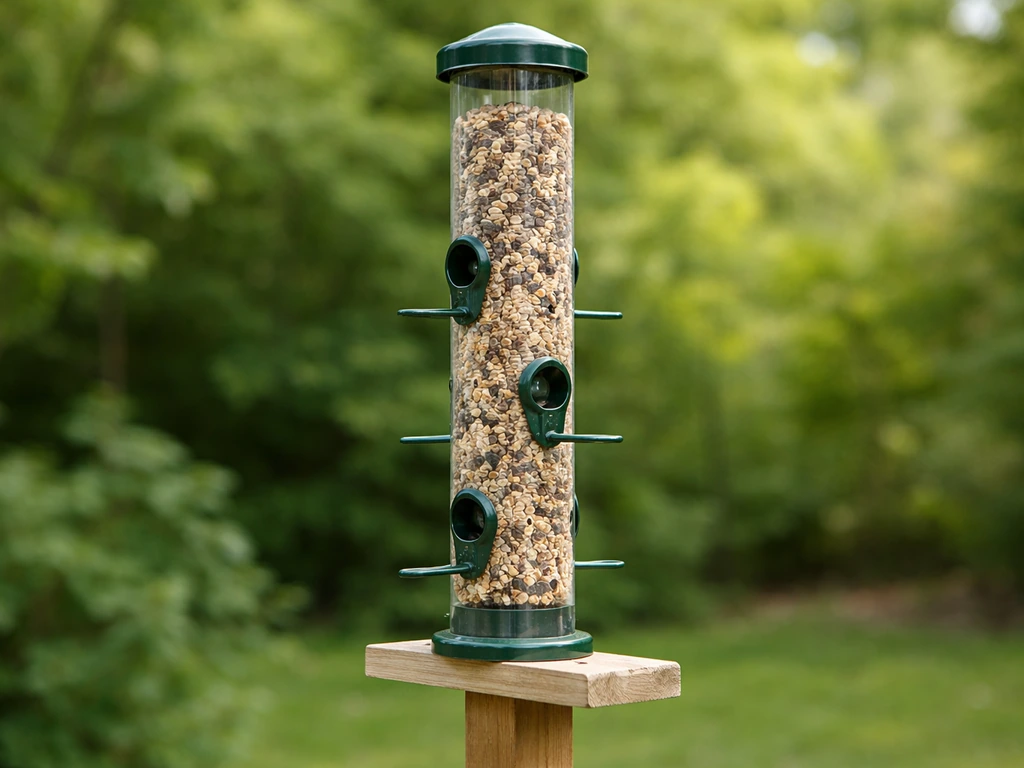
Building a bird feeding station is one of the most satisfying backyard projects you can tackle in a weekend. Done right, it gives you a centralized spot to hang multiple feeders, offer different food types, and attract a much wider variety of birds than a single feeder ever could. This guide walks you through every step: picking a design, gathering materials (including a simple wood build), assembling everything, installing it safely, and keeping it in good shape long-term.
How to Build a Bird Feeding Station Step by Step
Marcus Brennan
17 Apr 2026
Choosing the right bird feeding station design
Before you cut a single board or buy a pole, think about what you actually want from your station. A feeding station is really just a system: a pole or post, one or more hanging points, and one or more feeder types. The design you choose shapes which birds show up and how much maintenance you're signing up for.
The simplest and most beginner-friendly approach is a pole-mounted station with a central post and a few hook arms. You hang different feeders from the arms: a tube feeder for sunflower seeds, a suet cage for woodpeckers, maybe a small mesh sock for nyjer thistle. According to the USDA Forest Service, blank" rel="noopener noreferrer">combining multiple feeder types like tube feeders, hanging trays, and thistle socks on a single station is one of the most effective ways to increase the number of species visiting your yard.
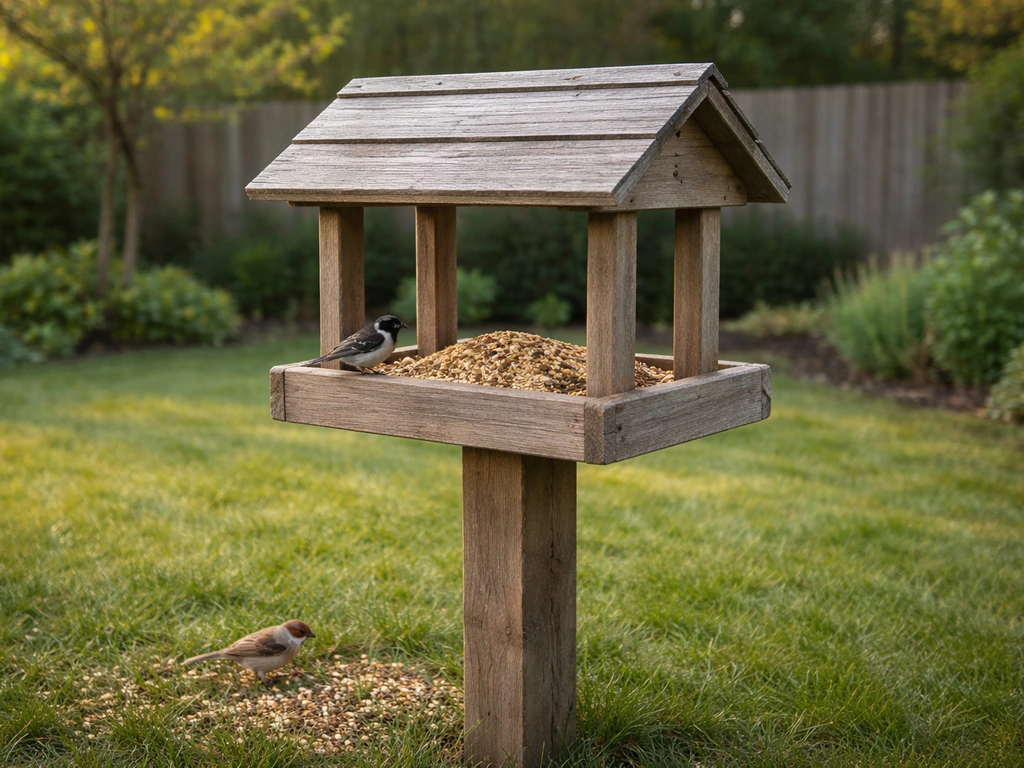
The other popular option is to build a dedicated platform as part of your station. A platform feeder is any flat, raised surface where you spread seed directly. Platform feeders attract the widest variety of seed-eating birds, but they're more exposed to rain, squirrels, and other wildlife than enclosed feeders. If you want to learn more about building a dedicated flat-surface feeder, a detailed guide on how to build a platform bird feeder covers that specific build in depth. For a station, you can mount a small platform tray as one component among several feeders.
My personal recommendation for most people starting out: go with a pole-and-arms station that includes at least three hanging points. It's modular, easy to expand, and much simpler to pest-proof than a sprawling structure. You can always add a roofed tray later once you've figured out your yard's traffic patterns.
Materials and tools you'll need
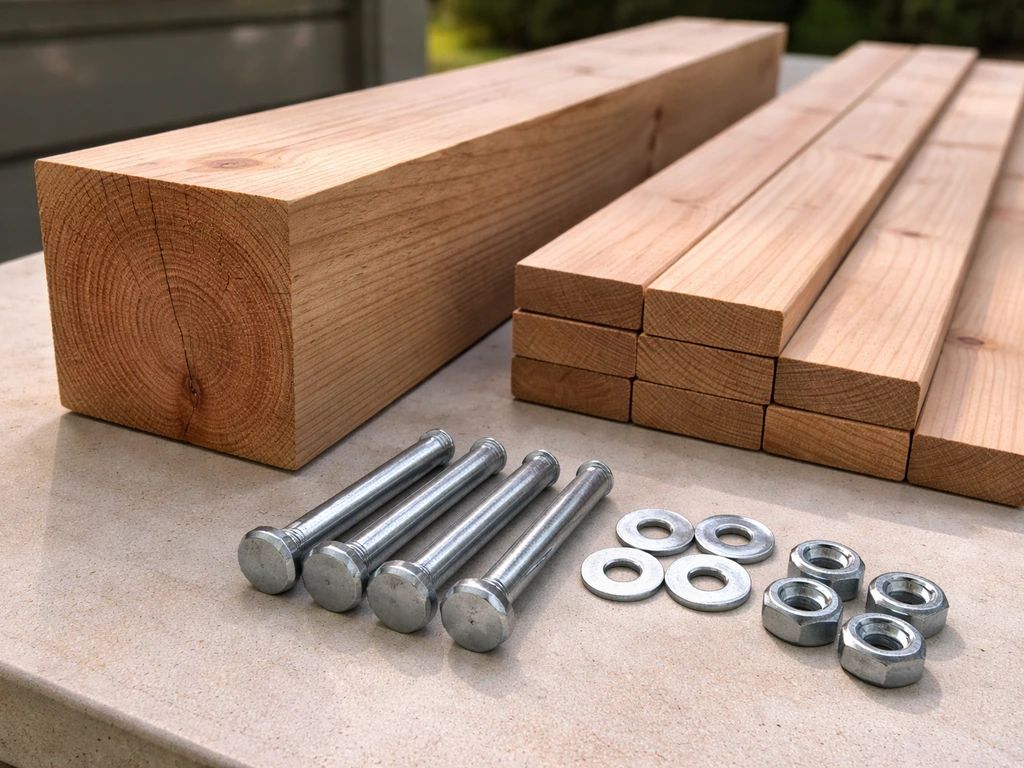
You have two main paths here: buy a shepherd's hook pole system and add feeders, or build a freestanding wooden station from scratch. Both work well. The pole route is faster; the wooden build is more customizable and looks better in most gardens. Below is what you need for a straightforward wooden post-and-arm station, followed by a quick note on budget alternatives.
Wood build materials list
- One 4x4 cedar or pressure-treated post, 8 feet long (cedar is naturally rot-resistant and holds up without paint)
- Two 1x4 cedar boards, each 24 inches long (for horizontal arms)
- One 1x6 cedar board, 12 inches long (for a small platform tray, optional)
- Exterior-grade wood screws, 2.5-inch and 1.5-inch lengths
- Four or more heavy-duty screw-in hooks (rated for outdoor use)
- One 60 lb bag of fast-setting concrete (for anchoring the post)
- Exterior wood paint or sealant for weather protection (flat or satin finish holds up better than gloss outdoors)
- One cross brace piece cut to fit between the arms for added rigidity (measure the inside span and cut to fit, as recommended in Kreg's construction approach)
Tools
- Circular saw or miter saw
- Drill with bits (1/4-inch bit for drain holes, pilot bit for screws)
- Level
- Post-hole digger or clamshell auger
- Measuring tape and pencil
- Clamps (helpful but not essential)
- Paintbrush for sealing cut ends
If you're on a tight budget or just want to get something up fast, you don't have to build from scratch. A simple station can start with a recycled broom handle or thick bamboo pole anchored in a bucket of sand or concrete. You can hang feeders you've already made from recycled plastic bottles, milk jugs, or pinecones coated in peanut butter and seed. These quick options are a great entry point, and you can always upgrade to a sturdier wooden build once you know where you want the station permanently. For detailed instructions on how to build a bird feeder from scratch using common household materials, that guide covers the individual feeder construction side of things.
Step-by-step: building your wooden station
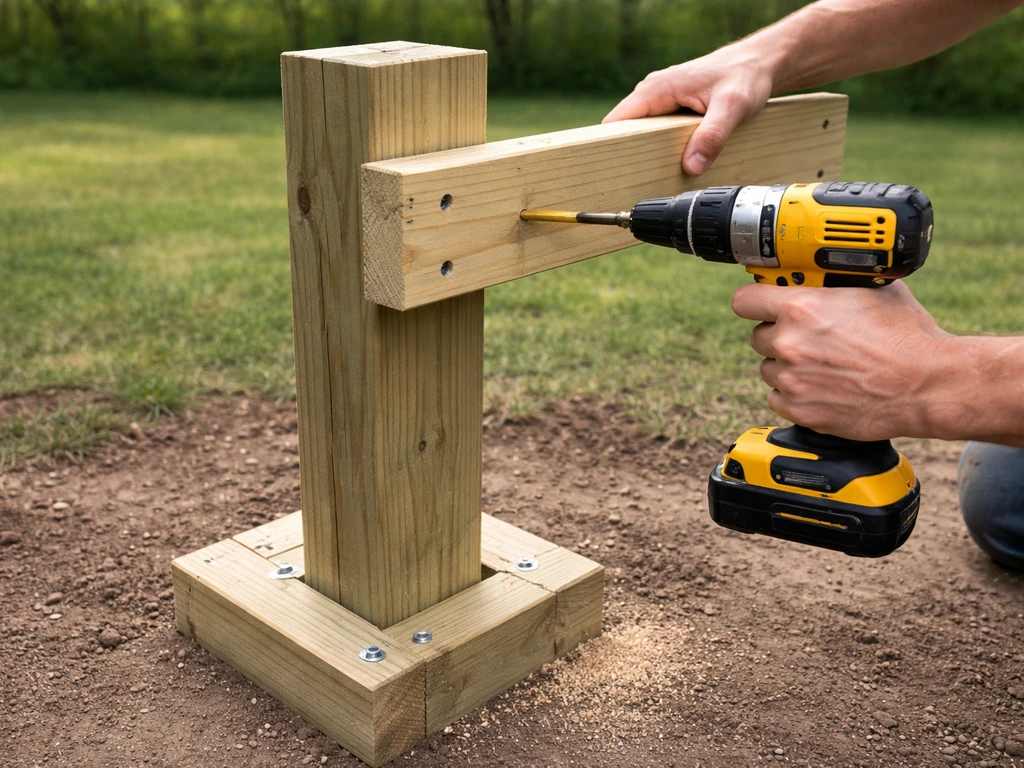
This build takes about 3 to 4 hours including drying time for the concrete. Hole-and-water style soil drainage evaluation from Colorado State University Extension supports the idea that managing drainage and water flow matters when you’re building or placing outdoor structures. Woodsmith Plans and similar beginner-friendly woodworking resources consistently emphasize using exterior-grade materials throughout, so don't cut corners on that point even if you're tempted to use whatever spare lumber you have sitting in the garage.
- Cut your post and arm boards to length. The 4x4 post should be 8 feet total: roughly 18 to 24 inches will go underground, leaving about 6 feet above ground. Cut the two 1x4 arm boards to 24 inches each.
- Seal all cut ends immediately with exterior sealant or paint. Cut wood absorbs water fast and rots from the inside out. Don't skip this step, even if you plan to paint the whole thing later.
- Attach the arm boards to the post in a cross or T-shape, roughly 12 to 18 inches from the top of the post. Use two 2.5-inch screws per joint and pre-drill to avoid splitting the cedar. Add your cross brace between the arms to lock in the shape and prevent wobbling over time.
- If you're adding a small platform tray to the station, attach the 1x6 board flat to the top of the post or to one of the arm boards. Drill at least six 1/4-inch drain holes through the floor of the tray so rain doesn't pool and rot the wood or mold the seed. This drainage spec comes directly from Colorado State University extension guidelines for feeder construction.
- Screw your outdoor hooks into the underside of the arm boards, spacing them at least 8 inches apart so feeders don't bang together in the wind.
- Apply a full coat of exterior paint or sealant to the entire structure. Two thin coats are better than one thick one. Let it dry completely before installation.
- Dig a hole 18 to 24 inches deep and slightly wider than your post. Set the post, check it with a level on two sides, brace it temporarily, and pour in the fast-setting concrete. Follow the bag instructions (typically just add water in the hole). Most fast-set concrete is solid enough to hang feeders within 4 hours.
If you want to add a covered platform section to your station, rather than just an open tray, building a roofed component keeps seed drier and extends refill intervals significantly. The process for that specific addition is covered in detail in this guide on how to make a platform bird feeder with roof.
How to set up, hang, and place your station safely
Where you put the station matters as much as how you build it. Get the placement wrong and you'll deal with nervous birds, window collisions, and squirrels raiding feeders no matter how well-built your station is.
Distance from windows
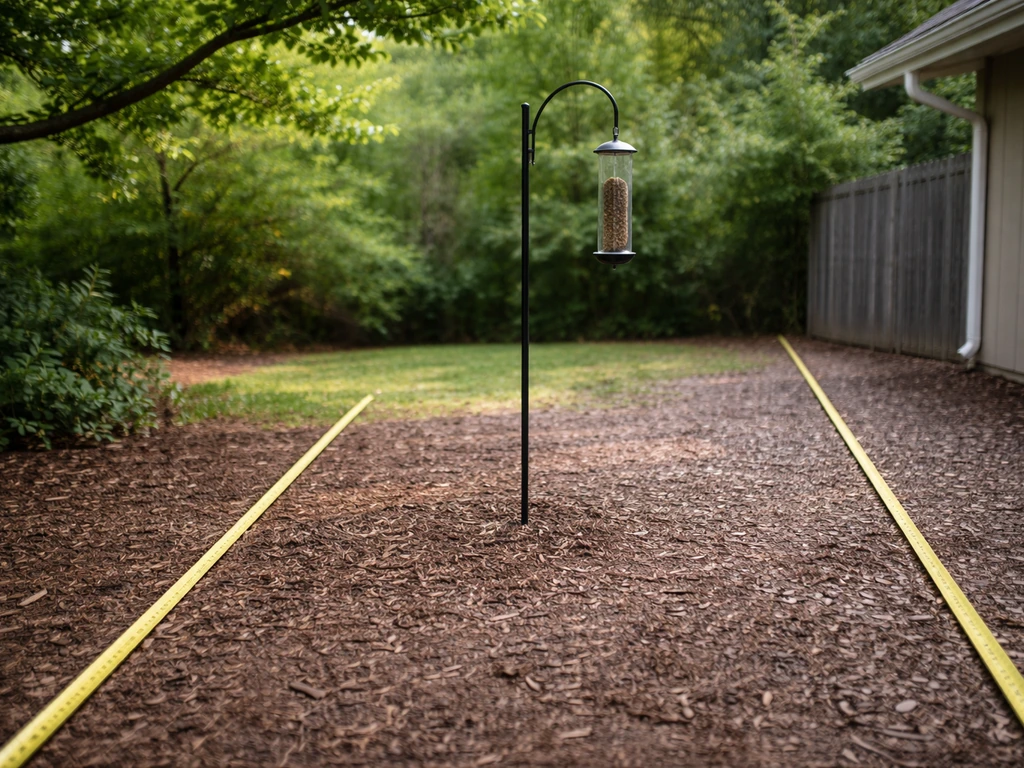
The U.S. Fish and Wildlife Service recommends placing feeders either 3 feet or less from windows, or more than 30 feet away. The logic is counterintuitive: feeders very close to glass mean birds can't build up dangerous speed if they fly toward the window. Feeders in the middle distance (say, 10 to 25 feet) are actually the most dangerous zone because birds have room to accelerate. So either put your station right up near the house where you can watch it easily, or position it well out into the yard.
Distance from trees and structures
For squirrel deterrence, place your station at least 8 to 10 feet away from any tree branch, fence, roof edge, or railing. Squirrels can jump roughly that distance horizontally, so closer than that and you're basically giving them a launchpad. This spec is consistent with guidance from baffle manufacturers and wildlife feeding specialists alike.
Height and open space
Most birds feel safest feeding when they have clear sightlines and an easy escape route. Aim for feeders hanging between 4 and 6 feet off the ground. Higher is fine for squirrel resistance, but too high makes filling and cleaning awkward. Position the station so there are shrubs or small trees within 5 to 10 feet for birds to dart to if startled, but keep the station itself in open space.
If your yard is large enough, the National Wildlife Federation suggests setting up multiple feeding stations in different areas to spread bird activity and reduce crowding. Even two stations positioned in different corners of the yard will attract more species overall than one crowded central spot.
What to hang where
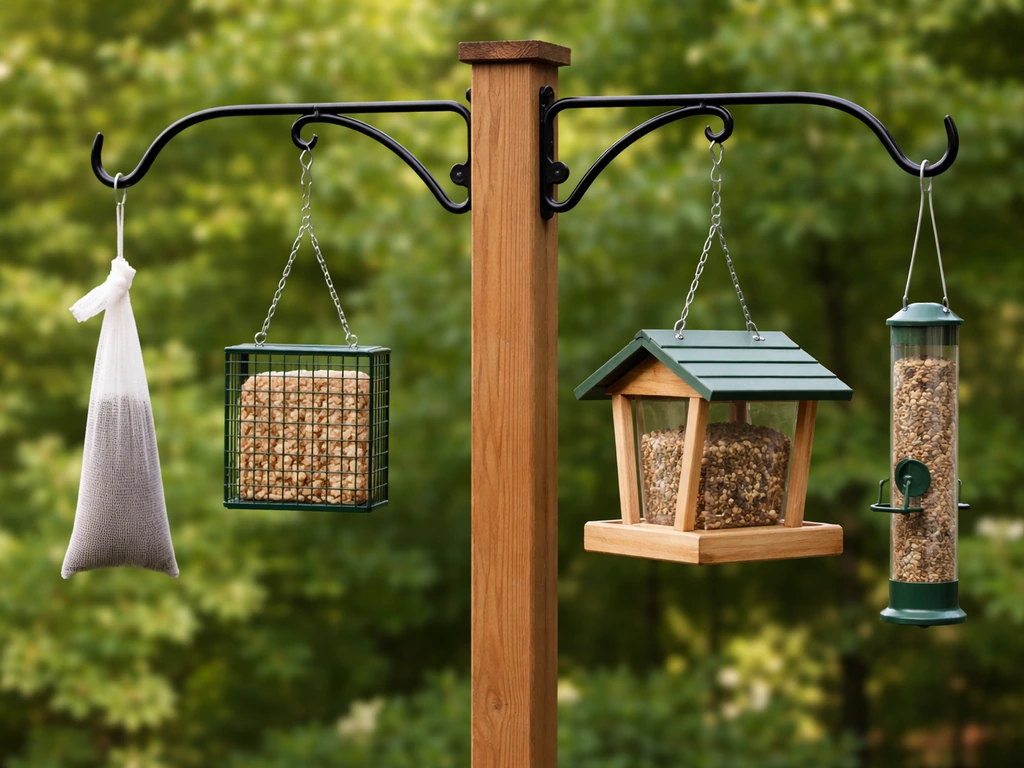
Hang heavier feeders (suet cages, hopper feeders) from the sturdier inner hooks closest to the post. Lighter feeders like nyjer socks or small tube feeders can go on the outer ends of the arms. If your platform tray is part of the station, use it for cracked corn, millet, or mixed seed. Suet feeders hung from your station are particularly good for attracting woodpeckers and other insect-eating species that won't visit seed feeders at all.
Pest-proofing and wildlife safety
Squirrels are the main challenge. The good news is that a well-placed station with a baffle is genuinely effective, not just a partial deterrent. A cylindrical pole-mount squirrel baffle, installed on the post below the feeders, stops squirrels from climbing up. For the baffle to work, the station needs to be that 8 to 10 feet clear of jumping-off points mentioned above. Some commercial squirrel-resistant pole systems, like the Squirrel Stopper Sequoia, specify a total installation height of about 8 feet 2 inches above the ground as part of their design specs, which gives you a useful reference for your own build height.
Raccoons are the next problem. They're strong enough to pull feeders off hooks, so use locking S-hooks or carabiner-style clips instead of simple open hooks on any feeder you hang overnight. If raccoon pressure is heavy in your area, bring tube and platform feeders inside at night and put them back out in the morning. It sounds like extra work, but it's actually faster than cleaning up spilled seed every day.
For squirrels that are specifically raiding a cage-style or tray feeder, sometimes the best solution is adding a physical exclusion layer. There's a smart approach covered in detail in this article about how to build a cage around a bird feeder, which lets smaller birds through while blocking larger, more aggressive visitors.
Beyond mammals, watch out for mold and bacteria, which are a real risk to bird health. Don't overfill feeders, especially platform trays, and clean up spilled wet seed from below the station promptly. Wet seed on the ground grows mold fast and can attract rodents.
Maintenance, cleaning, and fixing common problems
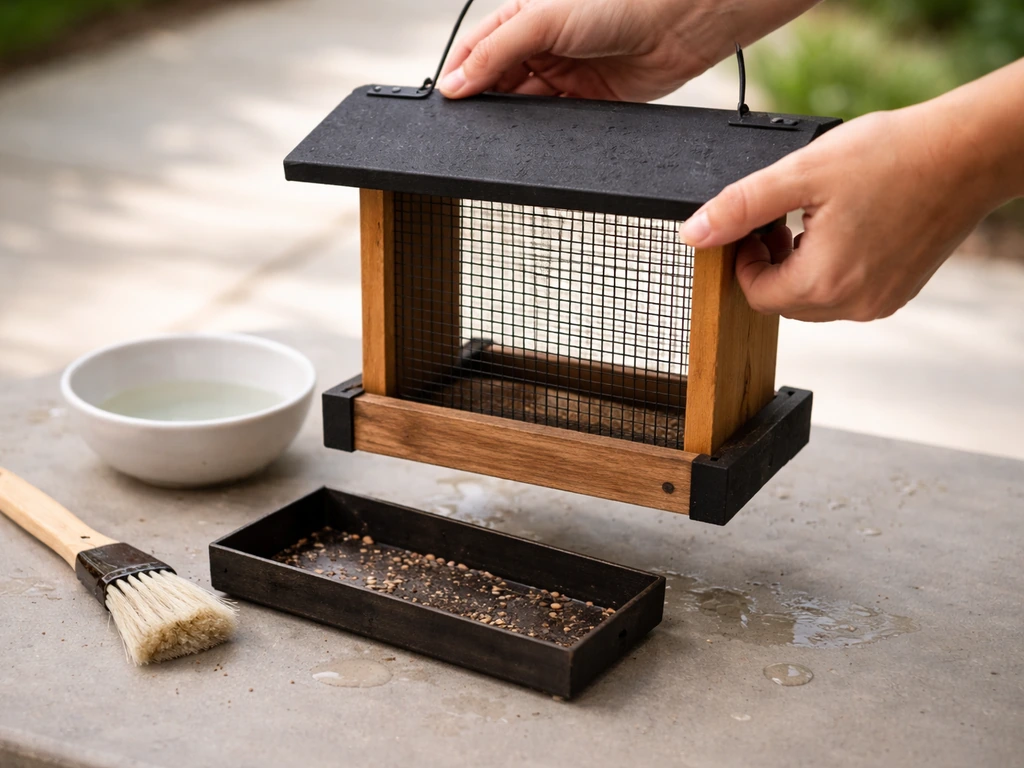
Most feeder station problems after setup come down to three things: seed going bad, feeders getting wobbly, and birds not showing up as expected. Here's how to handle all three.
Cleaning routine
Clean your feeders every one to two weeks during active feeding season, and more often in warm, humid weather. The cleaning process recommended by bird welfare organizations consistently involves the same basic steps: wash with warm soapy water, then disinfect by soaking the feeder for 10 to 15 minutes in a solution of 1 part household bleach to 9 parts water. After soaking, scrub any remaining residue, rinse thoroughly with clean water, and let everything air dry completely before refilling. This is important: putting seed into a damp feeder is one of the fastest ways to create a mold problem.
Structural maintenance
Check the post at ground level once a season. Even pressure-treated or cedar posts eventually soften at the soil line. Poke the wood with a screwdriver: if it sinks in easily, the post needs to be replaced or the bottom resealed. Reapply exterior sealant to any bare or peeling sections of the post and arms each spring before the wet season hits. Tighten all screws annually since wood expands and contracts with temperature changes, and screws back out gradually over time.
Troubleshooting: birds not visiting
If birds aren't using your station after a week or two, the issue is almost always one of three things: wrong seed for the local birds, too much human disturbance nearby, or the station is too exposed with no nearby cover to retreat to. Try switching to black oil sunflower seed first, since it's the single food that attracts the broadest range of common feeder birds. If that doesn't help within another week, try moving the station closer to shrub cover while still keeping those squirrel-deterrent clearances.
Quick-reference comparison: station design options
| Design type | Best for | Squirrel resistance | Build difficulty | Species range |
|---|---|---|---|---|
| Pole-and-arms (wood post, multiple hooks) | Most backyards, beginners | High with baffle | Moderate (3-4 hrs) | Broad (depends on feeders hung) |
| Shepherd's hook pole system (store-bought pole) | Quick setup, renters | High with baffle | Easy (1 hr) | Broad |
| Freestanding wooden platform station | Open yards, ground feeders | Low to moderate | Moderate to hard | Very broad including ground birds |
| Recycled-material station (bucket, broom handle) | Budget builds, test setups | Low | Easy (30 min) | Moderate |
For most people, the pole-and-arms wooden build hits the best balance of durability, customization, and pest resistance. The shepherd's hook is the fastest to deploy. The full platform station attracts the most species but needs the most maintenance and is hardest to squirrel-proof. Start with what matches your current skill level and yard conditions, and upgrade from there. A feeding station you actually maintain will always outperform a perfect design that's neglected.
FAQ
What seed mix should I start with if I am not sure which birds live near me?
Choose feeders that match the “dominant diet” of your local visitors. In many yards, black oil sunflower seed is the safest starting point because it attracts the widest range of common feeder birds. If you are targeting finches, nyjer usually works better, and for woodpeckers you will typically need suet or suet blends rather than seed-based feeders.
How can I prevent mold when I use a platform feeder in rainy weather?
If you see seed sitting wet for hours (especially on platforms or trays), reduce the exposed feeding surface, shorten refill intervals, or add a roofed component. Platform-only setups often need more frequent cleaning and smaller fills because rain and dew soak seed faster than enclosed feeders.
My feeder station feels wobbly, what should I check first?
Stability matters more than height. Wobble comes from loose hardware, arms that are not rigidly braced, or a base that is too shallow. For a permanent post, use a sufficiently deep concrete or a correctly weighted anchor, and re-tighten all connections after the first few weeks, then at least once per year.
Do I need to add water or will the station be enough on its own?
Birds can starve from dehydration, even if seed is available, so provide clean water nearby. A simple shallow birdbath or dripper (kept clean and refilled) helps, but place it so birds have escape cover and keep it away from direct squirrel launch points.
Should I clean under and around the station too, or just the feeders?
Yes, especially for platform feeding. Feeders with openings and hanging trays can still accumulate waste underneath, so sweep up spilled seed regularly and disinfect feeders during cleaning. If you only clean the feeders but leave wet spill in place, mold and bacteria risk stays high.
What design mistakes cause feeders to swing or shake in wind?
When building or installing, treat the station like a wind sail. Orient arms so they are not acting like long paddles, keep enough clearance from fences or walls to avoid turbulence, and use proper-rated hooks, clips, and screws designed for exterior use.
What height is best, and when should I raise or lower the feeders?
Aim for a “comfort zone” for birds, usually around 4 to 6 feet off the ground, then adjust for your yard constraints. If you go higher, filling and cleaning become harder and feeders get less use; if you go too low, squirrels, cats, and disturbance risk increase.
My station is built correctly, why are birds not visiting after two weeks?
Many people underestimate “human traffic” effects. Even if the station is correctly placed, frequent movement within a few yards can keep birds away, so reduce sudden disturbances and avoid placing the station in a path where pets or people pass repeatedly.
How full should I keep the feeders, especially platform trays?
No, it can make visits worse. Overfilling encourages waste, attracts rodents, and increases mold risk, particularly in humid weather. Fill so feeders empty within a predictable window, then top off as needed rather than dumping large amounts at once.
What is the best way to deal with raccoons without giving up the station?
For raccoon-heavy areas, plan for access control. Use locking clips overnight, and if necessary bring feeders in during peak activity times, then reinstall in the morning. This is often easier than trying to out-clean daily spills.
Will a baffle alone stop squirrels, or do I still need to adjust placement?
If squirrels are persistent, baffles and distance work together. Ensure the station is far enough from jump-off points, and install a pole baffle sized for your setup so squirrels cannot climb the post below the feeders.
How should I distribute heavier and lighter feeders on the arms?
Yes, but do it strategically. Put most feeders on robust, inner attachment points and reserve lighter feeders for outer hooks. This helps the whole assembly handle load and reduces stress at the arms and fasteners over time.
Can I move my feeding station once birds start using it?
If you need to move the station, change it gradually. Birds build routines, so try adjusting position or cover distance in stages rather than relocating from one side of the yard to the other, and keep the feeder types and seed offerings consistent during the transition.
How often should I clean the station and how does season change the schedule?
Weather impacts cleanup schedules. In warm, humid periods you should clean more often because residue spoils faster, and you should always air-dry feeders completely before refilling to avoid trapping moisture inside.
Next Article
How to Make a Tube Bird Feeder Step by Step
Step-by-step how to make a tube bird feeder with materials, safe mounting, maintenance, and fixes for leaks and clogs.