The simplest way to attach a bird feeder to a tree is to loop a wide, adjustable strap or a length of coated wire over a sturdy branch, hang an S-hook or carabiner from it, and clip your feeder there. That setup takes about five minutes, holds reliably through wind and rain, and doesn't harm the tree. But which exact method works best depends on your feeder style, branch thickness, and how much you care about pest-proofing, so here's the full breakdown. Netvue-specific models often come with their own mounting plate or clip style, so check the included hardware and match it to your branch or post for a secure fit bird feeder.
How to Attach a Bird Feeder to a Tree or Post
Marcus Brennan
24 Apr 2026
Choosing the Right Mounting Method for Your Feeder Type
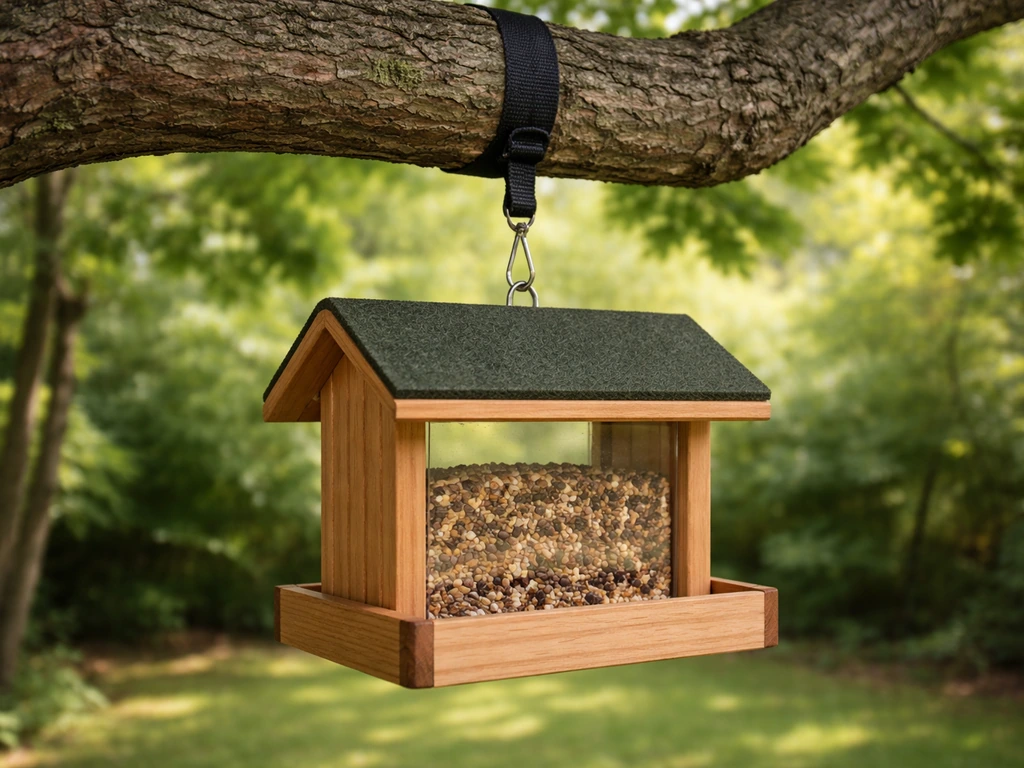
Not every feeder hangs the same way, and picking the wrong mount is usually why feeders end up lopsided, spinning in the breeze, or crashing to the ground after one storm. Before you grab a hook or drill anything, match your mounting approach to what you're actually hanging.
| Feeder Type | Best Mount Option | Notes |
|---|---|---|
| Tube feeder (with hanging loop) | S-hook or carabiner on a strap/wire | Lightweight; a single hook point works fine |
| Hopper/house feeder | Shepherd's hook arm or chain with two anchor points | Heavier when full; needs a more rigid mount |
| Platform/tray feeder | Two-point chain or flat bracket on a post | Needs to stay level; single-point hang causes tipping |
| Suet cage | S-hook directly over a branch or on a mounted screw eye | Small and light; almost any method works |
| Peanut/mesh feeder | Carabiner or snap hook on a cord or chain | Tends to swing; stiffer cord reduces spin |
The rule of thumb: the heavier and wider the feeder, the more anchor points and rigidity it needs. A light tube feeder forgives a lot of improvisation. A platform feeder loaded with seed does not, it needs two attachment points or a flat bracket to stay level.
Attaching to a Tree: Strap, Cord, and Hook Options
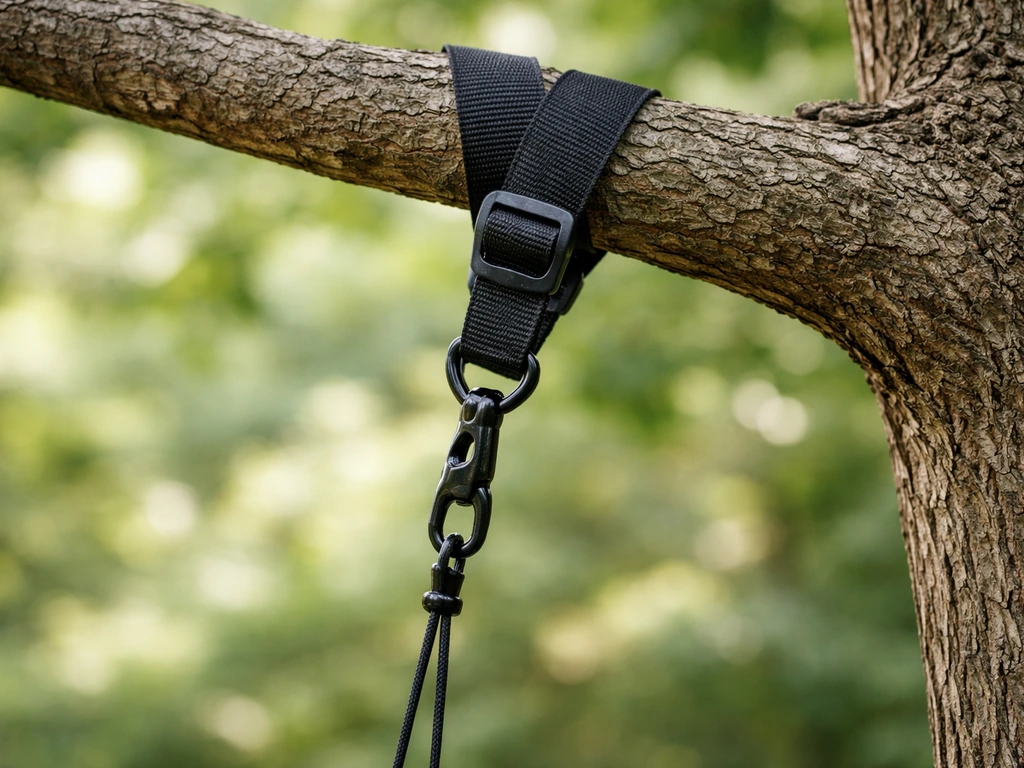
Trees give you plenty of options, but the best one depends on your branch situation. Here's what actually works and when to reach for each.
Wide Nylon or Rubber Straps (Best All-Around Choice)
A wide tree strap, the kind sold for hammocks or bird feeders specifically, is my first recommendation every time. They're adjustable, won't bite into bark, and most versions buckle or loop with a quick-release so you can lower the feeder for refilling without a ladder. Aim for a strap at least 1 inch wide; narrower cords cut into branches over time and damage the cambium layer under the bark. Loop the strap around the branch, thread it back through itself or use the buckle, then hang your S-hook or carabiner from the loop. Done.
Coated Wire or Chain (Best for Squirrel Resistance)
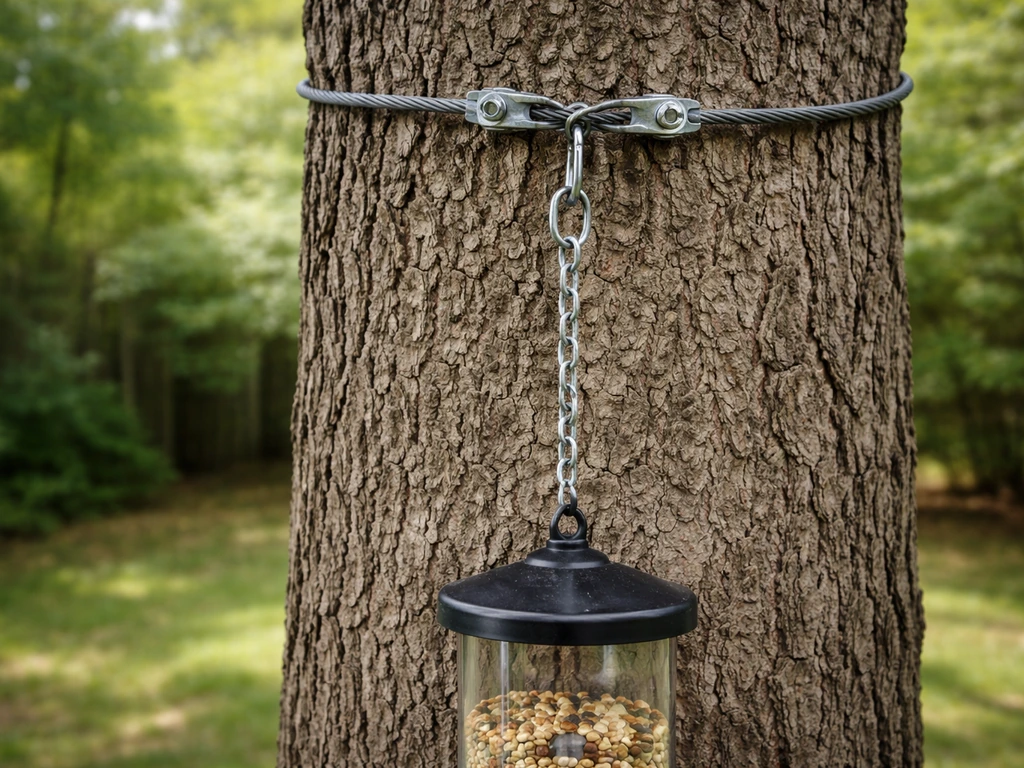
If squirrels are your main problem, switch from soft straps to smooth coated wire or a metal chain. Squirrels struggle to grip a thin, smooth surface, especially if it's hanging freely. Use at least 16-gauge coated wire so it doesn't flex too much under a loaded feeder. Thread it over the branch, twist the ends together with pliers, and hang your feeder from a locking carabiner. One downside: wire can eventually cut into bark if it shifts, so check it monthly and add a short section of rubber hose or pool noodle where wire meets wood to cushion the contact point.
Hooks and Screw Eyes (Best for Trunks or Large Limbs)
Some people prefer screwing a large eye hook or a shepherd's hook arm directly into the trunk or a thick horizontal limb. It gives a rock-solid anchor point. The trade-off is that you're putting a hole in the tree, which is worth weighing carefully (more on that in the safety section). If you go this route, use a stainless steel or galvanized screw eye, drill a pilot hole first to avoid splitting, and choose a spot at least 12 inches from any wound or fork in the tree. This method is best reserved for large, healthy hardwoods where you need a truly fixed position.
Bungee Cords and Rope (Use with Caution)
Bungee cords are tempting because they're cheap and everywhere, but they bounce the feeder when birds land, which scares off more cautious species. They also degrade fast in UV light and snap without much warning. Plain rope works better, but knot it tightly (a bowline or two half-hitches) and use braided nylon rather than twisted rope, which unravels. If you go with rope, inspect it every few weeks during summer heat and after any freezing weather.
Attaching to a Post: Matching Hardware and Securing for Stability
If you're working with a mounted post rather than a tree branch, the mechanics are a little different but the goal is the same: zero wobble and easy access for maintenance. If you do not have a tree nearby, you can still hang a bird feeder safely using a post-mounted hook or a clamp-on bracket system how to hang a bird feeder without a tree. Posts give you the advantage of placing your feeder exactly where you want it, free of overhanging branches that let squirrels drop in.
For a wooden post, the most reliable option is a galvanized or stainless steel shepherd's hook bracket, the kind that screws into the post face with two bolts. These hold even heavy hopper feeders rock-steady. If you want a hanging feeder on a post, mount a horizontal arm (a hook arm or a wooden dowel through a drilled hole) and hang from that. The arm should extend far enough from the post that the feeder swings freely without tapping the wood.
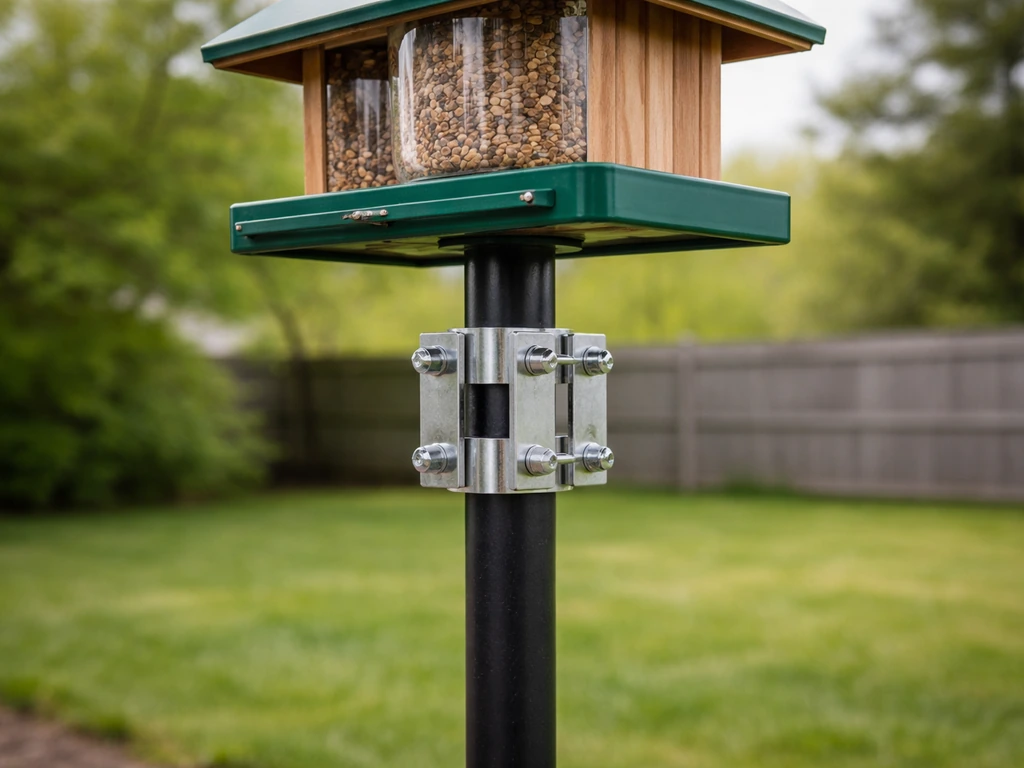
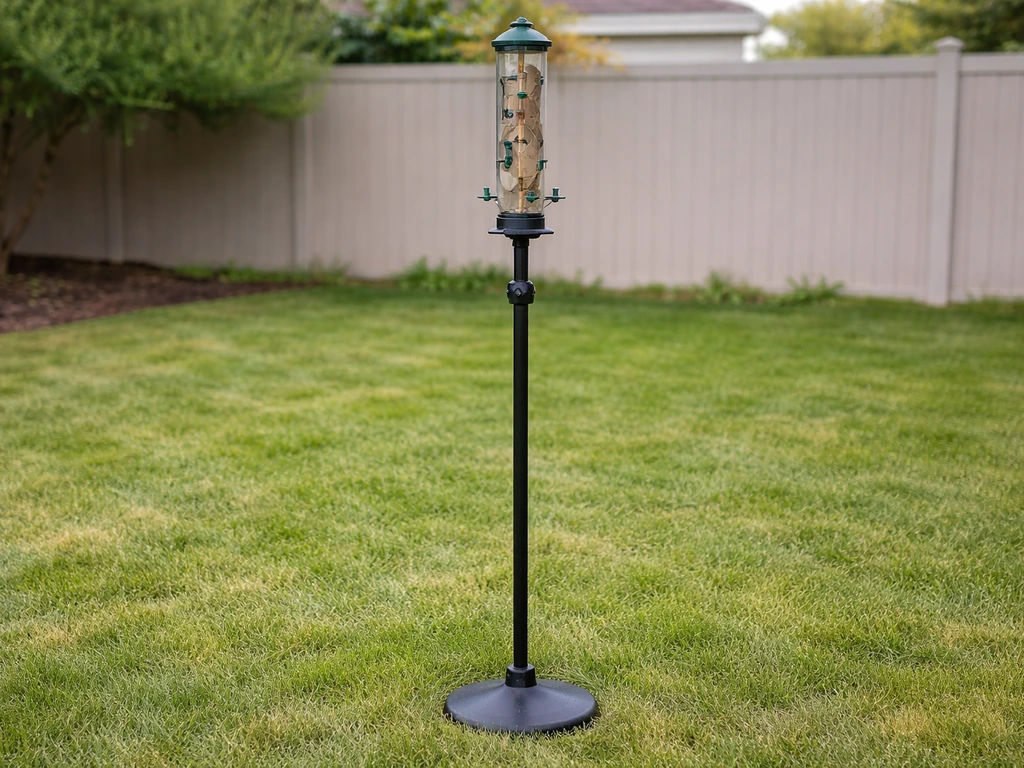
For a metal pole or T-post, use a pole-mounting clamp with a set screw rather than trying to tie anything around the smooth surface. If you want a dedicated solution for mounting on a pole, use the right pole clamps or a post-mounted bracket so your feeder stays stable and easy to service how to mount a bird feeder on a pole. These clamps are available at most hardware stores and lock the feeder bracket at whatever height you choose. If you're using a freestanding pole in open ground, it should be driven or anchored at least 18 to 24 inches deep, a pole that flexes at the base makes feeders swing and spill seed constantly.
Platform feeders on posts need a flat, level top bracket rather than a hanging arm. Fasten the tray to the bracket with two bolts through pre-drilled holes, or use a dedicated platform feeder post cap, which cups the base of the feeder and keeps it square even when birds land on the edge.
Placement Tips: Height, Distance from Cover, and Visibility
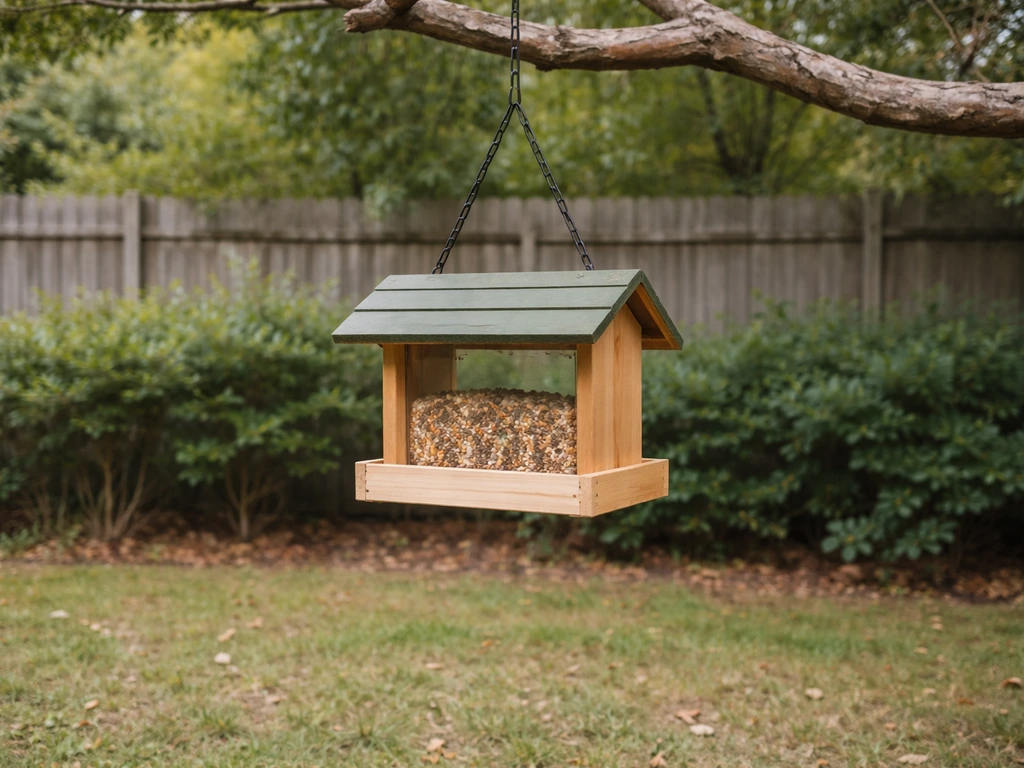
Getting the mount right is only half the job. Where and how high you place it makes a real difference in how many birds actually show up, and how safe they are when they get there.
- Height: Hang feeders at least 5 to 6 feet off the ground. This keeps most ground predators (cats, raccoons) from reaching up and snatching visiting birds. For tube and hanging feeders, 6 to 8 feet is a sweet spot that also keeps squirrel jumping distance in check from below.
- Distance from cover: Place the feeder within 10 to 15 feet of shrubs or trees so birds have a quick escape route if a hawk shows up. But don't go closer than about 10 feet to large branches above — squirrels will use those as a launchpad.
- Window clearance: If you're placing the feeder to watch from inside, keep it either within 3 feet of the window or more than 10 feet away. The dangerous middle zone — 4 to 9 feet — is where birds build up enough speed to seriously injure themselves on a collision. Three feet or less means birds don't have room to reach dangerous velocity.
- Visibility from the feeder's perspective: Birds need clear sight lines in multiple directions so they can spot threats. Avoid wedging the feeder into dense foliage where they can't see around them.
- Sun exposure: Partial shade helps keep seed and suet from going rancid faster in warm weather. A spot with morning sun and afternoon shade is ideal.
Safety and Tree Protection: Avoiding Bark Damage and Unstable Branches
Trees are living things, and the wrong mounting method can cause real harm over time, girdling (cutting off the flow of water and nutrients under the bark), decay at screw-hole entry points, or structural damage to branches that can't handle the weight. Here's how to avoid it.
- Always use wide, soft contact points where your strap or wire meets the bark. Thin cords concentrate pressure and cut in. If you only have thin cord, wrap it in a section of rubber tubing or even a cut-up garden hose where it loops around the branch.
- Check your strap or wire position every month during the growing season. Trees grow outward, and a strap that fits loosely in spring can be cutting into bark by fall. Adjust or move it before it embeds.
- Choose branches that are at least 2 to 3 inches in diameter and clearly healthy — no cracks, no fungal growth, no hollow sections. A branch that looks borderline probably is.
- Avoid dead limbs entirely. A dead branch can snap under the weight of a loaded feeder and feeder hardware, especially after rain adds extra load. If you're not sure whether a branch is alive, scratch the surface lightly — green under the bark means it's alive.
- If you use a screw eye, keep it to one hole per tree, in a healthy section of trunk, and accept that this is a permanent anchor point. Don't move it seasonally.
- Never wrap wire or cord all the way around a trunk or branch without leaving room for growth. A full circumferential wrap will girdle the tree within a few seasons.
Troubleshooting Common Hanging Problems
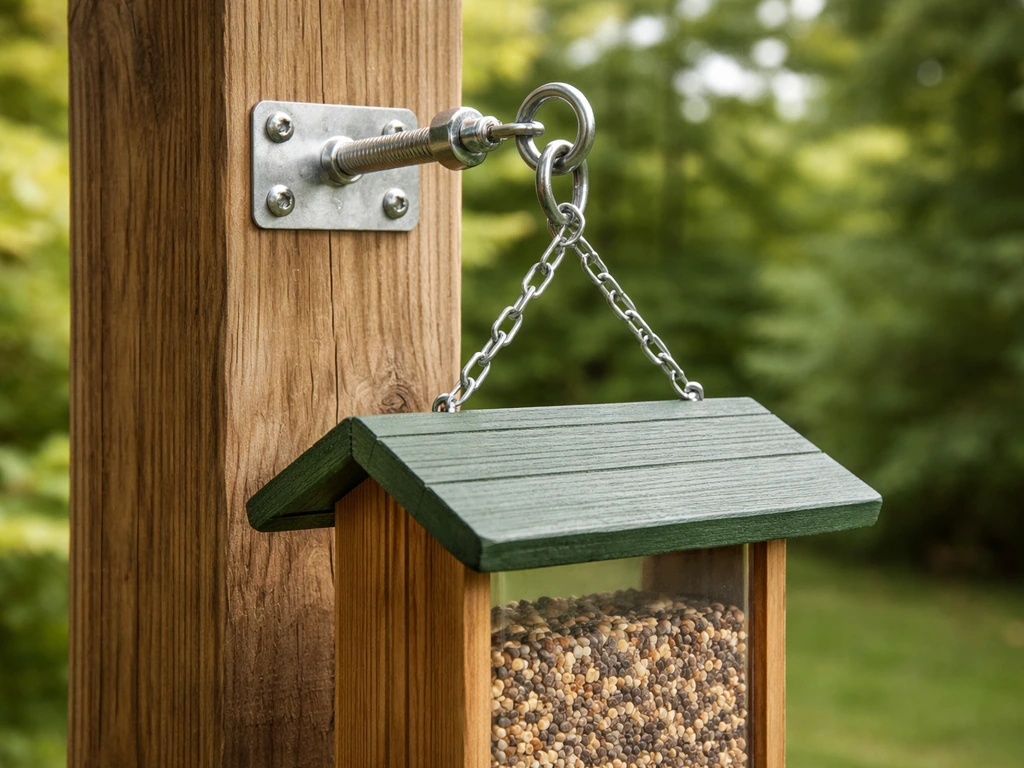
Even a well-planned setup can develop issues after a few weeks. Here are the most common problems I've run into and how to fix them quickly.
Feeder Keeps Swinging or Swaying
Excessive sway means your hang point has too much slack, or the branch itself is too flexible. First, shorten the cord or chain so the feeder hangs closer to the branch, less length means less pendulum swing. If the branch is the problem, move to a thicker one or brace the feeder against a secondary anchor point (two lines instead of one, creating a V-shape). A stabilizer weight clipped to the bottom of the feeder also helps dampen movement in wind.
Feeder Twists and Spins
Spinning is almost always a connection-type problem. An S-hook or round loop lets the feeder rotate freely. Replace the S-hook with a locking carabiner and add a small swivel between the chain and the feeder hook, the swivel lets it spin freely without twisting the main cord, and then returns to neutral on its own. If the feeder is round, a second anchor wire off to the side of the branch will stop rotation entirely.
Strap or Cord Keeps Slipping Down the Branch
This happens on branches that taper sharply. Move the strap to a spot where the branch is more uniform in diameter, or use a strap with a buckle that grips itself rather than relying on friction. A strip of rubber shelf liner wrapped around the branch under the strap adds enough grip to stop most slippage.
Feeder Hangs Unevenly or Tips to One Side
Uneven hanging on a hopper or platform feeder usually means a single attachment point and an off-center hook loop. Check whether the feeder's built-in hanging ring is centered over its weight. If it isn't, shift to a two-chain system attached to opposite ends of the feeder roof so you can independently adjust each side until it levels out. A small bubble level set on the feeder tray for 10 seconds tells you exactly how far off you are.
Can't Reach the Feeder to Refill It
If you have to drag out a step stool every time, your feeder is too high for the branch you chose. Consider rigging a pulley system, one small pulley fixed to the branch and a cleat or tie-off point at shoulder height on the trunk or a nearby post. You can lower the feeder to refill, then hoist it back up. This is also a smart solution for anyone with mobility limitations.
Ongoing Maintenance and Pest-Proofing Checks
Setting it up correctly is the start, not the finish. A monthly five-minute check keeps your feeder safe, attractive to birds, and resistant to the usual problems.
- Check strap and cord tension monthly: Straps loosen after heavy rain and thermal expansion in summer heat. Give everything a firm tug — if it shifts more than an inch, tighten or re-knot.
- Inspect for chew damage: Squirrels will gnaw through plastic-coated wire, rubber straps, and wooden hardware over time. If you see fresh tooth marks, upgrade that component to metal.
- Look for bark embedding: Each month during the growing season, check that straps haven't started pressing into the bark. A strap that's flush with the surface needs to be repositioned immediately.
- Check feeder cleanliness: Moldy or wet seed clogs ports and can make birds sick. Clean tube feeders with a bottle brush and mild soap every two to four weeks, more often in humid weather.
- Pest-proof the approach: If squirrels are reaching the feeder from above (dropping from branches), trim any branches that hang within 10 feet horizontally or 5 feet vertically above the feeder. A baffle mounted on the cord or post below the feeder stops climbers.
- Check hardware for rust or corrosion: Metal hooks, carabiners, and chain links should be rust-free. Replace any hardware showing orange rust spots — corroded metal weakens faster than it looks.
- Tighten any screws or bolts seasonally: Freeze-thaw cycles and wind vibration back out fasteners over time, especially on post-mounted brackets.
If you get all of this dialed in, the setup genuinely takes care of itself between checks. For hanging a bird feeder from the house, you can combine a secure outdoor mount with the right placement so the feeder stays stable and safe. A good strap mount over a healthy branch, at the right height, with a squirrel baffle in place, is something you can largely ignore except for refilling and the quick monthly once-over.
That's the real goal: a stable, low-maintenance setup that birds actually use. You can also plan a camera-friendly mount so you get a steady view without the feeder swinging or twisting how to mount bird feeder with camera.
If you eventually want to explore options beyond trees, like balcony setups, window mounts, or dedicated pole systems, each of those situations has its own set of hardware tricks worth knowing, but the principles of stability, safety, and easy access stay the same throughout. When feeders are placed very close to windows, the Michigan DNR warns about window collision risk, recommending keeping feeders at least 3 feet away from windows [Bird Feeding Tips](https://www. michigan. gov/dnr/-/media/Project/Websites/dnr/Documents/WLD/Archive/Misc-info/birdfeedingtips.
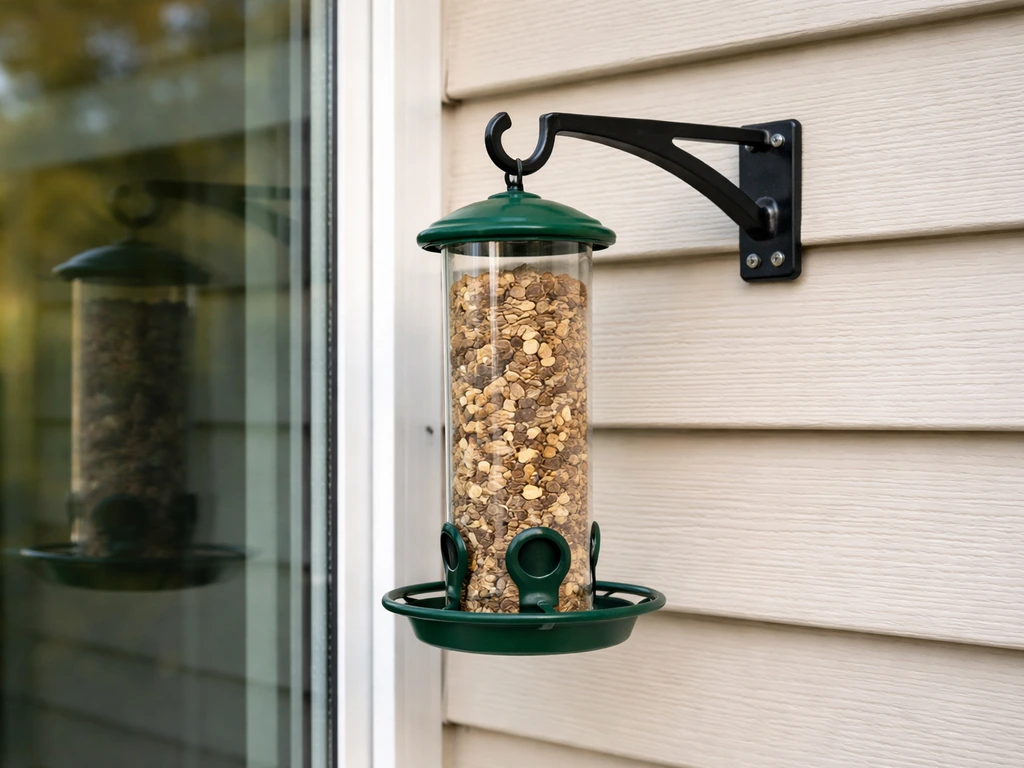
pdf? hash=08B25DED50F479AE2FFAEBDED4F2FF0E&rev=7a579f91433f4270bf0addc1881d09ec). If you prefer a closer viewing spot, learn how to hang a bird feeder outside a window so it stays secure and safe. If you want to hang a bird feeder on a balcony, focus on using a secure mount and placing it so birds can feed safely without the feeder swinging balcony setups.
If you want the same stable, low-maintenance approach but for branches instead of balconies or poles, follow these tips for how to hang bird feeders from trees.
FAQ
Can I use fishing line, nylon rope, or paracord to attach a bird feeder to a tree?
It’s usually a bad idea. Fishing line stretches and degrades quickly outdoors, and paracord can cut or saw into bark as it shifts. If you want “soft” attachment, use a wide adjustable tree strap made for feeders or hammocks, or braided nylon rope tied tightly, then inspect it monthly for fraying, UV cracking, and slippage.
How do I choose the right strap width and tension so it won’t damage the tree?
Aim for a strap at least 1 inch wide and make it snug enough to prevent shifting, not so tight it compresses the bark. After a week, check that the strap hasn’t tightened as the branch dries. If you notice bark whitening or grooves, switch to a wider strap and add a protective cushion point where the strap contacts wood.
What’s the safest way to attach to a dead or weak branch?
Don’t. Weak or decaying branches can fail under seed weight and bird activity, even if they hold the feeder briefly. Choose a healthy branch with good thickness and no visible cracks, fungus, or loose bark, and when in doubt, switch to a secondary anchor point or move the feeder to a thicker limb.
Should I hang the feeder from the highest branch available to keep it away from animals?
Not necessarily. Very high placement increases pendulum swing and makes refilling unsafe if you use a ladder. Place it so birds can access it easily, but keep slack minimal so it doesn’t spin. If you’re worried about animals, use the squirrel baffle option and keep the feeder close to the branch rather than suspended far out.
How low should the feeder hang to reduce wobble?
Hang it as close as practical to the branch, shortening the cord or chain so the feeder sits with minimal free length. If you see noticeable sway or the feeder taps the branch in wind, shorten further or brace to a second anchor (a V-shape) so movement is damped.
My feeder keeps spinning and twisting the cord, what should I fix first?
Start with the connection hardware. Replace a basic S-hook setup with a locking carabiner and add a small swivel between the feeder hook and the hanging line. That lets the feeder rotate freely without twisting the main cord, and it should stop the “wire spring” effect that causes twisting over time.
Will wire or a metal chain cut into the tree?
It can, especially if it shifts while the feeder sways. If you use coated wire or chain, check monthly for grooves and add a cushioning section like rubber hose or a pool noodle where metal meets bark. Also keep slack low so the contact point doesn’t slide back and forth.
Can I use an eye hook (screw eye) in any tree?
Only in suitable, healthy hardwoods. Drilling adds an entry point for decay and can weaken the limb if placed poorly. Use stainless or galvanized hardware, drill a pilot hole to prevent splitting, and place it at least 12 inches from any wound, branch fork, or existing damage.
What should I do if my platform or hopper feeder won’t stay level?
A single off-center hanging point usually causes tilt. Use a two-chain system attached to opposite ends of the feeder roof, then adjust each side until level. A small bubble level placed on the tray makes the adjustment precise in under a minute.
How often should I inspect the mount and what am I looking for?
Do a quick monthly check. Look for strap slippage or bark grooves, rust or cracking on hooks and carabiners, wire cutting marks, and rope or bungee UV damage. Also confirm the feeder is still centered and not gradually drifting off-balance.
Is a bungee cord acceptable if I want easy, quick attachment?
Generally no. Bungees bounce the feeder when birds land, which can reduce visits, and they degrade in UV and can fail without warning. If you want quick access, choose a strap with a quick-release buckle instead, then use an appropriate hook and keep the hang point stable.
What if I can’t reach the feeder comfortably for refills?
If the feeder is too high, avoid stretching with ladders. Consider a simple pulley with a small pulley attached to the branch and a tie-off point on the trunk or a nearby post at shoulder height, so you can lower the feeder for refilling and hoist it back up safely.
How do I mount a feeder for camera viewing so it stays steady?
Reduce movement at the source. Use a stabilizer approach, keep the hanging length short, and prefer a connection that avoids twisting (carabiner plus swivel). Position the feeder so you get a direct view without wind-driven swing, then re-check after the first storm since mounts can loosen slightly over the first few days.