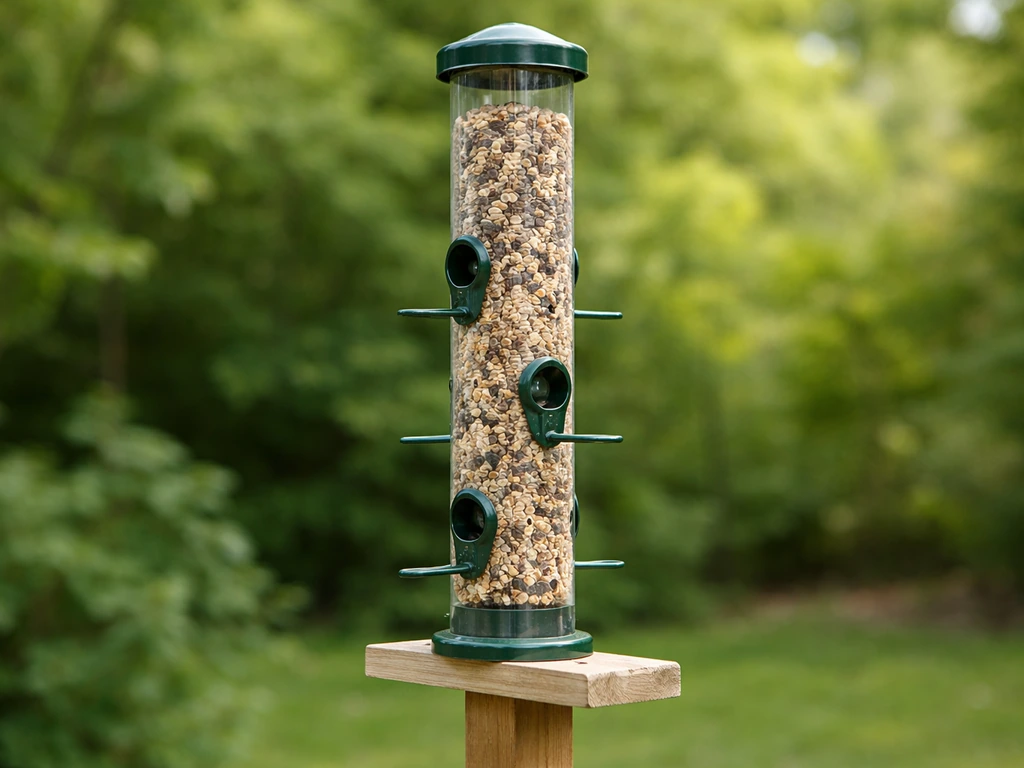
Hanging a bird feeder from a tree is one of the quickest wins in backyard birding, but there are a few decisions that make the difference between a feeder birds actually use and one that swings wildly in the wind, gets raided by squirrels every day, or damages your tree over time. Here is everything you need to pick the right spot, grab the right hardware, and get your feeder up safely today.
How to Hang Bird Feeders From Trees: Step-by-Step
Marcus Brennan
17 Apr 2026
Choosing the right spot and height on your tree
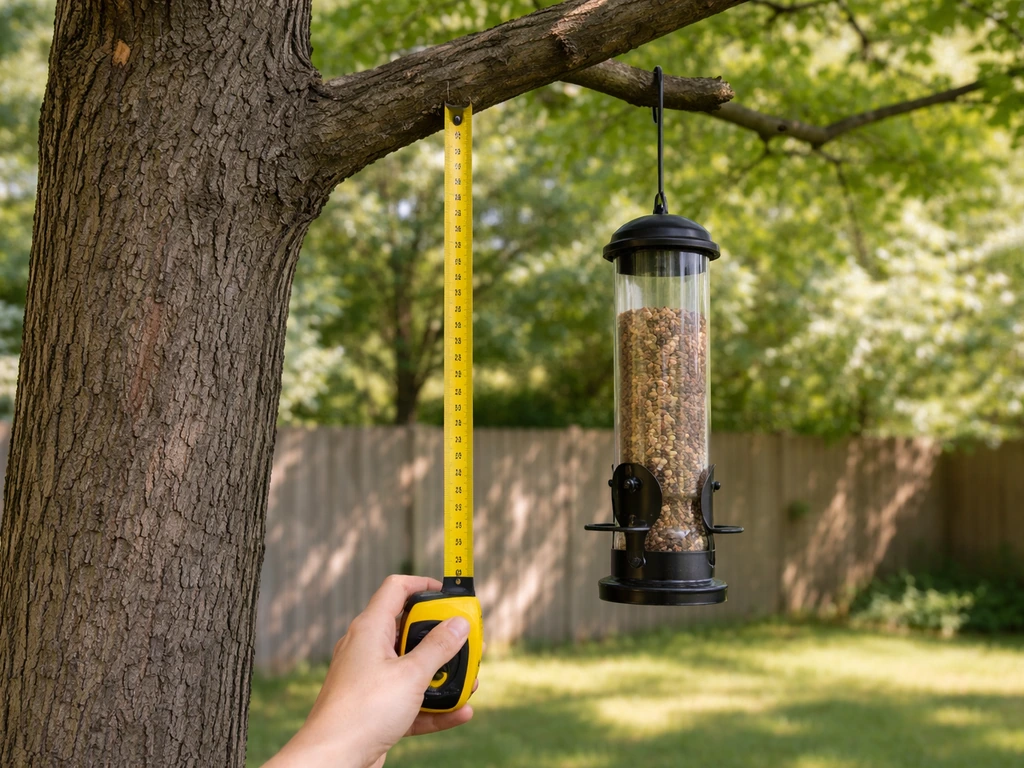
Height and placement matter more than most people expect. The sweet spot for most hanging feeders is between 5 and 6 feet off the ground. That keeps the feeder accessible for you to refill without a ladder, but high enough that cats and other ground predators cannot easily ambush visiting birds. If you plan to add a squirrel baffle (which you should), aim to position the baffle itself between 4 and 5 feet off the ground, which is the height range Audubon cites for effective baffle installation.
Distance from the tree trunk is just as important as height. Squirrels are excellent jumpers and can clear at least 7 to 9 feet horizontally from a launch point. A widely used placement rule of thumb is the 5-7-9 rule: hang the feeder roughly 5 feet off the ground, at least 7 feet from any structure like a fence or deck, and at least 9 feet away from overhanging branches or anything a squirrel can descend from. When hanging from a branch, that means choosing a limb long enough that the feeder hangs well out from the trunk, not right next to it.
Think about cover, too. Small birds need a fast escape route if a hawk appears, so placing your feeder within roughly 10 to 15 feet of a shrub, hedgerow, or dense branch cluster gives them somewhere to dart. At the same time, avoid putting the feeder so close to thick cover that a cat or other predator can crouch and ambush birds at the feeder itself. A little open space around the feeder gives birds a clear view of approaching threats.
If your tree is near the house, factor in window distance. Feeders placed between 3 and 30 feet from a window create the highest risk of fatal window strikes because birds build up enough speed to cause injury. Place your feeder either within 3 feet of the glass (so birds cannot accelerate before a collision) or more than 30 feet away. Pilchuck Audubon Society advises placing bird feeders and baths either at least 30 feet from windows or within 3 feet of windows to reduce window collisions. This one adjustment can save a surprising number of birds each year.
What to use to hang bird feeders
The right hanging hardware depends on where on the tree you are attaching the feeder, how heavy the feeder is, and whether you want a permanent or adjustable setup. Here is a breakdown of the main options and when each makes sense.
| Hardware | Best for | Pros | Watch out for |
|---|---|---|---|
| Braided nylon or polyester cord | Light feeders on branches | Cheap, flexible, easy to tie | Can fray and snap; replace every season |
| Coated steel wire (14–16 gauge) | Heavier feeders, longer-term setup | Durable, weather-resistant | Can cut into bark over time; use tubing over wire |
| Chain with S-hook | Any feeder needing height adjustment | Easy to raise/lower; strong | Metal can rust; use galvanized or stainless |
| Tree branch hook (screw-in) | Permanent setups on solid limbs | Very stable; neat look | Requires drilling into tree; use sparingly |
| Wide nylon straps or tree straps | Wrapping around trunks or large limbs | Tree-safe; no damage to bark | Can slip on smooth bark; check tension monthly |
| Zip ties (heavy-duty UV-rated) | Temporary or lightweight setups | Free if you have them; quick | Degrade in UV; check and replace every few months |
One practical tip that saves a lot of trouble: if you are running wire or cord over a branch, thread it through a short section of garden hose or rubber tubing first. This cushions the branch, prevents the wire from cutting into the bark as the branch sways, and extends the life of the setup. Skip this step and you will often find a groove cut into the bark within a single season.
For the feeder itself, a sturdy S-hook connecting the hanging hardware to the feeder's loop makes height adjustment easy and lets you swap feeders quickly. Pair that with a saucer-style squirrel baffle hung above the feeder on the same cord or wire, and you have a setup that handles both stability and pest control in one go.
Hanging a feeder from a tree branch or limb
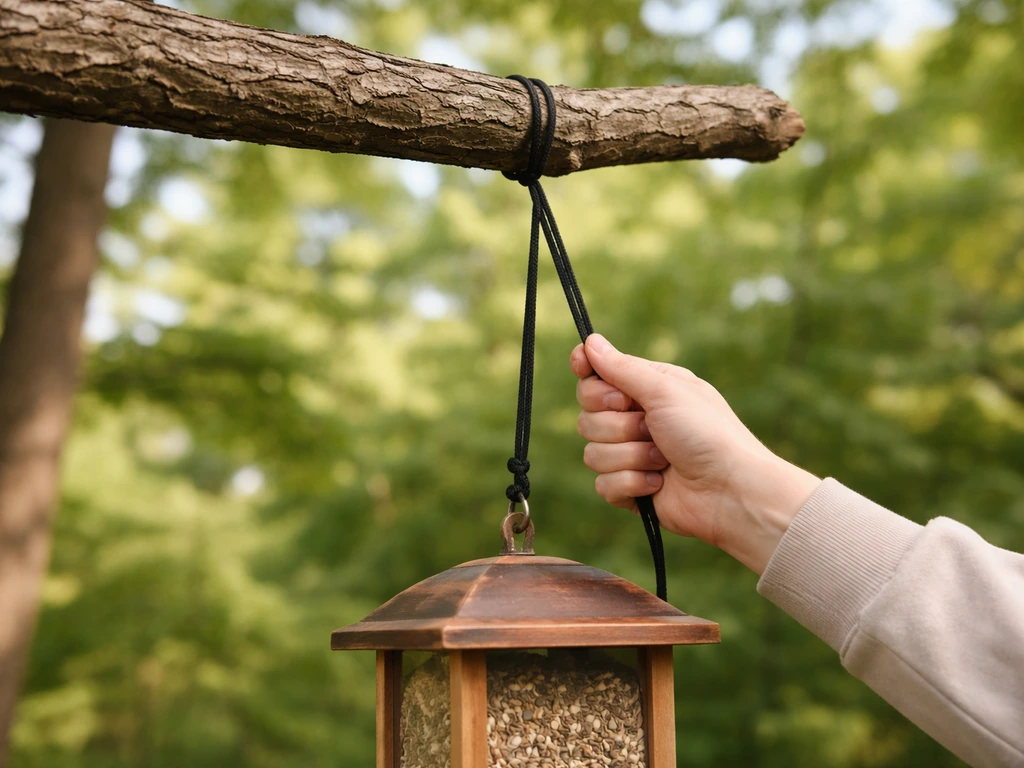
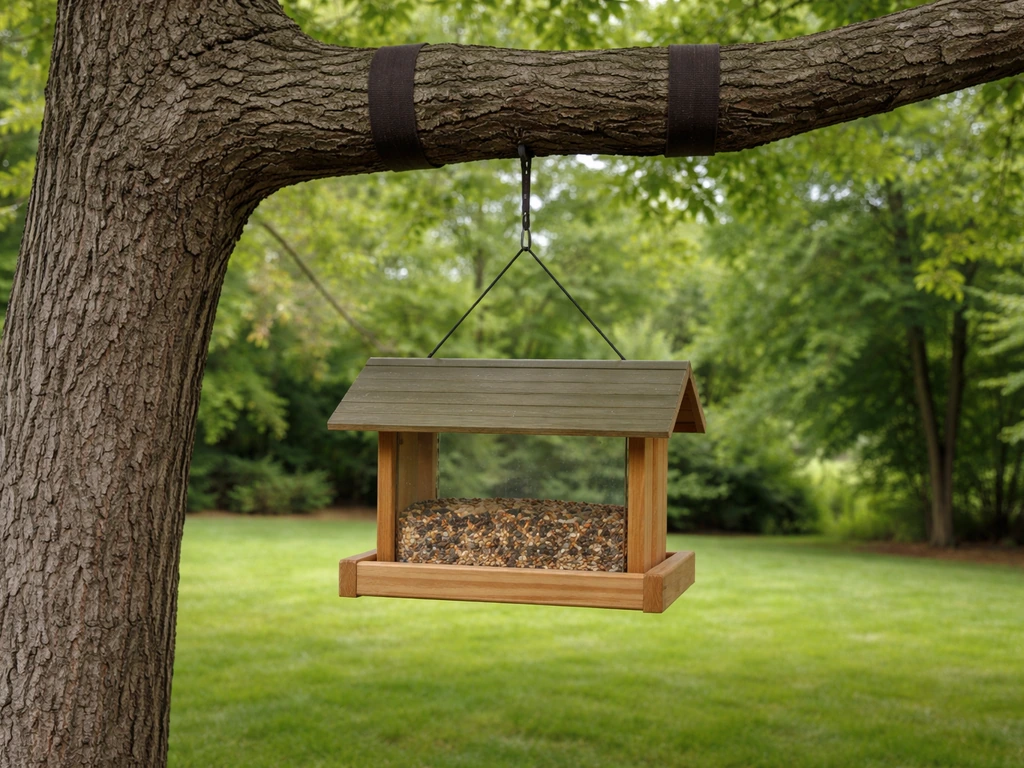
A sturdy, mostly horizontal branch at least 1 inch in diameter is the classic hanging point, and for good reason. It is simple, adjustable, and keeps the feeder out in the open where birds can spot it easily. Here is how to do it cleanly.
- Pick a branch that is solid and mostly level. Test it by grabbing and pulling down sharply. If it flexes a lot or feels soft, go up the tree to a thicker limb.
- Cut a length of coated steel wire or braided cord about 3 feet longer than you need. The extra length gives you room to work.
- If using wire, thread it through a 6-inch piece of rubber hose or garden tubing. Drape this padded section over the branch so the hose sits on the bark.
- Loop the wire over the branch and connect both ends below using a carabiner or by twisting the wire back on itself. Make at least 4 or 5 tight twists so it does not slip.
- Clip an S-hook to the loop hanging below the branch. Hang your squirrel baffle on the S-hook first (open side facing down), then hang the feeder below that.
- Check that the feeder hangs at least 18 inches below the branch so the baffle has room to function. Squirrels need to reach around the baffle to get to the feeder, and a well-placed baffle stops them cold.
If you prefer a more permanent approach for a thick, healthy limb, a screw-in shepherd's hook or eye-bolt screwed directly into the underside of the branch is very stable. Use a galvanized or stainless steel eye-bolt with a washer, and keep the hole size appropriate for the branch diameter. Avoid large screws in branches under 3 inches thick. For more detail on attaching hardware directly to the tree itself, the guide on how to attach a bird feeder to a tree covers fastener types and bark-safe techniques in depth.
Hanging a feeder from a tree trunk or high branch
Sometimes the best branch is 10 or 12 feet up, or you want to mount directly on the trunk because there are no usable low limbs. Both situations are workable, but they require slightly different approaches.
Mounting on the trunk
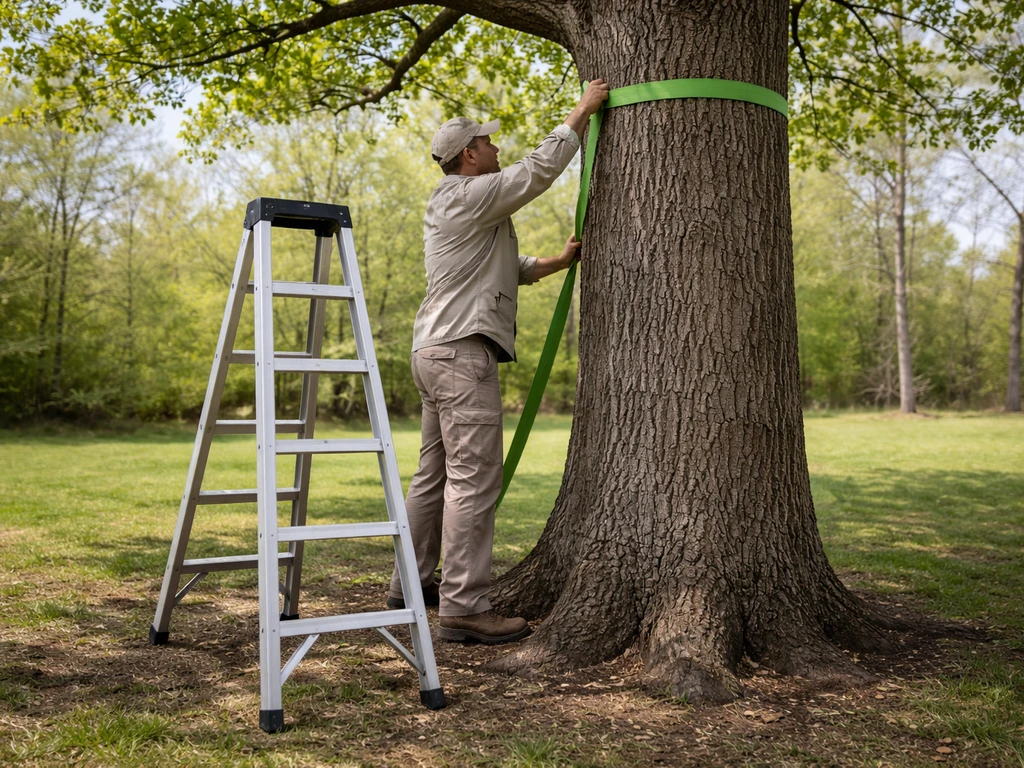
For trunk mounting, avoid driving nails or large screws directly into the bark if you can help it. A better approach is to wrap a wide nylon tree strap (the kind sold for hanging hammocks) around the trunk at your target height, then clip a short length of chain or a hook to the strap loop. This keeps the hardware removable and does not create a wound in the bark that can let in disease. If you do need to screw into the trunk, use a single stainless steel eye-bolt no larger than 3/8 inch in diameter, and seal the entry point with tree wound sealant. One screw does minimal harm to a healthy, mature tree.
Reaching a high branch
For branches 10 feet and higher, the simplest method is a throw line. Take a small weight (a tied bundle of cord works, or a light carabiner), tie it to the end of your hanging cord, and toss it over the target branch. Once it clears, pull the weight back down so both cord ends are within reach at ground level. Tie off one end to your hardware (the baffle and feeder assembly), then pull the other end to hoist everything up to the right height. Tie the anchor end to a lower branch or loop it around the trunk with a cleat hitch so you can lower the feeder for refilling without climbing.
A simple pulley system makes this even easier if you plan to use the same spot long-term. Attach a small single pulley to the high branch using a strap or eye-bolt, run your cord through it, and you can raise and lower the feeder from the ground in seconds. This is especially useful for heavy platform feeders or suet cages that you refill frequently.
How to hang a feeder up high safely
Hanging a feeder high in a tree looks great and keeps it out of reach of most ground-based pests, but the main safety concern shifts from the feeder to you. Here are the ground rules.
- Use a stable, rated step ladder on level ground. Never lean a ladder against a branch you are also trying to hang from.
- Have a second person hold the ladder base on uneven terrain.
- Use the throw-line method (described above) instead of climbing whenever the branch is more than 8 feet up. It is faster and safer.
- Inspect the branch from the ground first. Look for cracks at the crotch, soft spots, or signs of rot before you trust it with hardware and a hanging feeder.
- Test the finished setup by pulling down firmly on the feeder with both hands before you walk away. If it moves, retie or reposition.
On the squirrel-proofing side, hanging high does not automatically solve the problem. Squirrels can descend from above as well as leap from below. The 9-foot rule still applies: if any branch, rooftop, or other surface is within 9 feet of the feeder (horizontally or overhead), a squirrel will eventually use it. A dome-shaped baffle hung above the feeder is your best defense in tree setups because it blocks descent from the branch the feeder is hanging from.
How to hang a bird feeder between two trees
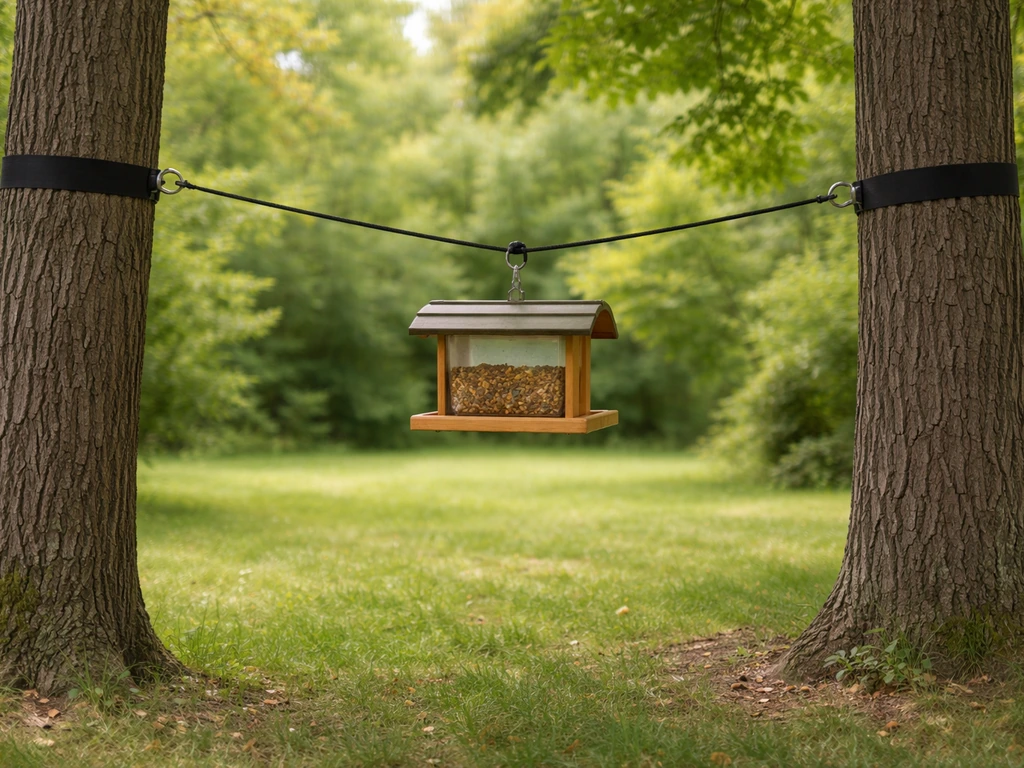
A between-trees setup is a great solution when neither tree has a single ideal branch, when you want to hang multiple feeders in a row, or when you want the feeder out in the open away from squirrel launch points on either trunk. The basic method is a tensioned line strung between two trunks or solid limbs, with the feeder hanging in the middle.
- Choose two trees that are 10 to 20 feet apart. Closer than that and you have limited room to position the feeder away from both trunks. Farther than 20 feet and a single line will sag significantly under the feeder's weight.
- Attach a tree strap or eye-bolt to each tree at the same height (around 7 to 8 feet is good for a between-trees line). Use straps over eye-bolts whenever possible to avoid bark damage.
- Run a length of 14-gauge coated wire, paracord rated to at least 100 lbs, or a dedicated hammock-style line between the two anchor points. Pull it taut and tie off securely on both ends.
- Hang your feeder from the midpoint of the line using an S-hook or a separate short drop cord. Midpoint keeps the feeder as far as possible from both trunks, which is your best natural squirrel deterrent.
- Add a baffle on the drop cord above the feeder. For extra protection, you can also thread the main line through a section of PVC pipe on either side of the feeder hang point. Squirrels trying to walk the line will spin on the PVC and fall off.
- Check the line tension after the first rain. Cord stretches when wet, and a sagging line can drop the feeder close enough to the ground for raccoons to reach.
If you do not have two suitable trees in the right positions, do not force it. A freestanding pole or a mounted arm off the house can work just as well or better. The article on how to mount a bird feeder on a pole walks through pole options in detail, including options for yards with no good tree placement at all. And if you want to go treeless entirely, how to hang a bird feeder without a tree covers wall mounts, deck mounts, and other creative alternatives.
Quick setup checklist and troubleshooting
Before you walk away from a freshly hung feeder, run through this quick checklist. It covers the most common things people miss on the first install.
- Feeder hangs at 5 to 6 feet off the ground (or baffle is at 4 to 5 feet if using one)
- Feeder is at least 7 feet from fences, decks, and structures
- Feeder is at least 9 feet from overhanging branches and the tree trunk
- Rubber tubing or hose is protecting the branch where wire or cord contacts bark
- S-hook is fully closed and cannot open under the feeder's weight
- Squirrel baffle is installed above the feeder with at least 18 inches of clearance below
- Feeder is within 10 to 15 feet of some escape cover (shrub, dense branches) for small birds
- Feeder is either within 3 feet or more than 30 feet from the nearest window
If the feeder keeps swaying
Swaying is usually a cord-length problem. A longer drop cord swings more in wind, which spills seed and discourages nervous birds. Shorten the cord so the feeder hangs no more than 12 to 18 inches below the branch or anchor point. You can also add a stabilizer by running a second cord from the bottom of the feeder down to a tent stake in the ground, keeping just enough slack that birds can land comfortably but the feeder cannot spin wildly.
If squirrels are still getting in
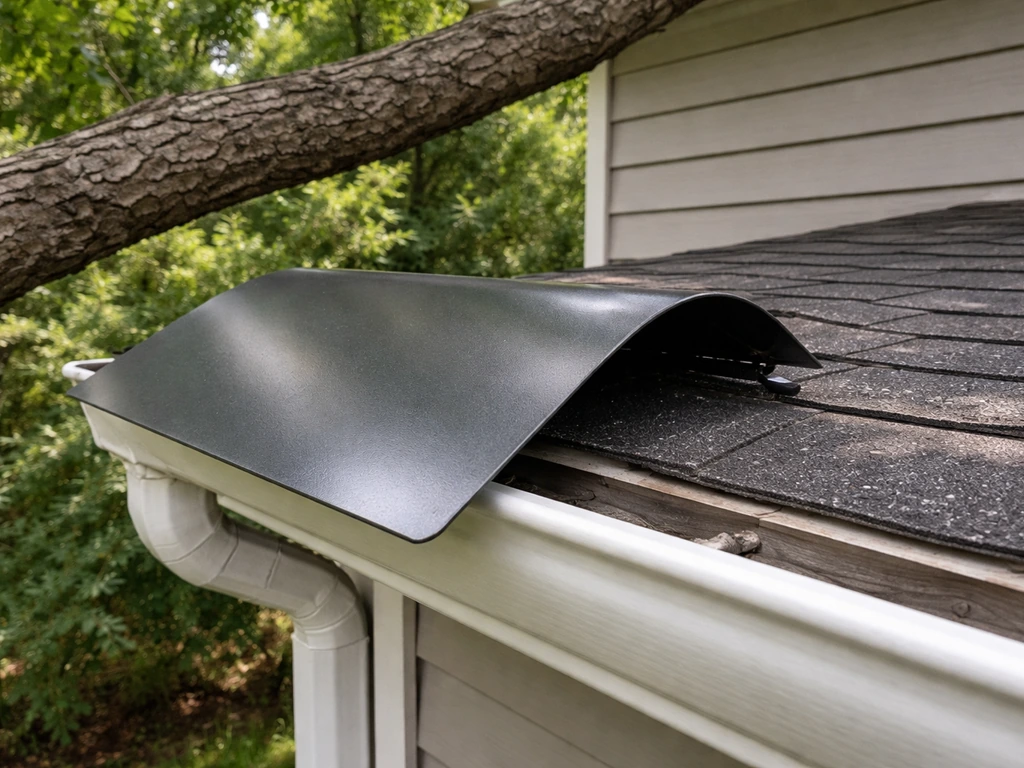
First, check all distances again. Even a single nearby branch that has grown over the winter can create a new launching point. If the distances are correct, look at the baffle angle. Dome baffles work by making squirrels slide off when they grab the edge. If the dome is tilted or positioned too close to the feeder body, a determined squirrel can grip the lip and climb over it. Center the dome and make sure it hangs level. If you are still having trouble, seed scattered on the ground below the feeder draws rodents and racoons up into the area, increasing pressure from all sides. Project FeederWatch notes this directly as a reason to use feeders with catch trays or to sweep up spilled seed regularly.
If birds are not coming
Give it at least a week after a new install. Birds are cautious with anything new in their territory. If they are still absent after 10 days, check whether the feeder is in a location with too much human foot traffic or noise right underneath it. Also confirm the seed is fresh. Old or wet seed smells off to birds even if it looks fine to you. Project FeederWatch recommends cleaning seed feeders at least once every two weeks (more often in warm or humid weather), and U.S. Fish and Wildlife Service guidance echoes the same two-week cleaning schedule to keep disease from spreading at shared feeding stations.
If you can't access the feeder easily for refills
Access is a real problem that most people underestimate when they first pick a hanging spot. If refilling requires a ladder every single time, you will eventually skip it, and an empty feeder stops attracting birds. Either install a pulley so you can lower the feeder from the ground, choose a lower branch as your anchor point, or consider a different location altogether. If the tree just does not have a convenient setup point, mounting on the house is a surprisingly effective option. The guide on how to hang a bird feeder from the house covers gutter hooks, bracket mounts, and other methods that keep the feeder within easy reach. For apartment or condo dwellers who do not have yard trees at all, check out how to hang a bird feeder on a balcony for railing mounts and suction-cup options that work without any drilling.
After the feeder is up: keeping it working well
Once everything is hung and the birds start arriving, the maintenance routine is simple. Refill seed before it runs completely out (birds stop checking feeders that are empty for days at a stretch). Clean the feeder with a 10 percent bleach solution and rinse thoroughly every two weeks, or more often during summer heat when mold grows fast. Check your hanging hardware and cord every month, especially after heavy winds or ice storms. Rubber tubing on wire contacts should be inspected for cracking or slipping. Nylon cord should be replaced every season because UV exposure weakens it even when it looks intact.
If you want to take your setup a step further and actually watch what visits your feeder, a camera-equipped feeder mount makes identification easy and is a great way to keep a personal bird log. The setup guide for how to mount a bird feeder with a camera explains how to add a camera without spooking the birds or creating extra hardware that squirrels can use as a climbing aid. For those interested in a specific smart feeder model, there is also a dedicated walkthrough on how to mount a Netvue bird feeder that covers placement and app setup in one go.
One last thing worth mentioning: trees are not the only option, and sometimes a window mount brings birds much closer than any branch ever will. If you want birds right at the glass, the article on how to hang a bird feeder outside a window walks through suction mounts and window-box setups that work beautifully for watching birds up close without a tree in sight.
FAQ
What should I do if my tree branch is too thin or sways a lot when I hang the feeder?
Choose a branch with enough stiffness so the feeder stays mostly still, ideally at least 1 inch in diameter as you set the hanging point. If the branch flexes, lengthen the drop a little less, shorten excess cord, and use a stabilizer line from the feeder bottom to a ground stake (with slight slack for birds). If the limb still sways after adjustments, switch to a screw-in eye-bolt on a healthier limb, or mount on the trunk with a tree strap and removable chain so you can avoid weak branches.
How do I prevent the wire or cord from cutting into the bark over time?
If you run cord over the branch, protect the contact point. Thread the line through a short section of garden hose or rubber tubing before tying it off, and periodically check for bark grooves after storms or seasonal growth. Also avoid very tight knots that can “saw” into the wood, use a strap-based method for trunk mounts, and replace UV-worn nylon cord even if it still looks intact.
Can I hang the feeder higher than 6 feet, and will it still work for birds?
Yes, but you must adjust expectations. Higher placement can reduce ground predator access, yet squirrels may launch from above if any branch, roof edge, or surface is within about 9 feet. If you go higher, prioritize a correctly positioned dome baffle and keep the feeder out of squirrel descent lanes, and make sure you can still refill without a ladder by using a throw line or pulley.
What’s the best way to stop squirrels when my setup still gets raided?
First verify there is no alternative route. Check for overhead or nearby launch points within roughly 9 feet, then confirm the baffle is centered, level, and hung at the right height above the feeder. If the dome is tilted or too close to the feeder body, squirrels can grip and climb. Also clean up spilled seed and consider catch trays, since food on the ground can pull rodents upward and increase overall pressure around the station.
Should I use a baffle above the feeder, or will one lower down be enough?
For tree setups, a baffle above the feeder is usually the most effective because it blocks the most direct descent path. A baffle positioned too low can leave a clear “step down” route, and a misaligned or angled dome can still be climbed. If you use a squirrel baffle, aim to place the baffle itself in the stated effective height range so it intercepts squirrels at the moment they try to reach the feeder.
How close can I place a hanging feeder to windows without increasing bird collision risk?
Use the window-distance rule: either place the feeder very close to the glass (around within 3 feet) so birds cannot build speed, or keep it far enough away (more than 30 feet) to reduce collision likelihood. If your ideal tree spot falls in the risky middle zone, choose another branch or switch to an alternate mounting location that lets you meet the safe distance categories.
What if I want to hang multiple feeders between two trees, but they interfere with each other?
Plan spacing along the line. Keep each feeder far enough apart so birds and squirrels cannot use one feeder position to launch to another, and stagger heights slightly if you have the option. Make sure each feeder has its own baffle coverage when needed, and consider a longer tensioned line only if both trees are sturdy enough and the system stays taut in wind.
How short should the hanging cord be to reduce swaying and seed spillage?
Keep the drop moderate. The article’s guidance is to have the feeder hang no more than about 12 to 18 inches below the branch or anchor point. If it swings, shorten the cord first, then add a second stabilizing line from the feeder bottom to a tent stake so it can’t spin wildly while still allowing comfortable landing.
Do I need a pulley, or is a throw line enough for high branches?
A throw line works well for occasional placement and minor adjustments, especially if the anchor point is out of reach but consistent. A pulley is better if you refill frequently or the feeder is heavy (platform feeders, suet cages) and you want to raise and lower it from the ground. If the feeder height changes often, prioritize quick access with a pulley rather than climbing repeatedly.
How often should I clean my bird feeder once it’s hung from a tree?
Stick to a frequent schedule. Clean seed feeders at least every two weeks, more often in warm or humid weather where mold grows quickly. After cleaning with a 10 percent bleach solution, rinse thoroughly, and check that baffles, hooks, and tubing are not holding residue that can spread germs or deter visits.
Why aren’t birds visiting after I hang the feeder, even though the placement seems correct?
Give it time, typically about a week, since birds can be cautious with new stations. If activity is still low after around 10 days, reassess human traffic or noise directly under the feeder, confirm seed freshness (old or wet seed can be unattractive), and verify there is no new overhead “launch” branch that undermines your baffle and squirrel control.
What maintenance checks should I do after storms or seasons change?
Inspect monthly, especially after heavy winds, ice, or rapid seasonal growth. Look for slippage or cracking in rubber tubing at wire contact points, check knots and attachment points for loosening, and replace nylon cord when UV weakening becomes likely even if it appears okay. Also scan for new branches that enter the 9-foot squirrel-access zone and adjust if needed.
Next Article
How to Make a Tube Bird Feeder Step by Step
Step-by-step how to make a tube bird feeder with materials, safe mounting, maintenance, and fixes for leaks and clogs.