No tree? No problem. You have more good options than you might think, and honestly, some of them work better than a tree branch anyway. A dedicated pole or post gives you full control over height, placement, and pest-proofing in a way that a random branch never will. This guide walks you through every realistic no-tree scenario: fences, decks, balconies, ground stakes, wall-mounted hooks, and eave hangers. By the end, you'll know exactly what to buy or build, where to put it, and how to keep it up and squirrel-resistant without a single tree in your yard.
How to Hang a Bird Feeder Without a Tree: 6 Secure Options
Marcus Brennan
18 Apr 2026
Your best mounting options when there's no tree
Each of these approaches works well in the right setting. The key is matching the method to what you actually have available in your yard or outdoor space.
Freestanding pole or post
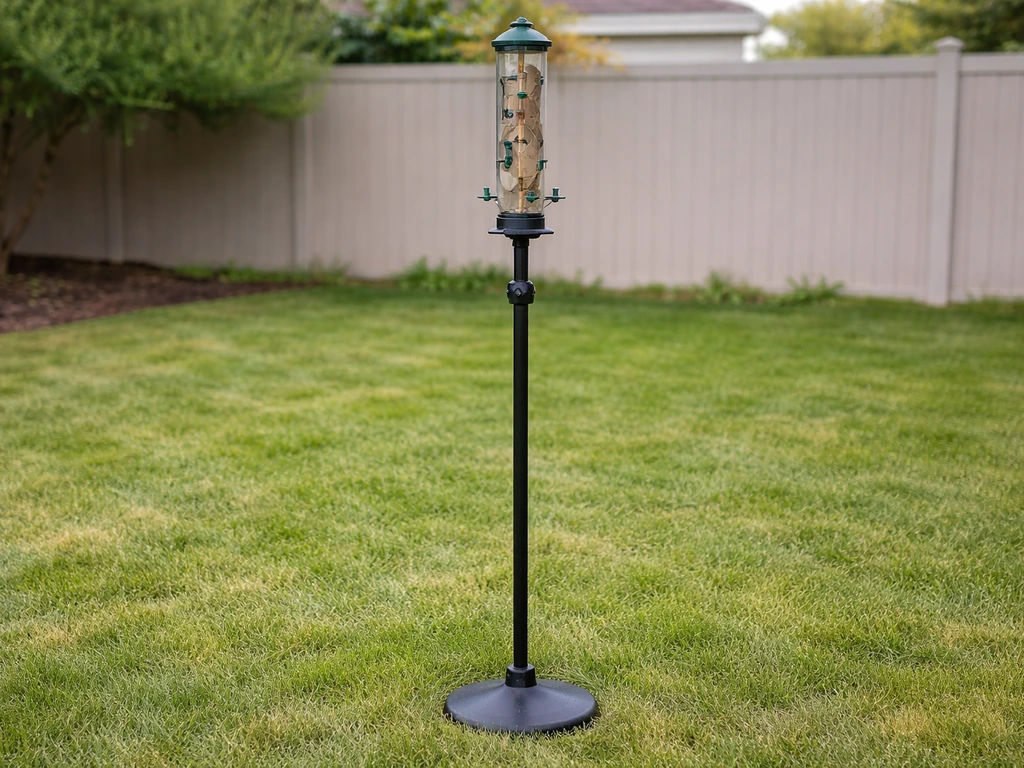
This is the gold standard for no-tree setups. A metal or wooden post sunk into the ground (or weighted into a ground stake socket) gives you complete placement freedom. If you’re choosing a freestanding option, learning how to mount a bird feeder on a pole will help you pick the right height, clearance, and stability features.
If you want to use a freestanding setup, review how to mount a bird feeder on a pole so the height and stability are right. If you’re using a Netvue model, follow the manufacturer’s mounting steps for your specific feeder base and bracket style how to mount netvue bird feeder.
Shepherd's hook poles are the most popular version: they're inexpensive (typically $15 to $40), come in heights from 5 to 8 feet, and require no tools beyond a rubber mallet. For heavier feeders or windier yards, a 4x4 wooden post set in concrete is more stable and can support multiple hooks or an arm bracket.
The big advantage of any freestanding pole is that you can add a squirrel baffle below the feeder, which is much harder to do effectively from a tree branch.
Deck railing clamps and hooks
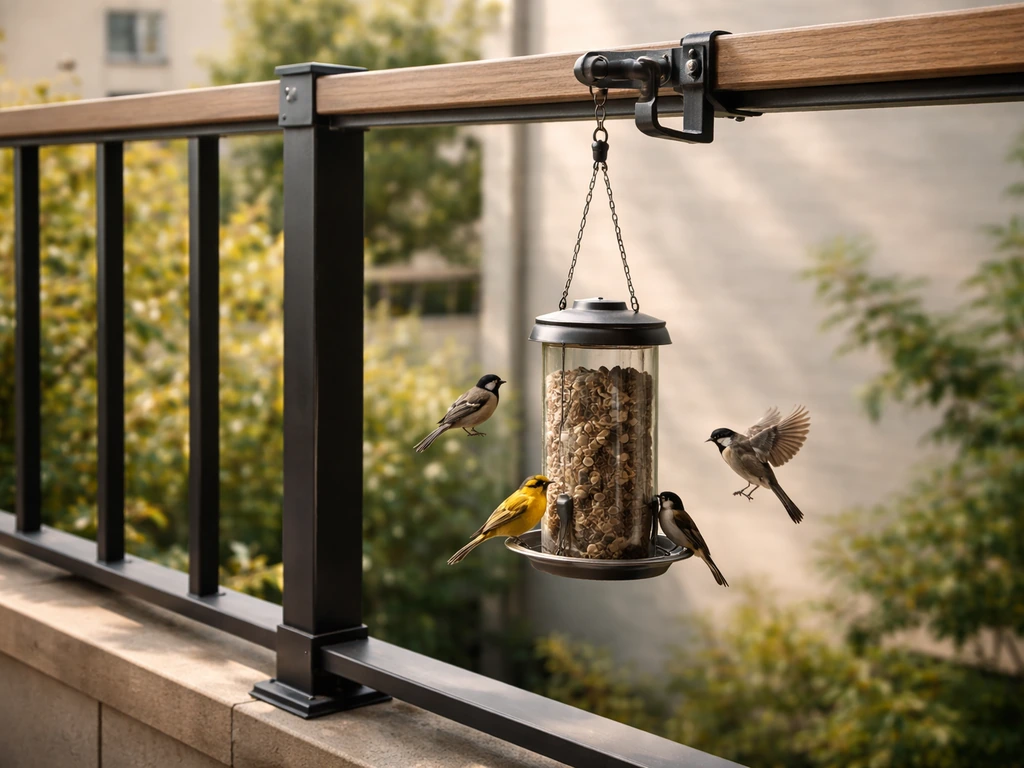
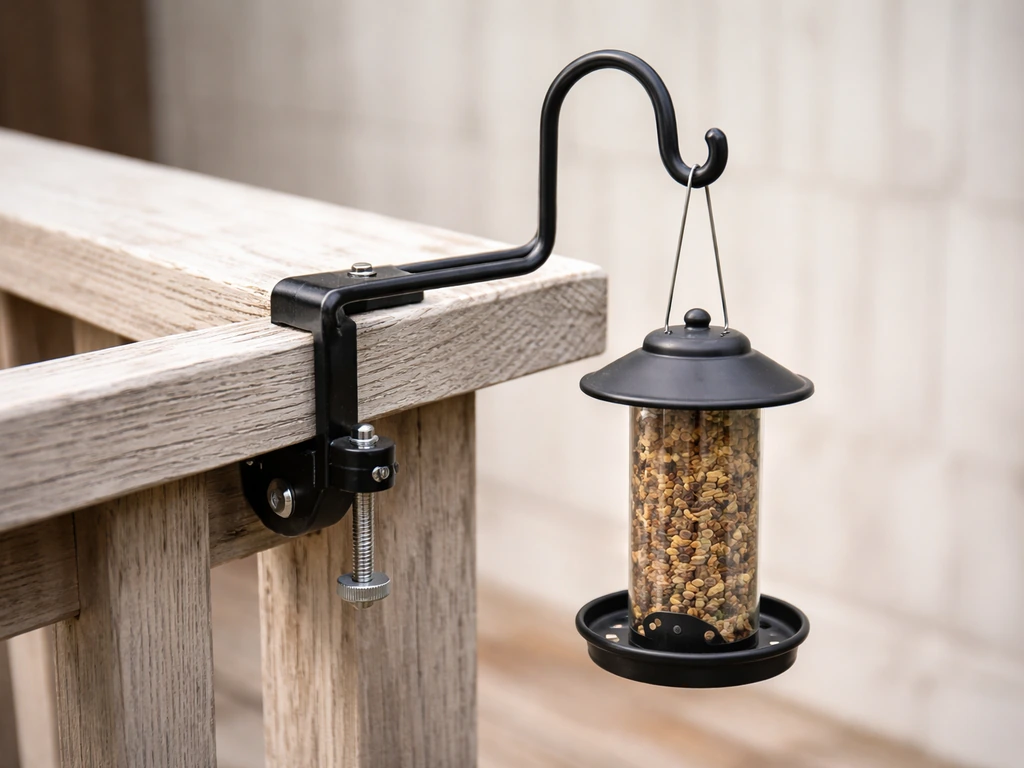
If you have a deck or porch railing, a clamp-on hook or bracket is one of the fastest setups you can do in under ten minutes. Commercial clamp-on deck hooks are rated for specific weight limits, with many models handling up to 40 pounds, which is far more than any feeder you'll fill with seed. Look for a model with a tightening bolt and a swivel head so the feeder hangs plumb even if the railing isn't perfectly level. Some clamp-on pole kits even include decorative branches so you can hang multiple feeders from one clamp. For extra security, a few manufacturers recommend drilling a small pilot hole through the clamp foot and driving a screw into the railing cap.
Fence mounting
A wooden privacy fence or chain-link fence can work well, especially in smaller yards. For wood fences, a J-hook screwed directly into the top rail gets the feeder out away from the fence face so birds have approach room. A shepherd's hook stake can also be driven into the ground directly alongside a fence post for extra stability. Chain-link fences can accommodate S-hooks threaded through the wire, though the feeder will swing more freely, which some birds don't mind but which makes squirrel-proofing trickier.
Wall brackets and eave hooks
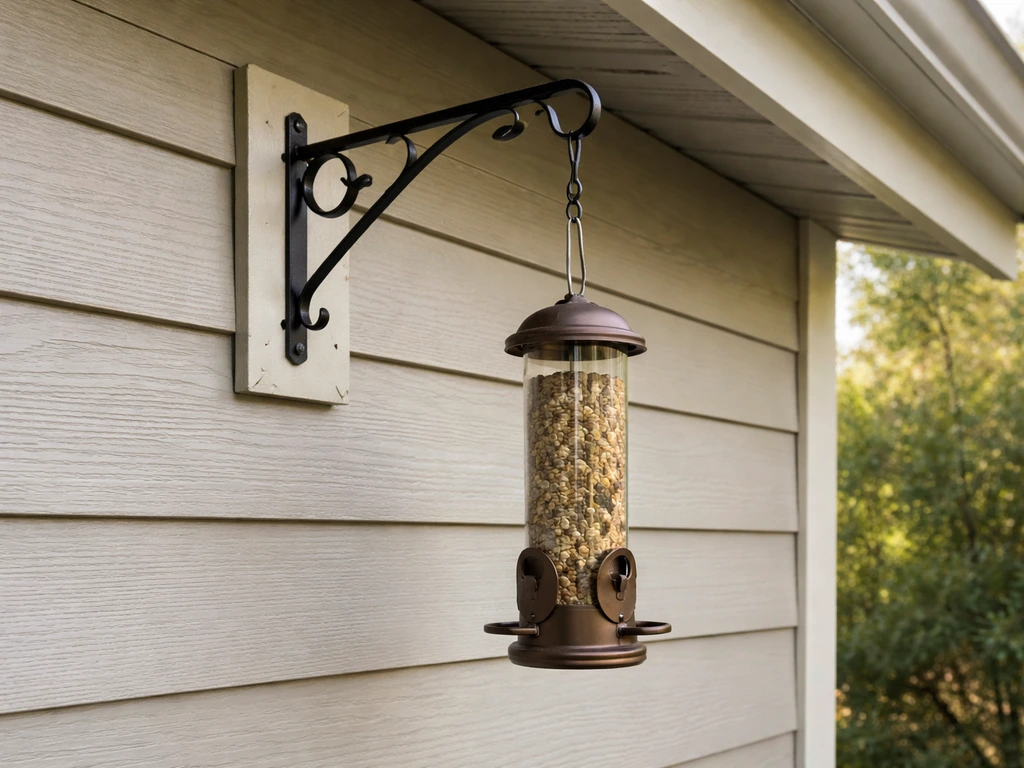
A bracket screwed into a wooden exterior wall or the fascia board under your eaves can extend a feeder 12 to 24 inches out from the structure. This works well for houses with wide eaves because the overhang provides natural weather protection. Use a bracket rated for outdoor use (powder-coated steel or stainless) and anchor it into a stud or use appropriate wall anchors if you're going into siding only.
Keep in mind that wall-mounted feeders are close to the house by nature, so the window-distance rules (covered below) matter a lot here. If you don’t have a tree or your setup is closer to the house, mounting a feeder on a pole is a practical alternative mount a bird feeder on a pole.
If you’re hanging the feeder outside a window, follow the 3-30 rule so birds don’t hit the glass when they launch toward the seed window-distance rules.
Balcony rails and tension rods
Apartment and condo dwellers have real options too. Clamp-on balcony hooks (similar to deck hooks) attach to the top rail without drilling. Suction-cup window feeders are another route if the railing isn't suitable. If you're working with a balcony specifically, there's a lot more to cover on spacing and weight limits, so that situation is worth its own deep dive.
Where to put the feeder (distance, visibility, shelter)
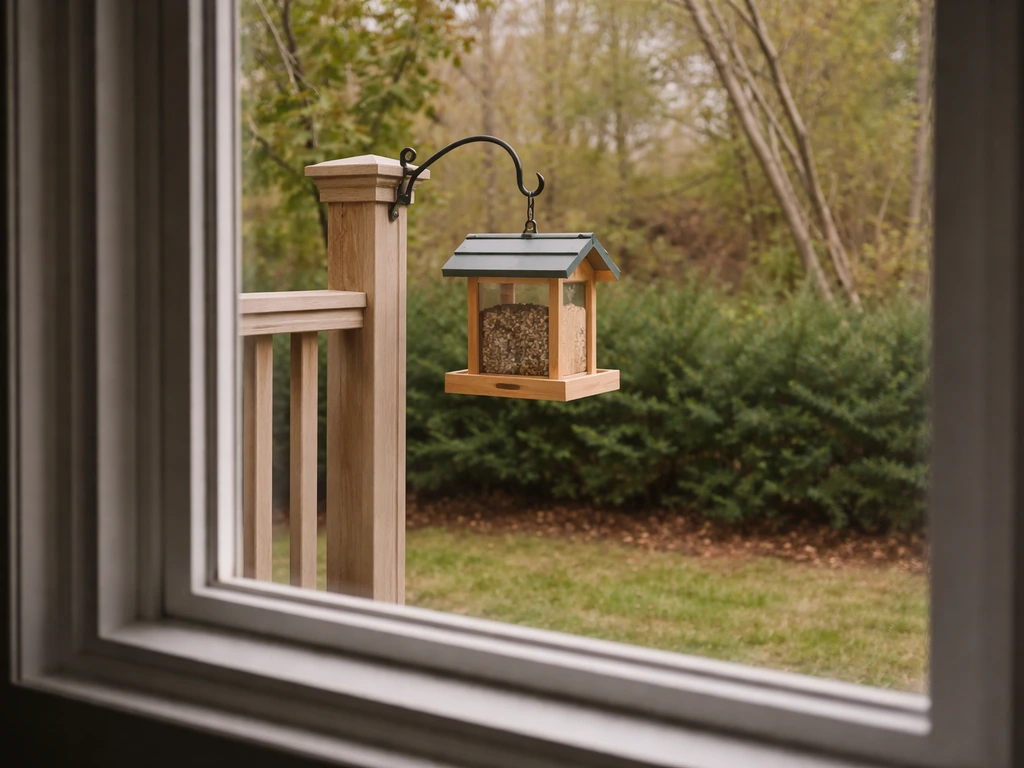
Placement is where most people get it wrong, even when the physical mounting is solid. The location affects which birds visit, how safe they are from windows and predators, and how much maintenance you'll end up doing.
The 3-30 rule for windows
This is the single most important placement rule, and it comes from Audubon as well as the U. S. Fish and Wildlife Service: [place your feeder either within 3 feet of a window or more than 30 feet away from one](https://www. ornithology.
org/birdwatching/birds-in-the-backyard/birds-and-windows). The logic is straightforward. [Within 3 feet](https://wdfw. wa.
gov/species-habitats/living/habitat-at-home/songbird-habitats), a bird that does flush toward the glass doesn't have enough room to build dangerous speed. Beyond 30 feet, the birds are far enough from the house that window reflections aren't a flight path issue. The dangerous zone is everything in between, roughly 3 to 30 feet, where birds can get up to full speed and hit a window hard enough to be fatal.
If the only spot you have is in that middle range, adding window decals or exterior screens on nearby windows can reduce the risk significantly.
Open sightlines and nearby cover
Birds want to be able to see predators coming, so a feeder in a completely open space with no escape cover nearby will get ignored. Aim for a spot where there's a shrub, hedge, brush pile, or dense perennial bed within about 10 feet. That gives birds a quick shelter to dash to if a hawk shows up.
At the same time, the immediate area around the feeder should be open enough that you can see the birds from inside, and so cats or other ground predators can't sneak up invisibly. If you want to monitor what’s visiting, you can mount a bird feeder with a camera so you get clear footage without moving the feeder setup.
A feeder hung 6 to 8 feet off the ground in an open area with a shrub about 8 feet away is a solid target setup.
Distance from foot traffic and pets
Keep feeders at least 10 feet from regular foot traffic paths, doors, and pet areas if you can. Birds will habituate to predictable human activity, but surprise movement (a door suddenly opening, a dog rushing out) will spook them repeatedly and reduce visits. If a deck or patio is your only option, position the feeder toward the quieter end and give it a few weeks for birds to learn the routine.
How to hang it safely and securely
A feeder that sways, slips, or falls isn't just annoying, it's a mess (spilled seed attracts rodents) and potentially dangerous to the birds. Here's how to get the attachment right. If you want the easiest path, follow this step-by-step guidance on how to attach a bird feeder to a tree.
Hardware choices
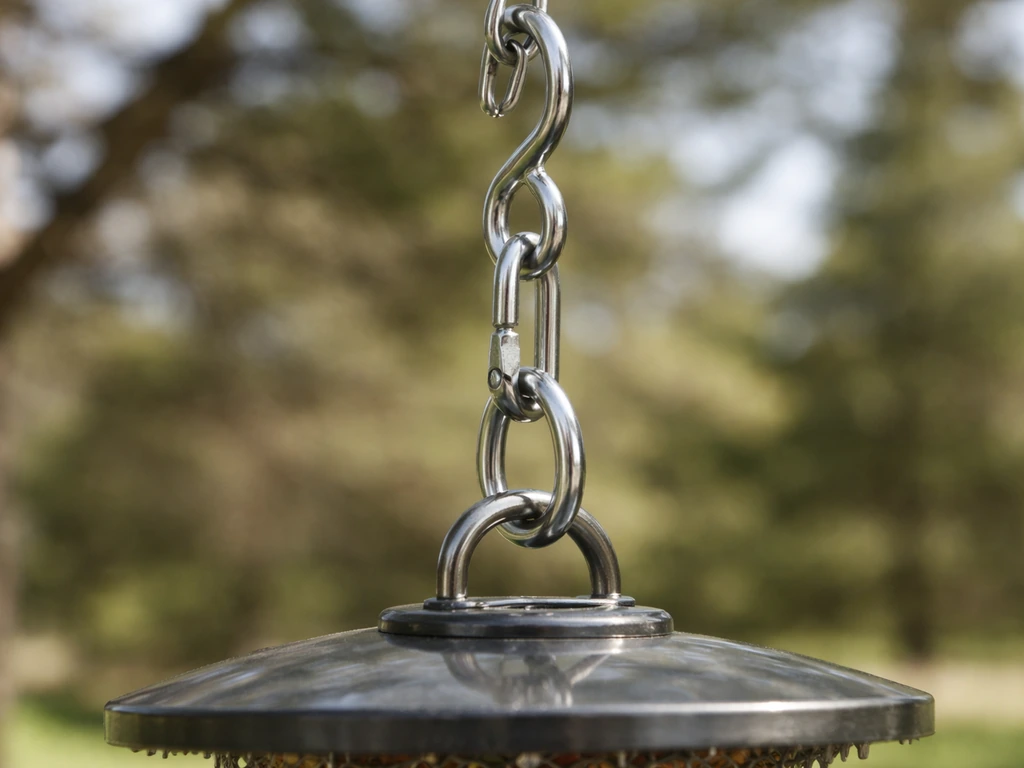
Use stainless steel or zinc-plated hardware for anything that will live outdoors year-round. S-hooks are convenient but should be squeezed partially closed with pliers so the feeder can't pop off in wind. Snap hooks (carabiners) are even better because they lock positively. For hanging cord, avoid plain twine or nylon rope: both rot and degrade in UV light. Stainless steel cable, coated wire rope, or chain are the most durable options. If you prefer something softer and adjustable, look for UV-resistant braided polyester rope rated for outdoor use.
Weight and load considerations
Feeders are heavier than they look when full. A standard tube feeder holds about 1 to 2 pounds of seed, but a large hopper or platform feeder can hold 5 to 10 pounds, plus the feeder's own weight. Add a squirrel baffle (another 1 to 3 pounds) and you need a mount rated for at least 15 to 20 pounds minimum, with a good safety margin built in. Deck railing clamps rated at 40 pounds are comfortably within that range for most setups. For wall brackets, check the manufacturer's load rating and anchor into studs whenever possible.
Reducing swing and sway
Hanging a feeder on a long, loose chain in a gusty yard is a recipe for it to swing constantly, spill seed, and stress the birds. Shorter hangs are more stable: keep the drop between the hook and the feeder's hanger loop to 6 to 12 inches if wind is a concern in your yard. You can also add a small rubber washer or cut a short piece of garden hose and thread the wire through it to create a friction damper at the hook point. For pole setups, choose a pole with a wide, sturdy base or drive it deeper into the ground.
Step-by-step setups for the most common situations
Fence-mounted feeder
- Choose a section of fence that gets morning sun and is at least 10 feet from a window or meets the 3-foot rule.
- Select a powder-coated J-hook or arm bracket rated for outdoor use.
- Pre-drill a pilot hole into the top rail of the fence at the chosen spot to avoid splitting the wood.
- Drive a 3-inch exterior screw through the bracket into the rail. For chain-link, use a heavy-duty S-hook through the top rail wire.
- Hang the feeder using a snap hook or squeezed S-hook, keeping the drop to 8 to 10 inches.
- Check that the feeder hangs level and isn't resting against the fence face — it should clear the fence by at least 6 inches so birds can approach from both sides.
Deck or balcony rail setup
- Measure the thickness of your railing cap to make sure the clamp will fit (most clamp-on hooks accommodate 1.5 to 2.5 inch rails).
- Slide the clamp-on hook or pole kit onto the railing at the quieter end of the deck.
- Tighten the bolt firmly with a wrench — hand-tight is usually not enough.
- For extra security, drill a small pilot hole through the clamp foot into the railing cap and drive a short screw through it.
- Hang the feeder from the hook using a locking snap hook.
- Check the weight rating on the clamp (look for 40 lb minimum) and make sure your filled feeder and baffle combination stays comfortably under it.
Ground stake or shepherd's hook
- Choose a spot in the yard that meets the window-distance rule and has nearby low shrubs or cover within 10 feet.
- Soften the ground with water if the soil is hard or clay-heavy — this makes driving the stake much easier.
- Drive the shepherd's hook or ground socket straight down using a rubber mallet. Aim for at least 10 to 12 inches of stake depth for stability.
- For heavier feeders or windy yards, use a two-piece pole system with a wider base spike and lock the sections together with the included bolt.
- Add a squirrel baffle to the pole below the feeder (details in the pest-proofing section below).
- Hang the feeder and confirm the pole doesn't rock when you push it sideways. If it does, drive it deeper or add a collar stake at the base.
Patio or eave wall mount
- Locate a stud in the exterior wall or fascia board using a stud finder.
- Hold the bracket against the wall at the target height (typically 5 to 6 feet from the ground) and mark the screw holes.
- Pre-drill pilot holes and drive 3-inch exterior-grade lag screws or structural screws into the stud.
- If you can't hit a stud, use toggle anchors rated for at least 50 pounds in the wall material you're working with.
- Attach the hook or arm to the bracket and hang the feeder.
- Verify the feeder clears the wall by at least 12 inches so birds have approach and escape room on all sides.
Weather and pest-proofing without a tree
Squirrel and raccoon deterrence
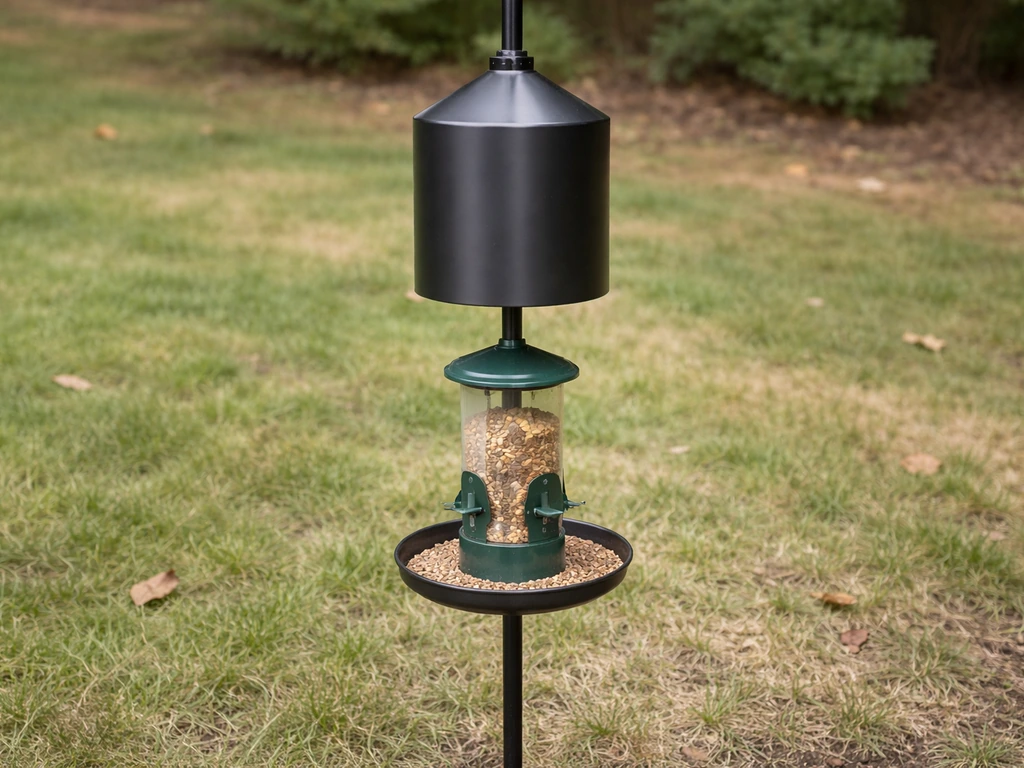
Here's the honest truth: if you hang a feeder on a pole and add a proper baffle, you can get very close to a squirrel-proof setup. Audubon specifically recommends a pole-plus-baffle combination as one of the most effective approaches available. A dome-shaped squirrel baffle mounted on the pole below the feeder (about 4 to 5 feet off the ground) blocks squirrels from climbing up.
If squirrels are jumping from a fence, structure, or the ground in a running leap, the baffle also disrupts their landing. The Washington Department of Fish and Wildlife recommends dome-shaped baffles mounted above and below the feeder for maximum coverage.
The key is placement: the baffle needs to be at least 4 feet off the ground and the feeder needs to be at least 10 feet away from any jump-off point (fence, wall, post, or structure) that a squirrel could use as a launching pad.
Managing seed spillage
Spilled seed on the ground draws rodents, and rodents draw larger predators closer to your yard and pets. The Florida Fish and Wildlife Conservation Commission specifically flags ground spillage as a key risk factor. To minimize it: use feeders with catch trays to collect shells and dropped seed, choose no-mess seed blends (hulled sunflower chips, shelled peanuts) that produce less debris, and rake or sweep the area under the feeder every week or two. If you're mounting to a deck or patio, a drip tray hung below the feeder is especially useful because rodents can access hard surfaces more easily than open ground.
Wind and weather durability
Without a tree canopy to buffer wind, pole-mounted and fence-mounted feeders take the full brunt of storms. Choose feeders with secure lid latches (not just friction-fit lids) and seed ports that close when not in use. In areas with heavy wind or snow, bring feeders inside during major storms rather than leaving them to swing and potentially break the mount. For deck and rail setups, check the clamp tightness monthly since temperature swings cause metal to expand and contract, which can loosen hardware over time.
| Mounting Method | Best For | Squirrel-Proof Potential | Estimated Cost | Stability in Wind |
|---|---|---|---|---|
| Shepherd's hook / ground pole | Open yards, lawn areas | High (with baffle) | $15–$40 | Moderate (drive deep) |
| Deck railing clamp | Decks, porches, patios | Moderate (jump risk) | $20–$50 | High (bolt-tightened) |
| Wall bracket / eave hook | Close to house, small yards | Low (structure nearby) | $10–$30 | High (screwed in) |
| Fence J-hook or arm | Privacy fences, perimeter yards | Low (fence is a highway) | $8–$25 | Moderate |
| Freestanding 4x4 post | Permanent installs, heavy feeders | High (with baffle) | $40–$100+ | Very High |
What to do when things go wrong
The feeder keeps shifting or falling
If a shepherd's hook keeps leaning, the stake isn't deep enough or the soil is too soft. Try driving it another 4 to 6 inches deeper, or switch to a ground socket system that lets you pour a small concrete collar around the base. For clamp-on deck hooks that keep sliding along the railing, make sure the tightening bolt is wrench-tight (not just hand-tight) and add that pilot-hole screw for insurance. If a wall bracket is pulling away from the siding, you're not in a stud, add a backer board across two studs and remount to that.
Birds aren't showing up
Give it time first: new feeders in new locations can take two to four weeks for local birds to discover, especially if there are no trees nearby that birds already use as staging perches. You can speed things up by adding a birdbath nearby (water is a powerful attractor), placing a few natural perches close to the feeder (a simple branch stuck in the ground counts), and making sure you're using the right seed for your region. Black-oil sunflower seed attracts the widest variety of backyard birds in North America. Also double-check that the feeder is genuinely visible from open sky, not tucked so close to a wall or fence that birds can't spot it from above.
The feeder swings too much and birds avoid it
Constant motion makes birds nervous, and a wildly swinging feeder in gusty conditions will see far fewer visitors than a stable one. Shorten the hang length, add a friction damper at the hook point (a piece of old garden hose threaded on the wire works well), or switch to a feeder designed for windy conditions with a wider, weighted base. Deck and fence mounts are generally more stable than ground poles in high-wind areas simply because the structure itself absorbs most of the movement.
You're getting squirrels no matter what
First, check your clearances: the feeder needs to be more than 10 feet horizontally from any jump-off point and at least 4 feet off the ground. If those distances are correct and squirrels are still getting there, they're likely climbing the pole. Add a large dome baffle (at least 15 inches in diameter) directly on the pole below the feeder, positioned about 4 to 5 feet from the ground. If you're on a deck where jump distances are hard to control, consider a weight-sensitive feeder that closes the ports under a squirrel's heavier weight, they work well in constrained spaces where baffles can't do the full job.
Next steps once you're set up
Once your feeder is up and birds are visiting, the main ongoing tasks are cleaning (every one to two weeks, more often in humid weather), refilling before the feeder goes completely empty (empty feeders train birds to stop checking), and doing a hardware check at the start of each season. A little time now on the mounting side saves a lot of headaches later. If you find yourself wanting to expand beyond one feeder, a multi-arm pole system lets you hang three or four feeders from a single ground stake, which is a great way to attract different species without cluttering your yard with separate setups.
FAQ
Can I hang a bird feeder on a balcony or railing if I cannot drill holes?
Yes, clamp-on or hook systems are typically the safest no-drill route. Still verify the clamp rating for the combined load (feeder plus filled seed, plus any baffle) and install the feeder so it hangs plumb from a swivel head. If your railing is decorative metal or hollow, avoid clamping at the thinnest section and choose a model with wide contact area.
What height is best if I want to reduce squirrels but still bring in small birds?
A good starting point is mounting the feeder 6 to 8 feet off the ground in an open area with nearby cover. If squirrels are persistent, add a dome baffle mounted on the pole 4 to 5 feet high and keep the feeder at least 10 feet away from any squirrel launch point (fence tops, walls, posts). For very small birds, you may need slightly lower placement, but keep the baffle clearance so squirrels cannot reach above it.
My feeder is close to a window, what should I do if I only have a spot in the 3 to 30 foot danger zone?
Use multiple risk reducers together. Place the feeder on the side of the window that birds can approach from without a clear straight line to the glass, add exterior window decals or screens to break up reflections, and keep the nearby area open so birds can see you and nearby predators. Also avoid setting the feeder right next to window trim where birds can line up for a direct dash.
How do I keep a fence-mounted feeder from swinging so much in wind?
Shorten the hanging distance between the hook and the feeder, and use hardware that locks rather than loose S-hooks. If you use S-hooks, partially close them so they cannot pop open in gusts. For chain-link fences, minimize slack and consider a setup with a tighter connector and a feeder designed for windier locations.
What should I do if the hardware loosens after a few weeks on a deck or eave?
Do a quick tightening check after temperature swings start (early spring and late fall are common loosening times). For clamp-on mounts, wrench-tighten the bolt rather than relying on hand tightness, and confirm the clamp contacts a stable section of the railing cap. If a wall bracket is pulling away from siding, it usually means no stud support, so switch to anchoring through studs or add a backer board across studs.
Do I need a catch tray, and how much does it really matter?
It matters because seed spillage attracts rodents, and rodents can increase predator activity near pets. If your setup is on a deck, drip or catch trays are especially valuable since dropped seed and shells land on hard surfaces. Choose feeder designs with built-in collection trays when possible, and rake or sweep under the feeder every one to two weeks.
Can I use rope or string to hang the feeder if it looks secure?
Avoid plain twine or untreated nylon rope outdoors. UV exposure and weather cause it to degrade, which increases the risk of sudden loosening. Use stainless hardware with durable hanging material such as coated wire, chain, or UV-resistant braided outdoor rope that is rated for outdoor load conditions.
What seed approach works best when birds are slow to discover the new feeder?
Give it time (often 2 to 4 weeks) but also increase attractiveness. Use a region-appropriate mix, black-oil sunflower is a reliable all-purpose choice for many areas, and consider placing a birdbath nearby. Make sure the feeder is visible from open sky, not hidden behind a fence corner or tucked against a wall where birds cannot spot it while flying.
If squirrels still get to the feeder even with a baffle, what is the most common mistake?
Most often it is placement relative to launch points. The baffle must be mounted on the pole about 4 to 5 feet high, and the feeder should be positioned at least 10 feet away from any jump-off surface they can use (fence top, wall, nearby post). If the feeder is too close to a structure or the baffle sits too low, squirrels can reach around or jump directly onto the feeder.
How often should I clean and inspect the feeder setup?
Clean the feeder every 1 to 2 weeks, more frequently in humid weather, and refill before it is completely empty so birds do not stop visiting. In addition, do a hardware check at the start of each season and after major storms, especially for clamps and wall mounts where wind, vibration, and thermal expansion can loosen components.
Next Article
How to Hang a Bird Feeder on a Balcony or Patio
Step-by-step ways to hang a balcony or patio bird feeder using safe hooks, brackets, cords, or railing mounts.