You can absolutely hang a bird feeder on a balcony or patio, and you don't need a yard, a tree, or any special tools to do it. The safest and most effective approach depends on what your balcony structure looks like, but in most cases a railing-mounted bracket or a ceiling hook will get you sorted in under 30 minutes. If you’re looking specifically for a house setup, the same mounting ideas—like hooks, brackets, and safe placement—apply how to hang bird feeder from house. Before you grab anything off a shelf, though, there are two things worth checking first: your weight limits and your lease or HOA rules. More on both below.
How to Hang a Bird Feeder on a Balcony or Patio
Marcus Brennan
18 Apr 2026
Check your rules before you hang anything
This isn't the most exciting place to start, but it can save you a fine or a forced removal later. Some HOA and condo documents outright ban bird feeders anywhere on the property. Others specifically prohibit attaching anything to a balcony railing or ceiling. If you're renting, your lease may have similar language about alterations or attachments. Pull out your lease or HOA rules, search for 'bird feeder' or 'balcony,' and spend five minutes checking before you invest in hardware. If you’re deciding between a tree-mounted option and a balcony or patio setup, the same basics—secure mounting, proper height, and easy access—still apply how to hang bird feeders from trees. If the rules are silent on feeders, you're almost certainly fine. If they're not, a freestanding floor-mounted pole placed inside the balcony footprint is often your workaround since it doesn't attach to any building surface.
Best balcony and patio setup for a bird feeder
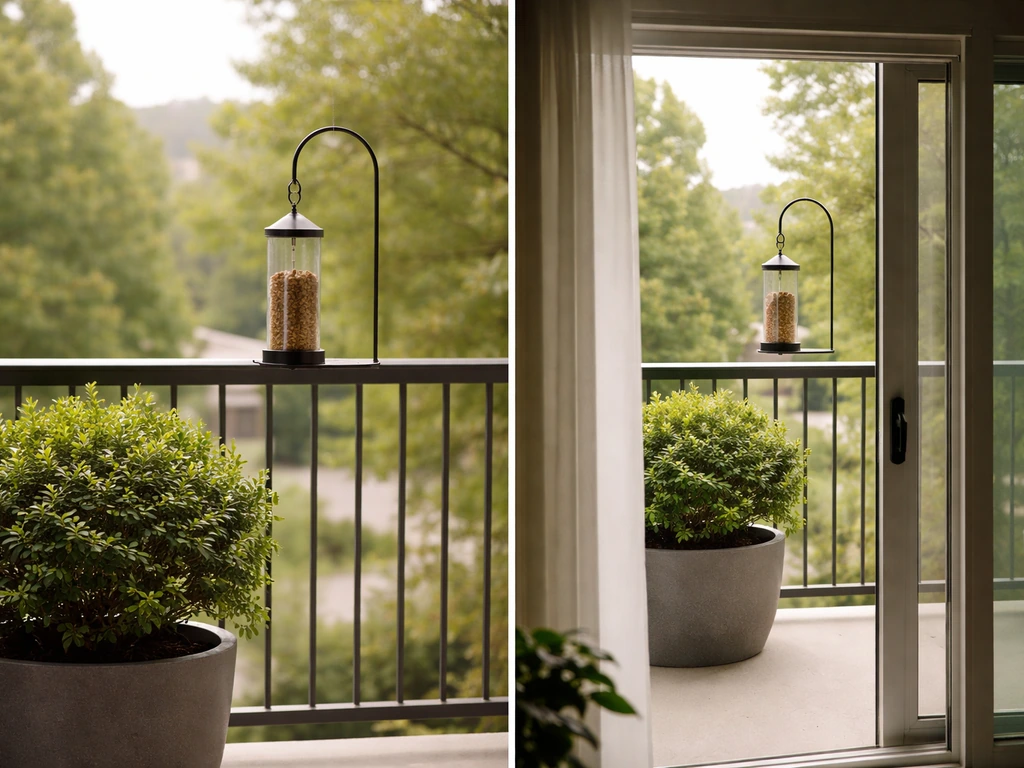
The ideal balcony feeder setup gives birds a clear flight path in, some nearby shelter to perch and watch from, and keeps the feeder visible from inside your home so you can actually enjoy watching them. A covered balcony (one with a roof or overhang) is genuinely better than an open one. It protects the seed from rain, slows down mold, and gives birds a sense of security. If your balcony is fully open to the sky, that's still workable, but you'll want to lean toward a feeder with a wide roof or canopy to shed water.
For patios at ground level, the setup considerations are slightly different. You have more flexibility: a pole mounted in a weighted base, a shepherd's hook driven into a nearby garden bed, or a bracket attached to a fence post all work well. The main patio-specific challenge is keeping the feeder far enough from low cover (dense shrubs, fences) that cats can't use it as a launching pad. A clearance of about 10 feet from dense ground-level cover is the commonly cited guideline.
Whether you're on a balcony or patio, position the feeder so you can reach it easily for refilling and cleaning. A feeder that's awkward to access tends to get neglected, and neglected feeders grow mold and attract pests. If you have to lean dangerously over a railing to refill it, move it closer to the door.
Choosing the right hanging method
This is where most people get stuck because there are several options and the right one really depends on what your balcony looks like. Here's a straightforward breakdown of the four main approaches.
Ceiling or overhead beam hooks
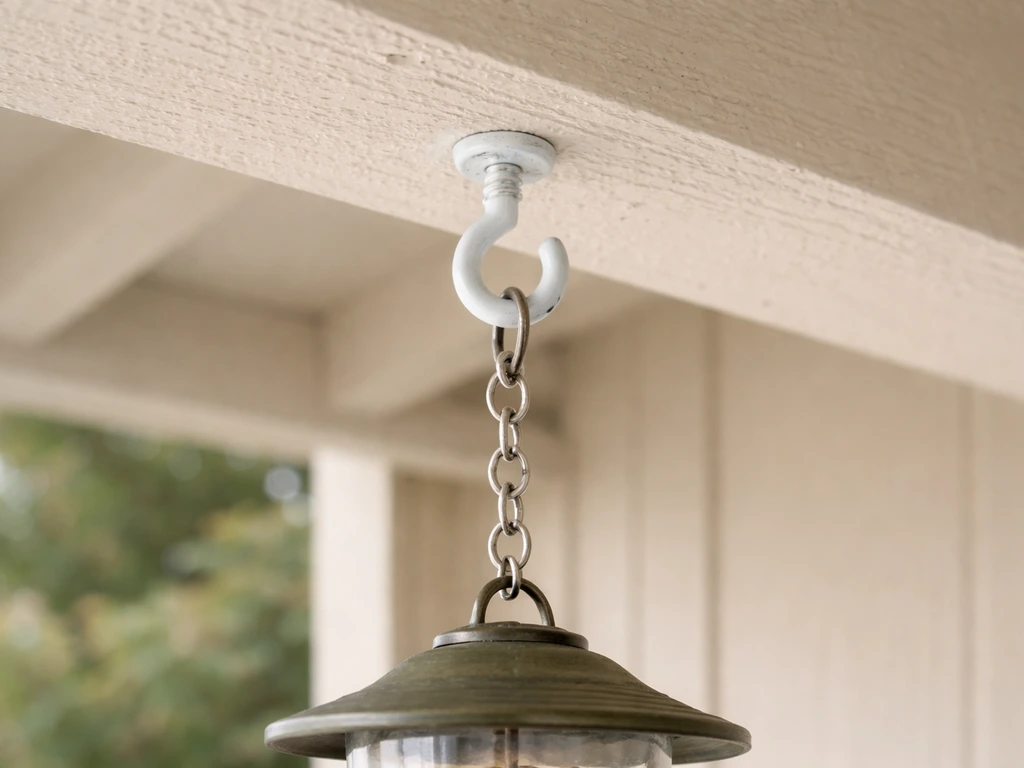
If your balcony has a solid ceiling or an overhead beam, a screw-in cup hook or a swivel hook is the cleanest solution. Use a hook rated for at least 3 to 5 times the weight of your filled feeder. A typical tube feeder filled with seed weighs 3 to 5 pounds, so a hook rated for 15 to 20 pounds gives you a comfortable safety margin. Pre-drill a pilot hole to avoid splitting wood, and drive the hook into solid material, not just drywall or a thin soffit panel. This method keeps the feeder hanging freely, which birds prefer, but it does require putting a small hole in the ceiling, so check your lease first.
Railing mounts and clamp brackets
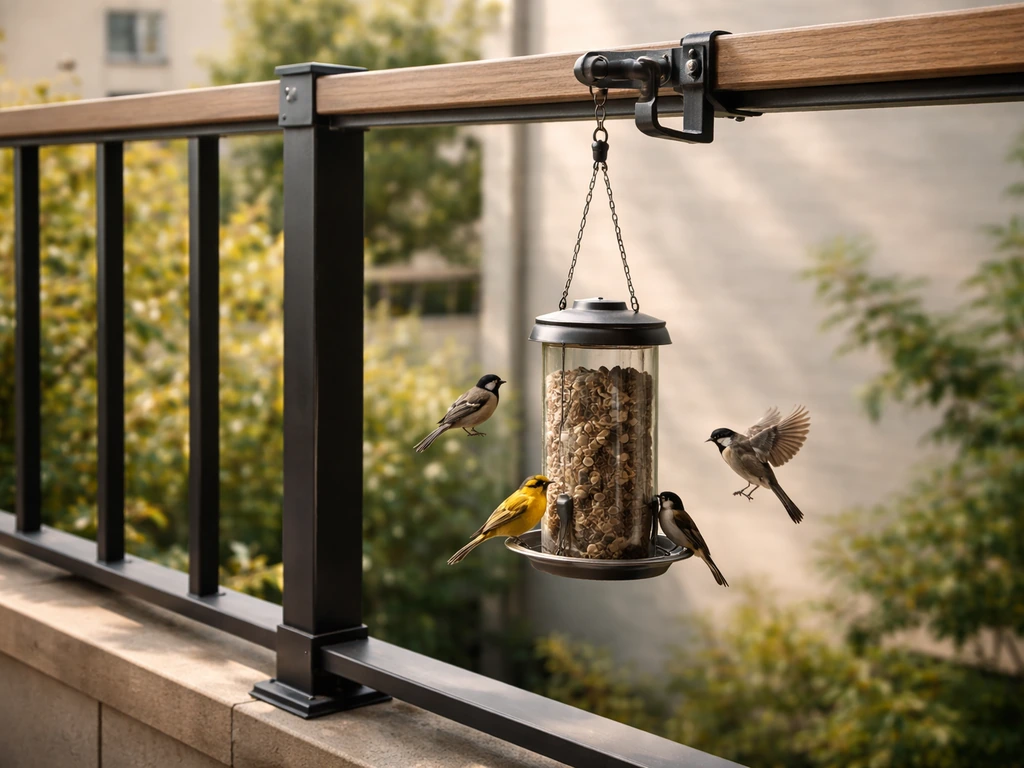
A railing-mounted bracket is the go-to solution for apartments and condos where you can't drill into the building. These clamp onto the top of a railing with a set screw or bolt and extend an arm outward so the feeder hangs outside the railing or just above it. Look for brackets that fit your railing width (most standard balcony railings are 1.5 to 2 inches wide) and have a rust-resistant coating since they'll live outside year-round. The main limitation is weight: most railing brackets are designed for hanging baskets and are rated for 10 to 15 pounds, which is plenty for a single feeder but not for a large, heavy platform feeder. Tighten the clamp firmly and check it every few weeks since vibration from wind can loosen set screws over time.
Cable or cord suspension
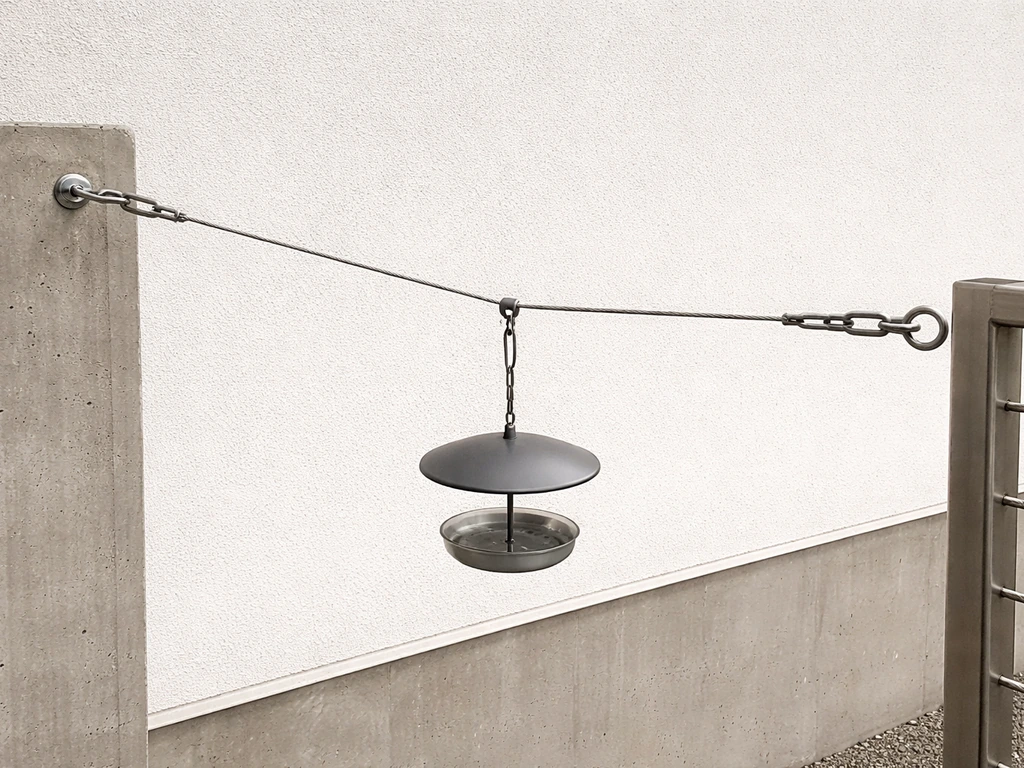
Running a cable or strong cord between two anchor points (like two eye bolts on opposite walls, or between a wall anchor and a railing post) lets you hang a feeder at any point along the line. This works well on covered patios with two solid walls or posts. Use braided steel cable or UV-resistant paracord rather than regular twine, which weakens quickly outdoors. A cable setup is also easier to adjust for height. The downside is that it requires at least two solid anchor points and can sway significantly in wind if the line isn't kept taut.
Freestanding poles and weighted bases
If you can't attach anything to the building, a shepherd's hook or feeder pole in a heavy weighted base is the no-drill, no-lease-violation option. Purpose-built balcony pole bases (sometimes called planter pole bases) are designed to sit on a flat surface and use weight to stay stable. Fill the base with sand, gravel, or water according to the manufacturer's instructions. These work best on large balconies and patios where there's enough floor space to position the base away from foot traffic. On a small apartment balcony, a freestanding pole can feel cramped and tip risk goes up in strong wind, so it's not always the ideal first choice.
| Method | Best For | Drilling Required | Weight Capacity | Wind Resistance |
|---|---|---|---|---|
| Ceiling/beam hook | Covered balconies with solid overhead | Yes | High (15–30 lbs+) | Good if cord is short |
| Railing clamp bracket | Apartments, no-drill balconies | No | Moderate (10–15 lbs) | Fair, check tightness often |
| Cable/cord suspension | Covered patios with two anchor points | Yes (anchors) | Moderate (varies) | Poor if line is loose |
| Freestanding pole/base | Large patios, no-attachment rules | No | High (feeder only) | Poor in high wind |
How high to hang it and where to place it for bird traffic
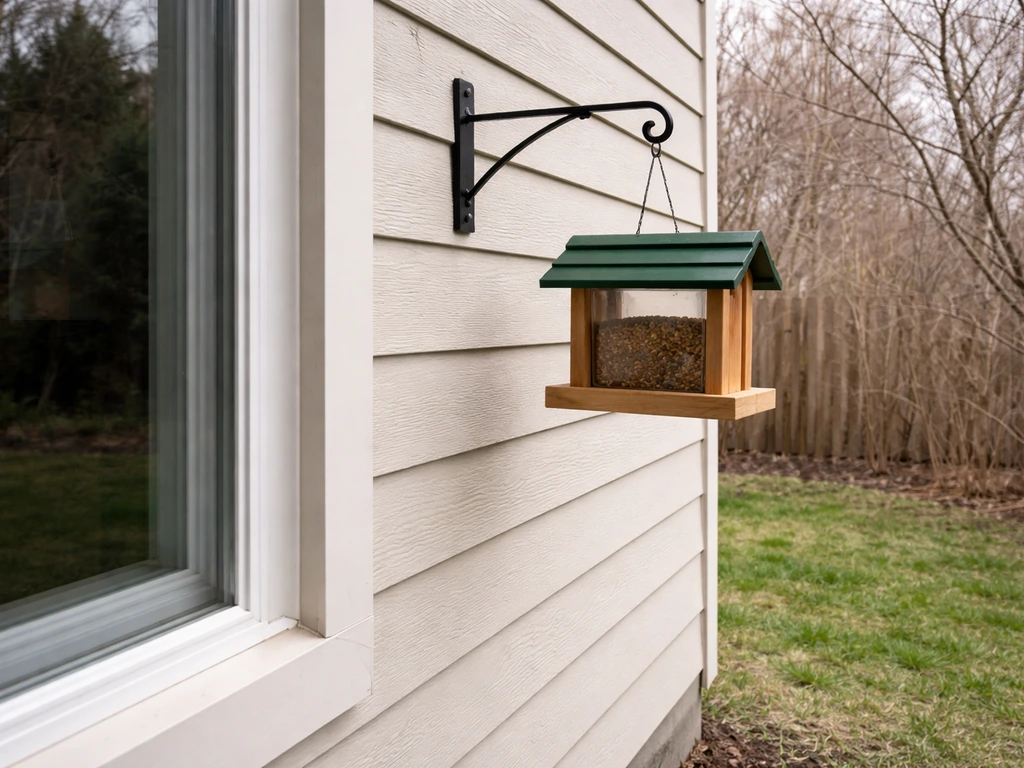
Height matters for two reasons: bird safety and predator access. The general rule is to hang a feeder at least 5 feet off the ground to keep it out of easy reach of cats and other ground-level predators. On a balcony, this is rarely a problem since the balcony floor itself is already elevated, but it's worth keeping in mind on ground-floor patios. For balconies, hanging the feeder so the bottom of it sits at roughly eye level when you're seated inside (typically 4 to 5 feet above the balcony floor) is a good practical target. It puts the feeder in easy view, makes refilling manageable, and keeps it in the birds' comfortable approach zone.
Distance from windows is the other placement factor people overlook. Birds flying toward a feeder that's right against the glass can hit the window on approach or departure. The U.S. Fish & Wildlife Service recommends placing feeders, bird baths, or houses no more than 3 feet from a window to reduce the risk of bird-window collisions blank" rel="noopener noreferrer">within 3 feet. Hang the feeder either very close to the window (blank" rel="noopener noreferrer">within 3 feet, so a startled bird doesn't build up enough speed to get hurt) or far enough away (more than 10 feet) that birds have time to veer. The 3-to-10-foot zone is actually the most dangerous for window strikes, so try to avoid placing the feeder there. If you're hanging feeders outside a window specifically for viewing, that's a different setup with its own considerations.
Position the feeder where birds have a clear line of sight and an approach path that doesn't require flying through a tight gap. Birds like to survey a feeding spot before landing, so placing the feeder near (but not immediately adjacent to) a railing post, a potted plant, or even a small decorative branch gives them a natural perch to pause on first. Feeders placed in completely open, exposed spots with no nearby landing perch tend to see less traffic, especially early on when birds are still discovering the location.
Securing the feeder safely against wind, sway, and weather
Balconies can be windier than they look from inside, especially on higher floors or on the corners of buildings. A feeder that swings and sways violently in the wind will lose seed constantly, stress any birds that try to use it, and put extra strain on whatever it's hanging from. There are a few things you can do to reduce sway without making the feeder completely rigid (some gentle movement is fine and natural).
- Keep the hanging cord or chain short. The longer the cord, the more the feeder pendulums. Aim for 6 to 12 inches of cord between the anchor and the feeder top, not 2 feet of swinging chain.
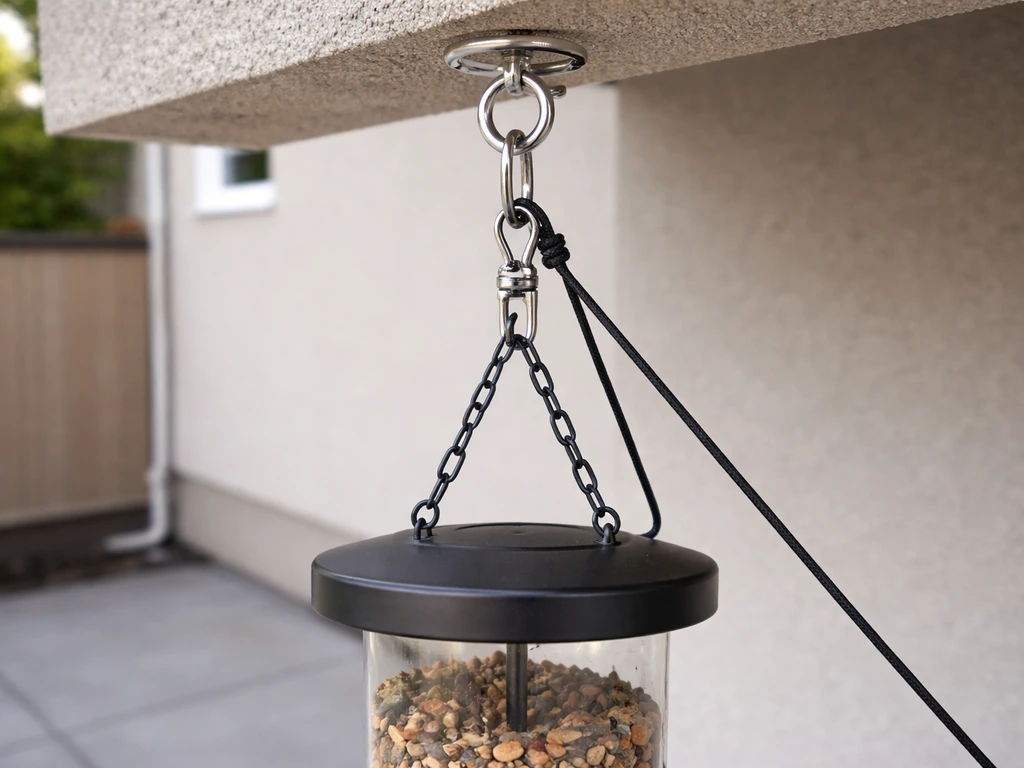
- Use a swivel hook at the attachment point. It lets the feeder rotate in wind rather than twisting and straining the cord.
- Choose heavier feeders over ultralight plastic ones. A bit of mass helps dampen movement. A filled metal or wood feeder sways less than an empty plastic one.
- On very windy balconies, add a stabilizer: a short length of thin cord tied from the bottom of the feeder to the railing below it, with just enough slack to allow normal movement but prevent violent swinging.
- For railing brackets, check the tightness of the clamp bolt monthly. Wind vibration works screws and bolts loose over time.
For weight and structural safety, know your limits. Most residential balconies are rated for 40 to 60 pounds per square foot of live load, so the feeder itself isn't the concern. The concern is the specific attachment point. A cup hook driven into solid framing can hold 30 or 40 pounds without complaint. The same hook in crumbly stucco or thin drywall will pull out. If you're uncertain about what your ceiling or wall material is, stick to railing clamp brackets or freestanding poles, which don't require structural attachment at all.
Weather-proof your hardware from the start. Use stainless steel, galvanized, or zinc-coated hooks and brackets. Standard steel will rust within one season in most climates, and a rusted bracket is both ugly and weaker. Nylon or vinyl-coated cable outlasts bare wire in sun and rain. If you live somewhere with freezing winters, check that any clamp bracket's tightening bolt hasn't seized up before the first hard freeze, when you may need to remove or adjust the feeder.
Pest-proofing and keeping the mess under control
Seed spillage is the number one complaint from balcony feeder users, and it's also what attracts pests. On a ground-floor patio, spilled seed brings squirrels, mice, and insects. On an upper-floor balcony, you're less likely to deal with squirrels, but pigeons, starlings, and insects (especially ants and wasps in warm months) can still become a problem. The fixes are the same regardless of floor height.
Reducing seed spillage
Use a tray or catch basin clipped below the feeder. Most tube and hopper feeders have an optional tray attachment designed for exactly this. It catches fallen seed, gives ground-feeding birds a bonus feeding spot, and keeps the balcony floor clean. Empty and rinse the tray every few days in warm weather to prevent mold. Alternatively, look for no-mess seed mixes: hulled sunflower seeds (sunflower chips), shelled peanuts, and Bark Butter-style spreads produce almost zero shell debris compared to standard sunflower seeds or millet mixes.
Dealing with squirrels (ground-floor and low patios)
If squirrels are reaching your patio feeder, a freestanding pole with a baffle (a dome-shaped or cylindrical guard placed on the pole below the feeder) is the most reliable mechanical solution. Position the pole at least 10 feet from any structure a squirrel could launch from, and place the baffle at least 4 to 5 feet off the ground. Hanging feeders from a ceiling hook or bracket well inside a balcony puts them out of squirrel range in most cases, since squirrels generally can't jump vertically to a hanging feeder from a railing unless the feeder is right there.
Ant and wasp control
Ants follow the hanging cord up to a feeder and can overrun it in warm weather. An ant moat (a small water-filled cup placed on the cord above the feeder) works extremely well and costs almost nothing to make from a plastic bottle cap. Keep the moat filled with water and add a drop of dish soap to break surface tension. For wasps, avoid nectar feeders or feeders with sugary mixes on an enclosed balcony. If wasps are a persistent issue, switch to seed-only offerings and keep the feeding area clean of any sweet residue.
Pigeons and starlings
Large, open platform feeders are an invitation to pigeons and starlings, which can quickly take over a balcony feeder and drive away smaller birds. Switching to a tube feeder with small ports, or a mesh feeder sized for finch-weight birds, does a lot to exclude the bigger, bolder species. Avoid throwing loose seed on the floor or railing: it basically acts as a pigeon magnet.
Step-by-step: hanging a bird feeder on your balcony or patio
Here's how to go from nothing to a working feeder setup in about 20 to 30 minutes. This walkthrough assumes a standard apartment balcony with a railing, but the steps adapt easily to a covered patio or a freestanding setup. If you’re planning a Netvue bird feeder, the mounting method matters—follow the steps for a balcony or patio setup that matches your railing or ceiling options how to mount netvue bird feeder. Once you’ve picked the mount, you can also plan for a simple camera placement so you can capture birds without disturbing them a covered patio.
- Check your lease or HOA rules for any restrictions on bird feeders or balcony attachments. If in doubt, ask your building manager before spending money on hardware.
- Choose your mounting method based on what you have: railing clamp bracket for apartments with no-drill rules, ceiling hook for covered balconies with solid overhead structure, or a weighted freestanding base if no attachment is possible at all.
- Pick up your hardware. For a railing clamp bracket: you need the bracket (sized to your railing width), a locking S-hook or carabiner, and stainless or galvanized hardware. For a ceiling hook: a screw-in swivel hook rated for at least 15 pounds, a drill with a small bit for the pilot hole, and a short length of chain or cord.
- For a railing bracket: slide the bracket onto the top of the railing, position the arm to extend outward over the outside edge, and tighten the clamp bolt firmly with a wrench or screwdriver. Give it a firm tug to confirm it's solid before hanging anything.
- For a ceiling hook: locate solid material (use a stud finder or tap and listen for a solid sound). Mark your spot, drill a pilot hole slightly smaller than the hook's thread diameter, then screw the hook in by hand until it's fully seated. Clip an S-hook or carabiner to the eye of the hook.
- Hang the feeder with a cord or chain no longer than 6 to 12 inches between the attachment point and the feeder top. Shorter means less sway.
- Fill the feeder with seed appropriate for the birds in your area. Black oil sunflower seed attracts the widest variety of backyard birds and works in almost any feeder style.
- Observe from inside for the first few days. If birds aren't finding it, add a small pile of seed on the railing or a nearby surface as a visual cue. Most birds find a new feeder within 3 to 7 days once they're used to the spot.
- Set a maintenance reminder: refill as needed, rinse the feeder and tray every 1 to 2 weeks, and inspect the bracket or hook monthly for loosening or rust.
What to do when things go wrong
If the feeder swings too much in the wind, shorten the cord and add a bottom stabilizer cord as described above. If birds aren't coming, be patient (a few days to a week is normal), add a visual seed cue on the railing, and make sure the feeder isn't placed right up against a wall with no clear approach angle. If you're getting excessive mess on the balcony floor, add a seed tray below the feeder and switch to hulled seed. If pigeons are dominating the feeder, swap to a smaller-port tube feeder. None of these problems are permanent, and most take one small adjustment to fix.
If you don't have a balcony at all and are working with just a window, that's a different setup worth looking into separately. If you’re trying to hang a bird feeder outside a window for easy viewing, keep extra space from the glass to reduce window strikes. And if you have outdoor space but no tree, a pole-mounted setup with a weighted base or ground anchor handles most of the same challenges covered here. If you’re trying to attach a bird feeder to a tree, you’ll want to use the right strap or hook type and hang it at a safe height away from predators. If you’re specifically trying to hang a bird feeder without a tree, a pole-mounted setup with a weighted base or a ground anchor is usually the simplest workaround no tree. The balcony approach just has the added constraint of working within a limited footprint and sometimes tighter attachment rules, which is exactly why getting the mounting method right from the start saves you from redoing it later.
FAQ
How do I hang a bird feeder on a balcony railing if I have a metal railing instead of wood?
Use a clamp-on bracket designed specifically for the railing material and thickness, then confirm the bracket’s clamp width matches your rail. Avoid drilling into metal unless you know the rail is structural, and use stainless hardware or a rust-resistant bracket coating since vibration and rain speed up corrosion.
What should I do if my balcony ceiling is drywall or a thin soffit, and I cannot find solid framing?
Do not drive a hook into drywall, it can pull out under load and create a safety hazard. Switch to a railing clamp bracket or a freestanding weighted pole base so the attachment load does not rely on interior wallboard.
Can I hang more than one feeder from the same hook or bracket on a balcony?
You can, but treat it as a load rating problem, not just a weight problem. Add up the combined weight of all feeders when filled, then include the extra force from swinging in wind, and make sure the bracket or hook is rated well above that total.
How can I reduce wind swing without making the feeder too rigid?
Try shortening the hanging cord so the feeder has less swing length, and consider adding a second stabilizer line from the feeder area to a nearby anchor point (only if it is allowed by your balcony setup). Keep at least a small amount of natural movement, fully rigid mounts can still transfer harsh vibration to the attachment.
What height is safest for balcony feeders if I have pets or I cannot sit at the usual eye level?
If pets have access to the balcony, aim higher than the typical 4 to 5 feet viewing target, and ensure the feeder is placed where a pet cannot reach or jump onto the support. Also keep it away from easy climbing routes like near furniture corners or stacked planters.
How do I prevent spilled seed from attracting pests when my balcony gets a lot of rain?
Use a seed tray or catch basin under the feeder, then rinse and dry the tray on a tighter schedule during wet weather. If mold forms quickly, switch to hulled seed or shell-reduced options to reduce debris that stays wet.
Will a railing bracket lose tightness over time, and how often should I recheck it?
Yes, set screws can loosen from vibration. Make it part of your routine to re-tighten every few weeks, and check after storms or high-wind days. If you notice any wobble, replace the bracket hardware rather than tightening repeatedly.
Where should I place the feeder relative to my balcony wall or corner?
Do not place it right against a surface if birds need a clear approach angle. If you must use a corner, position it so birds can land and depart with at least some open air space, and add a nearby perch option like a potted plant or railing post nearby but not directly blocking the approach path.
What feeder type works best if pigeons keep taking over?
Switch to smaller-port tube feeders or mesh feeders sized for finch-weight birds, since port size helps limit larger birds. Also stop any “loose feeding” on the railing or floor, because dropped seed quickly teaches pigeons where the food source is.
If ants find the feeder, how do I stop them on a balcony setup?
Use an ant moat on the hanging cord above the feeder (a small water-filled cup works), and add a tiny drop of dish soap to reduce surface tension. Refill frequently, especially after rain, because the moat only works when the barrier stays intact.
Is it ever better to use a freestanding weighted pole instead of attaching to the balcony?
Yes, especially if your lease or HOA restricts attachments, or if your ceiling and rail materials are uncertain. A weighted pole base avoids drilling but should be positioned away from foot traffic, and you may need to account for stronger tipping risk on small balconies.
What should I consider if I want to hang a feeder outside a window for viewing from indoors?
Keep the feeder either very close to the glass (within about 3 feet) or far enough away (more than about 10 feet) to reduce window strike risk. The middle range (roughly 3 to 10 feet) is where birds most often build up speed and hit the window.
Next Articles
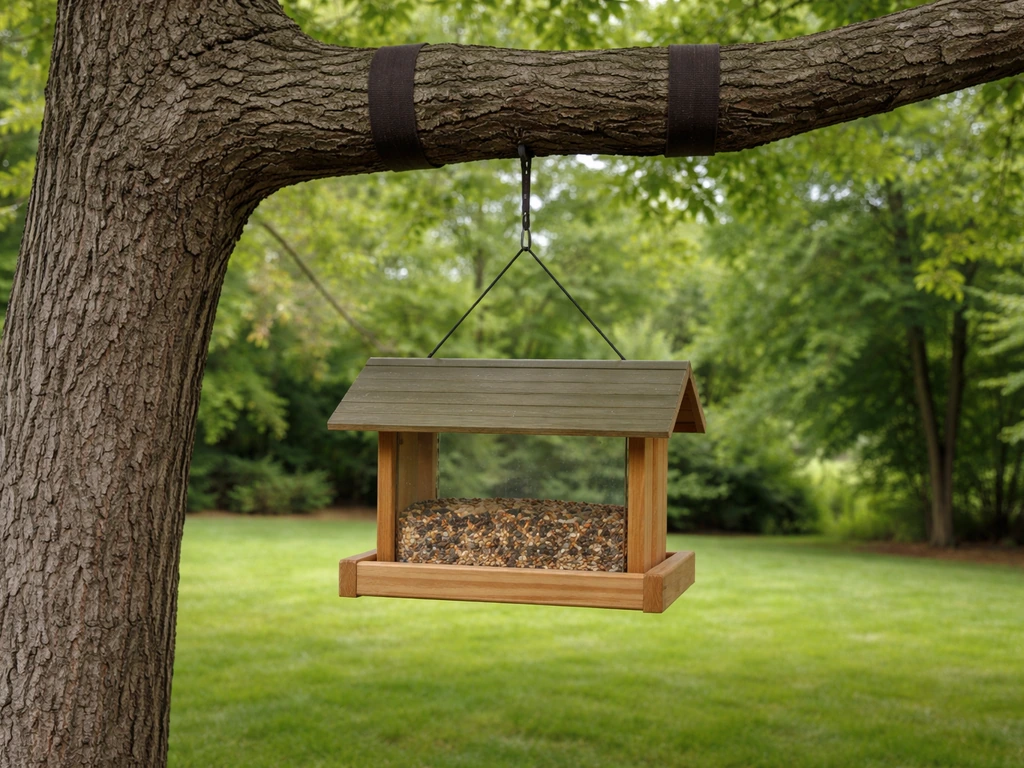
How to Hang Bird Feeders From Trees: Step-by-Step
Step-by-step guide to hang bird feeders from trees, choosing height and safe straps or hooks for trunk, branch, and betw
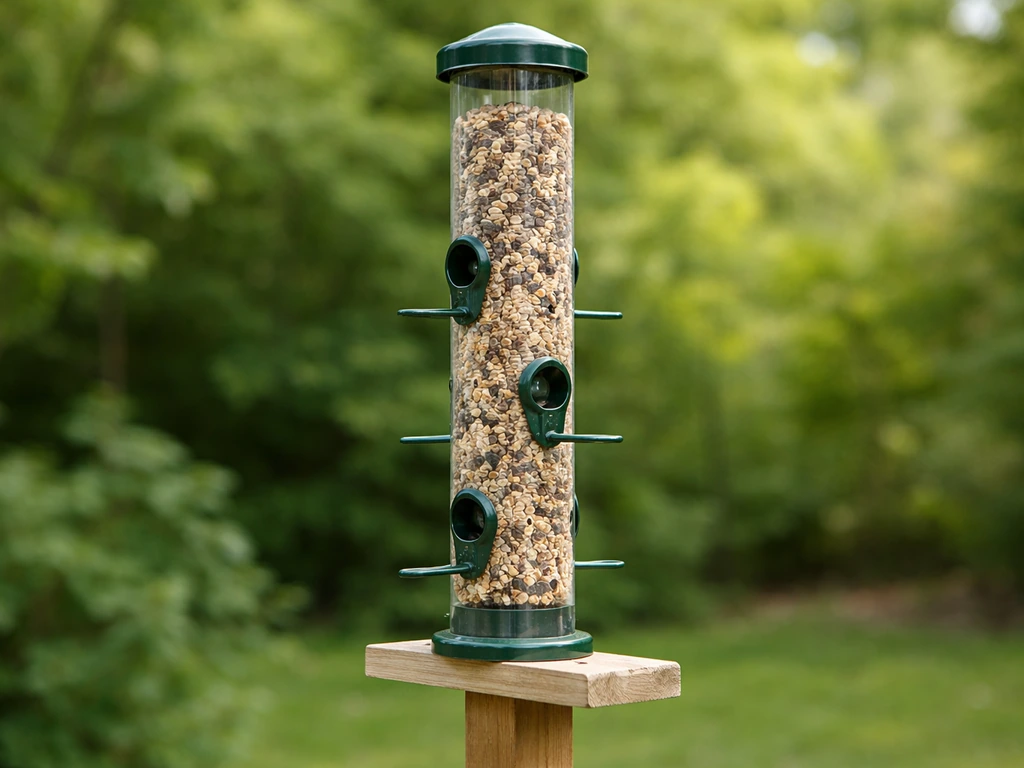
How to Make a Tube Bird Feeder Step by Step
Step-by-step how to make a tube bird feeder with materials, safe mounting, maintenance, and fixes for leaks and clogs.
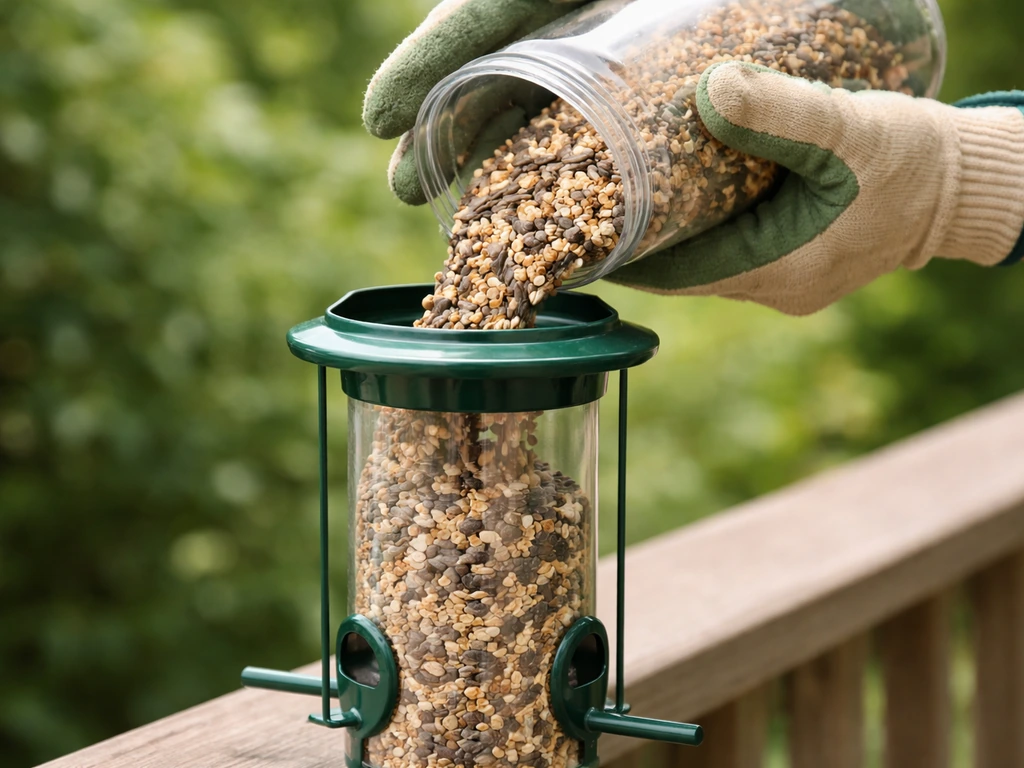
How to Put Bird Seed in a Bird Feeder Step by Step
Step-by-step guide to add bird seed to hopper, tube, platform, and suet feeders, avoiding spills and jams.