You can hang a bird feeder from your house using a screw-in eye hook, a wall-mounted bracket, or an eave hook, depending on where you want it and what your house surface is made of. The key things to get right are location (at least 5 feet off the ground, either within 3 feet of windows or more than 30 feet away), secure hardware matched to your siding or trim material, and a squirrel deterrent from day one. Get those three things right and you'll have birds visiting within a few days.
How to Hang a Bird Feeder From a House Safely
Marcus Brennan
28 Apr 2026
Choose the right spot on your house first
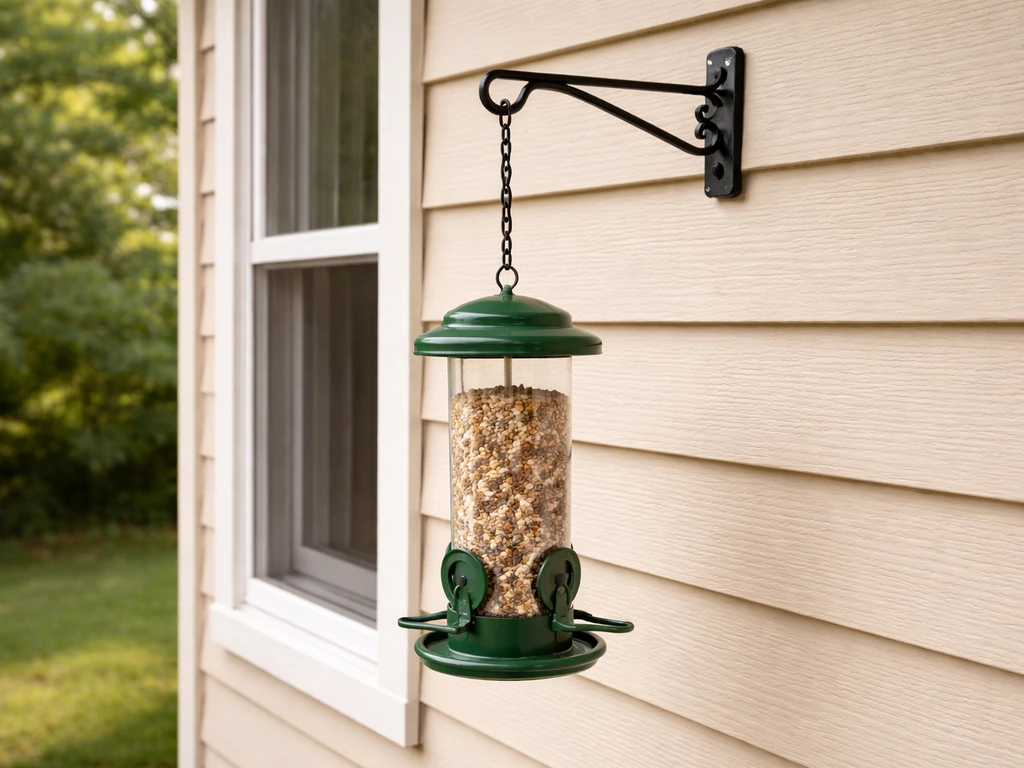
Before you drill anything, walk around your house and think like a bird. Birds want a feeder they can approach easily, with nearby cover (shrubs or a fence within 10 to 15 feet) to retreat to if they get spooked, but not so much clutter that cats can ambush them. The best spots are usually a covered porch ceiling, a wide eave overhang, or a solid wooden fascia board. These give you something sturdy to attach hardware to without compromising the weatherproofing of your walls.
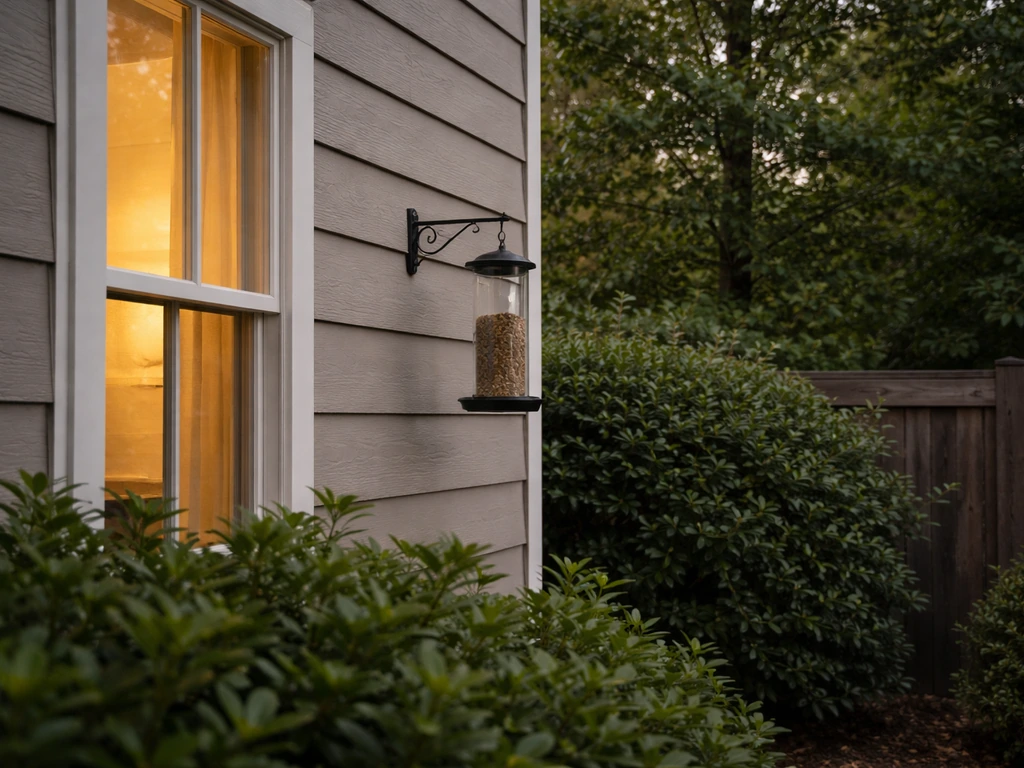
The window collision rule is the most important placement factor most people skip. If you're hanging a feeder on a balcony, pay extra attention to where it sits relative to nearby windows and railings window collision rule. Feeders hung between 3 and 30 feet from a window sit in the danger zone where birds can build up enough speed after a fright to fatally strike the glass. Audubon's guidance is clear: put the feeder either within 3 feet of the window (so a startled bird can't gain enough speed to hurt itself) or more than 30 feet away. If your porch window is the most convenient spot, mount the feeder right beside it rather than across the yard.
A few spots to avoid: the corner of the house where wind funnels and swings the feeder constantly, directly over an air conditioning unit or vent, and anywhere within easy jumping distance of a fence post or deck railing that squirrels already use as a highway. Also avoid hanging directly over a high-traffic walkway. Seed husks and droppings will land below every feeder, and having that mess fall onto a path or patio table gets old fast.
Height from the ground
Hang the feeder at least 5 feet off the ground. This keeps it out of reach of cats and reduces risk from other ground-level hazards. Most people find 6 to 7 feet works perfectly for a porch or eave mount because it puts the feeder at comfortable eye level for watching birds while keeping it high enough to deter casual cat interest. If you're mounting from a second-story eave, you may end up higher than that, which is fine as long as you can still reach the feeder easily for refilling and cleaning.
Pick the best hanging method and hardware
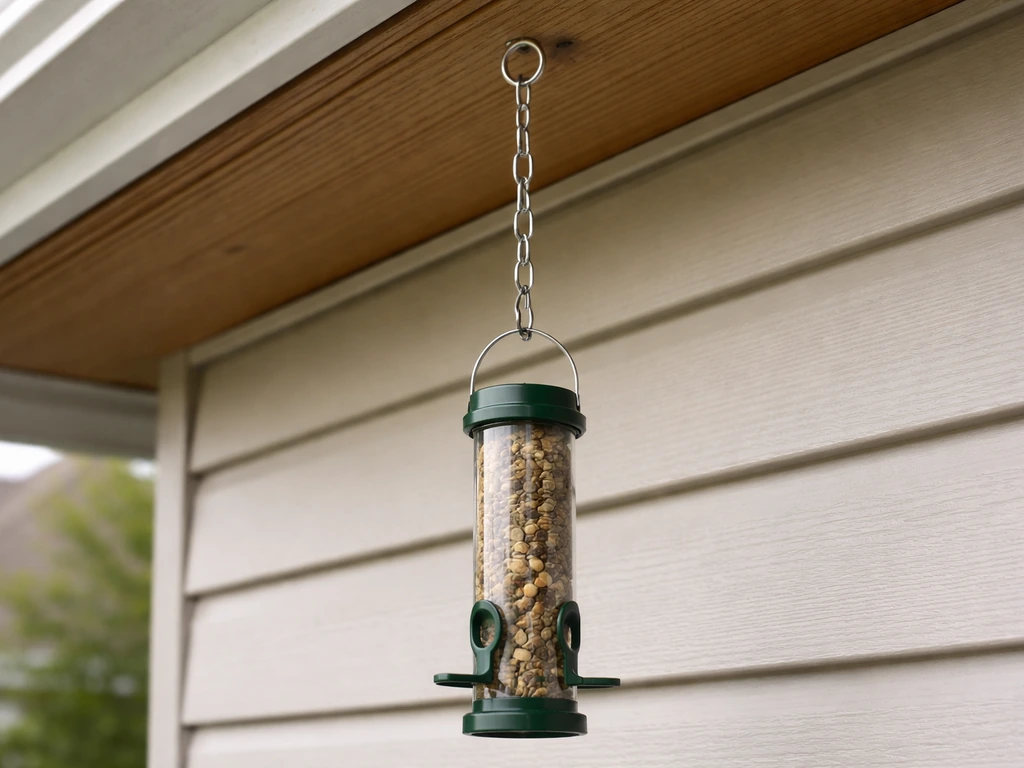
Your house material and the weight of your feeder determine which hardware to use. A lightweight tube feeder filled with nyjer seed might weigh 2 to 3 pounds full. A large hopper feeder packed with sunflower seeds can hit 10 to 15 pounds. Match your hardware to the heaviest the feeder will ever be, not empty weight.
| Mounting Surface | Best Hardware | Notes |
|---|---|---|
| Wood fascia or soffit | Screw-in eye hook (3/8 inch or larger) | Pre-drill a pilot hole to avoid splitting. Use a stainless or galvanized hook to resist rust. |
| Porch ceiling (wood) | Ceiling hook with lock nut or swivel hook | Use a swivel to let the feeder rotate in wind without twisting the line. |
| Vinyl or aluminum siding | Wall-mounted bracket with toggle bolts or siding hook | Never rely on siding alone. Find a stud or use a proper toggle/anchor rated for the load. |
| Brick or masonry | Masonry screw anchor with J-hook | Use a hammer drill and a masonry bit. Standard screws will not hold. |
| Eave overhang (deep) | Shepherd's hook bracket or adjustable arm bracket | Great for extending the feeder out from the wall for better bird access and visibility. |
For most wood-framed homes with a porch, a simple 3/8-inch stainless eye hook screwed into the ceiling joist is the easiest, most reliable option. If you want to hang a bird feeder specifically on a balcony, you can use many of the same height and hardware tips, but make sure it’s secure and won’t sway hang a bird feeder on a balcony.
Pair it with an S-hook and a short length of chain or heavy wire so you can adjust the feeder height without re-drilling. If you want the feeder out away from the wall (better for birds and easier to watch), a wall-mounted arm bracket screwed into a stud gives you 12 to 18 inches of clearance and handles most feeder weights comfortably.
If you're also adding a device to monitor visitors, follow these same mounting basics for how to mount bird feeder with camera. If you have a Netvue bird feeder, the mount style you choose matters, so plan the attachment points and clearance before you drill Netvue bird feeder mounting.
Avoid thin picture-frame hooks, command strips, or anything adhesive for outdoor feeder use. They're not rated for outdoor temperature swings or the dynamic load of a swinging feeder in wind. I've seen a command strip installation last exactly one rainstorm before dropping the feeder onto a concrete patio. Use real hardware.
Step-by-step: hang the feeder safely
This whole job usually takes 20 to 30 minutes once you have your hardware. You'll need a drill, an appropriately sized drill bit (slightly smaller than your screw or anchor diameter), the hook or bracket, pliers or a wrench, and your feeder with its hanging wire or chain. If you plan to hang bird feeders from trees, make sure the rope or strap is secure and positioned far enough from branches birds use to escape predators.
- Mark your spot. Hold the feeder up to where you want it and mark the ceiling or wall with a pencil. Make sure you're over a joist or stud if going into a ceiling or wall. Use a stud finder or tap and listen for a solid knock versus a hollow one.
- Pre-drill your pilot hole. Use a bit slightly narrower than the threaded shank of your eye hook or screw anchor. For wood, this prevents splitting. For masonry, use a masonry bit and hammer drill.
- Install the hardware. Screw the eye hook in by hand until snug, then use pliers or a screwdriver through the eye to tighten fully. For bracket installations, use the provided screws or bolts and make sure every screw point hits wood or anchor.
- Add a swivel or S-hook to the eye hook so the feeder can rotate slightly in wind without the hanging wire kinking and fatiguing over time.
- Attach your chain or hanging wire. Use enough length that you can unhook the feeder for cleaning without needing a step ladder every single time.
- Hang the feeder empty first and give it a firm tug from below. It should feel completely solid. If there's any wobble or pull-out, the anchor isn't seated properly and you need to address that before adding seed weight.
- Fill the feeder and hang it. Check the setup again after the first wind event to confirm nothing has shifted.
If your installation spot is on vinyl siding and you can't locate a stud, use a toggle bolt anchor rated for at least twice your feeder's max weight. Follow the same step-by-step approach when you install a Netvue bird feeder, including using the right anchor for your siding and maximum feeder weight. Drill through the siding, insert the toggle, tighten until snug, and then attach a J-hook or bracket. This will hold reliably, but try to find a stud if at all possible. Siding flexes more than wood framing and a stud mount will always feel more solid.
Match height and feeder type to the birds you want
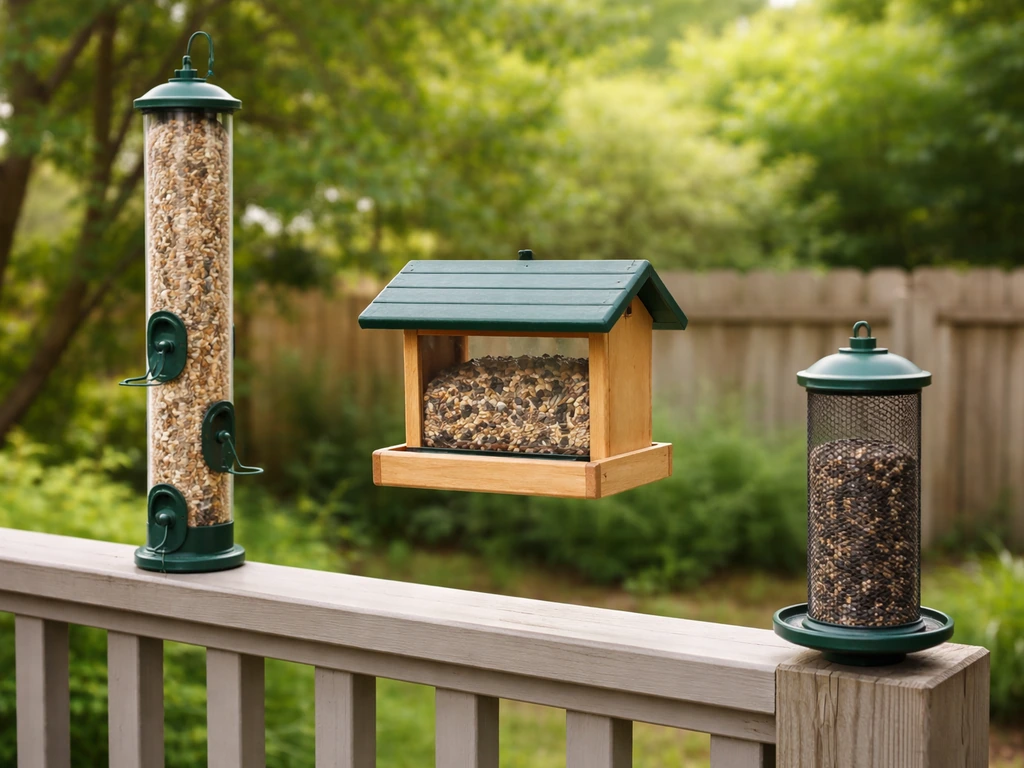
The 5-foot minimum height works for all common backyard species, but certain birds have strong preferences. Chickadees, nuthatches, and finches are comfortable visiting feeders at 6 to 8 feet off the ground. Mourning doves and juncos strongly prefer feeding near ground level, so they're better served by a platform tray under the main feeder rather than the hanging feeder itself. Cardinals will visit hanging feeders but seem happiest at 5 to 6 feet with a clear perch and some nearby shrub cover.
| Target Bird | Preferred Feeder Type | Ideal Height Range | Notes |
|---|---|---|---|
| Chickadees | Tube feeder with small ports | 5–8 feet | Will use almost any hanging feeder; loves sunflower chips |
| Finches (goldfinch, house finch) | Nyjer/thistle sock or fine-port tube | 5–8 feet | Prefer feeders they can cling to; avoid large platform perches |
| Nuthatches | Tube or suet cage | 5–8 feet | Will feed upside down; suet cage hung from eave works great |
| Cardinals | Hopper or platform with wide perch | 5–6 feet | Need sturdy perch and nearby cover; avoid very exposed spots |
| Woodpeckers | Suet cage | 6–10 feet on house wall or post | Can be mounted directly to a wood fascia board |
| Mourning doves | Ground tray or low platform | 2–3 feet or ground level | Not great candidates for house-hung feeders; use a separate low tray |
If birds aren't showing up within a week or two, don't assume the feeder placement is wrong. First check that the seed is fresh (stale or moldy seed is the most common reason birds ignore a feeder), then look at the sight lines. If there's no cover within 15 feet for birds to dart to when spooked, they'll skip it. Temporarily placing a potted shrub or a small brush pile nearby can help jump-start activity. Once birds find it, you can gradually move the shrub away.
Keeping squirrels and raccoons out
This is honestly the part that takes the most trial and error. Squirrels are persistent and athletic, and raccoons are strong enough to pull down a poorly secured feeder in one night. The good news is that house-mounted feeders with the right setup are actually easier to squirrel-proof than tree-mounted ones, because you have more control over the approach routes. If you want to keep it off a tree, focus on sturdy house mounting and use the same height and window-distance rules.
The distance rules for squirrels
Squirrels can jump roughly 5 feet horizontally and drop 8 to 10 feet from above without trouble. So if your feeder hangs within 5 feet of a fence, roof edge, or any other launch point, assume squirrels will reach it. Mount the feeder at least 5 feet out from any wall-mounted bracket or position it so there's no nearby surface to jump from. From a porch ceiling, this is naturally achieved if the feeder hangs in open space rather than near a post or railing.
Baffles and guards
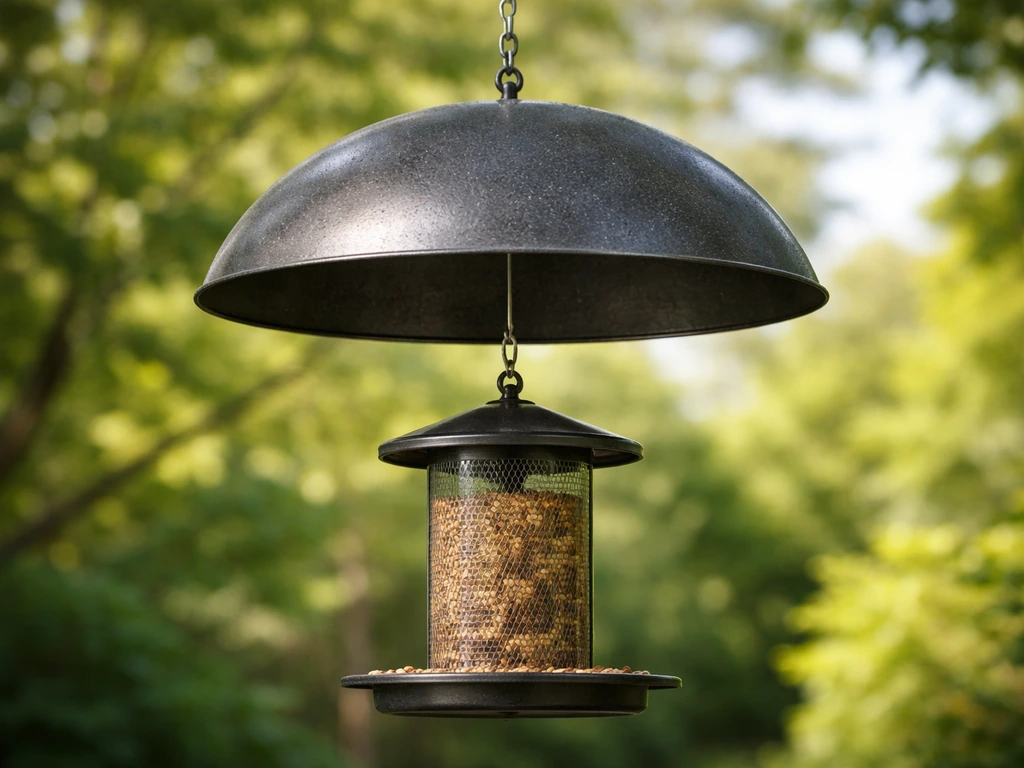
A squirrel baffle is the single most effective physical deterrent. For hanging feeders, use a dome-style baffle mounted above the feeder on the hanging wire or chain. The dome needs to be at least 15 to 18 inches in diameter to work properly. Smaller ones just give squirrels a grip point to shimmy around. Position the dome so it sits just above the feeder, not a foot above it, so a squirrel can't get a foothold between dome and feeder.
For raccoons, weight-sensitive feeders (which close off the seed ports when anything heavier than a bird lands on the perch) are highly effective and worth the extra cost if raccoons are active in your area. A standard tube feeder has no defense against a raccoon that can simply pull it down or tip it. A weight-activated feeder stays closed under raccoon weight and most won't bother after a few failed attempts.
A few other things that actually work
- Switch to safflower seed for a season. Squirrels strongly dislike the bitter taste. Most songbirds including cardinals, chickadees, and nuthatches eat it happily.
- Use a no-mess or hulled seed blend. Squirrels are partly attracted by fallen shells on the ground. Hulled sunflower or nyjer reduces ground scatter.
- Add a moat-style water barrier above the feeder on the hanging wire. Fill a small cup or moat guard with water so squirrels have to cross a water obstacle to reach the feeder from above. Works better in dry seasons.
- Take the feeder in at night during raccoon season (spring through fall). Raccoons are nocturnal and no birds will miss a feeder that's not out at 2am.
Ongoing maintenance to keep things going all year
A feeder that works great in May can become a moldy health hazard for birds by July if you're not cleaning it. Tube feeders with wet seed compacted at the bottom can harbor bacteria that make birds sick. This isn't optional maintenance; it's the part that determines whether your feeder helps birds or harms them.
| Task | Frequency | Notes |
|---|---|---|
| Refill feeder | Every 2–5 days (more in busy seasons) | Only refill once old seed is gone or removed. Don't top off over old seed. |
| Wipe ports and perches | Weekly | Use a dry brush or pipe cleaner to clear compacted seed from ports. |
| Full feeder wash | Every 2 weeks minimum, weekly in heat and humidity | Use 9 parts water to 1 part bleach, rinse thoroughly, and let dry completely before refilling. |
| Check hardware | Monthly | Look for rust, loosened screws, and chain wear. Tighten or replace as needed. |
| Inspect mounting points | Each season (4 times a year) | Check that eye hooks are still firmly seated and no wood rot has developed around anchors. |
| Seasonal seed switch | Fall and spring | Offer suet in cold months when high-calorie food is most needed. Switch back to seed blends in spring. |
| Clear seed debris below feeder | Weekly | Old hulls and dropped seed can attract rodents and mold. Rake or sweep regularly. |
At the start of each season, do a quick audit of the whole setup. Check that the bracket or hook hasn't shifted (wood swells and contracts with temperature), the feeder's hanging wire hasn't frayed, and the baffle is still correctly positioned. Five minutes of checking twice a year prevents the kind of slow hardware failure that drops a feeder unexpectedly. If you're also hanging feeders from trees or in spots without a tree nearby, the same maintenance principles apply, though the mounting hardware check will differ by installation type. For specific instructions on suspending them in that setup, review our guide on how to hang bird feeders from trees If you're also hanging feeders from trees.
Once you've got the basics working, it's genuinely satisfying to watch the same birds return to the same spot day after day. Start with one good setup on your most accessible house surface, get it tuned in, and expand from there. You don't need a dozen feeders to attract variety; you need one well-placed, well-maintained feeder with the right seed.
FAQ
What if I can’t find a stud or solid fascia board when I’m trying to hang a bird feeder from the house?
Use the siding-appropriate hardware described in your guide, like a toggle bolt anchor rated for at least twice the feeder’s maximum filled weight. If you are mounting near trim, also consider locating a structural support behind the trim, since it typically holds better than sheathing or hollow wall spaces.
Can I hang a bird feeder from a gutter or directly from the roof edge?
It’s usually a bad idea unless the attachment method is specifically designed for gutters or roof framing. Gutters can crack or bend, and you can also misalign the feeder so it swings into the window or walkway. Prioritize a ceiling joist, stud, or solid fascia area as in the main setup.
How far from the window should I place the feeder if it’s on a balcony or near a bay window?
Keep to the same safe ranges, within 3 feet of the glass or more than 30 feet away, and apply that to the actual window face the birds can strike. If the feeder is near a railing, confirm the clearance from every pane they could reach after a startle, not just the closest point.
What’s the safest way to attach the hanging wire or chain to the eye hook so it doesn’t twist?
Use an S-hook or quick link rated for the load, then check for free movement before leaving it overnight. Twisting usually comes from misaligned hooks, and it can cause fraying or uneven suspension that makes a feeder swing more in wind.
How do I choose the right hanging height if I want different birds but I only want one feeder?
Pick a height that suits the majority visitors (often 5 to 6 feet for cardinals, with 6 to 8 feet comfortable for finches and similar species). If you also want ground-preferring birds like doves or juncos, add a separate tray on the ground or near-ground, rather than lowering the hanging feeder and increasing risks from cats or predators.
Will a squirrel baffle work if my feeder is close to a wall or porch post?
It can, but only if squirrels can’t use nearby structures as “launch points.” The baffle must sit just above the feeder (not far above it), and you should also keep the feeder at least 5 feet out from fence posts, railings, or roof edges so there is no easy shimmy or jump route.
How often should I check the mount, and what failures should I look for?
Do at least two quick checks per year, plus after major wind storms. Look for shifted hardware (especially in wood framing), frayed hanging wire, rusted or loose connections, and baffle alignment, since the baffle that slides down can suddenly create a foothold.
If birds aren’t visiting, could the seed type be the issue even if placement is correct?
Yes. The main causes to verify first are fresh, dry seed and correct sight lines to nearby cover, but also consider whether the seed matches local preferences. If you recently switched seed and activity dropped, try returning to a proven mix for your yard species while keeping the feeder cleaned and dry.
Is it okay to use an adhesive method like outdoor Command strips on siding?
For outdoor feeder use, avoid adhesive mounts and thin picture-frame hooks. Outdoor temperature swings and the dynamic load from wind can cause sudden failure. Use real rated hardware and, when possible, anchor into a stud or structural surface.
What’s a safe way to clean a feeder mounted above a patio or walkway?
Clean in a way that prevents drips and seed hulls from landing on a high-traffic surface, since debris buildup makes the spot unpleasant fast. If possible, do a quick “empty and brush” inside a bag or bucket, then rinse and fully dry before refilling, to reduce mold and bacteria issues.