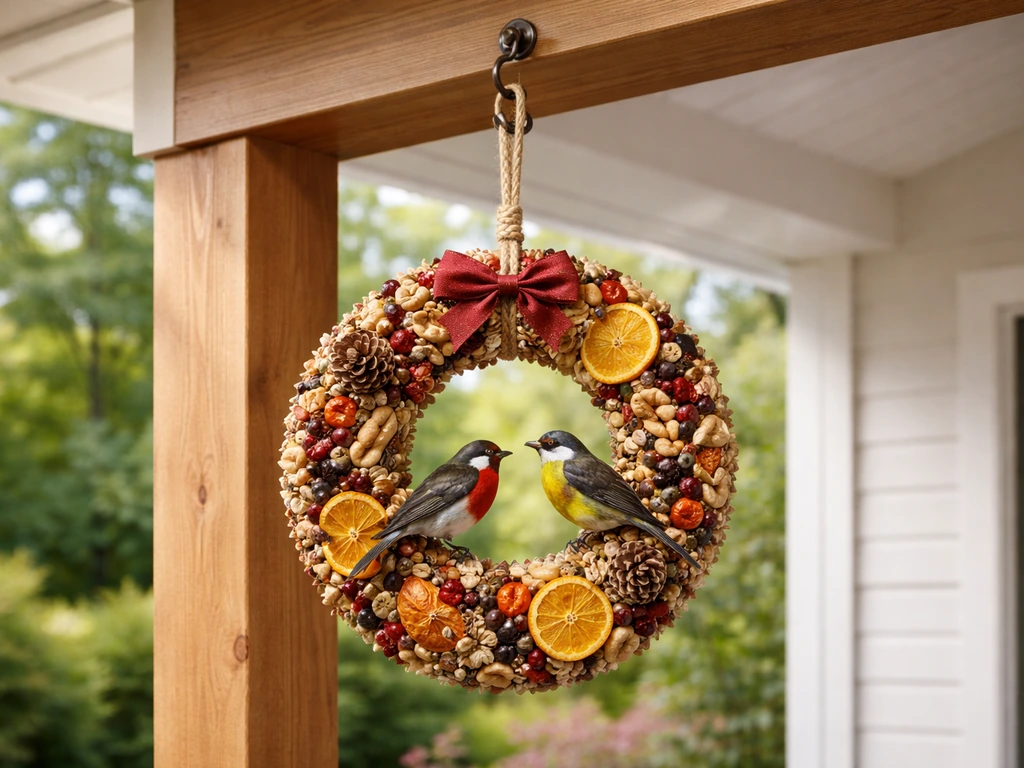
The Mr. Bird Wildfeast Wreath comes ready to hang using its raffia bow, so in most cases you don't need any extra hardware at all. Slip the bow over a hook, a nail, or a sturdy branch, position it 5 feet off the ground, and you're done. That said, raffia stretches, sways, and can drop the whole wreath if it gets wet, so knowing how to reinforce it and where to place it makes a real difference in both safety and how quickly birds find it.
How to Hang Mr. Bird Wildfeast Wreath Securely
Marcus Brennan
27 May 2026
What the Wildfeast Wreath is and what it comes with
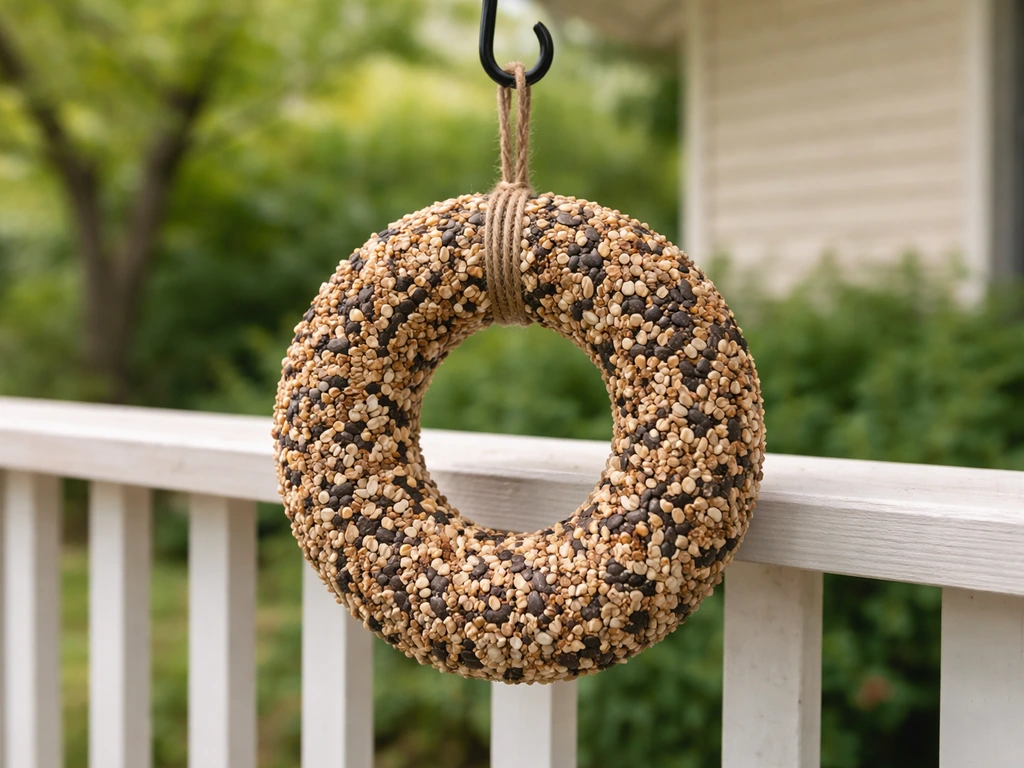
The Mr. Bird Wildfeast Wreath is a 9-inch diameter, 3-inch deep compressed seed-and-nut wreath that weighs around 32 ounces (2 pounds) when full. The Paper Store listing reports an approximate weight of about 40 ounces for the Mr. Bird Wildfeast Seed Wreath, which may vary by package or listing specifications [weighs around 32 ounces (2 pounds) when full.
](https://www. thepaperstore. com/Mr-Bird-Mr-Bird-Wildfeast-Seed-Wreath/p/36910700005). That's not trivial weight for a bow made of raffia, so the suspension point you pick needs to handle it without flexing.
Most listings describe it as hanging by its raffia bow, and some include a net around the wreath that can also serve as a second suspension point. Check your package for both. If you got a bow but no net, the bow alone works fine as long as you back it up with a short length of jute cord or a sturdy S-hook through the loop.
If you're missing the bow or the net entirely, don't stress. A 12-inch length of jute twine, a zip tie threaded through the wreath frame, or a small wire hook through the top edge will all hold 2 pounds without trouble. The wreath itself has a firm enough form that you can hang it from a single top point without it collapsing.
Picking the right spot before you hang anything
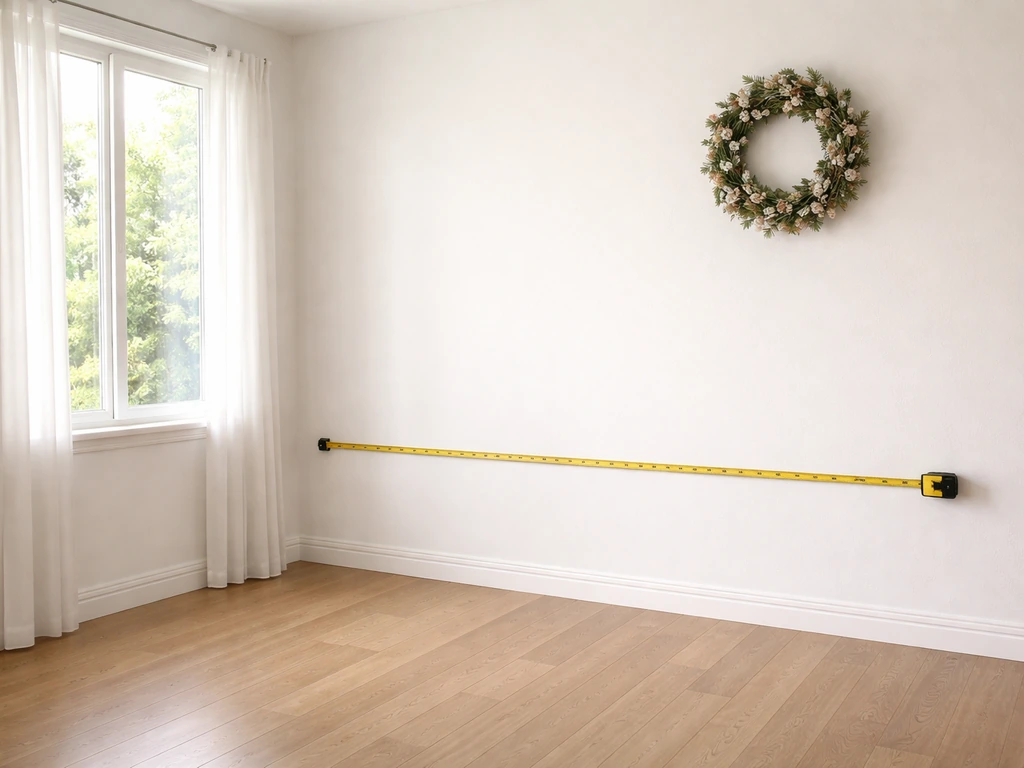
Location is the decision that matters most and the one people rush past. Get this right and birds will find the wreath within a day or two. Get it wrong and you'll be moving it around for weeks.
Window distance: the most important safety rule
Place the wreath either within 3 feet of a window or more than 30 feet away. That gap in the middle (3 to 30 feet) is the danger zone where birds build up enough speed to fatally hit glass. A wreath hanging 10 feet from a picture window looks charming from your kitchen but causes collisions regularly. Within 3 feet, birds can't build up lethal momentum. Beyond 30 feet, they have time to see the glass and redirect.
Predator cover and escape routes
Hang the wreath within 10 feet of a shrub, dense branch cluster, or brush pile so birds have somewhere to dart if a hawk shows up. Open-air placement in the middle of the yard looks great on paper but leaves clinging birds exposed. You want cover nearby, but not so close that a cat can crouch and ambush from it. About 8 to 10 feet from dense ground-level brush is the sweet spot.
What to avoid
- High-traffic walking paths where people will regularly pass within 6 feet
- Overhanging branches directly above the wreath (squirrel highway)
- Areas with standing water below that can splash up and accelerate mold
- Full afternoon sun in summer, which dries the wreath out fast and can turn suet and fruit components rancid
How to actually hang it: five methods that work
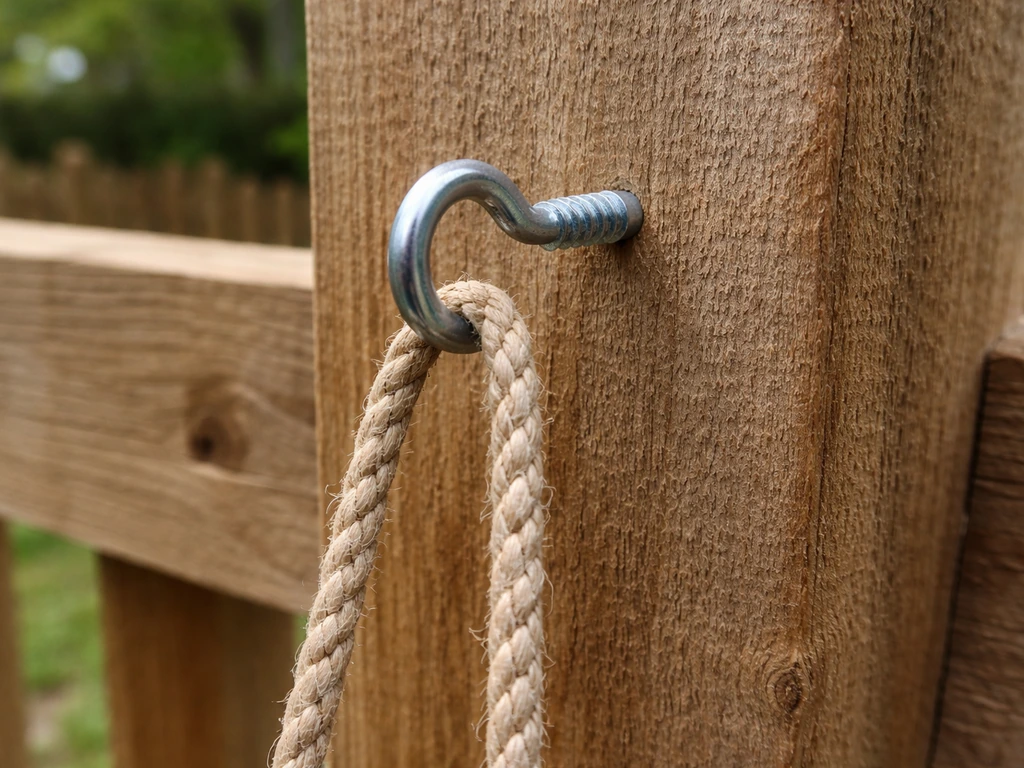
Pick the method that matches what you already have. If you want a more specific walkthrough, follow the steps for how to hang a bird seed wreath and choose the right method, hook, and placement. You don't need to buy anything special for most of these.
- Screw hook on a post or fence: Drive a 2-inch screw hook into a wooden post or deck railing. Loop the raffia bow directly over it. Add a short loop of jute cord through the bow before hooking if you want extra reinforcement against slipping.
- S-hook on a shepherd's crook: Thread an S-hook through the raffia bow loop and hang it from the curved end of a shepherd's crook pole. This is the easiest no-tools method and lets you move the wreath any time.
- Tree branch with cord: Tie a 12-inch jute or nylon cord to a branch that's at least 3/4 inch thick. Thread the other end through the raffia bow loop and tie it off, or clip it with a carabiner. Avoid branches that bounce heavily in the wind.
- Hanging feeder stand or pole with arm: If you already have a multi-arm feeder pole, hang the wreath from one of the arms using the raffia bow or an S-hook. This keeps everything in one place and makes squirrel-baffling much simpler.
- Suet cage adapter: If the raffia bow feels too flimsy, thread a piece of wire through the top edge of the wreath frame and twist it into a loop. Hang that wire loop from any hook. This distributes weight across the frame instead of relying entirely on the bow.
How high to hang it and how much clearance to leave
Hang the wreath so that blank" rel="noopener noreferrer">its bottom edge is at least 5 feet off the ground. This keeps it out of easy reach of cats and most ground predators, and it matches the standard guidance for suet and seed feeders from most bird-feeding organizations. If you prefer a more purpose-built suspension like an iit bottle top bird feeder with hanger, the same height and clearance rules still help reduce predator and cat access. If you're adding a squirrel baffle below the wreath, the bottom of the baffle needs to be at least 4 to 5 feet off the ground, which means the wreath itself will sit a few inches higher.
Lateral clearance matters too. Keep the wreath at least 7 to 8 feet away from tree trunks, fence posts, deck railings, and roof overhangs that a squirrel could launch from. Squirrels can easily jump 5 to 6 feet horizontally, so 8 feet is not overkill. If you're hanging from a single branch, make sure nearby parallel branches are also at least 7 feet away.
| Placement factor | Recommended distance or height |
|---|---|
| Height off ground (bottom of wreath) | 5 feet minimum |
| Distance from windows (safety zone) | Under 3 feet or over 30 feet |
| Distance from squirrel jump points | 7 to 8 feet minimum |
| Distance from nearby escape shrubs | 8 to 10 feet (for bird cover) |
| Clearance above wreath to branch/overhang | At least 12 inches |
Keeping it stable: preventing sway, droop, and pest access
Stopping sway
A 2-pound wreath swinging in a stiff breeze will scare off smaller birds and can eventually work the bow loose. If your hanging point is exposed to wind, shorten the suspension cord to the minimum needed (6 to 8 inches of cord or bow between the anchor and the wreath top). The less length between the anchor point and the wreath, the less pendulum effect you get. You can also tie a short secondary cord from the bottom edge of the wreath frame to a nearby fixed point to dampen the swing without restricting birds from landing.
Preventing droop
Wet raffia stretches and can slowly let the wreath slip lower over weeks. Check the bow after the first rain. If it's loosened, re-tie it with a tighter knot or slide a zip tie around the bow loop to lock in the size. Replacing wet raffia with a short length of jute cord or nylon rope after the first month is the most reliable long-term fix.
Reducing pest access
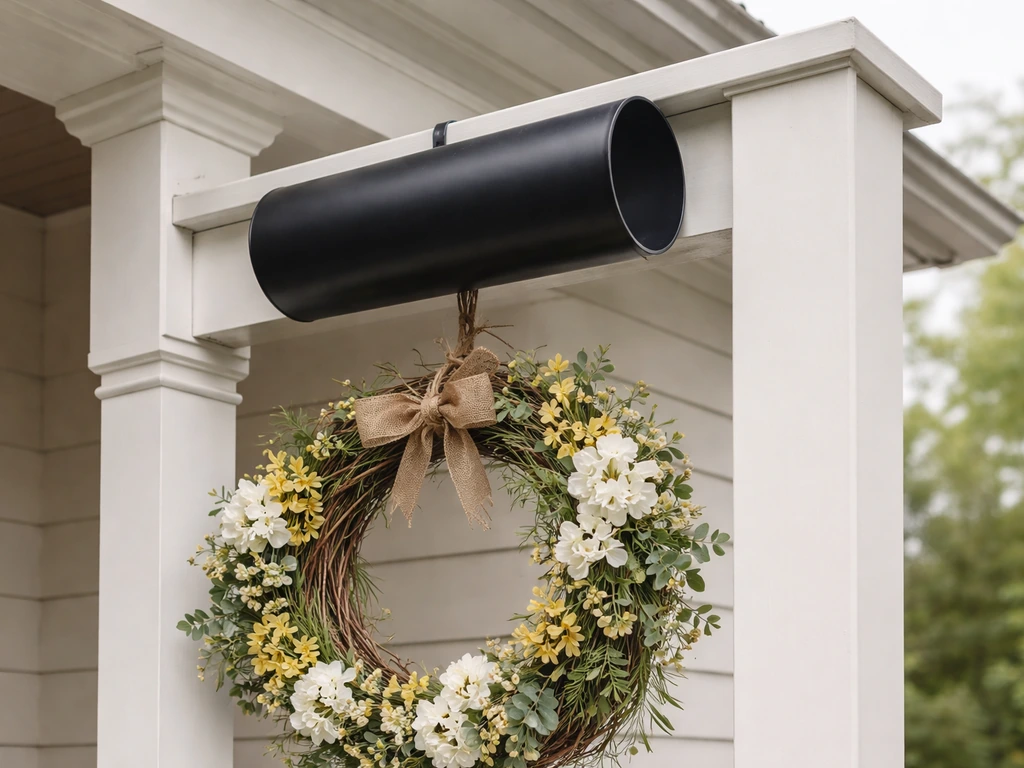
A hanging squirrel baffle mounted directly above the wreath (or below it on a pole) is the most effective deterrent. The baffle needs to sit so that squirrels can't get above it by jumping from a nearby structure. If a full baffle isn't practical, hanging the wreath from a pole in open ground, at least 8 feet from anything a squirrel can climb, is nearly as effective. Greased poles and spinning hangers exist but require more maintenance. For a simple wreath hanging situation, open-air pole placement is the most reliable no-fuss solution.
What to do if the wreath won't hang right or birds aren't showing up
The wreath hangs crooked or keeps tilting
A wreath that tilts usually means the suspension point is off-center on the bow loop, or the bow loop itself has shifted to one side. Take it down, re-center the hook or cord in the exact middle of the bow, and re-hang. If the wreath itself is uneven in weight (more seeds on one side, for example), you can compensate by slightly off-setting the cord in the opposite direction. It takes a couple of tries but you can get it level.
The attachment point feels wobbly or insecure
If the branch, hook, or post you hung from feels like it's moving under the weight, move the wreath before it falls. A good anchor point should hold 5 pounds without any noticeable flex. For posts and deck railings, use a screw hook driven in at least 1.5 inches, not a nail. Nails pull out over time especially in soft wood.
Birds aren't visiting after a few days
Give it at least 3 to 5 days before worrying. Birds need time to scout new food sources. If nothing is happening after a week, check these things in order: Is the wreath too exposed with no nearby cover? Is it too close to high foot traffic?
Is it hanging right next to an existing feeder that birds already prefer? Try moving it 10 to 15 feet from any other feeder so it's discovered on its own terms, and make sure there's a perch spot (branch, shepherd's crook arm) within a foot of the wreath that birds can land on while feeding. Wreaths work differently than tube feeders, and some species need a landing spot nearby to feel comfortable clinging to the side.
Keeping the wreath in good shape over time
Weather and exposure
The Wildfeast Wreath is meant to be used outdoors, but extended rain will soften the compressed seed block and can cause it to crumble faster than expected. If a multi-day storm is coming, taking it down and storing it indoors in a cool dry spot extends its life noticeably. You don't have to bring it in for every light rain, but heavy soaking followed by freezing will degrade it quickly.
Refilling and refreshing
The Wildfeast Wreath is not designed to be refilled in the traditional sense since it's a solid compressed block. Once it's mostly consumed or crumbles significantly, it's time to replace it rather than patch it. In the meantime, check it every week or two and knock off any moldy areas with a stiff brush. In humid weather, you'll want to check weekly because moisture can accelerate mold on the fruit components faster than on plain seed.
When to take it down
Take the wreath down when more than half the seed has been eaten and what remains looks damp, dark, or is developing visible mold. At that point birds are getting diminishing return and you're mostly maintaining a mold block. Also take it down if the raffia bow has degraded to the point where you don't trust it to hold the remaining weight. Clean the hook or hanger with soapy water and dry it before putting up a replacement. Cleaning between wreaths takes 2 minutes and prevents mold spores from seeding the next one. Audubon's standard guidance is to clean feeders every two weeks, and a quick wipe of the hook area fits that schedule perfectly.
If you enjoy hanging seed wreaths and want to branch out, the same hanging methods here work well for hanging other bird seed wreaths, seed bells, and homemade Christmas wreath feeders. If you also want to make your own bird seed hangers, the key is choosing a sturdy suspension point and using ingredients that stay firm outdoors seed wreaths. If you want the same results with a seed bell, follow these same height, anchor strength, and placement tips so the bell is secure and visible to birds seed bells. The height rules and window-distance guidance apply across all of them, so once you've dialed in the spot for this wreath, you have a reliable setup for whatever comes next.
FAQ
What should I do if the raffia bow loosens after rain and the wreath drops?
To avoid slipping, keep the bow knot tight and use only a small wrap length of cord (enough to back up the loop, not so much that the wreath hangs too low). After the first rain, re-check that the wreath bottom still sits at least 5 feet high, and if it dropped, lock the bow loop size with a zip tie or switch to jute cord/nylon rope for the suspension.
Can I hang the wreath from a tree branch, and how do I know the branch will hold?
Yes. If you hang it from a branch, look for flex as you lift the wreath into place, the anchor should feel solid under a weight test of about 5 pounds. Also confirm there is at least 7 to 8 feet of clearance from nearby parallel branches or posts so squirrels cannot launch directly at the seed block.
I only received the bow, no net. Is it still safe to hang the wreath with just one top point?
If you do not have a net, you can still use a single top suspension point. For extra reliability, thread a jute cord through the frame area and tie it so the knot sits at the very top edge, then add a short secondary cord from the wreath bottom to a nearby fixed point to reduce swinging.
How long should it take for birds to find the wreath, and what should I troubleshoot first?
If the wreath is not getting any visitors, the most common cause is placement. First, check that it is within 3 feet of windows? No, it should be either within 3 feet of a window or more than 30 feet away, and then verify you have nearby cover about 8 to 10 feet from dense ground brush. If it is already in a good spot, try moving it 10 to 15 feet away from any existing feeder so birds discover it as a distinct option.
Do birds need a nearby perch when a wreath hangs free on a hook?
A perch point is often the difference between visits and none at all. Aim for a landing branch, shepherd’s crook arm, or similar perch within about 1 foot of the wreath surface so birds can cling while feeding, especially if your wreath is hanging in open air with nothing immediately adjacent.
If I add a squirrel baffle, what height should I set the wreath and baffle?
For a 9-inch wreath that needs to be out of easy reach, set the bottom edge at 5 feet or higher. If you add a squirrel baffle, plan the baffle so its bottom stays about 4 to 5 feet high, which usually means the wreath will end up a few inches above that.
What’s the best way to stop wobbling in windy areas without making it hard for birds to land?
If it swings too much, shorten the suspension so the distance between the anchor and the wreath top is only about 6 to 8 inches, this reduces pendulum effect. If you want to keep the height, add a short secondary cord from the wreath bottom to a nearby fixed point to dampen motion without limiting where birds can land.
My wreath hangs at an angle. How can I level it correctly?
If the wreath tilts, re-center the suspension on the middle of the bow loop, then re-hang. If the wreath itself is uneven due to seed distribution, you can compensate by offsetting the cord slightly in the opposite direction of the tilt, and it may take one or two re-adjustments to get it level.
What kind of hook or anchor should I use for decks, posts, and fences?
Choose an anchor you trust for more than just the wreath’s weight, aim for an attachment point that could handle about 5 pounds without flex. For posts and deck rails, use a screw hook driven in at least 1.5 inches rather than a nail, nails can loosen and pull out over time.
How do I know when it’s time to remove and replace the wreath?
Take it down when the seed block looks damp, dark, or begins to show visible mold, especially if it is past the point where more than half has been eaten. Also remove it if the raffia bow has degraded enough that you would not trust it to hold the remaining weight, then clean the hanger before installing the next wreath.
Can I refill or extend the life of the Wildfeast wreath instead of replacing it?
Not really. Since it is a compressed block, once it’s mostly consumed or crumbles significantly, patching it usually does not prevent further deterioration. The practical next step is to replace it, while keeping a routine to knock off moldy areas promptly in humid conditions and clean the hanger between uses.
Next Articles
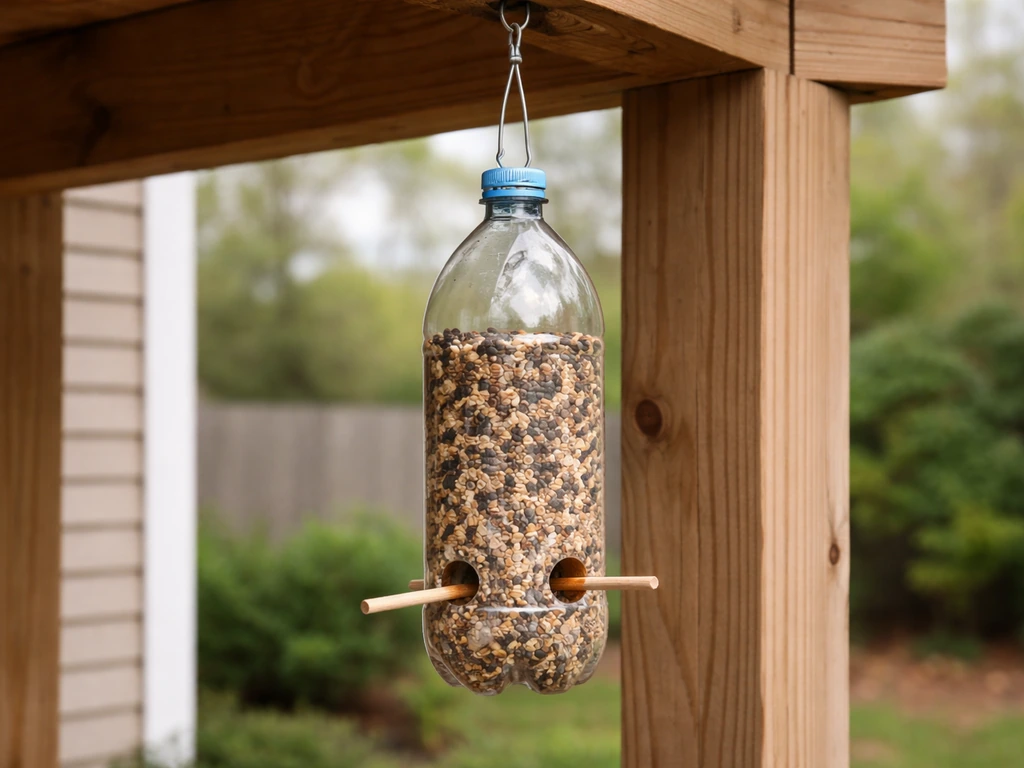
How to Hang a Bird Bottle Feeder: Step-by-Step Guide
Step-by-step how to hang a DIY bird bottle feeder, with location, hanging hardware, drilling tips, level checks, and fix
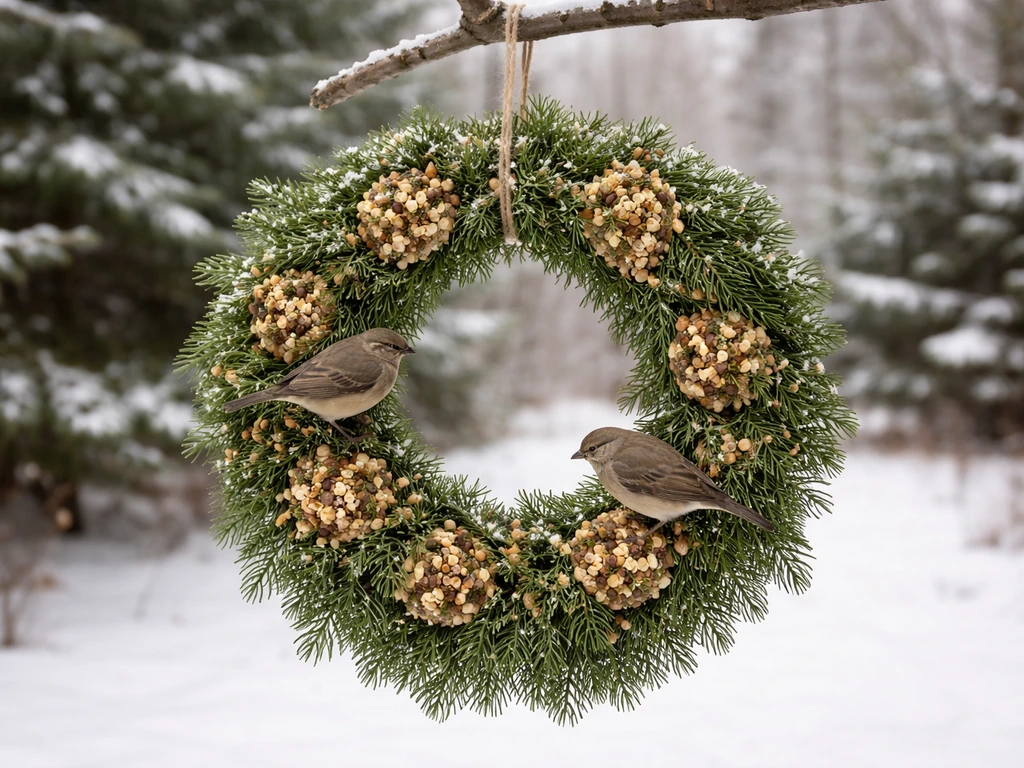
How to Make a Christmas Wreath Bird Feeder Step by Step
Step-by-step guide to build a Christmas wreath bird feeder with winter-safe food, setup tips, and easy cleaning
How to Hang a Bird Seed Wreath Step by Step
Step-by-step how to hang bird seed wreath, choose spot and secure method, plus fixes for slipping, height, and weather i