You can make a functional bird seed hanger in under an hour using rope, a mesh bag or small bucket, and a couple of basic hardware pieces. The simplest version is just a knotted cord looped through a mesh onion bag filled with seed and hung from a shepherd's hook or tree branch. Sturdier builds use PVC-coated wire, a small plastic container, and a swivel clip so the feeder can be refilled without untying anything. If you want a DIY option with a durable hanger, an iit bottle top bird feeder with hanger can be a simple, space-saving build to try next. Which version you need depends on your birds, your yard setup, and how much squirrel trouble you're dealing with.
How to Make Bird Seed Hangers: Step-by-Step DIY Guide
Marcus Brennan
12 Jun 2026
Pick the right type of seed hanger for your yard and birds
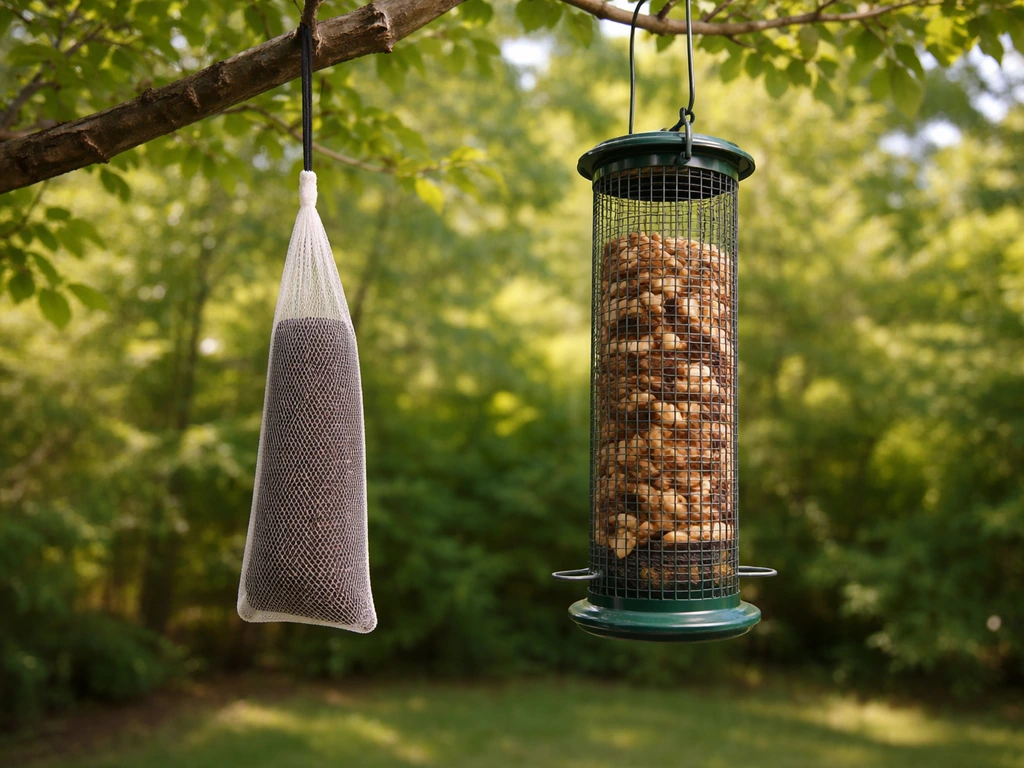
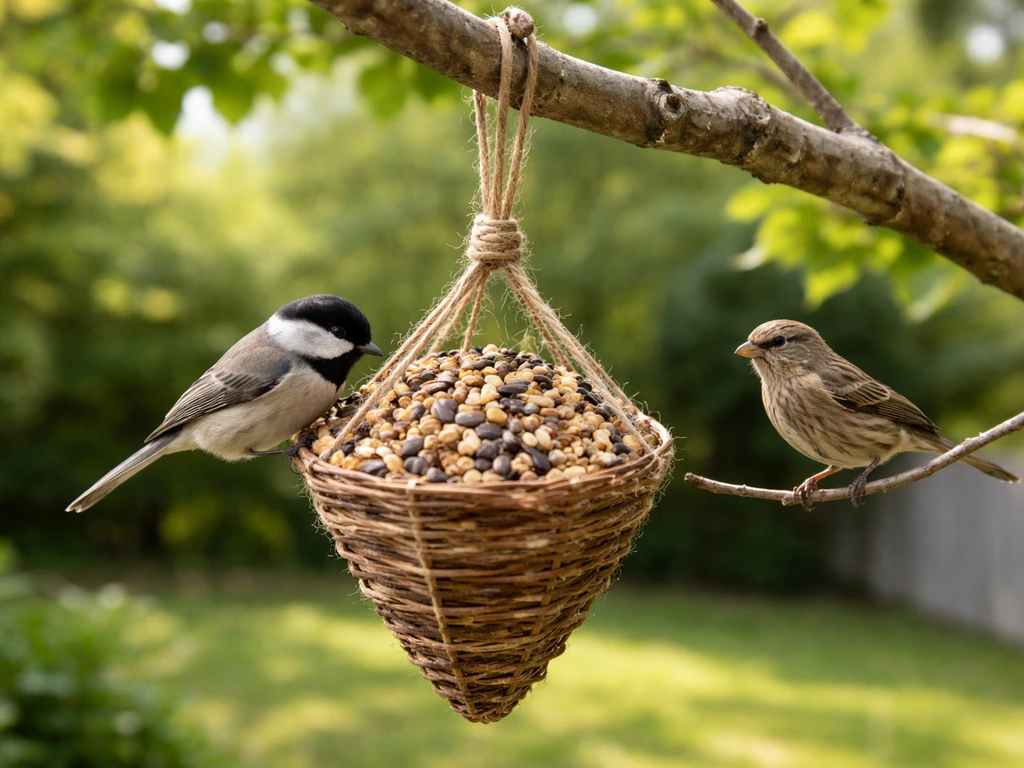
Before you build anything, it helps to match the hanger style to the birds you're actually trying to attract. Small clinging birds like chickadees, nuthatches, and finches do great with a hanging mesh bag or tube-style holder. Ground feeders like doves and sparrows prefer a platform setup, but they'll visit a low-hung tray hanger too. If you're feeding a mixed crowd, a small hopper-style hanging box works well because the walls and roof protect the seed from rain while keeping it accessible from multiple sides.
Think about your yard structure too. If you have a tree branch or shepherd's hook already, almost any hanger design will work. If you're mounting from an eave or fence post, you'll want something that doesn't swing wildly in wind, which means a shorter drop length and a weighted or baffled design. Here's a quick breakdown of the main hanger types and where each fits best.
| Hanger Type | Best For | Pest Resistance | Weather Protection | Build Difficulty |
|---|---|---|---|---|
| Mesh bag / net | Finches, clinging birds | Low | Low | Very easy |
| Rope and bucket/tray | Mixed species, platforms | Medium (with baffle) | Low to medium | Easy |
| Wire-wrapped tube or cylinder | Clinging and perching birds | Medium | Medium | Easy to moderate |
| DIY hopper box (hanging) | Mixed species, all seasons | High (with baffle) | High | Moderate |
| Pinecone or suet roll hanger | Woodpeckers, chickadees | Low | Low | Very easy |
If you're unsure where to start, go with a rope-and-tray hanger or a mesh bag first. They're cheap, quick to build, and will tell you a lot about which birds visit before you invest time in something more elaborate. You can always upgrade later.
Materials and tools you'll need for a durable DIY hanger
The materials list here is split by project type, from the quickest no-tools build up to a sturdier hanging feeder box. For most of these, you're shopping from what's already in the garage or a quick trip to a hardware store for a few dollars.
For a mesh bag or simple cord hanger
- Mesh produce bag (onion or citrus bags work great) or a metal suet/seed mesh cage
- Paracord, natural jute twine, or nylon rope (at least 3mm thick for durability)
- Swivel snap clip or S-hook (stainless or galvanized to resist rust)
- Scissors
- Optional: small carabiner for easy refilling
For a rope-and-tray or bucket hanger
- Small plastic bucket, terracotta saucer, or shallow wooden tray (6 to 12 inches wide)
- Paracord or braided nylon rope, 4 to 6 feet length
- Drill with a 1/4-inch bit (for drainage holes and cord attachment points)
- Eye bolt or screw hook with nut (for center hang point on bucket builds)
- Weatherproof wood glue or silicone sealant if using wood
- Sandpaper (120 grit) to smooth edges on wood trays
For a hopper-style hanging box
- 1/2-inch exterior plywood or cedar board (cedar resists rot and warping far better than pine)
- Small hinges (2) for a flip-top lid
- Hardware cloth or wire mesh (1/4-inch grid) for drainage floor panel
- Exterior wood screws (1-1/4 inch), wood glue
- Eye bolt at the top center for hanging
- Paracord or chain (chain doesn't stretch or fray like rope)
- Drill, saw, hammer, measuring tape
- Exterior paint or waterproof sealant for the wood
A quick word on rope vs. chain: rope is cheaper and easier to work with, but it frays and stretches over time, especially with UV exposure. If you're hanging something heavy or in full sun, PVC-coated galvanized chain is worth the extra few dollars. For lightweight mesh bags, jute or paracord is totally fine for a season or two before you swap it out.
Step-by-step build options (simple to sturdier designs)
Build 1: The 5-minute mesh bag hanger
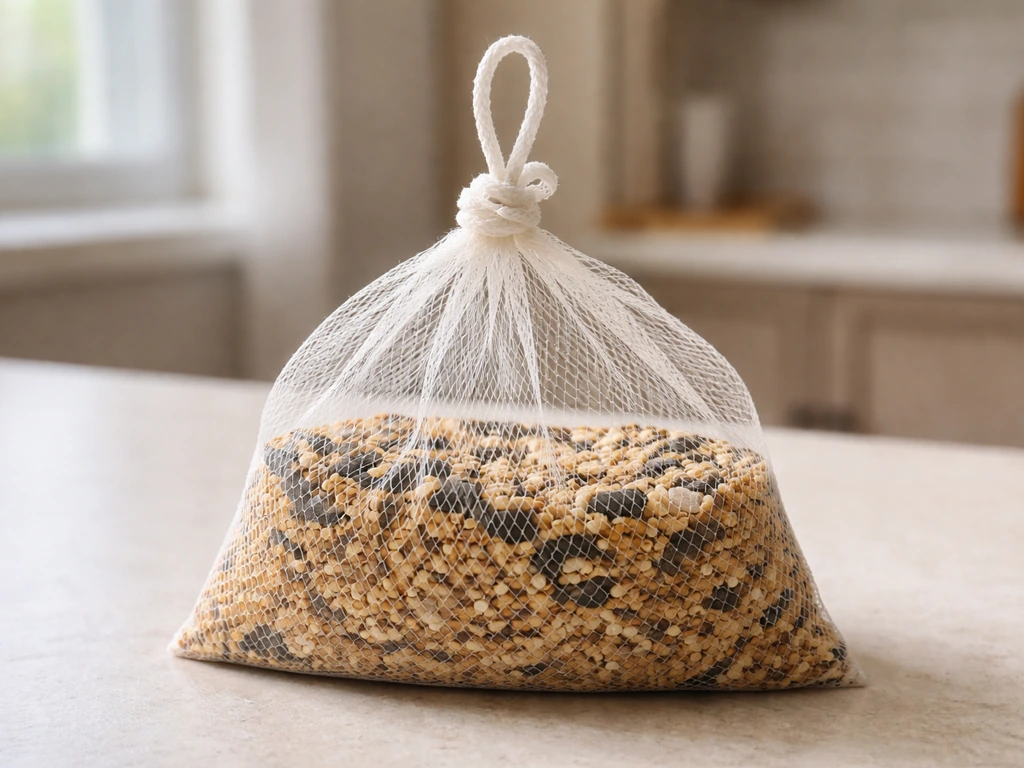
- Fill a mesh produce bag about two-thirds full with seed (leaving room to tie it off).
- Gather the top of the bag and tie a double overhand knot with about 6 inches of cord looped through the gathered top.
- Tie the other end of the cord to a swivel snap clip or S-hook.
- Clip directly onto your hook, branch, or shepherd's hook arm.
- That's it. Refill by untying the base knot, adding seed, and retying.
This is perfect for nyjer (thistle) seed for finches or peanuts in the shell for jays. It drains naturally and costs almost nothing. The downside is that squirrels can easily chew through mesh bags, so use it where squirrels aren't a major problem or pair it with a baffle.
Build 2: Rope-and-tray hanger (about 30 minutes)
- Take your tray or saucer and drill 4 drainage holes in the bottom, evenly spaced, about 1/4 inch diameter.
- Drill 4 additional holes near the rim, equally spaced, for the support cords.
- Cut 4 equal lengths of paracord, each about 24 inches long.
- Thread one cord through each rim hole, tying a large stopper knot underneath each hole so the cord can't pull through.
- Gather all 4 cords at the top and bring them together at equal lengths so the tray hangs level.
- Tie all 4 cords together with a strong overhand knot about 6 inches above the tray, then loop the remaining cord length into a hanging loop.
- Attach a swivel snap clip or S-hook at the top loop.
- Test the hang before adding seed: the tray should sit level and not tilt to one side.
If the tray tilts, just pull one or two cords slightly longer at the top knot and retie. If you need step-by-step help for a bottle-style feeder, plan the hanger hardware and placement before you attach anything rope-and-tray hanger. Once you have a rope-and-tray setup, you can follow the same general steps to hang a bird seed wreath for easy, consistent feeding. Cedar wood trays work better than terracotta long-term because they don't crack in freezing temps, but a basic terracotta saucer from a dollar store will do the job through a few seasons if you bring it in during hard frosts.
Build 3: Hanging hopper box (1 to 2 hours)
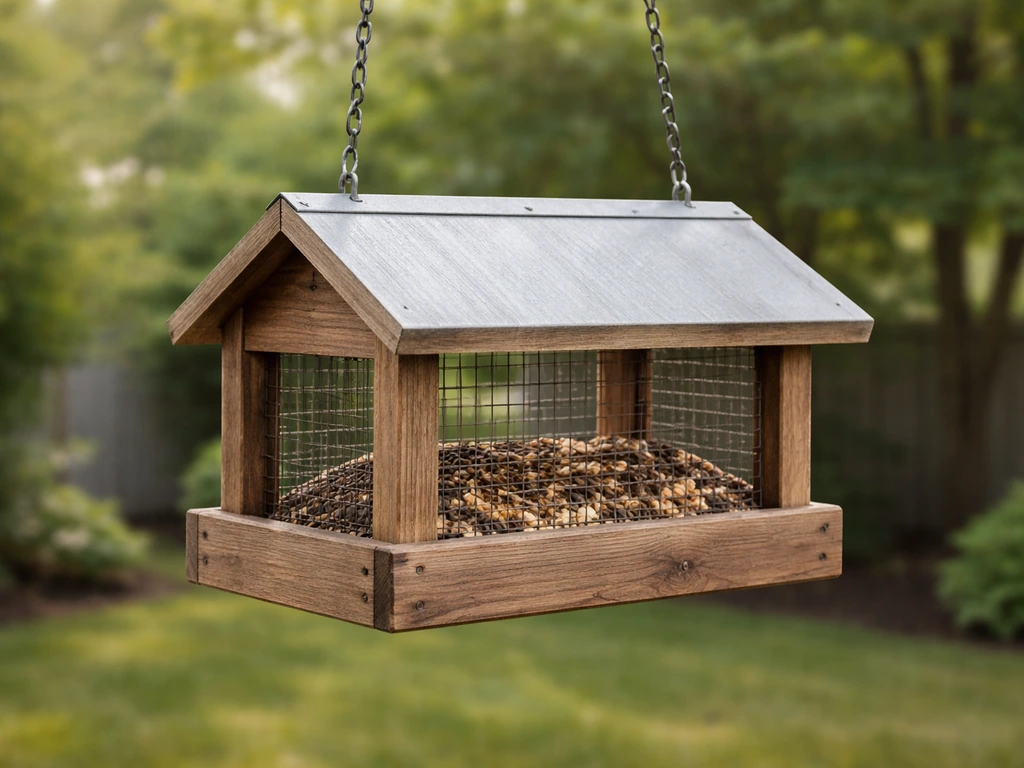
- Cut two side panels (6 inches wide x 10 inches tall), a back panel (8 inches wide x 12 inches tall), a front panel (8 inches wide x 6 inches tall for visibility/access), a roof panel (10 inches wide x 10 inches long), and a floor panel (8 x 6 inches).
- Drill several 1/4-inch drainage holes into the floor panel, or substitute a piece of 1/4-inch hardware cloth cut to size and stapled to the frame.
- Assemble the four walls with wood glue and exterior screws, checking for square corners.
- Attach the floor panel to the bottom of the box.
- Mount the roof panel using two small hinges at the back so it opens upward for easy refilling.
- Drill a hole through the center of the roof peak and thread an eye bolt through it, securing with a washer and nut on the inside.
- Apply exterior sealant or paint to all outer surfaces and let dry completely before use.
- Hang using chain or heavy paracord looped through the eye bolt.
This hopper design is one of the most practical setups for year-round use. The blank" rel="noopener noreferrer">walls and roof shield the seed from rain and wind, which means seed stays fresh longer and you waste less to spoilage. For hopper feeders, the U.S. Fish & Wildlife Service notes that blank" rel="noopener noreferrer">a hopper style would be best for helping keep seed in good condition by protecting it from rain. It's also deep enough to hold a good supply so you're not refilling every single day. If you want to add a seed port on the front panel, cut a 1-inch slot at the base of the front panel so seed can flow down to a small lip perch.
How to hang it safely and in the right location
Height matters more than most people realize. For most backyard species, hang feeders between 5 and 7 feet off the ground. That's high enough to deter cats and give birds a clear sightline, but low enough that you can refill and clean without a ladder. If you're hanging from a tree branch, choose a branch that's at least 1 inch in diameter and test it with a firm tug before loading any weight on it.
Distance from cover is a real tradeoff. Birds feel safer when there's a shrub or tree within about 10 feet to retreat to if they're spooked, but hanging the feeder too close to dense cover (within 3 feet of a fence, thick shrub, or building corner) gives squirrels and cats an easy launch pad. The sweet spot is 5 to 10 feet from cover with open airspace around the feeder itself. If you want to take the theme up a notch, swap the plain hanger for a Christmas wreath bird feeder and follow the same hanging and pest-proofing tips.
For window safety, place any feeder either within 3 feet of a window or more than 30 feet away. Feeders at mid-distance (5 to 25 feet) are where window strikes happen most because birds build up speed before impact. This is one of the most commonly overlooked placement details, and it genuinely matters.
Attachment methods by structure
| Mounting Point | Best Attachment Method | Notes |
|---|---|---|
| Tree branch | S-hook or snap clip over branch | Check branch diameter and stability first |
| Shepherd's hook | Snap clip or direct loop onto hook arm | Use a pole baffle below the arm for squirrel control |
| Eave or overhang | Screw hook into joist, not just siding | Hit the structural joist or use a toggle bolt |
| Fence post top | Eye bolt drilled into post top, short chain drop | Keep drop length short to reduce swing |
| Freestanding pole | Threaded arm bracket with locknut | Most stable option for heavy hopper designs |
Make it pest-resistant and reduce seed spillage
Squirrels are the main challenge with any hanging feeder, and the honest truth is that no single trick stops them permanently. The most reliable method is a combination of placement and a physical baffle. A pole-mounted shepherd's hook with a cone or cylinder baffle placed 4 to 5 feet up the pole works better than any hanging squirrel guard because it blocks the approach route entirely, not just the feeder itself.
For tree-hung feeders, the classic advice is to hang the feeder at least 10 feet from any jumping point (trunk, fence, building) and at least 6 feet below an overhanging branch. That's genuinely hard to achieve in most yards, which is why a shepherd's hook with a baffle is usually the more practical option.
Seed spillage attracts rats and mice, which is a bigger problem than most people expect. A few ways to reduce it: use a seed tray or catcher dish hung below the main feeder, switch to no-mess blends (hulled seed, shelled peanuts), and avoid millet-heavy mixes if you're not actively trying to attract ground feeders, since millet is the seed most birds toss aside. Clean spilled seed from the ground every few days, especially in warm months.
- Use a cone or cylinder baffle on any pole-mounted hanger (4 to 5 feet up the pole)
- Keep feeders at least 10 feet from trees, fences, or structures a squirrel can leap from
- Add a seed catcher tray below tube or bucket hangers to catch shell debris
- Switch to hulled or no-mess seed blends to cut ground mess by 50% or more
- Bring feeders in at night if rats are a known issue in your area
- Add a rain guard above open trays (a simple inverted plastic saucer on the cord works fine)
Troubleshooting common issues after setup
Seed clumping and blocking
This is the most common complaint, especially after rain or in humid weather. Wet seed clumps and blocks the feed ports or mesh, and if it sits long enough it molds. The fix is two-part: improve drainage on your hanger (add more or larger drainage holes) and switch to a seed blend with less powder and filler. Straight sunflower hearts or safflower seed clumps far less than typical wild bird mixes with lots of milo or cracked corn filler.
Feeder swinging too much in wind
A feeder that spins and swings in the wind makes birds nervous and spills seed constantly. The most effective fix is shortening the drop length so there's less cord between the attachment point and the feeder, ideally 6 to 12 inches rather than a long rope. You can also add a stabilizer arm: a short horizontal bracket that keeps the feeder from rotating. If you're hanging from a cord, twist a small weight (like a steel washer or two) onto the cord just below the attachment point to add some resistance.
Weak knots slipping or cord breaking
If a feeder drops, it usually means the knot was a simple overhand or the cord was thinner than 3mm. Use a bowline knot for any load-bearing loop as it's the standard for a reason: it doesn't slip under load, and it's easy to untie. For anything over a pound (most bucket or box hangers), use braided nylon rope at 4mm minimum or switch to light chain. Check all knots every month, especially after a wet season when rope fibers swell and then dry weakened.
Difficulty refilling
If refilling your hanger is annoying, you won't do it consistently, and that's when birds stop visiting. The fix is almost always hardware: replace a tied loop with a snap clip or carabiner so you can lower the feeder in seconds, or add hinges to a box feeder lid so you can fill from the top without dismounting anything. This is worth spending 10 minutes on upfront.
Birds not visiting after setup
Give it at least two weeks, especially if you're new to feeding in that spot. Birds need time to find a new food source. If nothing shows up after two weeks, check: is the feeder too close to a high-traffic area (driveway, back door)? Is the seed fresh and not stale or clumped? Are there no nearby perches or shrubs within reasonable distance? Try moving the feeder 10 to 15 feet and see if that changes anything.
Maintenance and upkeep: cleaning, refilling, and repair
A dirty feeder can spread avian diseases between birds, so this matters beyond just aesthetics. The basic schedule is a full scrub every 2 to 4 weeks during active feeding seasons. For mesh bag hangers, just replace the bag (they're cheap and not worth cleaning). For trays and box feeders, scrub with a solution of 1 part bleach to 9 parts water, rinse thoroughly, and let dry completely before refilling. Never refill a wet feeder as seed mold grows fast.
Check your hardware every time you refill. Give the hanging cord or chain a firm tug. Look at the attachment knot or clip for fraying or rust. Check any screw hooks or eye bolts for wobble in their mounting point. Tighten or replace anything that feels loose. This takes about 30 seconds and prevents the annoying experience of a feeder crashing down on a calm day.
For wooden hopper hangers, inspect the sealant or paint every spring. Cracked sealant lets water into the wood, which leads to rot and warping within a season. Lightly sand any peeling spots and re-coat with exterior sealant or a water-based outdoor paint. Cedar and redwood resist this far better than pine, which is one reason they're worth the extra cost if you're building something meant to last more than a year or two.
Quick maintenance schedule
| Task | Frequency | Notes |
|---|---|---|
| Refill seed | Every 2 to 5 days (active season) | Check for clumping or mold before topping off |
| Remove spilled seed from ground | Every 2 to 3 days | Reduces rat and pest activity significantly |
| Full feeder scrub and rinse | Every 2 to 4 weeks | Use diluted bleach solution, dry completely before refilling |
| Hardware inspection (cord, clips, knots) | Every refill | 30-second check, replace any frayed or rusted parts immediately |
| Sealant and paint check (wood feeders) | Every spring | Re-coat any cracked or peeling areas before the rainy season |
| Full replacement of mesh bags or rope | Every season or when worn | Cheap materials; don't wait for failure before replacing |
If you're just getting started, build the mesh bag hanger first and hang it from a shepherd's hook with a cone baffle. That setup costs under $15, takes less than 10 minutes, and will tell you immediately which birds are in your yard and whether squirrels are going to be a problem. Once you know what you're dealing with, scaling up to a rope-and-tray or hanging hopper box makes a lot more sense and you'll know exactly what features you need. If you're already running a more elaborate setup with seed bells, wreaths, or bottle feeders, the same hardware principles apply: short drop lengths, swivel clips for easy removal, and regular hardware checks keep everything working season after season.
FAQ
Can I make a bird seed hanger without buying hardware like clips or swivels?
Yes, but keep the hanger separate from the seed container so it can be removed for cleaning. If you use rope, choose UV-resistant cord and burn or tape the rope ends to prevent unraveling, then use a loop that can be untied or clipped off in seconds.
What’s the best way to prevent seed hangers from rusting or breaking where the rope meets the hook?
If your hanger uses a metal hook or eye bolt, wrap the contact point with a short piece of heat-shrink tubing or cloth tape to reduce seed grinding and corrosion. Also, avoid thinner hooks with sharp bends, they can deform and start slipping over time.
How do I know if my knot will actually hold the weight of a loaded seed bag?
For small birds on mesh bags, a standard knot is usually fine, but if you notice any slip or the bag sags under its own weight, switch to a bowline loop for the load-bearing connection. Re-tie or replace any section that has stretched, especially after wet weather.
What should I do if my hanging feeder keeps twisting or tilting even after I retie the cords?
Use two separate tie points, one on each side of the feeder, and keep them the same length so the feeder hangs level. If it tilts, shorten only the higher side and then confirm the feeder still drains, because drainage problems can also cause mold and clogs.
Will thicker rope or cord stop squirrels from getting into a mesh bag feeder?
If you’re worried about squirrels chewing the hanger, don’t rely only on thicker rope. Upgrade the part the animal can reach, use a cone or cylinder baffle higher on a shepherd’s hook, and consider using a tube or box with a hard access opening rather than exposed mesh.
My DIY bird seed hanger is working, but no birds are visiting. What should I check first?
If the feeder is cleaned but birds still ignore it, check for two things: freshness and scent. Wet, stale, or clumped seed smells different and won’t attract quickly, and in new setups you may need to start with a simple, familiar blend (like sunflower or safflower) for faster discovery.
How do I stop seed from molding in a hanging setup after humid or rainy days?
To reduce mold, make the hanger “dry fast” by adding extra drainage holes or choosing a container that sheds water quickly, and only fill to a level you can top up within a day or two during humid weather. If seed is clumping, swap blends to lower-filler options like straight hearts or safflower.
Is 5 to 7 feet always the best height, and what changes if I’m hanging from a tree branch?
For most yards, aim for 5 to 7 feet, and test branch strength before loading. If you must hang higher for cats, use a shorter drop and a sturdy connection so wind doesn’t swing the feeder excessively and spill seed.
What’s the safest way to manage seed spillage so it doesn’t attract rodents?
Use a seed catcher tray or dish hung below, then remove it regularly, because trapped seed also attracts mice and rats. Avoid letting spilled seed accumulate in corners near the feeder, especially if you have pets or outdoor cats.
How often should I inspect and replace parts like rope, knots, and connectors?
If a bird seed hanger is outdoors year-round, inspect the rope or cord every couple of weeks during the first month, then at least monthly after that. Replace frayed sections immediately, and re-check knots after storms because swelling and drying can weaken rope.