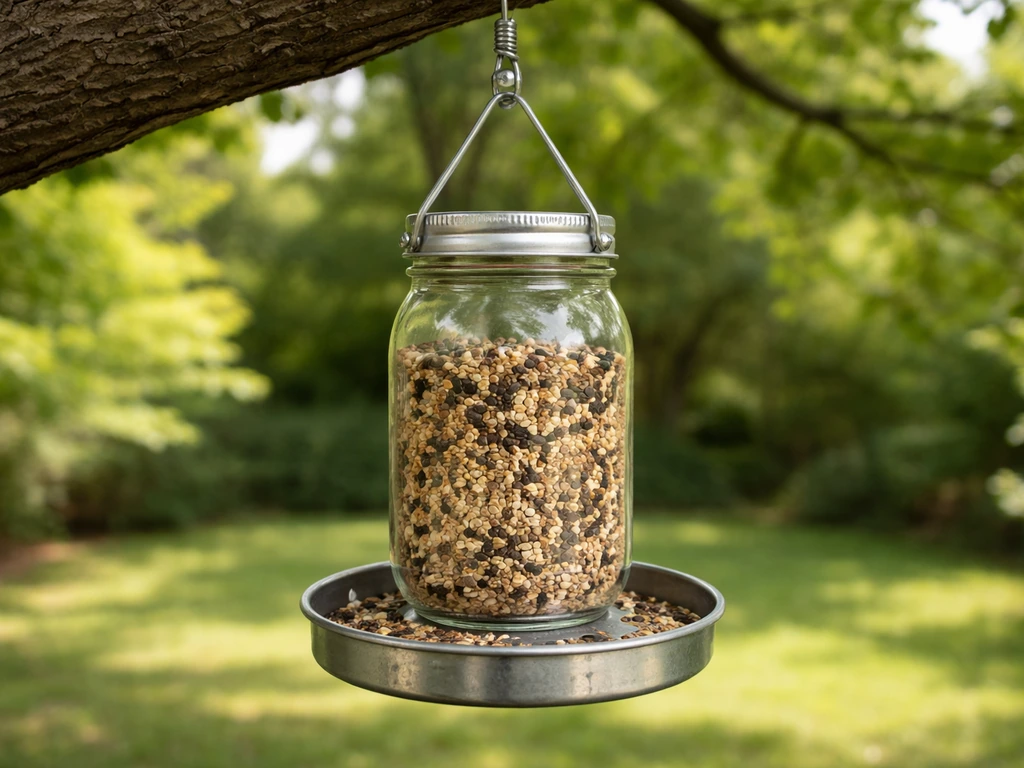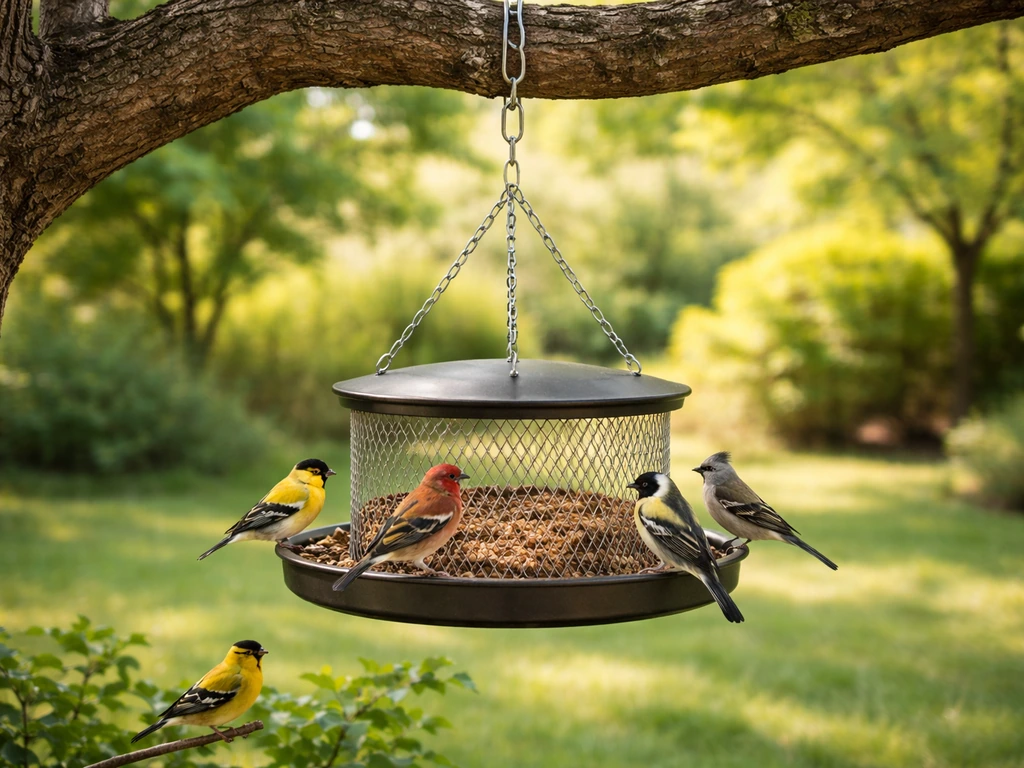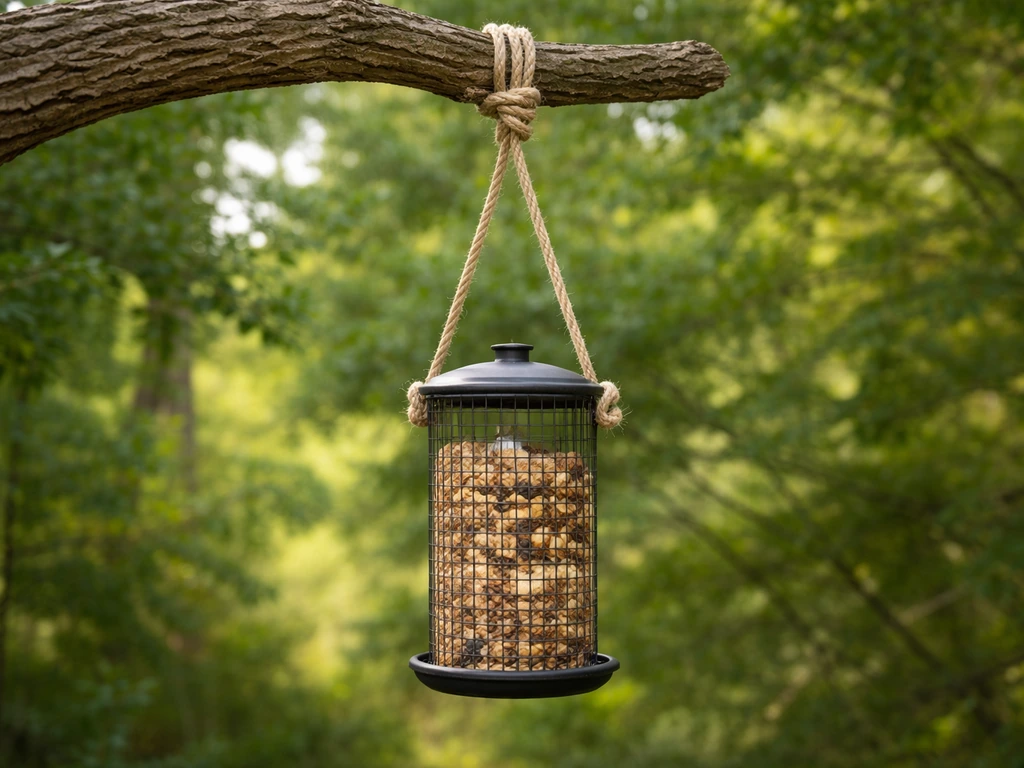
Hang your pine cone bird feeder about 5 feet off the ground, at least 10 feet away from fences, deck railings, or tree trunks, and within clear sightlines from a window you actually sit near. Use a 12-inch length of sturdy twine or wire looped through or around the top of the cone, tied with a double knot, and clipped to a hook or branch. That setup covers the basics for most backyards. If you want to build or choose a pine cone feeder first, follow a simple hanging bird feeder recipe and then use these placement and mounting tips. Everything below will help you dial it in for your specific space, the season, and whatever pests show up. If you are using a mason jar bird feeder instead of a pine cone feeder, the same hanging principles will help you choose a safe spot and get it secure.
How to Hang a Pine Cone Bird Feeder: Placement Tips
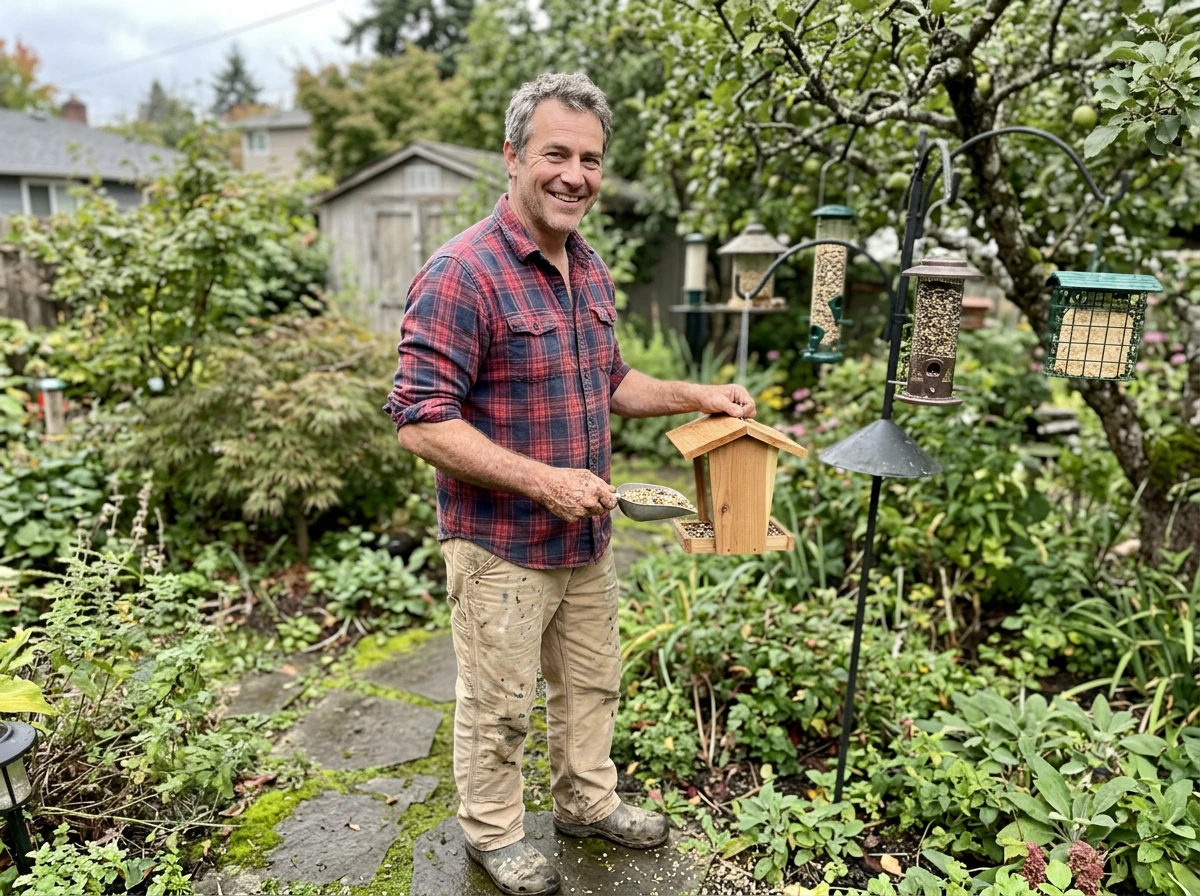
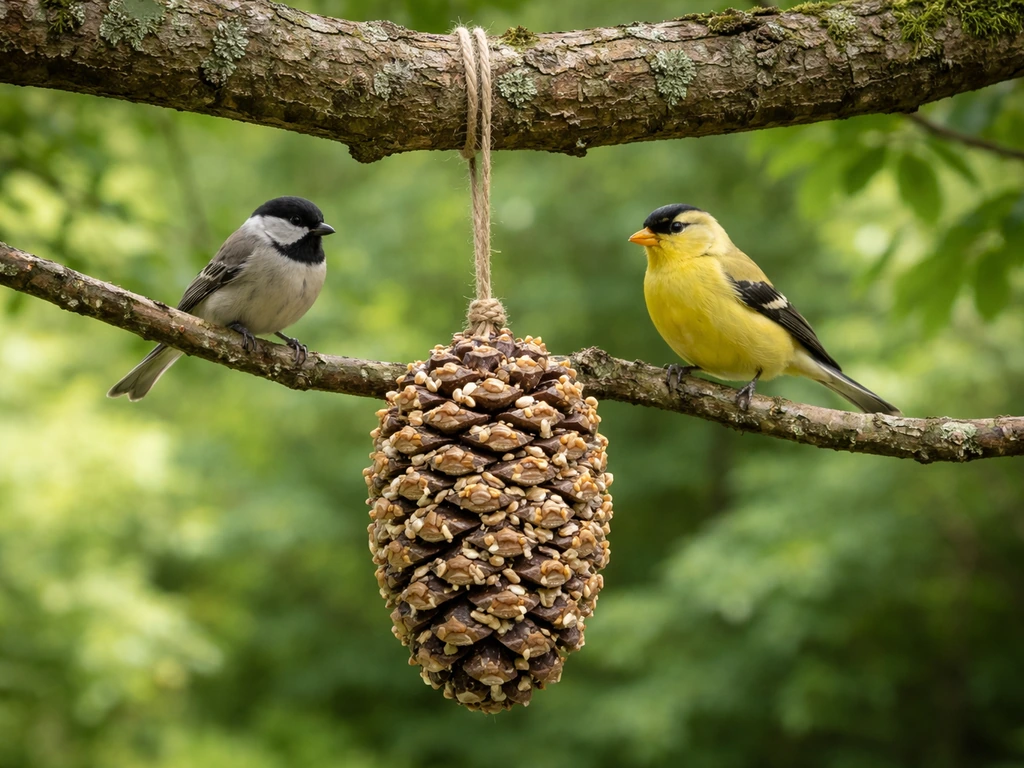
Best height and visibility for pine cone feeders
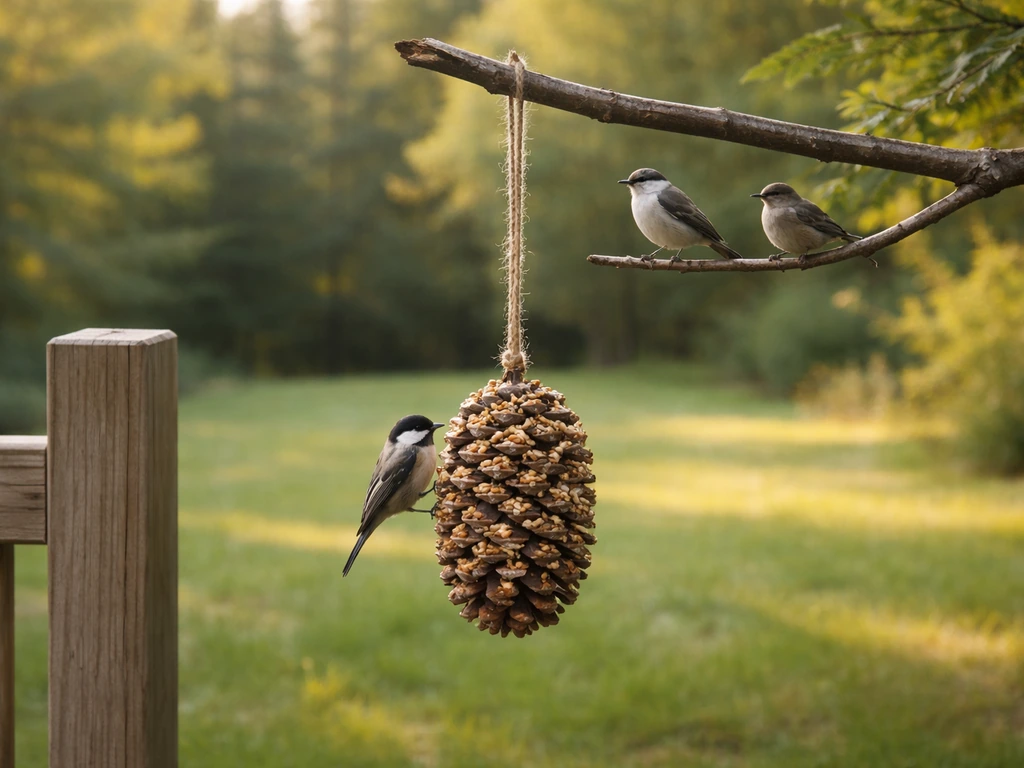
The sweet spot for hanging a pine cone feeder is right around 5 feet off the ground. That height keeps the feeder accessible to small perching birds like chickadees, nuthatches, and finches, while putting it just out of easy reach for cats stalking from below. Low feeders, say 2 to 3 feet up, are genuinely risky because a crouching cat can close that gap fast. Go much higher than 6 or 7 feet and you start making it harder for birds to spot and feel safe landing on something that sways.
Visibility matters too, and not just for the birds. Hang it somewhere you can actually watch from inside. Pick a spot with a clear line of sight from a favorite chair or kitchen window. If it's hidden behind a shrub or tucked around a corner, you'll forget to check it and the peanut butter will go rancid before you notice.
One thing to think about carefully: window strikes. If you hang the feeder within 3 feet of a window (basically affixed to the frame or right next to the glass), birds won't be moving fast enough to seriously injure themselves if they do hit the glass. The dangerous middle zone is roughly 3 to 30 feet from a window, where birds build up speed. If that middle-zone placement is your only option, 10 feet from the glass is a reasonable compromise, and using window decals or tape to break up the reflection helps reduce strikes, especially in fall and winter when collision risk is highest.
Where to hang it: keeping birds safe from predators and weather
Safety is really two problems at once: protecting birds from things that want to eat them, and protecting the feeder from things that want to eat the food. For predator safety, placement near dense shrubs or brush piles is a double-edged sword. Birds like having cover nearby to dart into if a hawk shows up, but that same cover is exactly where cats wait. The National Wildlife Federation recommends keeping feeding areas at least 10 to 12 feet away from cat hiding spots. A good rule: if the space under or around the feeder looks like good ambush habitat, move the feeder.
For weather protection, you want some overhead shelter without completely blocking the feeder. A branch with leafy or evergreen cover above it breaks wind and sheds rain without creating a cave. Fully exposed spots in open air mean the peanut butter and seed coating on your pine cone will get soaked, go rancid quickly, and become moldy faster. A little natural overhead coverage extends the life of each feeder by days.
Wind is a specific problem with pine cone feeders because they're light and will spin and swing dramatically in a strong gust. That movement actually startles birds and makes them less likely to use the feeder. If you're in a consistently windy spot, hang it lower on a branch with multiple attachment points (two strings instead of one) to reduce the swing radius.
How to hang it: string, wire, clips, and hooks
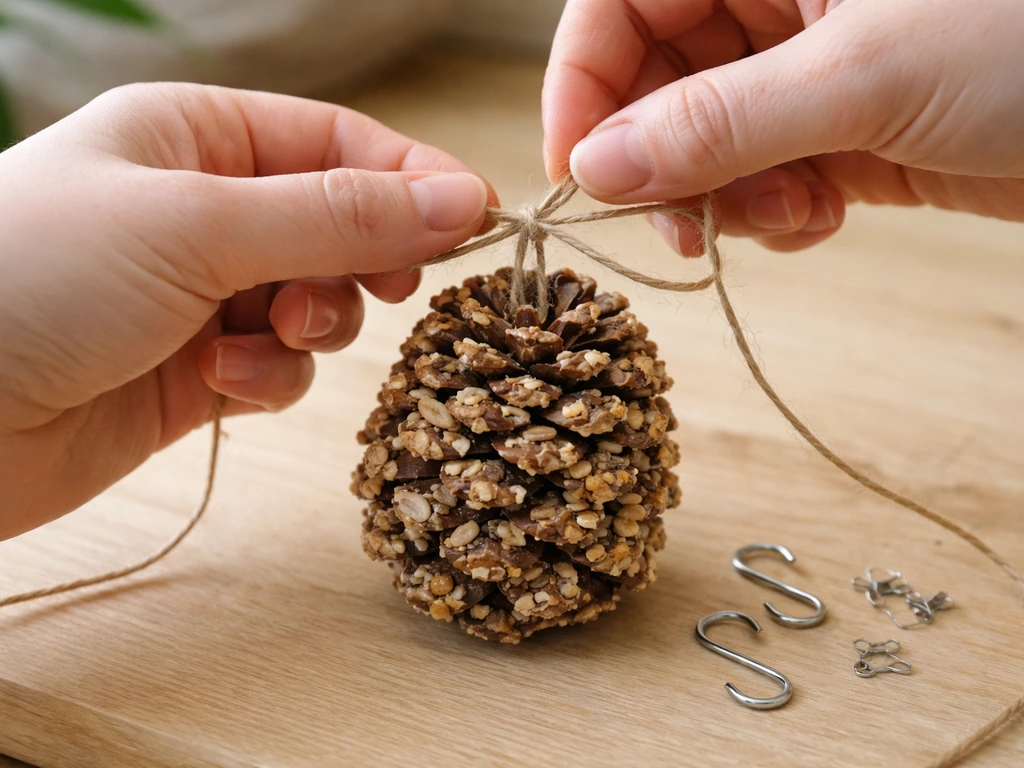
For most pine cone feeders, the hanging method is simple: blank" rel="noopener noreferrer">cut about 12 inches of sturdy twine, jute cord, or thin wire. If your pine cone has a natural gap at the top between the scales, loop the string around the top section and tie it there. If you made the feeder yourself, poke a small hole through the base of the top and thread the string through before knotting. Either way, finish with a double knot and give the feeder a firm tug to test it before hanging. If you want a little extra control, you can also hang the feeder using a pulley so you can lower and raise it safely without reaching up Either way, finish with a double knot and give the feeder a firm tug. Bird activity creates constant small vibrations and the occasional hard pull, so a loose knot will fail eventually.
From there, you have a few options for the actual hanging point:
- S-hook on a branch: slip one end over the branch, clip the feeder string to the other end. Easy to move and reposition.
- Screw-in hook: works well for wooden fence posts, deck railings, or balcony overhangs. Drill a pilot hole first so the wood doesn't split.
- Carabiner clip: good for balcony railings where you want to swap feeders in and out quickly.
- Zip ties or wire wrap: if you're attaching to a thin branch or wire railing without a hook, wrap and twist wire or a zip tie around the anchor point and loop the feeder string through it.
- Plant hanger arm: a small shepherd's crook or plant hanger arm screwed into a fence post or deck board gives you a clean adjustable hang point away from the surface, which also helps with squirrel access.
Whatever hardware you use, make sure the anchor point can handle the feeder swinging in wind without loosening over time. Screw-in hooks have a tendency to back out of softwood over a few weeks, so check them every time you reload the feeder.
Tree, balcony, or fence: picking the right spot for your space
Where you hang it depends a lot on what you actually have access to. Here's how each option stacks up:
| Location | Best for | Main challenge | Quick fix |
|---|---|---|---|
| Tree branch | Most natural setup, great bird traffic | Squirrel access and wind swing | Hang at least 10 ft from the trunk, use a baffle on the line |
| Balcony railing or overhang | Apartment or condo dwellers, easy access | Wind exposure, limited distance from windows | Use a hook arm to extend feeder away from railing; add window decals |
| Fence post or fence rail | Good for yards without suitable trees | Close to ground-level predators, cat access | Mount high on the post (5 ft+), keep surrounding ground clear |
| Dedicated shepherd's crook pole | Best squirrel control, most flexibility | Requires open lawn space away from launch points | Position 10–12 ft from trees and structures, add a baffle at 4–5 ft |
If you have a good tree, that's usually the best starting point. Look for a branch that's at least an inch thick, extends somewhat away from the main trunk (so it's not a highway for squirrels), and has a little natural cover above it. Avoid branches directly over pathways where falling seed and droppings become a mess. If you're working with a balcony or fence, a small hook arm that extends the feeder 6 to 12 inches out from the surface makes a real difference in bird confidence and keeps the feeder from banging against a wall in wind. If you are working with a wall instead of a tree or balcony, follow these steps for a simple wall mounted bird feeder setup how to make a wall mounted bird feeder.
Adjusting placement by season
Spring and summer bring more leaf cover, more bird species, and more insect food competition. Your pine cone feeder will probably see lighter traffic in peak summer because birds are eating bugs and fruit. Keep it up anyway, especially if you have suet-loving species around, but focus placement on visibility and ease of cleaning rather than maximizing traffic. Shade matters more in summer too: a feeder baking in direct afternoon sun will melt the peanut butter coating and turn it rancid within a day or two.
In fall and winter, priorities shift. Bird traffic picks up significantly as insects disappear and migrants pass through. Move the feeder to a spot with more wind protection if your summer location was exposed. Deciduous branches that offered leaf cover are now bare, so you may want to relocate under an evergreen or closer to a sheltered wall. Window strike risk is also higher in fall and winter, so if you haven't already dealt with window reflection near your feeder, that's the time to add decals or tape to the glass.
Winter also means checking the feeder more frequently. Peanut butter mixed with seeds can freeze solid and become inaccessible in hard freezes. In that case, bring the feeder indoors overnight and rehang it in the morning, or switch to a recipe that includes lard, which stays softer at low temperatures.
Dealing with squirrels, ants, rain, and mold
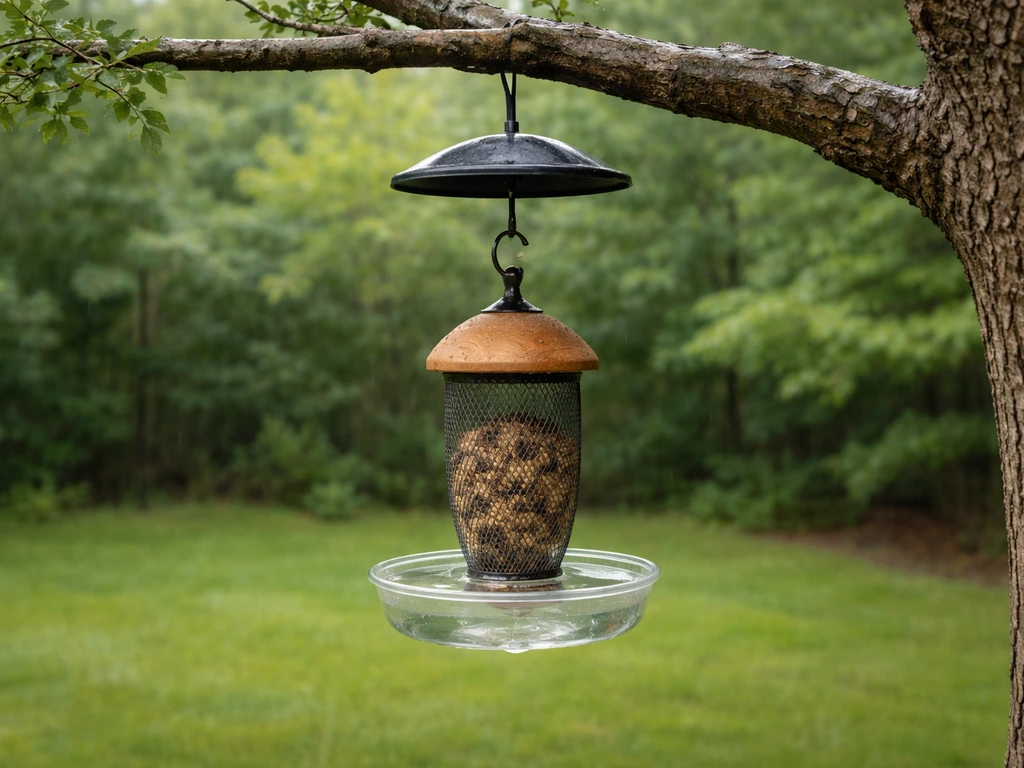
Squirrels
Squirrels are the most common problem, and with pine cone feeders they can clean one out in minutes. The two-part solution is distance and baffles. Keep the feeder at least 10 to 12 feet horizontally from any launch point: tree trunks, fence rails, deck edges, pergola posts. Squirrels can jump farther than most people realize, so measure it rather than eyeballing it. If you're hanging from a pole, add a baffle (a domed squirrel guard) positioned 4 to 5 feet off the ground on the pole below the feeder. That combination of distance and baffle stops the vast majority of squirrel attempts.
Ants
Ants follow the string or wire up to the feeder, especially when there's anything sweet in the coating. The simplest fix is an ant moat: a small cup of water placed on the hanging line above the feeder that ants can't cross. You can buy these cheaply or make one from a bottle cap with a hole punched through the center. Keep it filled, especially in dry weather when ants are foraging more aggressively.
Rain and mold
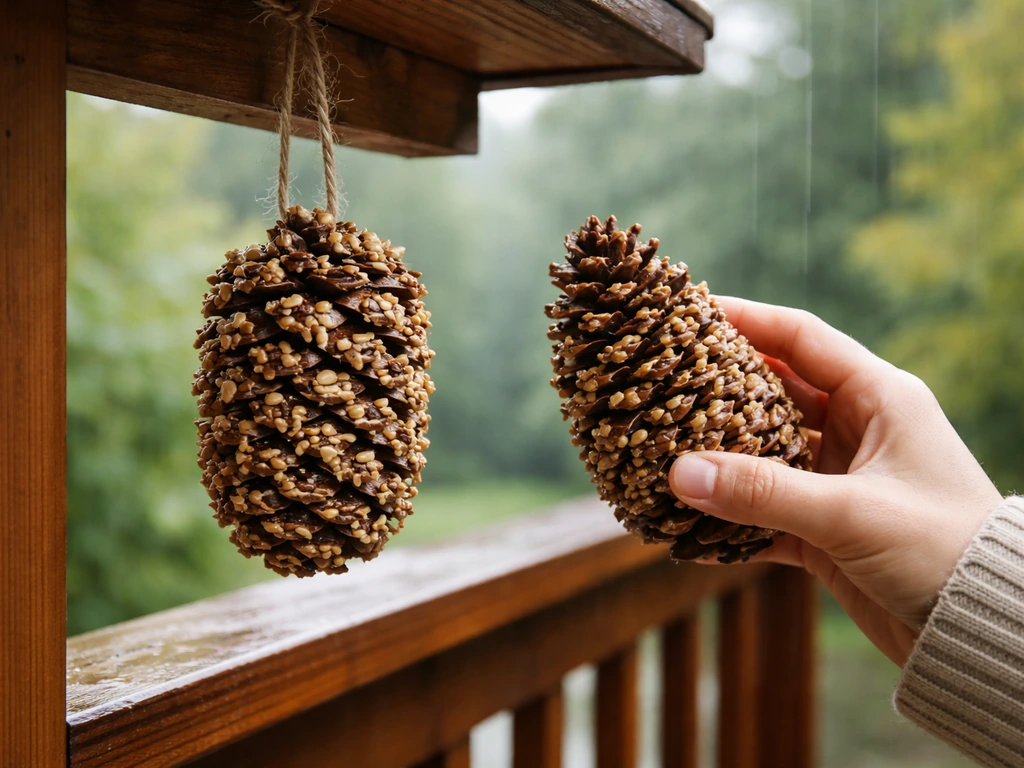
Rain is the pine cone feeder's biggest enemy. A soaked feeder with wet seed and peanut butter will grow mold within a day or two in warm weather. Overhead cover helps, but after heavy rain you should inspect the feeder and replace it if the coating looks washed out, slimy, or discolored. Pine cone feeders are inexpensive and quick to make, so don't try to rescue a moldy one. Toss it, rinse the string, and hang a fresh one. Clean up any fallen seed below the feeder regularly too, since wet seed on the ground is a disease risk for ground-feeding birds and will attract rodents.
As a general rule, plan to refresh your pine cone feeder every one to two weeks, more often in hot or humid weather. That schedule keeps the food safe and the feeder from becoming a hygiene problem. If you're building your own feeders, rolling a fresh batch takes only a few minutes once you have the materials ready, so it's not a big ask to swap them on a regular rotation.
Your quick-start plan
To pull this all together: pick a spot about 5 feet up with some overhead cover, at least 10 feet from squirrel launch points and cat hiding spots, within sightlines of a window you use. Hang it with 12 inches of sturdy twine tied in a double knot, clipped to an S-hook or screw-in hook at your chosen anchor point. Check the feeder every few days, replace it every one to two weeks or after heavy rain, and adjust the position seasonally as leaf cover and bird behavior change. If you are new to suet feeders, the placement rules stay similar: hang it where birds can see it safely and keep it away from predators and window strikes adjust the position seasonally. That's really the whole system. Start there, watch how the birds respond, and move it if traffic is slow after a week. Most placement problems solve themselves with one or two small adjustments.
FAQ
How can I tell if my knot and hanging line will not slip as birds pull on the pine cone?
Use a hook or branch anchor that lets the feeder hang freely and swing slightly without twisting the string tight against the top. A good quick check is to push the cone gently with your finger, it should return to center without the knot slipping or the cord rotating into a single tight twist point.
Can I hang a pine cone bird feeder from a railing or wall instead of a tree branch?
Yes, but only if it does not create a rigid “banging” setup. Aim for a branch that is strong and low enough to keep the feeder around the target height, and position the hanging point so the cone swings under it rather than hitting the trunk or wall when wind gusts.
What should I do if my yard layout makes it hard to keep the feeder 10 feet from cats?
If you are outside the 10-foot buffer from cat hiding spots but you still want to feed safely, focus on visibility and add physical barriers such as a baffle on the supporting pole, or move the feeder farther horizontally rather than lower to “compensate.” Cats can pounce upward from hidden areas, so height alone is not a solution.
My pine cone feeder gets messy after rain, is it better to move it or change the recipe?
Use less-sloshing packing by tying from the top opening so the cone stays level, and choose a spot with overhead shelter to reduce soak-through. If the coating regularly washes out, it is better to reduce rain exposure or switch to a formulation that tolerates moisture than to keep trying to reuse a damaged feeder.
How often should I inspect the hanging hardware during windy weather?
After strong gusts, re-check the entire hanging system, especially where the cord meets the pine cone and where it attaches to the hook. Pine cone feeders spin more in wind, so loose anchors that seemed fine on day one can fail after repeated sway cycles.
If I cannot hang it around 5 feet, what height should I target instead?
Keep it high enough for small perching birds but avoid making it difficult to land. If you can’t hit the ideal height, prioritize predator and cat safety and select a branch that provides a stable perch area, then monitor whether birds avoid the feeder for more than a few days.
If ants are reaching the feeder, will moving it help or should I use an ant moat?
Yes, but place the hanging line so it does not run near the feeder like a “zipline.” Twine can also attract ants because they follow it, so adding an ant moat on the hanging line above the feeder is more effective than just relocating within the same zone.
What’s the safest way to rehang after I remove the feeder for cleaning?
Avoid rope bridges and loose cords that can fray or separate when the feeder sways. If the birds pull hard, cut a new length of twine, tie a fresh double knot, and give it a firm tug before rehang rather than trying to retighten the same section repeatedly.
How do I decide where to place a baffle if I hang the feeder from a pole?
Squirrels can exploit short distances and launch points. First measure from the most likely “jump-off” area, not just the nearest fence or trunk, then add a baffle if you are hanging on a pole so the squirrel can’t access the line or climb higher quickly.
Does the feeder need to be visible from a specific window, or is any window fine?
If you have low light in the viewing area, pick a location that is visible from where you will actually check it, since you are less likely to catch rancid or moldy food. Birds may still visit, but you will miss the hygiene window, especially during humid weather.
What if I only have a branch over a path, is that still okay?
Do not hang the feeder directly over walkways where droppings will land. If you must use that side of the yard, shift the anchor so the feeder hangs over a mulch or bare ground area you can clean easily, and consider a slightly more sheltered branch to reduce scatter during windy days.
How should I handle a feeder after it becomes moldy or the coating turns slimy?
If the cone is soaked, slimy, or discolored, do not try to salvage it. Replace the pine cone feeder and rinse the hanging line, then scrape up fallen seed so ground-feeding birds do not pick at damp food that can become a disease and rodent attractant.