The fastest way to get a working bird feeder up today is to grab a plastic bottle or a pinecone from the yard, spend 15 minutes building something simple, and hang it 5 to 10 feet off the ground in a spot with nearby shrubs for cover. If you want the full walkthrough, start with the step-by-step approach for how to draw a bird feeder and adjust it to your materials and yard. That gets birds visiting within a few days. If you want something more durable, a basic wooden platform feeder built from scrap wood takes a couple of hours and lasts for years. Either way, the feeder itself is only part of the equation. Where you hang it, what food you put in it, and how often you clean it will determine whether birds actually show up and stick around.
Bird Feeder Tutorial: Build, Place, and Troubleshoot Any Feeder
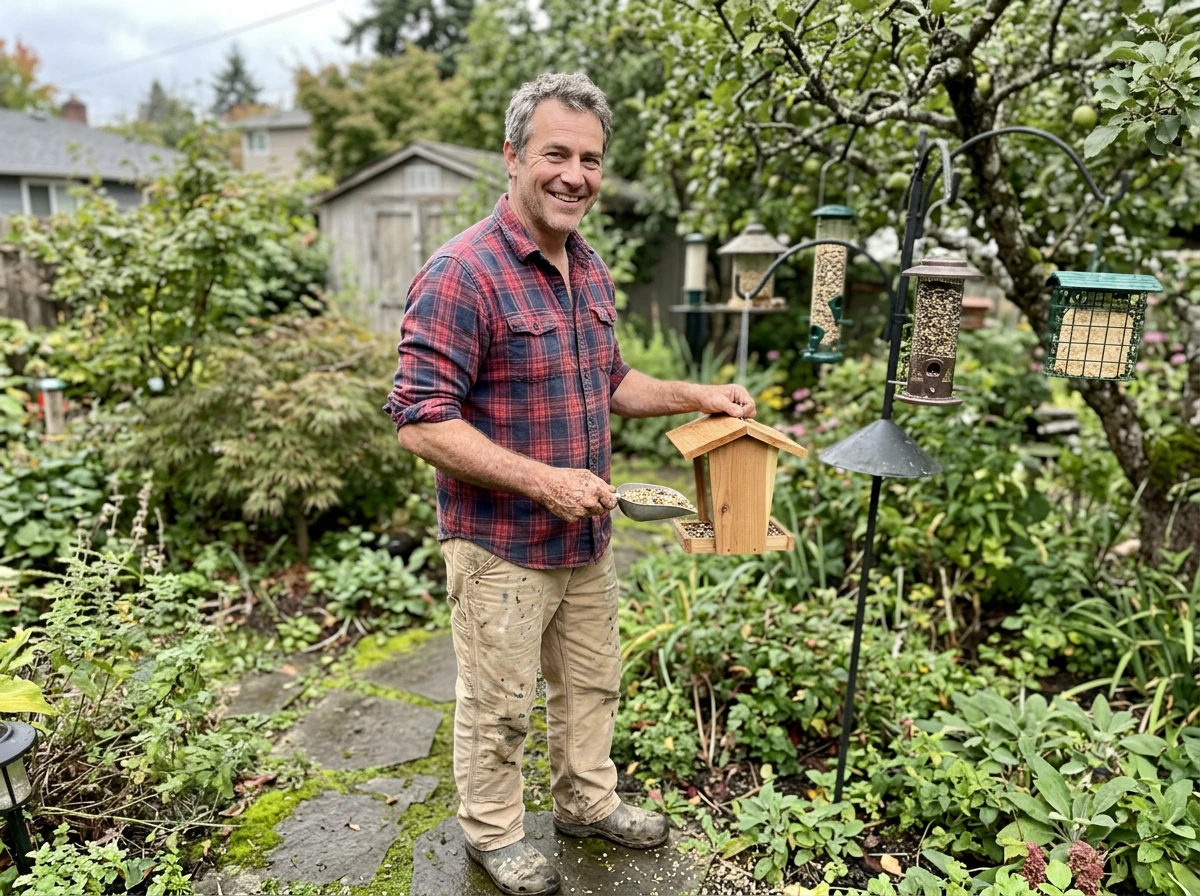
Pick the best feeder type for your yard
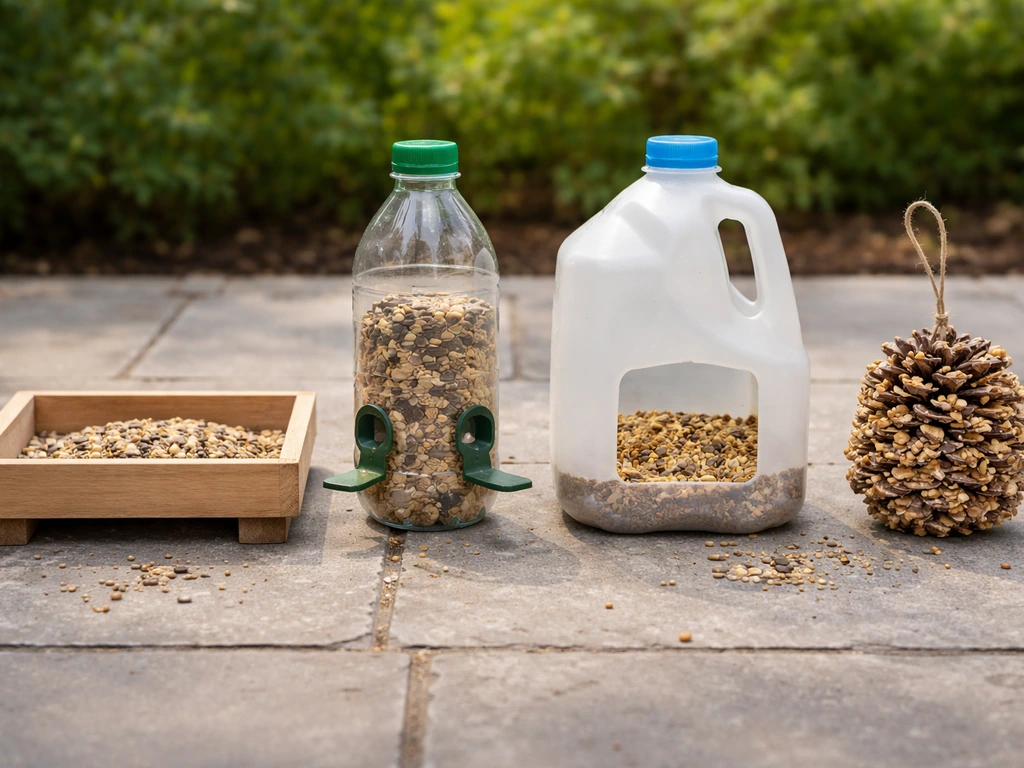
The feeder type you choose changes which birds visit, how much maintenance you're signing up for, and how squirrel-proof the whole setup is. There's no single best option, but there's definitely a best option for your specific yard and goals.
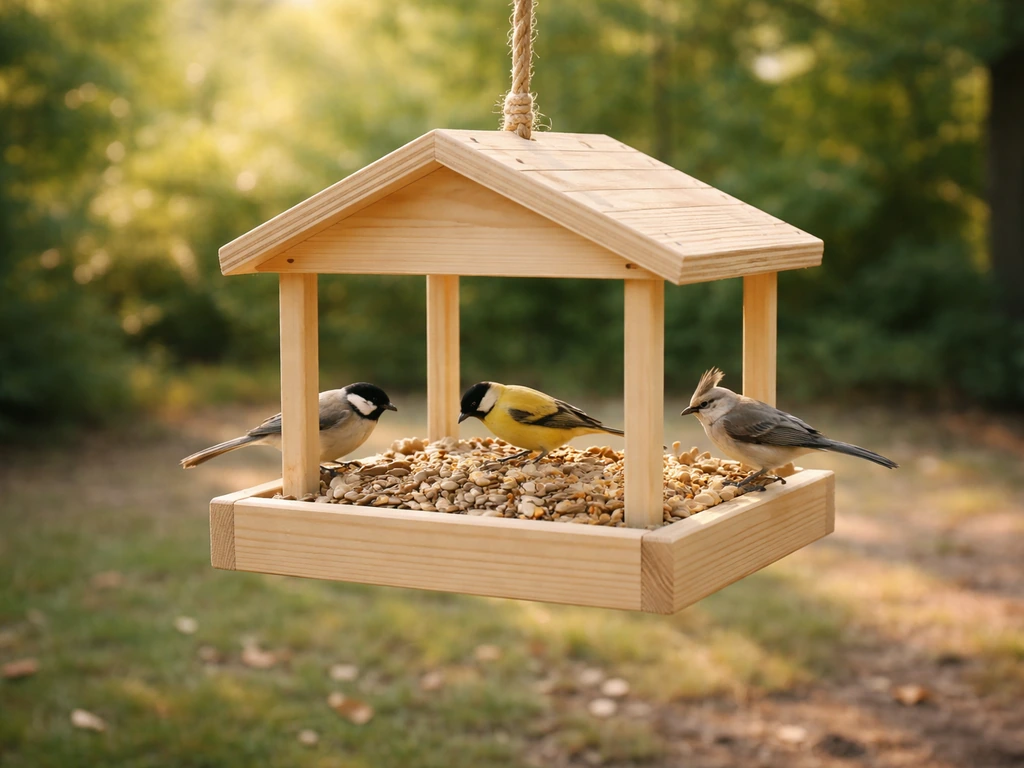
Platform feeders (flat, tray-style surfaces) attract the widest variety of seed-eating birds and are the easiest to build from scratch. The downside is that they're completely open, so squirrels love them and rain can spoil the seed fast. Tube feeders are better for controlling access and keeping seed dry, but they favor smaller birds like finches and chickadees. Hopper feeders sit in the middle: they protect seed from weather and attract a solid range of shrub and treetop feeders. Suet cages are a completely different category and are the go-to for woodpeckers, nuthatches, and chickadees, hang them high on a tree trunk or post and you'll see results quickly. Ground feeding species like sparrows and doves often won't visit elevated feeders at all, so if those are the birds in your yard, a low platform or tray is the right call.
For most beginners, I recommend starting with a platform or hopper-style feeder filled with black-oil sunflower seeds. It covers the broadest range of backyard birds with the least fuss. Once you know which birds are visiting, you can add a tube or suet feeder to target specific species.
| Feeder Type | Best For | Bird Variety | Squirrel Risk | Weather Protection |
|---|---|---|---|---|
| Platform/Tray | Beginners, ground feeders | Widest variety | High | None (open) |
| Hopper | General backyard use | Wide variety | Medium | Good |
| Tube | Finches, small birds | Moderate | Lower | Good |
| Suet Cage | Woodpeckers, nuthatches, chickadees | Narrow but consistent | Low | Minimal |
| Bottle/Jug (DIY) | Quick builds, beginners | Small-medium birds | Medium | Moderate |
Step-by-step DIY builds
All four of these builds work. I've tried each of them and they all attract birds reliably. Pick the one that matches your materials and skill level right now.
Wooden platform feeder (2 to 3 hours, most durable)
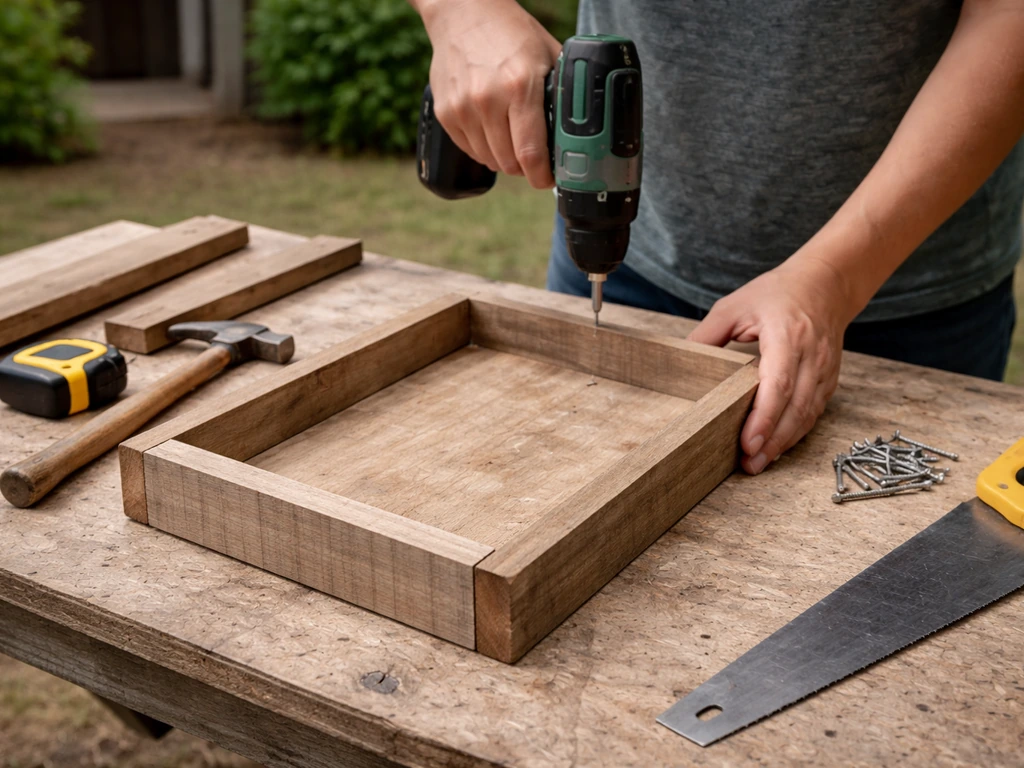
A wooden platform feeder is the most rewarding build and genuinely lasts years if you use outdoor-grade or reclaimed wood. USA Gardening’s DIY wooden bird feeder guidance specifically calls for using reclaimed wood and building a large-capacity feeder. You don't need to be handy, if you can make straight cuts and drive screws, you can build this.
What you need: a piece of wood roughly 12 by 16 inches for the base (reclaimed fence board or cedar works great), four short lengths of 1x2 lumber for the side rails (about 1 inch tall to keep seed from blowing off), a drill, screws, and a piece of hardware mesh or just a drill bit for drainage holes.
- Cut your base board to size (12 by 16 inches is a good starting point — large enough for several birds to feed at once).
- Drill drainage holes across the base — about 8 to 10 holes with a 3/8-inch bit — so rain doesn't pool and rot your seed.
- Cut four side rail pieces to border the tray, leaving the corners open slightly so water and debris can drain.
- Screw the rails to the edges of the base plate, flush with the bottom surface.
- Sand any rough edges so birds don't catch their feet.
- Drill a hole in each corner or attach a central hanging hook to the underside of the base for mounting.
- If painting or sealing, use a non-toxic, water-based sealant and let it cure fully before adding seed.
Plastic bottle feeder (20 minutes, beginner-friendly)
This is the build I recommend to anyone who wants birds visiting this week without spending money. A clean 2-liter bottle is all you really need.
What you need: a clean 2-liter plastic bottle with lid, a chopstick or wooden dowel, scissors or a craft knife, twine or wire for hanging.
- Rinse the bottle thoroughly and let it dry completely.
- Cut two small feeding holes on opposite sides of the bottle, about 2 to 3 inches up from the bottom. Make them roughly the size of a quarter.
- Just below each feeding hole, poke a small hole sized for your chopstick or dowel — this becomes the perch.
- Push the chopstick all the way through both perch holes so it sticks out a few inches on each side.
- Drill or punch 4 to 6 small drainage holes in the very bottom of the bottle.
- Fill the bottle with birdseed through the top opening, then screw the lid back on.
- Tie twine securely around the neck of the bottle or thread wire through the lid for hanging.
Milk jug feeder (20 to 30 minutes, great for larger seed capacity)
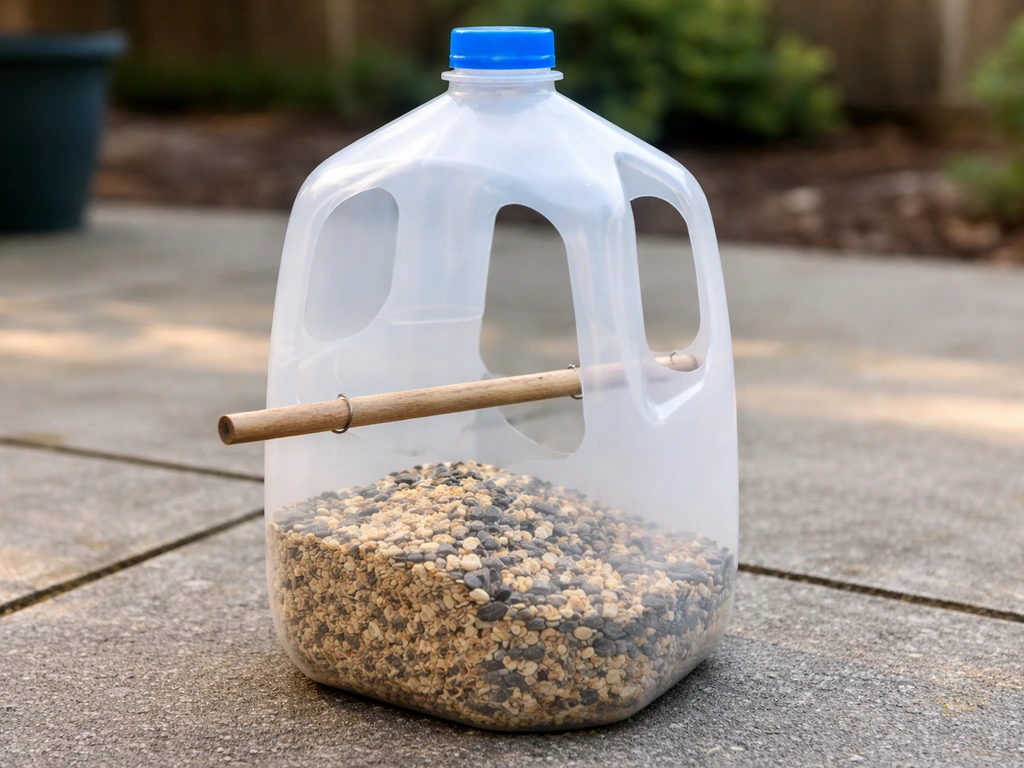
A gallon milk jug holds more seed than a bottle and is easy for kids to make. The wide body also gives you more flexibility for cutting bigger openings.
What you need: a clean gallon milk jug, scissors or craft knife, a twig or small dowel for the perch, twine or wire.
- Rinse the jug and let it dry completely — any milk residue will mold fast.
- Cut two large openings on opposite sides of the jug, starting about 3 inches up from the base. Make each opening roughly 3 by 4 inches so birds can easily access the seed.
- Just below each opening, poke a small twig-sized hole for the perch on each side.
- Push a sturdy twig or small dowel through both perch holes so it protrudes several inches on each side.
- Punch a few drainage holes in the base.
- Fill with seed through the top opening and replace the cap.
- Thread twine through the handle and tie it off for hanging, or use the handle directly on a hook.
Pinecone feeder (10 minutes, no tools required)
This is the simplest feeder you can make and it's genuinely effective, especially for attracting chickadees, nuthatches, and small finches. It works best in fall and winter when birds need extra calories.
What you need: a large, dry pinecone, peanut butter or vegetable shortening, birdseed, and yarn or twine.
- Tie a length of yarn or twine securely around the top of the pinecone, leaving enough length to hang it.
- Using a butter knife or your fingers, coat the pinecone generously with peanut butter or shortening. The peanut butter acts as the glue that holds the seed in place.
- Roll the coated pinecone in a shallow dish of birdseed, pressing gently so seeds stick into all the gaps between the scales.
- Hang it from a branch, hook, or shepherd's crook.
One note: in very hot weather (above 85°F or so), peanut butter can go rancid quickly. In summer heat, vegetable shortening is a better binder. Replace the pinecone feeder every week or two.
How to hang or place your feeder safely
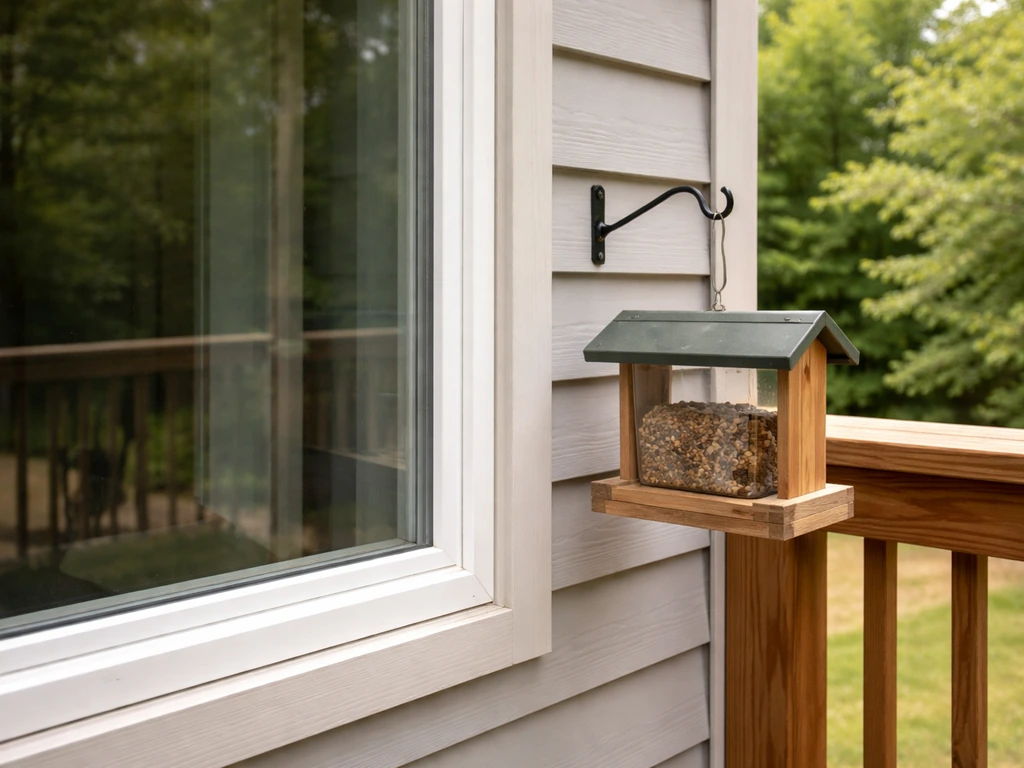
Location is where most people go wrong. A beautiful feeder hung in the wrong spot will sit empty for weeks, or worse, cause window collisions that injure or kill birds.
The window placement rule is simple but critical: place feeders either within 3 feet of a window, or 30 feet or more away from any window. Feeders in that dangerous middle zone (3 to 30 feet) give birds enough room to build speed before they hit glass. Right up close to the window, they can't build momentum. Far away, they have time to course-correct. This is one of the most researched and consistently recommended guidelines from bird safety organizations, and it genuinely makes a difference. If you want to do the window-feeder route, suction-cup feeders mounted directly on the glass work well and eliminate the risk entirely.
Beyond the window rule, look for a spot that offers nearby cover. Birds are prey animals and they won't feel comfortable eating in an exposed open space with no trees, shrubs, or fences nearby. Aim to hang the feeder 5 to 10 feet from a shrub or small tree, close enough for birds to retreat quickly, but not so close that cats or squirrels can use the cover to ambush feeders.
For hanging methods, your main options are a shepherd's crook pole in the ground (the most flexible and squirrel-manageable option), a branch hook, a deck railing hook, or a freestanding bracket mounted to a fence or wall. Shepherd's crook poles are my favorite because you can add a baffle below the feeder, move the location easily, and adjust height. Aim for a height of 5 to 6 feet off the ground for most feeders, which keeps them accessible to birds while being high enough to discourage some ground-level predators.
Choose the right food and match it to the birds you want
If you only buy one type of bird food, make it black-oil sunflower seeds. They have thin shells and high fat content, and they attract more bird species than any other single food. Chickadees, nuthatches, finches, cardinals, jays, juncos, and even some woodpeckers will eat them. They work in virtually every feeder type and they're available at every hardware and garden store.
Once you're ready to expand, use separate feeders for separate foods, this is one of the most effective ways to attract a broader range of species. Here's how the major food types break down:
| Food Type | Best Feeder For It | Birds It Attracts | Notes |
|---|---|---|---|
| Black-oil sunflower | Platform, hopper, tube | Wide variety (cardinals, chickadees, finches, jays, nuthatches) | Best all-around choice |
| Nyjer/thistle | Tube or sock feeder | Goldfinches, siskins, redpolls | Fine seed — needs a purpose-built feeder |
| Suet | Cage feeder, mesh bag | Woodpeckers, nuthatches, chickadees, wrens | Especially good in cold months |
| Millet (white) | Platform, ground tray | Sparrows, juncos, doves, towhees | Great for ground feeders |
| Safflower | Platform, hopper | Cardinals, chickadees | Squirrels generally dislike it |
| Cracked corn | Platform, ground tray | Jays, doves, sparrows | Can attract rodents if left to accumulate |
| Peanut butter/seed mix | Pinecone, log feeder | Chickadees, nuthatches, woodpeckers | Best in cooler weather |
If squirrels are a serious problem in your yard, switching to safflower seed is one of the easiest low-effort fixes. Squirrels strongly dislike it, and many birds (especially cardinals) love it. It costs about the same as sunflower seed and works in the same feeders.
For sparrows and doves specifically, keep in mind that these species prefer flat ground-level surfaces. If your yard has a lot of these birds but they're ignoring your elevated feeder, a low platform tray or a simple ground feeder (even a baking tray on a garden stone) will serve them much better.
Maintenance: cleaning, refilling, and seasonal adjustments
This is the part most people underestimate. A dirty or neglected feeder doesn't just stop attracting birds, it actively harms them by spreading disease and mold. The good news is that a consistent basic routine takes maybe 10 minutes every couple of weeks.
Cleaning schedule and method
Clean seed feeders thoroughly every two weeks as a baseline. In hot or wet weather, or if you notice sick birds at your feeder, bump that up to weekly. The cleaning method is straightforward: scrub the feeder with warm soapy water to remove debris and seed residue, then soak it for 10 minutes in a solution of one part bleach to nine parts water (roughly one tablespoon of bleach per cup of water). Rinse thoroughly until you can't smell bleach anymore, and then let the feeder dry completely before refilling. Refilling a wet feeder traps moisture in the seed, which causes mold in 24 to 48 hours in warm weather.
Don't forget the ground below the feeder. Rake or sweep up fallen seed, husks, and droppings regularly. Accumulated debris is a rodent magnet and a disease risk. Keeping the ground clean under your feeder is just as important as keeping the feeder itself clean.
Refilling and food management
Only put out as much seed as birds can realistically consume within your cleaning schedule. A half-full feeder that's always fresh is far better than an overflowing feeder with old or wet seed sitting at the bottom. If seed is clumping, smells musty, or shows any signs of mold, dump it and start fresh, don't just add new seed on top.
Seasonal adjustments
In summer, high-fat foods like suet can go rancid fast. Switch to no-melt suet formulations in hot weather, or skip suet entirely and focus on sunflower seeds and fresh water. In winter, fat-rich foods are critical, suet, peanut butter, and black-oil sunflower seeds help birds survive cold nights. If you live somewhere with freezing winters, check your feeder after snowstorms and clear any seed that has gotten wet and frozen. Birds are most stressed during extreme cold and need reliable access to food. Spring and fall are migration seasons when feeder activity can spike dramatically, so keep your feeder well-stocked and watch for species you wouldn't normally see.
Why birds aren't coming to your feeder (and how to fix it)
This is the most common frustration I hear from people who are new to feeding birds: they set everything up, and then nothing happens. A solid bird feeder setup also includes choosing the right placement and food, plus a simple cleaning routine. Here's what's actually going on in most cases.
- The feeder is too new and birds haven't found it yet. Birds are cautious and habitual. It can take anywhere from a few days to a few weeks for birds in your area to discover and feel comfortable with a new feeder. Be patient. Adding some seed scattered on the ground nearby can help birds notice the feeder faster.
- There's a predator nearby. A cat lurking in the yard, or a Cooper's hawk or Sharp-shinned hawk working the neighborhood, will clear out feeders instantly. This is completely normal. Once the predator moves on, birds come back on their own. Don't move the feeder — just wait.
- The location has too little cover. Birds need nearby shrubs or trees to retreat to between visits. A feeder in the middle of an open lawn with nothing within 15 feet will attract very few birds. Move it closer to natural cover.
- The food has gone bad. Wet, moldy, or old seed that smells musty will be ignored. Dump it, clean the feeder, and refill with fresh seed.
- The feeder type doesn't match the local birds. If ground-feeding species like sparrows and doves are common in your area, an elevated tube feeder won't help. Match your feeder style to the birds that actually live nearby.
- There's natural food abundance nearby. During summer berry season or when insect populations are high, birds may have plenty to eat without your help. Feeder activity naturally drops in peak summer and rebounds in fall and winter.
- The feeder is too close to a busy area. If the feeder is right next to a frequently used door, window, or high-traffic spot, birds may be getting spooked by human movement. Try moving it to a quieter part of the yard.
Pest-proofing: dealing with squirrels, ants, and unwanted visitors
Squirrels are smart, persistent, and athletic. They can jump horizontally about 10 feet and vertically about 5 feet. Any pest-proofing strategy has to account for both. The good news is that a combination of baffle placement and feeder positioning handles the vast majority of squirrel problems without much ongoing effort.
Squirrel-proofing step by step
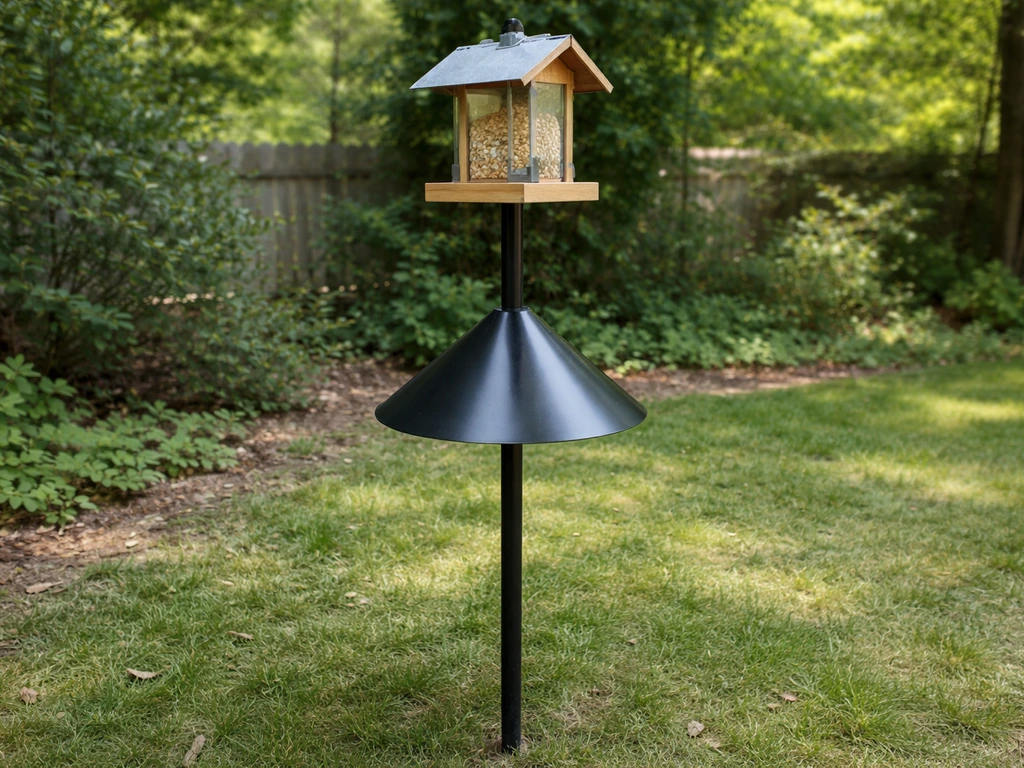
If you're using a pole-mounted feeder, add a baffle to the pole. Position it between 4 and 5 feet off the ground, too low and squirrels can jump over it from the ground, too high and it loses effectiveness. The feeder also needs to hang farther from any nearby tree trunk, fence, or structure than a squirrel can leap. In practice, this means keeping the feeder at least 10 feet horizontally from any launching point. Many people find that a dedicated shepherd's crook pole placed in the middle of an open lawn area, with a wide dome baffle, essentially eliminates squirrel access.
Switching to safflower seed is another easy win. Squirrels strongly dislike it and will usually leave a safflower-filled feeder alone, while birds like cardinals keep visiting as if nothing changed. Some feeders marketed as squirrel-proof (with weight-sensitive closing ports) do work reasonably well, but they're most effective when combined with baffle and positioning strategies rather than used alone.
Dealing with ants
Ants are mostly a problem for hummingbird feeders and any feeder with sticky seed residue. For seed feeders, regular cleaning eliminates most ant issues. If ants are still getting in, an ant moat (a small water-filled cup that hangs above the feeder on the hook) creates a barrier they can't cross. These are inexpensive and work reliably. Avoid using any kind of oil or grease on the feeder pole as a deterrent, it can get onto birds' feathers and cause serious harm.
Rodents and other ground visitors
Rats and mice are attracted by seed that falls to the ground and accumulates. The solution is consistent ground cleanup, rake or sweep below the feeder every few days. Using a seed tray or catch tray below the feeder helps enormously. Only put out food that birds will consume quickly, so less falls to the ground in the first place. If rodents are a serious problem in your area, temporarily switching to no-waste seed mixes (which use hulled seeds that produce almost no shell debris) significantly reduces the ground mess. Avoid corn and millet mixes if rodents are actively visiting, since these seeds are especially attractive to them.
Once your feeder setup is dialed in and birds are visiting reliably, you might want to experiment with attracting specific species or trying window-mounted options. If you want to draw the birds you attract, focus on their shape and beak type first, then add simple feather patterns and accurate proportions attracting specific species. If you’re using a window bird feeder, follow the same bird-safety placement rule and pair it with the right seed to help birds notice and stick around. A good backyard bird feeder setup is really about getting the whole system right, not just choosing the feeder. The basics covered here, build, hang, feed, clean, troubleshoot, apply to every feeder type and will serve you well no matter which direction you take the hobby next.
FAQ
How can I tell which birds my feeder will attract if I am using a seed mix?
Before buying or building more feeders, confirm what is in your mix by buying single-ingredient seed (like black-oil sunflower) or carefully reading labels. Seed blends can look similar but some ingredients (millet, cracked corn) increase waste and can attract rodents, while others may not suit your target birds.
What should I check if birds start showing up but then stop coming back?
If birds are visiting but not staying, check two practical issues: wet or stale seed and perching access. Seed that is musty or clumped from humidity repels birds quickly, and some feeders lack a comfortable landing spot, especially for finches and nuthatches.
Can I leave extra seed out overnight or between refills?
Yes, but keep it safe and simple. Put only a small amount out, refill after cleaning, and avoid leaving it uncovered overnight in humid weather. A steady, “never-missed” amount for your cleaning schedule prevents mold and keeps birds from eating spoiled seed.
How long should I wait after changing food before deciding it did not work?
Use fresh, dry seed and clean the feeder before adjusting. If you have multiple feeder types, separate them by food so you can observe preferences. Once you add a new food, wait about a week for results, because bird visitation patterns often lag behind changes.
What do I do if bigger birds chase smaller birds away?
If you see repeated aggressive chasing, it is often about feeder competition. Solve it by adding more feeding stations or spacing feeders farther apart, so smaller birds have a place to land without being bullied. Also consider tube or hopper feeders for smaller birds when finches and chickadees need protected access.
Can I set up a hummingbird feeder at the same time as seed feeders without creating ant problems?
Yes. If you want hummingbirds in your yard, use a dedicated hummingbird feeder with sugar water and keep it separate from seed feeders, since ant issues are common around sticky residue. Wash hummingbird feeders thoroughly and never mix sugar water into seed-feeder areas.
My yard has birds, but only one or two species. How do I narrow down the cause?
If the feeder is attracting only a few species, reduce variables. Stick to one seed type first, maintain the same feeder location, and keep cleaning consistent. Then make one change at a time (food or feeder type), so you can actually identify what is improving or limiting visits.
Could my homemade feeder be built correctly but still not used? What parts usually fail?
A snapped twig perch, loose hardware, or uneven drainage can reduce use even when the feeder is otherwise fine. Inspect for wobbling, sharp edges, and drainage holes that might clog with debris, then re-screw or replace the perch so birds can land confidently.
What is the safest way to store bird seed, and what if it gets damp?
For bin-bag storage or leftovers, keep seed sealed and dry, and avoid storing it in areas exposed to moisture. If you suspect contamination or pests, discard the seed, wipe the hopper or container, and start with a new batch so birds do not keep returning to spoiled food.
How do I reduce rats and mice if they are already visiting my yard?
Switching to no-waste seed mixes helps reduce shell and husk buildup, and using a catch tray limits debris under the feeder. Also avoid leaving expensive, rodent-attracting mixes out too long, because the ground mess and smell tell rodents it is worth staying.
My baffle is not working. What is the most common squirrel-proofing mistake?
A baffle is most effective when it sits where squirrels cannot jump over it from a nearby launching point. If you keep missing that, try moving the entire feeder farther from trees, fence lines, or overhanging branches, because squirrels use those as ramps even if the baffle is present.
I built the feeder, but nothing shows up. What is the fastest step-by-step way to diagnose the problem?
If you are getting no birds, a quick “field test” is to simplify: use black-oil sunflower seeds, ensure the feeder is clean and dry, and confirm the placement (not in the 3 to 30 foot window risk zone and near cover). After that, give it a few days, because birds often scout from nearby foraging routes.
How do seasonal weather changes affect feeding, especially in freezing cold or hot summer?
Avoid stacking feeders so one blocks another from view. In colder months, ensure feeders are reachable even after snow, and clear wet seed or ice so birds are not forced to stand on slippery surfaces. In hot weather, limit high-fat foods that can spoil and keep everything refilled with fresh dry seed.