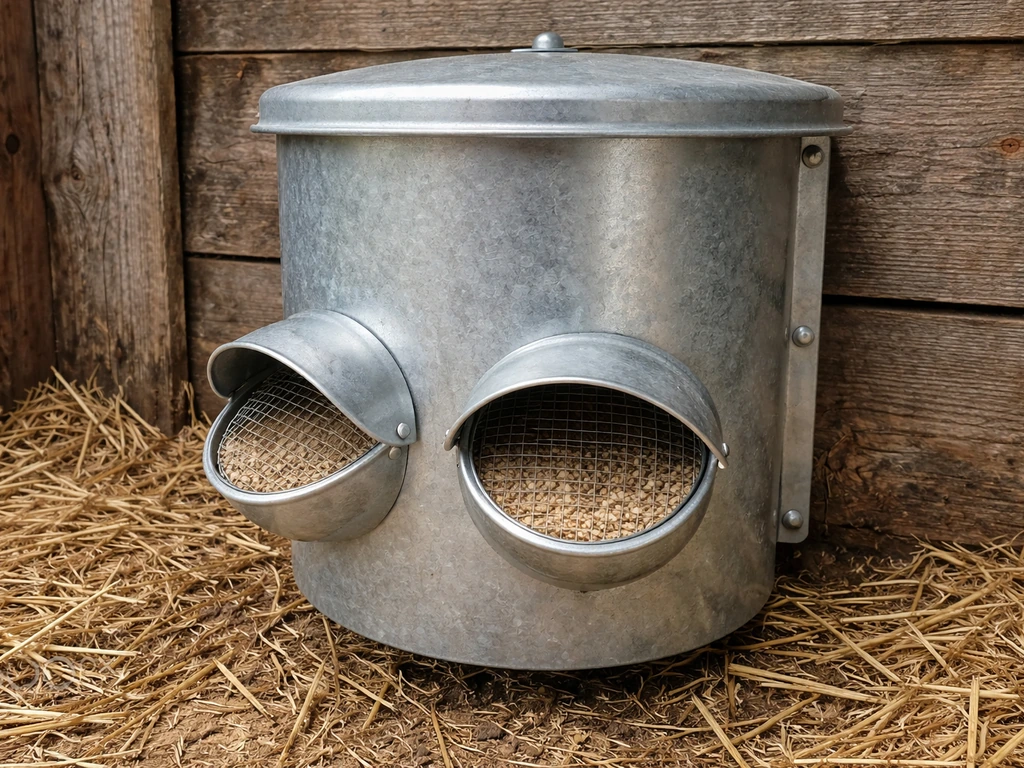
The fastest fix is to switch from any open bowl or tray setup to a deep, narrow-mouth container with a hood or cover that forces your dog to reach in from the front while blocking birds from landing on the rim and pecking freely. Pair that with smart placement away from perch surfaces and you eliminate most bird access without making your dog work hard for every meal.
How to Make a Bird-Proof Dog Feeder: DIY Steps
Marcus Brennan
30 May 2026
How birds actually get into a dog feeder
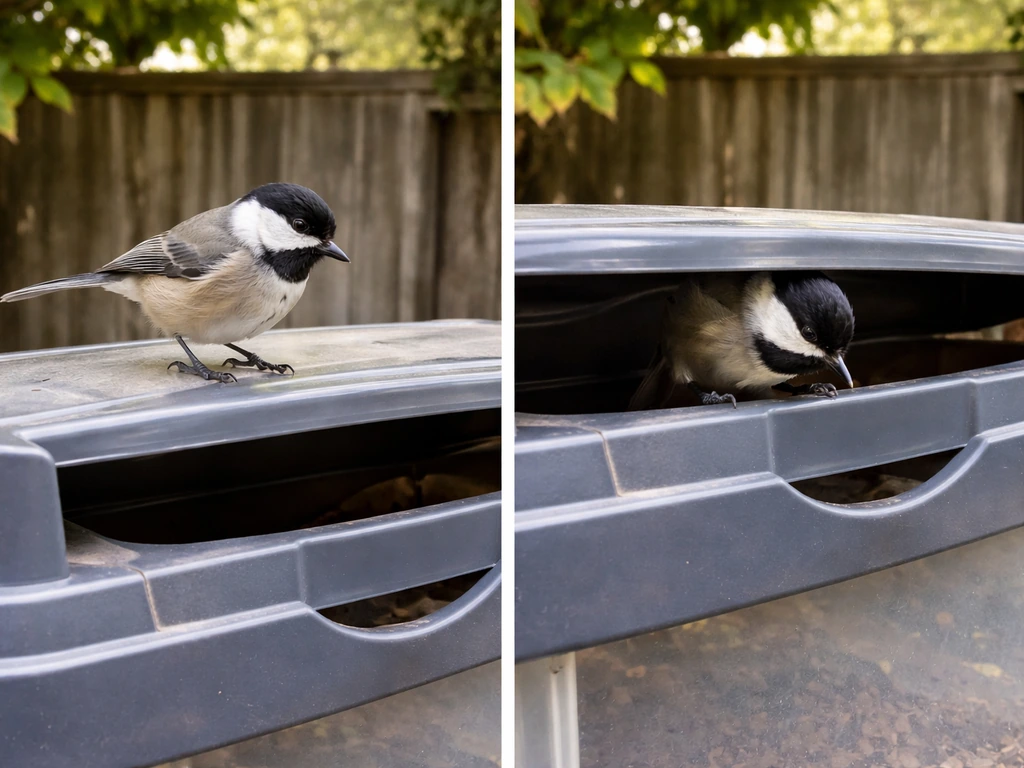
Before you build anything, it helps to watch what's happening for a few minutes. Birds almost never hover and dip into a container. They land first. Every time a bird accesses your dog's food, it's following a predictable pattern: spot the food, find a landing surface on or near the feeder, perch, then eat. The landing surface is your enemy. On a standard open dog bowl, the rim is a perfect perch. On a raised gravity feeder with a wide trough, the edge of the trough works just as well. Grackles, sparrows, starlings, and pigeons are the usual offenders because they're comfortable landing near people and pets, not easily spooked, and will return dozens of times a day if the food is accessible.
The secondary access point is overhead. If your feeder is under a tree, fence rail, or awning edge, birds will drop down from above rather than flying in horizontally. That means a side hood alone won't solve the problem if you haven't also closed off the top. Understanding these two access routes (rim landing and overhead drop) is what shapes every design decision below.
Design features that actually block birds
You don't need to reinvent anything. The same principles used to keep grackles off bird feeders work here, just applied to keep birds off dog food instead. There are three hardware approaches that work reliably when combined.
Overhead hood or cover
A hood extends out past the opening of the feeder like a wide brim, preventing birds from dropping straight down into the food. For a dog feeder, this can be as simple as a circular piece of plywood or sheet metal screwed to a post or wall bracket about 6 to 8 inches above the feeder opening, with at least a 4-inch overhang on all sides. The dog approaches from the front and pushes its snout under the hood with no problem. A bird trying to land on top of the hood slides off or finds no food, and a bird trying to drop from above is blocked by the hood's overhang.
Limited entry opening
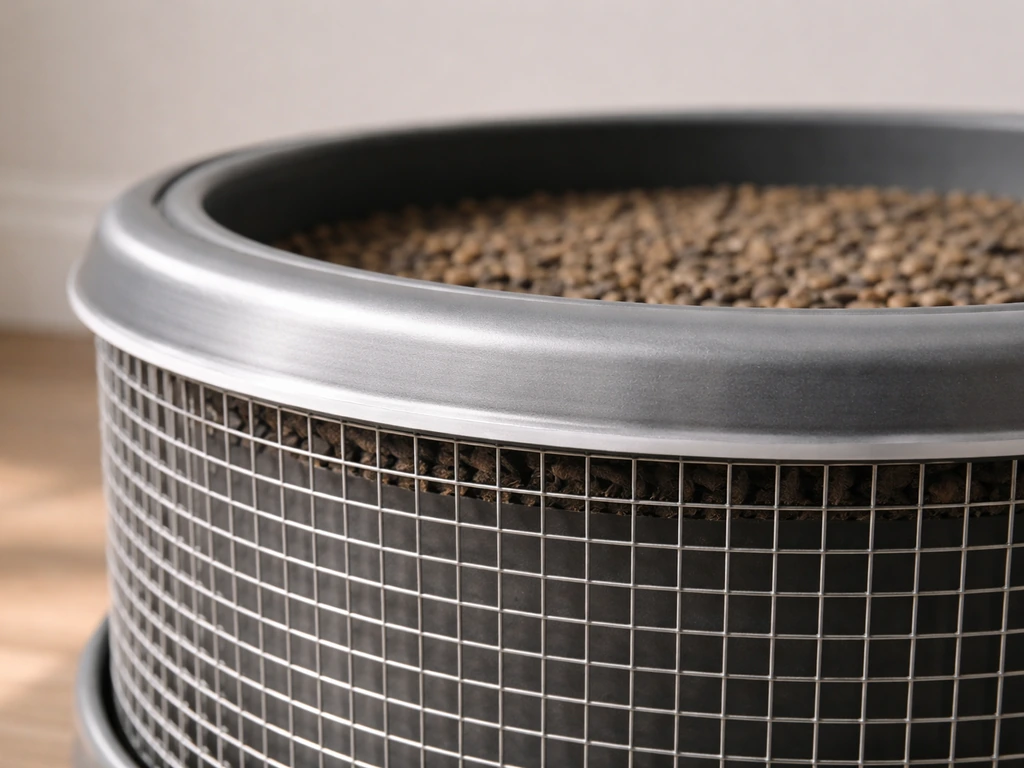
Instead of a fully open bowl, a container with a restricted opening lets your dog's snout in but makes it awkward or impossible for a bird to land inside. Think of a deep bucket with a single oval cutout near the base of the front face. The opening is sized to your dog's muzzle, roughly 3 to 5 inches wide and 2 to 3 inches tall for most medium to large breeds, angled slightly downward so rain doesn't pool in it. Birds can't grip the sloped edges below the opening, and the cutout is too low to the floor of the container for a bird to stand inside and eat comfortably. Project FeederWatch notes that blank" rel="noopener noreferrer">tube feeders with short perches can accommodate small birds, but perch length and access design can also limit larger birds such as grackles and jays.
Anti-perch rim and cage wrap
If you're working with a feeder that has a wider lip or rim, wrapping the outside with a physical cage using hardware cloth (also called wire mesh) eliminates perch spots. A mesh opening of about 1.5 inches blocks most mid-sized birds (starlings, grackles) while still leaving clearance for a dog's snout to push through a larger access door you cut into the front panel. The cage wraps the outside, not the inside, so the food sits in the inner container untouched by mesh.
Weight-activated cover (optional upgrade)
This is more of a premium build, but if your dog is persistent and birds are especially bold, a spring-loaded or gravity-hinged lid that opens under your dog's weight (front paws on a treadle plate) and closes when the dog steps back is effective. The mechanism is similar to weight-sensitive perches used on squirrel-resistant bird feeders. Birds weigh too little to trip the mechanism, so the lid stays closed when they land on the treadle.
Step-by-step DIY builds
Here are two builds ranging from a 30-minute beginner project to a more involved weekend build. Both use materials you can find at a hardware store for under $25.
Build 1: The bucket feeder with hood (beginner, about 30 minutes)
You need a 3.5- to 5-gallon food-safe bucket with a lid, a circular plywood disc or sheet of thin aluminum flashing (about 16 inches in diameter), two or three 3-inch bolts with washers and wing nuts, and a jigsaw or utility knife. Start by marking the access hole on the front of the bucket, about 1.5 inches up from the bucket's bottom, centered. Cut an oval roughly 4 inches wide by 2.5 inches tall. Angle the cut slightly so the bottom edge of the hole slopes downward and outward, keeping rain and debris from sitting on the ledge. Sand any sharp plastic edges with medium-grit sandpaper. Next, drill three evenly spaced holes around the rim of your plywood or flashing disc and through the bucket lid, then bolt the disc to the lid so it overhangs by at least 3 inches on all sides. The disc acts as your hood. Attach the assembled lid to the bucket, fill the bucket with kibble, and mount it on a post or wall bracket at your dog's shoulder height. The hood overhangs the opening, blocking downward access, and the recessed entry hole eliminates any landing ledge.
Build 2: The framed cage feeder (intermediate, 2 to 3 hours)
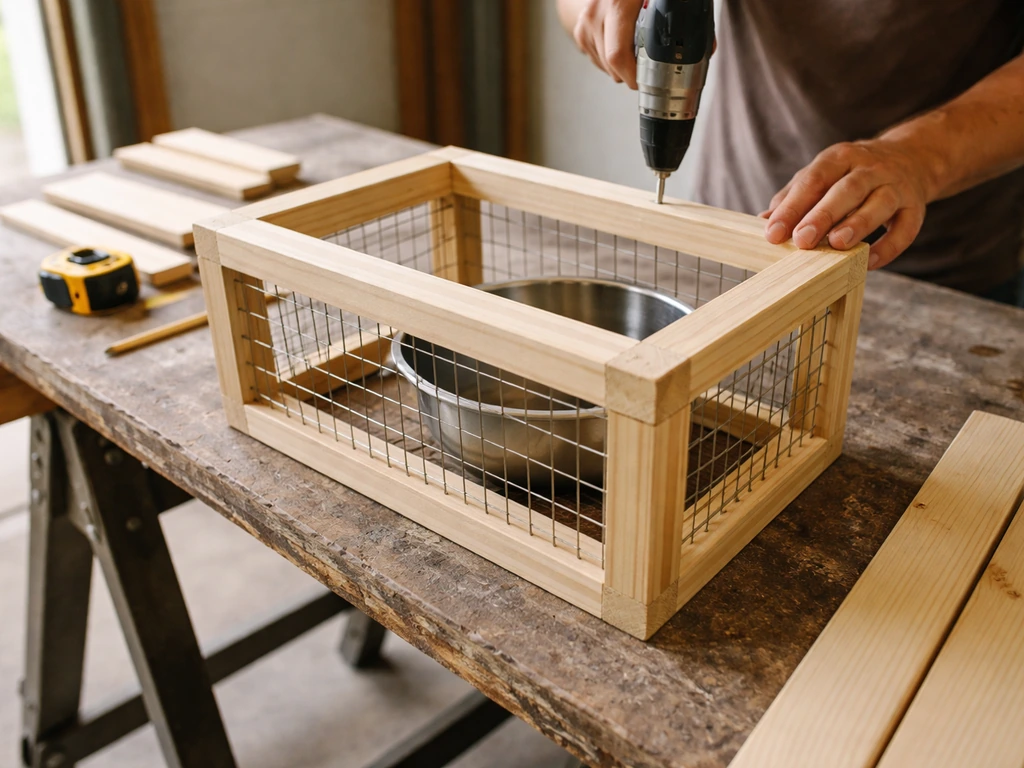
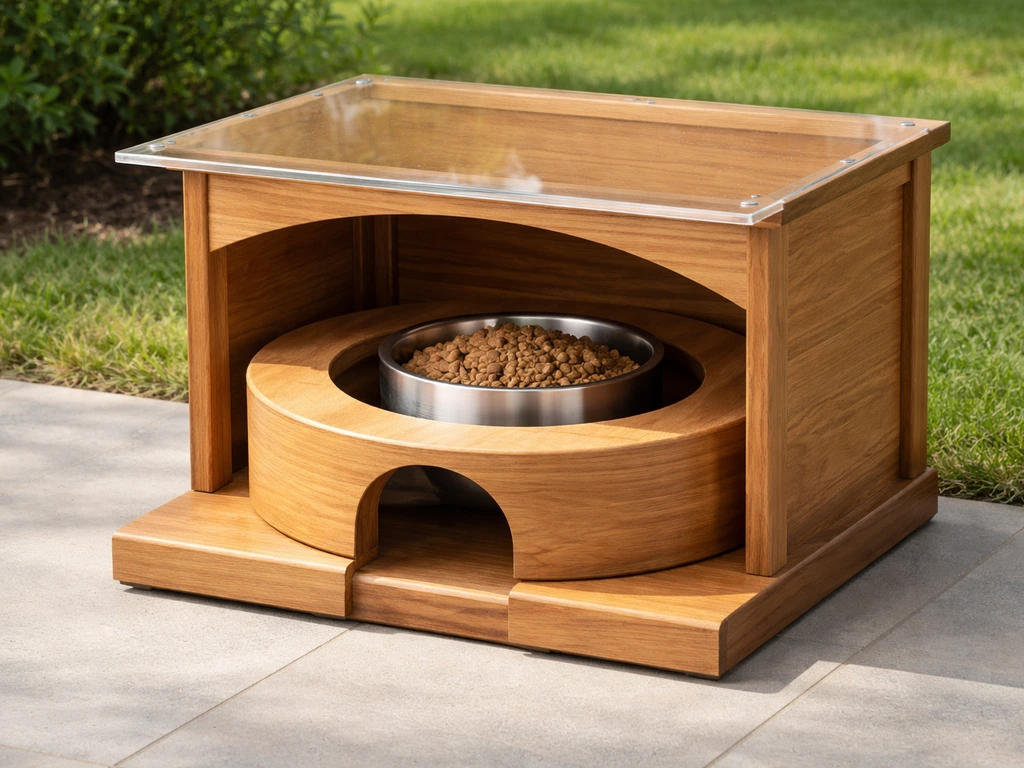
This build gives you a wooden housing with a cage exterior and a removable inner bowl, which makes cleaning easy. Materials: one 8-foot length of 1x6 pine, a 12x12-inch hardware cloth panel (1.5-inch mesh), a stainless steel dog bowl (6- to 8-inch diameter), exterior wood screws, a tube of exterior wood glue, a handsaw or circular saw, staple gun, and exterior wood sealant.
- Cut the pine into five pieces: two side panels at 10x6 inches, a back panel at 10x8 inches, a top panel at 10x8 inches angled to a 15-degree slope at the front, and a floor panel at 8x8 inches.
- Assemble the box using glue and screws, leaving the front completely open. The sloped top sheds rain and discourages landing.
- Cut an access circle in the front face of the floor panel, sized just larger than your dog bowl's diameter, so the bowl sits recessed and flush. This is where the dog eats.
- Staple the hardware cloth across the entire front opening, then cut a single circular hole through the mesh that aligns with the bowl hole below. Your dog's snout fits through the mesh hole and into the bowl.
- Sand all edges, wipe clean, and apply two coats of water-based exterior wood sealant. Let each coat dry fully (about 2 hours between coats) before moving to the next step.
- Mount the housing on a post or wall bracket at your dog's nose height and drop the stainless bowl into the recessed floor hole. To refill, lift the bowl out, fill, and replace.
The mesh front means no bird can land on a rim because there is no rim exposed. The recessed bowl means a bird landing on top of the housing (which the sloped roof discourages anyway) can't reach the food without going through the mesh, which it won't do without a perch to grip.
Mounting, placement, and anti-perch positioning
Where you put the feeder matters as much as how you build it. Even a well-designed feeder can be defeated if it's mounted next to a fence rail a bird can use as a launch platform. Keep these rules in mind.
- Mount the feeder at least 8 to 10 feet away from tree trunks, fence posts, and overhead branches. Birds will use those as staging perches and glide in from the side.
- If you're using a freestanding post, position a cone or cylinder baffle on the post below the feeder, with the top of the baffle at least 4 feet off the ground. This is the same approach used for squirrel-proofing bird feeder poles, and it blocks birds that try to walk up from ground level.
- Avoid placing the feeder directly under eaves or awning edges. Birds will perch on the edge and drop down. A clearance of at least 18 inches between the feeder hood and any overhead structure is a practical minimum.
- A spot with some nearby cover (shrubs or a fence 10 to 15 feet away) is fine and actually helps your dog feel less exposed while eating, but make sure that cover isn't close enough to give birds a direct glide path to the feeder opening.
- If birds are still approaching from a specific direction, add a strip of anti-bird spikes (the plastic type used on window ledges) along any surface they're using to stage their approach. These cost a few dollars at hardware stores and can be cut to length.
Weatherproofing, cleaning, and keeping things hygienic
A bird-proof feeder that traps moisture or isn't cleaned regularly creates a different problem: contaminated food. Grackles and sparrows carry salmonella, and even if they're no longer eating from your dog's feeder, their droppings landing nearby (or on the feeder exterior) can introduce pathogens. Regular cleaning is non-negotiable.
Weatherproofing the housing
If you built the framed cage feeder from pine, apply a water-based exterior-grade wood sealant every season (once in spring, once before winter). Two thin coats are better than one thick coat. Wipe the surface clean first, let it dry fully, then brush on the sealant. Pay extra attention to the bottom edges and any joints where water can wick in. For the bucket feeder, food-safe HDPE buckets are already weatherproof, but check the wood disc hood for cracking or delamination seasonally and re-seal or replace as needed.
Routine cleaning
Wipe the inner bowl and housing floor with warm soapy water every week. Every two to four weeks, do a full disinfection: mix 1 part bleach to 9 parts water (a 10% bleach solution), remove any food residue first, then soak or wipe down all interior surfaces and let sit for about 10 minutes. Rinse thoroughly with clean water and let the feeder air dry completely before refilling with kibble. Bleach residue on dog food is a real hazard, so don't skip the rinse. If you find bleach is corroding your hardware over time, use white vinegar for regular weekly cleanups and reserve bleach for monthly deep disinfections.
Drainage and condensation
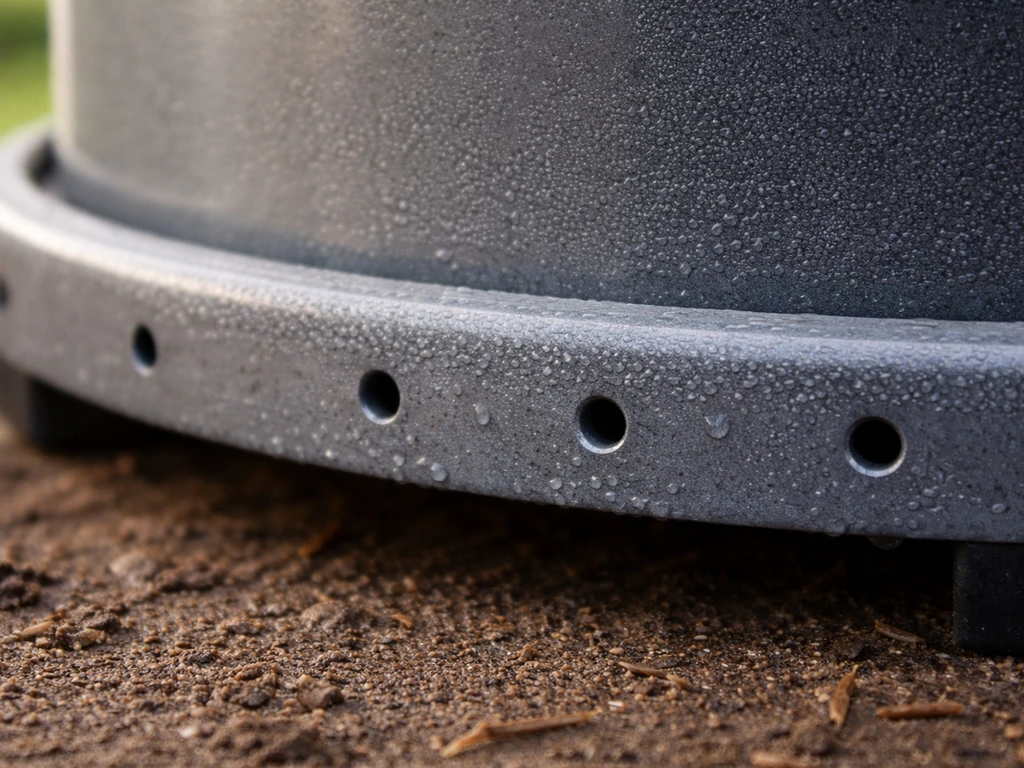
Drill two or three small drainage holes (about 1/4 inch) in the very bottom of any enclosed housing. Condensation builds up inside enclosed feeders, especially in the morning, and wet kibble gets moldy fast. A small amount of slope on the floor panel (use a thin shim when mounting) directs any moisture toward the drainage holes.
Troubleshooting when birds still get in
If birds are still accessing the food after you've built and mounted the feeder, run through this checklist before making major changes. Most failures come down to one of five causes.
| Problem | Likely cause | Fix |
|---|---|---|
| Birds landing on top of the feeder | Hood not wide enough or overhead structure too close | Extend hood overhang to at least 5 inches on all sides, or add angled anti-perch strips to the top surface |
| Small sparrows fitting through the access hole | Opening sized too large or mesh hole too wide | Reduce mesh opening to 1.5 inches or add a secondary inner collar around the access hole to narrow the gap |
| Birds approaching from a fence or post | Feeder too close to a launch surface | Move feeder at least 8 feet from any vertical surface, or add a baffle on the post below the feeder |
| Food getting wet or moldy quickly | No drainage or condensation buildup | Drill 1/4-inch drainage holes in floor panel and add a slight downward slope toward the front |
| Dog reluctant to use the new feeder | Access hole too small or hood too low | Widen the entry oval by 0.5 inches and raise the hood by an inch; let the dog investigate at its own pace for a day or two |
One thing worth accepting early: very small birds like house sparrows are harder to exclude than larger ones like starlings or grackles. If sparrows are your main pest, the entry-restriction approach (small oval hole) works best because sparrows need a ledge to perch on just like bigger birds. Remove any lip or ledge below the opening and the sparrow has nowhere to sit while it eats.
It's also worth noting that if you're fighting birds in the context of other feeders nearby in the yard, the birds are already habituated to the space. The closer your bird feeders are to the dog feeder, the more persistent the crossover problem will be. Keeping bird feeders at least 15 to 20 feet from the dog feeding station reduces the overlap significantly. If you're curious about solving pest problems on the bird feeder side too, the challenges of keeping specific species like doves or grackles away from bird feeders involve similar baffle and entry-restriction logic.
Safety and usability checks for your dog
A feeder that works for bird-proofing but stresses your dog out at mealtime isn't actually a win. Run through these checks before you call the project done.
- Height check: the center of the access opening should be at your dog's nose level when it's standing naturally. Too high and it has to crane its neck; too low and it has to crouch awkwardly, which can discourage use.
- Edge safety: run your fingers around every cut edge on the access hole and mesh opening. Any sharp edge that catches on your skin will catch on your dog's muzzle too. Sand wood edges and fold or file any wire mesh cut ends back on themselves.
- Space to eat comfortably: your dog needs to be able to get its snout fully into the bowl without the housing pressing against the sides of its face. Test by measuring your dog's muzzle width and checking it against the access opening before final assembly.
- No toxic finishes inside: any wood sealant, paint, or stain used on interior surfaces (anywhere your dog's tongue might contact) should be food-safe once cured. Water-based exterior sealants are generally safe when fully dry, but give them a full 48-hour cure before use.
- Stability: a feeder that tips or swings excessively when your dog pushes against it will frustrate the dog and potentially spill food. Mount it firmly. If it's on a post, check that the post is set at least 18 inches into the ground or anchored to a solid base.
- Easy for you to refill: the whole system needs to be practical long-term. If refilling requires tools or takes more than 60 seconds, you'll start leaving it open, which defeats the whole design.
Most dogs adapt to a new feeder within one to three days if the opening is the right size and it's placed in the same spot they're used to eating. If you are also trying to block larger wildlife, a bear-proof bird feeder uses the same idea of restricting access to openings and perches bear proof bird feeder. If you are wondering how to make a bird proof chicken feeder, the key is matching the opening and enclosure to block bird perches while still letting your pet access the feed opening is the right size. If your dog seems confused, put a small amount of high-value food (a few pieces of treat or wet food) just inside the opening the first day to encourage it to investigate. Once it figures out the mechanics, it'll use the feeder without hesitation.
FAQ
How do I choose the right size opening for my dog’s snout?
Measure your dog’s muzzle at feeding time (distance from nose tip to the back of the snout when it naturally reaches forward). Then size the opening so the dog can push through comfortably but birds cannot grip an interior surface. If the opening is too tight, your dog will either paw at it or refuse it, so err toward “dog fits easily” rather than “birds can’t.”
If the hood is installed, why do birds still get in?
Do not rely on the hood alone if you see birds dropping from overhead. In that case, add or extend a top cover or brim so the overhang blocks vertical entry. A common failure is a hood that sits above the feeder but leaves the top fully open for birds to drop in from trees, awnings, or fence rails.
How far should I place the dog feeder from fences, rails, or trees?
Leave space between the feeder and any bird launch point, especially fence rails and overhanging branches. If you can place your feeder on a wall or post set back from those surfaces, do it. Even with a perfect build, birds can reach and peck through gaps when the feeder is too close to a perching surface.
What happens if my bird-proof dog feeder traps moisture?
Use drainage holes and a slight slope on enclosed bottoms, then keep the area under the feeder dry. If you skip this, kibble can turn damp, clump, and grow mold, which can reduce palatability and attract more birds to probe. After wet weather, check inside daily until you confirm everything stays dry.
Do I need to clean the feeder exterior, or only the inside?
Clean any droppings promptly and make sure your exterior mesh or housing doesn’t become a landing target for birds to stand and eat around the opening. If birds are pecking the outside and getting food contamination from residue, focus on wiping the exterior surfaces too, not just the interior bowl.
Can I use bleach every time I clean the feeder?
Yes, but only as a last step for deep disinfection. Bleach can corrode hardware and leave residue that is unsafe for dogs, so always fully rinse and air-dry before refilling. For routine weekly cleaning, vinegar is safer for many parts if you notice corrosion.
Does feeder height affect bird access and dog comfort?
If you can, mount the feeder at the dog’s typical shoulder height so it reaches naturally without stretching up. With taller or heavier dogs, a slightly higher mount often prevents birds from using the floor or ledges around the base as stand-in landing spots.
Why does my dog struggle to eat from the restricted opening sometimes?
If the kibble is too big or irregular, it can bridge inside the recessed opening and make it harder for your dog to dispense the food. Use kibble size appropriate to your dog and test a full feed cycle once. If needed, swap to a consistent kibble or adjust the opening shape so it clears food without creating a ledge.
What changes should I make if house sparrows are the main problem?
For sparrows, reduce any shelf-like surface below the opening and avoid designs that accidentally create a horizontal perch. Smaller birds can exploit tiny ledges, so check with a flashlight from the bird’s perspective and sand or cover any exposed edges around the entry.
How can I diagnose whether birds are accessing from the side or from above?
Start by observing for 2 to 3 minutes at the time birds typically show up. If birds approach from directly above, you need more overhead coverage, not just rim blocking. If they approach from the side and land near the rim, focus on eliminating external perch points and using mesh or a hood overhang that blocks landing and pecking angles.
What’s the best way to transition my dog to the new bird-proof feeder?
Yes, but introduce it gradually. Put a few small treats at the opening (day one) and keep the feeder in the exact same place your dog already eats. If you change location and design at the same time, it slows adaptation and makes it harder to tell whether the issue is fit, placement, or mechanics.
Will having bird feeders near the yard make this problem worse?
If you have other feeders nearby, birds will often treat the dog feeder as just another stop. To reduce crossover, separate the bird feeder stations from the dog feeding area and expect fewer visits only after the birds lose easy habituation. If birds keep returning, also inspect the ground area for scattered droppings or spilled food that maintains the pattern.
Next Article
How to Make a Bird Proof Chicken Feeder Step by Step
Step-by-step guide to build a bird-proof chicken feeder that blocks perches and entry points while keeping feed accessib