The most reliable way to make a dove-proof bird feeder is to combine a tube or caged feeder design with small ports or wire mesh openings that physically stop larger birds from reaching the seed, then pair it with the right seed type and smart placement so doves have no reason to stick around. Mourning doves can't hover, don't do well on narrow perches, and are noticeably heavier than most songbirds you're trying to attract, so every part of this setup is working with those weaknesses.
How to Make a Dove Proof Bird Feeder Step by Step
Marcus Brennan
5 Jun 2026
Why doves are so hard to shake (and what actually stops them)
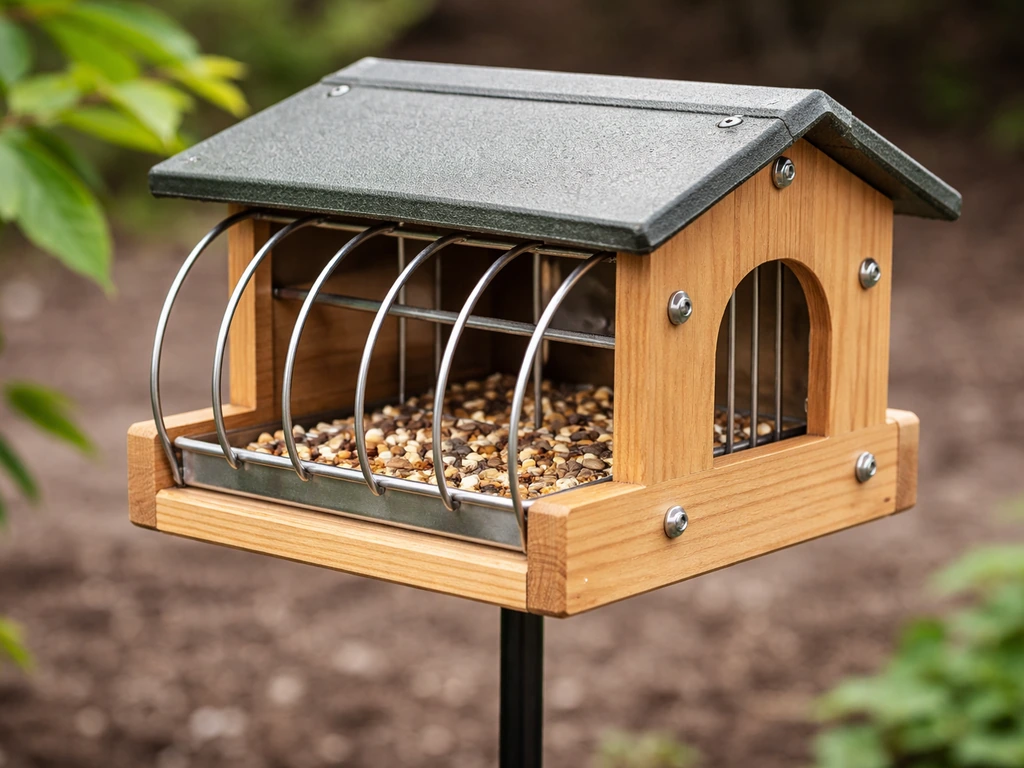
Mourning doves are ground foragers by nature. They evolved to scratch and peck along the soil, so they're not naturally built for hanging feeders or tight perching spots. The real problem in most backyards isn't that doves are climbing into tube feeders, it's that open platform feeders and seed spillage on the ground turn your setup into a buffet. Doves don't need to visit the feeder itself when there's a pile of millet and sunflower seeds on the lawn beneath it.
This matters for your strategy. A feeder that is 'dove-proof' usually works on one or more of three principles: physical size exclusion (the bird is too big to fit through the access point), weight activation (the feeder shuts off when something heavier than a small songbird lands on it), or food selection (the seed inside simply doesn't interest doves). Understanding which principle fits your situation saves you a lot of trial and error.
Pick the right exclusion strategy for your setup
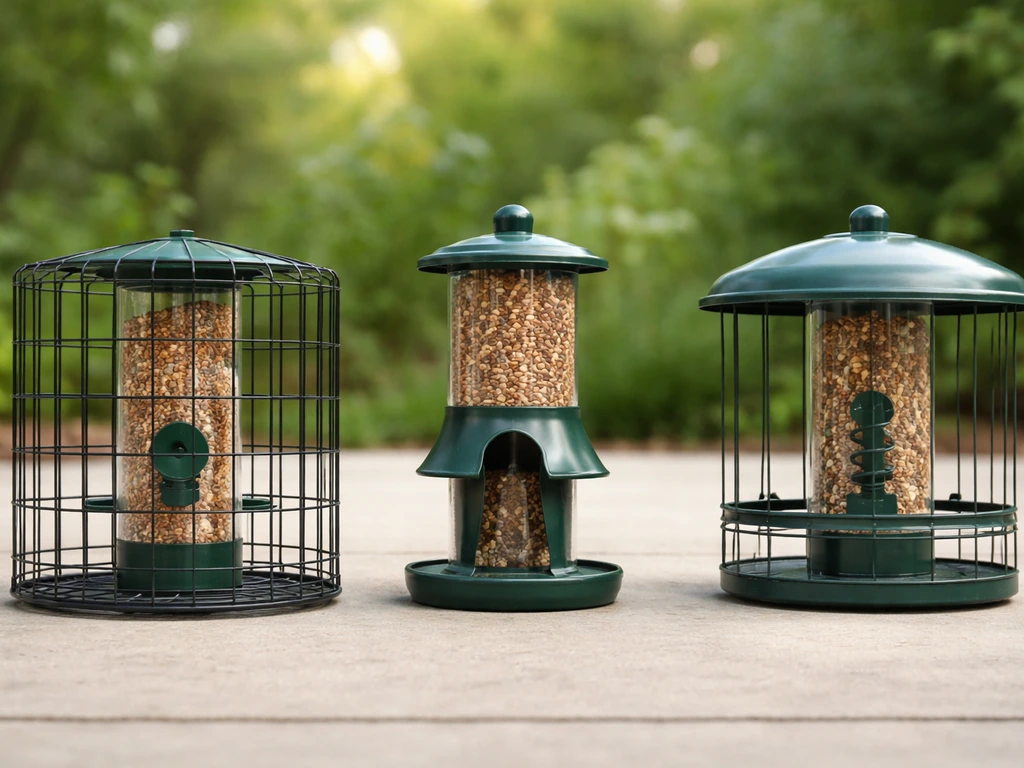
Not every exclusion method works equally well for every yard or bird mix. Here's how the three main approaches compare so you can choose before you start building or buying anything.
| Method | How it works | Best for | Limitations |
|---|---|---|---|
| Cage/mesh surround | Wire cage with openings small birds pass through but doves can't | Yards with many doves and diverse small songbirds | Larger songbirds like cardinals may also be excluded |
| Weight-activated perch | Spring-loaded perch closes seed ports under heavier birds | Situations where you want minimal modification | Needs calibration; doves around 4–6 oz may trigger some cheaper units inconsistently |
| Restricted port tube feeder | Tiny seed ports and no perch ledge prevent dove access | Nyjer/thistle feeders for finches | Only works well with selective seeds like Nyjer |
| Food-only swap (no build) | Switch to seeds doves dislike; remove platform feeders | Quick fix with no construction required | Limits variety; some target birds may also prefer excluded seeds |
In most yards, combining a cage or mesh surround with selective seed gives you the best result. Weight-activated feeders work well as a backup or when you want to keep offering mixed seed. If you're already planning other pest-proofing projects, the spacing and baffle logic here overlaps directly with what you'd use for a bear-proof bird feeder pole setup, though the exclusion goals are different. You can apply the same general anti-bear ideas, using sturdy barriers and access limits, when you build a bear-proof bird feeder bear-proof bird feeder pole setup. If you’re also trying to keep bears from reaching the seed, apply the same blank" rel="noopener noreferrer">pole-and-baffle spacing logic to your setup bear-proof bird feeder pole.
Build or modify your feeder to block dove access
You don't have to start from scratch. The most effective DIY approach is modifying an existing tube or hopper feeder with a wire cage surround. This is the classic 'selective cage feeder' concept used in extension bird-feeding guides, and it genuinely works.
Option 1: Add a wire cage to an existing feeder
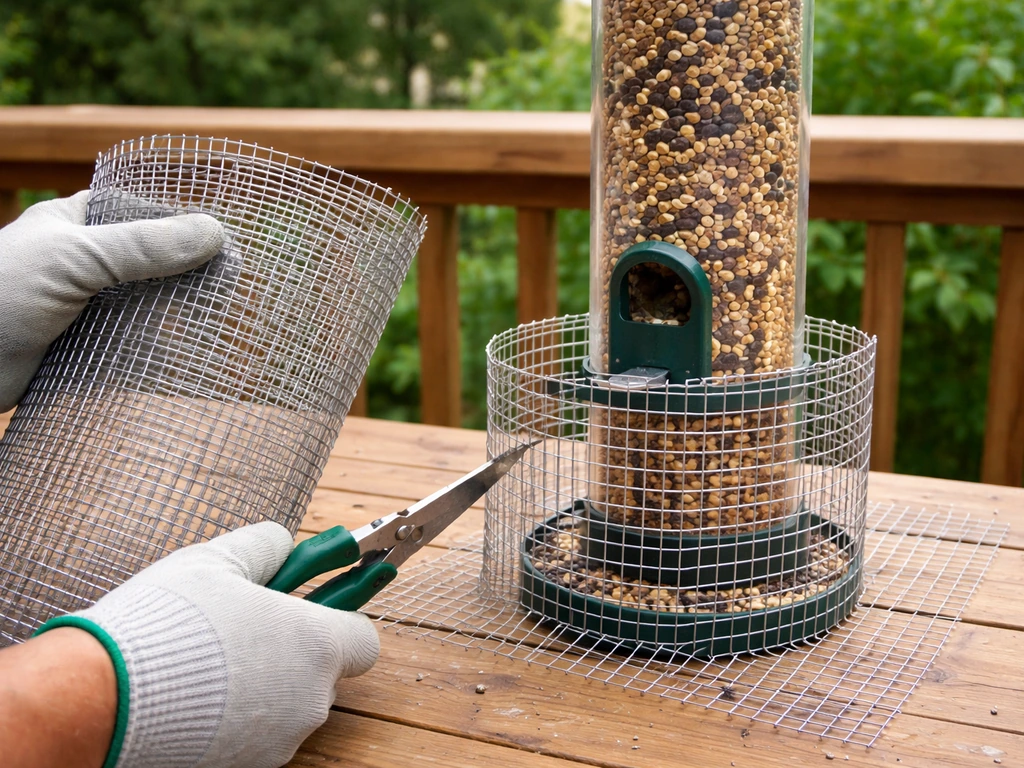
You'll need a roll of galvanized hardware cloth or welded wire mesh with openings of about 1. 5 inches square. That size lets chickadees, nuthatches, finches, and sparrows pass through easily while stopping mourning doves, which have a body width of roughly 2 to 2. 5 inches.
Cut a strip long enough to wrap around the feeder with a 3 to 4 inch gap between the mesh and the feeder body, then form it into a cylinder. Connect the ends with zip ties or twist the wire ends together.
Hang the cage from the same hook as the feeder using S-hooks or small carabiners, letting it hang 2 to 3 inches below the feeder bottom so small birds can fly up inside from underneath but doves can't land on a wide rim to boost themselves in.
Total materials cost runs about $8 to $15 if you're buying a new roll of hardware cloth, less if you have scrap wire on hand. Build time is around 20 to 30 minutes. The only tricky part is shaping the cylinder neatly, work gloves help, because cut wire edges are sharp.
Option 2: Build a restricted-port tube feeder from scratch
If you want to build a feeder from the ground up, a PVC pipe tube feeder with drilled ports is a great beginner project. If you build a bird-proof PVC tube feeder, include the same restricted ports and perches so larger birds like doves cannot access the seed how to make a bird proof dog feeder. Use a 2-inch diameter PVC pipe about 18 inches long with end caps on both sides.
Drill seed ports no larger than 3/8 inch in diameter, large enough for Nyjer seed to flow and for a small finch beak to access, but completely inaccessible to a dove beak, which is about 0. 7 to 0. 9 inches long. Add a thin wooden or metal perch dowel (1/4 inch diameter, about 2 inches long) below each port.
Doves simply can't grip perches that thin, and the narrow ports stop them from scooping seed even if they try to wedge in. This design is specifically built for Nyjer and small oil seeds, so keep that in mind when you fill it.
Option 3: Use or adapt a weight-activated feeder
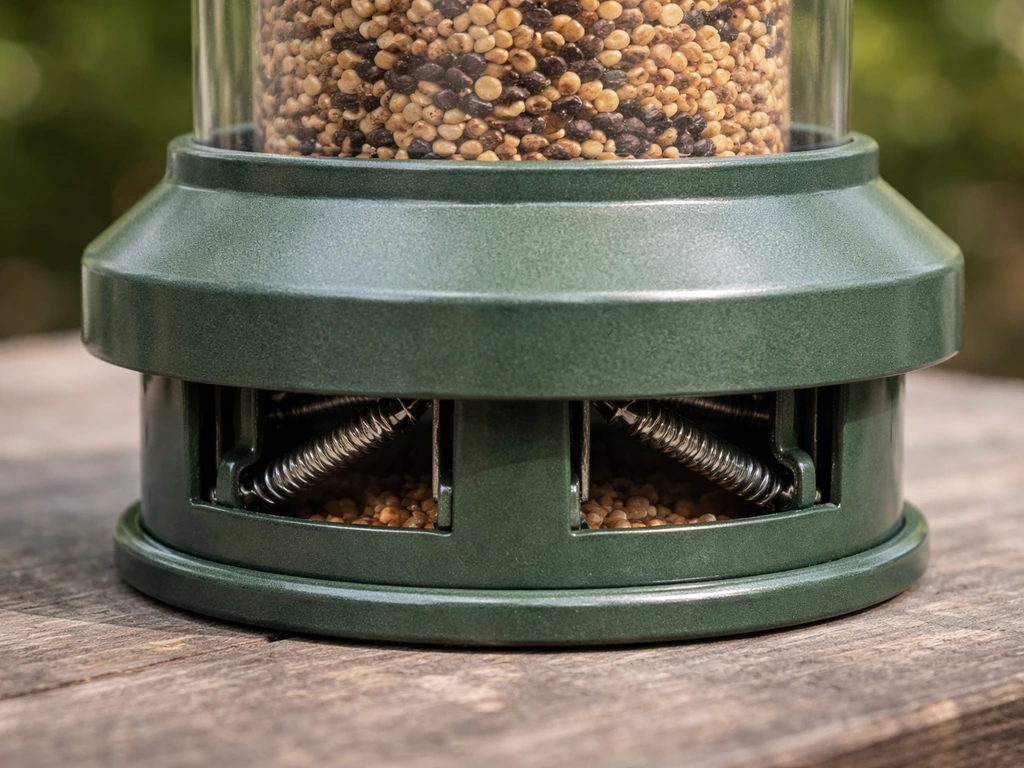
Commercial weight-activated feeders (like the Squirrel Buster line) have a spring-loaded outer shroud that drops over the seed ports when a heavier animal lands on them. Mourning doves typically weigh between 4 and 6 ounces, while house finches are around 0.7 to 0.9 ounces and chickadees around 0.4 ounces. Most weight-activated feeders are adjustable with a tension screw, so you can dial in the cutoff point to shut off for dove-weight birds while staying open for small songbirds. If you're modifying one of these, check the adjustment collar or setscrew under the base of the unit and back it off gradually until your target small birds can feed freely.
Hang it right: baffles, placement, and spacing
Even the best feeder design gets undermined by poor placement. Doves are ground foragers, so the fight isn't usually at the feeder itself, it's at the ground below it and on any wide ledges they can use as a landing zone.
- Mount pole-hung feeders at least 5 feet off the ground. This isn't just about doves — it's the baseline height for effective baffle use and general feeder security.
- Install a cone-shaped baffle on the pole below the feeder. The baffle should be at least 17 inches in diameter and positioned between 4 and 5 feet off the ground. Doves can't fly straight up under a cone and land on the feeder the way squirrels might climb a pole, but a baffle prevents any hopeful attempts from below and cuts off the easy landing approach.
- Keep the feeder at least 10 feet away from any fence, roof edge, deck rail, or tree branch that a dove could use as a launch point or landing perch nearby.
- If you're hanging the feeder from an overhang or branch rather than a pole, add a hanging baffle (a dome or cone-shaped guard above the feeder) at least 15 to 17 inches wide. This also doubles as rain protection, which is always useful.
- Avoid mounting anything with a wide, flat tray below the tube or hopper body. Tray extensions are perfect dove perches and should be removed or swapped for a much smaller catching tray (under 4 inches wide) if you want one at all.
The spacing from launch points is something a lot of people skip, and it's where a lot of dove-proofing fails. A dove that can land on a nearby fence post and hop to the feeder doesn't care about your cage design. Check your yard with fresh eyes after setting up and eliminate or move anything within about 10 feet.
Seed selection and feeding style to reduce dove interest
What's inside the feeder matters as much as the design itself. Mourning doves are strongly attracted to millet, cracked corn, and sunflower seed scattered on open surfaces. They're far less interested in Nyjer (thistle), safflower, and whole peanuts in the shell, foods that require specific feeders or don't match their feeding behavior.
- Switch to Nyjer seed in a finch tube feeder with small ports. Doves almost never bother with Nyjer, and it draws goldfinches, siskins, and redpolls well.
- Offer safflower in place of sunflower seed where possible. Cardinals and chickadees eat it readily; most doves ignore it.
- Cut out millet and cracked corn from your feeder mix entirely. These are the seeds doves most actively seek out.
- Clean up spilled seed on the ground every day or two. This is probably the single most underrated step — doves are staying in your yard because the ground under the feeder is rewarding them. Remove that reward and many will move on.
- If you want to keep offering mixed seed, put it in a weight-activated or caged feeder rather than an open hopper or tray.
Seed selection ties directly into feeder design choice. If you're building the restricted-port PVC tube feeder from the earlier section, you're already limited to Nyjer or very small seed, which is a feature not a limitation. The design and the food selection reinforce each other.
When doves still get in: troubleshooting step by step
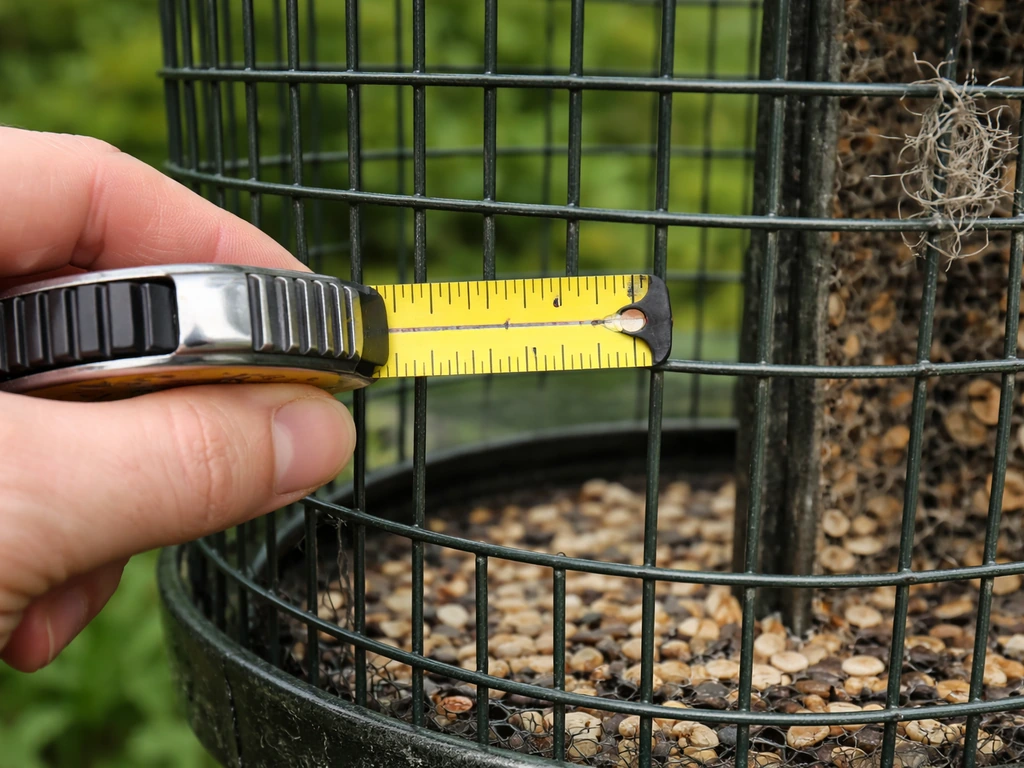
If you've built or modified a feeder and doves are still accessing it, work through these checks before making bigger changes. Most problems trace back to one of three things: the mesh opening is slightly too large, there's a landing surface doves are exploiting, or spilled seed on the ground is keeping a local dove population fed and motivated to keep trying.
- Measure your mesh or cage openings. If any gap is wider than 1.5 inches, a dove can often squeeze or reach through. Add a second layer of mesh offset by half a square to tighten the effective opening without starting over.
- Check for perch ledges. Any horizontal surface wider than about 1 inch — the bottom rim of the cage, the lip of a drainage tray, a wire connection — can be enough for a dove to gain purchase. Trim, remove, or wrap these with wire so they're no longer flat.
- Re-examine the gap between your cage bottom and the ground approach. If the cage hangs with a large open bottom gap (more than about 5 inches), a dove may be flying up and landing inside from below. Tighten the gap to 2 to 3 inches, which lets small birds fly up but limits dove entry angle.
- Adjust weight-activated tension if your feeder has it. If doves are still triggering the perch to stay open, tighten the spring tension slightly by turning the adjustment screw clockwise in small increments, testing with each step.
- Clean the ground under the feeder and remove all seed debris. Do this for 3 to 5 consecutive days to break the habit loop for doves already established in the area.
- If a specific dove is very persistent, temporarily move the feeder 10 to 15 feet to a new location. Doves are creatures of habit and often won't immediately follow a moved feeder, giving your exclusion setup time to 'stick' before they rediscover it.
One honest note: in heavy dove areas, you may never get to zero doves. The realistic goal is reducing their access to the feeder itself so they're getting nothing from the feeder station and eventually deprioritize your yard. A few doves pecking around on clean ground searching for almost nothing is a success compared to a dozen dominating the seed supply.
Also check whether the feeder itself needs a cleaning. Stale or moldy seed can cause target birds to abandon a feeder, which makes it look like the exclusion setup drove them away when it's actually a hygiene issue. Clean every other week as a baseline, more often in hot or humid weather, and always dry the feeder completely before refilling.
Quick checklist and upgrades for long-term success
Use this as your reference list once the feeder is up and running. Revisit it any time dove pressure increases, after heavy rain, or at the start of a new season.
- Feeder type: tube, caged, or weight-activated (not open platform or tray)
- Cage mesh opening: 1.5 inches or smaller
- Perch size: under 1 inch wide, thin dowel style, no flat ledges
- Seed: Nyjer, safflower, or whole peanuts — no millet, cracked corn, or scattered mixed seed
- Pole height: at least 5 feet off the ground
- Cone baffle: at least 17 inches diameter, mounted 4 to 5 feet high on the pole
- Clearance from launch points: 10 feet minimum from fences, branches, or rooflines
- Ground cleanup: remove spilled seed every 1 to 2 days
- Cleaning schedule: full feeder wash every 1 to 2 weeks, dry before refilling
- Seasonal check: inspect mesh, perch, and baffle for damage or loosening each spring and fall
For long-term upgrades, consider adding a second feeder station with Nyjer specifically for finches, the two-station approach lets you put dove-resistant seed in one location and any remaining mixed seed in a caged feeder in another, giving your target birds more feeding options without creating a concentrated dove attractant. If weather is also a concern at your location, pairing your cage setup with an overhead dome guard adds rain protection alongside exclusion.
If your feeder is wooden, sealing it with an exterior waterproof finish helps prevent swelling, warping, and premature wear from rain and snow. If you also want it rain proof, add a simple cover or overhead dome guard so seed stays dry while the feeder still blocks dove access rain proof bird feeder.
And if you're dealing with larger pest pressure beyond doves, the baffle geometry and pole placement principles here are the same foundation you'd use for a fully bear-proof pole system, just scaled up in hardware. A baffle-focused guide also recommends hanging baffles with the bottom at least 4 to 5 feet off the ground so animals cannot climb up to access the feeder.
FAQ
Can I make a dove-proof feeder using a regular tube feeder without adding a cage or changing the ports?
Yes, but only if you restrict access points so doves cannot reach the seed, and you still have to solve the ground buffet problem. If you keep the original wide feeding ports or allow any seed spill to accumulate below, a dove can keep foraging even when it cannot “reach in,” so use a catch tray strategy and clean spilled seed regularly.
What mesh opening size is safest if I want to protect songbirds but stop mourning doves?
A good target is about 1.5 inch square openings for the surrounding cage, but the real check is fit and access, not just the opening math. If you see a dove beak or toes making contact with seed through the mesh, reduce the effective opening by layering mesh or tightening the cage so there is less space between the mesh and the feeder body.
How high should I hang the feeder to reduce doves without scaring smaller birds away?
Aim for a height that small birds can still approach comfortably, while removing easy landing and hopping routes. Since doves use nearby launch points, hanging it higher only helps if you also clear fence posts, rails, and low branches within about 10 feet, otherwise doves simply hop or boost from those surfaces.
Do weight-activated feeders always work for doves?
They often reduce dove feeding, but they depend on correct adjustment and on whether doves can still access seed through any gap when the shroud is partially open. After dialing the tension screw, test with a small nonliving weight first, then observe for a few sessions to confirm that small birds can feed reliably while doves trigger closure.
If doves are still getting in, how can I tell whether it is a design flaw or a placement/spillage issue?
Run a quick diagnosis: remove or cover the feeder station for 24 to 48 hours, then watch where doves are foraging. If they disappear or reduce activity, the feeder access is the issue; if they keep scratching and returning, spilled seed or an attractive ground area is likely keeping them there, even if the ports are restricted.
How do I prevent seed spill from defeating my dove-proof feeder?
Use two steps together: (1) place the feeder so it is not over bare lawn or a wide ledge, and (2) remove spilled seed within a small radius after each refilling. A shallow tray under the area can help contain waste, but keep it clean, because doves will use any contained food source as a substitute feeding station.
Will switching seed type help, or does it only mask the problem?
Seed changes can significantly reduce dove interest, especially when you use dove-disliked options like Nyjer, but it is not a full solution if doves have physical access. The most reliable results come from pairing selective seed with restricted access, since doves will still exploit spilled or accessible seed regardless of preference.
Can I use a cage-surround method on hopper feeders instead of tubes?
Yes, but plan for how the hopper opening and internal walls create new “reach points.” Doves may not be able to fit through the mesh, but they can still wedge around structural gaps or access seed via a wide rim, so make sure the cage extends far enough down and stays tight relative to the feeder body.
How should I handle cleaning and drying so the feeder design does not get blamed for hygiene problems?
Clean at least every other week, then dry completely before refilling, especially around drilled ports and mesh ties where moisture can linger. If birds suddenly stop visiting after you made changes, check for moldy residue first, because a sanitation issue can make it look like the dove-proof design drove them away.
Is there a way to reduce doves over time without constantly modifying the feeder?
Yes, the article’s goal of reducing feeder access works best when you avoid rewarding them with alternative food on the ground. Combine strict cleanup of spilled seed, targeted seed choice, and consistent restricted access for a couple of weeks, then reassess before adding more complexity like additional stations.
Can I build a dove-proof PVC feeder for seeds other than Nyjer or small oil seeds?
Only if you recalculate port size and perch ability for the specific seed and target birds. The small ports and thin perches are tuned for Nyjer and small beaks, so larger seeds or bulkier feeders will either clog, become accessible to doves, or both.
Do I need to seal or protect the wire cage from rust or sharp edges?
If you use hardware cloth, inspect cut edges and deburr them with gloves and careful shaping so small birds do not catch claws. For long-term outdoor durability, ensure the wire is properly secured so it does not rub the feeder and create wear points that can loosen the cage over time.
Next Articles
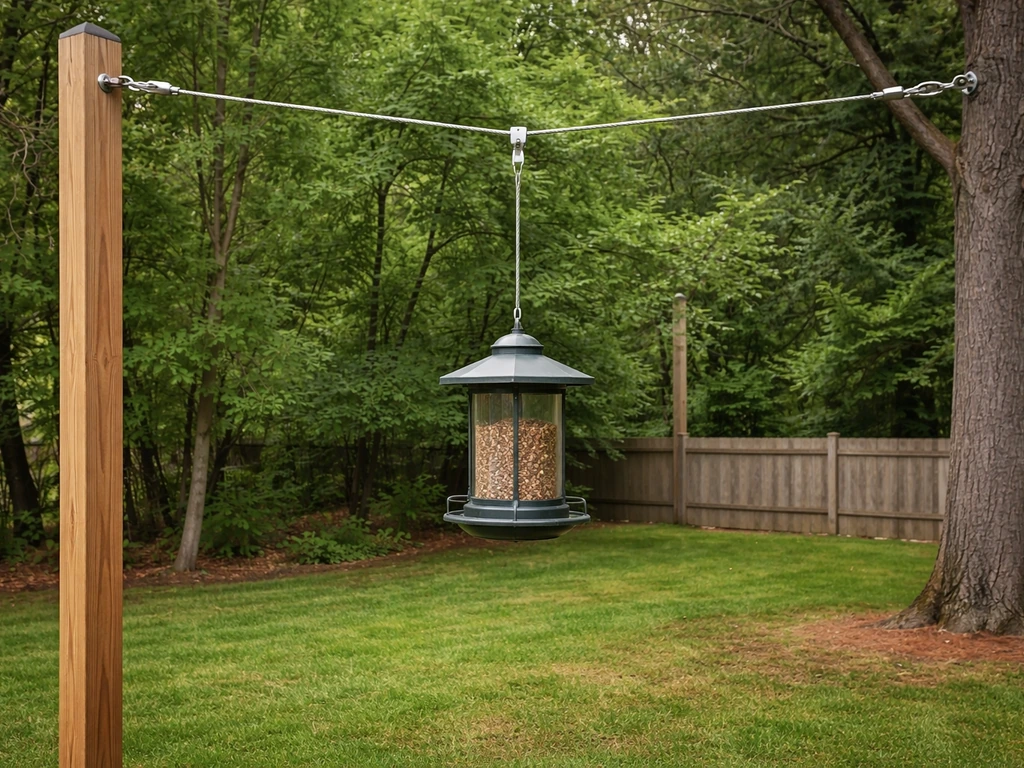
How to Make a Bear-Proof Bird Feeder That Works
Step-by-step build and mounting tips for a bear-proof bird feeder that resists pulling, reaching, and toppling.
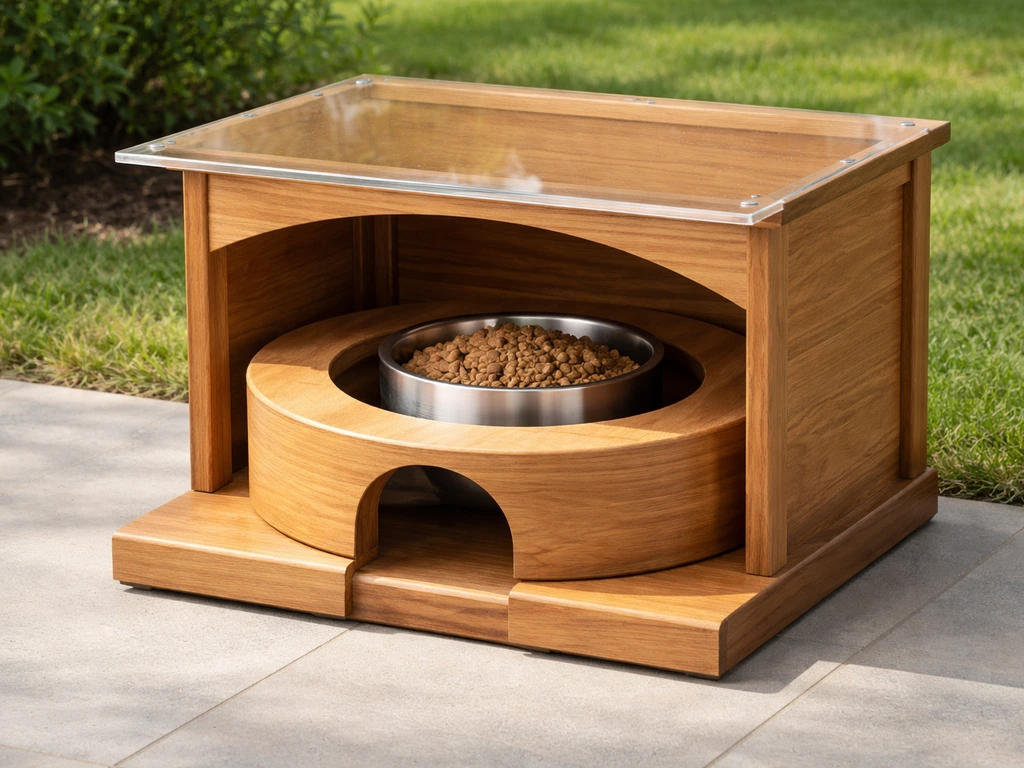
How to Make a Bird-Proof Dog Feeder: DIY Steps
Build a bird-proof dog feeder with hoods, baffles, single-entry guards, safe mounting, and easy maintenance tips.
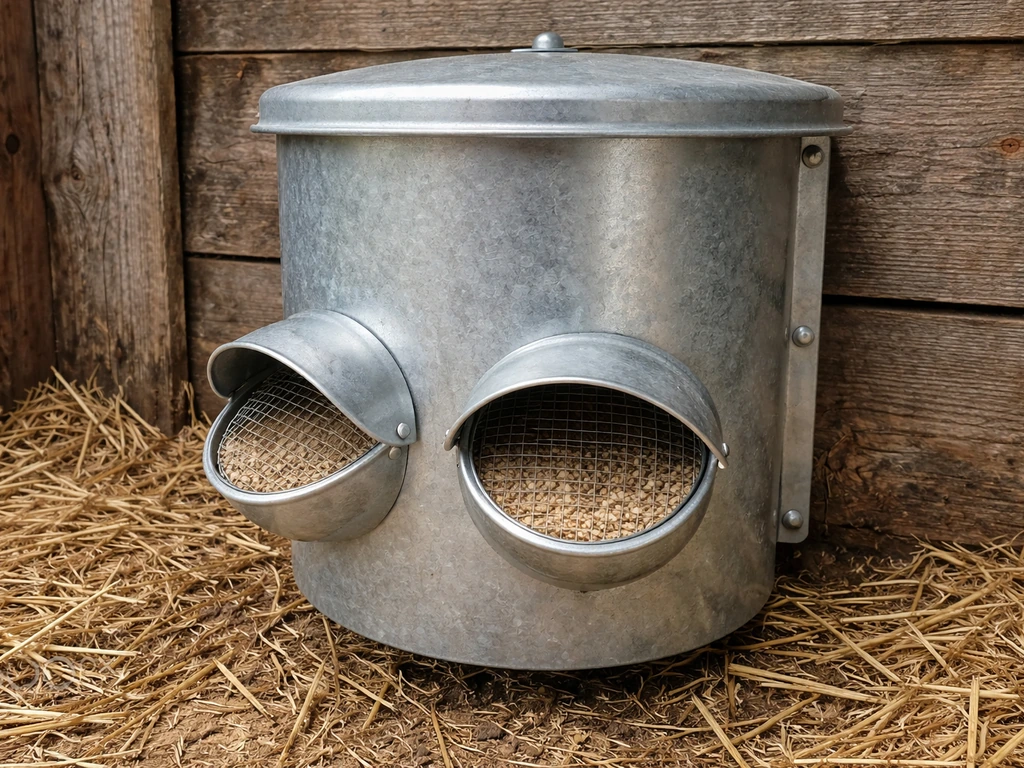
How to Make a Bird Proof Chicken Feeder Step by Step
Step-by-step guide to build a bird-proof chicken feeder that blocks perches and entry points while keeping feed accessib