You can make a working bird feeder today for free using a plastic bottle, a milk jug, or even a pinecone from the yard. Missouri Department of Conservation’s pinecone bird feeder recipe lists pine cones, yarn, peanut butter, and bird seed as the key ingredients pinecone from the yard. None of these builds take more than 20 minutes, none require special tools, and birds will start checking them out within a day or two of hanging. The key is cutting the right-sized openings, adding a perch, hanging it somewhere birds already travel, and filling it with black oil sunflower seed, which attracts more species than anything else you can buy.
How to Make a Cheap Bird Feeder From Household Items
Marcus Brennan
31 May 2026
Pick the best cheap feeder design for your space
Before you start cutting anything, spend 30 seconds matching the build to your situation. Not every design works in every yard, and picking the wrong one is the fastest way to end up with an ignored feeder or a soggy mess on the ground.
| Design | Best for | Time to build | Tools needed | Main limitation |
|---|---|---|---|---|
| Plastic bottle feeder | Small birds, limited space, balcony or fence | 15–20 min | Box cutter or scissors, skewer or pencil | Holds less seed, refill more often |
| Milk jug feeder | Larger birds, yard with shrubs, family project | 20–30 min | Scissors or craft knife, nail | Can crack in hard frost, not as durable |
| Pinecone feeder | Kids' project, quick gift, no tools needed | 5–10 min | None required | Holds very little food, mostly for soft fats/seed mix |
If you have a deck railing or a single hook and want to attract finches, chickadees, and cardinals, go with the bottle feeder. If you have kids involved or want something that hangs in a bush and attracts larger birds like jays, the milk jug is more satisfying. Pinecones are great as a second or third feeder, or when you literally have no scissors handy. For anyone curious about using old dishes or other reclaimed containers as feeders, that's its own rabbit hole worth exploring separately. Once you have the feeder basics down, you can also adapt the same designs to make bird feeders from old dishes and other reclaimed containers.
Materials and safe tools for budget bird feeders
Cheap doesn't mean unsafe. A few things genuinely matter here: avoid any container that held cleaning chemicals or pesticides, skip anything with sharp metal edges that could cut a bird's feet, and don't use materials that will leach chemicals into seed (think painted metal cans with unknown coatings). If you're tempted to paint your feeder anyway, pick a bird-safe approach and learn what color should i paint my bird feeder so the finish doesn't end up harming birds painted metal cans with unknown coatings. Stick to food-grade plastics, cardboard milk jugs with wax coating, or natural materials and you're fine.
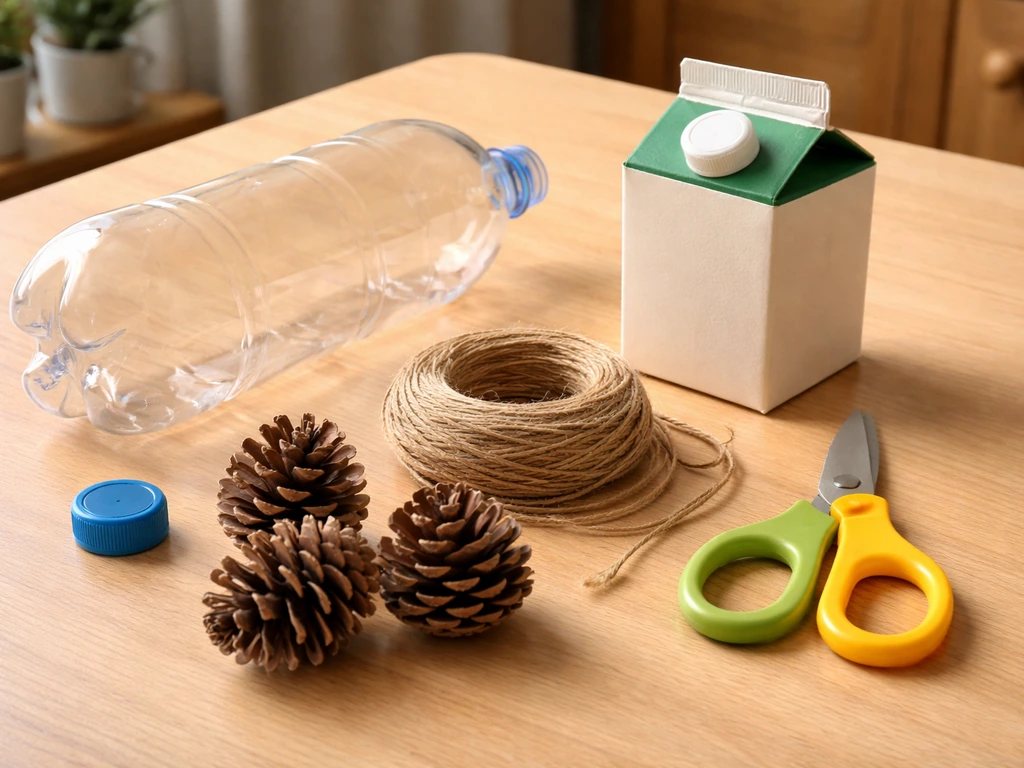
- Clean plastic bottle (2-liter soda bottle or 16 oz water bottle) — rinsed thoroughly
- Clean plastic milk jug (1/2 gallon or 1 gallon) — rinsed, label removed
- Large pinecone — dried out if freshly fallen, so scales open up
- Wooden dowels, pencils, or sturdy sticks for perches
- Twine, jute rope, or yarn for hanging (at least 18 inches)
- Box cutter or sharp scissors for cutting plastic
- A nail or skewer for poking small starter holes
- Peanut butter (unsalted, no xylitol) and/or shortening for pinecone builds
- Bird seed — black oil sunflower seed is the most versatile choice
A quick note on peanut butter: natural, unsalted peanut butter is fine for birds. The one thing you absolutely must avoid is any peanut butter containing xylitol, an artificial sweetener that is toxic to animals. Check the label before you use it. Also, the U.S. Fish and Wildlife Service recommends keeping food and materials as natural and chemical-free as possible when feeding wildlife, so skip the spray paint or chemical sealers on any part that touches seed.
Step-by-step: bottle feeder build
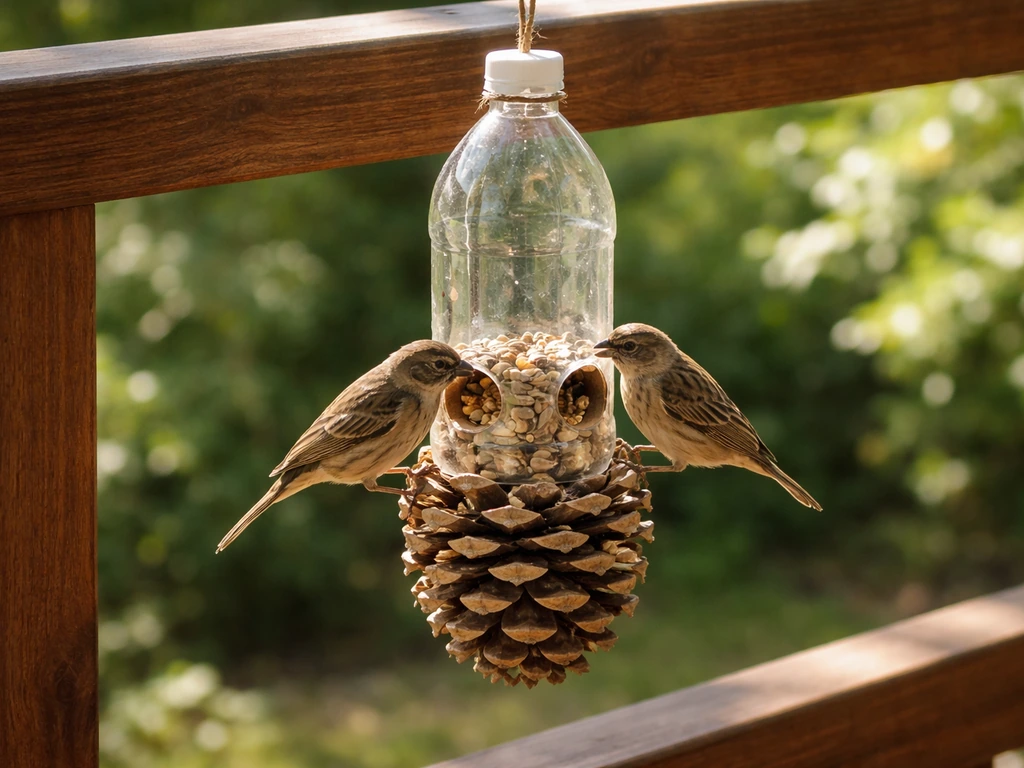
This is the build I recommend most for beginners. It takes about 15 minutes, holds enough seed for several days, and keeps seed reasonably dry. A 2-liter bottle works best for capacity, but any clean plastic bottle does the job. Instructables’ plastic bottle bird feeder build also relies on placing drainage holes near the bottom and setting feeding holes around half an inch square about 4 cm above each perch so seeds feed through without spilling out cutting the right-sized openings.
- Rinse the bottle and remove the cap. Let it dry completely before adding seed.
- Use a nail or skewer to poke a starter hole near the bottom of the bottle, about 1 inch up from the base. Then push a pencil or wooden dowel all the way through both sides to create a perch. Add a second perch hole about 1 inch higher and rotated 90 degrees so the two perches form a cross layout — this gives birds multiple landing spots.
- Cut two feeding holes, one above each perch, positioned about 4 cm (roughly 1.5 inches) above where the perch sits. Make each feeding hole about 1/2 inch square — large enough for seeds to trickle out when a bird lands and nudges the bottle, but small enough that the seed doesn't pour out on its own.
- Poke two small drainage holes at the very bottom of the bottle so any moisture can escape. This prevents seed from rotting in a puddle.
- Thread twine through two holes near the neck of the bottle (just below the cap threads) to create a hanging loop. Tie it off securely and tug test it before adding seed.
- Fill the bottle with seed through the open top, then screw the cap back on. The seed will slowly feed through the openings as birds eat.
- Hang it and you're done.
One thing that trips people up: cutting the feeding holes too large. If you want to upgrade from a bottle feeder, you can also make a bird feeder out of PVC pipe using similar hole sizing and placement ideas feeding holes. If seeds just fall out when you tip the bottle, the hole is too big. Start small and widen gradually with scissors. You want seeds to stay put until a bird actually lands on the perch and disturbs the bottle slightly.
Step-by-step: milk jug or container feeder build
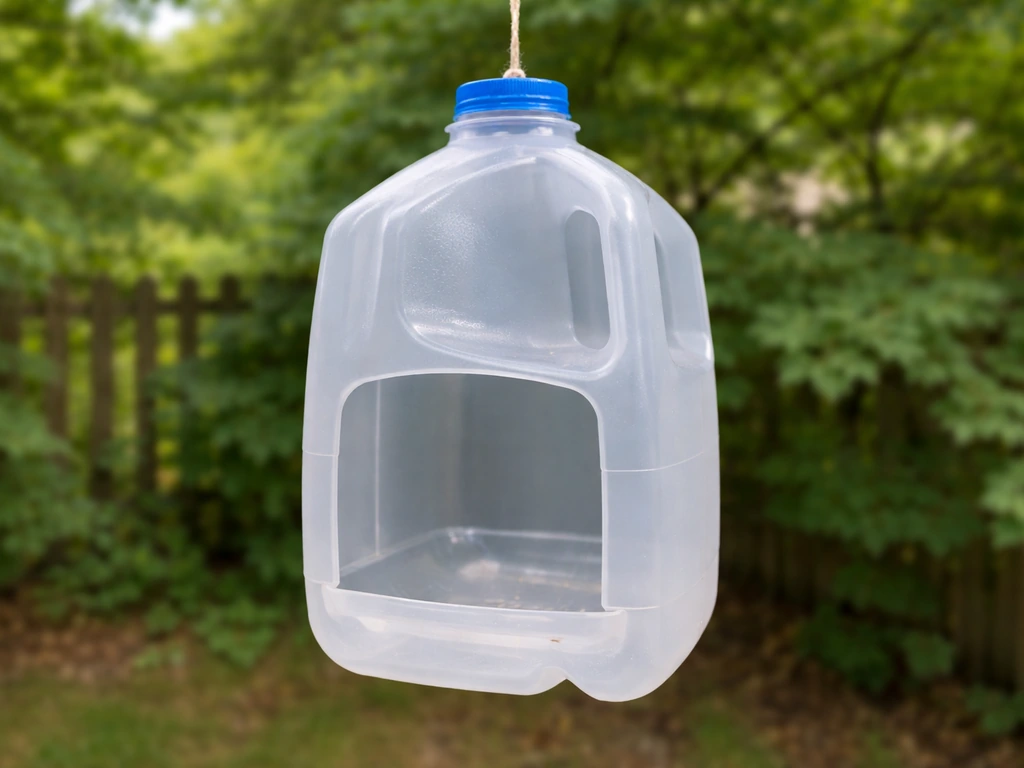
A milk jug feeder works differently from a bottle feeder. Instead of seeds trickling out through small holes, birds actually step inside the jug to feed. That means a larger opening, which also means this feeder works better for bigger birds like cardinals and jays. It's a bit messier in the rain, but it's a great first project for kids and takes almost no tools.
- Rinse the milk jug thoroughly and let it dry. Remove any labels.
- On one flat side of the jug, draw a circle about 2.5 inches wide, positioned a few inches up from the bottom. This is your entrance hole. Cut it out carefully with scissors or a craft knife. The bottom lip of the hole becomes a natural seed ledge where birds can stand.
- Just below the entrance hole, use a nail or skewer to poke a small twig-sized hole through the jug wall. Push a small twig or pencil through to act as a perch outside the entrance.
- Poke two or three small drainage holes in the very bottom of the jug in case water gets in.
- Use the jug's existing handle to thread your hanging twine, or poke two holes through the top of the jug and loop twine through them. Make the loop long enough to clear whatever branch or hook you're using.
- Pour a couple of inches of seed into the bottom of the jug — not so much that it blocks the entrance hole. Birds will reach in and pick at it.
- Hang it at roughly eye level on a branch or hook, ideally near some shrub cover.
In wet weather, the open entrance means rain can get in and wet the seed. If you live somewhere rainy, cut the entrance hole slightly smaller, or angle the jug so the opening faces slightly downward. You can also cut a small roof overhang by leaving a flap above the hole when you cut, just fold it outward and it deflects some rain.
Step-by-step: pinecone (and other no-cook) feeder options
Pinecone feeders are genuinely the simplest option, and they work. They're especially good as a quick project with kids or as a supplement to your main feeder. Chickadees, nuthatches, and woodpeckers go after these enthusiastically, especially in cooler weather when they need extra fat.
- Tie a length of yarn or twine (about 12 inches) around the top of the pinecone, near the stem. Make a loop at the other end for hanging. Do this first, before coating, so your hands stay clean.
- Spread peanut butter generously between the scales of the pinecone. Natural unsalted peanut butter works great. If you prefer not to use peanut butter, shortening (like Crisco) works just as well and has a neutral smell.
- For a longer-lasting and higher-energy mix, blend one part peanut butter with five parts cornmeal before applying. The cornmeal helps the mixture stay firmer in warm weather and stretch further.
- Roll or press the coated pinecone into a plate of mixed birdseed. Press gently so seeds stick between the scales.
- Hang in a sheltered spot — under a porch eave, in a tree with some canopy above it, or near a shrub. Direct sun melts the fat quickly, so shade is better.
- Check it every few days. When the seed is gone and the pinecone is bare, reload it or replace it.
If you don't have a pinecone, a toilet paper roll or paper towel roll works the same way: coat the outside with peanut butter, roll in seed, slide a stick through the center tube as a perch, and hang with twine through the tube. It lasts a few days and costs nothing. For a more durable version of this concept without any cooking involved, that's essentially where eco-friendly feeder builds start to overlap, worth looking into if you want something that lasts longer. Eco-friendly feeder builds like this focus on using what you already have and avoiding finishes that leave chemicals on the parts that touch seed.
Hanging, mounting, and placement for best bird traffic
Where you hang the feeder matters almost as much as what you put in it. Birds don't just fly randomly around a yard looking for food. They follow the same routes, check the same sheltered spots, and avoid open exposed areas where predators can catch them. Put your feeder in the right spot and birds will find it within a day or two. Put it in the wrong spot and it sits ignored for weeks.
- Hang within 3 feet of a window OR at least 30 feet away. This sounds counterintuitive, but it dramatically reduces window strikes. Close up, birds don't build enough speed to hurt themselves. Far away, they see the glass in context and avoid it. The danger zone is the in-between distance of 5 to 25 feet.
- Place the feeder near natural cover — a shrub, hedge, or tree within about 10 feet. Birds like to dart to cover if startled. With no cover nearby, many species simply won't risk using the feeder.
- Keep it at least 5 to 6 feet off the ground to discourage cats and ground predators, but not so high that you can't reach it for refilling.
- If you have multiple feeders, spread them out rather than clustering them. This reduces competition between species and lets shy birds feed without getting pushed out by dominant ones.
- Suet feeders and pinecone feeders should hang well off the ground against a tree trunk or on a branch — woodpeckers and nuthatches are more comfortable feeding in a vertical position against bark-like surfaces.
- Avoid placing feeders directly over garden beds or patios unless you want seed hulls and droppings there. A patch of ground underneath is fine and actually attracts ground-feeding birds like doves and sparrows.
Adding nearby plantings like native shrubs or berry-producing plants makes your whole yard more attractive to birds and dramatically improves how reliably they visit any feeder you hang. You can also dress up your feeder with simple, bird-safe decorations like natural materials, non-toxic paint, and weatherproof accents that do not touch the seed native shrubs or berry-producing plants. The Missouri Department of Conservation specifically notes that cover plants near feeding stations improve yard reliability for birds. You don't need a full garden redesign, even a potted shrub near the feeder helps.
Food choice, maintenance, and cleaning schedule
What to fill it with
Start with black oil sunflower seed. It's the single food that attracts the widest range of birds, including cardinals, finches, chickadees, blue jays, nuthatches, and woodpeckers. The shells are thin enough for small birds to crack, the seeds are high in fat and calories, and it's widely available at grocery and hardware stores. If you want to broaden your mix, add some white millet (for sparrows and juncos) and cracked corn (for doves and larger birds). Peanuts or dried fruit are great additions if you want to pull in woodpeckers and titmice.
Avoid cheap filler mixes with lots of milo (the round red seeds). Most backyard birds ignore it and it just ends up on the ground getting moldy. Spend a little more on a quality mix or just buy straight black oil sunflower and you'll get better results for less waste.
Cleaning schedule and how to do it
Clean seed feeders about once every two weeks under normal conditions. In warm or damp weather, bump that up to once a week. Leftover seed hulls and bird droppings can develop mold and spread disease between birds, so this isn't optional if you care about the birds actually staying healthy. If you see black mold, slimy seed, or any obviously wet/clumped seed inside the feeder, clean it immediately and toss the contaminated seed.
- Empty out all old seed and dump it in the trash or bury it away from the feeder area.
- Wash the feeder with hot soapy water and a bottle brush. For a deeper clean, use a dilute bleach solution of 1 part bleach to 9 parts water.
- Rinse thoroughly to remove all soap or bleach residue.
- Let the feeder dry completely before refilling. Putting seed into a wet feeder is how you get mold within days. Let it air dry for a few hours or pat dry with a clean cloth.
- Refill with fresh seed only.
For pinecone or suet-style feeders, the timeline is shorter. Suet can typically stay out for about 7 days in cool weather before you should check it. In summer heat, fat goes rancid faster and you'll want to swap it out every 3 to 4 days. When in doubt, if it smells off, replace it.
Pest-proofing and troubleshooting common problems
Squirrels getting into the feeder
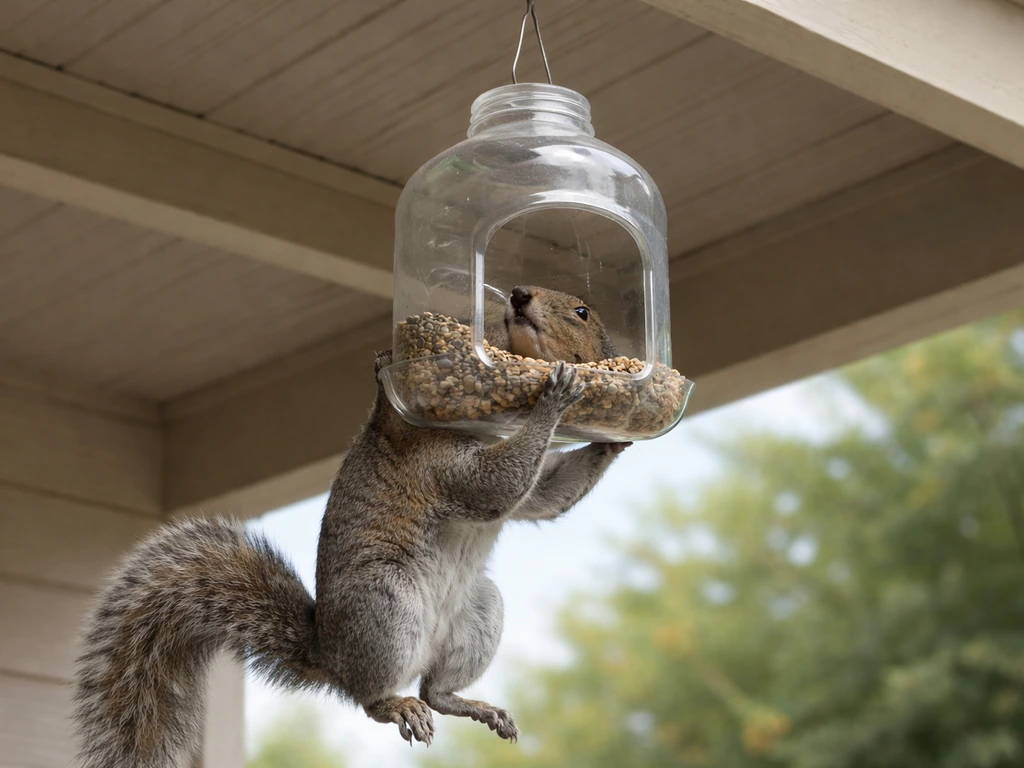
Squirrels are persistent and athletic. A baffle (a cone or dome-shaped guard on the hanging wire or pole) is the most effective deterrent, but it only works if the feeder is positioned correctly. Squirrels can jump up to 10 feet horizontally and 4 feet vertically from a standstill. If your feeder is within jumping distance of a fence, rooftop, tree branch, or any launch point, the baffle won't matter. Position the feeder at least 10 feet away from any horizontal surface a squirrel could launch from and at least 4 to 5 feet off the ground on a smooth pole. A DIY baffle made from a 2-liter bottle (cut in half and threaded over the hanging wire) can work as a budget option.
Raccoons and larger animals
Raccoons are strong enough to tear apart a plastic bottle feeder if motivated. Bring feeders inside at night if raccoons are active in your area, especially the milk jug and bottle designs. They're less interested if the feeder is empty overnight, so consider filling only what birds will eat in a day during raccoon season.
Birds aren't using the feeder
Give it at least 3 to 5 days before worrying. Birds discover new feeders by sight and then by other birds' cues. A few things speed this up: place the feeder near cover, scatter a small handful of seed on top of or around the feeder so birds spot it from above, and make sure there's no strong chemical smell from a newly cleaned feeder (rinse really well). If it's been two weeks and nothing, try moving the feeder closer to the shrubs or trees you see birds using.
Seed spoiling or getting wet
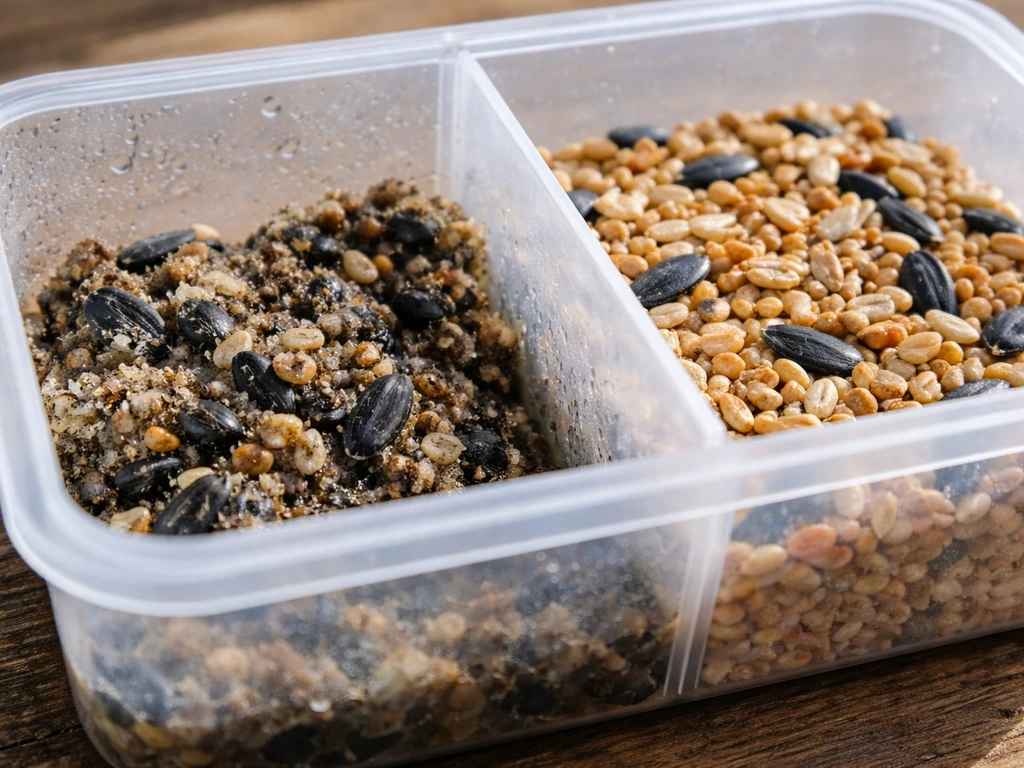
Wet or moldy seed is the most common problem with DIY feeders, especially the milk jug design. If you have old bird feeders that are cracked, rusted, or getting moldy seed, remove them and switch to fresh, safer feeders or clean them thoroughly before rehanging. Make sure your drainage holes are clear and large enough (at least 1/4 inch). Only fill what birds can eat in 2 to 3 days in wet weather. If seed is clumping at the bottom of a bottle feeder, it means moisture is getting in somewhere, check that your feeding holes aren't so low that rain runs in, and that your cap is sealed. Dump clumped seed immediately and refill with dry seed before rehung.
Seed not feeding through bottle holes
If seed isn't coming through the feeding holes when a bird lands, the hole may be slightly too small or the seed type too large. Sunflower seed in the shell is bigger than millet or safflower. Try gently widening the hole with scissors, a few millimeters at a time. Alternatively, lightly tapping the bottle when you refill it helps seeds settle and start flowing. Don't make the holes so large that seed pours out freely when no bird is there.
Feeder swinging too much and birds avoiding it
Some birds, especially heavier ones like cardinals and jays, don't love a wildly swinging feeder. If yours spins and swings in every breeze, add a second anchor point below the feeder to stabilize it, or hang it from a short hook rather than a long length of twine. Even tying the bottom of the feeder loosely to a nearby branch with a bit of string keeps it steadier without stopping it from hanging freely.
FAQ
How can I stop my DIY bird feeder from getting moldy in rainy weather?
For bottle and milk-jug feeders, use dry seed and make sure the cap area and any seams are fully closed, then pre-punch drainage or keep the feeding holes positioned slightly above where rain can pool. If you see seed clumping within 24 hours, something is letting water in, and you should empty, dry, and refill with fresh seed rather than letting it continue.
What’s the best perch height or placement for a cheap bottle or jug feeder?
Add a light wood perch or a thicker plastic dowel so birds can grip comfortably, then check that the perch sits slightly below the holes (for bottle feeders) so feet stay out of the seed stream. If the perch is too high or too close to the plastic edge, birds may avoid landing even if the holes are correct.
Is it safe to hang a homemade feeder with random string or twine?
If you use garden twine, make sure it is not treated with unknown chemicals, and replace it if it frays. For safer long-term hanging, tie to a clean hook or use uncoated, food-safe string through the container handle area, not through the seed-contact openings.
Why won’t birds feed reliably from my bottle feeder even though the holes are cut?
Not always, and it depends on what you built. For bottle and jug feeders, smaller holes can trap seed and reduce flow, which can cause birds to wait and drop more seed. Aim for “seed stays until disturbed,” then test by tipping gently and observing flow without a bird.
Can I transition from a seed mix to black oil sunflower without repelling birds?
Yes, but switch gradually. If you currently have a seed mix and want to move to mostly black oil sunflower, replace only part of the contents each refill over 1 to 2 weeks, so resident birds do not lose confidence when the feeder changes.
What common foods should I avoid putting in a cheap DIY feeder?
Avoid “helping” with extra nuts or bread. Bread is low value and can attract nuisance species while degrading water quality, and large nuts can be harder for small birds to crack. Stick to sunflower, millet, cracked corn, and (if you want) small amounts of peanuts, and keep anything you add dry.
How do I adjust my feeder if birds come for a day then stop visiting?
Yes. A simple way is to place the feeder so it is visible from nearby cover (shrubs or a short tree) but also positioned away from launch points. If you see birds only when the air is calm, stabilize the hanger (short hook or a second anchor) and keep the feeder from swinging into nearby branches.
What’s the safest way to clean a household-item bird feeder?
Clean only what is safe to rinse or wipe. For plastic bottle and milk jug feeders, rinse thoroughly with hot water and scrub hulls, then dry completely in a clean area before refilling. Do not use harsh detergents or chemical cleaners on parts that touch seed, even if you rinse.
How do I handle squirrels without constantly changing my recipe?
If you attract squirrels, change only the access, not the food. Move the feeder higher, add a properly positioned baffle, and stop overfilling. During peak squirrel activity, fill for 1 day and remove leftovers at night to reduce scent and access time.
My DIY feeder has no clear perch. Will birds still use it?
If you have no perch, many birds will not land. For bottle feeders, add a stable perch that can support weight and keep it level with the feeding holes. If you cannot add a perch, the easiest swap is to use the pinecone or paper-roll style (they inherently provide a grabbing surface).
How strict do I need to be about using containers that used to hold other products?
To reduce risk, never use containers that held pesticides, cleaners, or unknown chemicals, even if you rinsed them. Also avoid painted or coated metal unless you are sure the coating is bird-safe and will not touch seed, and use food-grade plastics or natural materials for any part that contacts seed.