The easiest apple bird feeder you can make today takes one apple, a skewer or thick wire, and about five minutes. If you want to build one specifically as a sugar feeder, follow the same placement and freshness tips but use a safe sugar-water mix instead apple feeder. Core the apple, thread a wire or sturdy string through the center hole, hang it from a branch, and you're done.
How to Make an Apple Bird Feeder at Home Step by Step
Marcus Brennan
4 Jun 2026
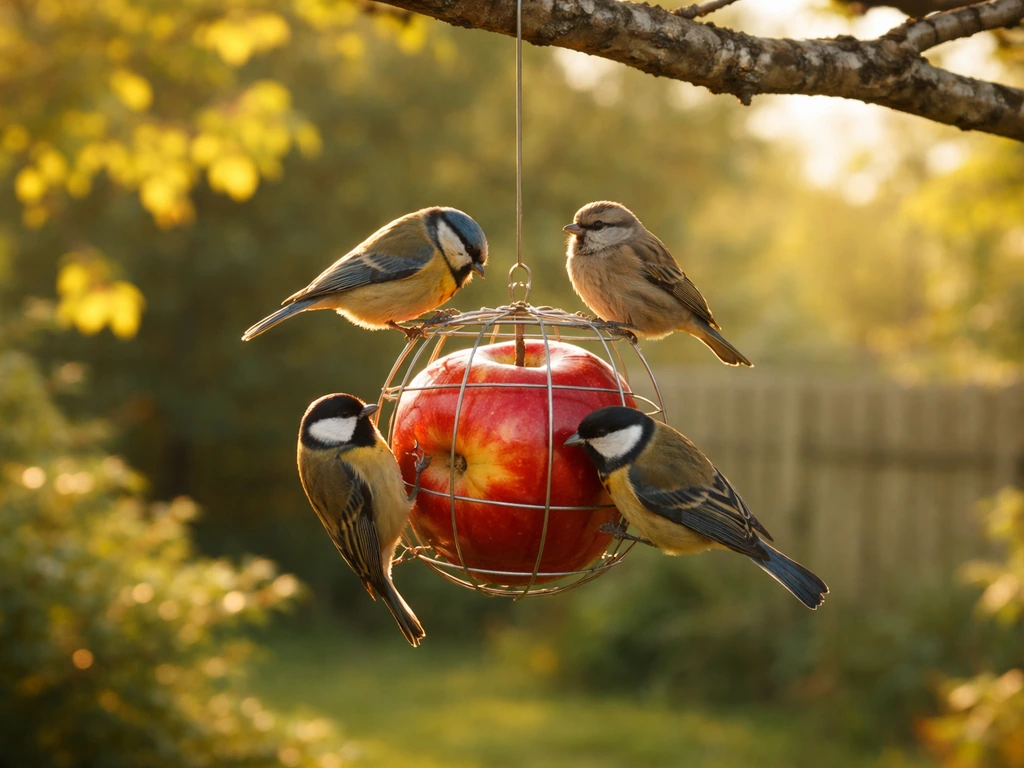
Once you have the basics of a hanging apple or cage feeder down, you can adapt the same wire-and-hang approach to make a magic halo bird feeder using an outer ring and evenly spaced feeding points. Birds like thrushes, robins, starlings, and waxwings will land right on the apple and peck at the flesh.
If you want something a bit sturdier or longer-lasting, a small wire mesh cage packed with apple chunks gives you more flexibility and holds up better in wind and wet weather. Either way, you do not need special tools, a workshop, or any carpentry experience to pull this off.
Choosing the right apple feeder style
There are two main DIY approaches worth knowing about, and the right one depends mostly on what you have on hand and how much time you want to spend.
The whole apple method
This is the classic craft-style feeder that the RSPCA and Scouts UK both describe. You core a whole apple to make a hole straight through the center, then thread a wire or thick string through that hole to hang it. Some variations slice off one third of the apple first to give birds a flat landing and feeding surface. It is dead simple, costs nothing if you have apples at home, and looks great in a garden. The downside is that a whole hanging apple can spin and sway in wind, which makes it harder for birds to land, and it starts to brown and soften within a day or two outdoors.
The wire mesh cage method
Cut a rectangle of wire mesh (hardware cloth works perfectly), roll it into a cylinder, close the ends with wire clips or by folding the mesh back on itself, and you have a small cage you can pack with apple chunks.
Instructables describes this wire-mesh birdfeeder build as starting with cutting wire mesh and then wrapping the mesh piece into a round cylinder shape to form a practical fruit-holding cage Cut a rectangle of wire mesh (hardware cloth works perfectly), roll it into a cylinder. This approach comes from the same wire mesh technique used for suet and seed feeders, and it works just as well for fruit.
The cage keeps pieces contained, reduces waste, and is easier to clean and refill than a whole hanging apple. It also lasts indefinitely since the cage itself does not rot. If you want a feeder you can reuse every season, this is the better option.
| Feature | Whole apple on wire | Wire mesh cage with apple chunks |
|---|---|---|
| Build time | 5 minutes | 15 to 20 minutes |
| Tools needed | Apple corer, wire or string | Wire cutters, pliers, wire mesh |
| Cost | Near zero | Low (under a few dollars for mesh) |
| Bird access | Good for larger birds | Good for all sizes |
| Freshness duration | 1 to 2 days | 1 to 2 days (apple still needs replacing) |
| Reusability | Single use | Reusable indefinitely |
| Weather resistance | Spins and softens quickly | More stable, pieces stay contained |
My honest recommendation: start with the whole apple method to see if birds visit your yard, then build a mesh cage once you know they do. The cage is worth the small extra effort once you are committed to keeping the feeder stocked.
Materials and tools you'll need
Here is what you need for each method. Pick the list that matches your build.
For the whole apple feeder
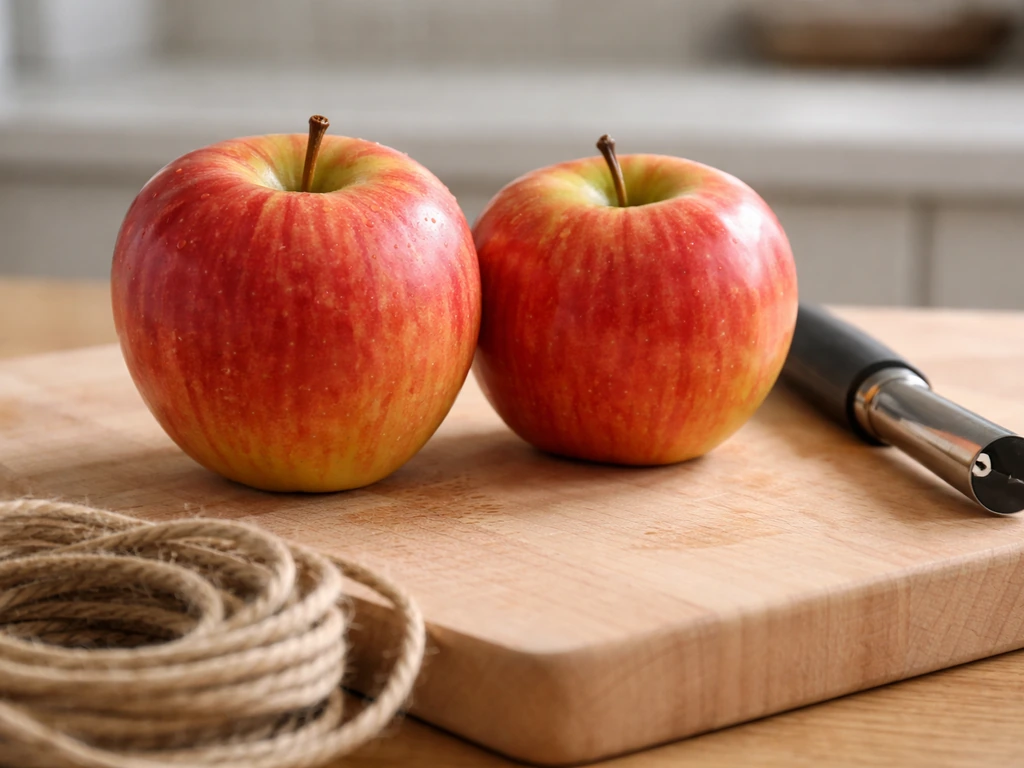
- 1 fresh apple (any variety, firm is better than soft)
- Apple corer or a sturdy knife
- 18 to 24 inches of stiff garden wire, or thick twine (at least 2mm)
- Wire cutters or scissors
- Optional: a sturdy skewer or wooden dowel to run through the apple for extra stability
For the wire mesh cage feeder
- Wire mesh / hardware cloth with openings around 1 to 1.5 inches (so birds can reach in)
- Wire cutters
- Needle-nose pliers
- Thin galvanized wire for closing seams and making a hanging loop
- 1 to 2 apples, cut into chunks
- A small knife for cutting apples
One important note on apple prep that often gets skipped: always wash store-bought apples thoroughly before putting them out. Commercial apples often carry pesticide residues on the skin, and birds will peck right through to the skin. Also, remove all seeds before hanging or packing any apple pieces. Apple seeds contain compounds that are harmful to birds, so core your apples carefully and discard the seeds.
Step-by-step: building your apple fruit bird feeder
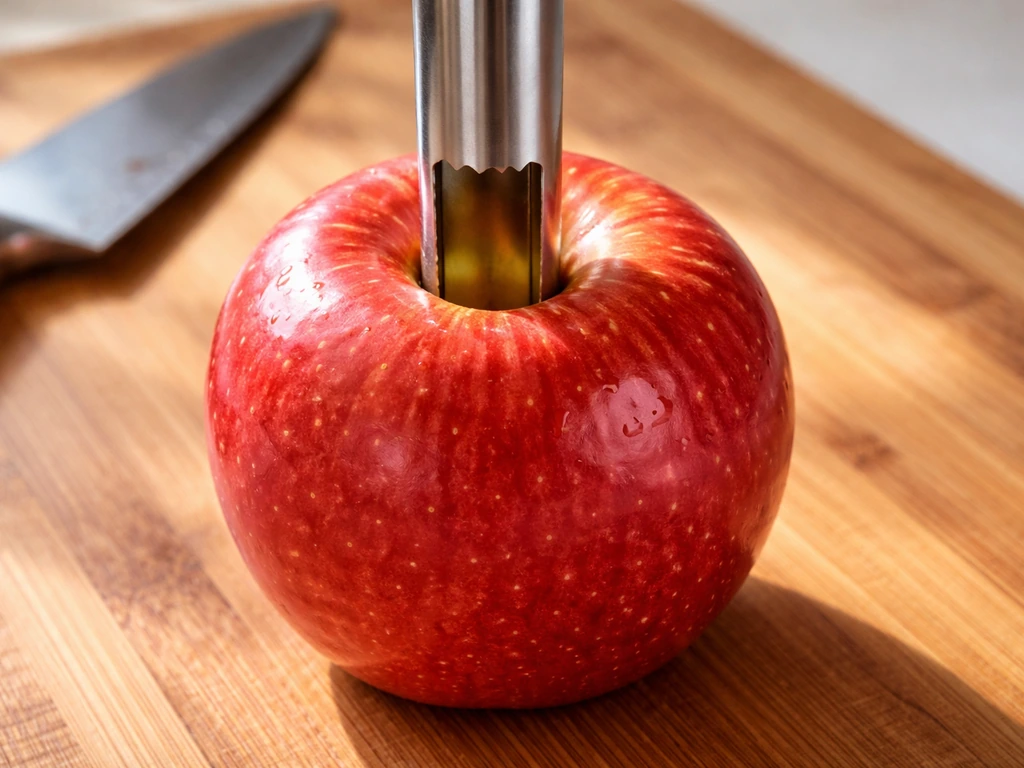
Method 1: whole apple on a wire (5 minutes)
- Wash the apple well and dry it.
- Use an apple corer or a sturdy knife to carefully cut a hole straight through the apple from top to bottom. The hole needs to be wide enough to thread your wire or twine through cleanly.
- Optional but recommended: slice off about one third of the apple from one side, creating a flat feeding platform. This gives smaller birds somewhere to perch and peck without the apple spinning.
- Cut a length of wire or thick twine, about 18 to 24 inches. Fold it in half to double it up for strength.
- Thread the doubled wire or twine through the apple hole from bottom to top.
- At the top, twist the two wire ends together or tie a firm knot to create a hanging loop. Make sure the apple cannot slide off the bottom. You can thread a small stick or twig horizontally through the wire just below the apple to act as a stop.
- Hang the apple from a branch or hook. Done.
Method 2: wire mesh cage with apple chunks (15 to 20 minutes)
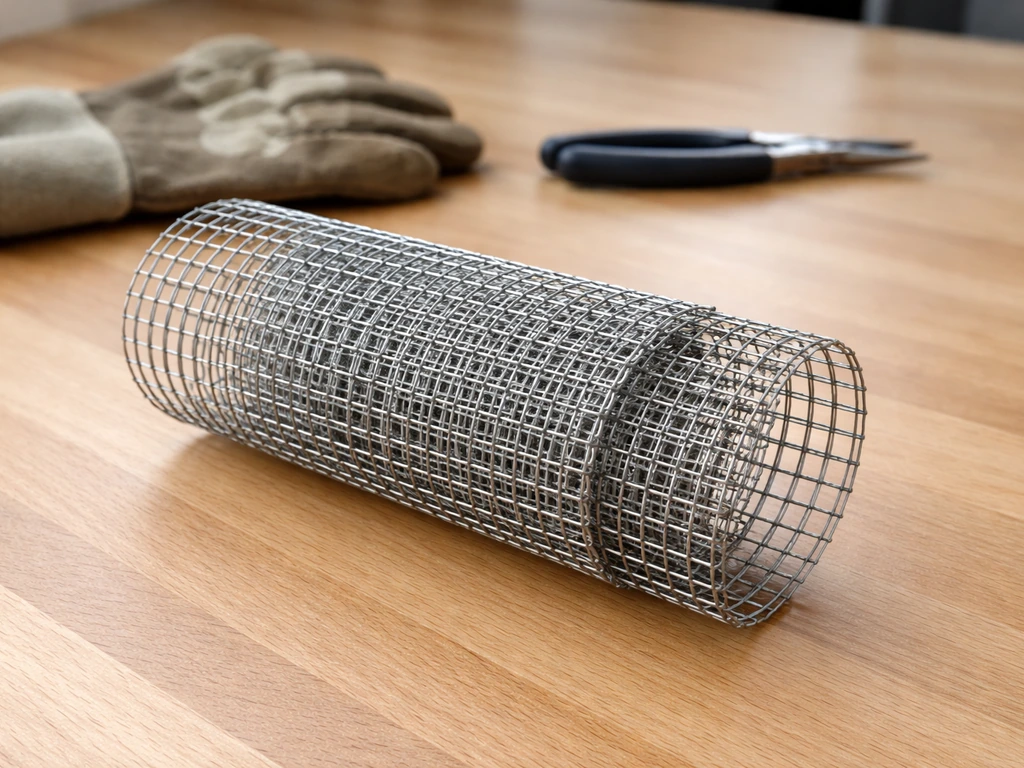
- Cut a rectangle of wire mesh approximately 8 by 10 inches. Wear gloves as cut edges are sharp.
- Roll the mesh into a cylinder shape with a diameter of about 3 to 4 inches. Overlap the edges by about an inch.
- Use short pieces of thin wire or the mesh's own cut ends to fasten the overlapping seam closed along the length of the cylinder. Pliers help here.
- Fold and crimp the mesh at one end to close the bottom of the cage. Pinch the wires together firmly with pliers so there are no sharp points sticking inward.
- Wash and core your apples, remove all seeds, and cut the flesh into chunks roughly 1 to 2 inches in size. Smaller pieces are easier for smaller birds.
- Pack the apple chunks into the open top of the cage, filling it about two thirds full. Do not overstuff or pieces will fall out.
- Close the top of the cage the same way you closed the bottom, but leave a section of wire extended to form a hanging hook or loop. Twist it firmly with pliers.
- Hang the cage from a branch, shepherd's hook, or feeder pole.
Both builds are genuinely quick, and you do not need to be precise about dimensions. The cage especially is forgiving: a slightly lumpy cylinder holds apple chunks just as well as a perfect one.
How to hang and place it in your yard
Location makes a bigger difference than most first-timers expect. Get this right and birds will find the feeder within days. Get it wrong and you will deal with squirrels, window strikes, or a feeder that birds simply never discover.
The most practical placement rule to follow is the 5-7-9 guideline: hang the feeder at least 5 feet off the ground, at least 7 feet horizontally from any fence, wall, or structure a squirrel could jump from, and at least 9 feet below any overhanging branch they could drop down from. Ideal Home, quoting wildlife expert guidance, describes the “5-7-9” placement rule for squirrel avoidance as hanging feeders 5 feet off the ground, 7 feet from fences or structures, and 9 feet from overhanging branches the 5-7-9 guideline. Squirrels are excellent jumpers, so these numbers are not arbitrary. If you cannot hit all three, prioritize the 9-foot branch clearance since that is the easiest route they use.
Place the feeder within 10 to 15 feet of some natural cover like a shrub, hedge, or small tree. Birds feel exposed at feeders, and nearby cover gives them somewhere to retreat quickly if they sense a predator. Without cover nearby, many species simply will not commit to visiting.
For window safety, either hang the feeder within 3 feet of a window (so birds cannot build up enough speed to hurt themselves if they fly toward it) or at least 30 feet away. The dangerous zone is anything in between, where birds hit glass at full speed.
If squirrels are a serious problem in your yard, a pole-mounted setup with a squirrel baffle below the feeder is more effective than trying to find a tree branch that meets all the criteria. A smooth metal pole with a baffle is genuinely hard for squirrels to get past, while a branch is always a gamble no matter how far away it seems.
Maintenance, freshness, and cleaning routine
Fresh fruit goes bad fast outdoors, and this is the main challenge with apple feeders compared to seed feeders. In warm weather, mold and yeast can start growing on cut apple surfaces in as little as two hours. That sounds extreme, and in practice birds often eat the apple before it has a chance to rot much, but you still need to check daily and replace old apple every one to two days at most.
If you see brown, mushy flesh, or any sign of black mold, remove the apple immediately. Do not wait for birds to sort it out. Moldy fruit can make birds sick, and a feeder with rotten food is also more likely to attract rodents and wasps.
How to clean the wire mesh cage
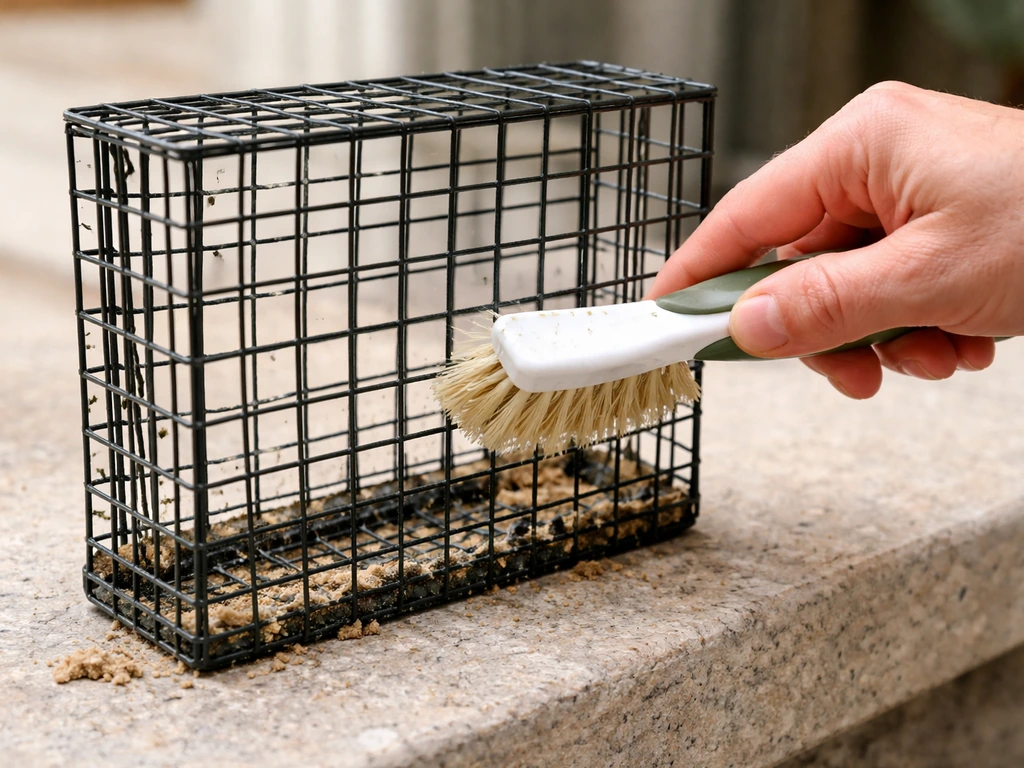
The whole apple version does not need cleaning since you replace the whole apple each time. The mesh cage does. Empty it fully, then scrub away any sticky residue with a brush and hot soapy water. For a proper sanitizing clean (which you should do weekly if the feeder stays up regularly), soak the cage in a 10% bleach solution: 1 part bleach to 9 parts water. Let it soak for 10 minutes, then rinse thoroughly and let it air dry completely before refilling. Never put apple back into a damp cage as moisture accelerates mold growth.
Also clean up around the base of your feeder regularly. Dropped apple pieces on the ground attract pests faster than almost anything else. Remove old pieces whenever you refill, and if the ground underneath has become messy over time, you can sprinkle a thin layer of agricultural lime (about a quarter inch) on the ground under the feeder area to help neutralize bacteria buildup.
Troubleshooting pests and setup problems
Squirrels are eating everything
Squirrels love apple as much as birds do. If they are hitting your feeder regularly, reassess your placement using the 5-7-9 rule above. If you are already at those distances and they are still getting through, switch to a pole-mounted setup and add a smooth metal baffle below the cage. A pole with a good baffle is the single most effective squirrel deterrent, far more reliable than placement tricks alone.
Wasps and insects are swarming the feeder
Ripe and overripe apple is extremely attractive to wasps. The best solution is to replace apple more frequently (every day in warm weather) and to remove old pieces before they get soft and sweet-smelling. Moving the feeder to a slightly shadier location also slows ripening. There is no feeder modification that fully stops wasps around fruit, so freshness management is your main lever here.
Ants are climbing up
If ants are marching up your hanging wire or pole to reach the apple, an ant moat placed between the hanging point and the feeder works well. It is a small cup filled with water that ants cannot cross. The same concept used for hummingbird feeders applies perfectly here. Keep the moat topped up, especially in dry weather when ants are most aggressive about finding sugar.
Birds are not visiting
Give a new feeder at least one to two weeks before you give up on the location. Birds are creatures of habit and it takes time for them to discover a new food source. Make sure the feeder is visible (not hidden deep in dense foliage) and that there is cover nearby. If nothing visits after two weeks, try moving the feeder closer to a known bird activity spot in your yard, like near a birdbath or existing seed feeder. If you are also looking for a nectar setup, the same placement and freshness basics apply to a nectar bird feeder in NZ near a birdbath or existing seed feeder.
The apple is rotting too fast
Hot, humid weather speeds up rot significantly. In summer, check and replace apple daily. You can slow things down a bit by placing the feeder in partial shade rather than full sun, and by using firmer apple varieties which hold up better than very ripe, soft apples. If you find you are going through a lot of apple quickly, cutting the pieces slightly larger means less surface area exposed to air, which slows browning a little. Do not put out more than you expect birds to eat in a day or two.
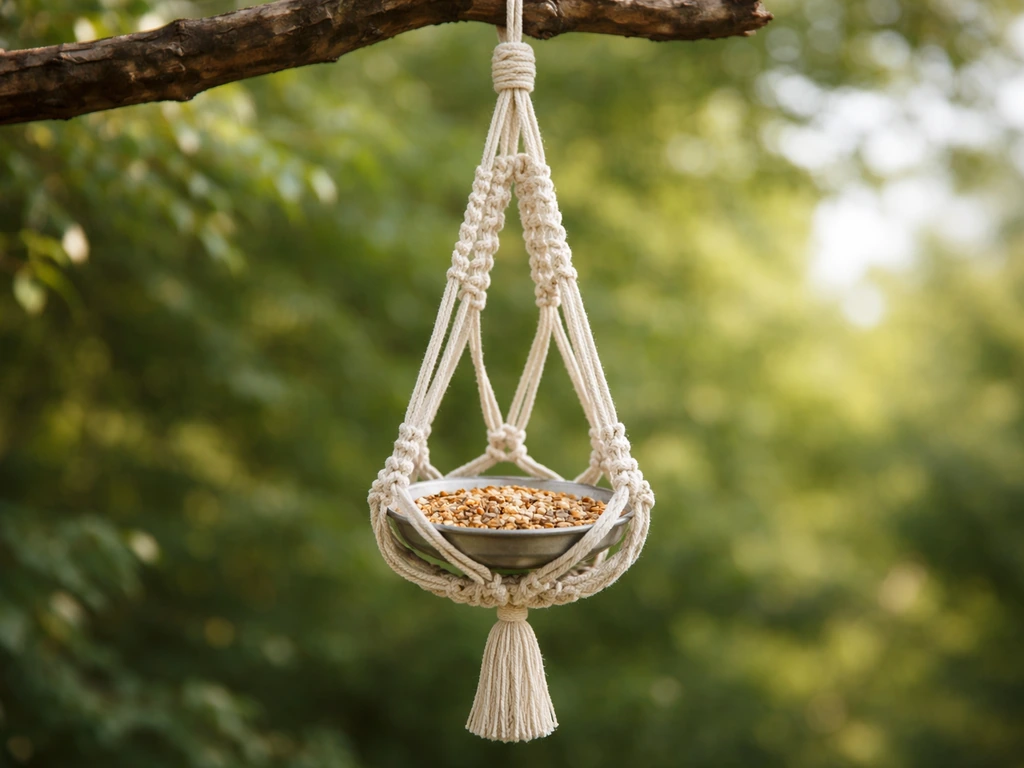
Once you have the routine down, an apple feeder is genuinely one of the most rewarding low-effort feeders to run. If you enjoy experimenting with fruit-based feeding, grape jelly feeders follow a similar logic and attract orioles and mockingbirds. And if you want to get more creative with your feeder setup overall, there are plenty of other DIY styles worth exploring: from simple hanging designs to more decorative macrame builds, the same core principles around placement, freshness, and pest-proofing apply across all of them. If you want a decorative twist, you can also learn how to make a macrame bird feeder using cord and a simple hanging design.
FAQ
Can I use apple slices instead of a whole apple or cage chunks?
Yes, but slices spoil faster because they expose more surface area to air. If you do use slices, keep portions small, mount them in the mesh cage (not as a single hanging piece), and plan on checking and replacing at least daily in warm weather.
What type of apple is best for an outdoor bird feeder?
Choose firm apples (not very ripe). Firmer fruit holds its shape longer, browns more slowly, and creates less mush that can smear onto the cage or attract extra insects. Avoid bruised apples since they collapse quickly.
How do I prevent the apple from sliding off the skewer or string?
Use a skewer or thick wire that passes through the center hole cleanly, then tie or wrap the ends securely so nothing can rotate. For a flatter landing, consider the one-third slice variation, where birds have a stable surface to peck.
Is it safe to use sugar-water instead of fresh apple?
It can be safe if the mixture is prepared fresh and in the correct strength for birds, but it is not the same as an apple feeder. Sugar-water also attracts ants, wasps, and aggressive feeders more than fruit does, so expect more frequent maintenance and stricter cleanliness.
How often should I clean the mesh cage if I’m only using it occasionally?
Do a quick scrape and hot-soapy rinse every time you empty and refill. Even if visits are sporadic, do a full sanitizing soak weekly when the feeder stays up regularly, and always sanitize after you notice brown residue, stickiness that won’t come off, or visible mold.
What should I do if birds are visiting but only pecking a little and leaving the feeder?
Check freshness first, if the apple is browning heavily or getting soft, birds may stop eating it. Also confirm the feeder is in view from nearby cover, some birds avoid feeding on a rotating hanging apple, and the cage style often gets better retention for repeated visits.
Will apple feeders attract pests like rodents or wasps?
They can. Rotten or very soft apple is the main driver, so remove old pieces immediately and clean dropped fruit around the base when you refill. For wasps, replacing more frequently, using partial shade, and removing soft pieces before they sweeten usually helps most.
Can I leave an apple feeder out overnight in winter?
Often yes, but monitor for ice and condensation. If temperatures drop sharply, fruit can freeze and become less accessible, causing birds to ignore it, and any partially thawed mush can still mold once it warms, so remove and replace when the surface looks wet or degraded.
What’s the best way to deal with ants if I don’t have an ant moat?
You can still reduce access by ensuring the hanging point is smooth and hard for ants to cross, but the moat filled with water is the simplest reliable barrier. If ants keep bypassing, check that the moat stays filled, clean any sugary drips on the wire or pole, and avoid placing near trails.
How do I avoid window collisions when the feeder is close to glass?
Use either the very close option (within about 3 feet) or the far option (at least about 30 feet). Do not rely on “in-between” distances, and if the feeder must be mid-range, consider adding window decals or increasing visual cues so birds can see the glass more clearly.
What if squirrels keep getting to the feeder even with good placement?
If the 5-7-9 distances are already met, switch to a pole-mounted setup with a smooth metal baffle. Branch-mounted feeders remain a weak point because squirrels can climb and launch from different angles, and a properly fitted baffle is the more dependable fix.
How long should I wait before deciding the location isn’t working?
Give it at least one to two weeks. During that time, keep the feeder visible and ensure nearby cover is close enough for quick retreat. If nothing visits after that window, move it toward an existing high-traffic area like near a birdbath or a seed feeder.
Next Article
How to Make a Macrame Bird Feeder Step by Step Today
Step-by-step macrame bird feeder guide: materials, knot tying, secure hanging, placement tips, and troubleshooting for r