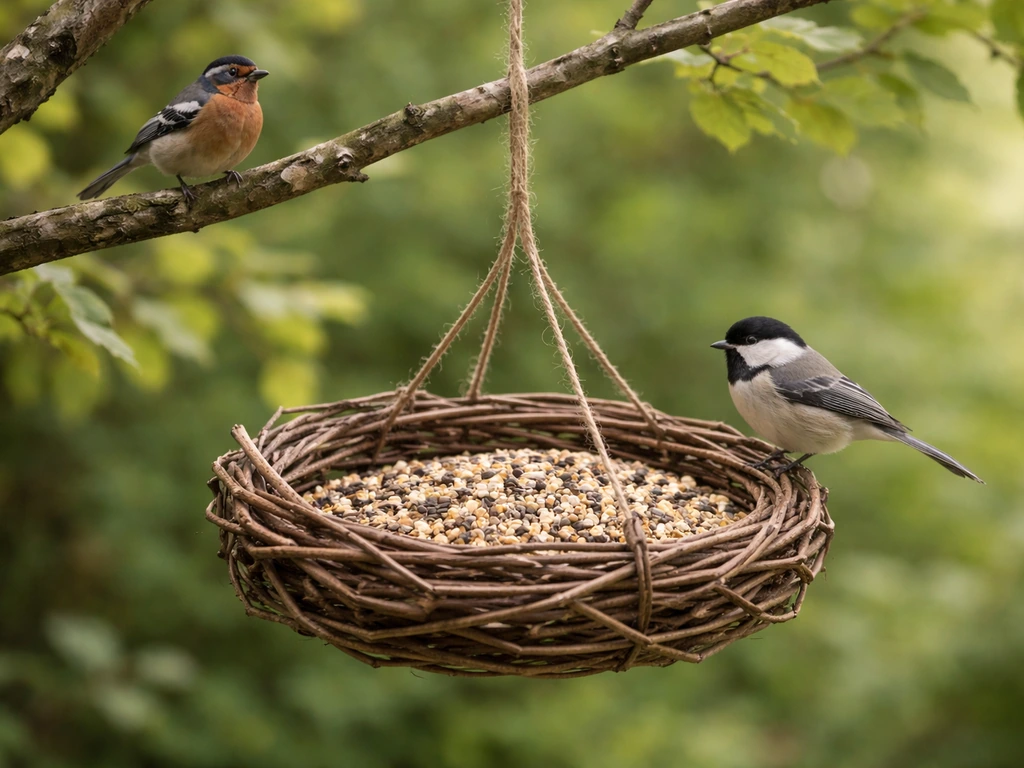
You can make a solid twig bird feeder in an afternoon using sticks from your yard, some natural twine or wire, and a few basic tools. The easiest design is a flat twig platform tray tied together in a grid or bundle, suspended by four cords from a central hook. It works, birds use it, and you can have it hanging outside within a couple of hours. Here is exactly how to do it. If you would rather make it from paper instead of twigs, follow a paper bird feeder guide for the right folding and hanging materials. If you want a pallet-based project instead, follow the same ideas for safe mounting, weatherproofing, and keeping seed clean how to make a bird feeder out of pallets.
How to Make a Bird Feeder With Twigs Step by Step
Marcus Brennan
8 Jun 2026
What you'll need before you start
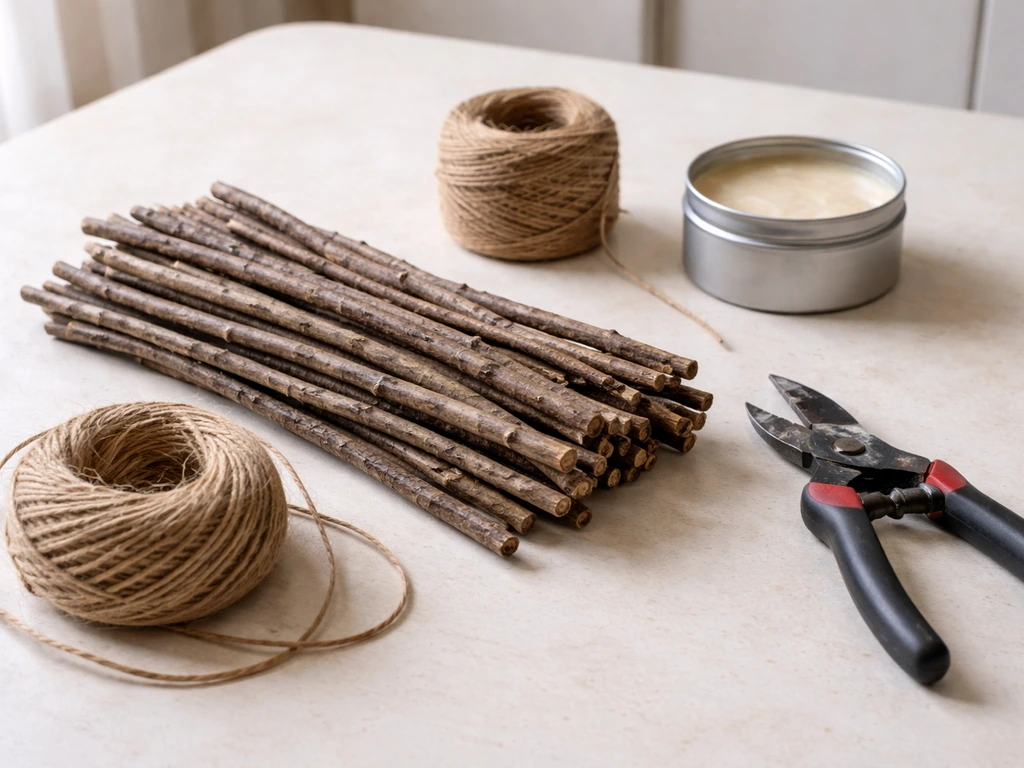
Gathering the right materials upfront saves you from stopping halfway through. The good news is most of this stuff is free or close to it. Go for untreated, unpainted natural twigs only. Cedar, birch, willow, and apple are all great choices because they are naturally rot-resistant and contain no chemicals that could harm birds. Avoid anything that looks chemically treated or has paint, varnish, or stain on it.
- 20 to 30 straight twigs, roughly 10–14 inches long and 1/4 to 1/2 inch thick (for the tray base)
- 8 to 12 slightly sturdier twigs, 1/2 to 3/4 inch thick (for the frame/border)
- Natural jute twine, sisal rope, or copper wire (all weather-resistant and non-toxic)
- A few longer flexible twigs or willow branches if you want a woven edge (optional)
- Sharp pruning shears or garden scissors
- A utility knife or pocket knife
- Non-toxic wood glue (optional, for extra reinforcement at joints)
- A ruler or measuring tape
- Four 12–18 inch lengths of rope or paracord for hanging
- One S-hook or carabiner clip for hanging
Twig thickness matters more than most guides admit. Too thin and your tray flexes and dumps seed when the wind picks up. Too thick and it becomes heavy and hard to tie. That 1/4 to 1/2 inch range for the base twigs is the sweet spot. Collect more than you think you need since some will snap or be too crooked to use flat.
Step-by-step: building the basic twig platform feeder
This build produces a flat tray-style feeder about 10 by 10 inches, which is a great size for holding sunflower seeds, mixed seed, or suet chunks. The whole thing should take you 60 to 90 minutes the first time. Plan for a little longer if you're new to lashing knots.
- Sort and trim your twigs. Use your pruning shears to cut 16 twigs to roughly the same length, about 10–12 inches each. Try to pick the straightest ones for this step. Set aside the sturdier border twigs.
- Lay out the base grid. On a flat surface, lay 8 twigs parallel to each other, spaced roughly 1 inch apart. Then lay the other 8 twigs perpendicular on top, again about 1 inch apart, creating a simple grid. This is your tray floor.
- Lash the intersections. At each corner intersection of your grid (and at the midpoints along the edges), wrap your jute twine around the crossing twigs in an X pattern, pull tight, and tie off with a square knot. You do not need to lash every single intersection, just the outer edges and a few inner ones for stability. If you want extra durability, dab a tiny amount of non-toxic wood glue at each tied joint and let it dry fully before moving on.
- Add a border frame. Take your four sturdier border twigs and lay one along each outer edge of the grid. These act as a low lip to keep seed from sliding off. Lash each corner where the border twigs meet, and tie them to the outer grid twigs at several points along their length.
- Reinforce and trim stray ends. Clip any twig ends that stick out more than half an inch past the border frame. This keeps the feeder tidy and prevents it from snagging on things when you hang it.
- Attach the hanging cords. Cut four equal lengths of rope or paracord, about 12–18 inches each. Tie one securely to each corner of the tray, looping it tightly around both the border twig and the nearest grid twig, then knotting it twice. Gather the four free ends and tie them all together in one knot at the top, leaving a small loop. Clip your S-hook or carabiner into that loop.
- Test for balance before hanging. Hold the feeder up by the hook and see if it hangs level. If one side dips, shorten the cord on that side slightly by retying it. You want the tray as flat as possible so seed stays put.
If you want to get slightly more ambitious, you can try a pyramid or A-frame twig feeder instead, which the RSPCA has demonstrated: tie four longer, sturdier twigs into a triangular pyramid shape using string at the top, then suspend it and place food in the cup where the twigs meet at the base. That version works especially well for hanging fat balls or suet. But for everyday seed feeding, the flat platform tray above is more practical and holds more food.
How to hang or mount the feeder safely
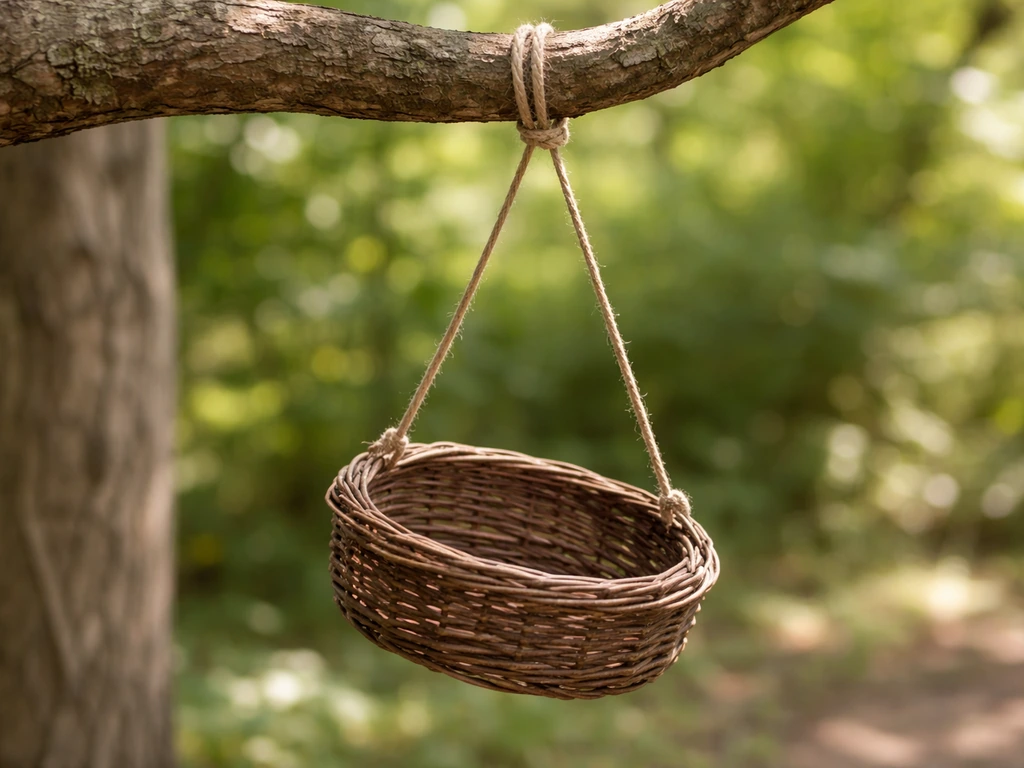
Where and how you hang this thing determines whether birds feel comfortable using it, whether squirrels raid it nonstop, and whether it survives the first windstorm. A few decisions here make a big difference.
Hanging from a tree branch
Find a branch that is at least an inch in diameter so it does not flex too much in wind. Use a longer piece of rope (not the hanging cords) to tie the feeder to the branch, or use a simple shepherd's hook slipped over the branch with the feeder hanging below it. The feeder bottom should sit at least 4 to 5 feet off the ground. Add a squirrel baffle above the feeder on the hanging line, positioned so there's at least 9 feet of clearance between the feeder and the branch above it. This matters because squirrels can and will leap down onto feeders from above if the gap is shorter.
Mounting on a pole
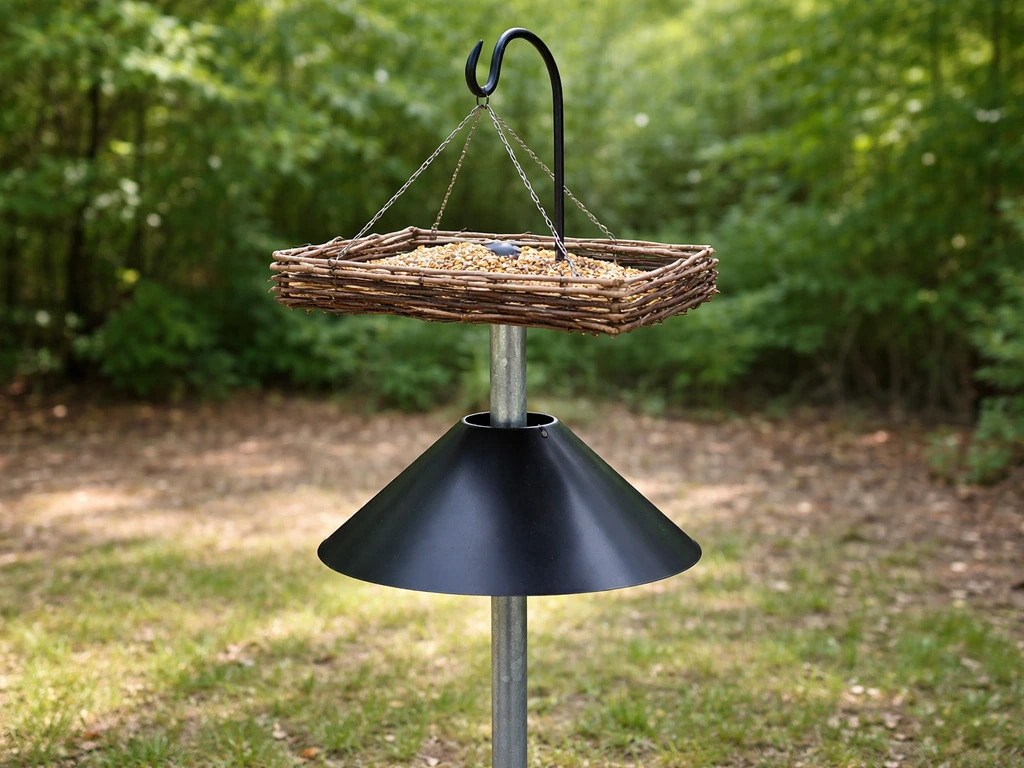
A metal pole with a hook at the top is often more stable and easier to baffle than a tree. Mount your baffle about 4 to 5 feet from the ground on the pole below the feeder. This blocks squirrels and most raccoons from climbing up. If you go the pole route, the twig feeder can sit in a small tray holder or hang via the S-hook from the pole's arm. A pole is worth considering if your trees are too close to rooftops or fences, which are basically squirrel launching pads.
Keeping it stable in wind
Twig platform feeders are lighter than wooden feeders, which means they can swing and spin. If that's a problem in your yard, add a small smooth stone or a piece of flat slate to the center of the tray as ballast. Just make sure it doesn't take up so much space that it pushes the seed off the edges. Alternatively, shorten all four hanging cords to around 8 inches instead of 12 to 18 inches, which reduces swing significantly.
Picking the right spot and the right food
Placement for bird safety and activity
Window collisions kill an estimated 100 million to 1 billion birds in North America every year, which is an almost unbelievable number until you've found one under your own window. The safest options are to place your feeder either within 3 feet of a window (close enough that a bird can't build fatal speed if it startles) or 30 feet or more away. The danger zone is roughly 3 to 25 feet from a window. Aim to stay outside that range. A spot near shrubs or a brush pile gives birds a place to retreat quickly when a hawk or cat shows up, which makes them much more willing to visit regularly.
What seed to put in a twig platform feeder
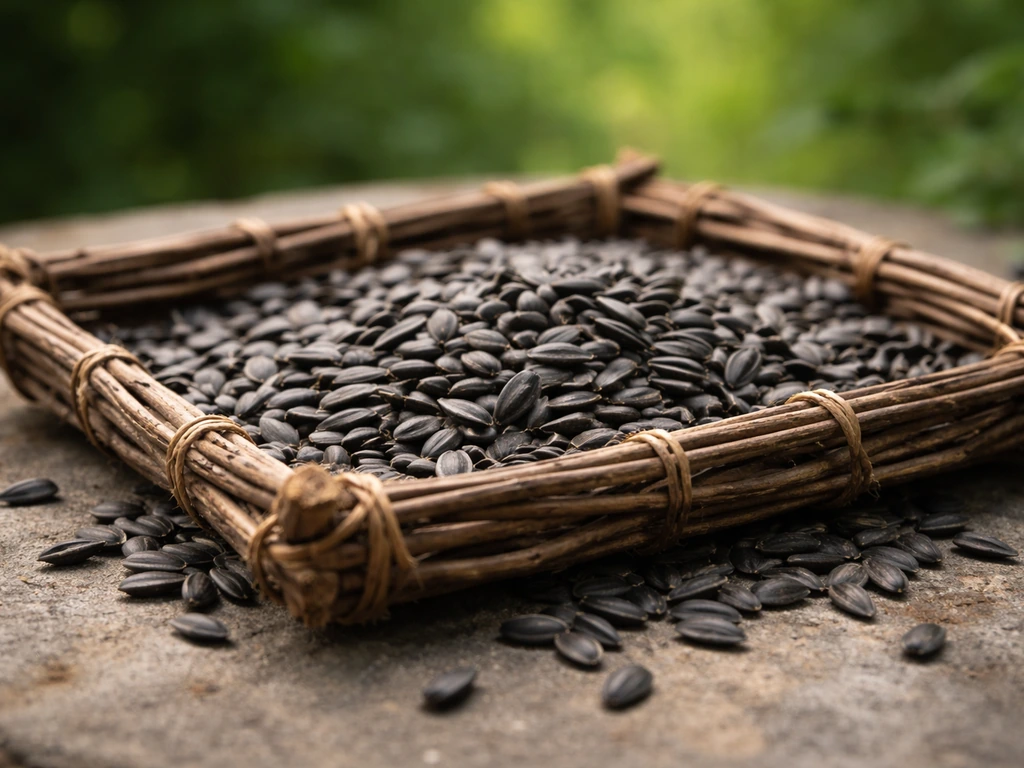
Twig platform feeders are open trays, which makes them well-suited to foods that are easy for birds to pick up and not too tiny to fall through the twig gaps. Black oil sunflower seeds are the top choice because they attract the widest variety of birds and have thin shells that most species can crack. Shelled peanut pieces, safflower seed, and millet also work well. Suet chunks or fat balls can sit in the center of the tray and stay put nicely. Nyjer (thistle) seed is not a great choice here because the seeds are very small and will fall right through a twig grid. Nyjer works best in specialized tube feeders and attracts finches like American Goldfinches, Pine Siskins, and Common Redpolls. If finches are your target, consider a tube feeder alongside your twig platform rather than trying to modify the twig design.
| Food type | Works in twig tray? | Birds attracted |
|---|---|---|
| Black oil sunflower seeds | Yes, excellent | Chickadees, cardinals, nuthatches, sparrows, finches |
| Shelled peanut pieces | Yes, excellent | Jays, woodpeckers, titmice, chickadees |
| Safflower seed | Yes, good | Cardinals, doves, chickadees |
| White millet | Yes, good (gaps may lose some) | Sparrows, juncos, doves, towhees |
| Suet chunks/fat balls | Yes, great (place in center) | Woodpeckers, nuthatches, wrens |
| Nyjer/thistle seed | No (falls through gaps) | Goldfinches, siskins (use a tube feeder instead) |
Making your twig feeder last through the weather
A raw twig feeder will weather and soften over time, which is fine and natural. But a few easy steps will extend its life from one season to three or four without using anything that could harm birds. If you want it to look more polished and stand out, the next step is to learn how to make a bird feeder stand out of wood.
- Choose naturally rot-resistant twig species from the start: cedar, willow, birch, and fruit-tree branches hold up much better than soft woods like poplar or basswood.
- Let any wood glue dry fully before the feeder goes outside. This sounds obvious but rushing it causes joints to fail faster when wet.
- Swap jute twine for copper wire or coated stainless steel wire at the load-bearing corners. Jute looks great but degrades faster when soaked repeatedly. Copper is bird-safe, strong, and lasts for years.
- After heavy rain or snow, shake the feeder gently and remove any wet, clumped seed immediately. Wet seed molds within 24–48 hours and can make birds sick.
- In winter, consider bringing the feeder under a covered porch or overhang during heavy snowstorms and putting it back out after. Snow load on a light twig tray can warp the frame.
- Inspect lashing knots every month or two. Re-tie any that have loosened. A feeder that drops because a knot failed is both a waste and potentially dangerous to birds below.
blank" rel="noopener noreferrer">Do not use any paint, varnish, wood stain, or chemical preservative on the twigs or binding. Even if a product claims to be non-toxic when dry, it is not worth the risk to birds that peck directly at the feeder surface. Untreated wood is the safest choice for any wildlife structure, a principle that applies whether you are building a twig feeder, a wooden feeder, or a nest box.
Keeping it clean and refilling on schedule
This is the part most people skip, and it's the part that matters most for bird health. A dirty feeder can spread salmonella, aspergillosis, and other diseases through a local bird population fast. The rule of thumb is to clean your feeder at least once every two weeks, and more often during wet weather, heavy use, or any time you spot sick-looking birds visiting.
- Remove all old seed and debris from the tray. Tap it out or use a stiff brush.
- Scrub the tray with warm soapy water, getting into the twig gaps and knots with a small brush or old toothbrush.
- Rinse thoroughly to remove all soap residue.
- Disinfect by soaking the feeder for 10 minutes in a solution of 1 part bleach to 9 parts water (this is a 10% bleach solution, which is what Clemson Extension, All About Birds, and the Virginia DWR all recommend).
- Rinse again completely after the soak to remove all bleach.
- Allow the feeder to air dry fully before refilling. This is non-negotiable. A damp feeder causes seed to mold within hours.
For refilling, check the tray every 2 to 3 days in active seasons. Remove any seed that looks wet, clumped, or has mold on it before adding fresh seed on top. Never just top off over old seed. That shortcut is how disease spreads. In summer, smaller amounts refilled more frequently is better than big batches that sit in heat.
Squirrel-proofing and fixing the most common problems
Squirrels and larger animals
Squirrels are relentless and genuinely clever, so the goal is not to outsmart one individual squirrel, it's to make the physical setup hard enough that they give up and go somewhere easier. The baffle approach described in the hanging section above (baffle on the hanging wire above the feeder, or on the pole below it, feeder bottom at least 4 to 5 feet off the ground, and 9 feet of clearance beneath any branch) handles the majority of squirrel raids. Do not try hot pepper additives in seed for an open tray feeder. Rain washes the capsaicin off fast and it's an ongoing expense. Physical barriers beat additives every time.
Birds aren't visiting
If your feeder has been up for a week or two with no takers, work through this list. First, check the seed: old or rancid seed smells musty and birds avoid it. Second, look at the location: is it too exposed with no nearby cover? Move it within 10 feet of a shrub, dense tree, or brush pile. Third, is it wobbling a lot? Birds are cautious about unstable landing spots. Stabilize with shorter cords or a counterweight. Fourth, be patient. It can take two to four weeks for local birds to discover a new feeder, especially if there are established feeders nearby competing for attention.
Wet seed and mold
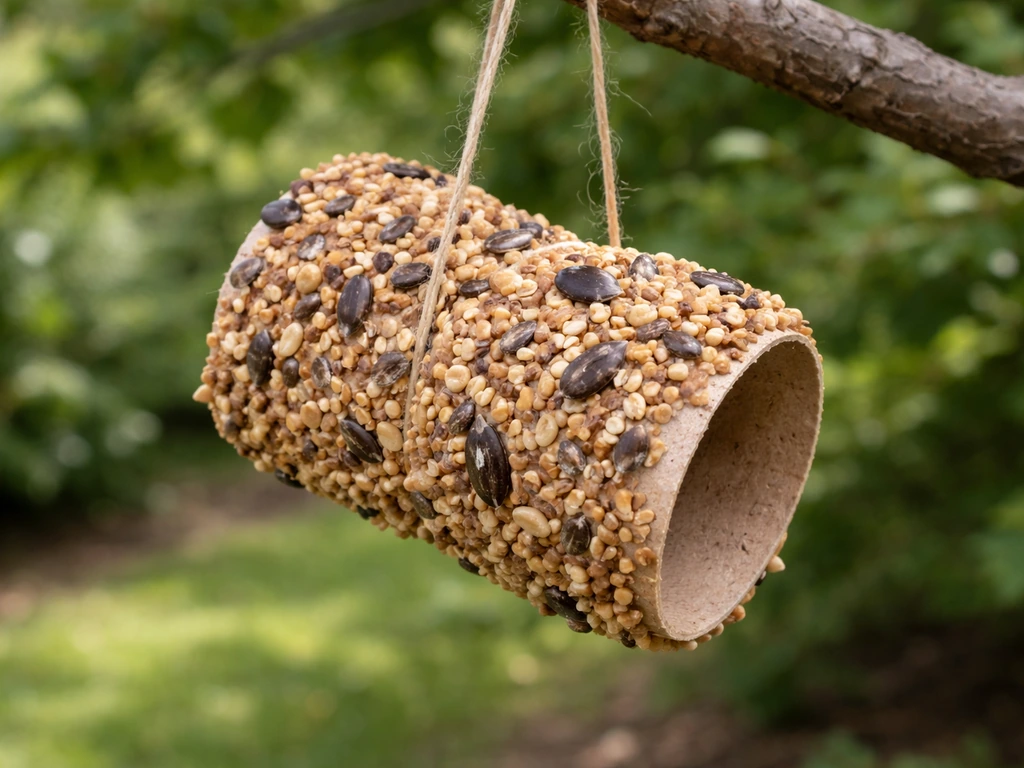
Open platform feeders get wet in rain, that's just the reality. You can reduce the problem by positioning the feeder under a tree canopy or adding a small roof. A simple canopy is just a wider flat piece of bark or a terracotta saucer hung about 6 inches above the feeder on the same cord system. To make bird feeders out of toilet paper rolls, you can coat the roll with peanut butter and roll it in birdseed, then hang it once it firms up. It won't keep everything dry but it cuts down on direct rain exposure significantly. If mold keeps recurring, try switching to seeds with shells (like black oil sunflower in shell) which shed water better than already-shelled or fine seeds.
The feeder is wobbling or tilting
Tilting usually means one corner cord is slightly longer than the others, or one twig joint has loosened and the frame has shifted. Take the feeder down, re-check all four cords and adjust them to equal length, then inspect every lashing point. Re-tie any loose ones. This takes five minutes and usually fixes it entirely. If the frame itself has warped, it may be time to build a replacement tray, though the hanging hardware and cords can be reused.
House sparrows or starlings dominating the feeder
Open tray feeders do attract bully species like European Starlings and House Sparrows since they are easy to land on. If this is a problem, switching a portion of your seed to safflower is a good first move. Starlings and House Sparrows tend to avoid safflower, while cardinals, chickadees, and native sparrows eat it readily. You can also try reducing the tray size so fewer birds can crowd it at once, which often helps smaller, shyer species get a turn.
FAQ
What twine or wire should I use to lash the twigs together, and how tight should I make the knots?
Use natural twine or simple wire, but keep lashing points snug enough that the tray does not rack when you press on a corner. If the frame can “twist” by hand, birds will be able to pry at loose joints later. Leave a little slack at the very center so the tray can flex slightly, instead of cracking at one lashing knot.
Can I make the twig feeder without a “central hook,” like hanging it from two points instead of four?
You can, but plan for stability. Two-point hanging often causes a gentle spin and uneven seed dumping in wind, especially with lighter twig frames. If you do it, use longer hanging lines and check for tilt after the feeder has been installed and loaded with seed for 10 to 15 minutes.
How do I prevent seed from falling through the twig gaps if I’m using small seed?
Keep small-seeded mixes out of an open grid. If you want to feed fine seed, line the tray with a thin layer of untreated natural material that birds can still access, or switch the main food to sunflower, suet, or other options with larger kernels. For nyjer, use a tube feeder instead of relying on the twig grid.
Should I soak or wash the twigs before building the feeder?
Avoid soaking twigs for long periods, because they can retain moisture and soften faster once outside. A light rinse to remove loose debris is fine, then let them fully dry before lashing. If you see mildew or sticky residue on the sticks, discard them.
How often should I clean the feeder if weather is dry but birds are visiting constantly?
Clean at least every two weeks, but shorten the gap when bird traffic is heavy. Look for seed husks piled thickly or damp patches trapped between twigs, those spots turn into contamination hotspots. During peak activity, aim for about weekly cleaning even if it has not rained.
What’s the safest way to clean a twig feeder without damaging it or stressing birds?
Take the feeder down, shake out old seed over a trash can, then scrub with hot water and a stiff brush. Let it dry completely in the sun or a dry spot before rehanging. Avoid bleach or other strong chemicals unless you fully remove residue and dry thoroughly, because birds peck surfaces.
How do I choose the best height and location if I have a small yard with limited options?
Use the window-distance guidance as a constraint, then prioritize cover. If you can only hang it within the 3 to 25 foot danger zone, reduce risk by placing it very near shrubs or a dense branch line so birds can escape quickly, and keep it well away from open flight paths. If placement must be near a fence, use a pole and baffle rather than relying on branches that squirrels can launch from.
My feeder keeps tilting, but I re-tied the cords. What else should I check?
Inspect the frame for a warped or cracked twig, one bad support point can keep creating tilt even if the cords match. Also check that the four suspension points are equally spaced from the center, if one lashing is closer to an edge, the feeder will hang at an angle when loaded.
Will adding ballast (stone or slate) make disease risk worse by trapping moisture?
It can, if the ballast prevents airflow into the center of the tray or holds wet seed in one spot. Use a flat, smooth piece placed at the center with enough clearance that water can drain through twig spaces. Remove any seed clumps immediately after wet weather so the center does not stay damp.
How can I deter squirrels if I cannot fit a baffle with the correct clearance?
If you cannot achieve the higher clearance beneath branches, use a more stable approach: increase feeder height and switch to pole mounting where the line geometry is more controllable. You can also reduce access by shortening hanging cords so the feeder swings less, because erratic movement helps squirrels time and grab it.
Can I feed fat balls or suet on the twig platform without a special holder?
Small suet chunks can work in the center, but large fat balls can shift and roll off an open grid if the tray is uneven. If you want fat balls specifically, build a center cup using a sturdy cluster of twigs or switch to the pyramid or A-frame style so the meeting point holds the fat ball more securely.
After putting it up, no birds come. How long should I wait, and what’s the fastest troubleshooting order?
Wait two to four weeks, but troubleshoot immediately on days 1 to 3. First confirm the seed is fresh and not clumped or rancid, then verify the feeder is in a safe-feeling spot near cover. After that, check wobble and tilt, fix those before changing seed type. Only then experiment with food, for example adding safflower to reduce aggressive visitors.
Next Articles
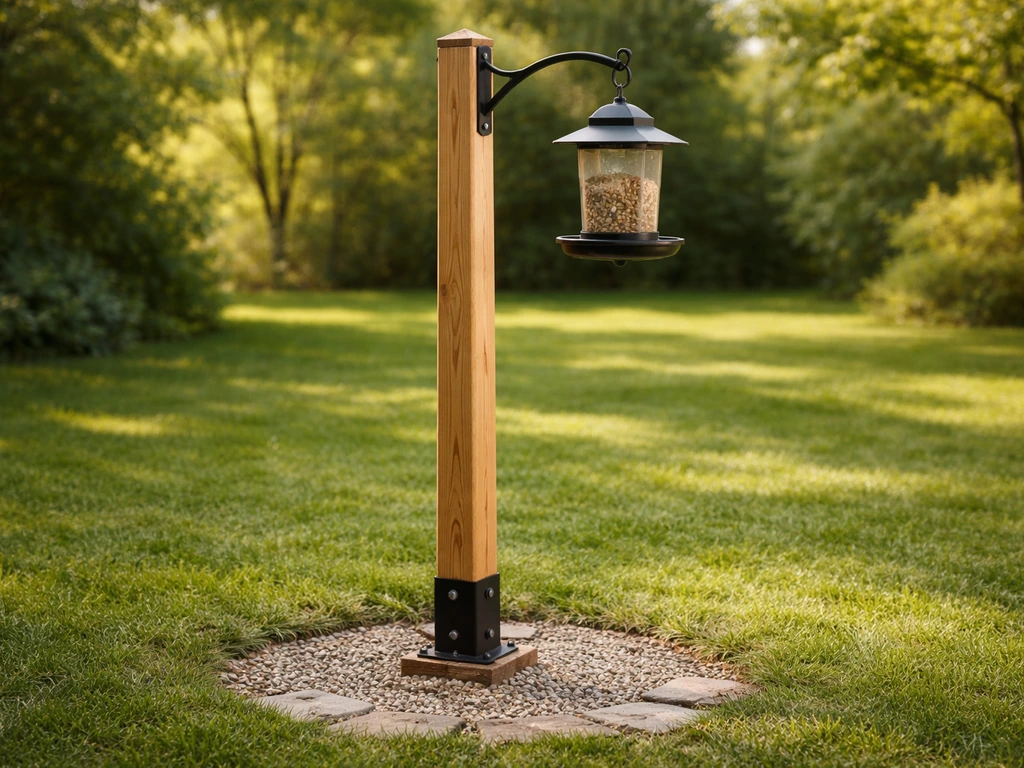
How to Make a Bird Feeder Post: Step-by-Step DIY
Step-by-step DIY guide to build a stable bird feeder post with safe mounting, weatherproofing, and pest-resistant setup.
How to Make a Bird Feeder With Paper Step by Step
Step-by-step paper bird feeder with materials, safe hanging tips, waterproofing, and feed and pest troubleshooting
How to Make a Bird Feeder Out of Pallets Step by Step
Step-by-step guide to build a pallet bird feeder or bird box, from safe pallet prep to mounting and easy maintenance.