You can build a functional oriole feeder today using materials you probably already have at home, and get it stocked with homemade nectar in about 30 minutes. If you also want a gourd project, see how to make a bird feeder out of a gourd for another simple DIY option. Orioles, including the Baltimore oriole that most people in the eastern U.S. are chasing, are not picky about feeder aesthetics. They care about the food, the color orange, and whether the feeder is easy to access. Get those three things right and you're in business.
How to Make an Oriole Bird Feeder Today
Marcus Brennan
20 Apr 2026
Choosing the right feeder style for orioles
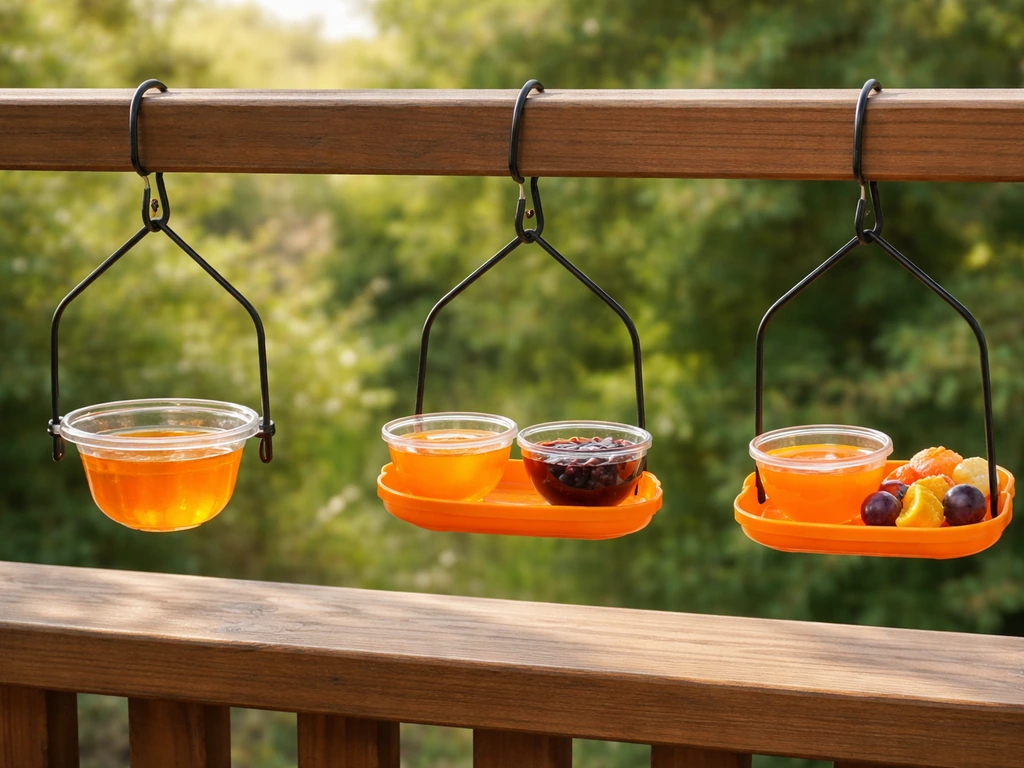
Orioles feed differently from most backyard birds. They love nectar, grape jelly, and fresh fruit, so the feeder you build needs to accommodate at least one of those, ideally two. There are three practical styles worth knowing about before you decide what to build.
| Feeder Style | Best Food | DIY Difficulty | Best For |
|---|---|---|---|
| Nectar cup/tube | Sugar-water nectar | Easy | Consistent daily visits |
| Jelly tray or cup | Grape jelly | Very easy | Quick setup, spring arrivals |
| Platform/fruit tray | Orange halves, fruit | Easy | Baltimore orioles especially |
For Baltimore orioles specifically, a feeder that offers both a nectar port and a small jelly cup side by side will almost always outperform a single-food feeder. Baltimore orioles have a well-documented preference for grape jelly and orange halves during spring migration, so if you're building during April through June, lead with jelly and fruit rather than nectar alone. Once they're established on your feeder, they'll drink the nectar too.
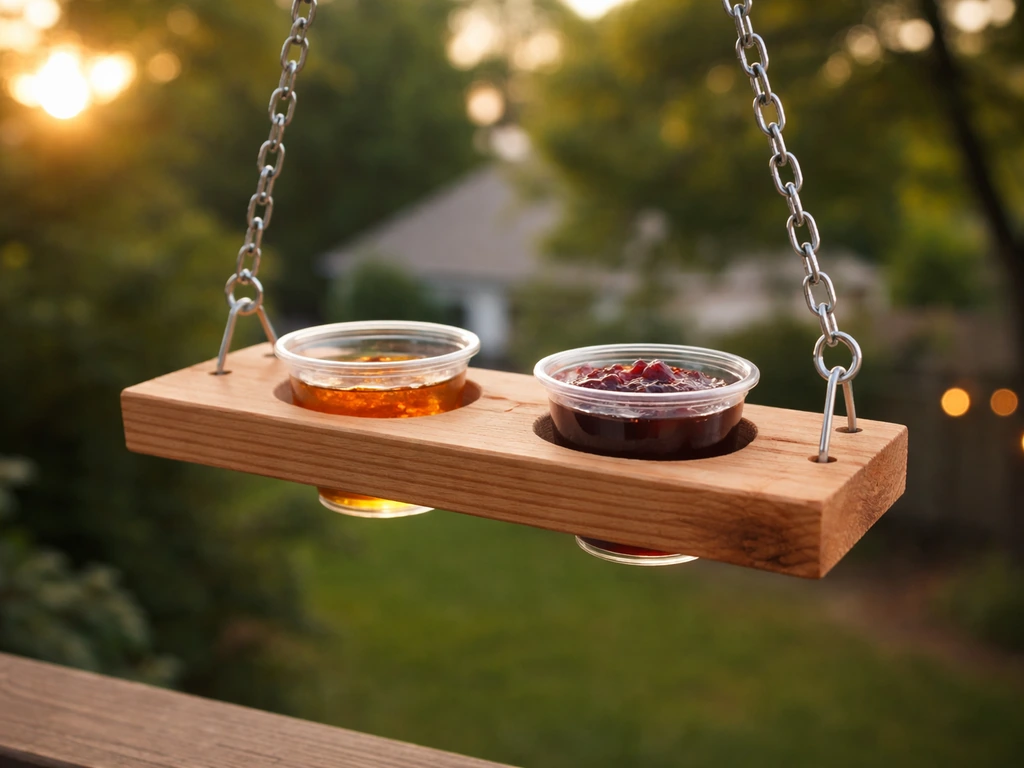
The simplest DIY route is a combination platform: a flat tray with a small jar or cup recessed into it for jelly, plus a small bottle or tube mounted above or alongside it for nectar. You don't need to pick just one style. A flat wooden tray with a recycled jar set into a hole is genuinely one of the most effective oriole feeder designs out there, and it costs almost nothing to build.
Materials and tools for a homemade oriole feeder
You have a few good options depending on what you have on hand. Here's what works well, ranging from free/recycled to minimal cost.
Option A: Wood platform tray (recommended)
- One piece of untreated cedar or pine board, roughly 8x10 inches (scrap wood works fine)
- Four short pieces of 1x1 inch wood strip or dowel for sides (about 1 inch tall to keep food in)
- One small glass jar with lid (a jam jar or baby food jar is ideal) for jelly
- One small plastic bottle (like a travel-size bottle or cleaned spice jar) for nectar
- Drill and a hole saw or spade bit sized to your jar
- Sandpaper (medium grit)
- Non-toxic outdoor wood glue or a few screws
- Screw eye or S-hook for hanging
- Orange paint or orange-painted trim (optional but helpful for attracting orioles faster)
Option B: Repurposed bottle or jar (ultra-simple)
- A clean plastic bottle (500ml works well) or mason jar
- Wire for hanging
- A shallow plastic lid or small tray to catch drips and hold jelly
- A nail or skewer to create a perch through the bottle neck area
- Orange tape or paint for color signaling
If you've built a bird feeder from a 2-liter bottle or a mason jar before, the technique transfers directly here. If you want the quick repurposed route, you can also learn how to make bird feeders out of mason jars and adapt the same nectar and jelly setup for orioles. If you only have a bottle available, jump to the simplified version at the end of this section how to make a bird feeder from a coke bottle. The main difference with an oriole feeder is that you want a wider opening or a cup attachment for jelly, not just seed ports. Keep that in mind when adapting any bottle-based design.
How to build your oriole feeder, step by step
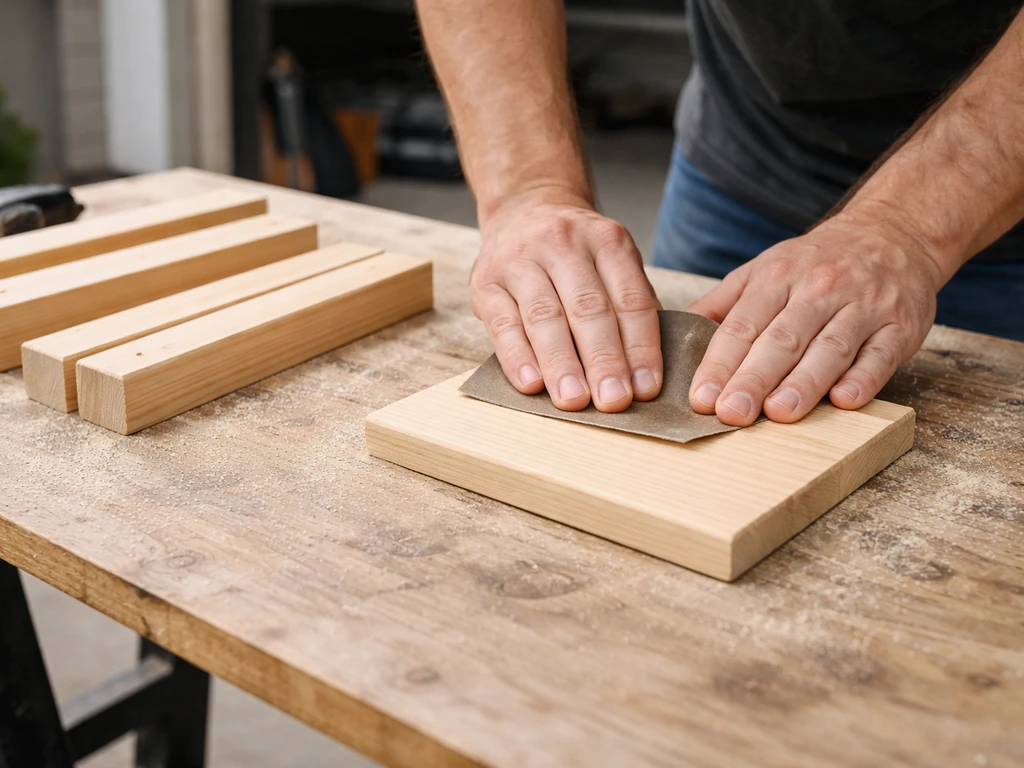
This build covers the wood platform tray style since it handles both nectar and jelly, works outdoors in all weather, and can be built with basic tools in under an hour. If you only have a bottle available, jump to the simplified version at the end of this section.
- Cut or trim your board to roughly 8x10 inches if it isn't already. Sand any rough edges so they don't split or splinter over time.
- Drill a hole in one corner of the board sized to snugly fit your glass jar. The jar should sit flush with or slightly below the top surface of the board so jelly doesn't spill easily. Test the fit before committing.
- Attach your four short side strips around the perimeter of the board using wood glue or small screws. These create a lip that keeps jelly cups, orange halves, and other food from sliding off in wind.
- Sand everything smooth once it's dry. Skip any stain or varnish on the food-contact surface. If you want to add color, paint only the exterior edges and underside with a non-toxic outdoor paint, preferably orange.
- Insert your glass jar into the drilled hole. This becomes your jelly cup. Remove the lid; you won't use it during operation.
- Mount a small nectar bottle or tube to one side of the tray. You can drill a second smaller hole and use wire to hold a small bottle at a slight downward angle so nectar flows to the opening. Alternatively, secure a commercial nectar tube with a zip tie to the tray edge.
- Attach a screw eye to the center of the underside of the board and run a wire, rope, or S-hook through it for hanging. Make sure the attachment is strong enough to hold the feeder's weight when full.
- If you want to add an ant moat (highly recommended), hang a small cup of water on the same wire directly above the feeder. Ants can't cross standing water, and this one addition will save you a lot of frustration.
Quick bottle version for Baltimore orioles
Fill a clean 500ml plastic bottle with homemade nectar (recipe below). A simple 2L bottle version works well as long as you create a safe perch and clean feeding holes so the birds can access the nectar easily. Punch or drill two small holes through the bottle near the base, thread a wooden skewer through both holes to create a perch, and cap the bottle.
Then use a nail or drill bit to make a small feeding hole just above the skewer on each side. Hang the bottle upside down so nectar flows toward the holes. Add a shallow plastic lid zip-tied to the bottom (now the top when hanging) as a jelly tray. It's not elegant, but Baltimore orioles don't care about elegant.
How to make oriole bird food at home
Oriole food has two main components: nectar and jelly. Both are easy to make or source. Get these right and the feeder will do the rest.
Homemade nectar recipe
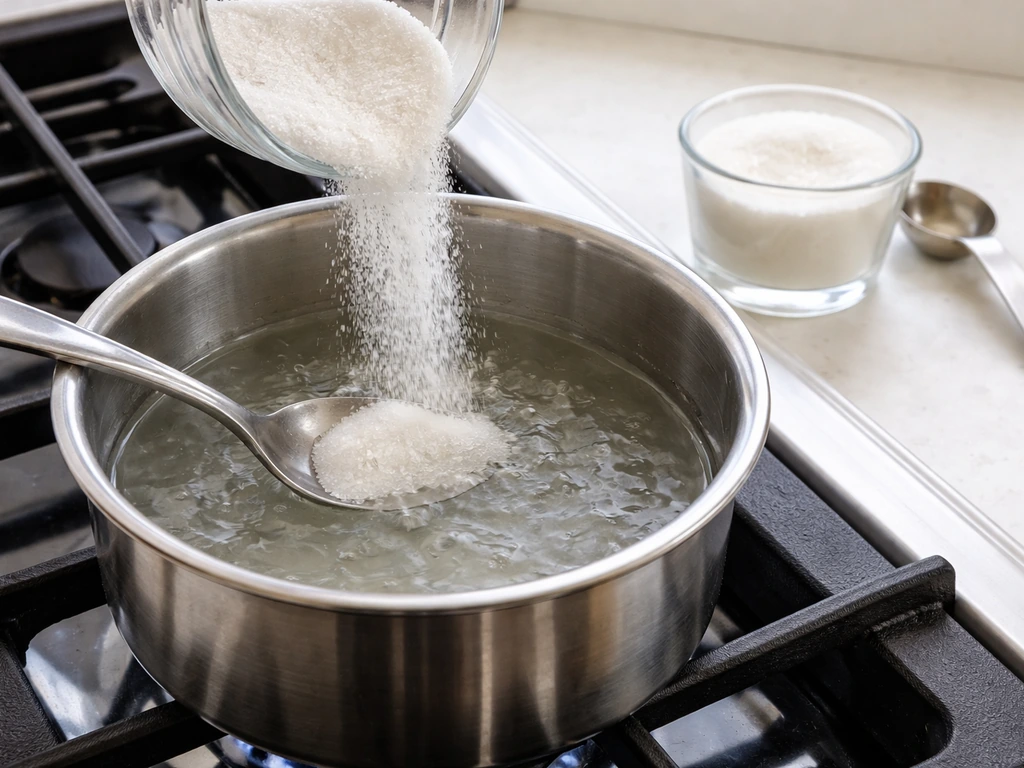
The recipe is simple and consistent across wildlife guidance: 1 part plain white granulated sugar to 4 parts water. That's it. Boil the water first, stir in the sugar until fully dissolved, then let it cool completely before filling the feeder. Do not use honey, brown sugar, artificial sweeteners, or powdered sugar. And never add food coloring. The red or orange dye does nothing useful for attracting orioles and can be harmful over time. The orange color on your feeder itself does that job.
| Water | Sugar | Makes Approximately |
|---|---|---|
| 1 cup | 1/4 cup | 1 cup nectar |
| 2 cups | 1/2 cup | 2 cups nectar |
| 4 cups | 1 cup | 4 cups nectar |
Store leftover nectar in the refrigerator for up to two weeks. Only fill the feeder with as much as orioles will drink in 2 to 3 days in mild weather, or daily in hot weather (above 85°F). Nectar ferments quickly, and a feeder full of spoiled sugar water will do more harm than good.
Grape jelly and fruit
For jelly, use any store-brand grape jelly. Spoon a small amount (about a tablespoon) into your jelly cup. Don't overfill it. Jelly spoils, and a large pile sitting in summer heat becomes a wasp magnet and a health risk for birds within a day or two. Refresh it every 1 to 2 days during warm weather. For orange halves, cut a navel orange down the middle and skewer or pin each half cut-side-up to your tray. Replace them when they start to dry out or show mold, usually every 2 to 3 days.
Where to hang it and how to set it up for fast results
Location is the single biggest reason a new feeder gets ignored. Orioles are shy birds that prefer open sightlines and nearby tree cover to retreat to. Here's what actually works.
- Hang the feeder 5 to 8 feet off the ground, ideally from a tree branch or shepherd's hook at the edge of your yard, near trees but not buried inside dense foliage
- Keep it visible from multiple directions so passing orioles can spot it during migration flyovers
- Place it within 10 to 15 feet of tree cover so orioles have somewhere to perch and assess before approaching
- Keep it at least 10 feet away from your main seed feeder station to avoid crowding and competition
- Position it where you can see it from a window so you actually notice when it needs refilling
- In direct sun, expect nectar to heat up and ferment faster. A spot with morning sun and afternoon shade is ideal
If you're targeting Baltimore orioles during spring migration (roughly late April through May in most of the eastern U.S.), get the feeder up by mid-April. Baltimore orioles are on a schedule. If your feeder isn't out when they pass through, you may not see them until the following year. That's not a reason to panic, just a reason to move quickly if you want results this season.
One trick that consistently speeds up discovery: hang a few strips of bright orange ribbon or surveyor's tape near the feeder when you first put it out. The movement and color catch the attention of birds flying overhead. Once orioles are coming regularly, you can remove the ribbons.
Cleaning, maintenance, and fixing what doesn't work
How often to clean
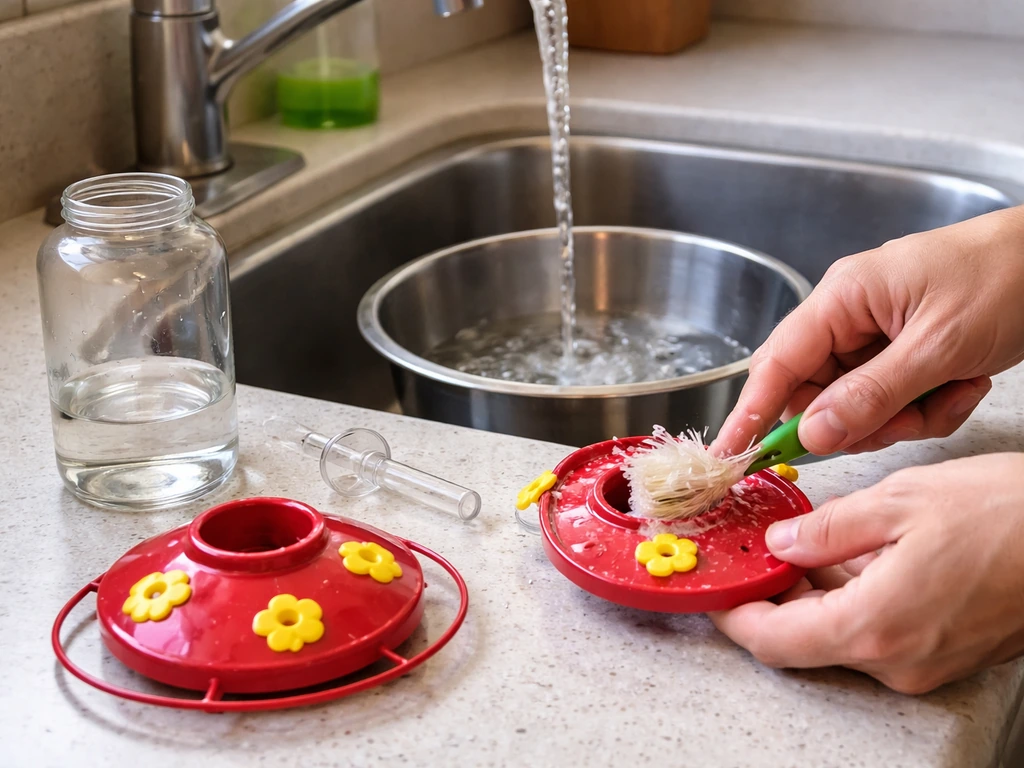
Nectar feeders need to be cleaned at least every five days as a baseline, and more often in warm weather. When temperatures are in the low-to-mid 80s°F, clean and refill every 2 to 3 days. When it's in the upper 80s or 90s, you're looking at daily or every-other-day changes. This isn't optional: fermented nectar and moldy jelly can make orioles sick, and once a bird gets sick at your feeder, it won't come back.
To clean, empty the feeder completely, rinse with hot water, and scrub the interior of all cups and tubes with a bottle brush or pipe cleaner. If you see any black mold or cloudy residue, use a dilute vinegar solution (one part white vinegar to four parts water), scrub thoroughly, and rinse several times until there's no vinegar smell left. Avoid soap if you can. Soap residue is hard to rinse out completely and can deter birds. If your wood tray has cracks or rough spots that are holding mold, sand them smooth and let the tray dry fully in the sun before refilling.
Common problems and how to solve them
| Problem | Likely Cause | Fix |
|---|---|---|
| No orioles after 2+ weeks | Wrong timing, wrong location, or feeder not visible | Move feeder closer to tree edge, add orange ribbons, confirm birds are in your area |
| Nectar turns cloudy quickly | Feeder in full sun, or nectar made with unboiled water | Move to partial shade, boil water before mixing, reduce fill amount |
| Ants invading the jelly cup | No barrier between feeder and hanger | Add a water-filled ant moat above the feeder on the hanging wire |
| Wasps or bees overwhelming feeder | Nectar spills or overfilled jelly cup | Reduce jelly to 1 tablespoon, wipe down feeder exterior after filling |
| Jelly drying out quickly | Too much sun or low humidity | Fill smaller amounts more frequently, consider a lid or shade cover |
| Squirrels reaching the feeder | Feeder too close to branches or structures | Move to a shepherd's hook at least 10 feet from any climbing surface, add a baffle |
What to do if orioles don't come right away
Give it time. Orioles will find a well-placed nectar feeder, but it can take anywhere from a few days to a couple of weeks depending on your location and how many orioles are passing through. Don't take the feeder down early out of frustration. Keep the food fresh, keep the feeder clean, and check that it's actually visible from open sky above the yard. The single most common mistake I see is hanging the feeder somewhere convenient for the person but hidden from birds flying overhead. Move it out into the open and give it another week before reassessing.
If you enjoy building feeders from everyday materials, the same creative approach works well for other backyard visitors too. Bottle-based feeders, tin can builds, and platform trays made from scrap wood are all versatile starting points for species-specific setups beyond orioles. The skills transfer quickly once you've done one build.
FAQ
Can I make an oriole feeder with only nectar, or do I really need jelly and fruit too?
You can start with nectar alone, but jelly and fruit often get orioles to check the feeder sooner (especially during spring migration). If you want the fastest results, add a small jelly cup or a few orange halves, then let the birds switch over to nectar once they are visiting regularly.
What should I do if I’m getting ants or wasps around the jelly cup?
Use smaller jelly portions so there is less spilled residue, and refresh more often in warm weather (every 1 to 2 days). Also keep the jelly cup shallow and drain-like, since pooling liquid and drips attract insects; rinse the area around the feeder during cleaning.
Is it okay to color the nectar or use orange juice to make it more attractive?
No, add only plain sugar and water. Skip honey, brown sugar, artificial sweeteners, powdered sugar, food coloring, and additives like orange juice, because they change fermentation rates and can cause cloudy or spoiled nectar that makes birds ill.
How do I prevent nectar from fermenting too fast between cleanings?
Make smaller batches and fill only what orioles will likely drink within 2 to 3 days in mild weather, and daily (or every other day at most) in hot conditions above 85°F. If the feeder is in direct sun, move it to partial shade to slow fermentation.
How can I tell when nectar is unsafe even if it still looks clear?
If it smells tangy or alcoholic, looks unusually thick, forms bubbles, or the bottle tubing looks slimy or cloudy, replace it immediately. When in doubt, discard and clean, because early fermentation can happen before the color changes.
Can I use a metal bottle or reused container for an oriole nectar feeder?
You can repurpose containers, but the key is food-safe materials and easy cleaning. Avoid containers with coatings or residues that can leach, and make sure the feeder can be scrubbed thoroughly with a bottle brush or pipe cleaner after each refresh.
What’s the best way to keep squirrels away from a platform or bottle-style feeder?
Place the feeder higher than you normally would for smaller birds, and use a hanger that does not allow easy climbing access. If you have repeated squirrel pressure, consider adding a simple baffle or pole setup so squirrels cannot reach the bottle or tray from nearby branches.
Should I hang the feeder lower or higher to help orioles find it?
Keep it visible from open sky with nearby tree cover for safety, but avoid low placement where it is blocked by shrubs or fence lines. A common fix is to hang it so orioles have clear sightlines from above, then wait an extra week after relocating rather than giving up early.
Can I leave the feeder up year-round for orioles?
In many regions, orioles migrate, so leaving it up can work, but only if you can maintain cleaning schedules and fresh food. If you cannot clean frequently in hot weather, take it down rather than risk fermented nectar or moldy jelly.
Do orioles come back to feeders that previously had moldy nectar or jelly?
They may not. Once birds get sick at a feeder, they often avoid that location. If you suspect contamination, do a deeper clean (including vinegar scrub if needed), let all parts fully dry, then refill with fresh nectar and jelly.
Next Articles
How to Make a Tube Bird Feeder Step by Step
Step-by-step how to make a tube bird feeder with materials, safe mounting, maintenance, and fixes for leaks and clogs.
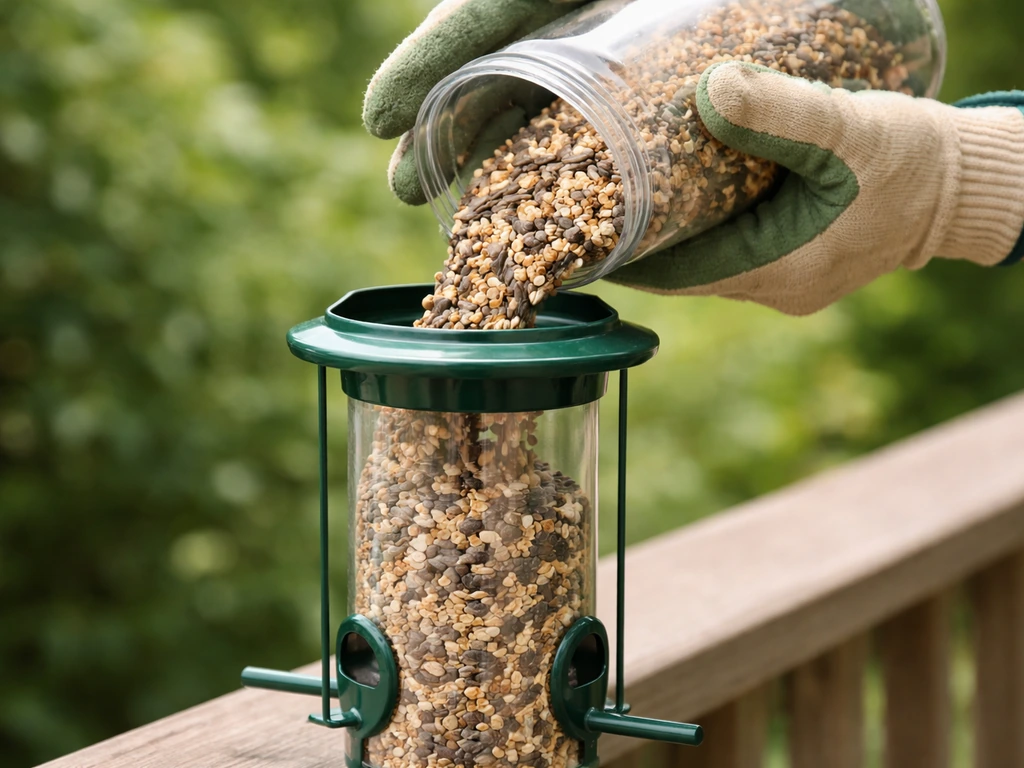
How to Put Bird Seed in a Bird Feeder Step by Step
Step-by-step guide to add bird seed to hopper, tube, platform, and suet feeders, avoiding spills and jams.
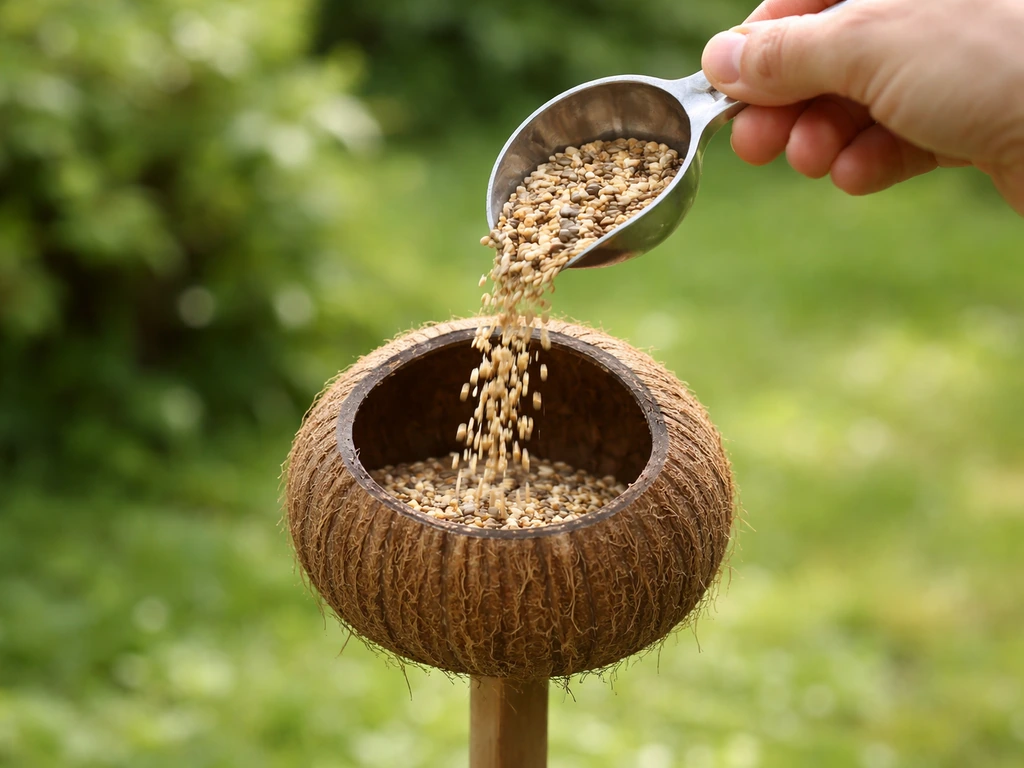
How to Refill a Coconut Bird Feeder Fast and Clean
Learn how to refill a coconut bird feeder fast, clean, and mess-free, with feeding, cleaning, and pest-proof tips.