The most effective way to make a bird feeder pole 'slippery' for squirrels and raccoons is not to coat it with grease or oil. Instead, you install a physical baffle, a smooth pole wrap, or a spinning sleeve that denies climbing pests a grip. Baffles placed 4 to 5 feet above the ground, combined with a pole location at least 8 to 10 feet from any jump-off point, stop virtually every squirrel and most raccoons reliably, without harming wildlife, contaminating your feeder, or damaging the pole. Grease feels like an obvious fix, but every major wildlife and birding authority advises against it. Here is exactly what to do instead.
How to Make a Bird Feeder Pole Slippery to Stop Climbing
Marcus Brennan
5 Jun 2026
Why feeder poles get 'slippery' (and what that actually means)
When someone says they want their pole to be slippery, they usually mean they want squirrels and raccoons to lose their grip and slide off before reaching the feeder. That makes sense, but 'slippery' in practice does not mean coating the pole like a greased pig at a county fair. It means creating a surface or obstacle that removes the mechanical advantage these animals rely on to climb. Squirrels grip metal or wood poles with their claws by finding tiny surface irregularities. A truly smooth, hard, and continuous surface takes away that grip. A physical barrier like a dome or cylinder baffle does the same thing even more reliably, because the animal physically cannot get past the shape, regardless of how strong its grip is.
Raccoons are heavier and stronger than squirrels, so they can power through approaches that frustrate squirrels. They also have hand-like paws that can wrap around poles and reach over lightweight baffles. Any effective anti-climb setup needs to account for both. The good news is that the right baffle handles both pests at once.
Safe ways to add slip to a bird feeder pole
Before getting into installation, it is worth being direct about what not to do. Petroleum jelly, cooking oil, motor grease, axle grease, vegetable oil, and WD-40 are all off the table. The University of Nebraska-Lincoln Extension, Cornell Cooperative Extension, and the Humane Society of the United States all advise against greasing poles. The reasons are not just theoretical. Oil and grease can coat a squirrel's or bird's fur and feathers, stripping natural waterproofing and causing hypothermia or skin damage. Petroleum-based products can cause neurological symptoms in wildlife through skin contact or ingestion. Even non-petroleum oils damage birds by disrupting feather structure. Birds perching on a treated pole or pecking at a greased surface can ingest enough to cause real harm. The Pennsylvania Game Commission and UC Davis Oiled Wildlife Care Network have documented exactly this kind of wildlife oil toxicity from backyard exposures. Skip the grease entirely.
The safe, effective approaches fall into three categories: smooth wrap sleeves that eliminate grip, spinning or tilting sleeve systems, and physical baffles. Here is a breakdown of each with materials and steps.
Option 1: Smooth pole wrap sleeve
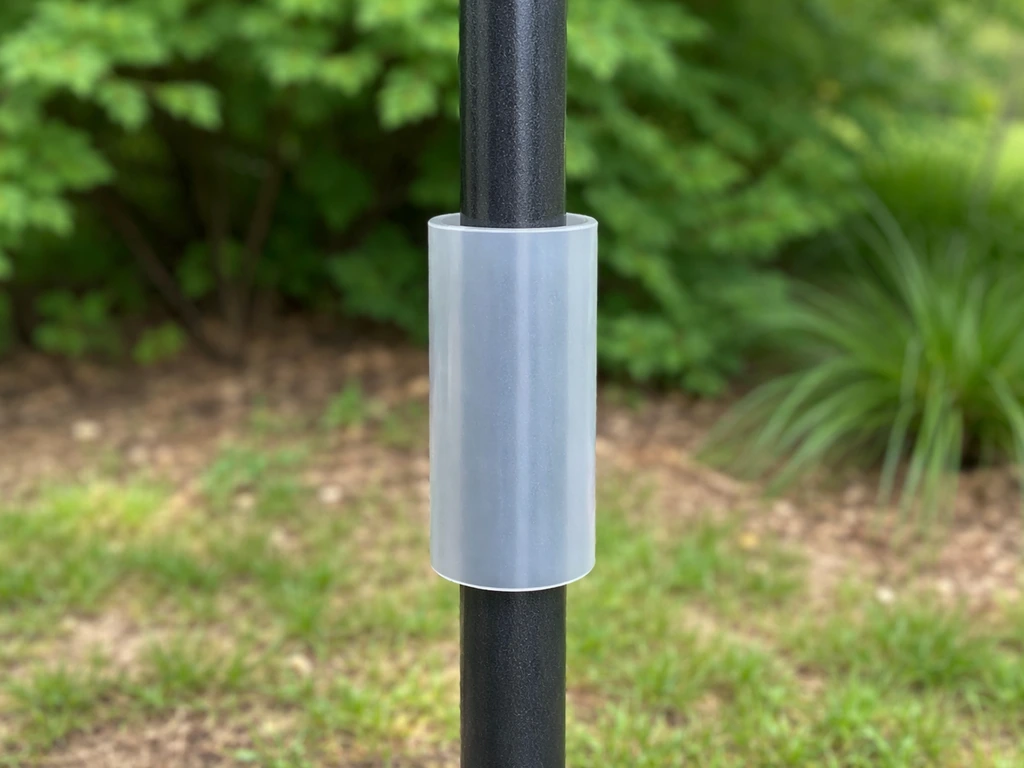
A wrap sleeve is a section of smooth material placed around the pole that a squirrel cannot grip. PVC pipe, flexible conduit tubing, or commercially made pole guard wraps all work. The wrap is installed so that it spins or slides freely on the existing pole, giving animals nothing to hold onto. For poles less than 10 inches in diameter (which covers almost every residential feeder pole), flexible conduit tubing cut to 18 to 24 inches works well and costs a few dollars at any hardware store.
- Measure the diameter of your feeder pole so you can buy conduit or PVC pipe with an inside diameter slightly larger than your pole.
- Cut a section of smooth PVC pipe or flexible conduit tubing 18 to 24 inches long.
- Slide the tube over the pole before final assembly, or cut it lengthwise and use clamps to wrap it around an existing pole.
- Position the sleeve so it sits in the section the squirrel would have to climb through to reach the feeder, roughly 3 to 5 feet above the ground.
- Make sure the sleeve rotates or moves freely when pushed. If it grips the pole, sand the inside or lubricate the pole inside the sleeve only (not the outside), using a tiny amount of dish soap, which dries harmless.
Option 2: Spinning sleeve system
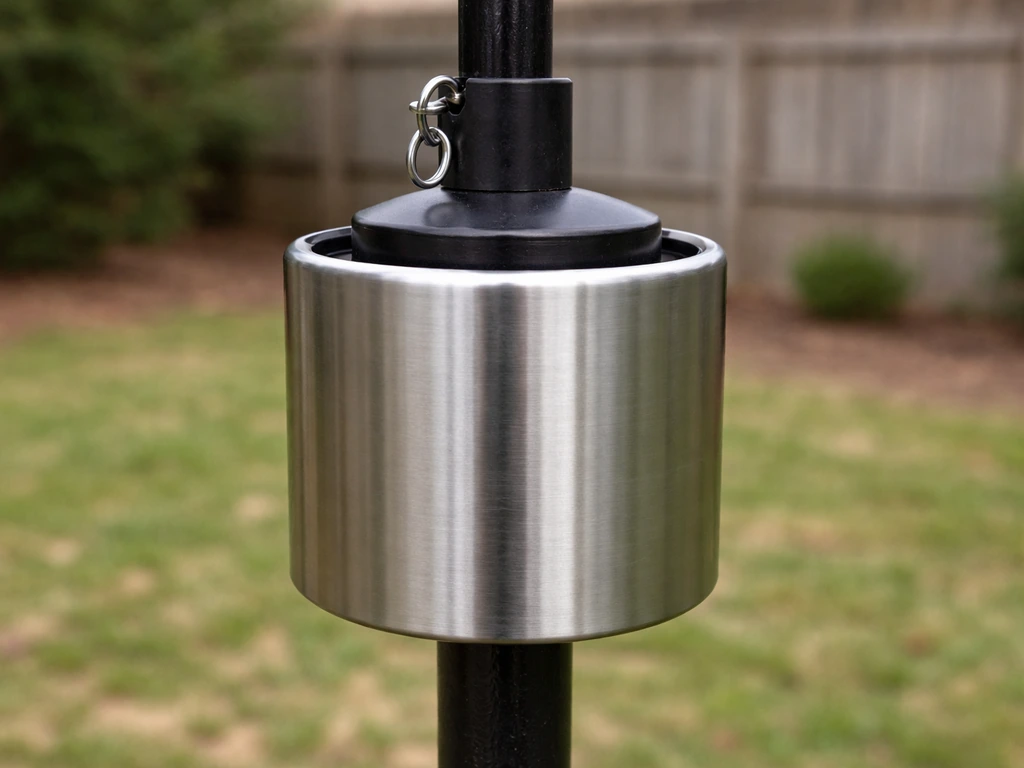
Commercially made spinning pole systems add a free-rotating tube around a fixed post. When a squirrel grabs the outer sleeve, it spins in place and the animal cannot get traction. Products like the Squirrel Stopper post system are built around this concept. You can also DIY this with a section of wider-diameter PVC pipe and a pair of PVC end caps with holes drilled through the center. Thread your pole through the caps and let the pipe hang freely. The squirrel grabs the pipe, the pipe spins, and the animal drops off. This works especially well on smooth metal poles.
Pole wraps, baffles, and grease-free options
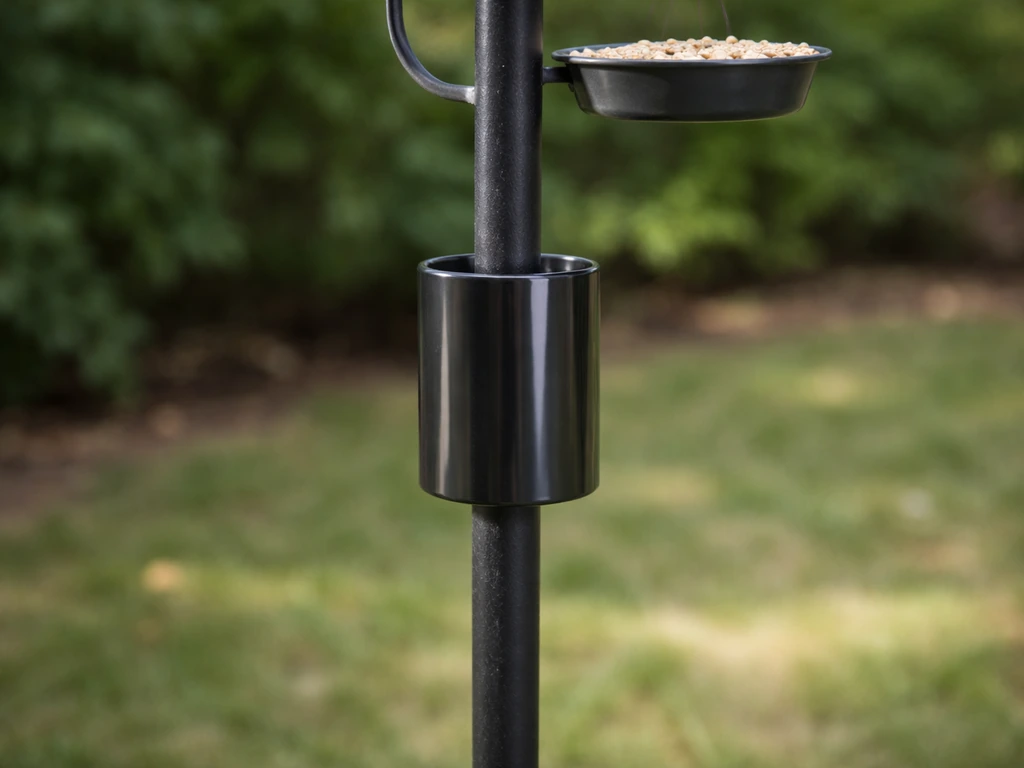
Baffles are the gold standard recommended by Audubon, HSUS, UNL Extension, Cornell, and virtually every wildlife organization. They work because they present a physical overhang or enclosed space that an animal cannot climb past, not because the surface is slick. There are two main shapes: dome baffles (inverted bowl mounted above or below the feeder) and cylinder or torpedo baffles (a long tube that surrounds the pole and prevents the animal from getting above it). Both work, but cylinders tend to stop raccoons more reliably because raccoons can reach over shallow domes.
How to install a pole-mounted baffle correctly
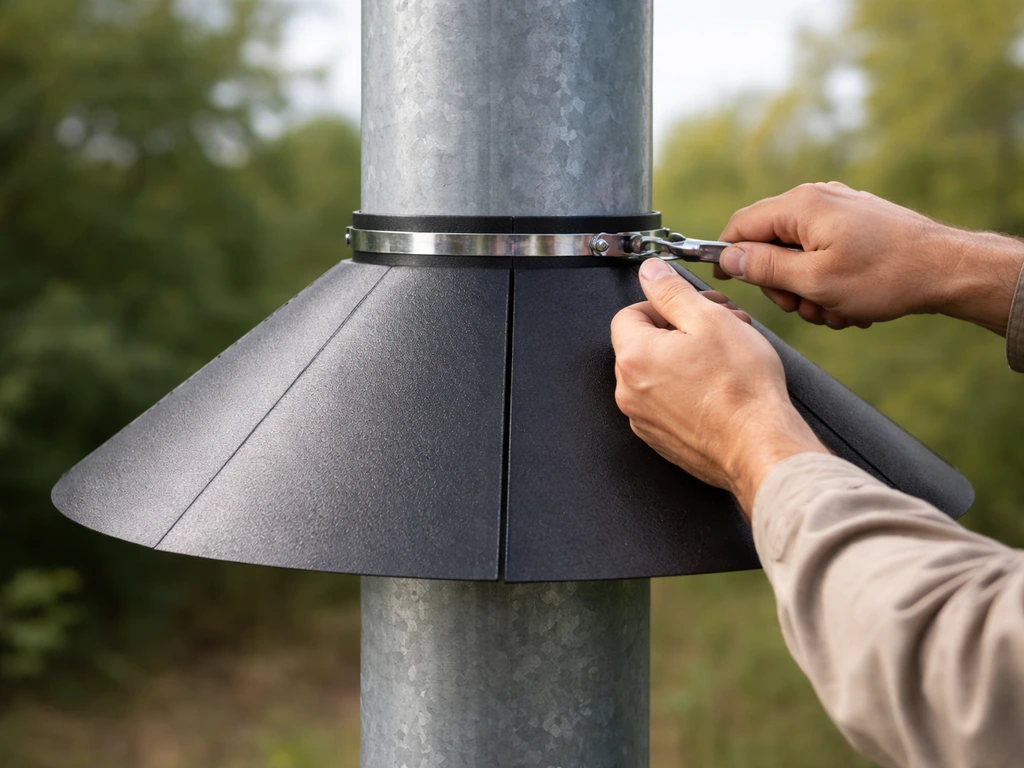
- Choose a baffle rated for your pole diameter. Wrap-around baffles (like the Audubon wrap-around model) are easiest to add to an existing setup because they clamp on without disassembly. Cylinder baffles from ERVA and similar brands thread onto the pole from the top.
- Set the top of the baffle at least 4 feet above the ground, and ideally position it directly under the feeder so there is no unprotected pole section above the baffle that a squirrel can reach.
- Check that no part of the baffle is within reach of an overhead branch, fence rail, deck railing, or roofline. Squirrels are capable jumpers and will leap from a nearby surface directly onto the feeder, bypassing the pole entirely.
- Tighten all mounting hardware so the baffle cannot tilt or rotate under an animal's weight. A loose baffle defeats the purpose. Double-check that there is no gap between the baffle and the pole where a small squirrel could squeeze through.
- After installation, watch the feeder for a full day. You will know immediately if the placement is wrong because you will see the squirrel go around, over, or past the baffle and reach the feeder.
Wrap-around baffles are particularly convenient if you have an existing pole already in the ground and do not want to disassemble the setup. They clamp around the pole in two halves and tighten with a bolt. Cylinder baffles are more effective for raccoons but need to be threaded on during pole installation. If you are setting up a new pole, threading a cylinder baffle on first is the easier path. Putting a bird feeder pole in the ground correctly before adding hardware makes the whole system more stable and the baffle more effective.
Pole location rules that make everything else work
Even a perfectly installed baffle fails if the feeder is within jumping range of a launching point. Squirrels can jump horizontally about 8 to 10 feet from a standstill and drop onto a feeder from above. The consensus from Audubon, Wild Bird Habitat Store, Perky-Pet, Squirrel Stopper, and ERVA is to keep the feeder pole at least 8 to 10 feet from any structure: trees, fence posts, deck rails, roof edges, garden walls, and even large pots or furniture. Ten feet is the safer number if raccoons are your main concern. If your yard does not have a spot that far from everything, the baffle becomes even more critical because it has to do more of the work.
Weather-proofing and maintenance schedule
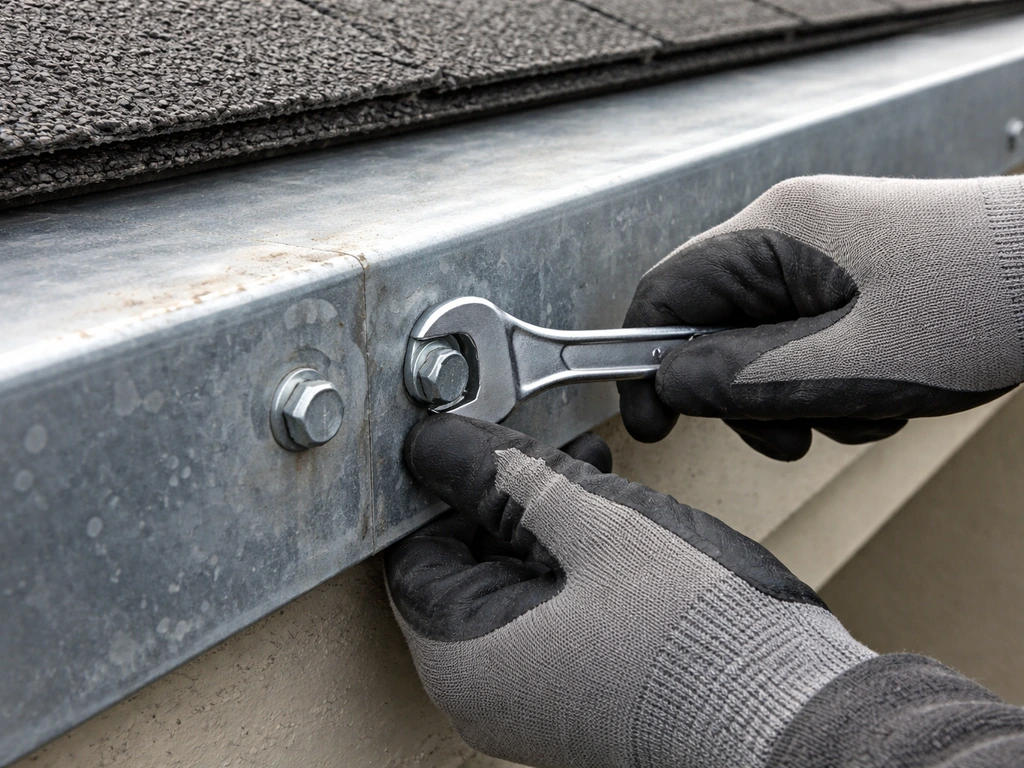
Physical anti-climb setups do not wear out the way grease does, which is one of the biggest practical advantages. A well-made baffle or wrap sleeve will last several seasons with minimal attention. That said, a quick maintenance routine keeps everything working reliably.
| Task | How often | What to check |
|---|---|---|
| Inspect baffle hardware | Monthly | Bolts tight, no cracks, no gaps forming at pole joint |
| Clean baffle surface | Every 4 to 6 weeks | Remove algae, bird droppings, or debris that could create grip texture for pests |
| Check pole for rust or corrosion | Each spring and fall | Sand and repaint bare metal spots before rust spreads and weakens the pole |
| Inspect pole wrap/sleeve | Every 2 to 3 months | Confirm sleeve still spins or slides freely; replace if cracked or warped |
| Recheck clearance distances | Each spring | Trees grow; branches that were 10 feet away last year may now be 7 feet away |
Rain and snow do not degrade a baffle or sleeve, but they can cause corrosion at metal hardware contact points. A thin coat of rust-inhibiting paint on any bare metal bolt heads or pole sections each spring keeps things solid. In heavy snow regions, check that accumulated snow on a dome baffle is not building a ramp that squirrels can use to hop over the edge. Knock snow off the baffle after storms.
UV exposure gradually makes plastic baffles brittle. Most quality baffles last 3 to 5 years in direct sun before the plastic becomes fragile. If you notice cracking, replace the baffle before it fails entirely and leaves your feeder unprotected.
Avoiding common safety risks
Risks to birds
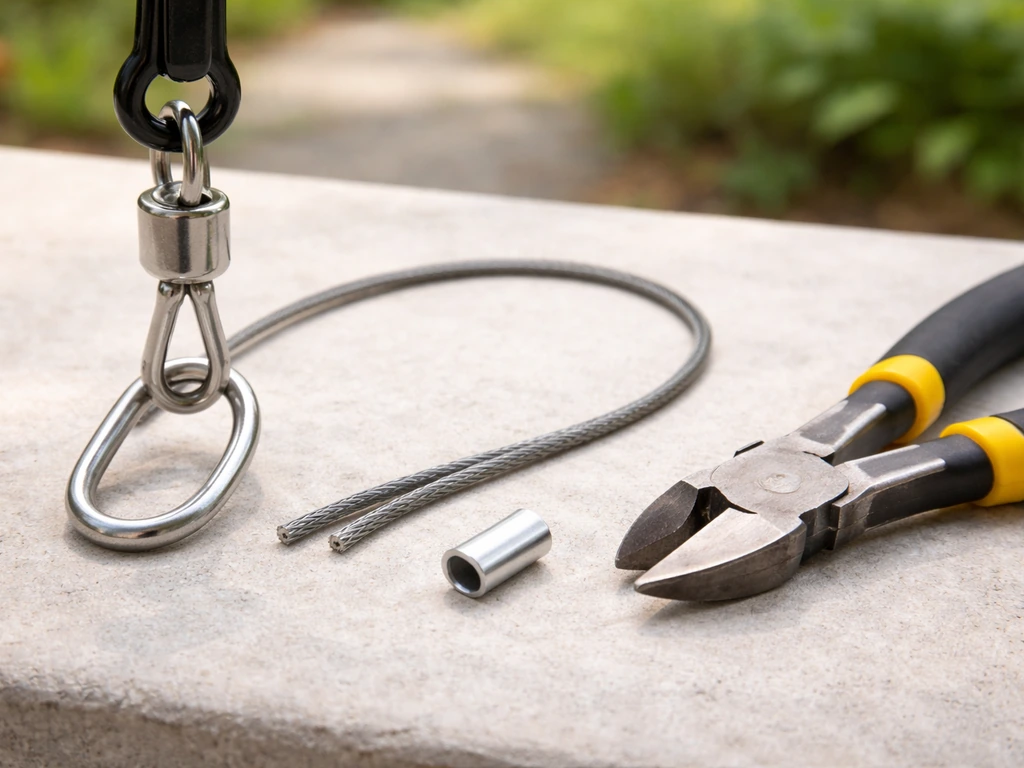
Birds land on and near poles regularly, and some species forage along the pole itself. Any substance applied to the outside of a pole that could transfer to feathers is a problem. Oils damage feather structure and remove waterproofing, which can cause a bird to become hypothermic in rain or cold. This is why the grease-free approach is not just a preference, it is the responsible choice. If you are trying to shorten bird feeder wire, use the same grease-free logic and pick safe mounting or tie-off methods that do not smear oils or leave residue on feathers. Stick to inert, hard surfaces: metal, PVC, hard plastic, and painted wood. None of these transfer harmful substances to birds on contact.
Risks to pets
Dogs investigate feeder poles constantly. A greased pole means a dog's paw, nose, or tongue can pick up petroleum jelly or oil. If the dog then licks it off, petroleum products can cause digestive upset or worse. Again, the physical-barrier approach completely avoids this risk. There is nothing on the pole exterior that a curious dog or cat can pick up.
Risks to the pole and nearby surfaces
Petroleum-based products degrade rubber, certain plastics, and painted surfaces over time. If your pole has rubber gaskets, plastic fittings, or nearby deck boards, greasing the pole can cause material breakdown you will not notice until the pole leans or a fitting cracks. Grease also drips onto soil and hardscape, creating staining and a slip hazard for people walking near the feeder. Physical wraps and baffles create none of these problems and actually protect the pole surface underneath them from UV and moisture.
When a squirrel still gets through
If a squirrel bypasses your baffle, check these things before trying a different product. First, measure the height: is the baffle top really 4 feet or more above the ground? Perky-Pet’s baffle instructions also specify placing the baffle about 4, 5 feet above the ground to prevent squirrels from reaching the feeder blank" rel="noopener noreferrer">baffle top really 4 feet or more above the ground. Second, is the feeder within 8 to 10 feet of a jump point? Third, is there a gap at the pole joint where the baffle meets the pole? A squirrel can compress its body through surprisingly small openings. Fourth, is the baffle large enough in diameter? Some dome baffles are too shallow for a determined raccoon, which can reach its arm over the edge and pull itself up. A cylinder or torpedo baffle eliminates this problem entirely because there is nothing to grip on the outside. Some readers also find that adding a slinky around the pole below the baffle is a useful backup layer, and it is a popular low-cost troubleshooting step worth considering alongside the main baffle setup.
Choosing the right setup for your feeder type and location
The best anti-climb approach depends on your specific pole, feeder, and yard. Use this guide to match your situation to the right solution.
| Your situation | Best approach | Key detail |
|---|---|---|
| New pole setup, starting from scratch | Cylinder/torpedo baffle threaded onto pole during install, pole 10 feet from structures | Thread baffle on before mounting feeder; set pole height so baffle top lands 4 to 5 feet up |
| Existing pole already in the ground | Wrap-around clamp baffle added mid-pole | Choose a baffle that opens in two halves; no disassembly needed |
| Heavy raccoon pressure | Large-diameter cylinder baffle (ERVA-style) plus pole at 10 feet from any structure | Raccoons can reach over shallow domes; the cylinder is much harder to bypass |
| Lightweight shepherd's hook style pole | Dome baffle on hook above feeder plus smooth pole wrap below | Shepherd's hooks are thin and easy to grip; the wrap below removes the climbing surface |
| Multiple feeders on a crossbar pole | Single large cylinder baffle centered on the main pole below the crossbar | One baffle protects all feeders on the crossbar if installed correctly |
| Hanging feeder on a wire or chain | Smooth PVC pipe threaded onto the wire on either side of the feeder | Squirrels walk the wire to reach the feeder; the spinning PVC stops this approach |
If you are unsure what to put on your bird feeder pole beyond the baffle itself, keep it simple: just the baffle and a smooth pole. Extra hardware like hooks, clamps, or decorative hangers between the baffle and the feeder give squirrels new grip points to exploit. The cleaner and more minimal the setup above the baffle, the harder it is for pests to adapt. Making sure your pole is stable and correctly installed in the ground from the start also helps, since a wobbling pole can shift a baffle out of position over time. If your feeder pole wobbles, follow a few stability checks and installation tips so the baffle stays aligned and the pole stays secure Making sure your pole is stable. If you are also asking how to keep the bird feeder pole straight over time, focus on a solid installation and checks for loosening hardware.
Getting your feeder pole genuinely squirrel-resistant takes maybe 30 minutes of setup and a five-minute monthly check. Once you see the first squirrel bounce off a correctly installed baffle and walk away confused, you will understand why this approach beats any slippery coating that ever existed.
FAQ
Can I make my bird feeder pole slippery using cooking spray, canola oil, or vegetable shortening instead of grease?
No. Any edible oil, even if it is not petroleum based, can still coat feathers or fur and disrupt waterproofing, and it attracts residue that pests may tolerate longer. Stick to physical barriers like a baffle, or a smooth, free-spinning wrap sleeve that does not leave transferable film on the pole.
What is the best height for the baffle if my feeder is already installed?
Aim for the baffle top to be 4 to 5 feet above ground, then verify the feeder is still in the 8 to 10 foot “clear zone” from likely launch points. If you cannot move the pole farther from structures, prioritize a cylinder style baffle (or a higher-coverage wrap) because you will need more physical denial to compensate for reduced clearance.
My pole is wood. Do baffles and smooth wraps work on wood the same way they do on metal?
Yes, but choose finishes and fit carefully. A wrap sleeve that spins freely on the pole works best because it removes the animal’s grip regardless of whether the pole is wood or metal. For baffles, ensure there is no gap where the baffle meets the pole, because squirrels can exploit any seam or uneven contact area.
How do I prevent a spinning wrap sleeve from “walking” up or down the pole?
Use the right inside diameter so it can rotate but not climbably shift, and keep the sleeve attachment points (if any) below the climbing zone. Also avoid mounting the sleeve so tightly that friction stops rotation. After installation, test by pushing the sleeve with your hand, it should move freely and return centered.
Do rain and snow reduce the effectiveness of smooth wraps or baffles?
Rain and snow usually do not degrade the physical barrier, but they can create temporary issues. Remove accumulated snow from dome baffles after storms so it does not become a ramp, and inspect metal contact points for corrosion since rust at bolts can loosen alignment over time.
How often should I check the setup, and what should I look for?
Do a quick monthly inspection. Confirm the baffle is still aligned (not rotated or shifted), check for loosened hardware, verify there is still a continuous barrier with no visible gap at seams, and look for wear cracks on plastic parts if they sit in direct sun.
Will UV exposure shorten the life of a plastic pole baffle?
Yes. If the baffle is in full sun, many plastic baffles last roughly 3 to 5 years before they become brittle. Replace at the first sign of cracking or splitting, because a partially failed baffle can leave just enough edge for a determined climber.
How do I keep my feeder pole from tipping or wobbling, since that can ruin the barrier?
Stability is part of the anti-climb system. Use correct pole depth for your soil and secure all fasteners firmly, then periodically re-check plumb and the tightness of mounting hardware. If the pole wobbles, correct the base before you add or adjust a baffle, because shifting will create new gaps or change the barrier height.
What if squirrels are still getting past the baffle, what are the most common causes?
Usually it is one of these: the baffle is too low, the feeder is within 8 to 10 feet of a jump point, there is a seam or gap at the baffle-to-pole interface, the baffle is too shallow for the raccoon/squirrel size you have, or the pole is so close to a deck rail or wall that the animal can launch directly onto the feeder.
Is it okay to apply any protective coating on the pole for weatherproofing if I have a baffle?
Use coatings that do not create transfer to birds and do not form an oily or sticky film. Paint and rust-inhibiting products on the pole hardware are generally fine, but avoid anything that could drip or smear onto the outside where birds perch or peck. Keep the area under the baffle clean and avoid over-spraying into the feeder zone.
Can I combine a baffle with a second “backup” like a slinky or extra sleeve below it?
Yes. A secondary low-cost layer, such as a slinky around the pole below the main barrier, can add redundancy if a squirrel somehow bypasses the top setup. Just make sure the main baffle still provides continuous physical denial at the correct height and that no extra attachments create new grip points.
Will dogs or cats get harmed if they lick or chew the pole?
Avoid any greased or oily treatments entirely. With physical baffles and smooth inert sleeves, there is no toxic surface residue to pick up. Still, periodically check for chewed-through wraps or damaged baffles, especially if pets have free access to the feeder area.
Can a pole that’s too close to a structure be fixed without moving the feeder pole?
Sometimes, but not always. If you cannot meet the 8 to 10 foot clearance from trees, fences, deck rails, roof edges, walls, or furniture, you must compensate by improving the barrier coverage. In practice, that usually means using a more robust cylinder style baffle or adding an appropriate secondary deterrent below it, then rigorously sealing any gaps.
Next Article
How to Shorten Bird Feeder Wire Safely Step by Step
Step-by-step ways to shorten bird feeder wire safely, choosing connectors and checks for strength, balance, and neat ten